

Hunting Trophy Inkstand
| Categories | Figural - Animals & Living Creatures, Stone/Marble/Ivory/Bone/Hoof/Leather |
| Type | Boar |
| Material | Brass, Glass, Horn/Bone/Tusk |
| Markings | Unmarked |
| Manufacturer | Undetermined |
| Origin | Undetermined |
| Date or Era | circa 1900 |
| Measuring | 5” x 4” x 3” high |
Description
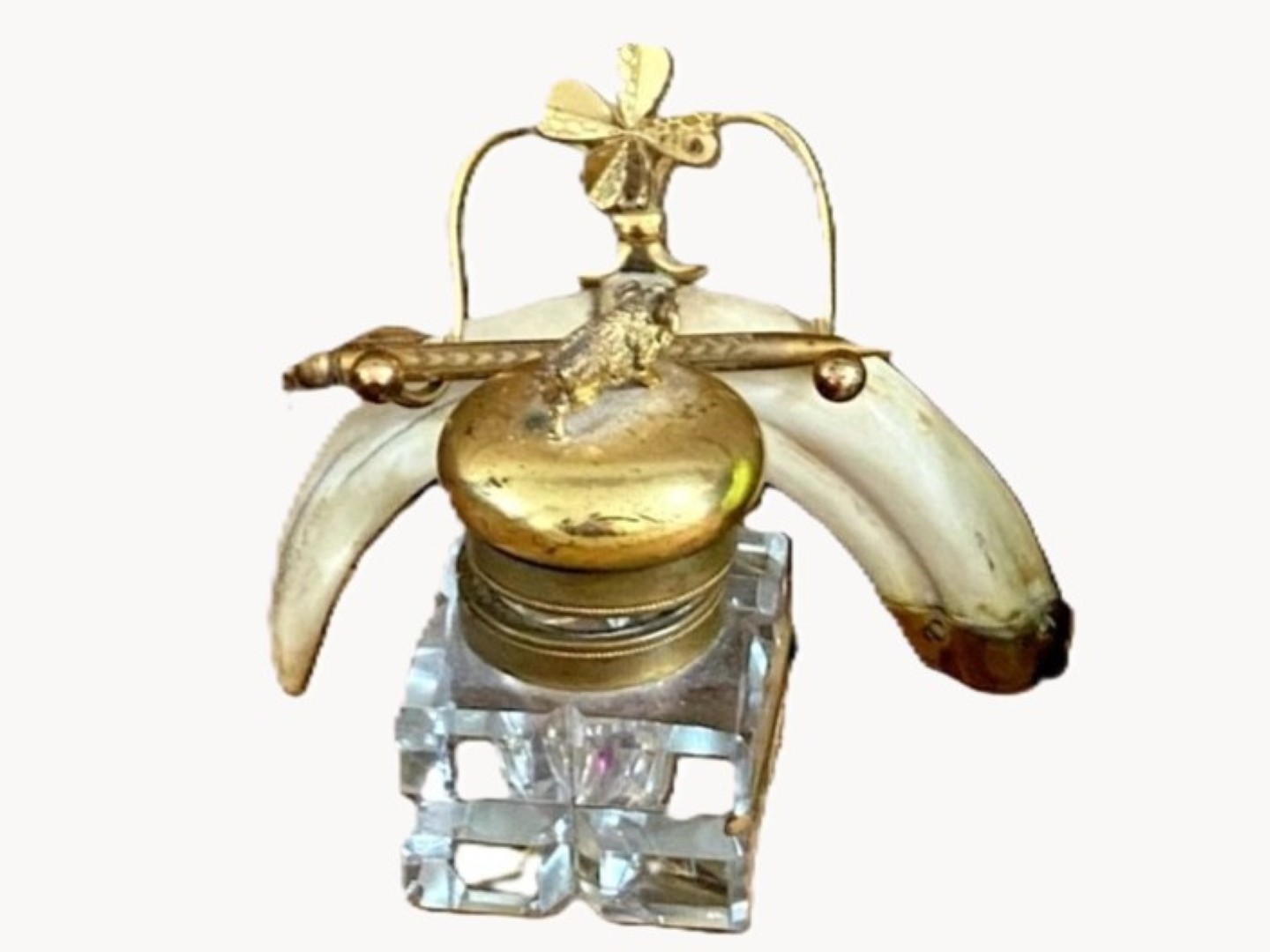
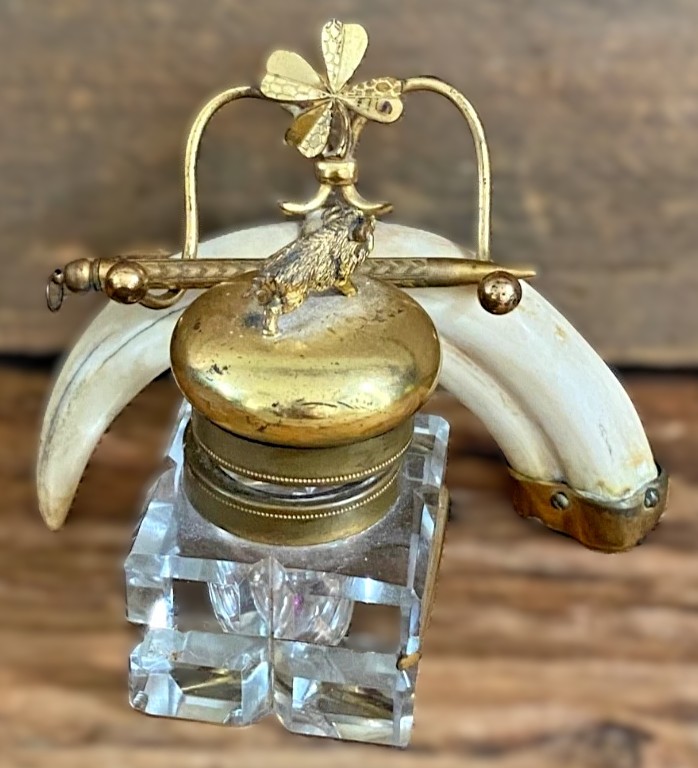
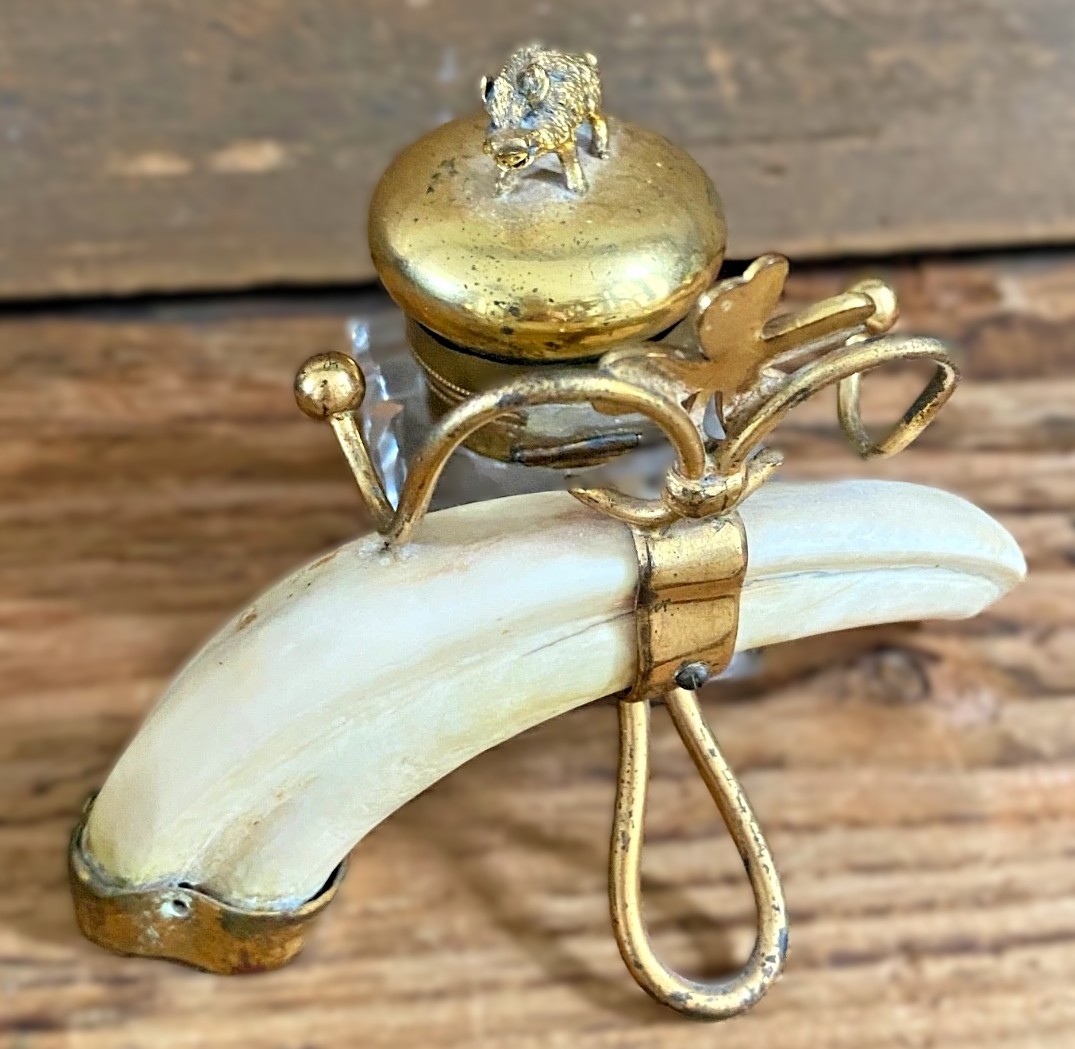
This is a late 19th-century novelty hunting-trophy inkstand.
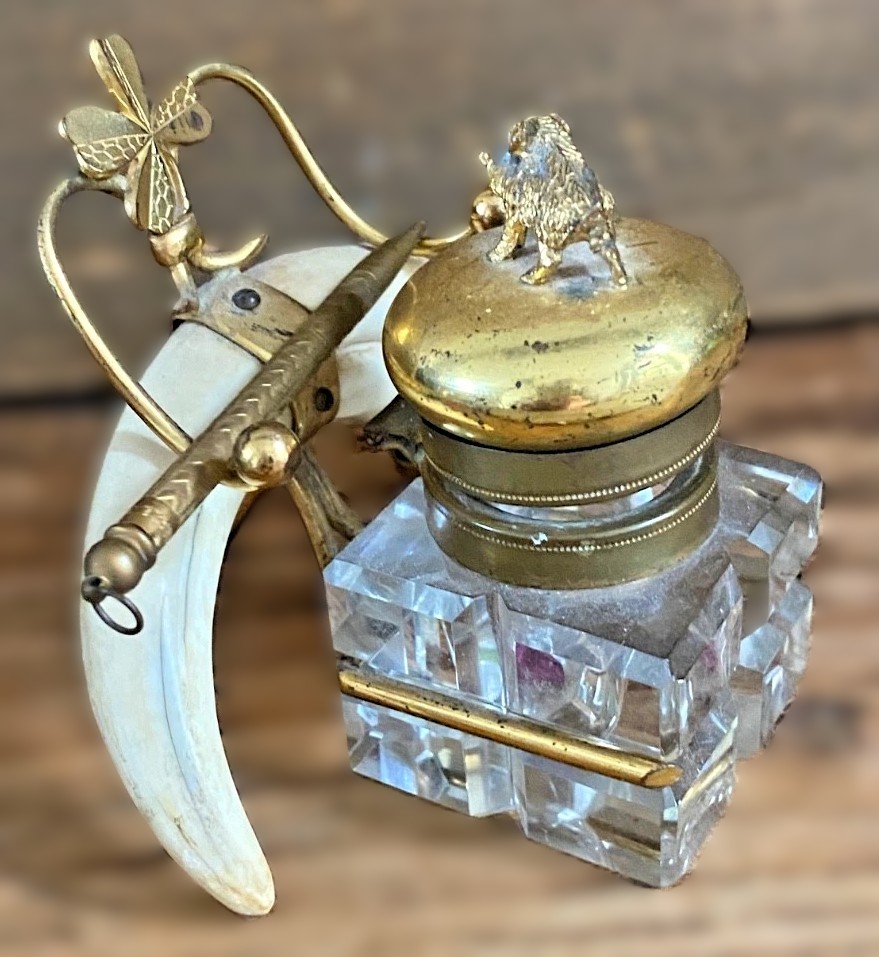
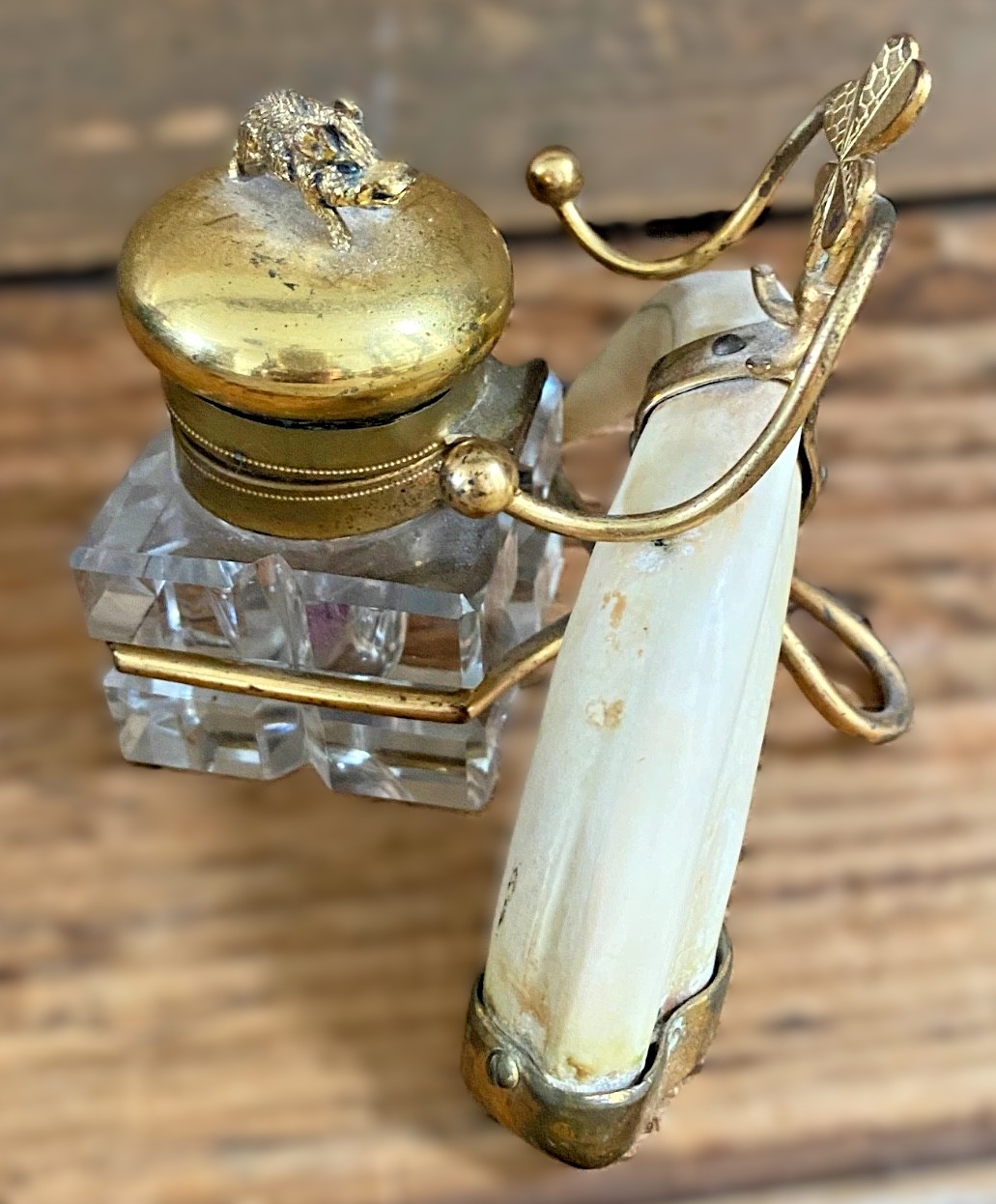
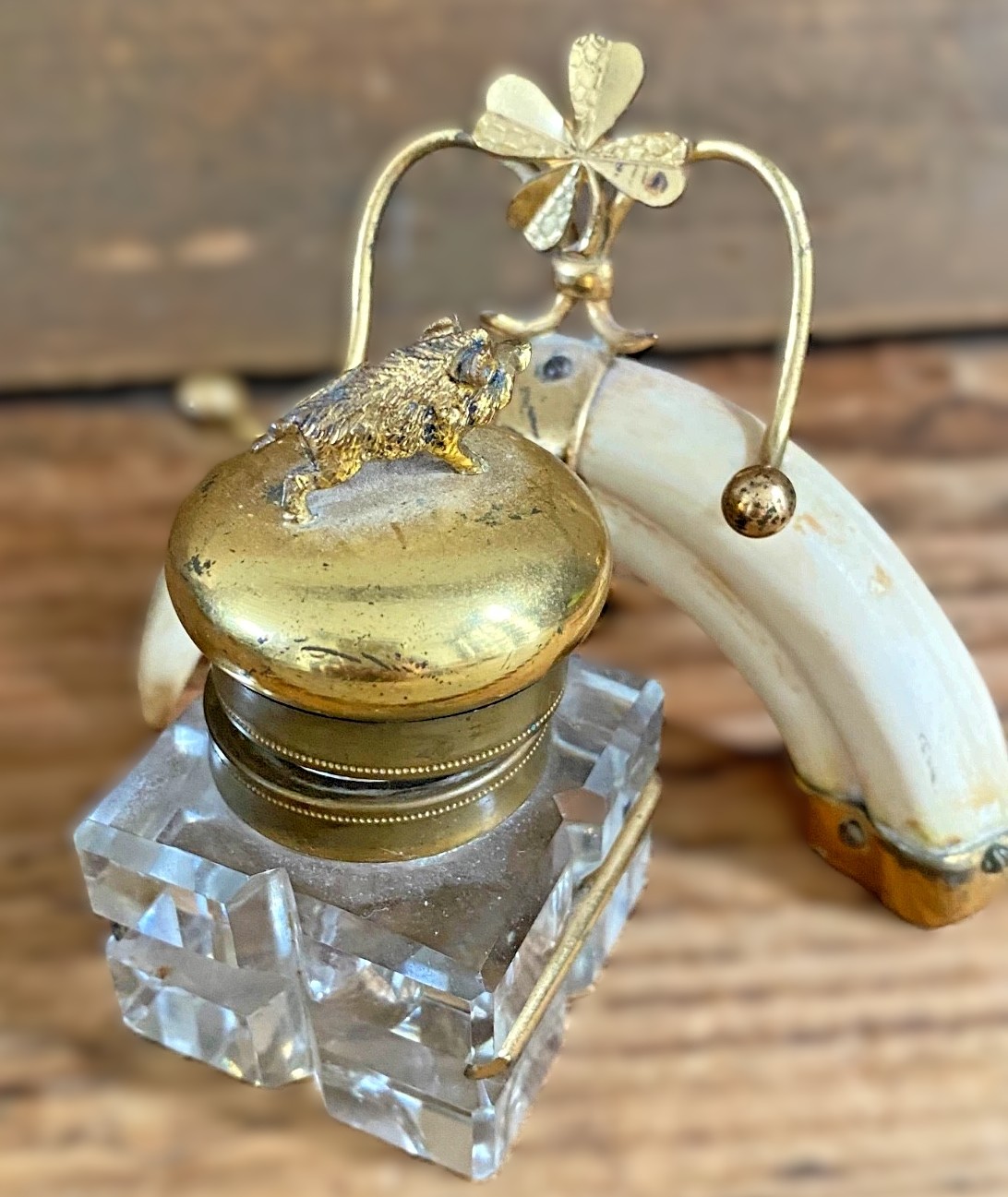
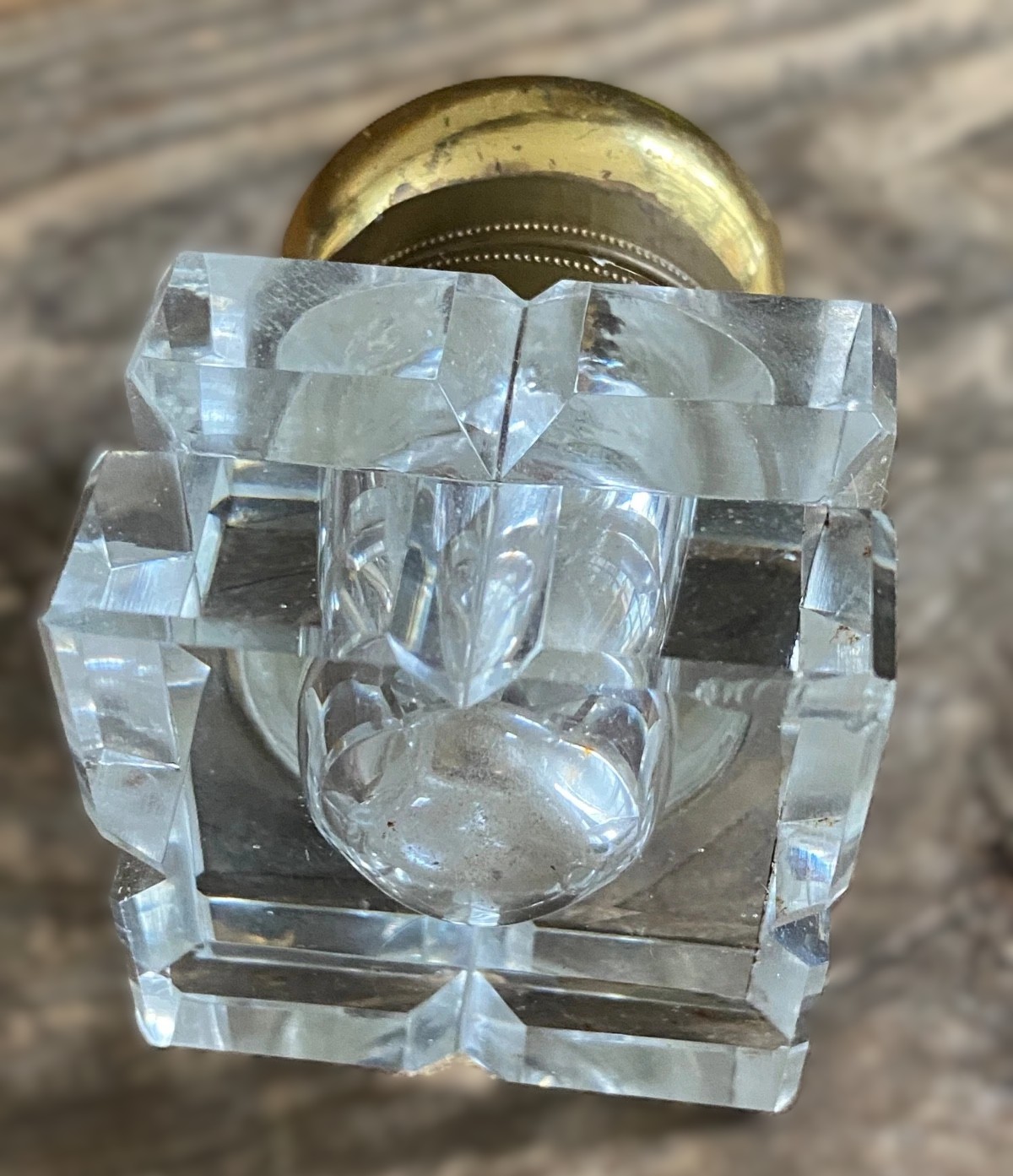
- The Inkwell: It features a heavy, square, block-cut crystal inkwell with a faceted underside. The neck is fitted with a brass collar leading to a smooth, domed hinged lid.
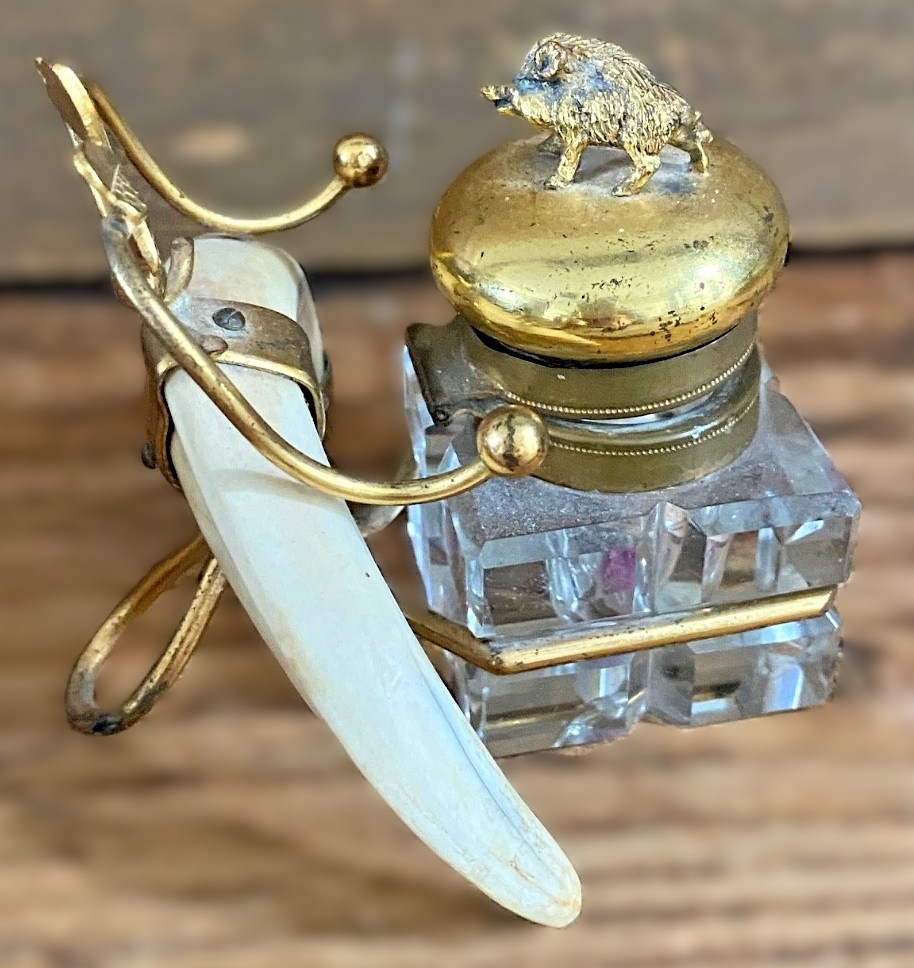
- The Figural Finial: Atop the lid stands a detailed, small cast-metal figure of a wild boar with a textured, bristled coat.
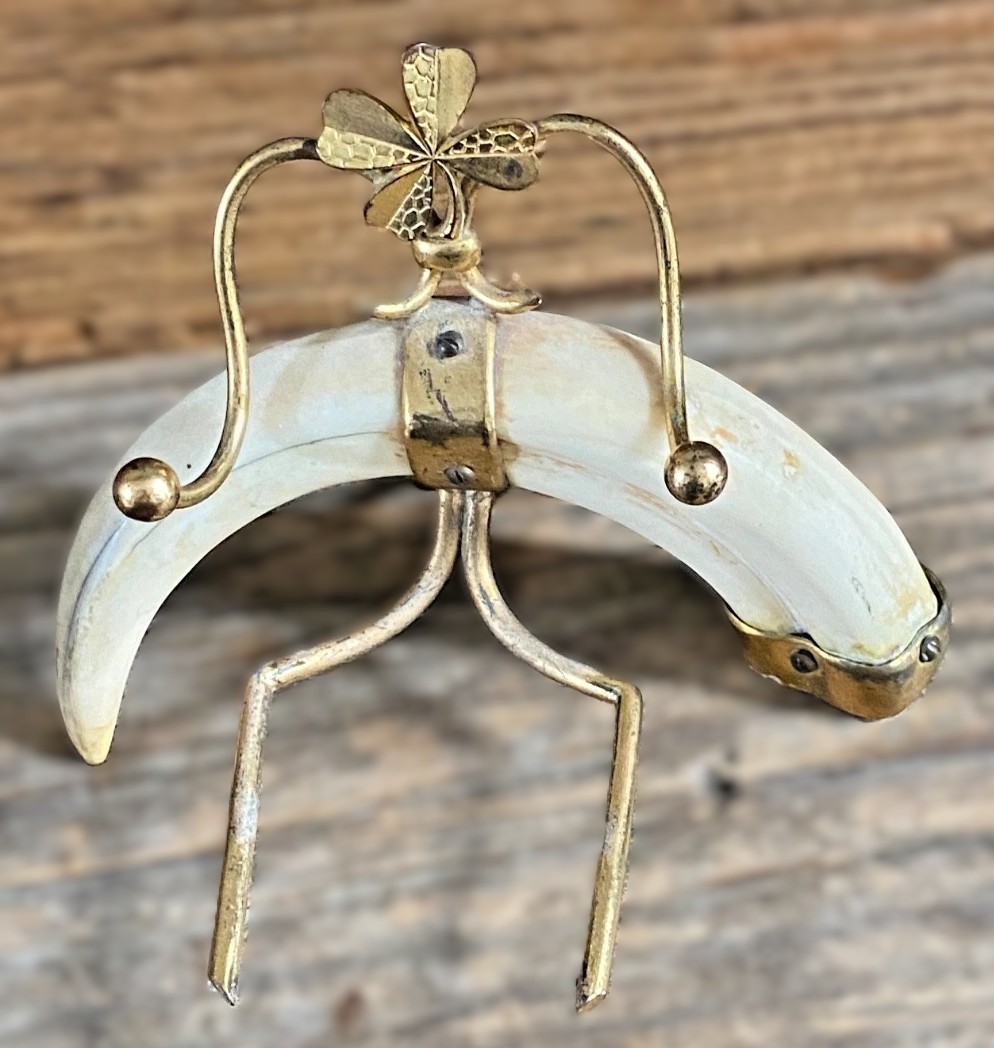
- The Frame: A brass wireframe cage cradles the crystal inkwell and extends upward into a decorative arch capped with a textured four-leaf clover or shamrock motif.
The Material:
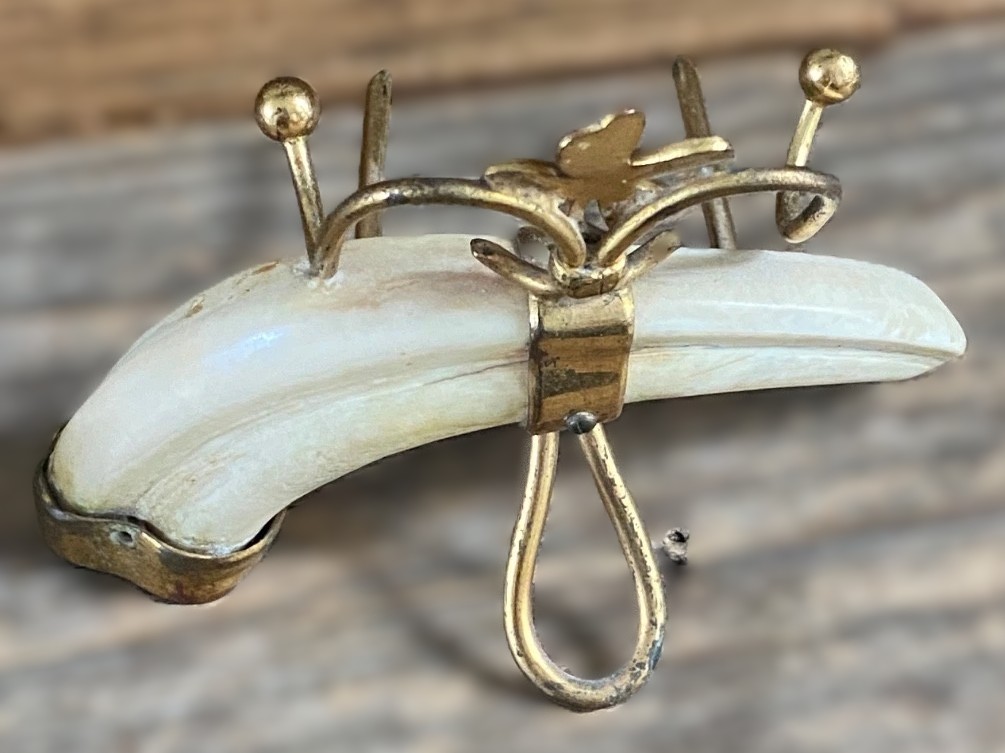
This inkstand is anchored with an authentic wild boar’s tusk. Hunting trophies of this era frequently integrated natural elements like tusks, hooves, and antlers into functional writing desk accessories.
- The large, curved tusk is secured right through its center by a fitted metal sleeve.
- This sleeve anchors the tusk to the main framework, while a brass loop extending out the back forms a tripod base to keep the heavy crystal inkwell perfectly balanced and upright on a desk surface.
- The capped metal end on the tip of the tusk protects the natural material from splitting or chipping.
The Pen Holder
The piece has a built-in pen rest integrated seamlessly into the upper brass bracket. The two small spheres extending forward from the frame act as the front supports, allowing a dip pen or fountain pen to sit horizontally directly above the curve of the tusk.
Origin, Maker, and Date
- When was it made? Circa 1880–1910 During this period, “Black Forest” and hunting-lodge aesthetics were fashionable for gentlemen’s libraries and studies.
- Where was it made? Most likely Germany, Austria-Hungary, or France. Wild boar hunting was an elite sport in the dense forests of Central and Western Europe, and regional metal workshops routinely produced these desk novelties. The prominent four-leaf clover design on the handle was a highly popular late-19th-century symbol for good luck (Glück) often utilized by Austrian and German metal foundries.
Sold for $256 in May 2026
Content disclaimer. The information posted is the owner’s best knowledge and may not have been vetted by the SOIC. We welcome comments, corrections, and additions, working to make our website information comprehensive and accurate.
Join the Society of Inkwell Collectors (SOIC) – it’s free!
Founded in 1981 as a non-profit organization,
we are documenting inkwells (and accessories).
We’re here to help and inform!