

Ram’s Horn Inkstand
| Categories | Stone/Marble/Ivory/Bone/Hoof/Leather |
| Type | Horn, Ram |
| Material | Horn/Bone/Tusk |
| Markings | Unmarked |
| Manufacturer | Undetermined |
| Origin | England |
| Date or Era | circa 1900 |
Description
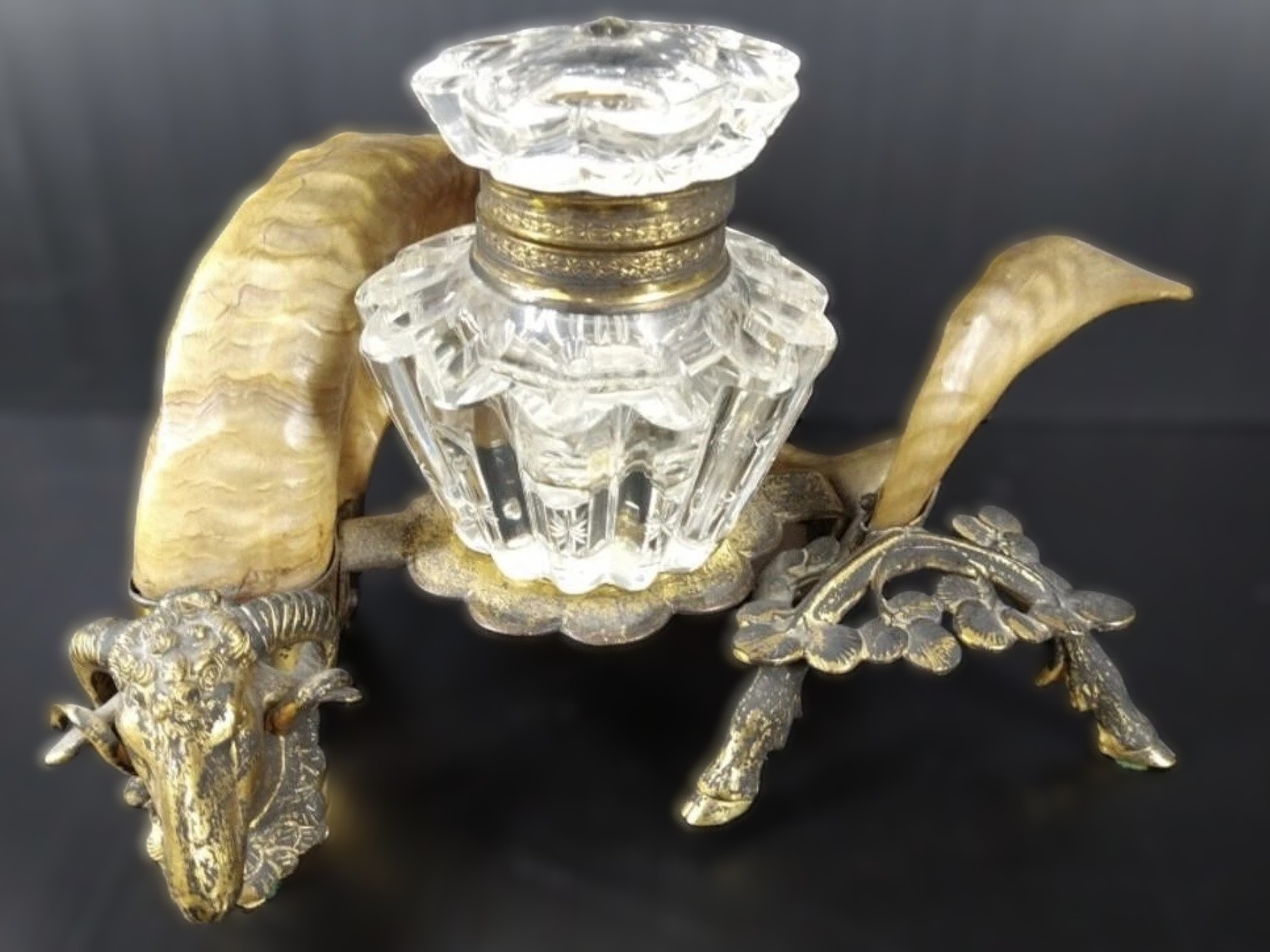
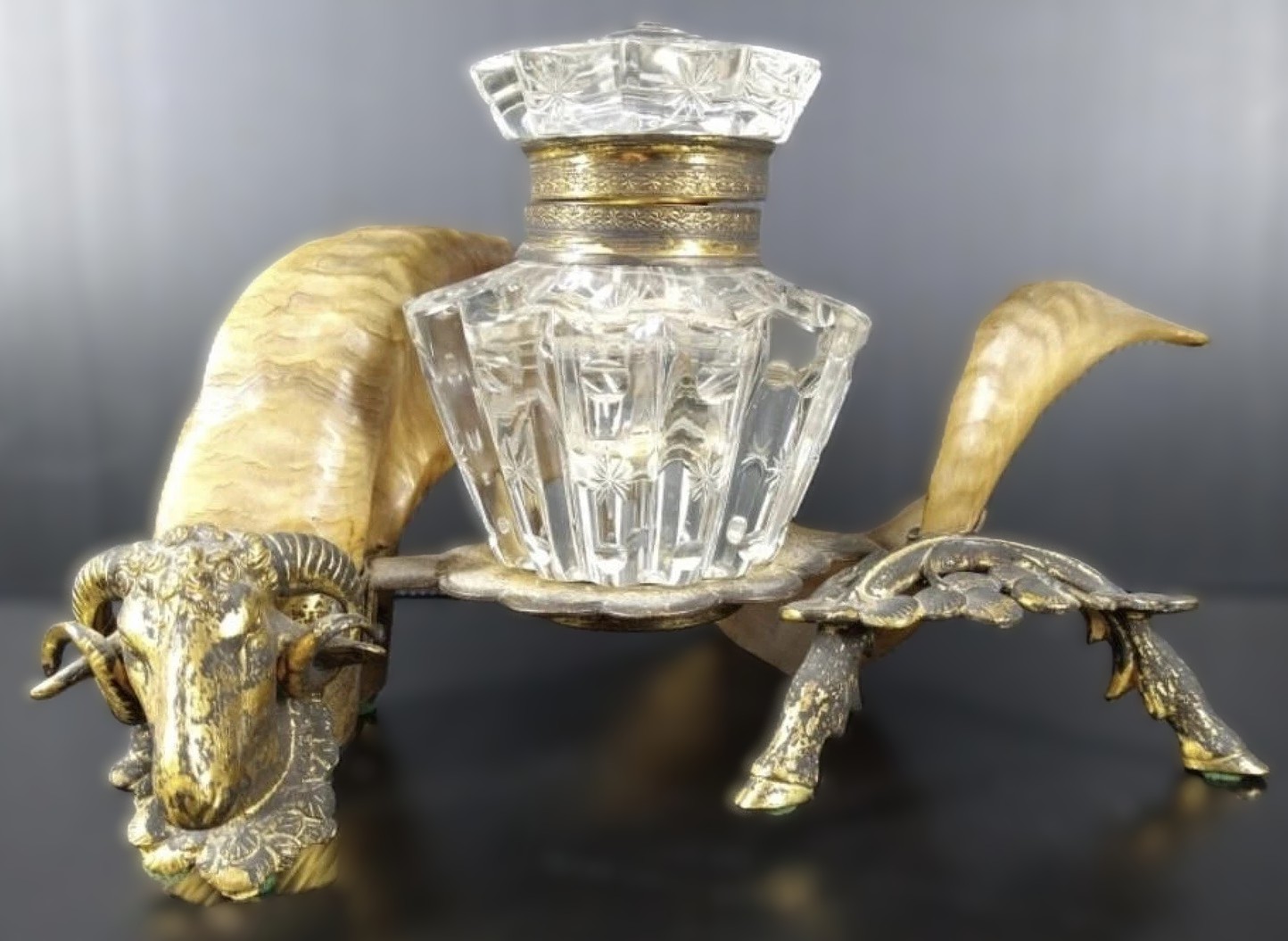
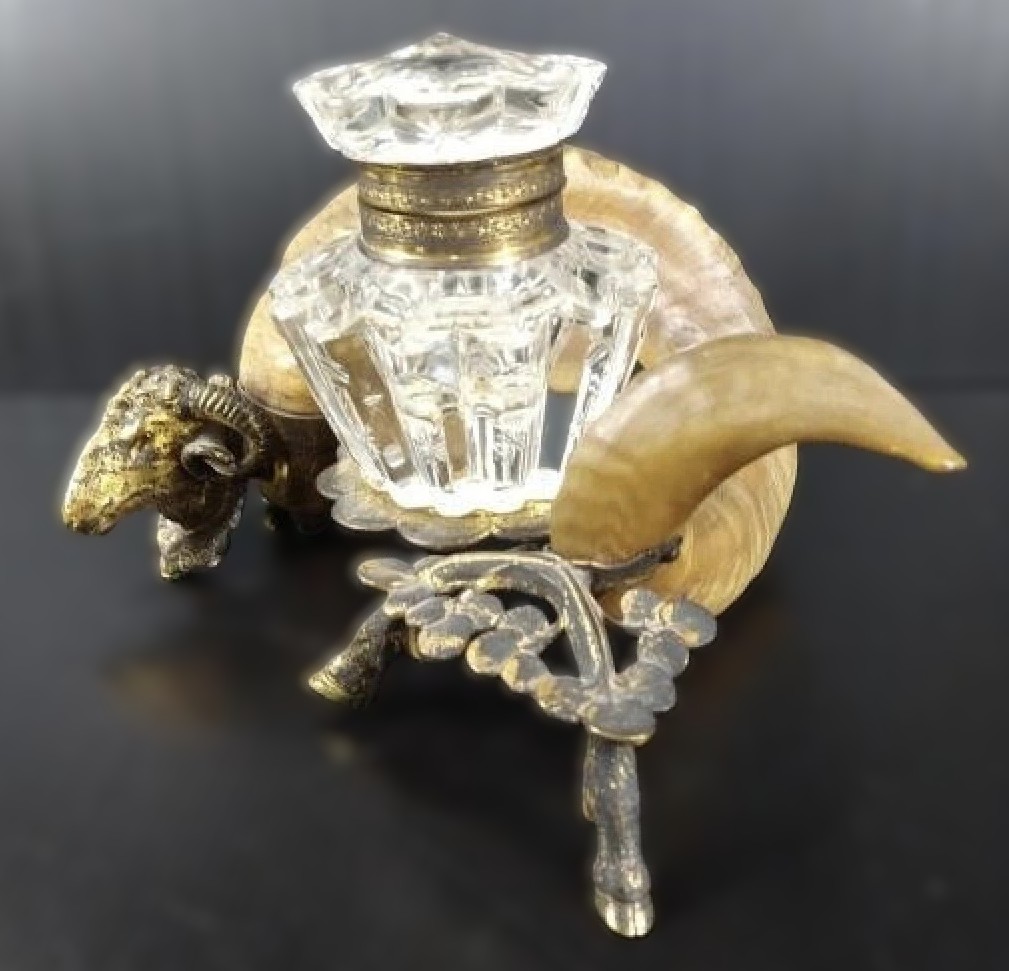
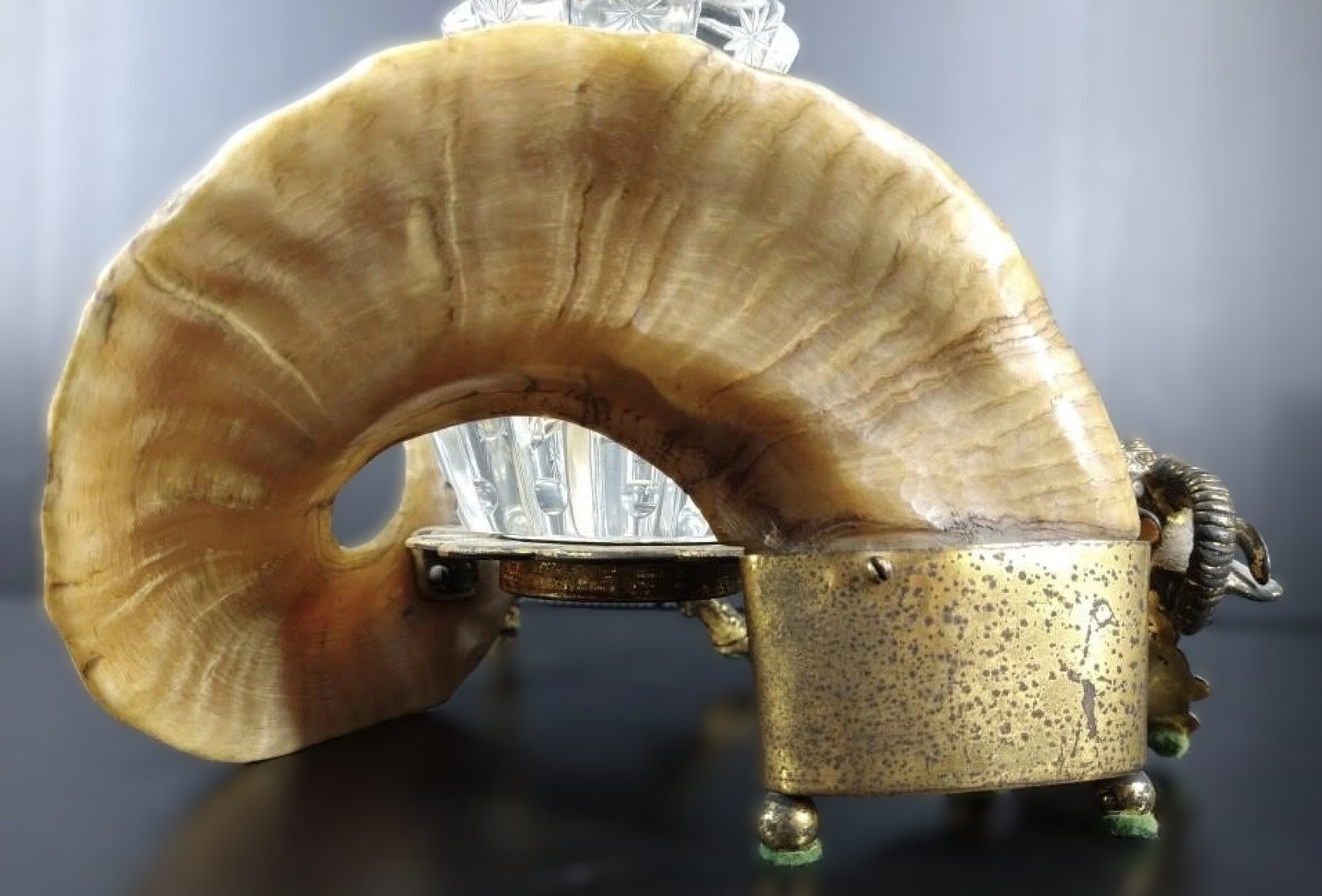
This is a late-19th-century gilt-brass inkstand mounted on a single-horn.
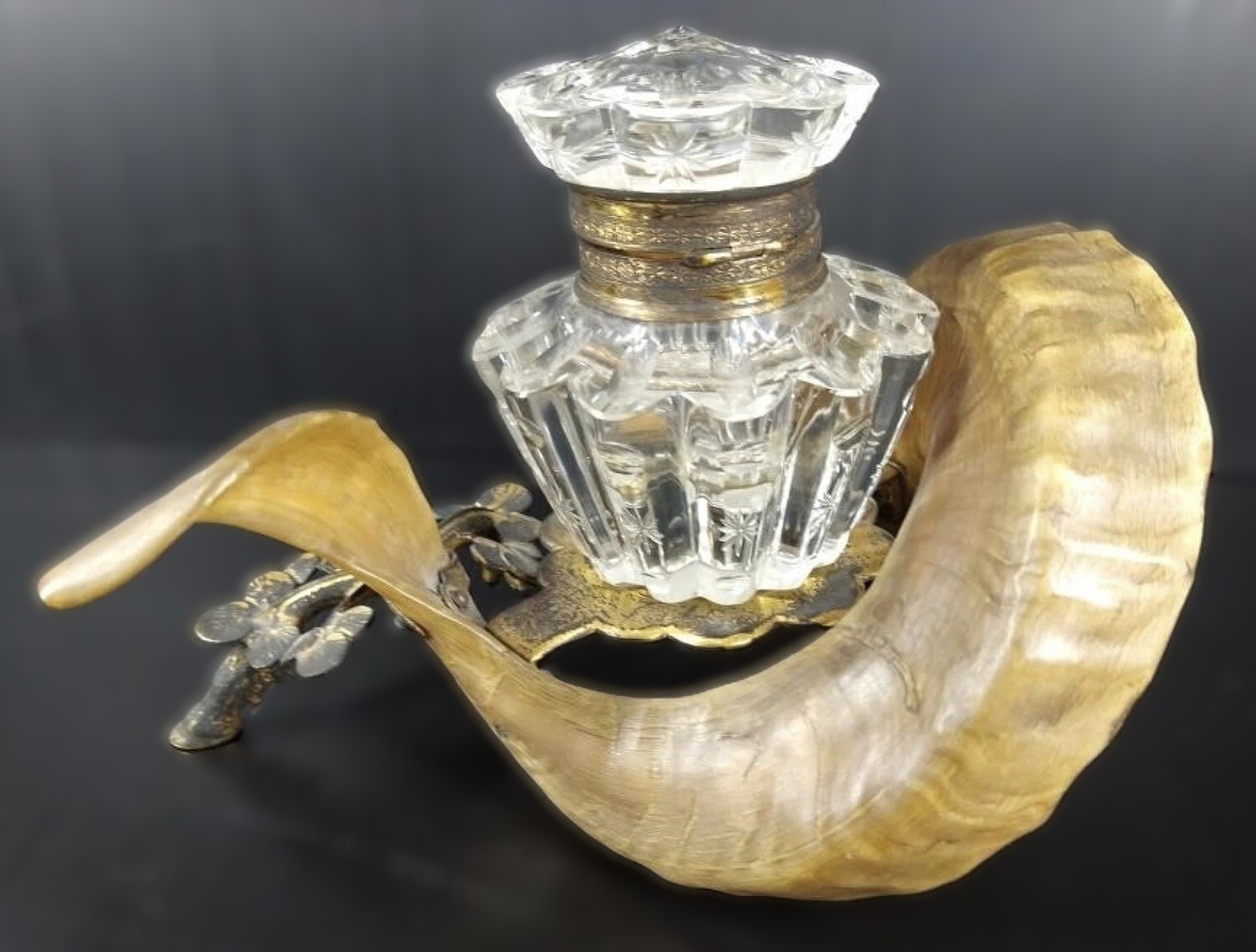
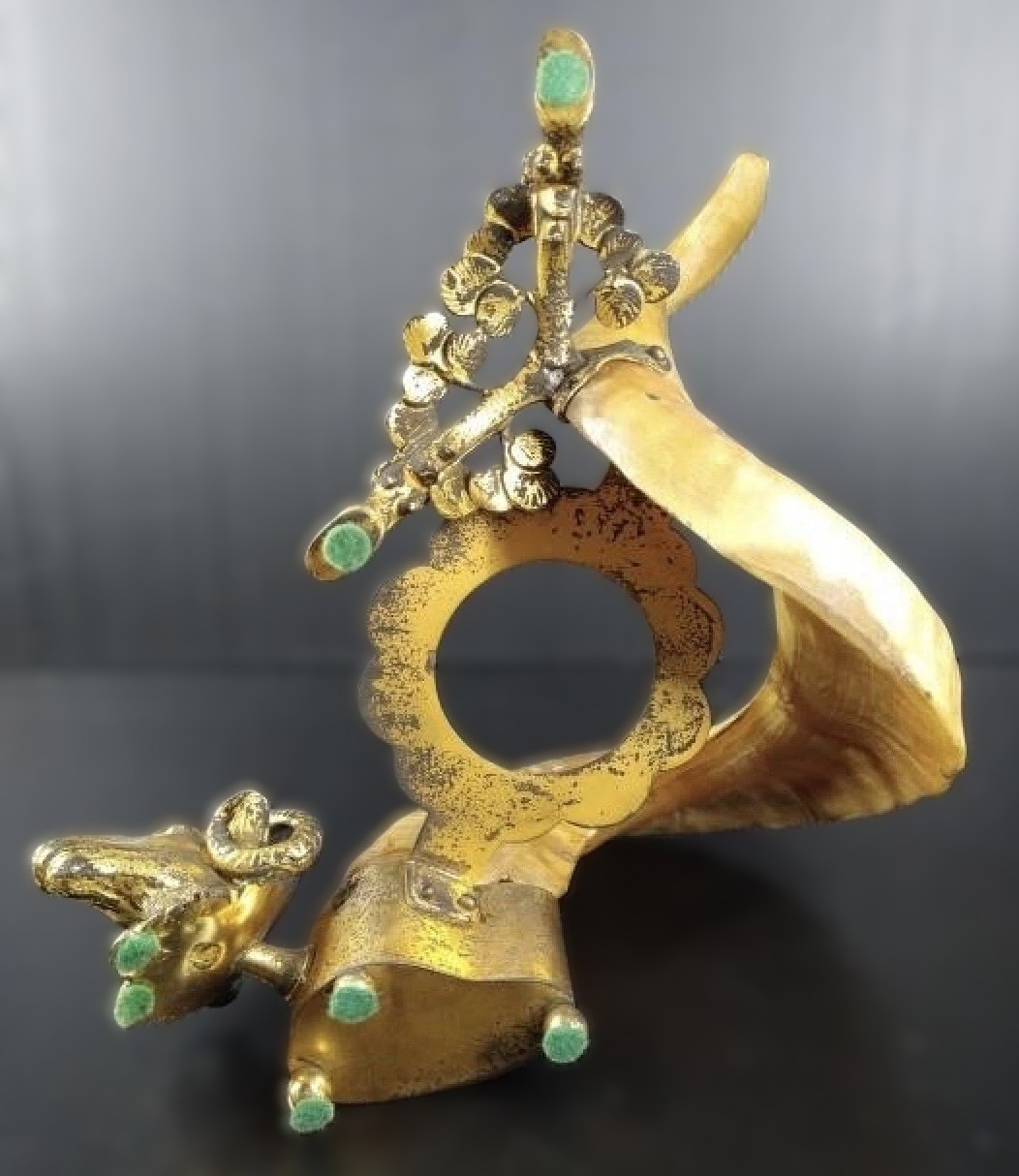
- The Structure: The inkstand uses a single natural corrugated ram’s horn curved into a sweeping dramatic arch that frames the back and side of the desk set.
- The Mounts & Metalwork:
- The left base of the horn terminates in a beautifully cast, realistic ram’s head with curled horns.
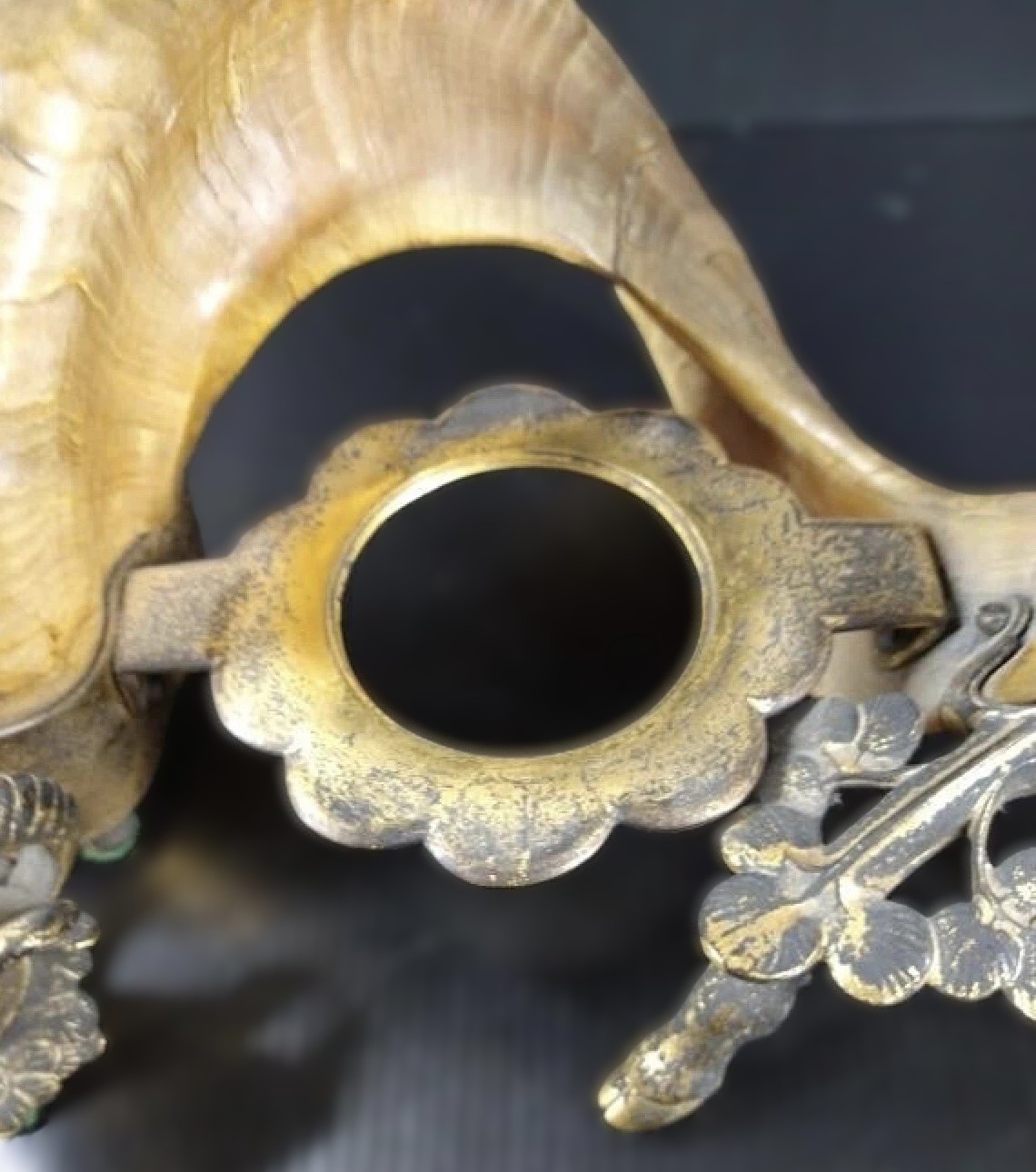
- The right side features an ornamental, openwork floral/foliate support arm ending in two distinct cloven-hoof feet.
- The central section features a scalloped, flower-shaped support collar that holds a heavy crystal inkwell.
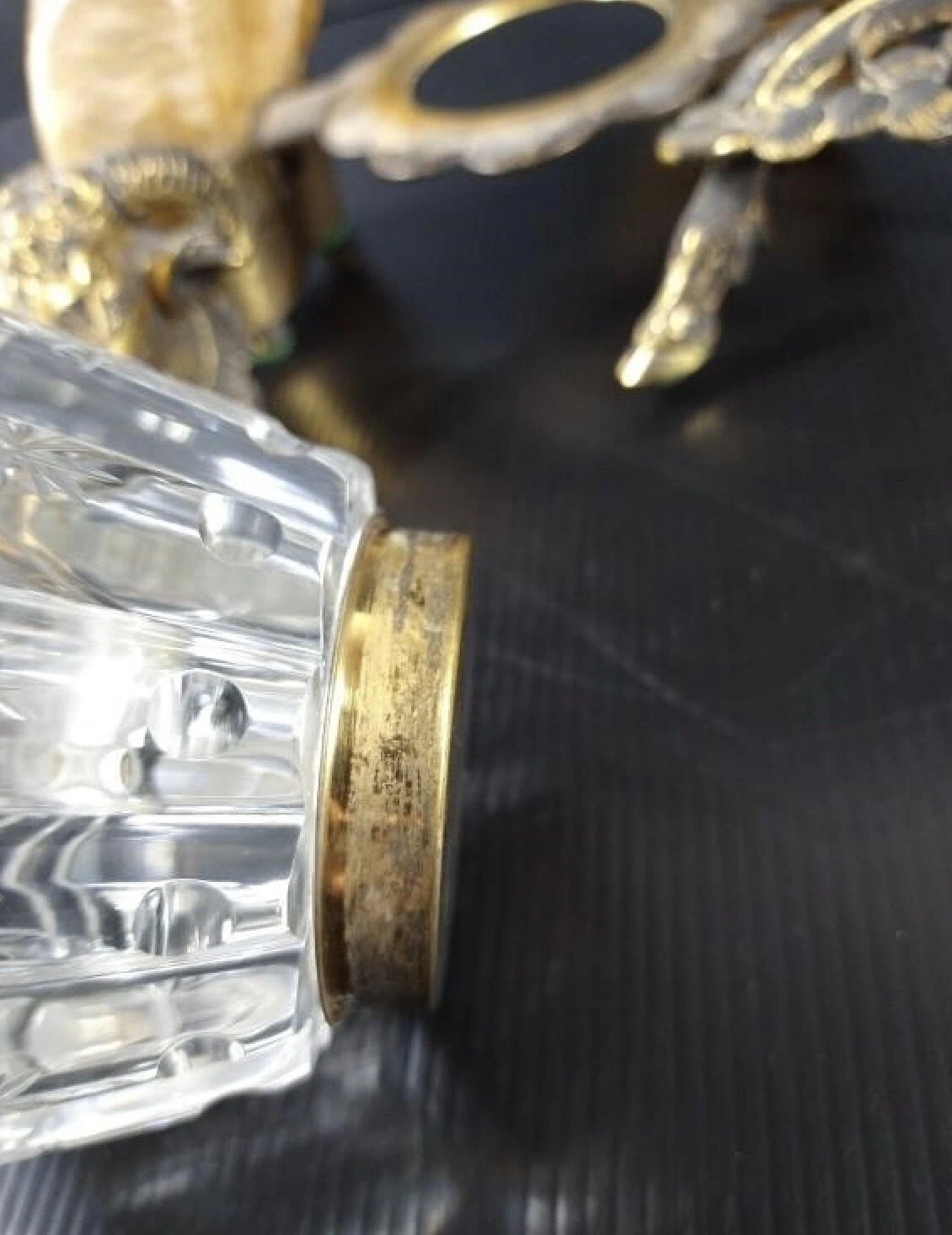
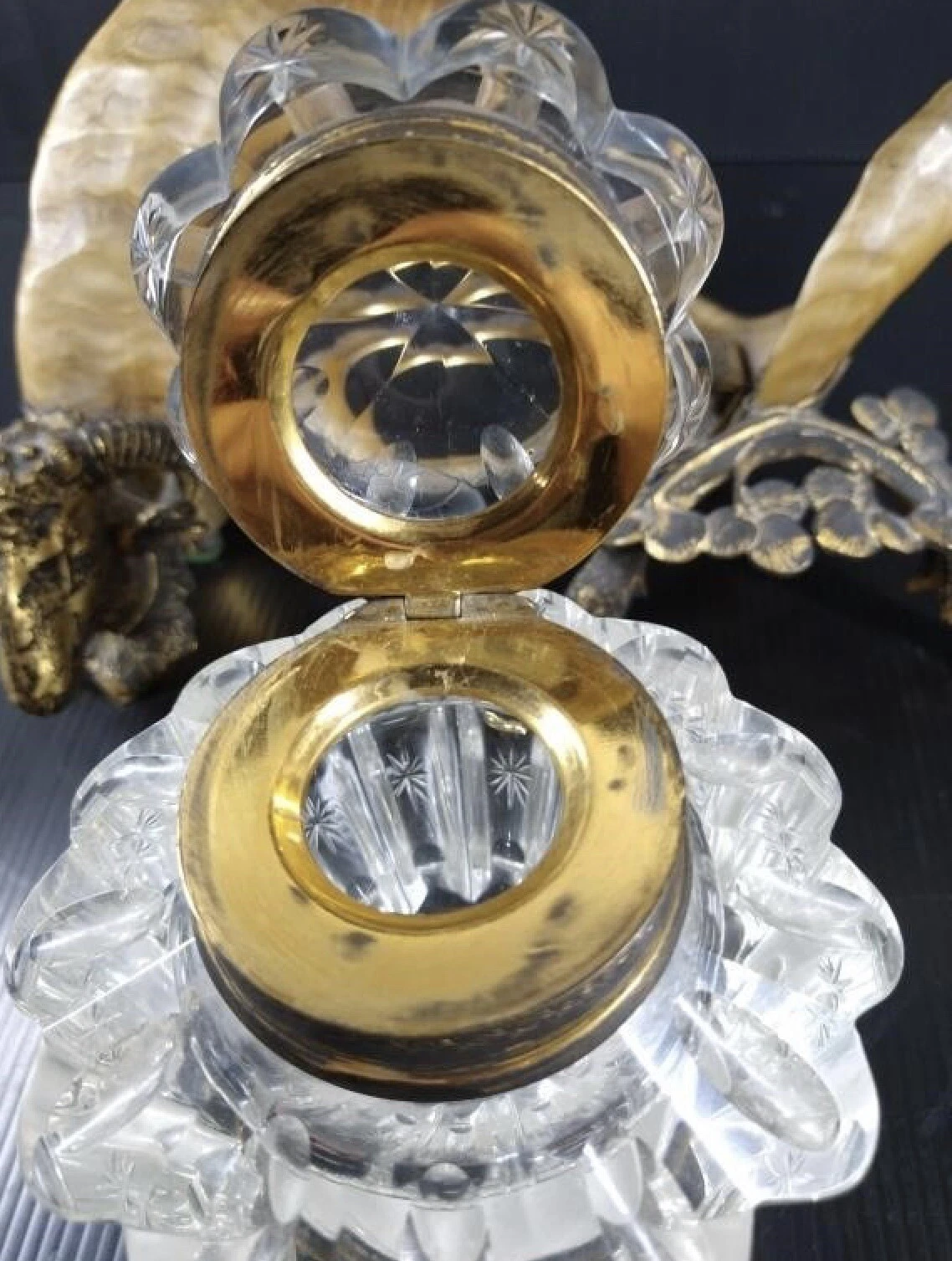
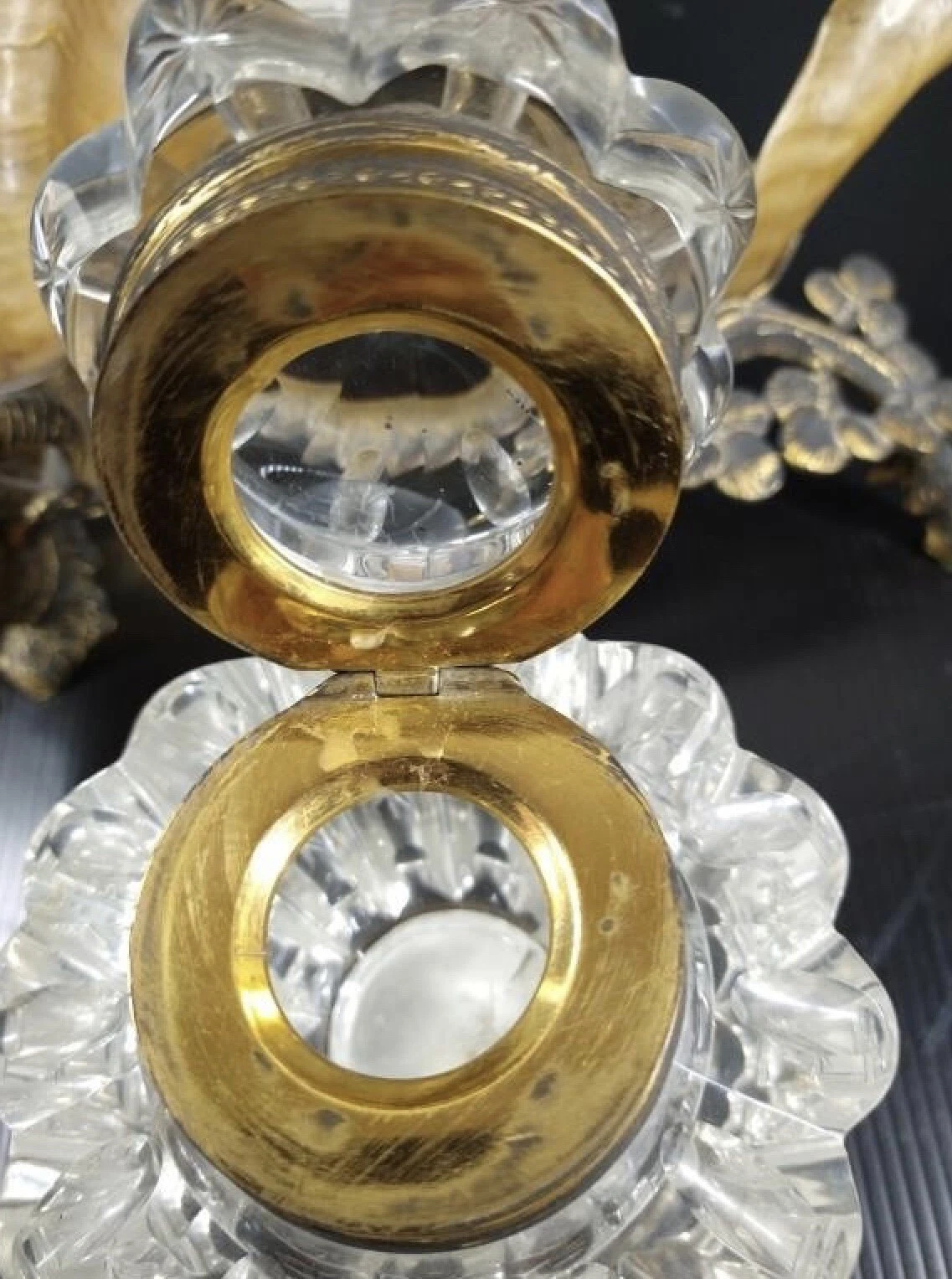
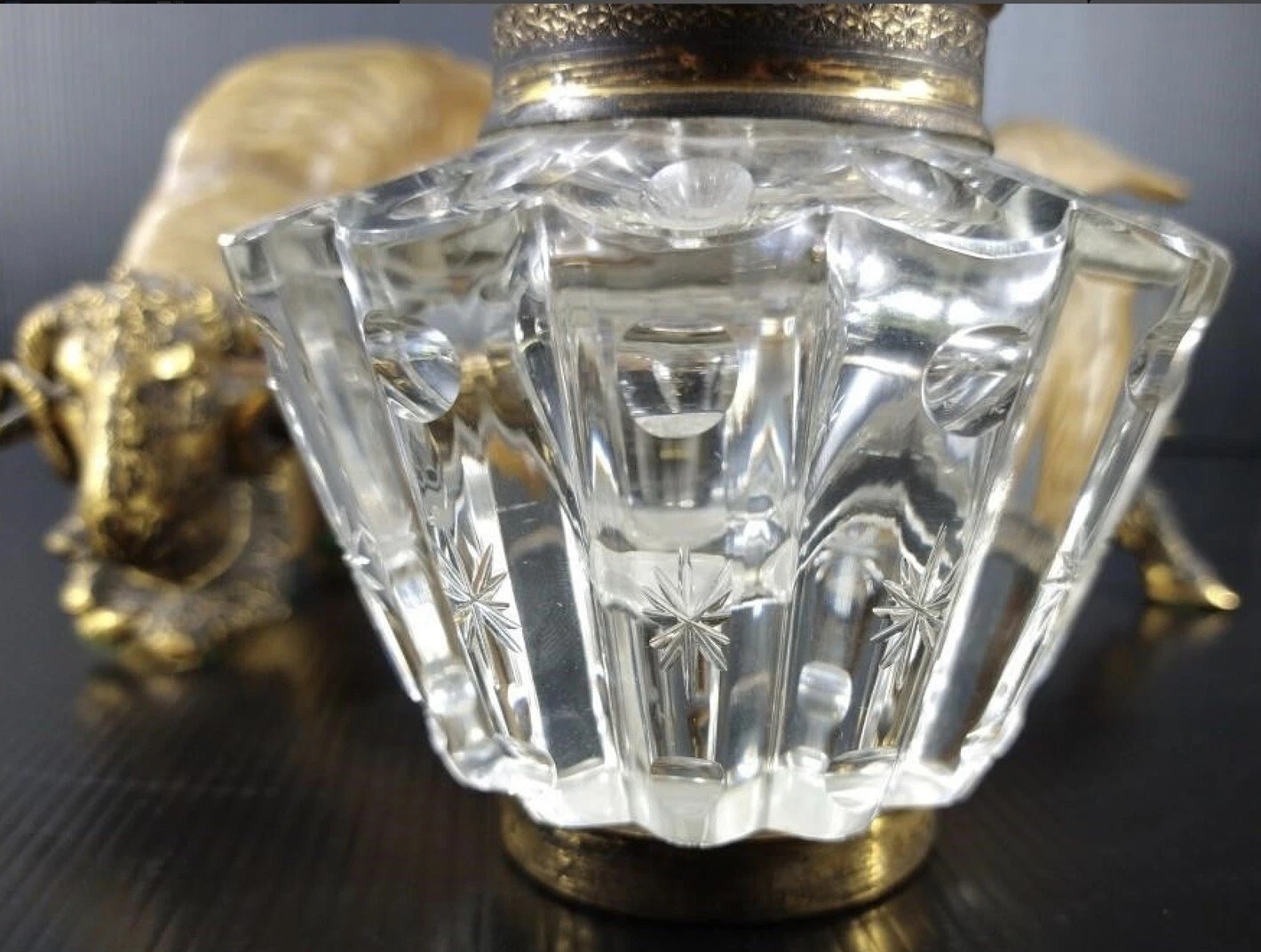
- The Inkwell: It is a massive, well-crafted cut-glass (lead crystal) inkwell, decorated with deep vertical fluting, circular thumbprints, and multi-point starburst cuts near the bottom. It features a hinged gilt collar and matching cut-glass starburst lid. The interior of the collar retains its original bright gold wash (gilding).
- The Understructure: Looking at the underside, the mount relies on standard period assembly, utilizing threaded rods and screws.
Dating the Piece
This inkstand can be reliably dated to circa 1895–1910. During the late 19th century, novelty writing sets utilizing natural taxidermy or animal elements—such as stag horn, boar tusks, and ram’s horns—were fashionable across the UK, particularly for decorating masculine libraries, hunting lodges, and country estates.
The Maker
A close inspection of the base collar, the metal housing, and the interior gilt rim reveals no stamped manufacturer hall-marks or maker signatures.
While prominent English silversmiths like Walker & Hall or Boosey & Co. frequently made high-end sterling and silver-plated horn inkstands, this piece is made of cast brass with a gold-toned fire-gilt or lacquer finish. This style of fine casting was a signature specialty of brass-foundry workshops operating out of Birmingham or Sheffield, England. Without a specific registration design number (Rd No) or maker’s mark stamped into the metalwork, it must be attributed broadly to an anonymous, highly skilled British artisan or foundry from that late Victorian era.
Sold for $400 in May 2026
Content disclaimer. The information posted is the owner’s best knowledge and may not have been vetted by the SOIC. We welcome comments, corrections, and additions, working to make our website information comprehensive and accurate.
Join the Society of Inkwell Collectors (SOIC) – it’s free!
Founded in 1981 as a non-profit organization,
we are documenting inkwells (and accessories).
We’re here to help and inform!