

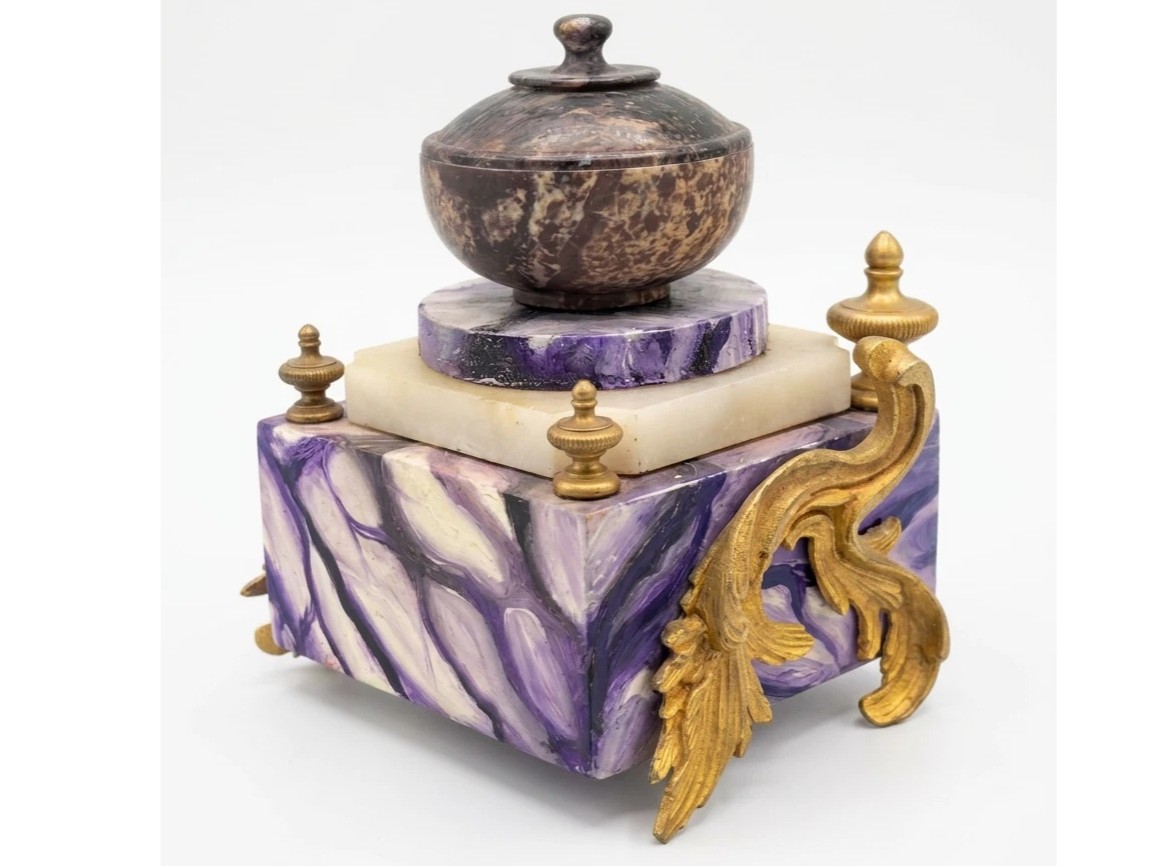
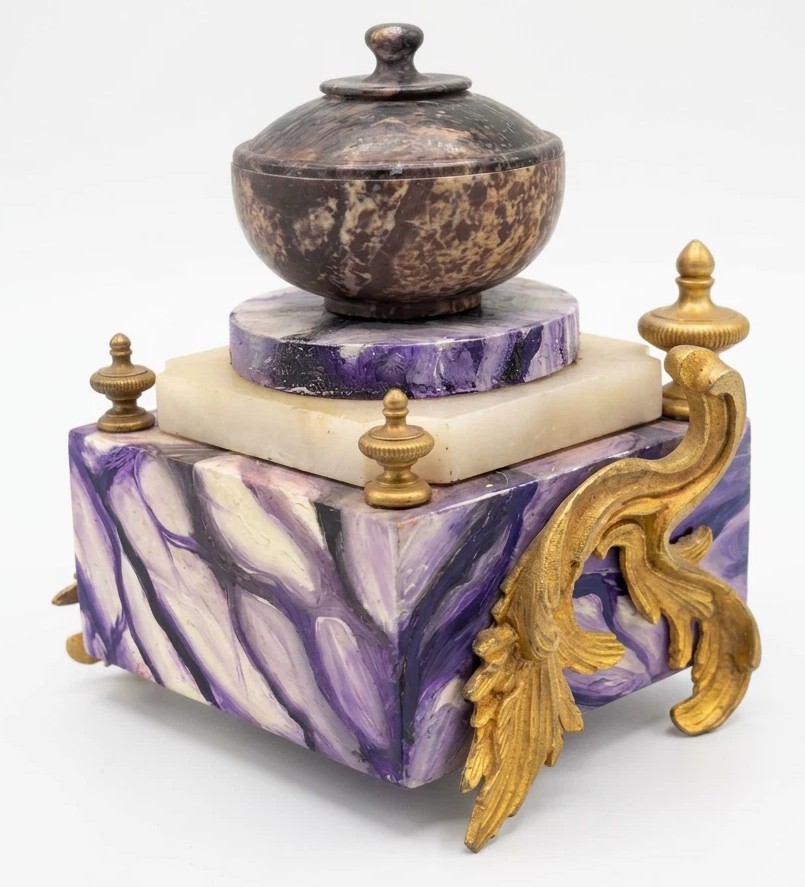
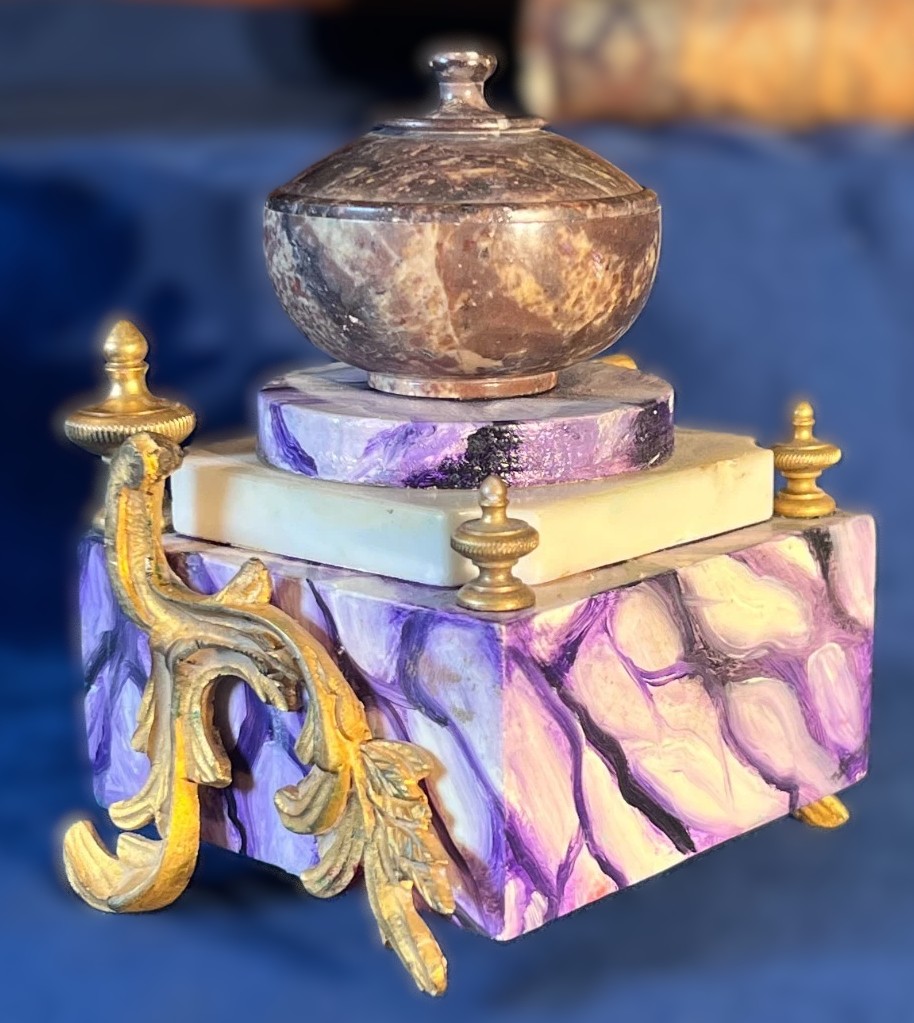
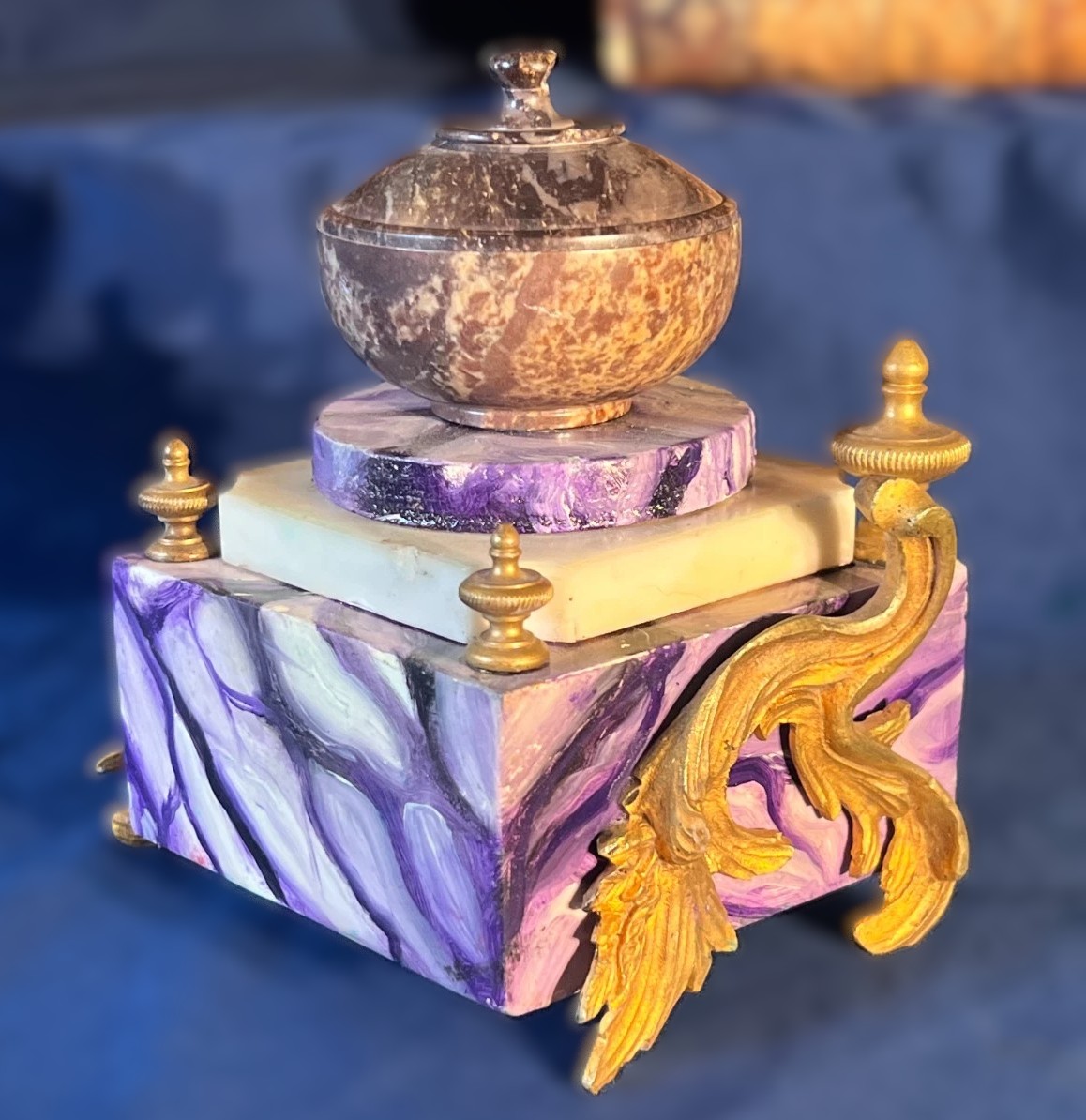
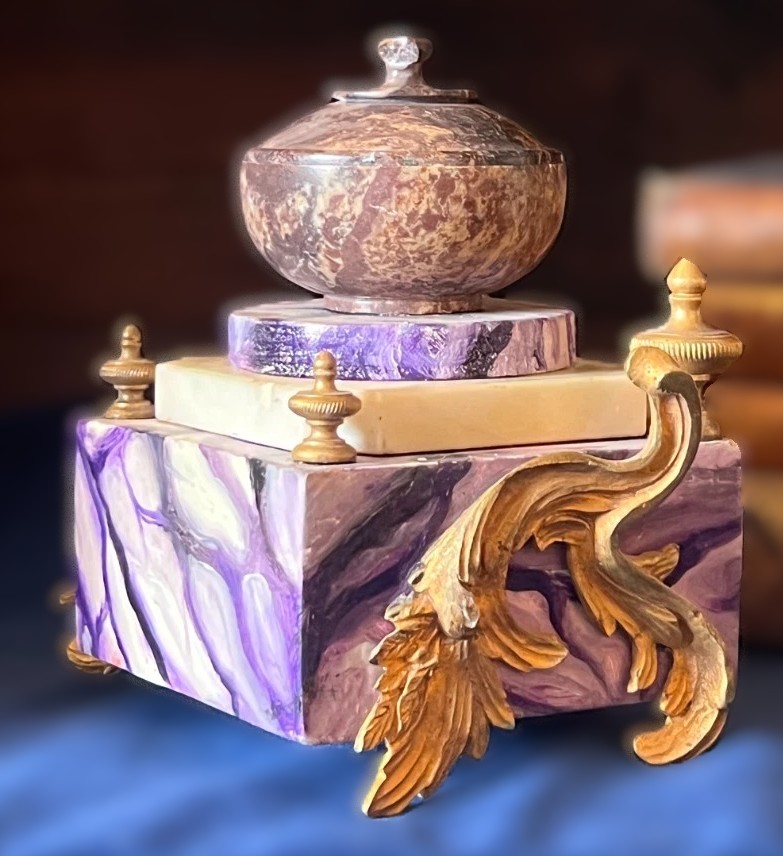
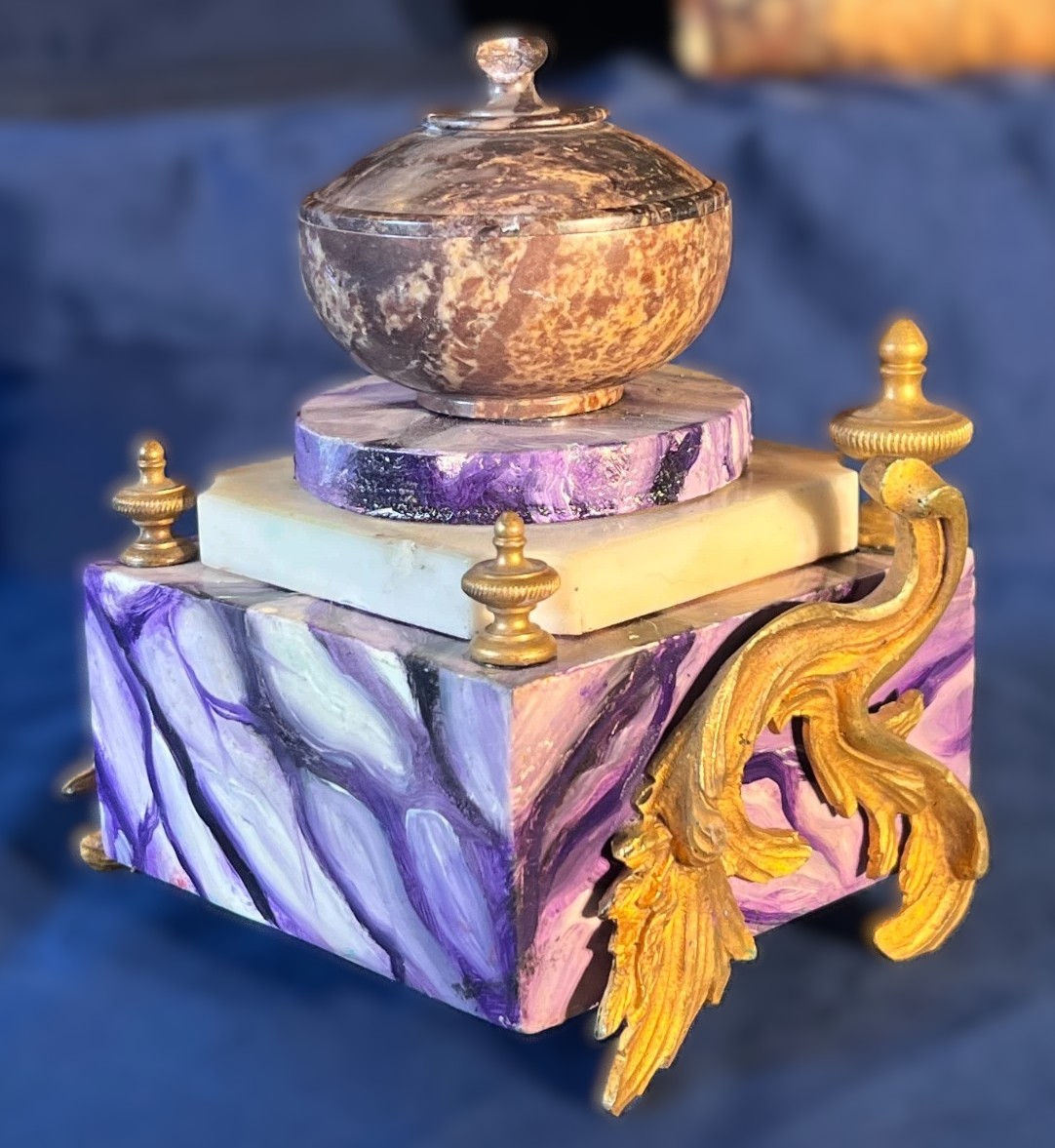
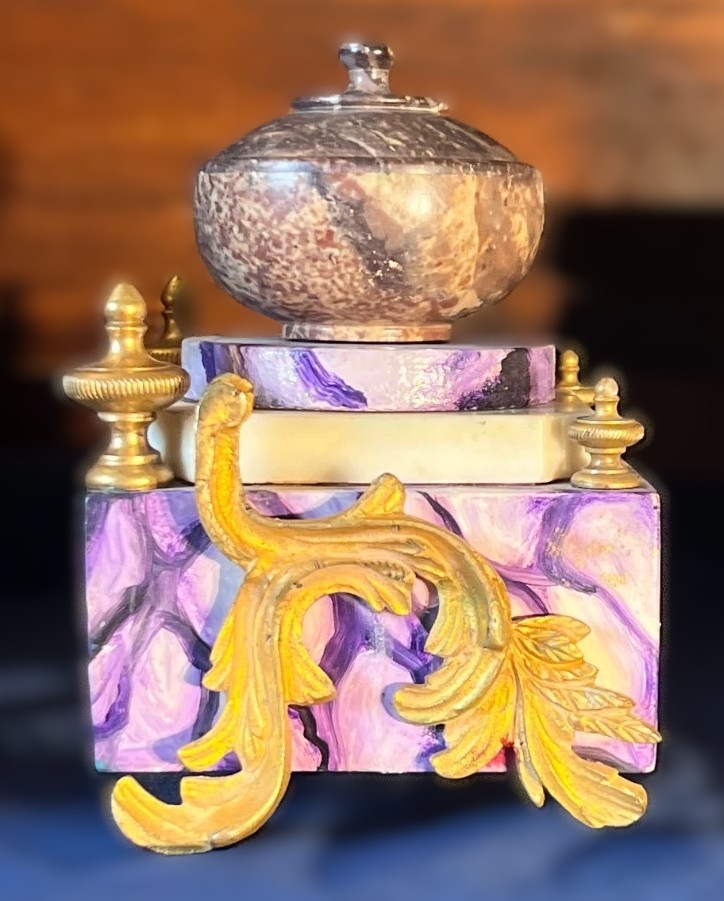
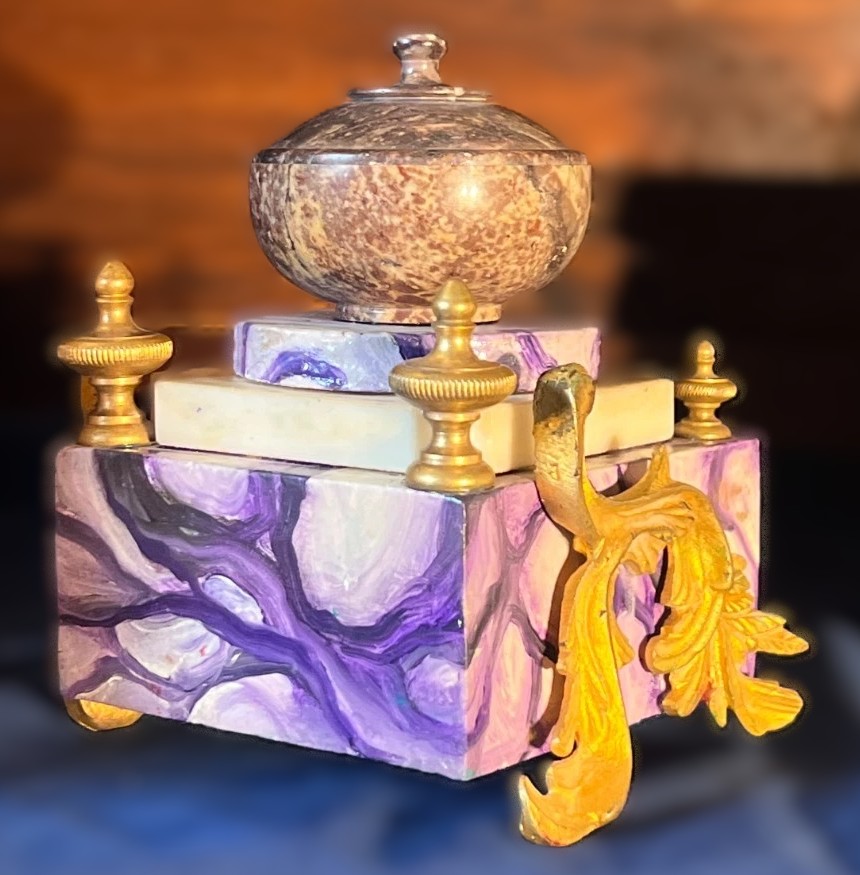
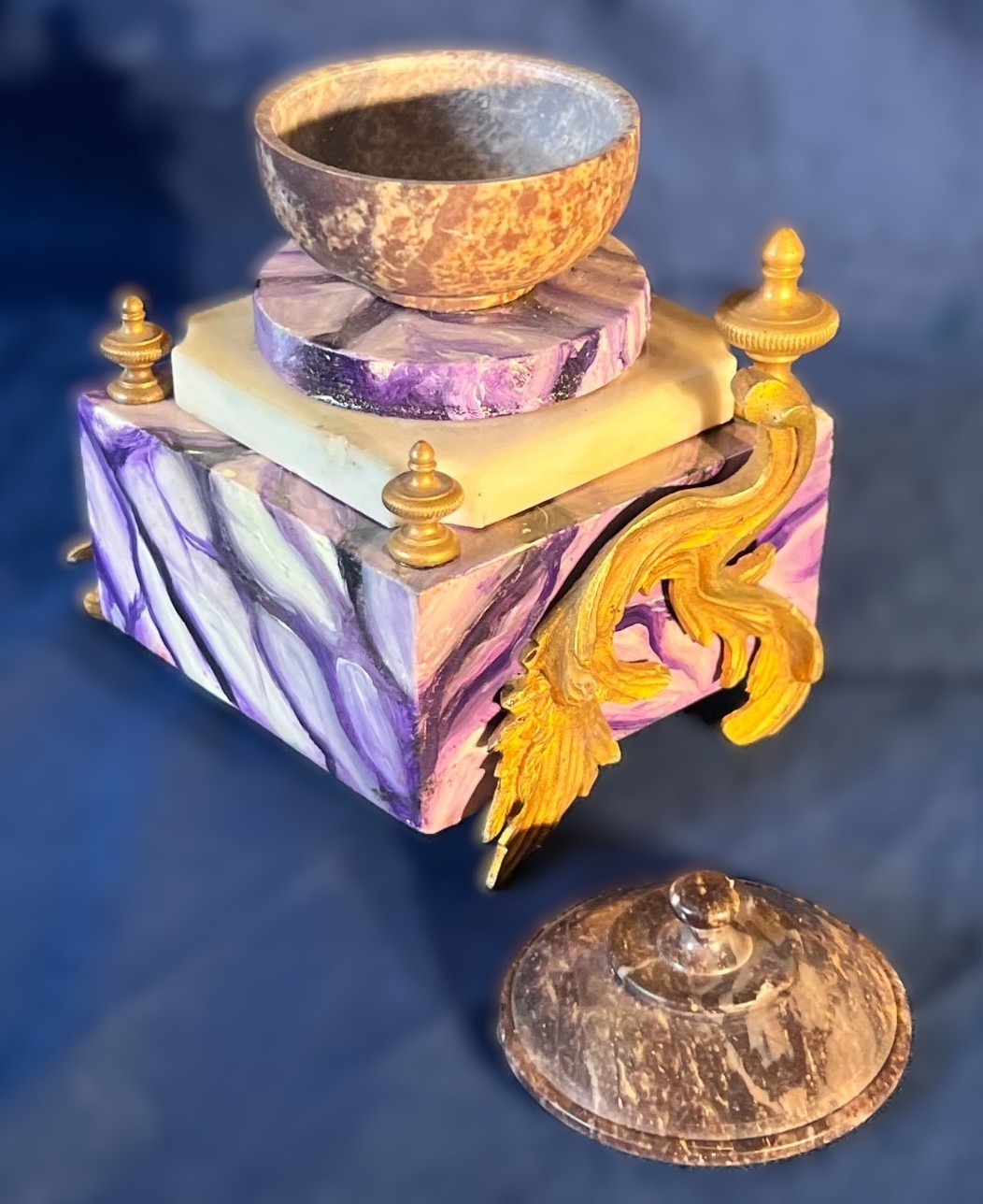
French Napoleon III Faux-Marble and Gilt Bronze Inkstand
| Categories | Stone/Marble/Ivory/Bone/Hoof/Leather |
| Material | Alabaster, Stone |
| Markings | Unmarked |
| Manufacturer | Undetermined |
| Origin | France |
| Date or Era | circa 1860 |
| Measuring | 4 ½” x 3 ¾” x 5 ¼” high |
Description
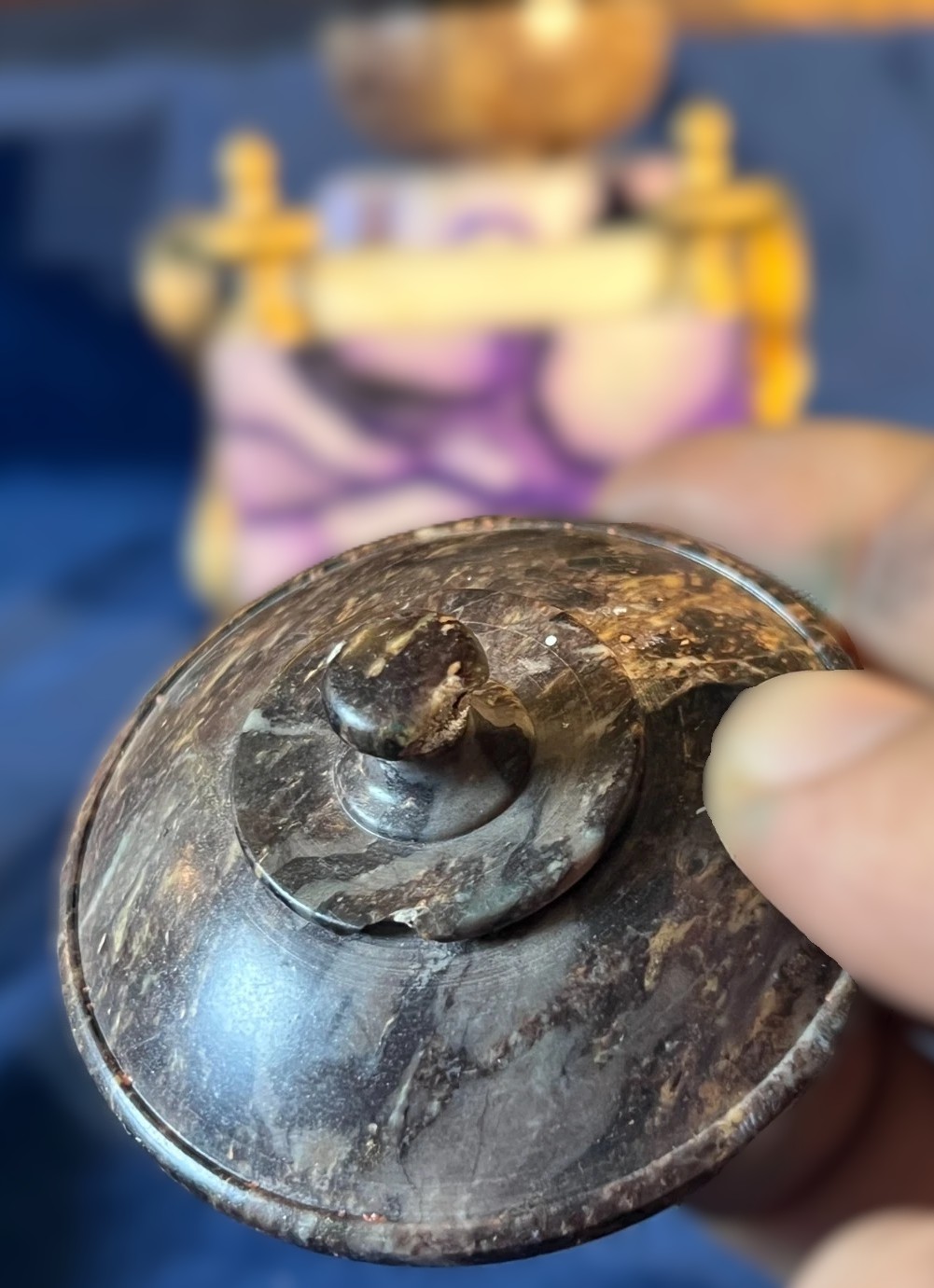
- The Inkwell Basin & Lid: The inkwell features a mottled, earth-toned natural stone basin with a matching stone lid.
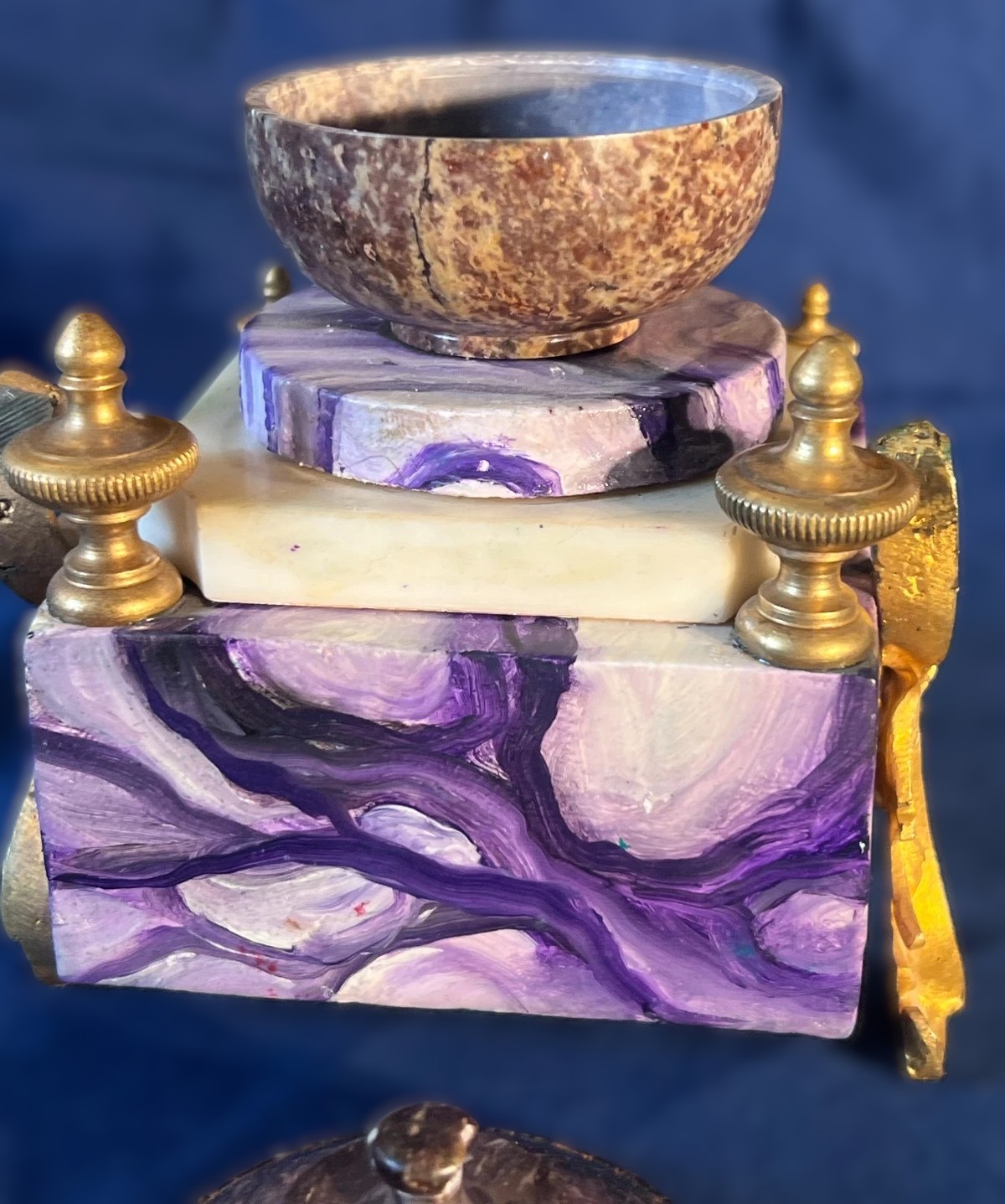
- The Base Structure: The tiering is geometric. The stone inkwell rests on a circular plinth painted in a faux-marble style, which sits on a genuine white/cream alabaster or marble square plaque. This, in turn, rests on a larger rectangular block.
- The Faux-Marble Finish: The most striking feature is the vibrant, hand-painted purple and white faux-marbling (scagliola style or painted wood/gesso) applied to the main lower block and the top circular plinth. The brushwork imitates heavy, stylized veining.
- Gilt Bronze Elements: The piece features Rococo-revival gilt bronze (ormolu) elements, including heavy foliated acanthus scroll feet/side mounts and tiered brass/bronze finials or corner posts flanking the stone plaques.
Age and Style
This piece is a classic example of 19th-century Eclecticism, most likely dating to the Napoleon III period (c. 1850–1870) in France.
During this era, French decorative arts heavily favored reviving historical styles (combining Louis XV Rococo scrolls with Louis XVI classical geometry) and utilizing striking material contrasts. The use of faux-marbling (trompe-l’œil) alongside genuine stone and fine ormolu was popular for luxury desk accessories of the mid-to-late 19th century.
Maker Attribution
Determining a specific maker for 19th-century French desk sets is challenging without a stamped foundry mark, signature, or a patent number inscribed on the metalwork or base.
Luxury items like this were frequently collaborative efforts: a Parisian bronze founder (fondeur) would supply the ormolu mounts, a stonecutter would shape the basin, a decorative painter would finish the faux-marble, and a retail marchand-mercier (merchant of luxury goods) would assemble and sell the final piece in a boutique.
Sold for $250 in May 2026
Content disclaimer. The information posted is the owner’s best knowledge and may not have been vetted by the SOIC. We welcome comments, corrections, and additions, working to make our website information comprehensive and accurate.
Join the Society of Inkwell Collectors (SOIC) – it’s free!
Founded in 1981 as a non-profit organization,
we are documenting inkwells (and accessories).
We’re here to help and inform!