

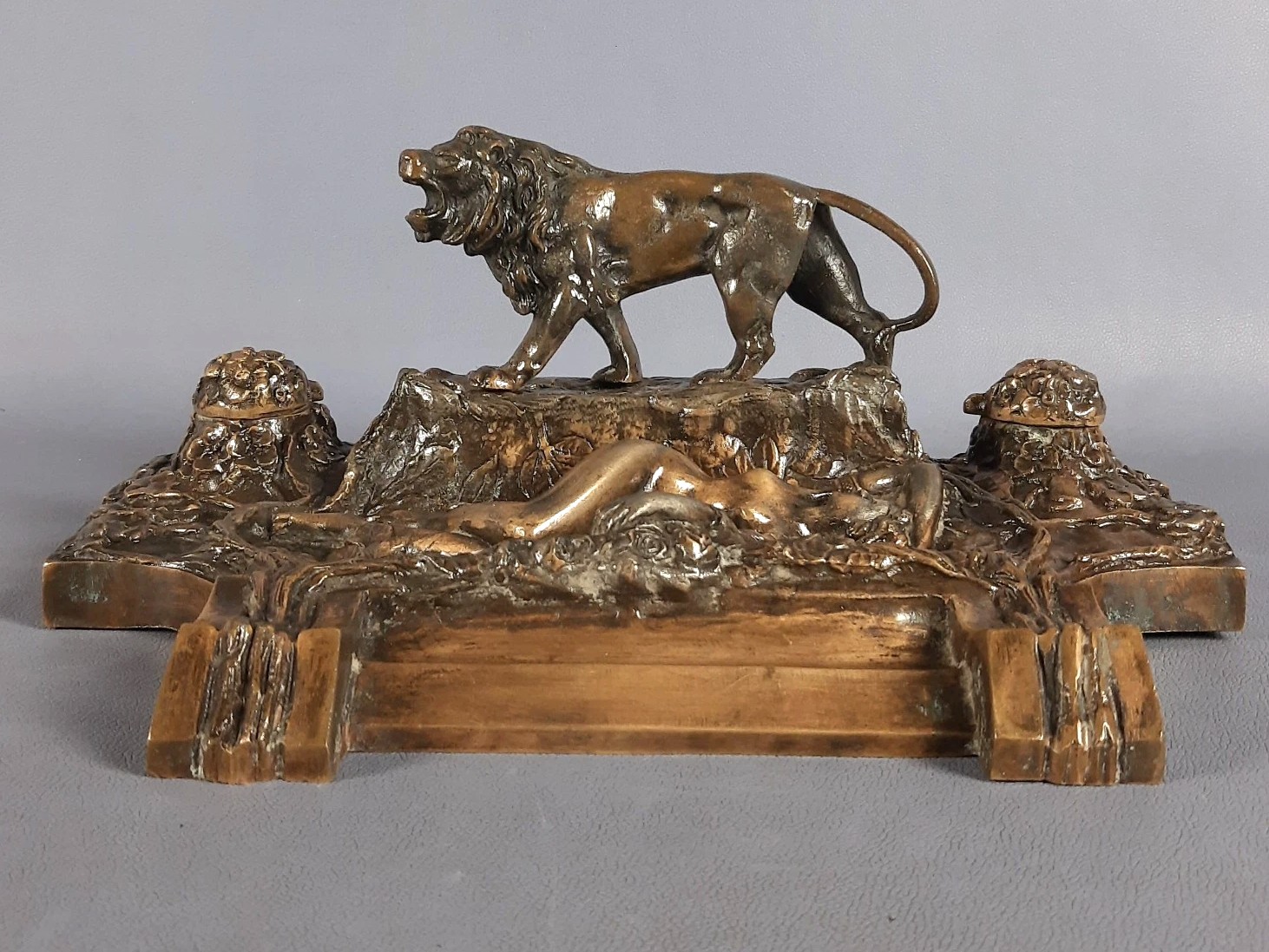




Una and the Lion
| Categories | Art Nouveau, Figural - Animals & Living Creatures, Figural - Mythology; Literature; Religion; Fictional |
| Type | Lion |
| Material | Bronze |
| Markings | Unmarked |
| Manufacturer | Undetermined |
| Origin | Undetermined |
| Date or Era | circa 1900 |
| Measuring | 12 ½” x 8 ⅝” x 5 ⅜” high |
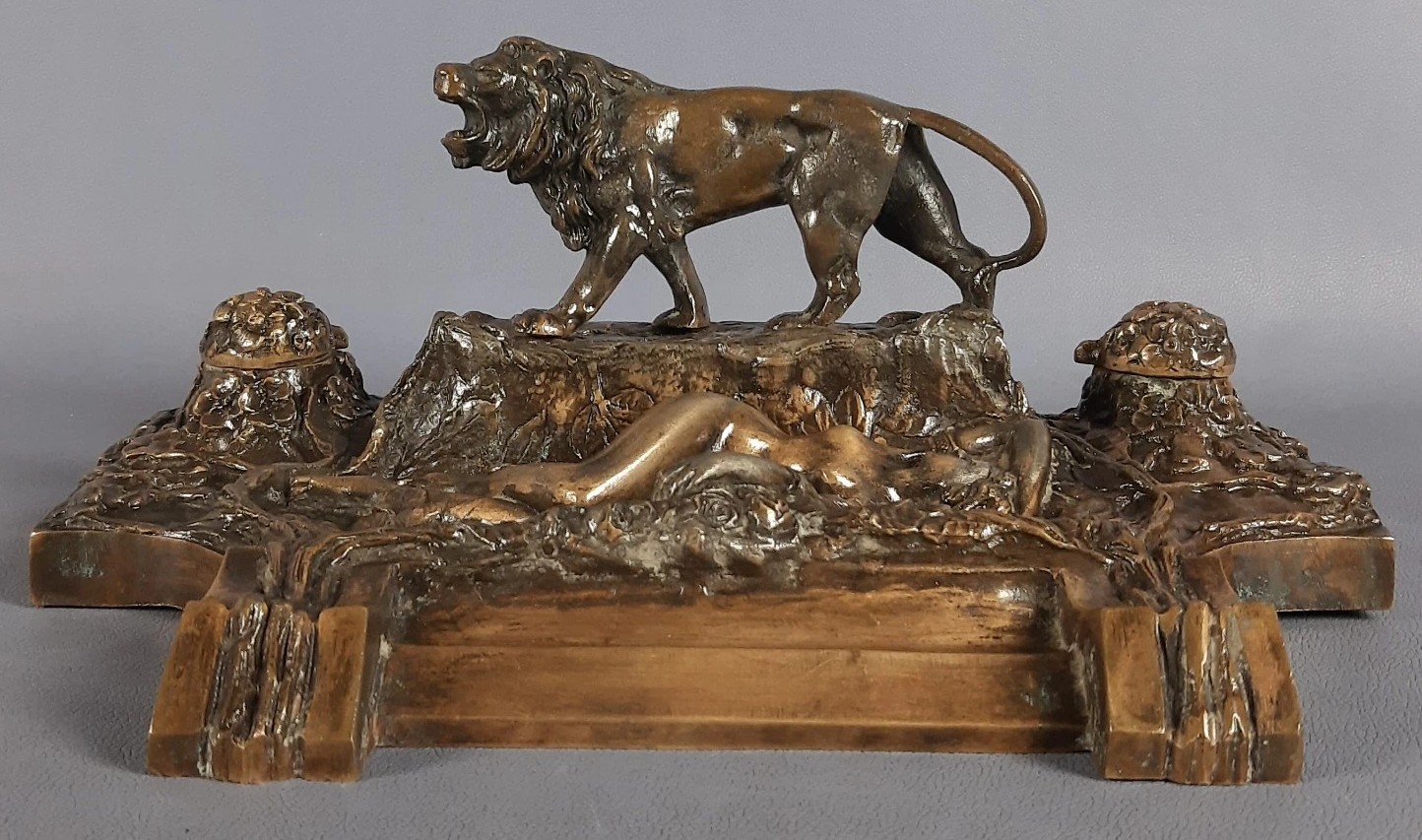
This Art Nouveau-era cast bronze double inkstand was produced during the late 19th or early 20th century, a period when artists often combined mythological themes with the flowing, organic lines of nature.
The Allegorical Theme: Una and the Lion
While the combination of a nude woman and a lion may seem unusual today, it is likely an allegorical representation based on Edmund Spenser’s 16th-century epic poem, The Faerie Queene.
- The Story: The scene depicts Una, a princess representing Truth and Purity. In the poem, Una is traveling alone when she encounters a fierce lion. Instead of attacking her, the lion is so tamed by her innocence and beauty that he becomes her loyal protector.
- Symbolism: In Victorian and Art Nouveau art, this pairing was a popular symbol of the power of beauty and virtue to subdue brute force.
Description
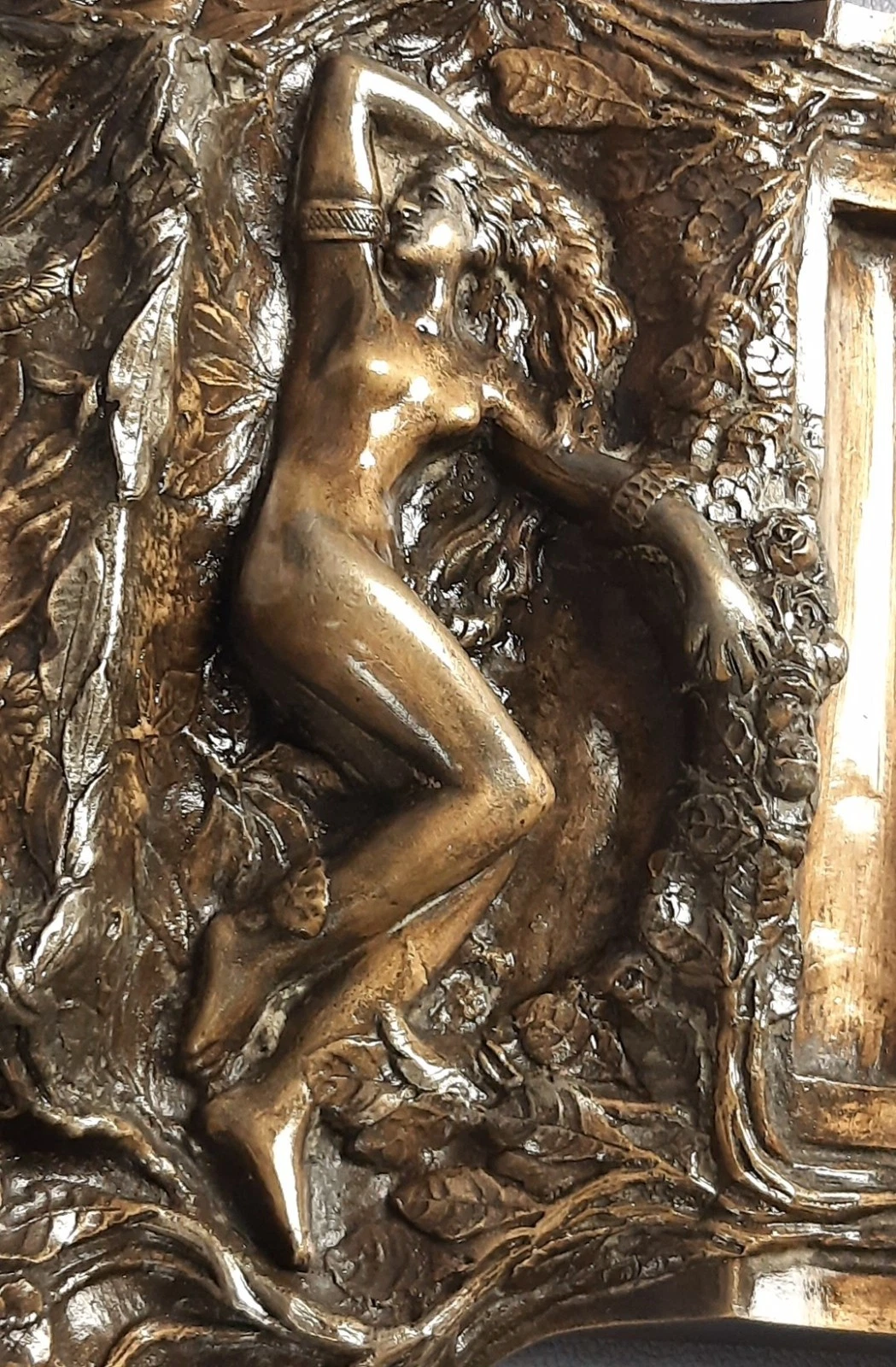
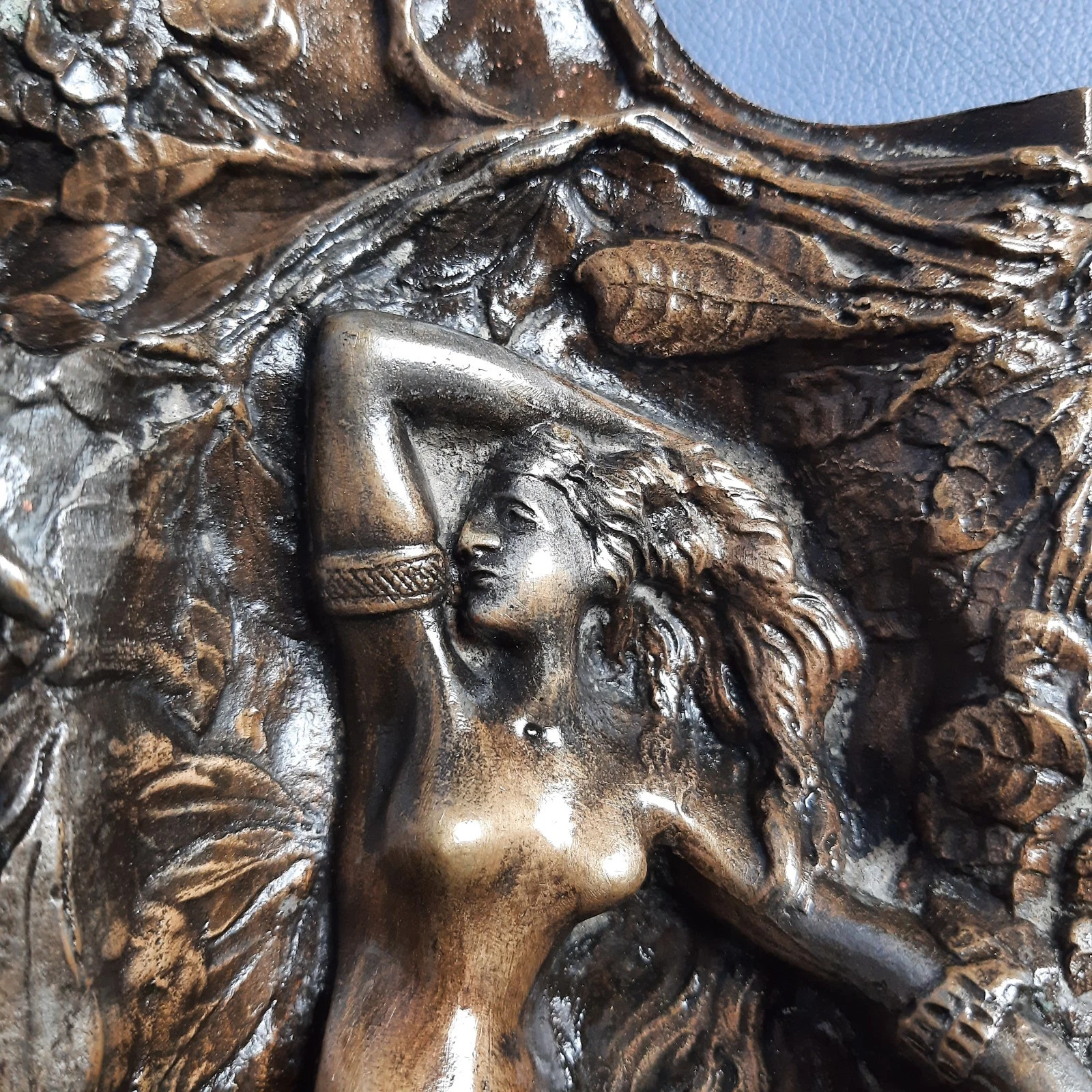
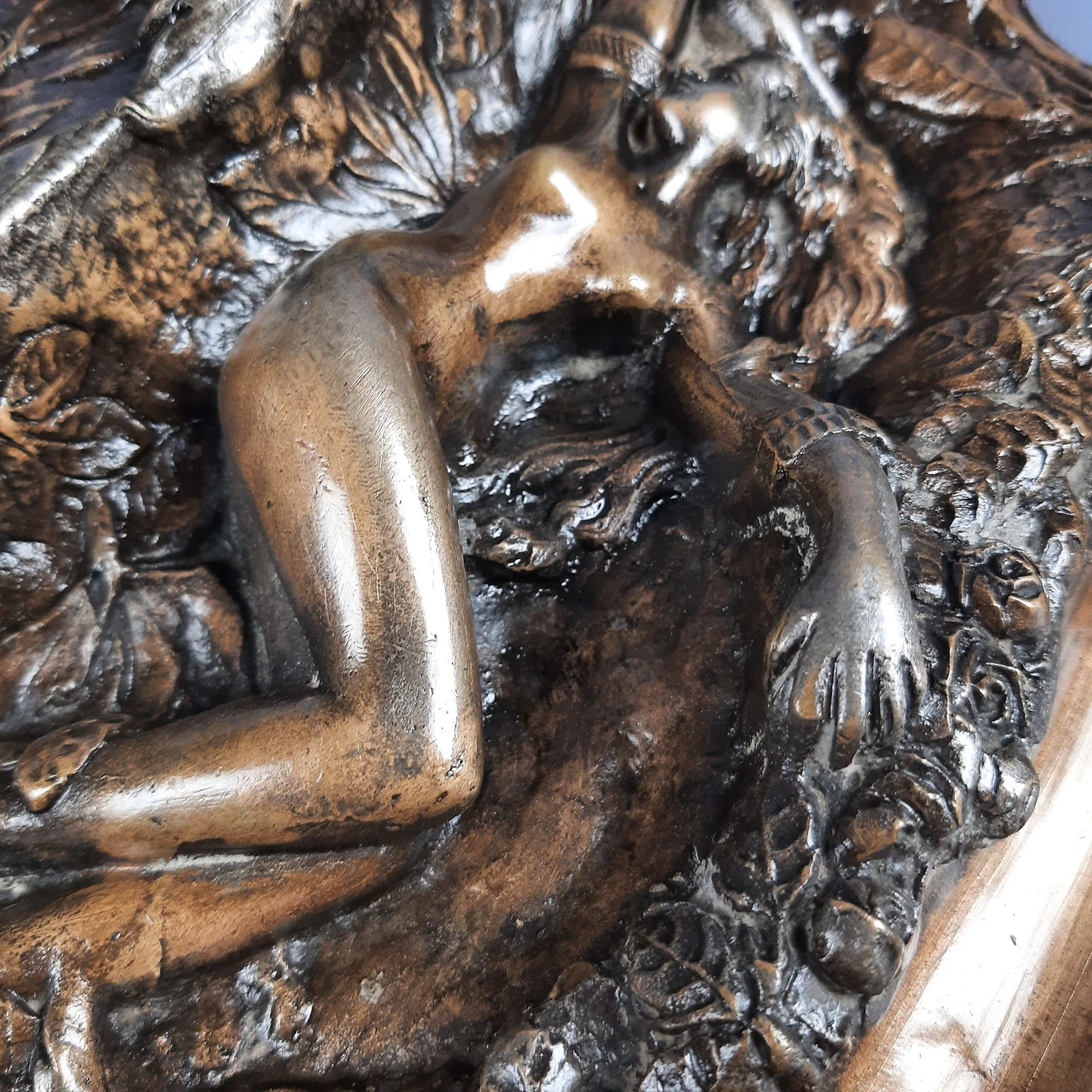
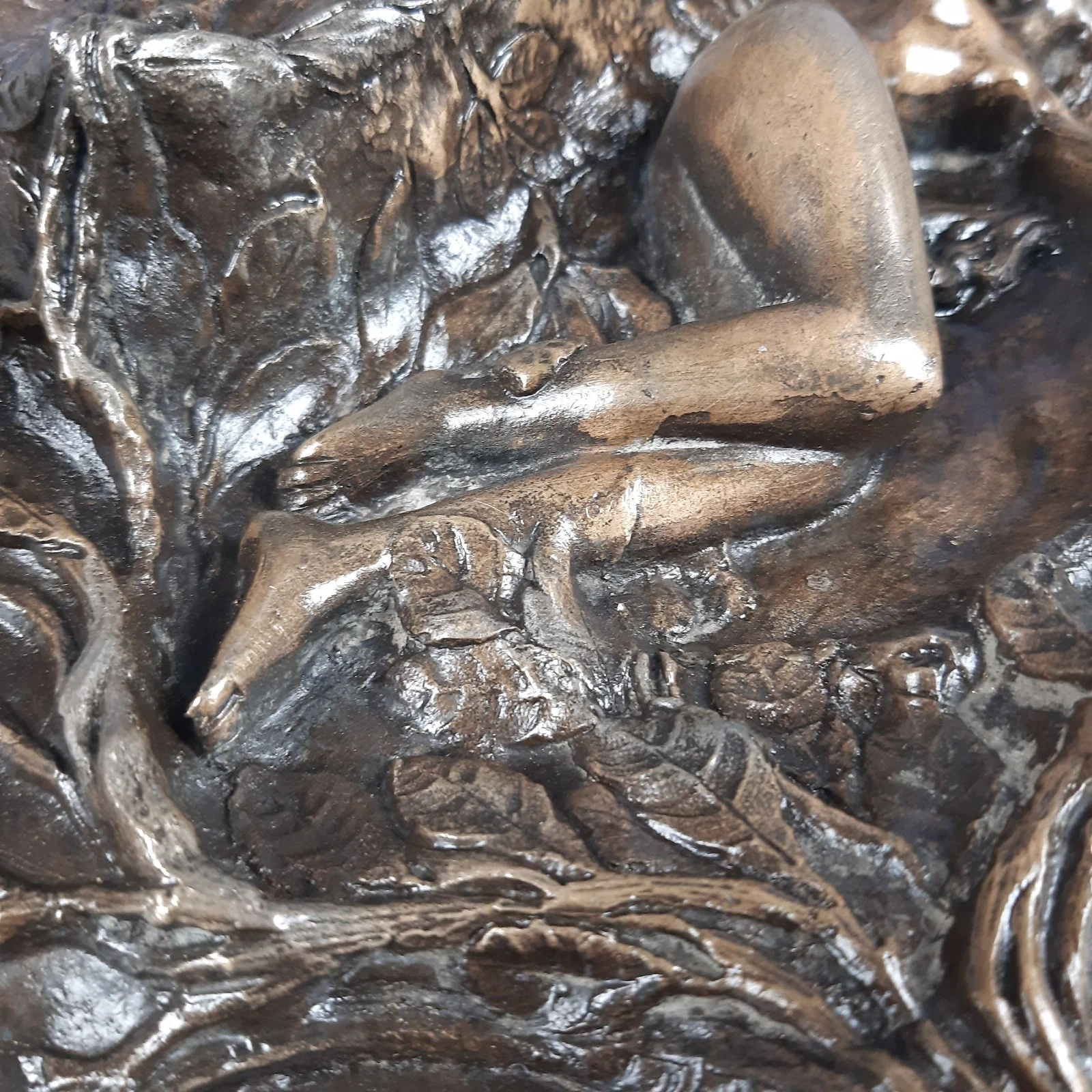
- The Figures: A majestic, maned lion is depicted in a walking, protective stance atop a rocky ledge. Below him, a nude woman lies in a reclining, semi-recumbent pose amidst a dense bed of foliage and flowers.
- The Inkwells: The two ink reservoirs are concealed within the flowered stumps or rock-like mounds positioned at the far left and right of the base. The hinged lids of these stumps are textured to blend seamlessly with the surrounding flora.
- Material and Construction: It is a hollow-cast bronze with a rich, dark brown patina. The underside shows the rough, blackened texture characteristic of a sand-casting process.
Age
- Estimated Date: Circa 1890–1910. The stylized treatment of the woman’s flowing hair and the naturalistic, overgrown look of the base are hallmark characteristics of the Art Nouveau movement.
Sold for $335 in January 2026
Content disclaimer. The information posted is the owner’s best knowledge and may not have been vetted by the SOIC. We welcome comments, corrections, and additions, working to make our website information comprehensive and accurate.
Join the Society of Inkwell Collectors (SOIC) – it’s free!
Founded in 1981 as a non-profit organization,
we are documenting inkwells (and accessories).
We’re here to help and inform!