




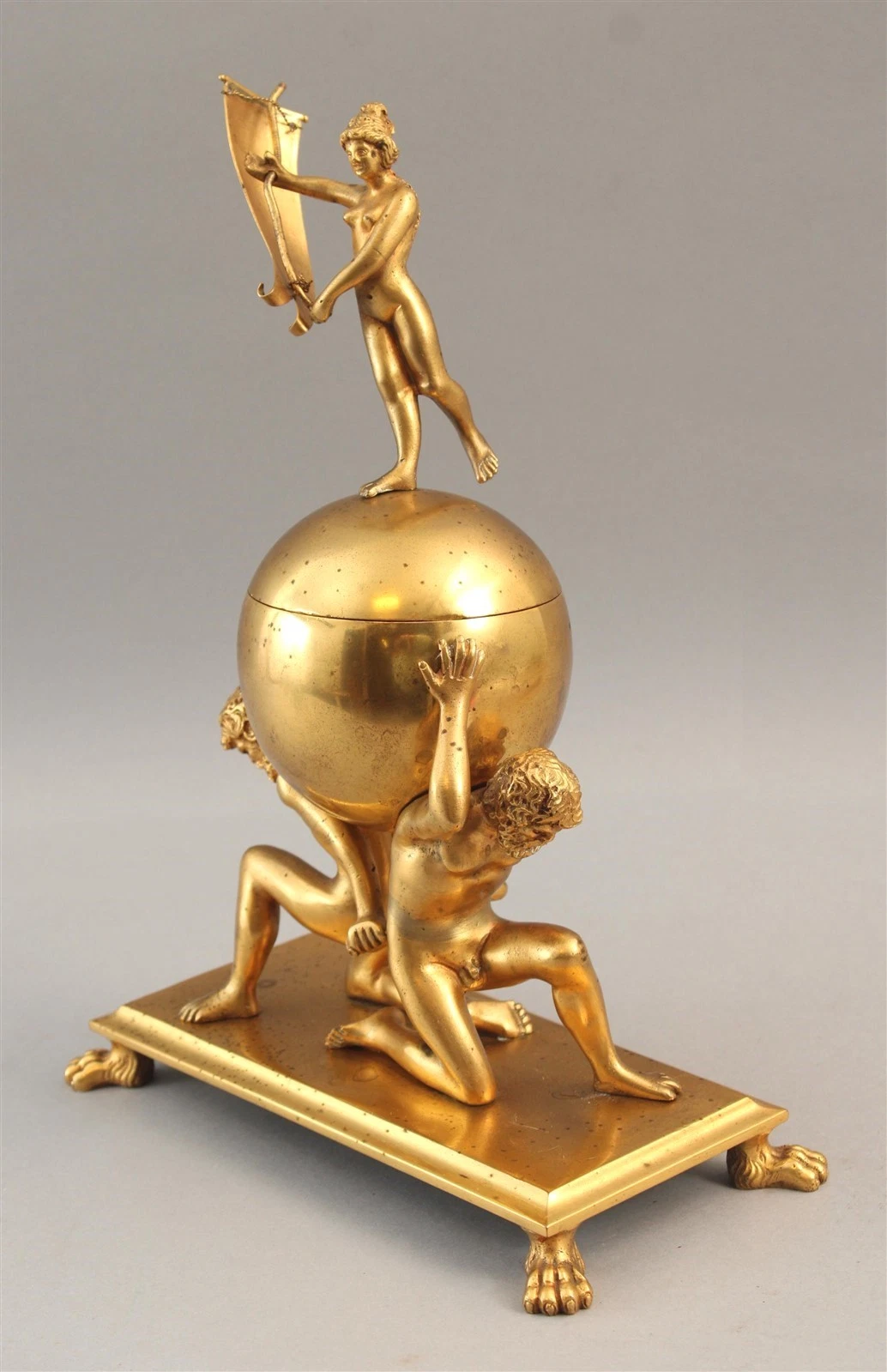
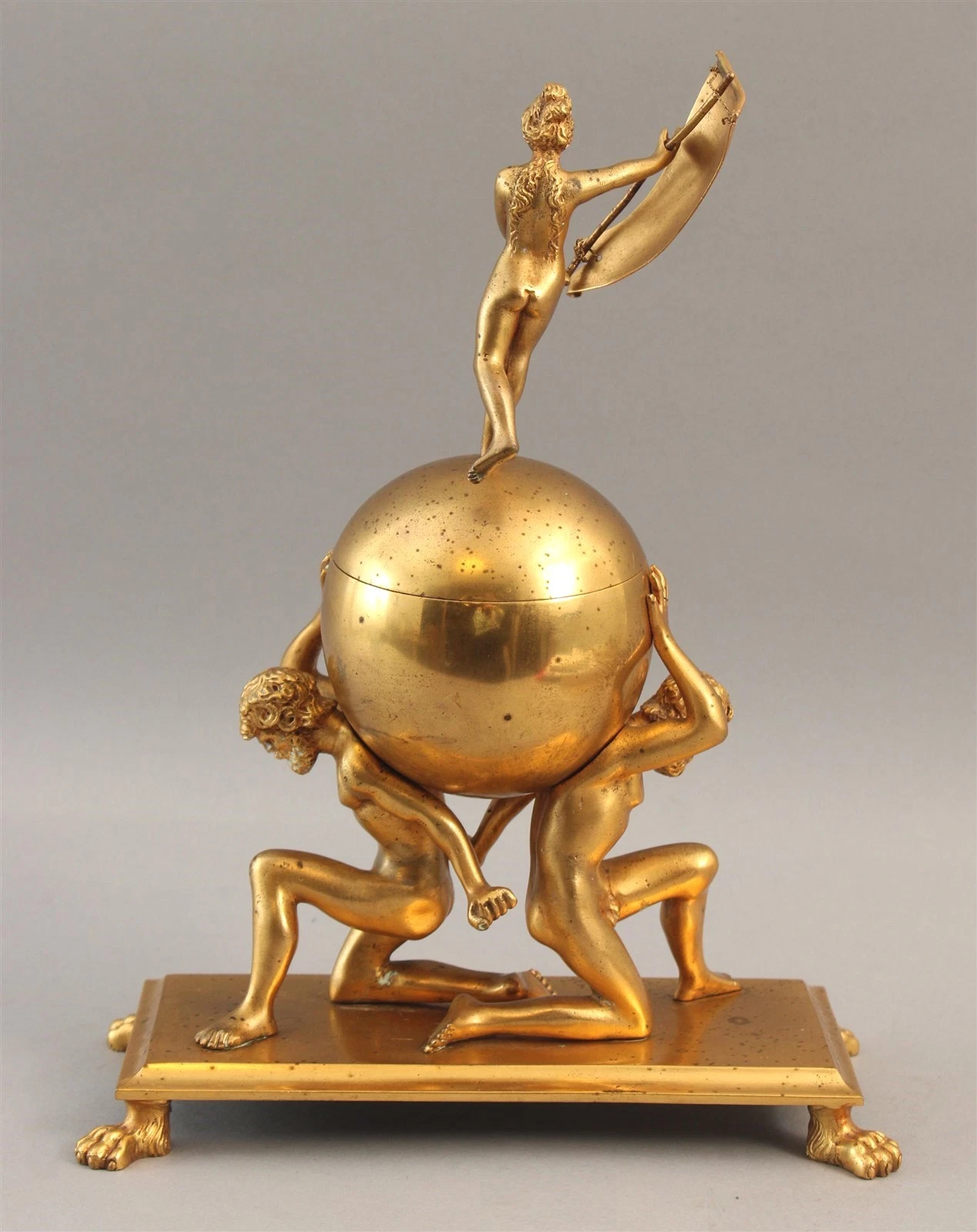




Grand Tour Inkstand Based on the Sculpture “La Fortuna”
| Categories | Figural - Mythology; Literature; Religion; Fictional, Souvenir |
| Type | Grand Tour, Mythology |
| Material | Gilt Bronze |
| Markings | Unmarked |
| Manufacturer | Undetermined |
| Origin | France |
| Date or Era | circa 1880 |
| Measuring | 9 ¾” x 5” x 13 ½” high |
This gilt bronze inkstand is a miniature historical tribute to one of Venice’s most famous landmarks, capturing the essence of 17th-century Baroque allegory.
The Original Sculpture: La Fortuna
The monumental statue that inspired this piece sits atop the Punta della Dogana (the Customs House) in Venice.
- Design and Representation: Sculpted by Bernardo Falconi in 1677, the original group depicts two crouching Atlantes (mythological figures based on Atlas) supporting a golden sphere. Standing atop the sphere is Fortuna, the Roman goddess of luck and fate.
- Symbolism: In the original, Fortuna holds a large textile vane that acts as a weathervane. Her rotation with the wind represents the fickleness of fortune—just as the wind changes direction, so too can a merchant’s luck at sea. The Atlantes represent the physical strength and stability required to support the world (and the commerce of Venice).
- Location: The Punta della Dogana was the point where all ships entering Venice had to stop to pay duties, making the statue a constant reminder to sailors and merchants of the unpredictable nature of trade.
Analysis of the Gilt Bronze Inkstand
This desk-sized version adapts the monumental sculpture into a functional luxury object.
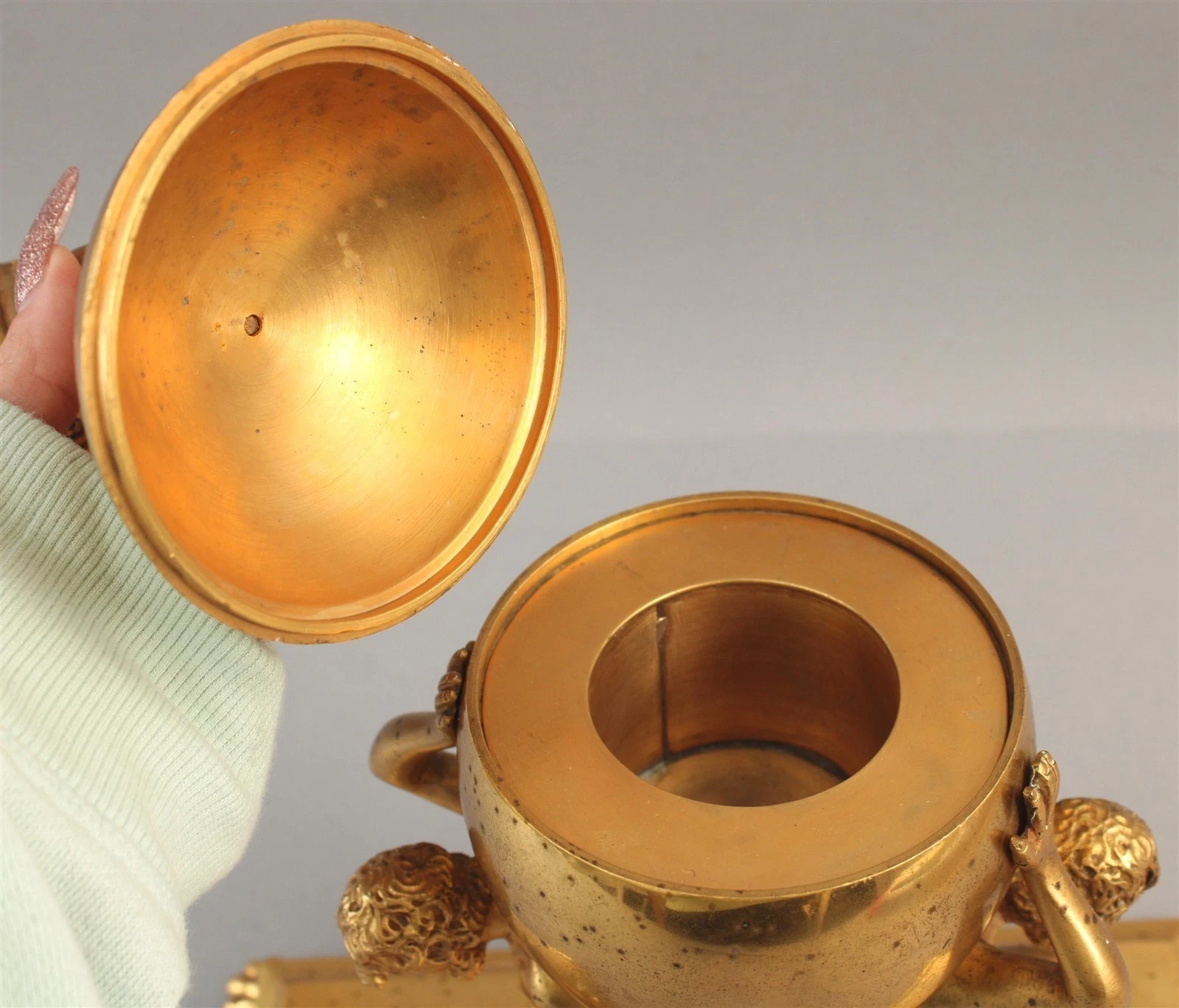
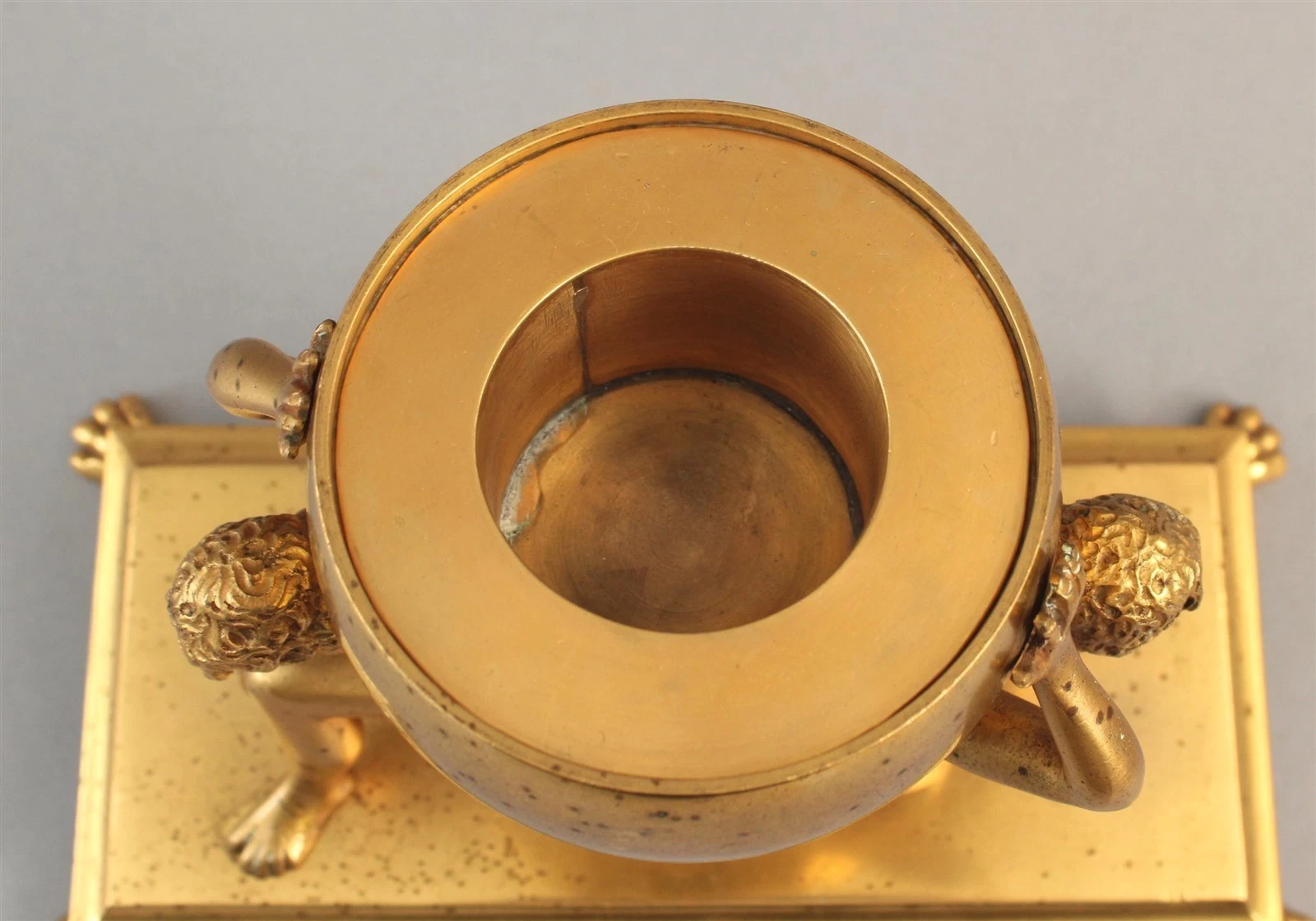
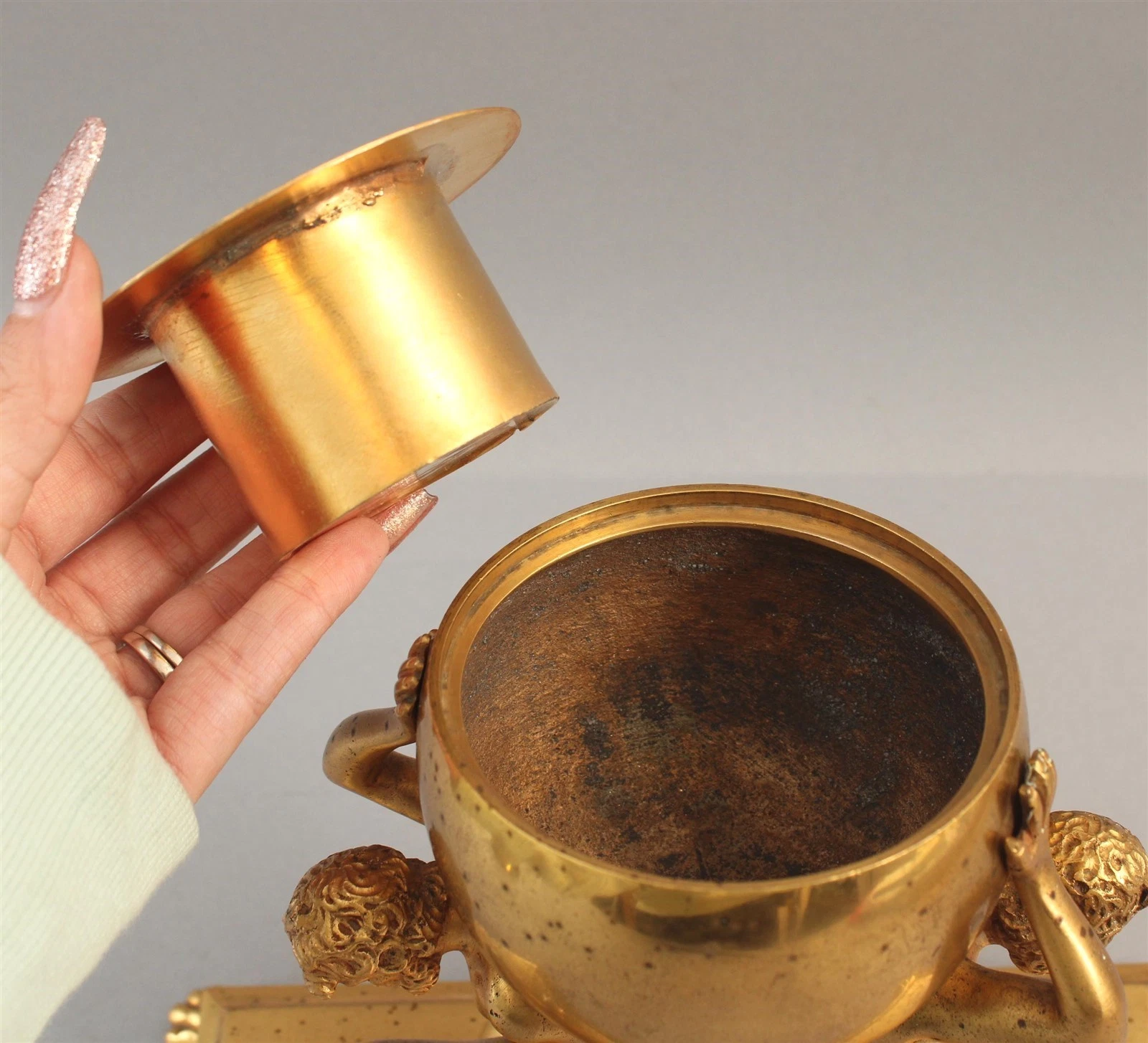
- The Inkwell Mechanism: The large, gilded globe is hinged, lifting to reveal a cylindrical well designed to hold a glass ink pot.
- The Figures: The two Atlas-type figures are depicted as muscular, bearded men with curly hair. They are positioned in dynamic, crouching poses to bear the weight of the “world” (the inkwell).
- Fortuna: The figure at the top is a simplified version of the goddess, shown nude and holding a stylized, sail-like vane.
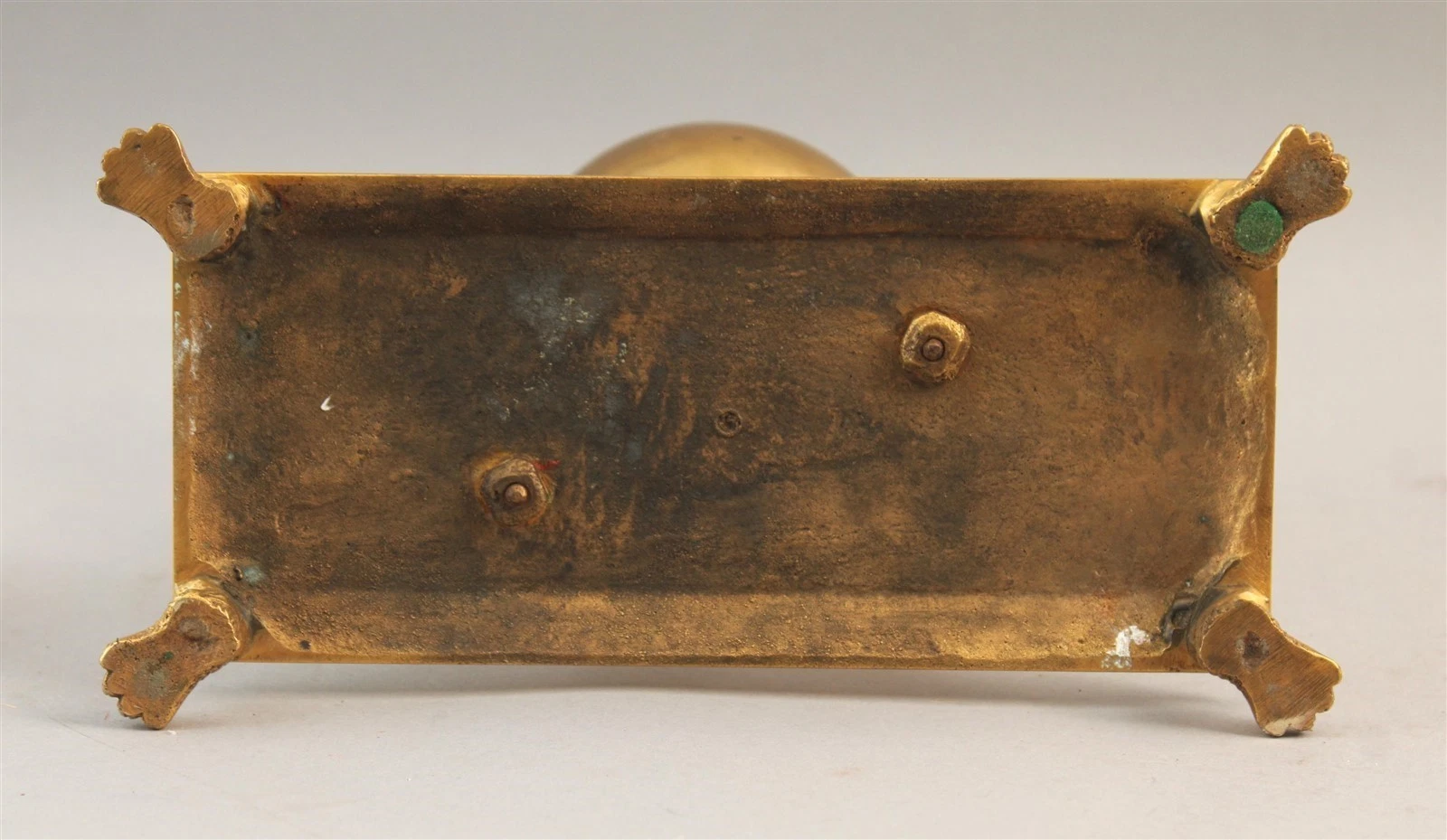
- Construction: The group is mounted on a rectangular plinth with lion-paw feet. The underside shows traditional threaded posts and nuts, indicating the figures and globe were cast separately and bolted to the base.
Origin and Age
Based on the casting style, the use of gilt bronze (ormolu), and the assembly method, here is the likely background:
| Detail | Description |
| Probable Origin | France (likely Paris). While the subject is Italian, high-quality gilt bronze “Grand Tour” souvenirs of this type were a specialty of 19th-century French foundries for the international market. |
| Estimated Era | Mid-to-late 19th Century (c. 1860–1890). This was the height of the “Grand Tour” era when wealthy travelers commissioned high-quality bronze replicas of famous European monuments. |
| Material | Gilt Bronze (Ormolu). The warm, gold-toned finish is achieved through mercury gilding or electro-gilding over a bronze base. |
The “Atlas” Figures
In classical mythology, Atlas was a Titan condemned to hold up the celestial heavens. In architecture and decorative arts, these supporting male figures are called Atlantes (the male version of Caryatids). Their presence here signifies the “weight” and importance of the world’s commerce that passed through Venice’s customs house.
Sold for $764 in January 2026
Content disclaimer. The information posted is the owner’s best knowledge and may not have been vetted by the SOIC. We welcome comments, corrections, and additions, working to make our website information comprehensive and accurate.
Join the Society of Inkwell Collectors (SOIC) – it’s free!
Founded in 1981 as a non-profit organization,
we are documenting inkwells (and accessories).
We’re here to help and inform!