

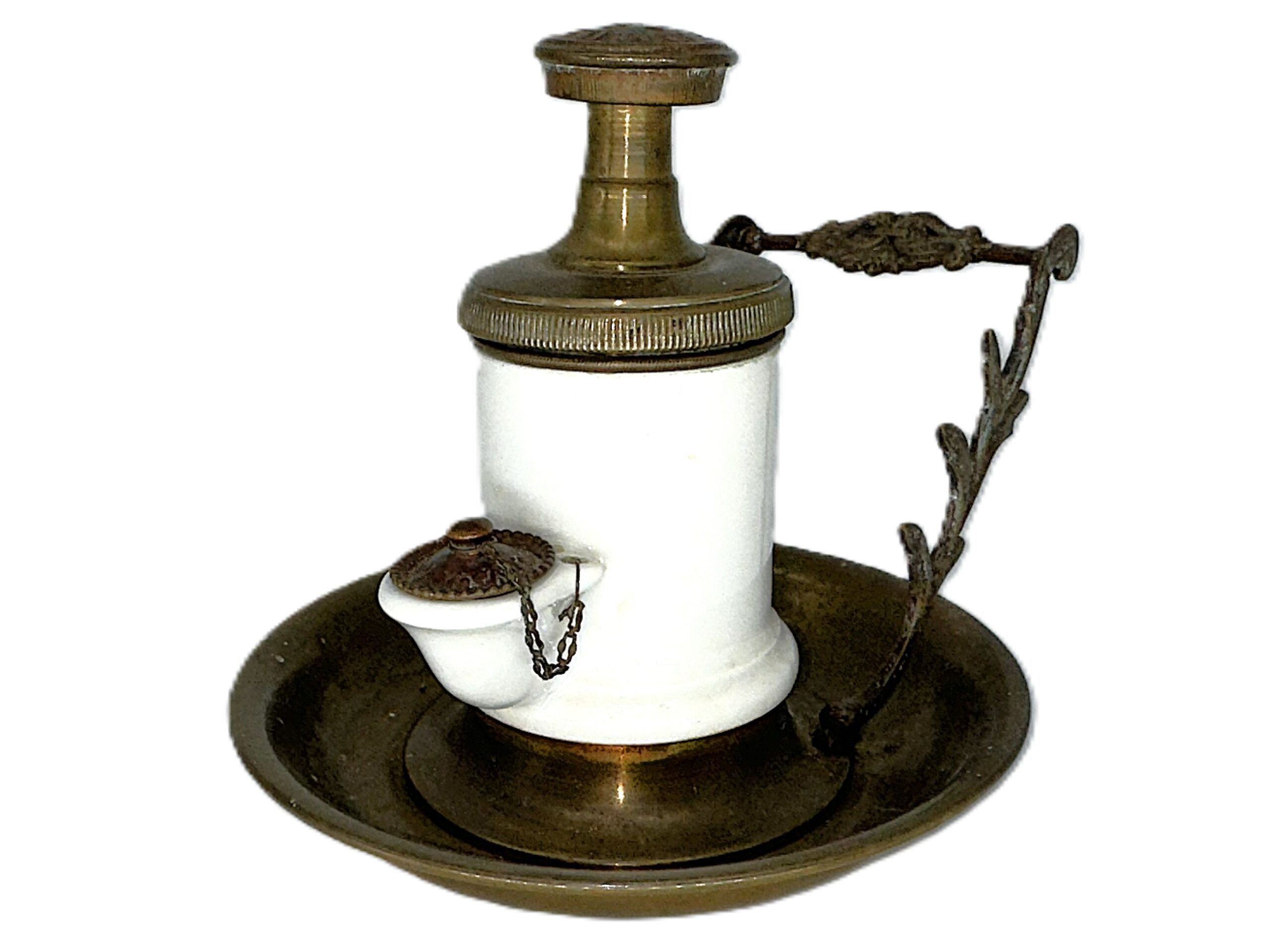

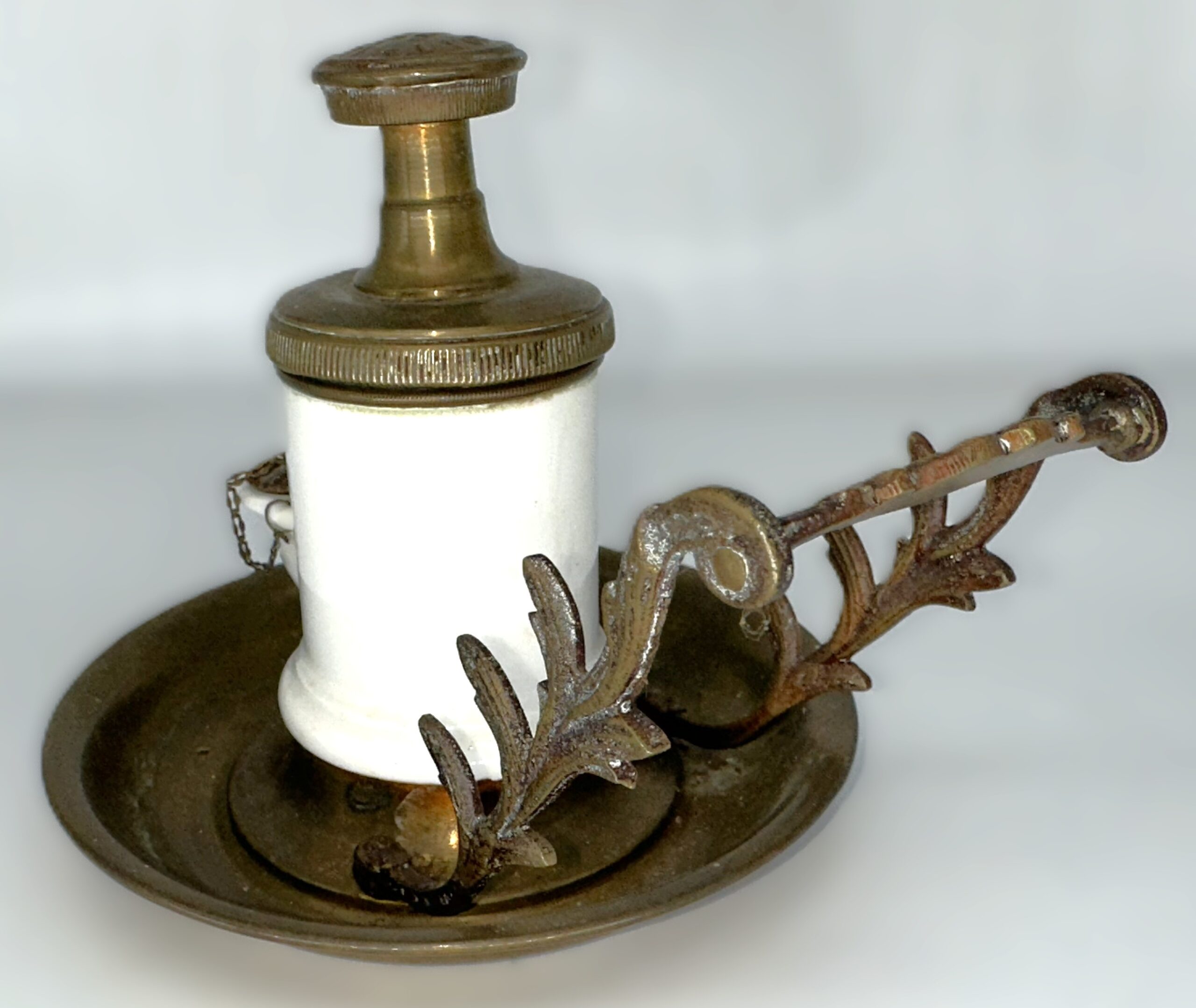
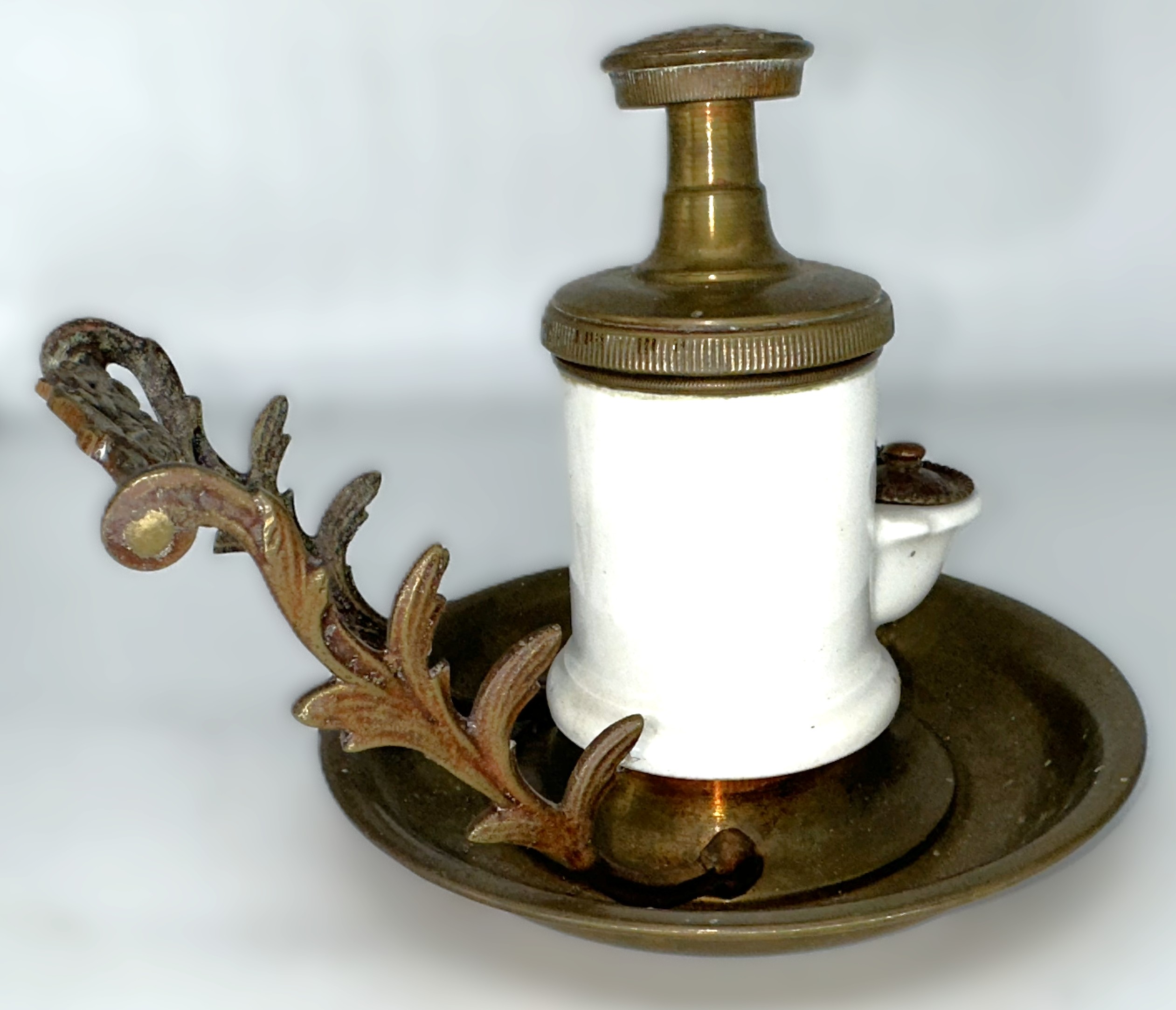
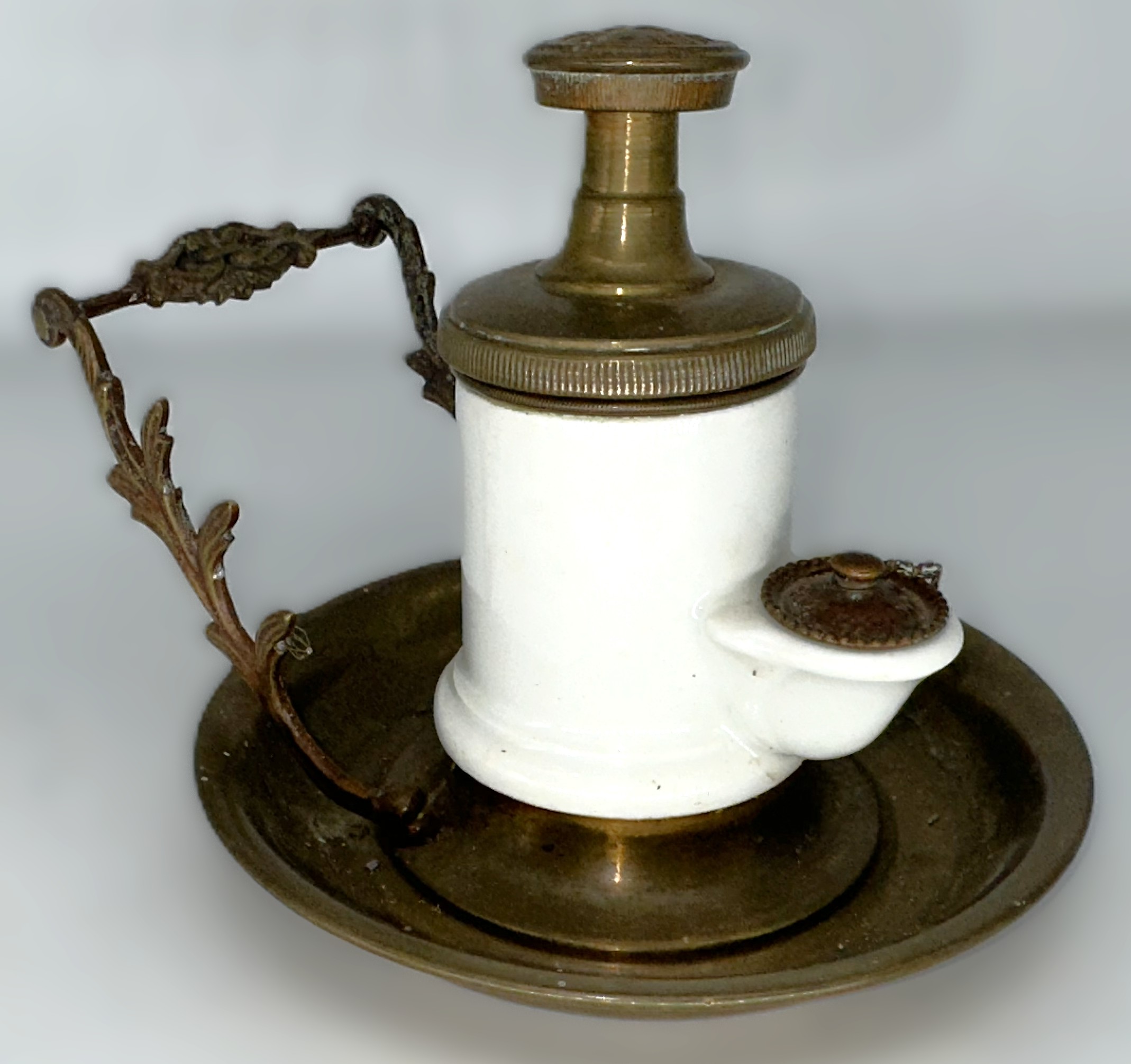
Porcelain and Brass Pump Inkstand
| Categories | Mechanical - Pump / Siphon |
| Type | Pump |
| Material | Brass, Porcelain |
| Markings | See Narrative |
| Origin | France |
| Date or Era | circa 1870 |
| Measuring | 5 ⅜” diameter; 5” high |
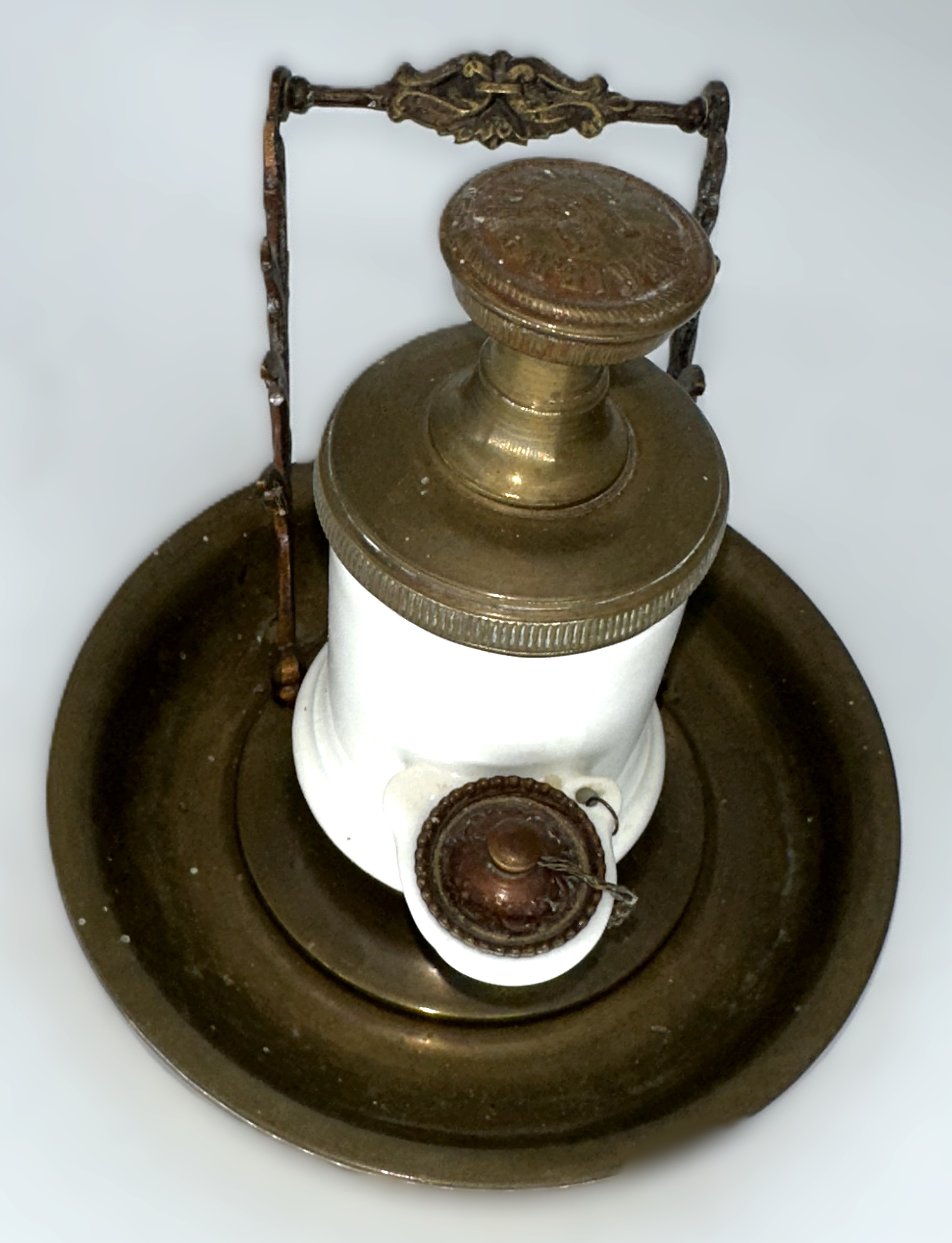
This white porcelain and brass inkstand, a classic example of a manual displacement pump inkwell, was manufactured in Paris during the late 19th century.
Description and Components
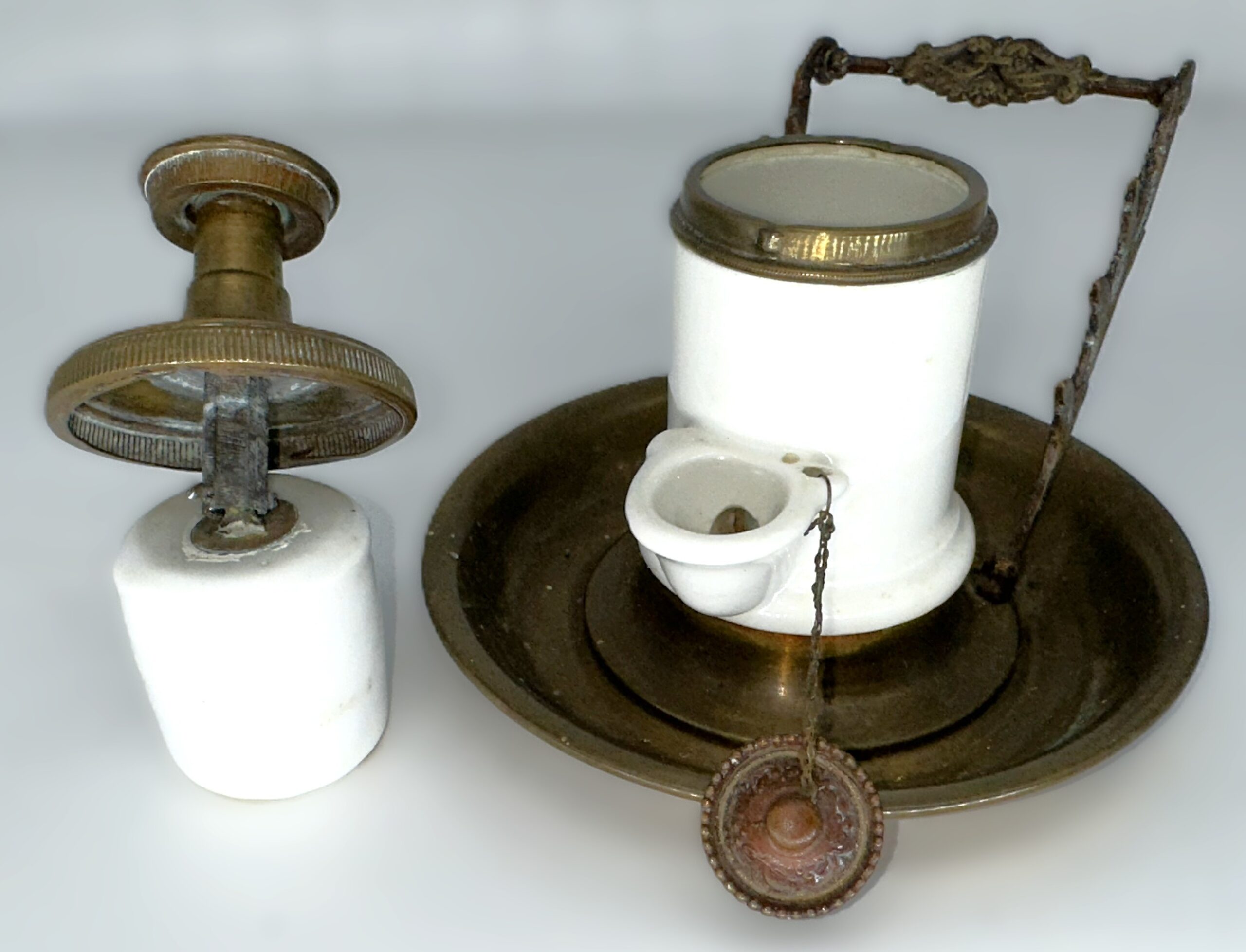
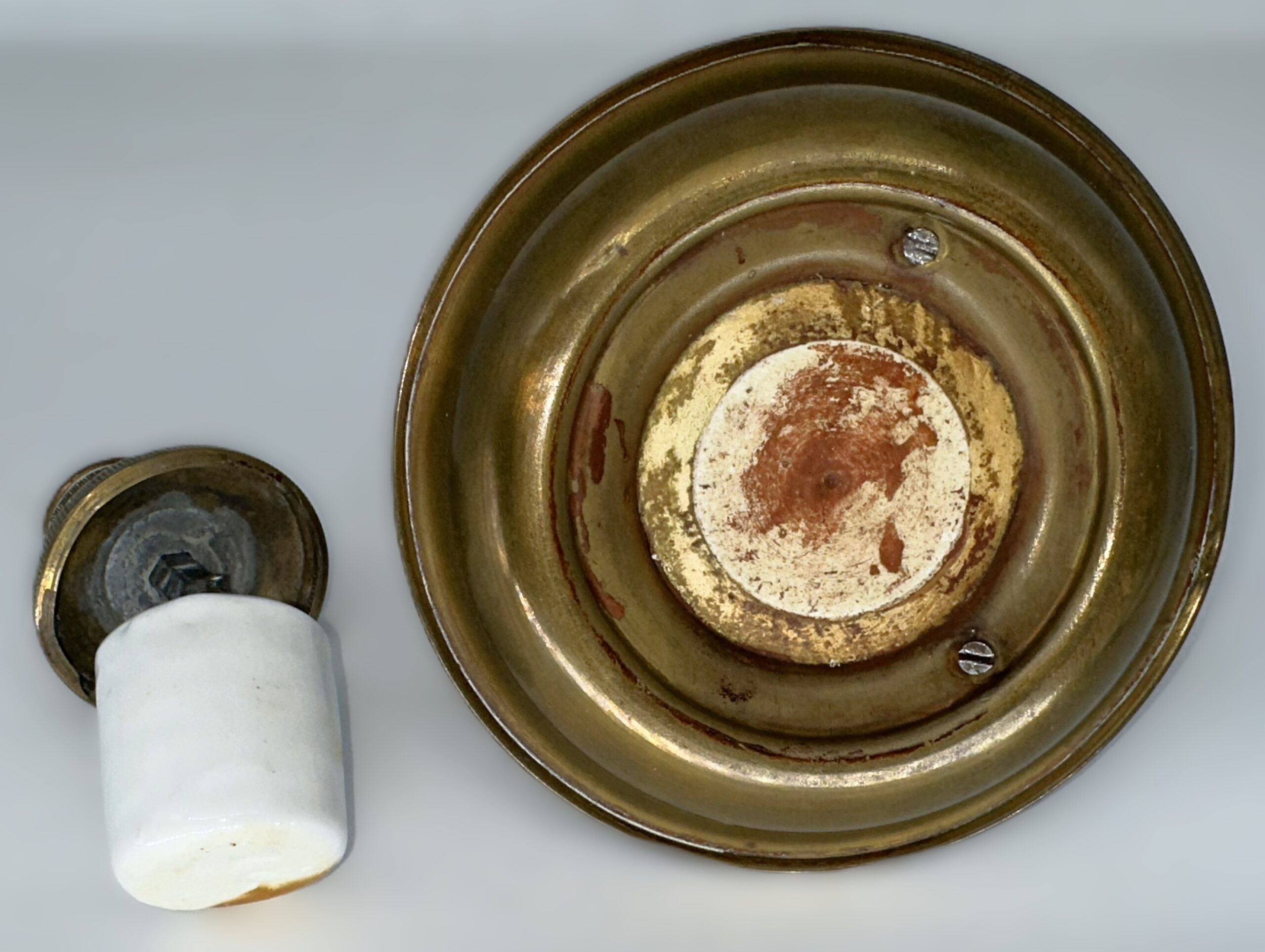
- The Porcelain Reservoir: The central unit is a cylindrical, white porcelain reservoir with a flared base, designed to hold a large supply of liquid ink.
- The Pump Mechanism: A solid porcelain plunger is attached to a threaded brass rod, which is connected to the turn-knob handle at the top.
- The Dipping Font: Projecting from the front of the porcelain body is a small, integrated font. It is protected by a decorative brass lid, which is attached to the body by a safety chain.
- The Brass Saucer Base: The entire assembly is mounted within a shallow brass saucer.
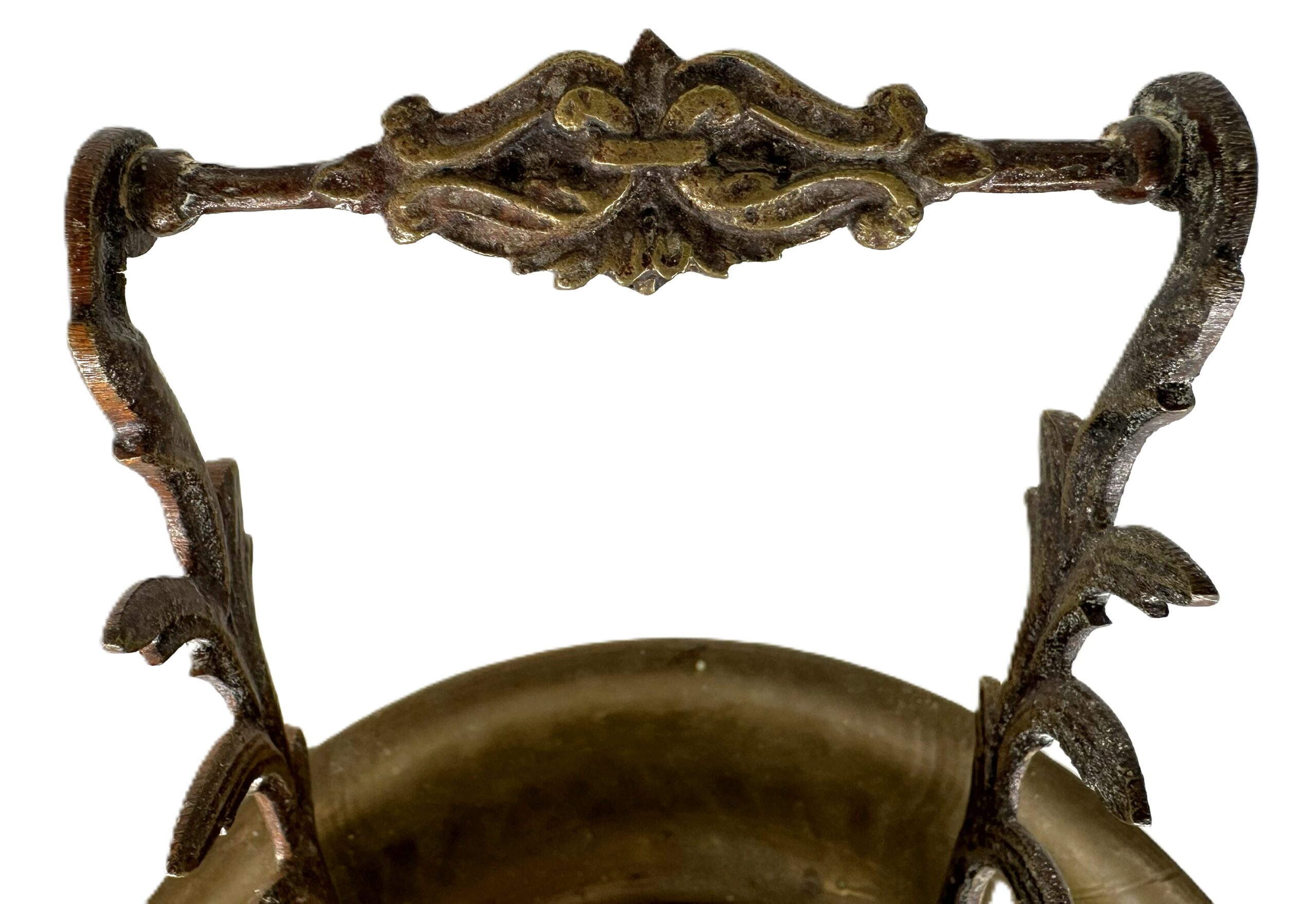
- The Pen Rack: An ornate brass rack is attached to the back of the saucer. It features upward-curving, leaf-shaped arms designed to hold multiple pens horizontally above the inkwell.
How the Pump Works
This inkstand operates using a positive displacement system:
- Lowering the Plunger: When the user turns the top brass knob, the internal porcelain plunger is forced downward into the main ink chamber.
- Ink Flow: As the plunger descends, it displaces the ink, forcing it to rise through an internal channel and fills the small front font.
- Regulation: This allows the writer to maintain a shallow, fresh supply of ink for dipping while keeping the bulk of the reservoir airtight and protected from evaporation or dust.
Manufacturer and Date
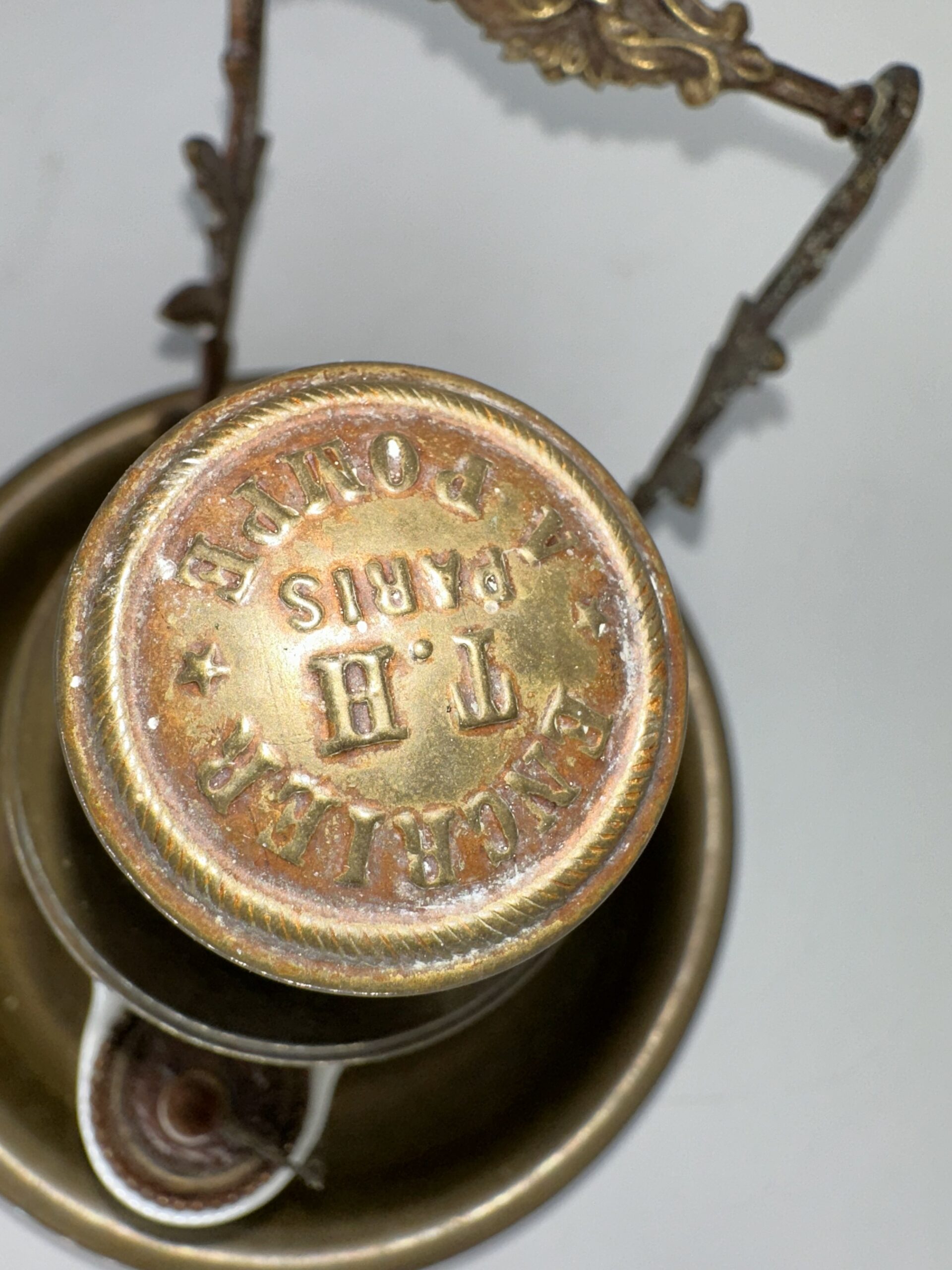
The brass turn-knob handle is clearly impressed with the mark: “ENCRIER – T.H. – PARIS – A POMPE”.
- Manufacturer: The piece was manufactured in France, specifically marked from Paris. The initials “T.H.” point to a French manufacturer specializing in patented mechanical deskware. During the mid-to-late 19th century, several Parisian inventors patented variations of the encrier à pompe—most notably makers like Thomas Haron (a prolific French maker of mechanical pump inkwells who held patents for these exact style displacement systems). The porcelain itself is a fine hard-paste porcelain, heavily decorated in the style of Vieux Paris (Old Paris) porcelain, which frequently utilized vibrant pink borders, extensive gilding, and bright botanical motifs.
- Age: Based on the patented “A Pompe” (Pump) mechanism and the neoclassical style of the brass pen rack, this piece dates to the late 19th century (circa 1860 – 1880).
Here is a reconstructed Parisian catalog-style description for this T.H. Paris Pump Inkstand:
Catalog Listing: L’Encrier à Pompe “T.H. Paris”
Manufacturer: (T.H.), Paris/Limoges
Mechanical System: Boquet Patent “A Pompe” (Piston Displacement)
Period: Third Republic / Belle Époque (Circa 1885–1895)
Retailer (Typical): Maison Alpha or Benn-Lévy, Paris
Detailed Technical Description
This “Encrier à Pompe” (Pump Inkwell) represents the pinnacle of 19th-century Parisian office novelties, designed to provide the writer with a constant, fresh supply of ink through mechanical precision.
- The Porcelain Body: Crafted from premium white “hard-paste” porcelain, the cylindrical reservoir is designed for durability and resistance to the acidic inks of the period. In this model, the body is mounted within a saucer base with a flared rim to catch incidental drips.
- The Mechanism: The brass turn-knob at the top is clearly impressed with the mark: “ENCRIER – T.H. – PARIS – A POMPE”.
- The Plunger: Inside the porcelain cylinder sits a solid, heavy porcelain piston (or plunger).
- The Action: Turning the threaded brass knob forces the plunger downward. This creates positive displacement, forcing the ink to rise through a small internal siphon tube and into the flower-bud-shaped font at the front.
- The Pen Rack: This model is fitted with an ornate neoclassical pen rack, featuring two leaf-shaped arms designed to cradle multiple dip pens horizontally.
To see how a pump inkwell works, check out this video:
Estimated Value: $150
Content disclaimer. The information posted is the owner’s best knowledge and may not have been vetted by the SOIC. We welcome comments, corrections, and additions, working to make our website information comprehensive and accurate.
Join the Society of Inkwell Collectors (SOIC) – it’s free!
Founded in 1981 as a non-profit organization,
we are documenting inkwells (and accessories).
We’re here to help and inform!