





Boquet Pump Inkstand on Ebonized Wood Base
| Categories | Mechanical - Pump / Siphon |
| Type | Pump |
| Material | Bronze, Porcelain, Wood |
| Markings | “PROPRIÉTÉ DÉPOSÉE PARIS” |
| Manufacturer | Boquet |
| Origin | France |
| Date or Era | circa 1870 |
| Measuring | 7 ⅞” x 4 ⅜” x 4 ½” high |
This elegant winding-chain inkstand is a sophisticated desk accessory from the mid-to-late 19th century (circa 1850–1875), representing the innovation of French mechanical office engineering.
Description & Components
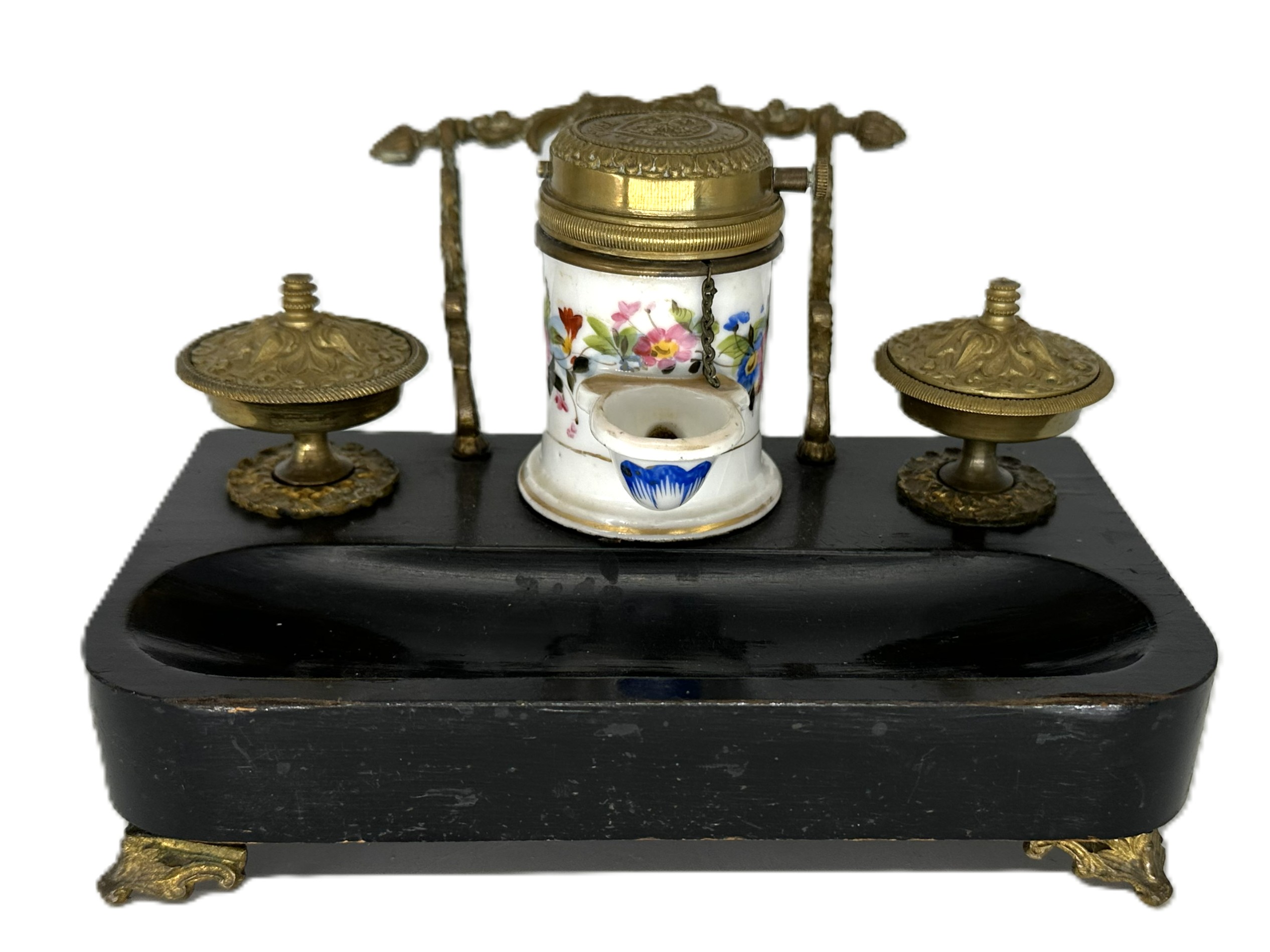
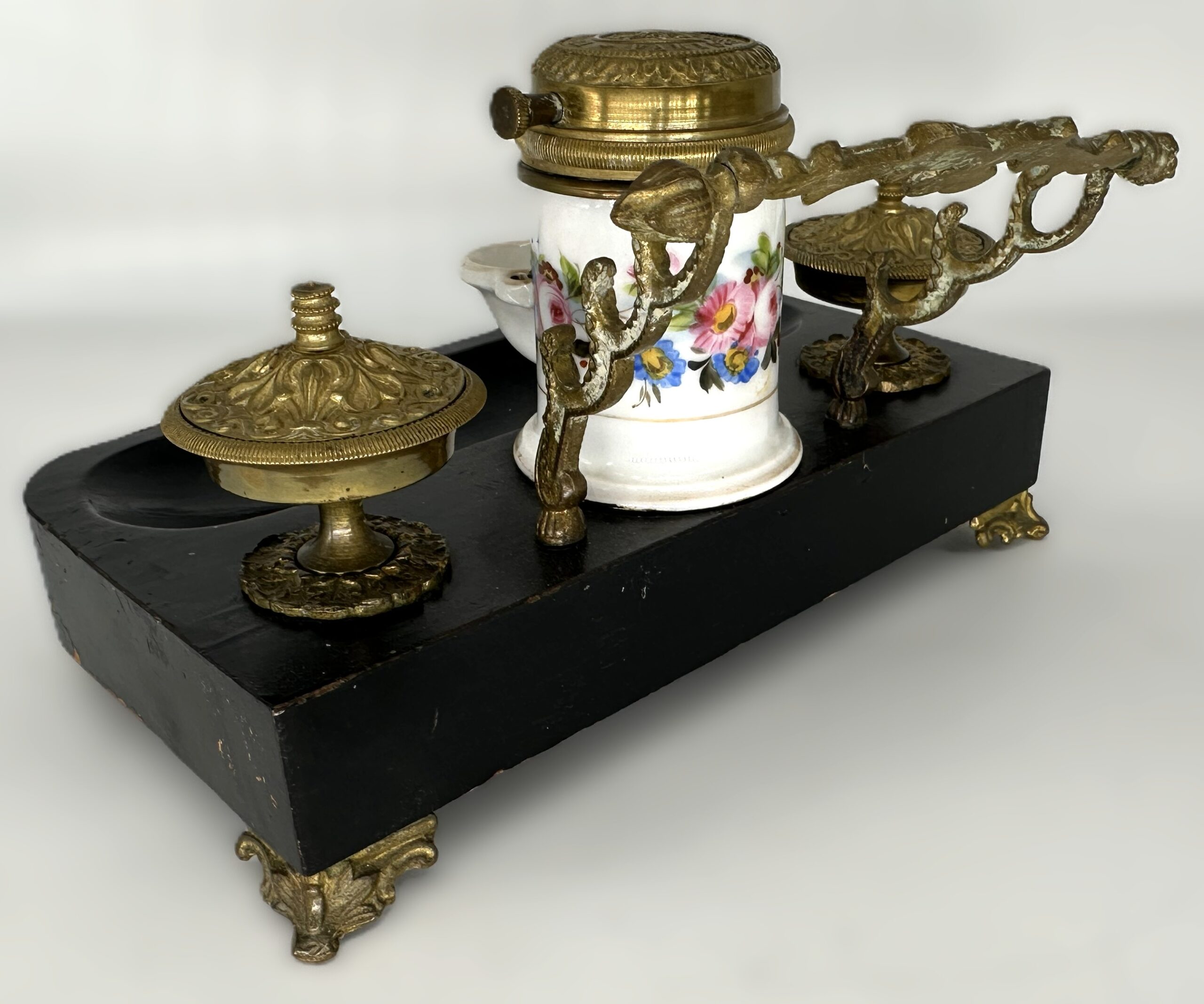
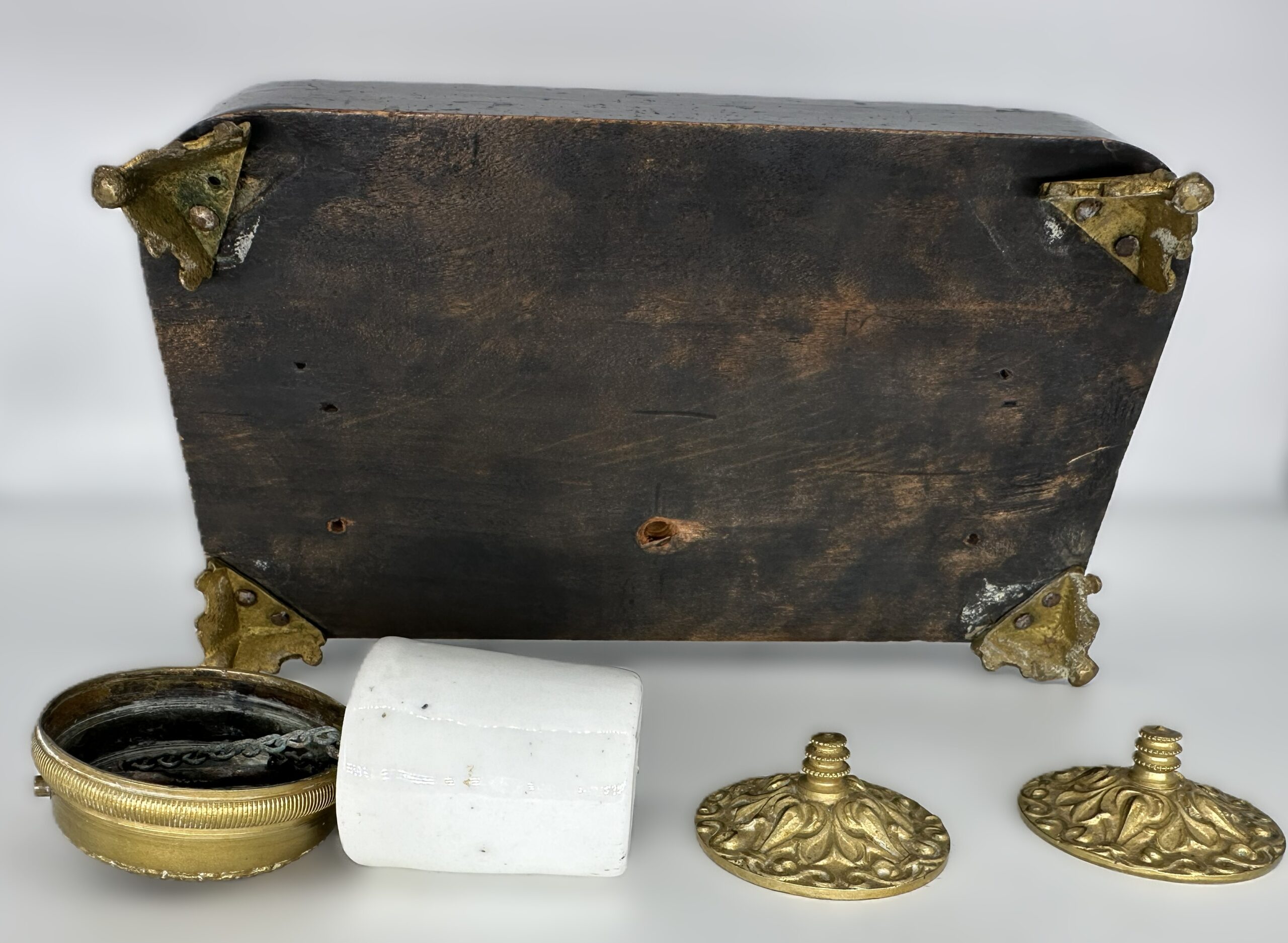
- The Base: The set is mounted on a heavy, rectangular ebonized wood base featuring a deep, horizontal pen channel at the front for resting dip pens. The base sits on four ornate bronze gilt feet.
- The Bronze Urns: Flanking the central inkwell are two matching, shallow bronze urns with elaborate lift-off lids. These were likely used for wafers (used to seal letters before self-adhesive envelopes), sealing wax, or small nibs. They are too shallow to hold ink.
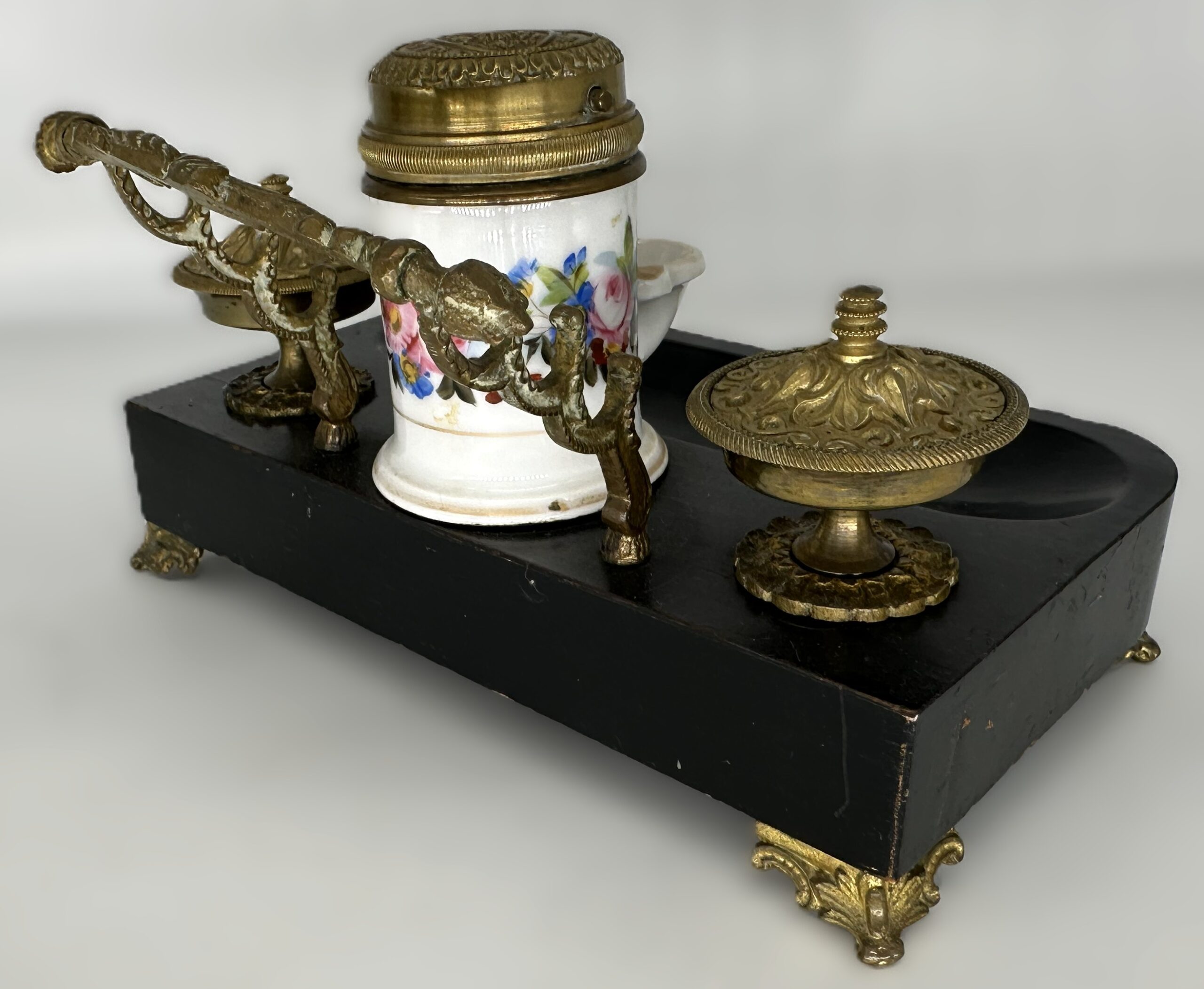
- The Pen Rack: Behind the inkwell sits a decorative bronze-gilt frame with multi-tiered horizontal arms, serving as a rack to hold pens above the reservoir.
- The Floral Design: The porcelain body is decorated with vibrant, multi-colored floral sprays. Based on the subtle variations in the brushwork and the slight “layering” of the enamel, these are hand-painted, which was standard for high-end French porcelain of this era.
The Boquet Winding Chain Mechanism
The brass lid of the central reservoir is stamped “PROPRIÉTÉ DÉPOSÉE PARIS”. This confirms it was produced under the specialized patents of the Boquet workshop in Paris.
How the Mechanism Works
This inkstand operates on the 1844 Louis Honoré Boquet patent for a “windlass” displacement system. Unlike standard screw-driven pumps, it uses a miniature internal chain:
- The Windlass: A small brass knob on the side of the lid acts as a windlass (a rotating axle).
- The Chain & Plunger: Turning this side knob winds or unwinds a delicate chain attached to a lead-weighted porcelain plunger.
- Pressure Displacement: When the plunger is lowered into the ink-filled reservoir, it displaces the liquid, forcing it to rise through an internal channel and out into the front dipping font.
- Purpose: This allows the writer to precisely control the ink level in the font, keeping the main supply protected from air to prevent it from becoming “sludgy” or drying out.
History & Rarity
This inkstand was manufactured in Paris by a boutique workshop using Boquet’s mechanical components fitted into a custom wood-and-bronze frame. While the Boquet winding system was a marvel of “gadgetry,” the thin chains were notoriously fragile, making intact, functional sets like this somewhat rare.
Estimated Value: $150
Content disclaimer. The information posted is the owner’s best knowledge and may not have been vetted by the SOIC. We welcome comments, corrections, and additions, working to make our website information comprehensive and accurate.
Join the Society of Inkwell Collectors (SOIC) – it’s free!
Founded in 1981 as a non-profit organization,
we are documenting inkwells (and accessories).
We’re here to help and inform!