

Inkipedia
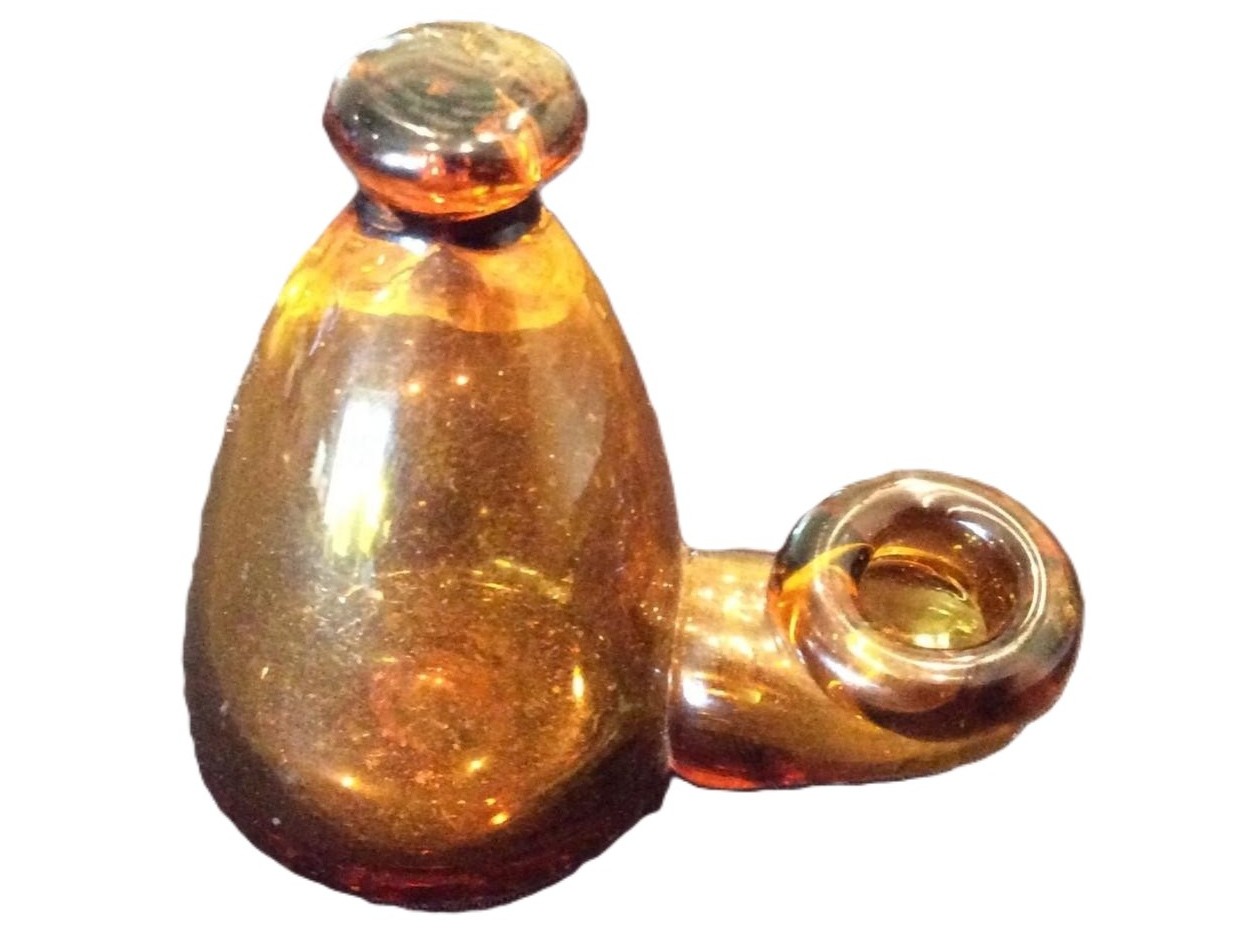
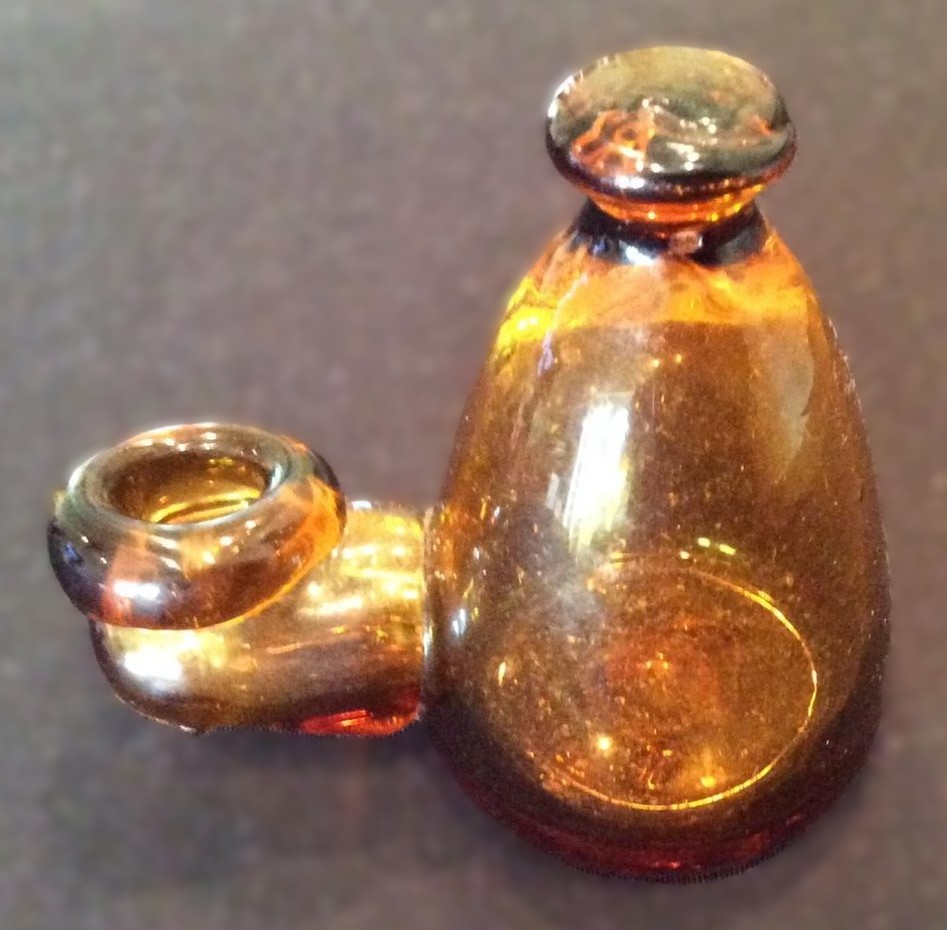
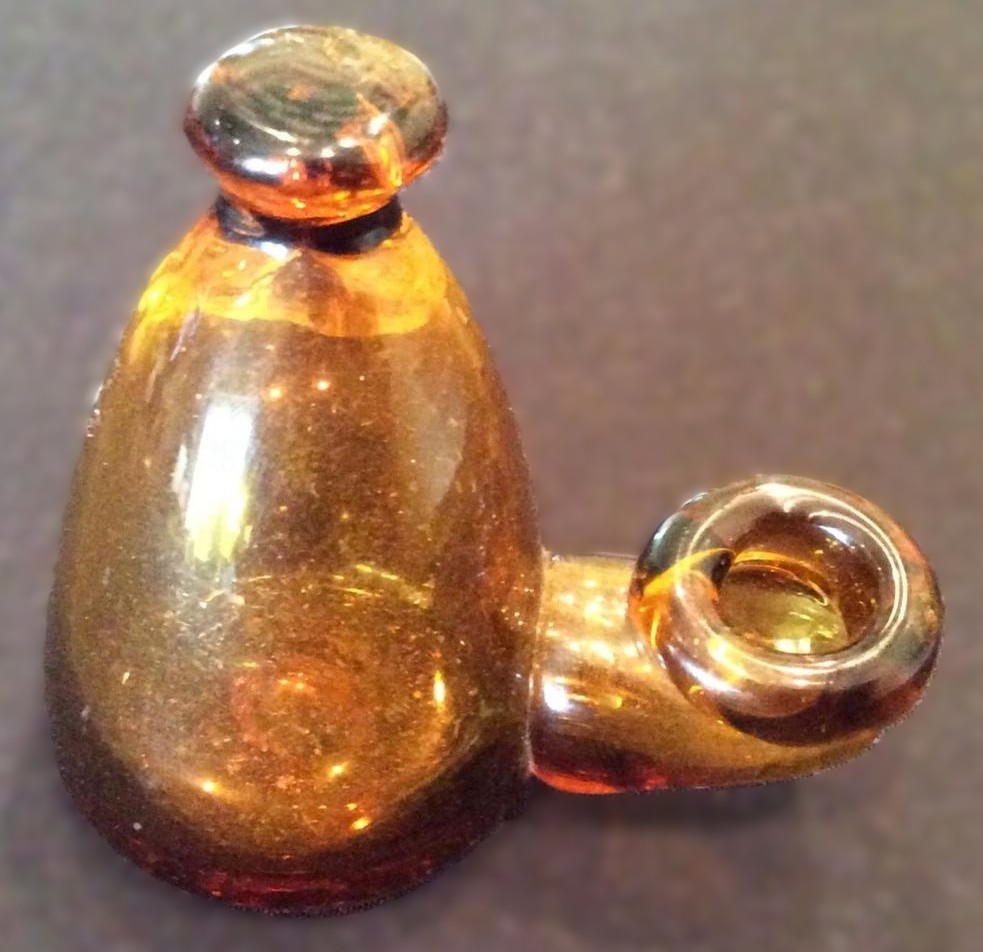
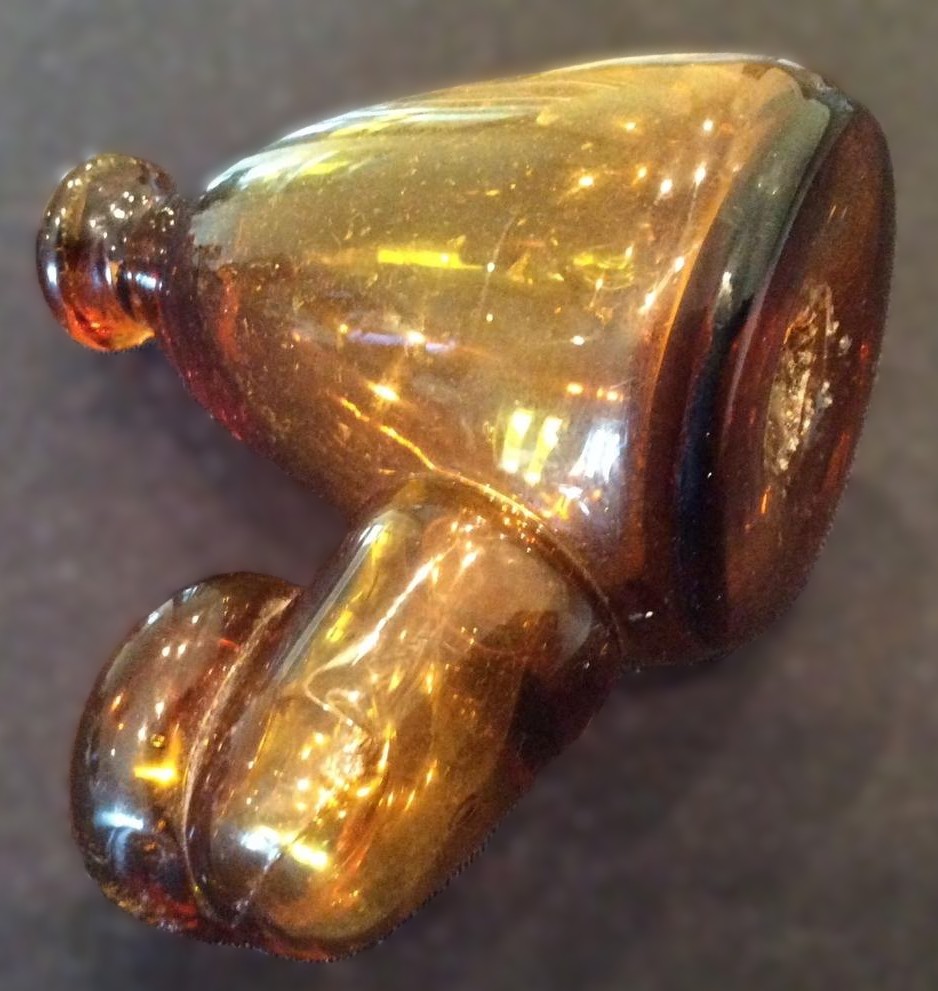
Teakettle Ink Bottle
| Categories | Ink Bottle, Mechanical - Pump / Siphon |
| Type | Tea Kettle |
| Material | Glass |
| Markings | Unmarked |
| Manufacturer | Undetermined |
| Origin | Undetermined |
| Date or Era | circa 1860 |
| Measuring | 3 ¼” across; 3” high |
Description
- Form & Shape: The bottle gets its name from its distinctive, miniature tea kettle silhouette. It features an upright, bulbous, pear-shaped main body (the reservoir) with a small rounded carrying finial at the top. Protruding from the side near the base is a short, horizontal arm ending in an upturned, funnel-shaped spout that functions as the dipping font.
- Color & Material: It is made from translucent amber (or honey-colored) glass, showing off characteristic small bubbles and imperfections inherent to early glassmaking.
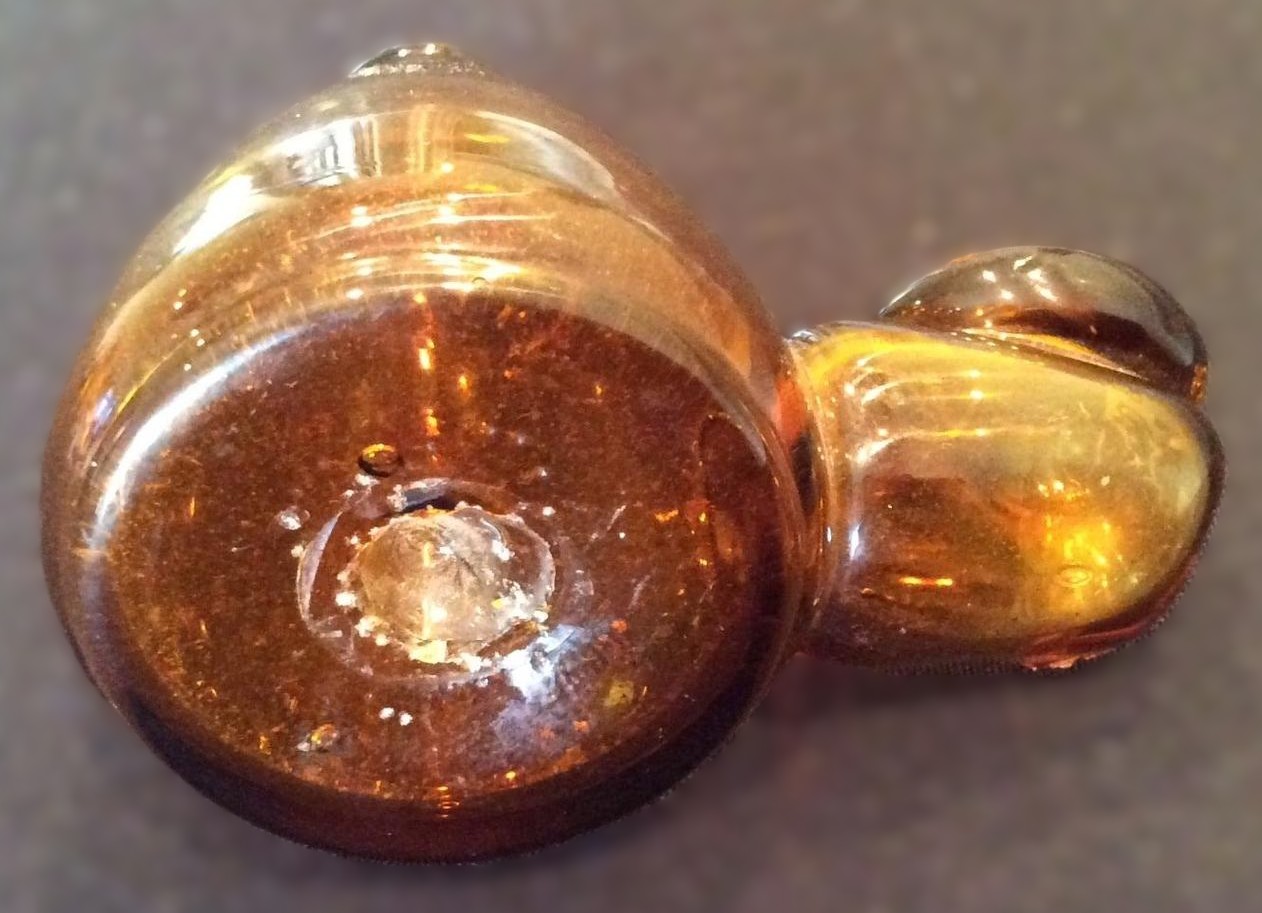
- Base: The bottom displays a rough pontil mark or central scar where it was snapped off the glassmaker’s pontil rod during hand-finishing.
How It Was Made
- Free-Blown Technique: Unlike mass-produced bottles shaped in rigid multi-part iron molds, pieces like this were free-blown by a skilled glassblower using a blowpipe.
- Hand-Tooling: The glassblower gathered molten amber glass on a pipe, blew the main body, and then manipulated or applied the side spout by hand, welding it back into the main chamber to create an internal channel.
- Pontil Mark: The base features a pontil scar, indicating that after the body and spout were shaped, the piece was attached to a solid iron rod (pontil) so the artisan could finish the top rim and neck while hot. This leaves behind the rough, indented circular scar visible on the bottom.
How It Functioned
- The Syphon/Pneumatic Principle: The “tea kettle” design relies on an internal fluid dynamic. The main upright body acts as the primary airtight or semi-sealed ink reservoir, while the side spout serves as the open well where a scribe would dip their quill or steel nib.
- Ink Regulation: Because of the internal connection between the main body and the lower side spout, pouring ink into the spout or filling the reservoir automatically levels out the liquid. The side font stays filled to a shallow, accessible depth, preventing the writer from accidentally overloading their pen with too much ink while keeping the bulk of the supply protected from rapid evaporation.
Where and When Was It Made?
- Era (When): These distinctive novelty and mechanical-style ink bottles date primarily from the mid-to-late 19th century (circa 1860s to 1880s), an era when desk accessories emphasized both whimsy and practical utility.
- Origin (Where): Tea kettle inks were produced in both American glassworks and European glass factories, where novelty inkwells were widely exported. Because free-blown examples with rough pontil marks typically lack maker’s marks or embossing, pinpointing an exact individual factory is difficult.
Sold for $167 in June 2017
Content disclaimer. The information posted is the owner’s best knowledge and may not have been vetted by the SOIC. We welcome comments, corrections, and additions, working to make our website information comprehensive and accurate.
Join the Society of Inkwell Collectors (SOIC) – it’s free!
Founded in 1981 as a non-profit organization,
we are documenting inkwells (and accessories).
We’re here to help and inform!