

Inkipedia


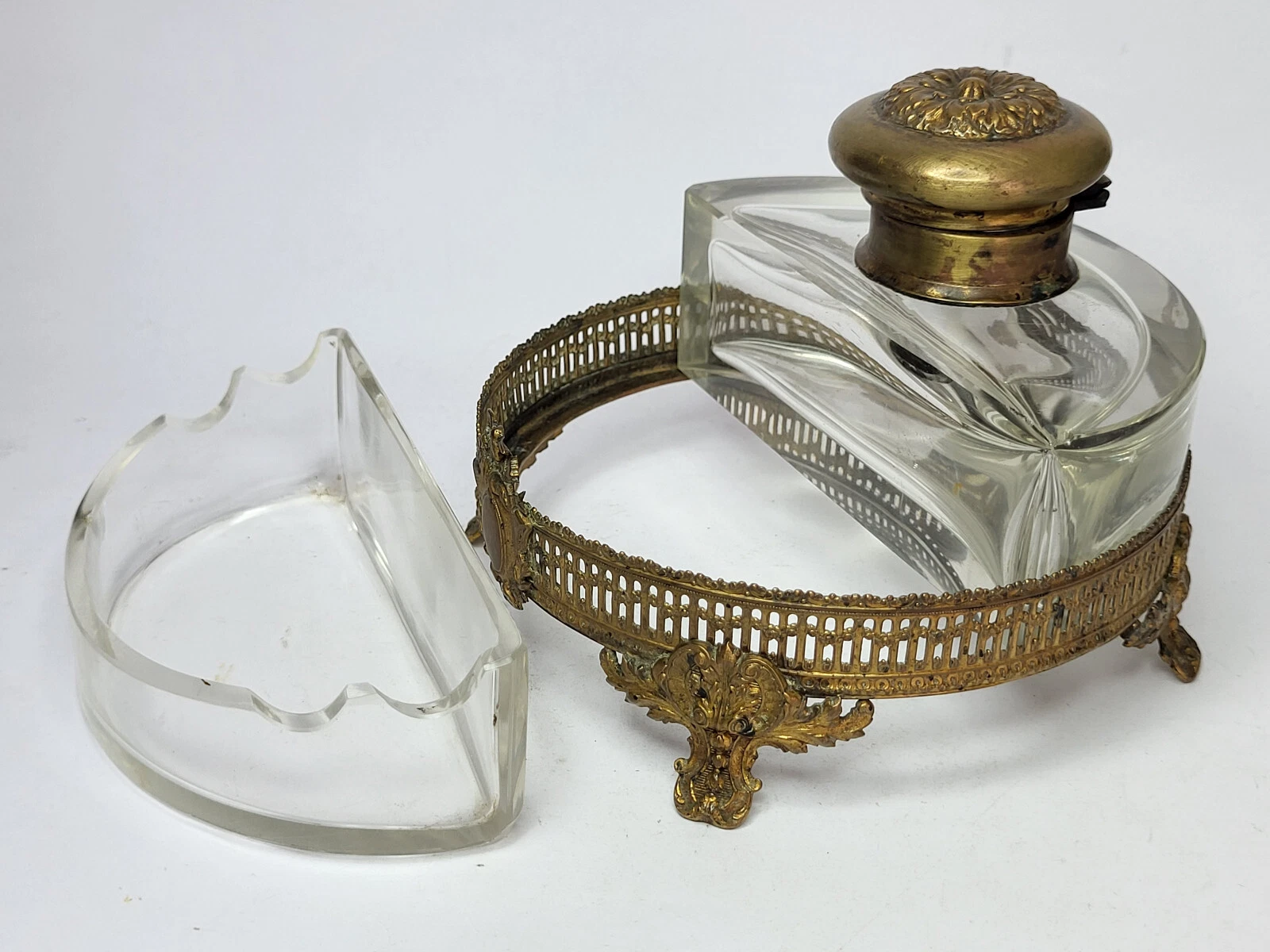

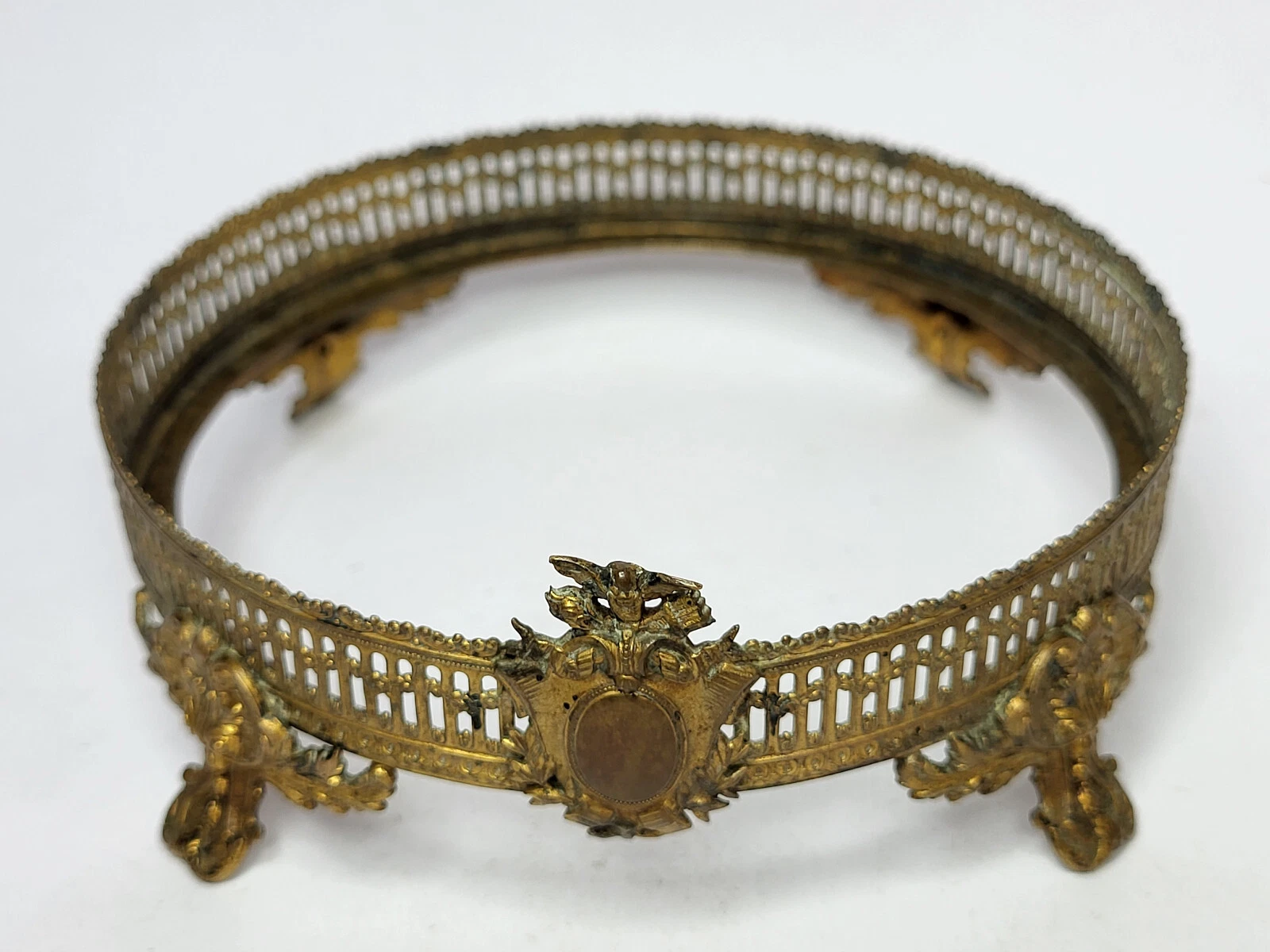


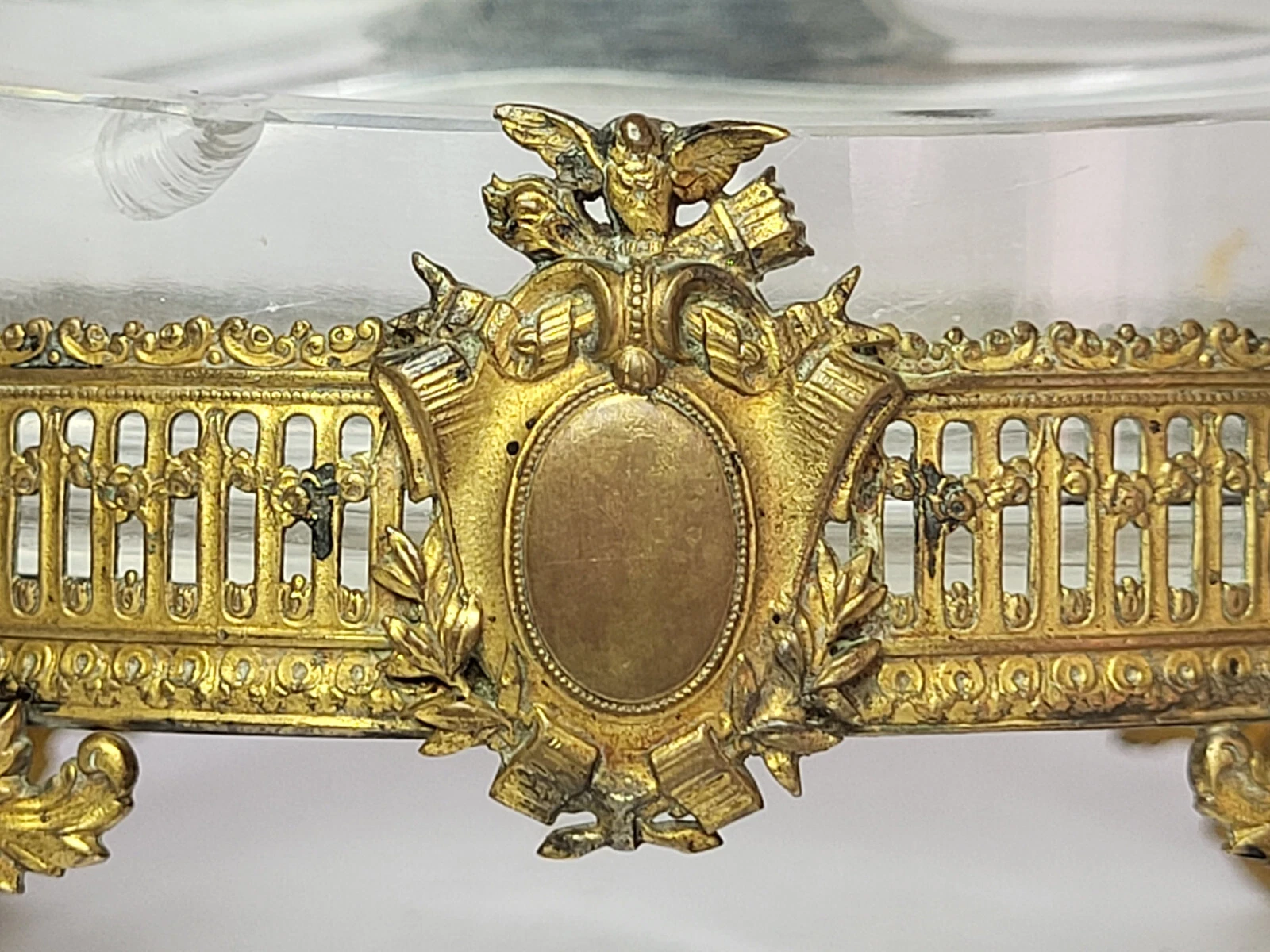
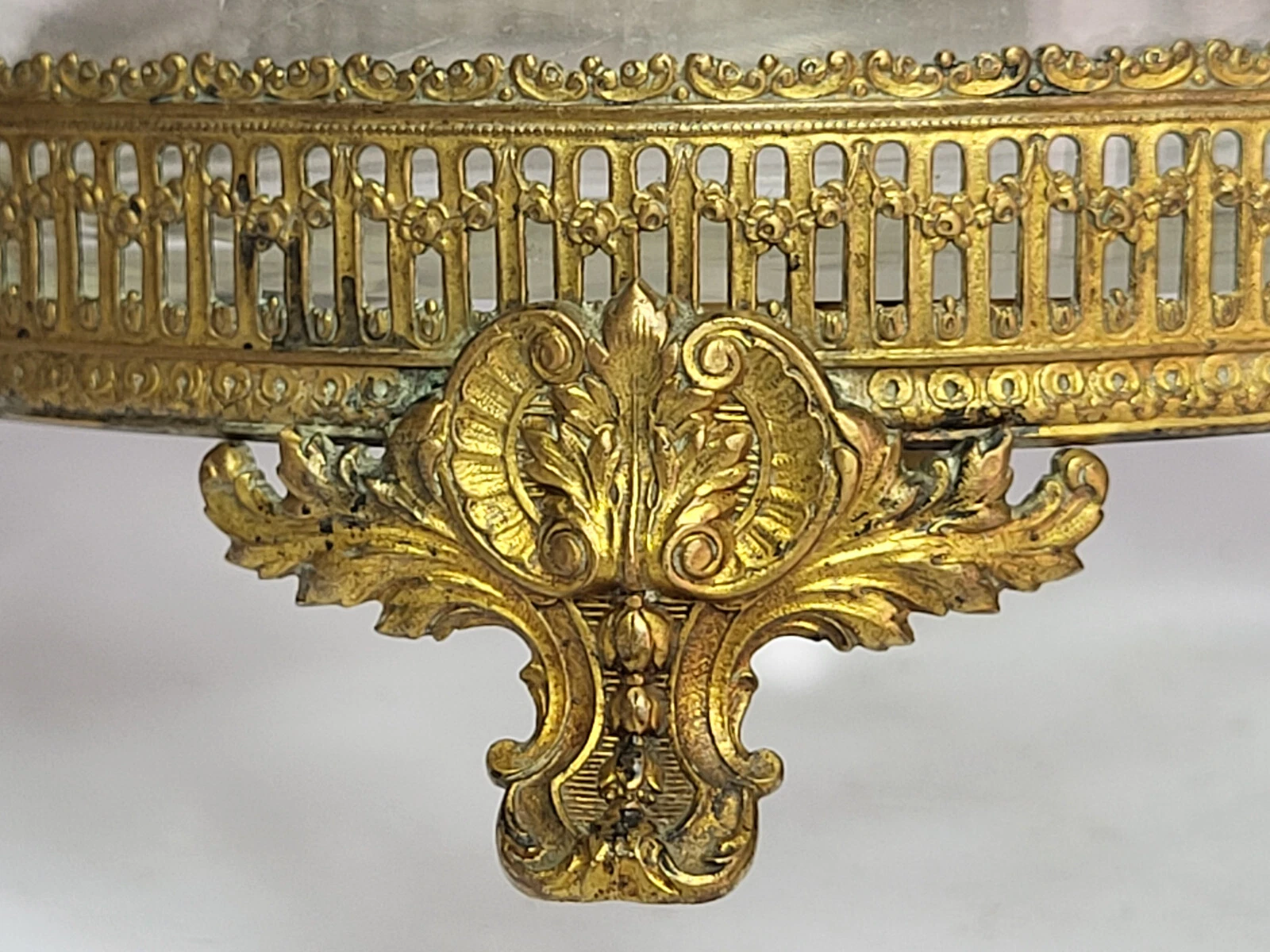
“Split” Design Glass Inkwell in Ormolu Stand
| Categories | Glass - Non-figural |
| Material | Glass, Ormolu |
| Markings | Unmarked |
| Manufacturer | Undetermined |
| Origin | France |
| Date or Era | circa 1900 |
| Measuring | 5 ⅜” diameter; 3 ¾” high |
This inkstand with two components dates to around 1890 to 1910. The “split” design—combining a sealed ink reservoir with an open pen rest in a single circular footprint—suggests it was made for a compact ladies’ writing desk (bonheur-du-jour).
Here is a detailed breakdown of its features and likely history:
- The Glass Components
- The Split Design: The most striking feature is that the “circle” is actually two separate semi-circular glass vessels that fit together like a puzzle.
- The Inkwell (Rear Half): This is a fully enclosed reservoir with a brass collar and a hinged lid. The glass is molded with deep fluting that radiates from the center.
- The Pen Tray (Front Half): The front section is an open dish. The “notches” are designed to rest a pen horizontally.
- Material: The clarity and the way the glass fits the metal mount suggest mold-blown lead crystal, likely polished to fit the frame.
- The Gilt Bronze (Ormolu) Stand
- Style: The metalwork is French Empire Revival or Neoclassical in style. It features a pierced gallery rail (a “fretwork” design) that mimics the railings found on 18th-century French furniture.
- Motifs: The feet are particularly detailed. They are cast with acanthus leaves and scrollwork. The central cartouche (the oval shield on the front) is topped with a Torch and Quiver motif—symbols often associated with Cupid (love) or intellect (illumination), which were popular decorative themes in French-influenced decor.
- Finish: The “gilt” finish is likely a wash of gold over brass or bronze (ormolu). The patina (darkening in the crevices) is consistent with authentic age.
- Age and Origin
- Origin: France is the most likely origin. The “gallery rail” design, the specific style of the feet, and the “Torch and Quiver” motifs are hallmarks of French desk accessories from the Belle Époque era.
- Date: Circa 1900 (1890–1910). This fits the transition period where heavy glass was paired with delicate, revival-style metalwork.
Sold for $200 in November 2025
Content disclaimer. The information posted is the owner’s best knowledge and may not have been vetted by the SOIC. We welcome comments, corrections, and additions, working to make our website information comprehensive and accurate.
Join the Society of Inkwell Collectors (SOIC) – it’s free!
Founded in 1981 as a non-profit organization,
we are documenting inkwells (and accessories).
We’re here to help and inform!