

Inkipedia
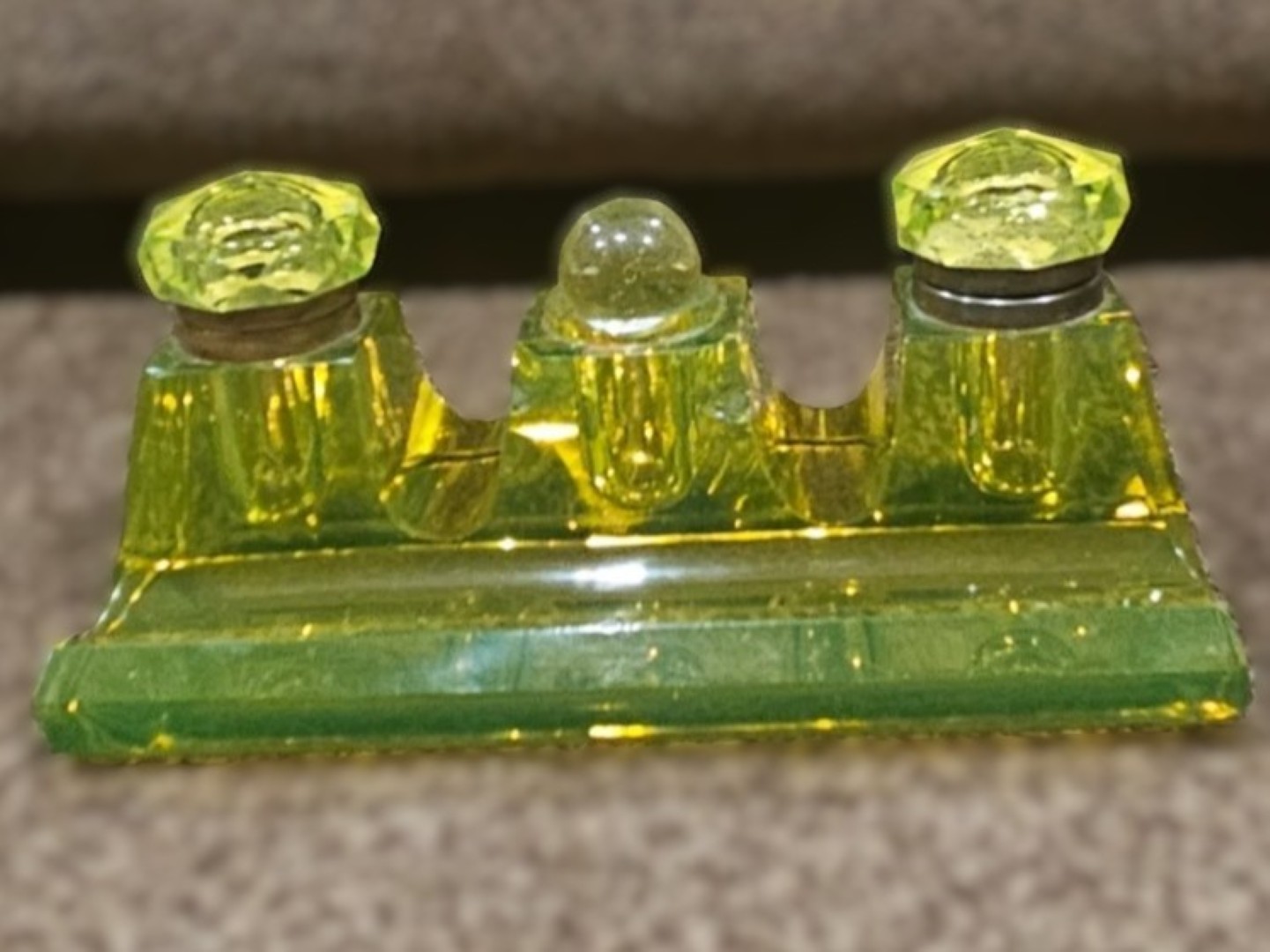
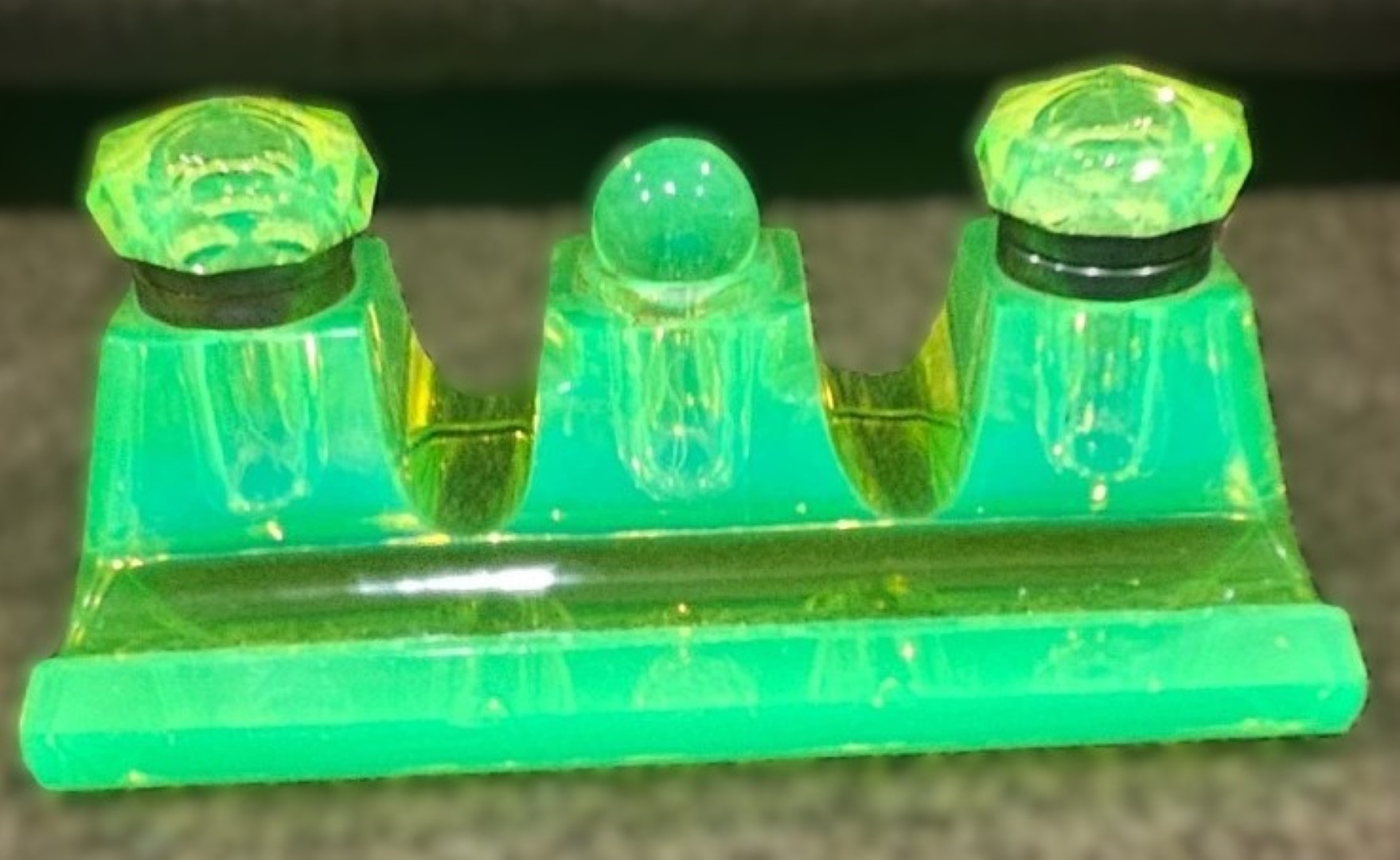
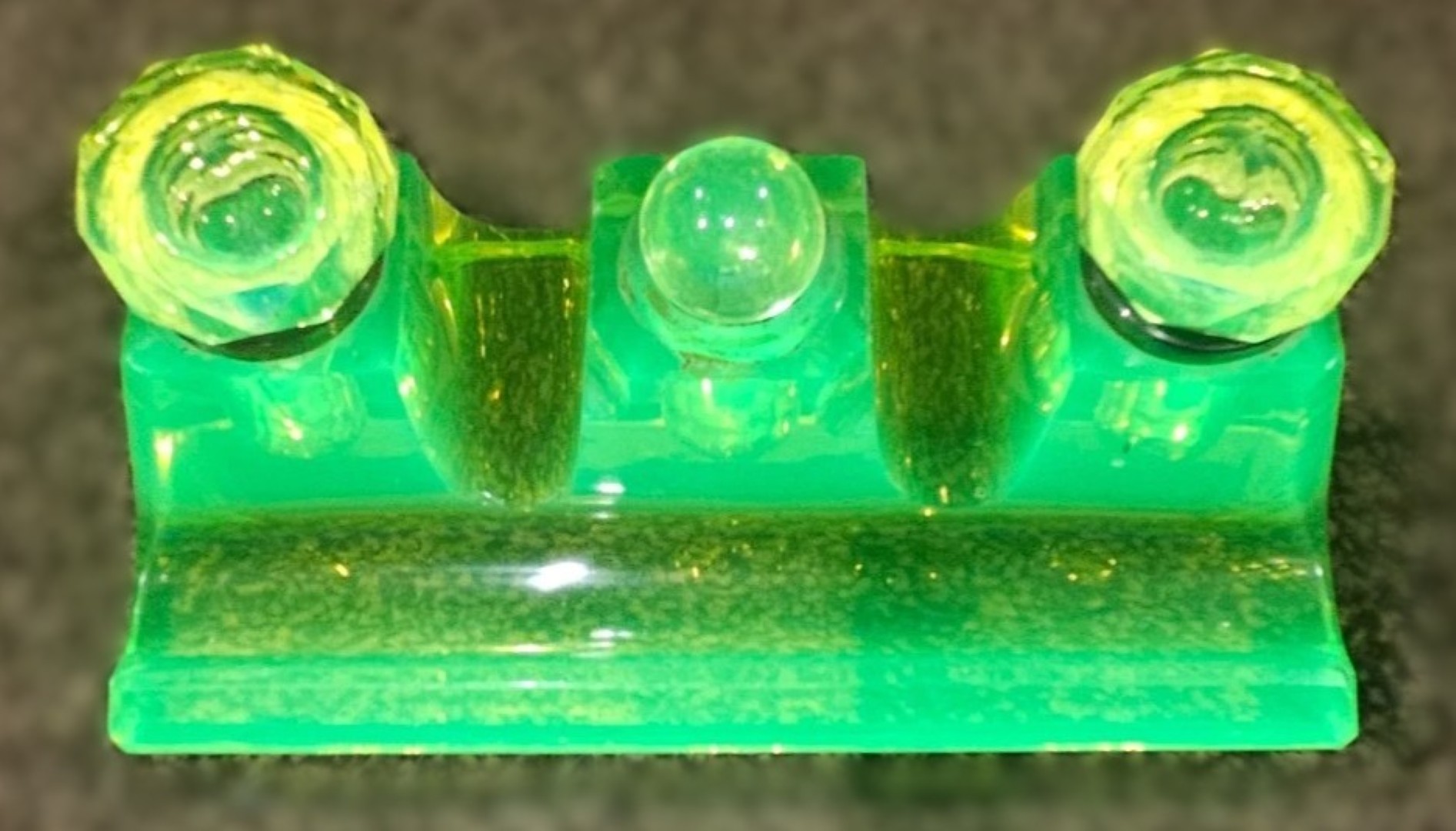


Vaseline Glass (Uranium Glass) Double Inkstand.
| Categories | Glass - Non-figural |
| Type | Vaseline |
| Material | Glass |
| Markings | Unmarked |
| Manufacturer | Undetermined |
| Origin | United States |
| Date or Era | circa 1920 |
- What is Vaseline Glass?
- The Name: Collectors use the term “Vaseline Glass” to describe this specific shade of transparent yellow-green glass. It gets its name because the color in natural light resembles the old formula of petroleum jelly (Vaseline).
- Why it Fluoresces: Why does it glow under black light? The answer is chemistry.
- Uranium Oxide: To achieve this specific yellow-green color, the glassmaker added uranium oxide (usually about 2% by weight) to the molten glass mixture.
- The Reaction: Uranium is fluorescent. When ultraviolet (UV) light hits the glass, the uranium ions become excited and re-emit the energy as visible bright neon green light.
- Radiation: While it is technically radioactive, the levels are extremely low and generally considered safe for handling and display.
- Description of the Desk Set
- Form: This is a Double Inkstand designed for a busy desk. It features two inkwells. The set retains its original matching glass lids. These are cut or molded into a faceted “gem” shape. They are attached with brass collars.
- Stamp & Envelope Moistener:
- This was a popular “sanitary” office device in the 1920s and 30s, designed to save one from having to lick stamps or envelope flaps.
- How it Works:
-
-
- The Reservoir: You would fill that small central compartment with water, not ink.
- The Floating Ball: The glass ball is designed to sit loosely in the opening, partially submerged in the water.
- The Action: When one needed to stick a stamp or seal an envelope, you would simply run the gummed strip over the top of the glass ball. The friction causes the ball to rotate (roll), picking up a thin coating of water from the reservoir below and applying it evenly to the paper.
-
- Pen Tray: The front of the block is molded with a long groove to serve as a pen rest.
- Age and Origin
- Age: Circa 1900–1930s.
- The popularity of uranium glass peaked between 1880 and 1920.
- The specific design of this piece—heavy, blocky, and geometric—suggests the Edwardian or Art Deco eras rather than the ornate Victorian period.
- Origin: Likely United States
- Major American glasshouses like Fostoria, Cambridge, and Duncan & Miller produced vast amounts of utilitarian Vaseline glass for offices.
Sold for $310 in November 2025
Content disclaimer. The information posted is the owner’s best knowledge and may not have been vetted by the SOIC. We welcome comments, corrections, and additions, working to make our website information comprehensive and accurate.
Join the Society of Inkwell Collectors (SOIC) – it’s free!
Founded in 1981 as a non-profit organization,
we are documenting inkwells (and accessories).
We’re here to help and inform!