

Inkipedia


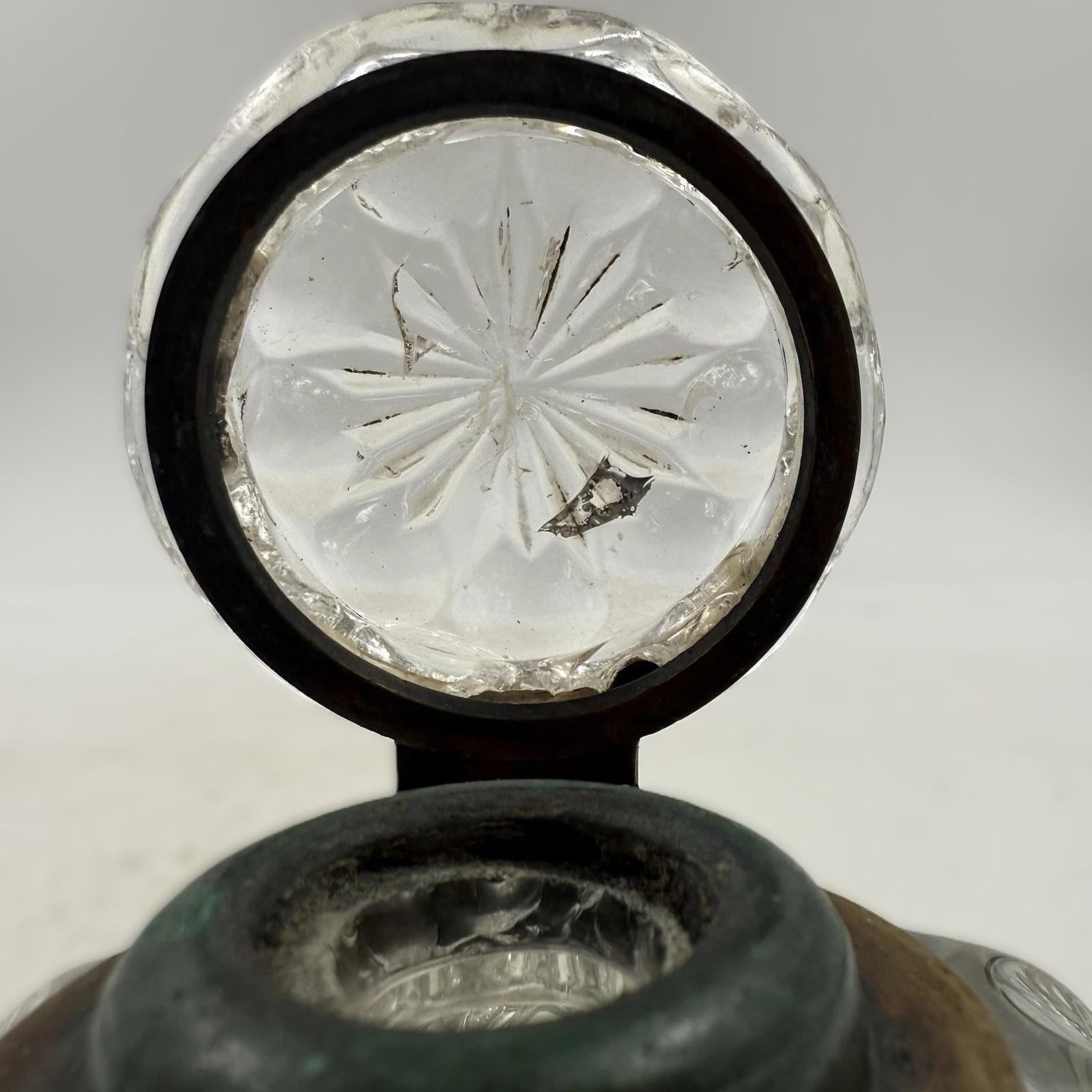


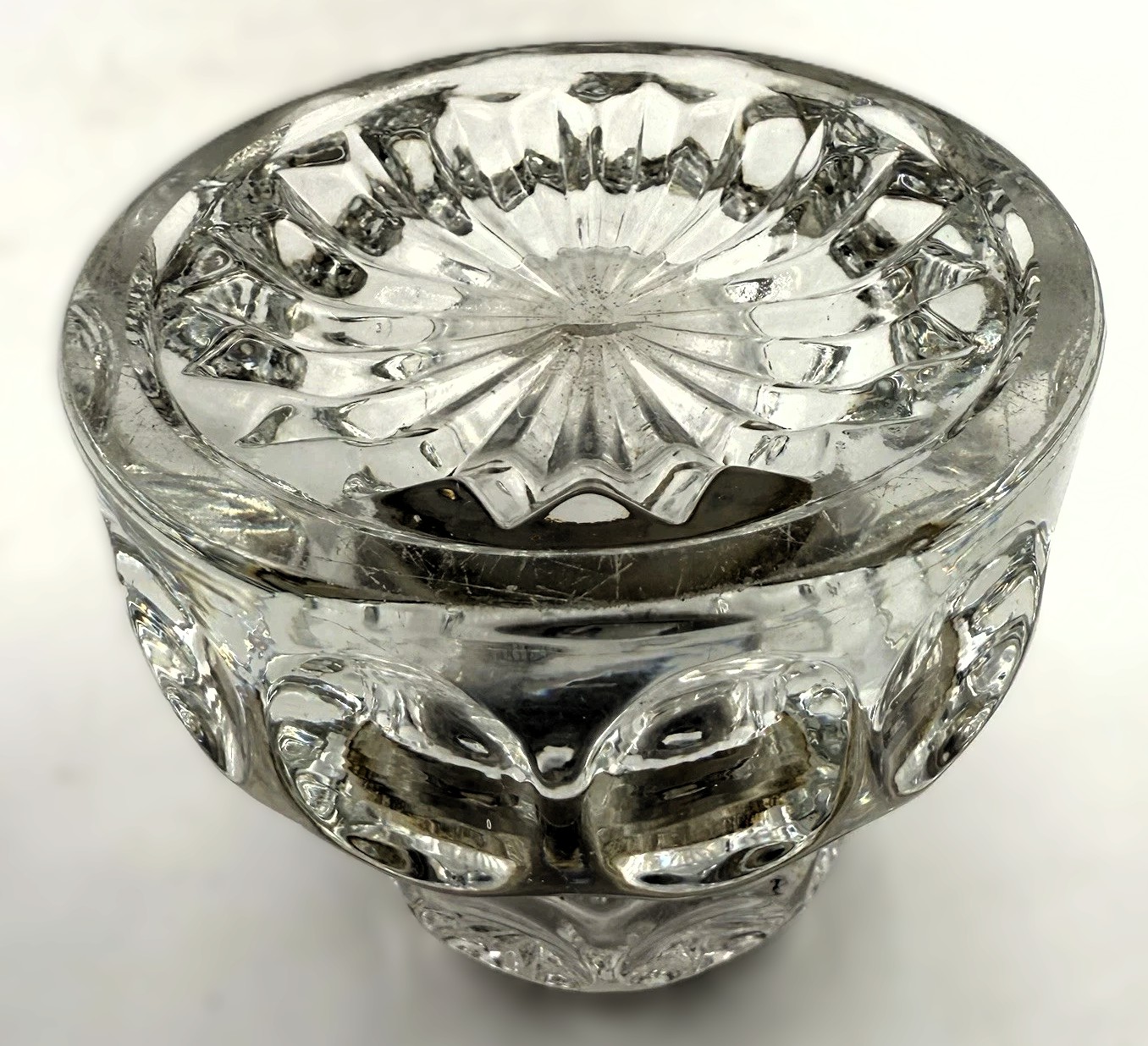
Heavy Cut Glass Inkwell
| Categories | Glass - Non-figural |
| Material | Glass |
| Markings | Unmarked |
| Manufacturer | Undetermined |
| Origin | Undetermined |
| Date or Era | circa 1900 |
| Measuring | 3 ¼” diameter; 3” high |
Heavy, geometric inkwells such as this one, were staples of high-end desks during the “Golden Age” of writing, designed to be substantial enough that they would not tip over while dipping a pen.
Here is a breakdown of its features and history:
- The “Dimple” or “Thumbprint” Pattern
- Technical Name: While often called “Thumbprint” or “Honeycomb” by collectors, the large, concave circular cuts are technically known as “Punts” or “Printies.”
- Function: In heavy lead glass (crystal), these concave cuts were not just decorative. They were designed to catch and refract light, making the inkwell sparkle like a jewel on a dark wooden desk.
- The Cut Star Base
- Significance: The starburst cut on the bottom is a key indicator of quality.
- Molded vs. Cut: Cheaper inkwells of this era were simply pressed into a mold. A “cut star” base means that after the glass cooled, a craftsman hand-ground the star pattern into the bottom and polished it. This indicates it was a higher-end luxury item, not a standard utility bottle.
- The Hinged Lid
- Construction: The lid is a matching piece of heavy glass set into a metal collar (brass that has developed a dark patina).
- Collar Hinge: This style of “collar” hinge was standard for heavy glass inkwells because you couldn’t drill into the glass safely. The metal ring clamped around the neck to provide a sturdy anchor for the heavy lid.
- Age and Origin
- Date: c. 1890 – 1915. This style straddles the American Brilliant Period of cut glass and the English Edwardian era.
- Origin: It is likely American or English.
- English: Stourbridge makers like John Walsh Walsh or Stevens & Williams were famous for this type of heavy, “rock crystal” style office glass.
- American: It could also be from an American glasshouse like Fostoria or Pairpoint, which produced heavy commercial inkwells for banks and law offices.
Sold for $65 in November 2025
Content disclaimer. The information posted is the owner’s best knowledge and may not have been vetted by the SOIC. We welcome comments, corrections, and additions, working to make our website information comprehensive and accurate.
Join the Society of Inkwell Collectors (SOIC) – it’s free!
Founded in 1981 as a non-profit organization,
we are documenting inkwells (and accessories).
We’re here to help and inform!