

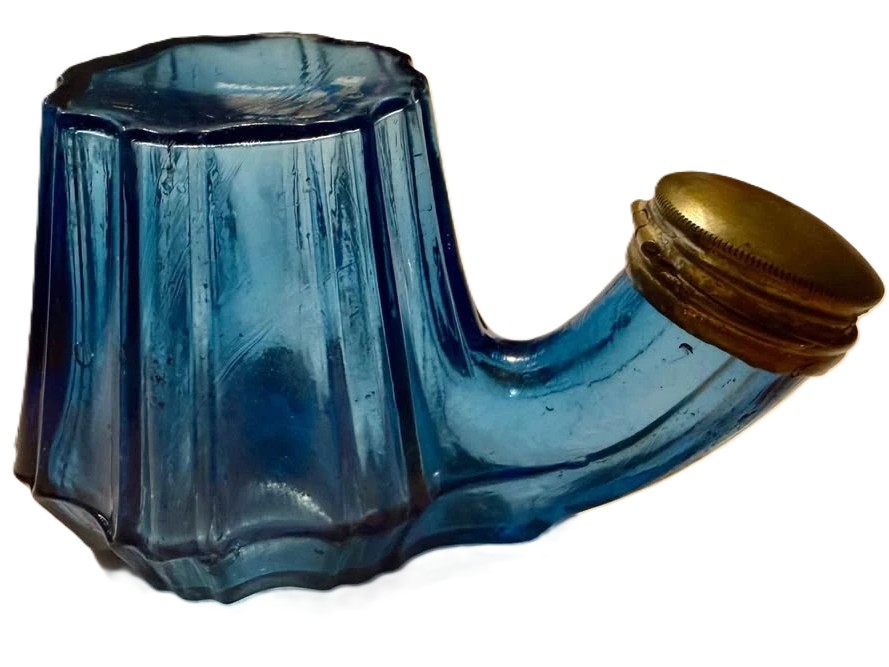
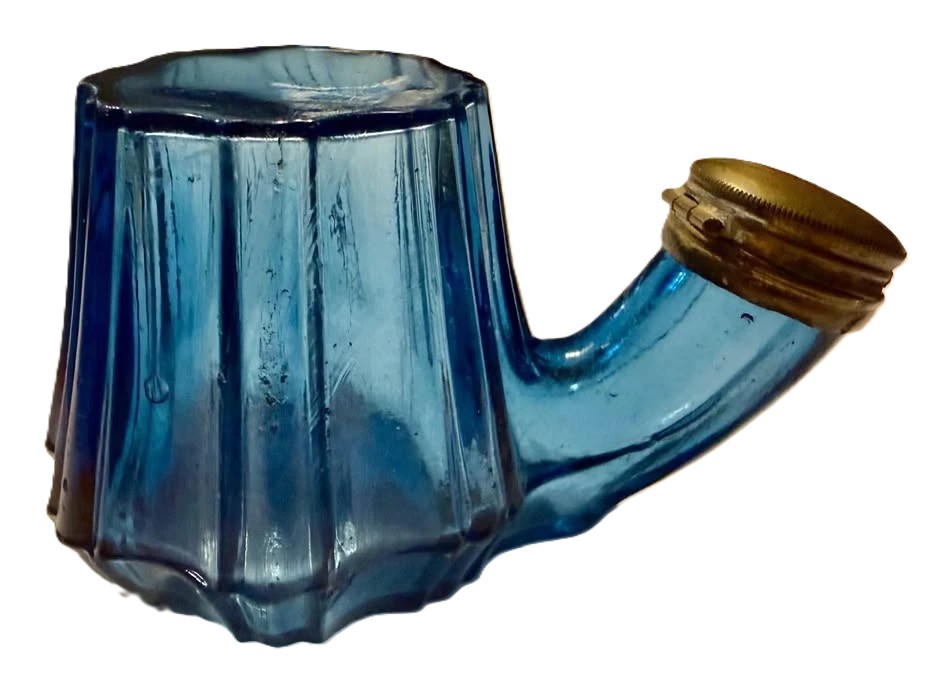
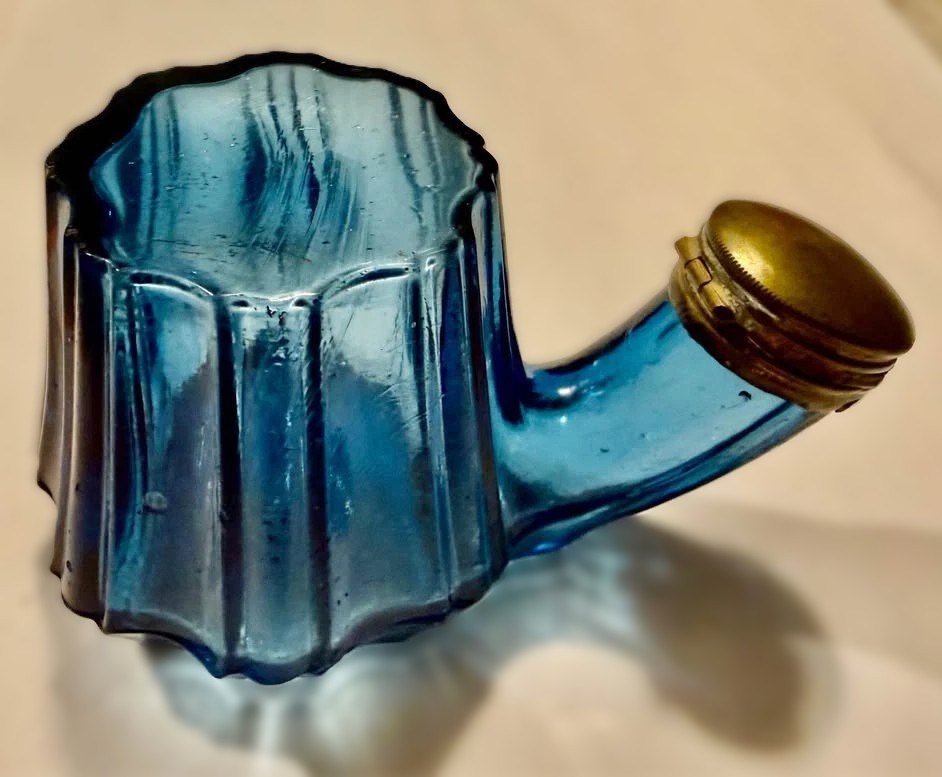

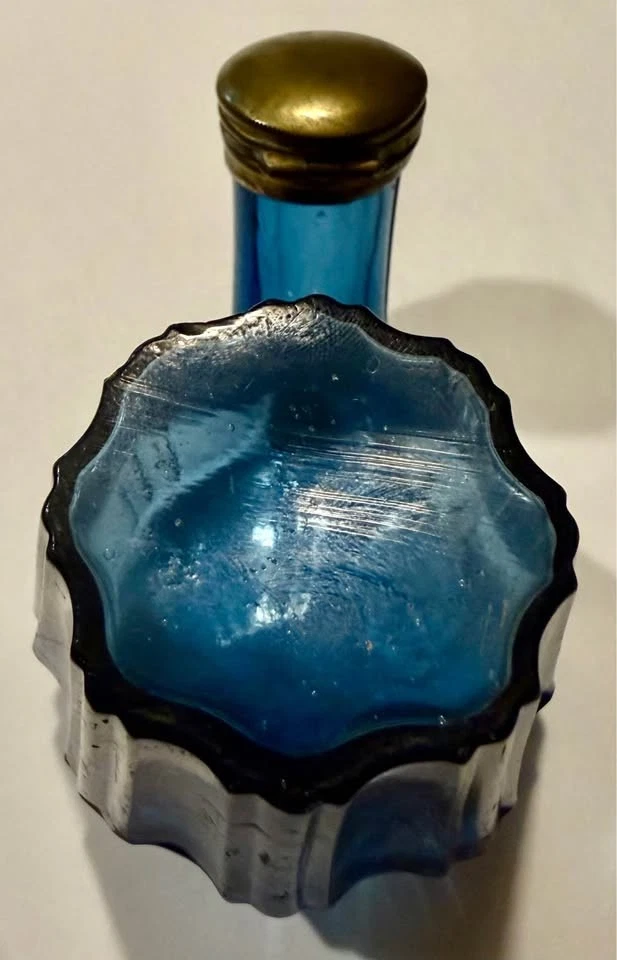


Sapphire Blue Glass Teakettle Ink Bottle
| Categories | Ink Bottle, Mechanical - Pump / Siphon |
| Type | Tea Kettle |
| Material | Glass |
| Markings | Unmarked |
| Manufacturer | Undetermined |
| Origin | Undetermined |
| Date or Era | circa 1890 |
This is a classic Victorian “Teakettle” or “Syphon” ink bottle. These are favorites among bottle collectors because they managed to be both highly functional and incredibly stylish.
The Description & Color
This ink bottle is made of molded sapphire blue glass (often called cobalt blue if the pigment is particularly deep). The vertical ribs or “fluting” on the reservoir were a popular decorative choice that also provided a better grip.
- The Labels: The stickers on the bottom (“058”, “775”, and “Saphire”) are likely inventory or auction tags from a previous owner. Interestingly, they spelled it “Saphire,” which was a common Victorian-era variant but is technically a misspelling today.
- The Hardware: The brass collar and hinged cap are original. These were designed to keep dust out of the ink and prevent excessive evaporation when not in use.
Date & Origin
- Date: This style was at its peak between 1880 and 1895.
- Where it was made: Most of these were manufactured in the United Kingdom (Stourbridge was a major hub for this type of glassware), the United States, and especially France. Without a maker’s mark embossed in the glass, it’s hard to be certain, but the quality of the sapphire glass suggests a high-end commercial glasshouse from that era.
How the “Syphon” Physics Works
This isn’t just a quirky shape; it’s a clever bit of 19th-century engineering designed to provide a constant ink level for your pen nib. It works using atmospheric pressure:
- Airtight Reservoir: The main body of the bottle acts as a vacuum-sealed chamber once the cap is closed or once the ink level inside blocks the internal opening of the spout.
- The Equilibrium: Gravity wants to pull the ink down and out of the spout, but atmospheric pressure pushes in against the small surface of ink exposed in the spout.
- The “Gulp”: These two forces balance each other out, keeping the ink from overflowing. As you dip your pen and use up the ink in the spout, the level drops slightly. This allows a tiny bubble of air to “gulp” up the spout and into the main reservoir.
- Automatic Refill: That air bubble displaces a tiny amount of ink, which flows from the reservoir into the spout, perfectly refilling it to the original level.
Fact: Because only the small amount of ink in the spout is exposed to the air, the rest of the ink in the reservoir stays fresh and doesn’t dry out nearly as fast as it would in an open pot!
Sold for $399 in February 2026
Content disclaimer. The information posted is the owner’s best knowledge and may not have been vetted by the SOIC. We welcome comments, corrections, and additions, working to make our website information comprehensive and accurate.
Join the Society of Inkwell Collectors (SOIC) – it’s free!
Founded in 1981 as a non-profit organization,
we are documenting inkwells (and accessories).
We’re here to help and inform!