






Revolving “Snail” Inkstand – H.L. Judd & Co.
| Categories | Mechanical - Snail / Pivoting |
| Type | Snail |
| Material | Cast iron, Glass |
| Markings | See Narrative |
| Manufacturer | H L Judd |
| Origin | United States |
| Date or Era | circa 1880 |
| Measuring | Single: 4 ¼” x 2 ¾” x 4 ½” high; Double: 4 ¼” x 4 ⅝” x 4 ½” high |
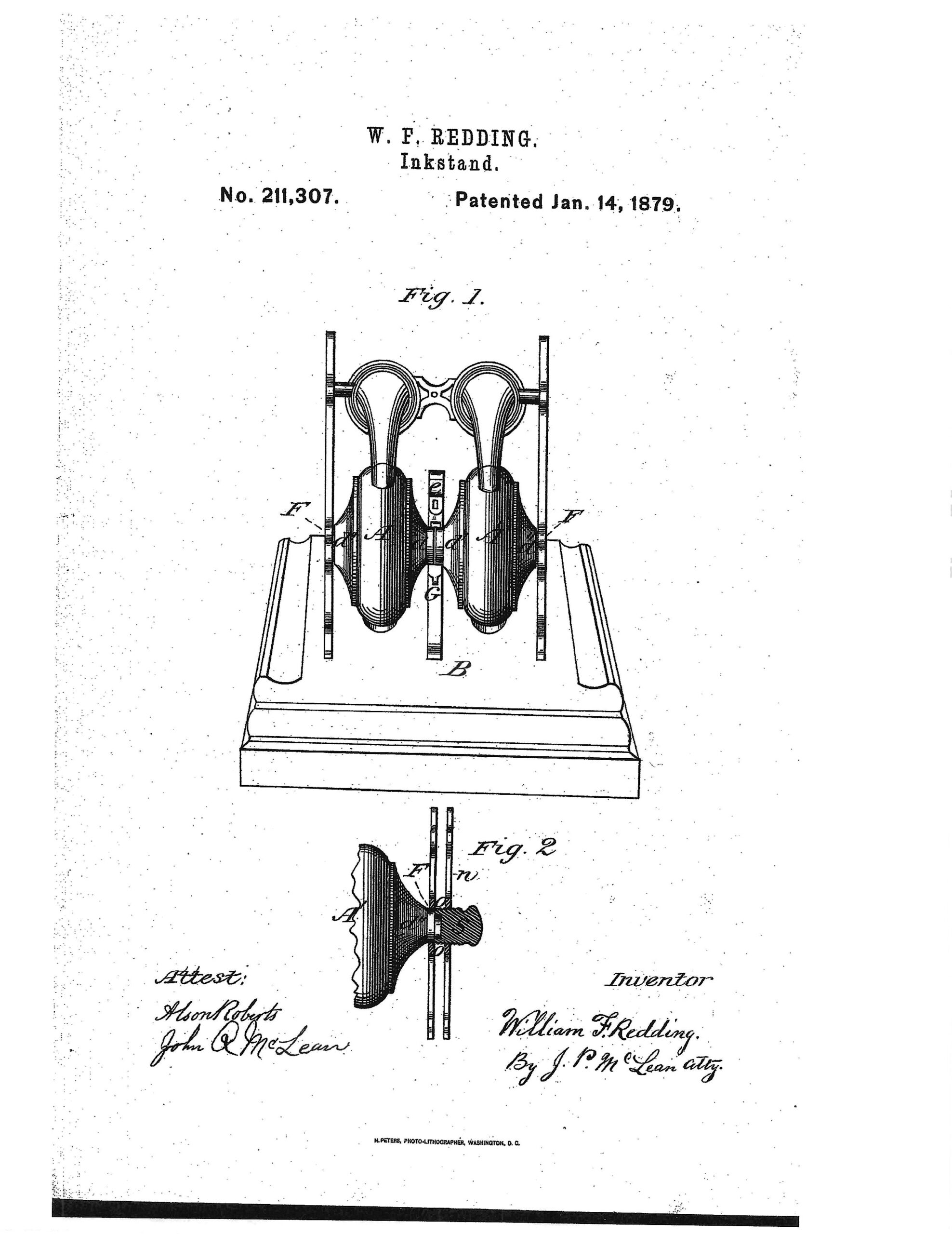
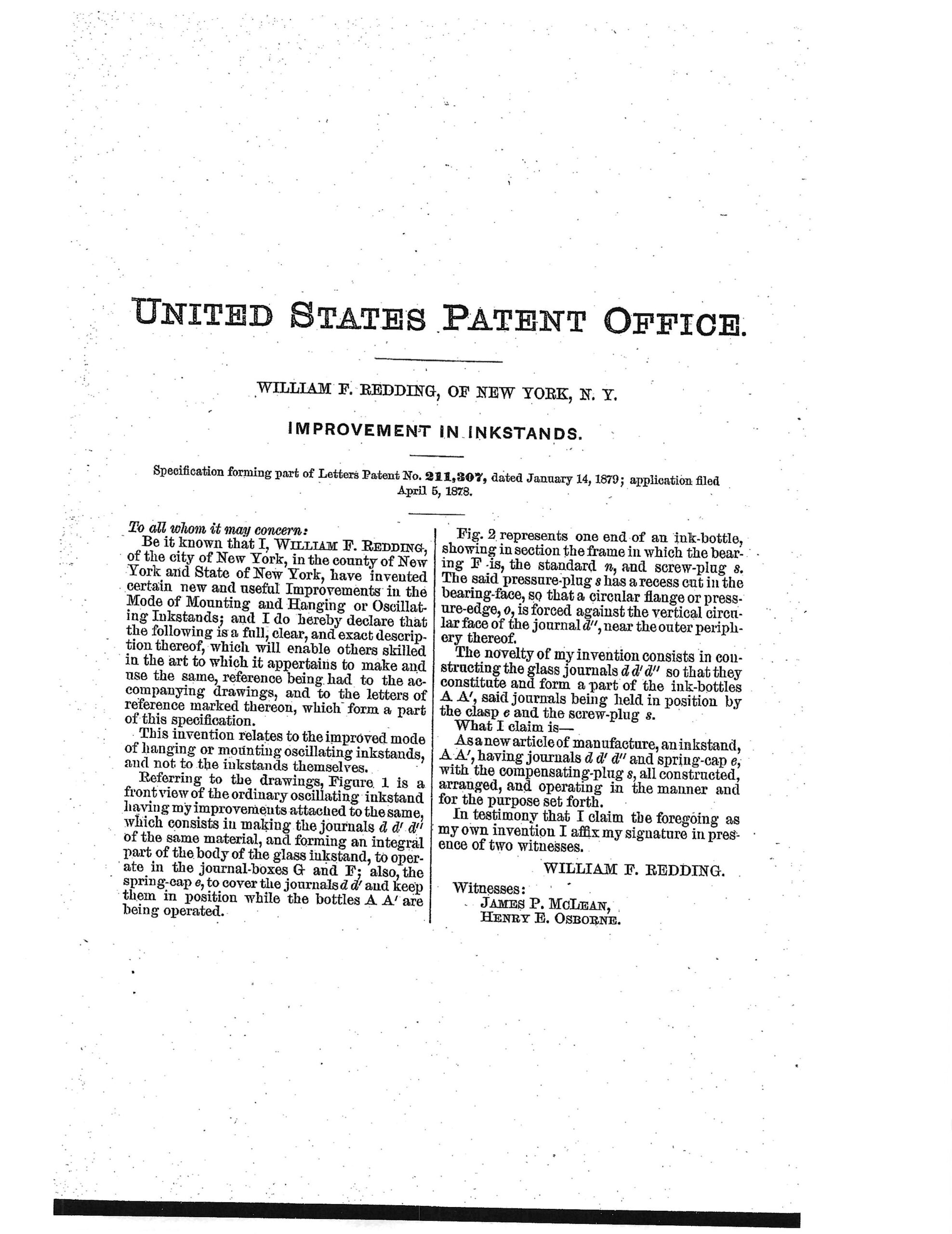
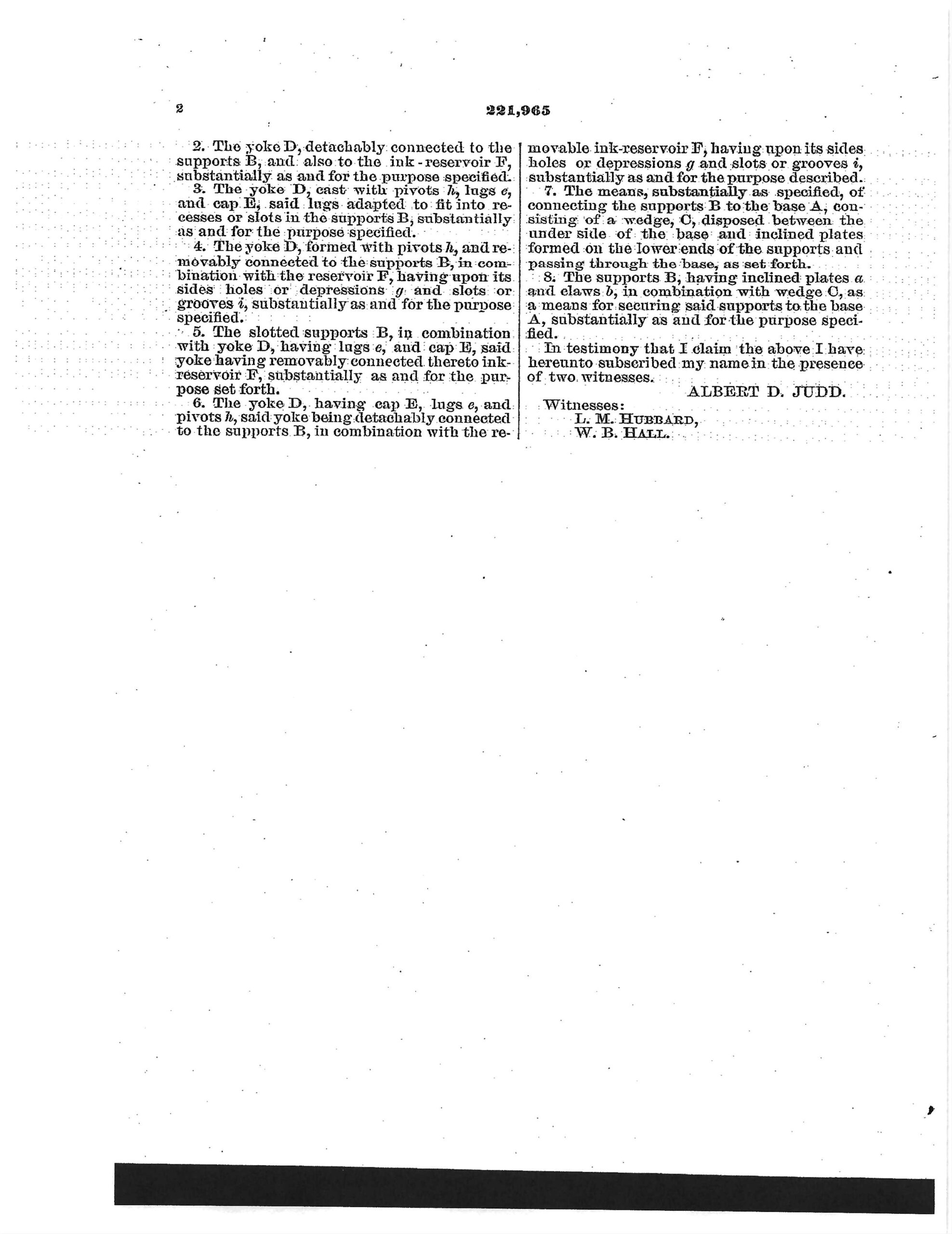
| Patent | Patent No. 211,307 (January 14, 1879) and Patent No. 221,965 (November 25, 1879) |
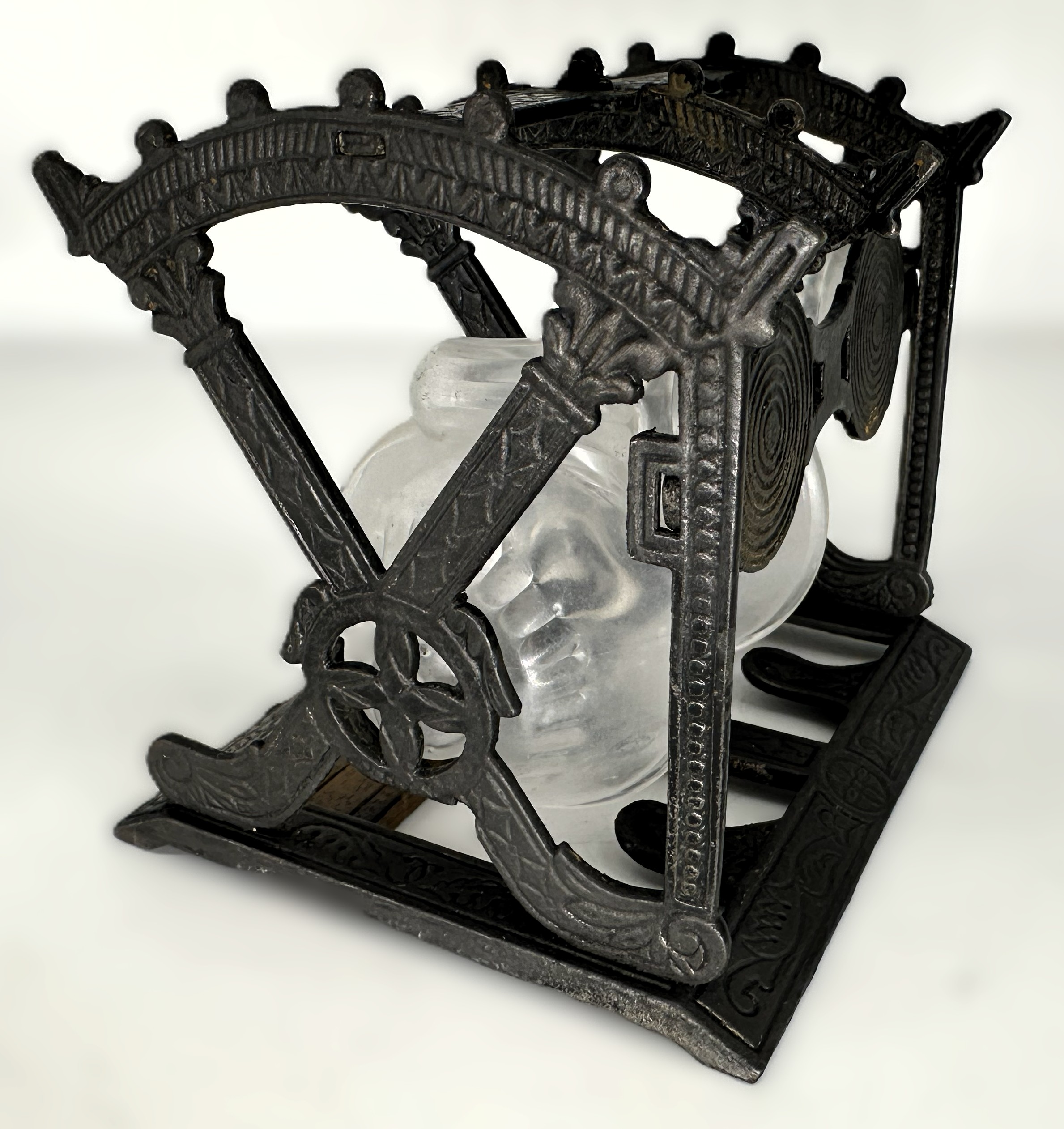
This revolving “snail” inkstand combines intricate aesthetics with inovative mechanical design.
The Manufacturer: Judd Manufacturing Co.
The Judd Manufacturing Company (originally H.L. Judd & Co.) was a premier manufacturer of “art metal goods” based in New Britain, Connecticut, with factories also located in Wallingford. Founded by Hubert L. Judd in the mid-1800s, the company became famous for its high-quality cast-iron and brass housewares, including bookends, mirrors, and desk accessories. Their products were known for their durability and “Japanese Bronze” finishes, which catered to the Aesthetic Movement’s fascination with East Asian motifs.
Technical Design & Patent History
The functionality of this inkstand is defined by two key patents which allowed the inkwells to rotate within the frame:
Patent No. 211,307 (January 14, 1879)
Issued to Edward S. May, this patent describes the core mechanical improvement for revolving inkstands.
- The Problem: Earlier revolving inkwells often relied on simple pins that would wear down or cause the glass to sit unevenly.
- The Solution: May invented a system where the inkwell is supported by a lateral pivot or “trunnion” that slots into the side frames. This allowed the well to swing freely and stay upright through gravity, even as the larger frame might be moved.
Patent No. 221,965 (November 25, 1879)
Also issued to Edward S. May (and assigned to H.L. Judd & Co.), this patent refined the rotating mechanism specifically for “snail” or scroll-shaped wells.
- Mechanism Summary: The patent covers the use of a stop-latch or friction-lock within the revolving axis. This allowed the user to rotate the inkwell to a specific angle for dipping the pen and then have it “click” or hold into place, preventing it from swinging wildly while in use.
Visual & Functional Description
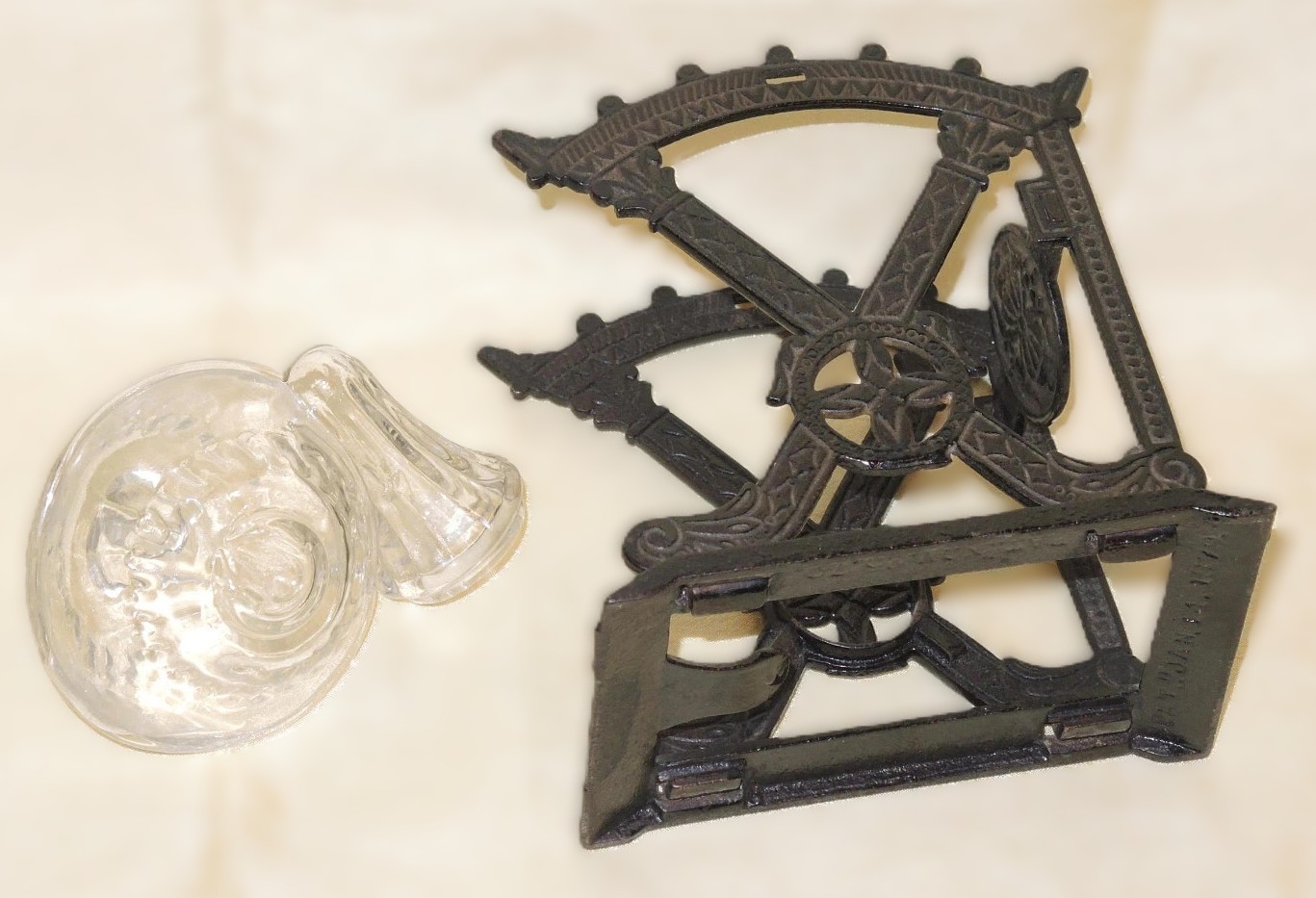
- The “Snail” Wells: The two glass reservoirs are molded in a distinctive spiral or “snail” shape. This design wasn’t just decorative; the curved shape helped manage the ink flow.
- Revolving Mechanism: The wells are suspended between the ornate cast-iron uprights. By gently pushing the glass, the wells rotate, allowing the user to seal the openings by turning them toward the back of the frame when not in use, which prevented the ink from evaporating or collecting dust.
- Frame & Finish: The heavy cast-iron base features an integrated triple pen rest across the top bar. The entire piece was originally coated in a “Japanese Bronze” lacquer—a copper-washed finish that was chemically darkened to give the iron the appearance of aged, hand-rubbed bronze.
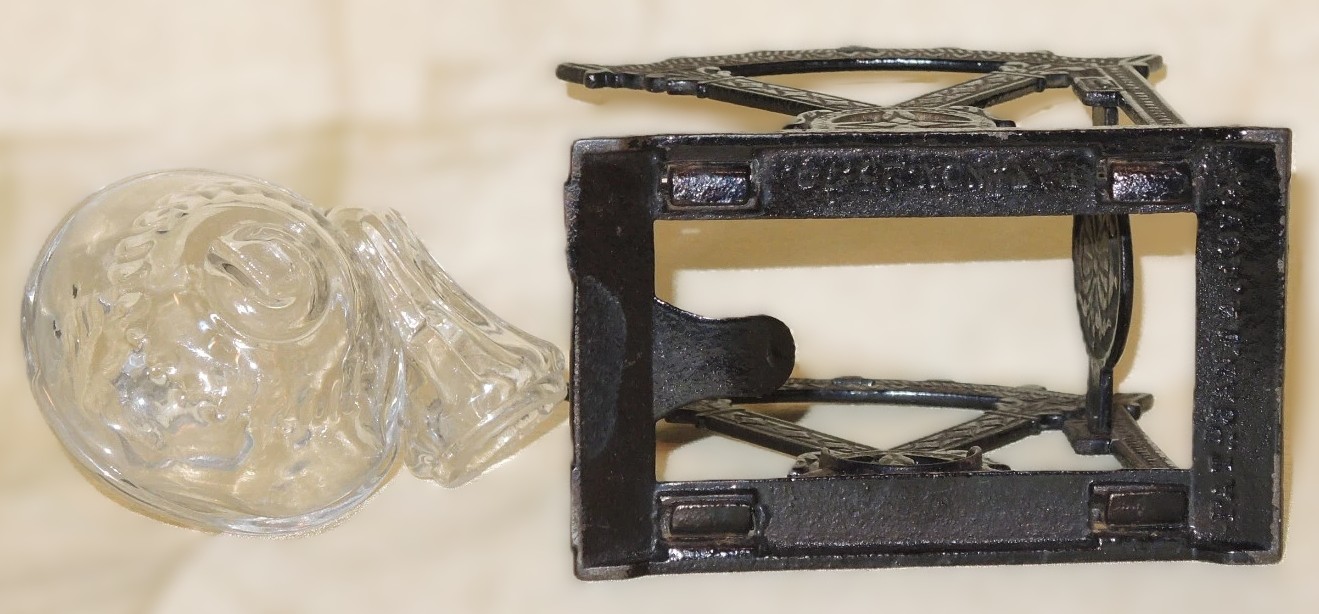
- Markings: The underside of the base clearly displays the “NOV. 25, 79” and “JAN. 14, 79” patent dates, confirming its production by Judd shortly after the patents were granted.
Judd manufactured both a single and double version. Examples of each are pictured.
Single sold for $94 in November 2025
Content disclaimer. The information posted is the owner’s best knowledge and may not have been vetted by the SOIC. We welcome comments, corrections, and additions, working to make our website information comprehensive and accurate.
Join the Society of Inkwell Collectors (SOIC) – it’s free!
Founded in 1981 as a non-profit organization,
we are documenting inkwells (and accessories).
We’re here to help and inform!