






Revolving Double “Snail” Inkstand
| Categories | Mechanical - Snail / Pivoting |
| Type | Snail |
| Material | Cast iron, Glass |
| Markings | Unmarked |
| Manufacturer | H L Judd |
| Origin | United States |
| Date or Era | circa 1880 |
| Measuring | 8 ½” x 4 ⅞” x 4” high |
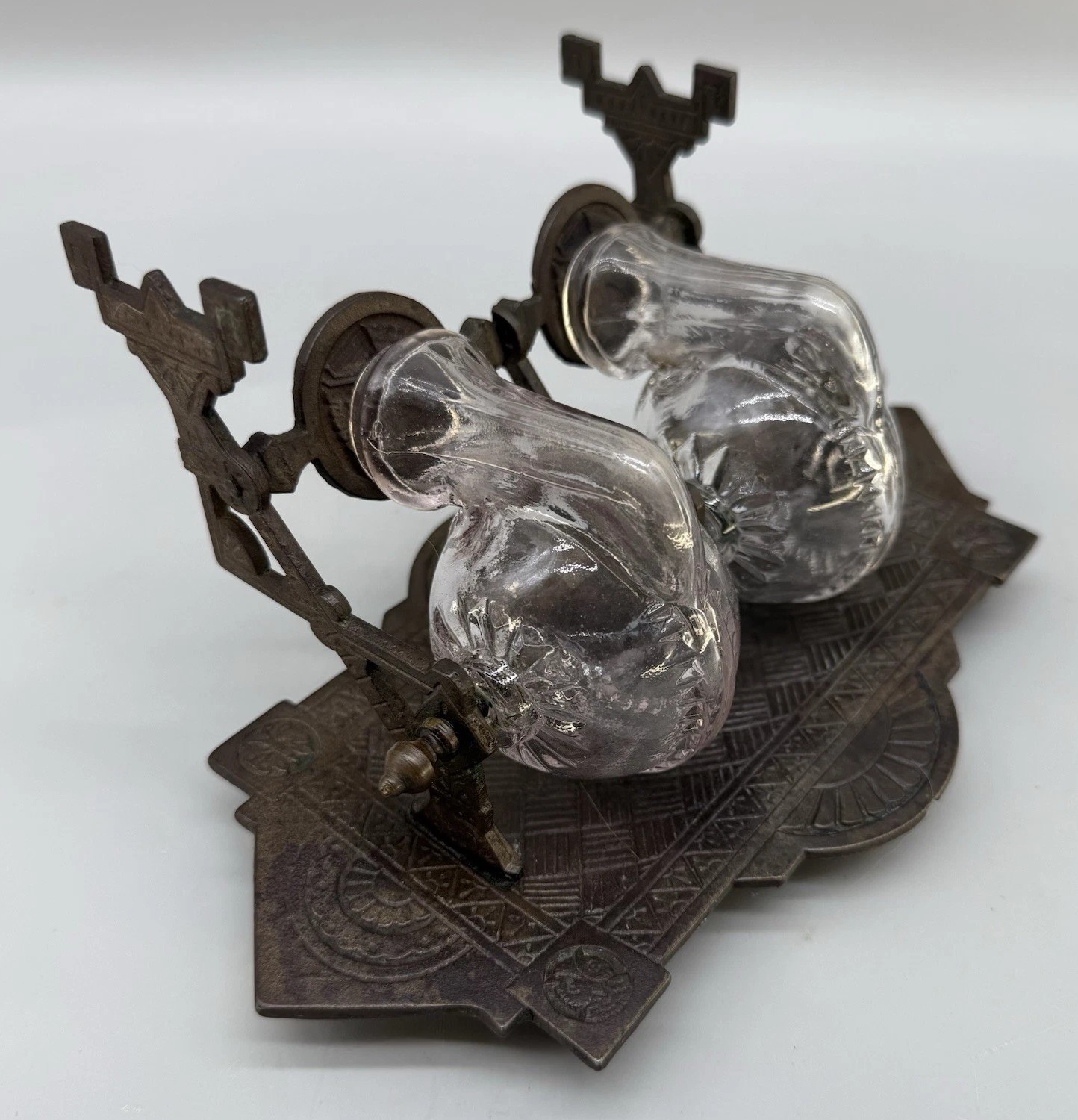
This revolving double “snail” inkstand is a classic of American mechanical design, manufactured by the H. L. Judd Manufacturing Company of New Britain, Connecticut, circa 1879–1885.
The Manufacturer: H. L. Judd Mfg. Co.
While several companies produced revolving inkstands, this specific combination of dragonfly corners and a stork motif is a hallmark of Judd. Judd was famous for his “Aesthetic Movement” cast iron desk accessories, which often blended industrial utility with whimsical nature motifs like insects and birds.
The “Snail” Mechanism Explained
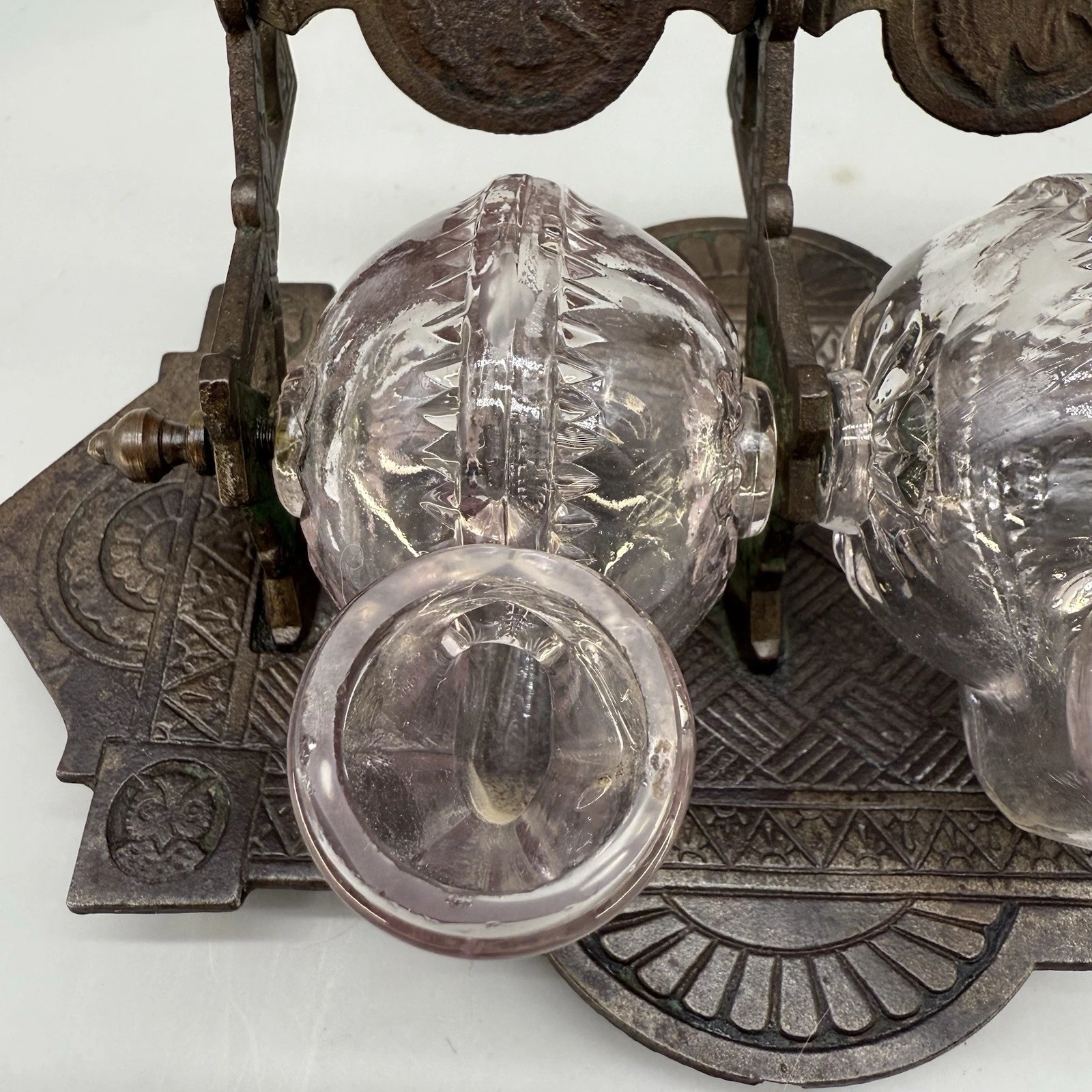
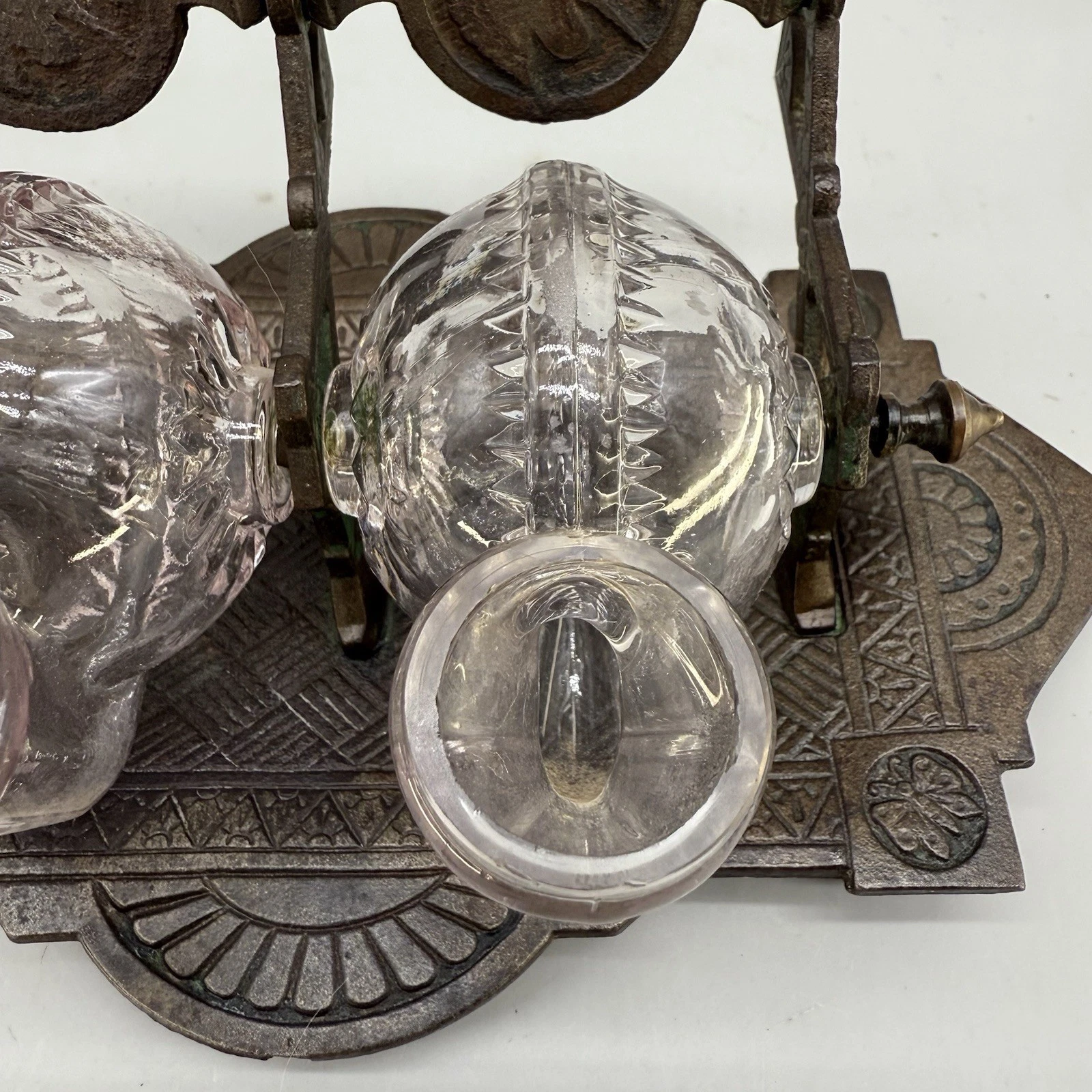
The “snail” name comes from the shape of the blown-glass reservoirs, which resemble a snail’s shell.
- The Pivot: The glass shell is held in a metal frame (standards) by two side-mounted screws that act as an axle.
- Opening: To use the inkwell, you manually rotate the “trumpet” end of the glass shell forward (downward). This action pivots the opening away from the stationary metal backplate.
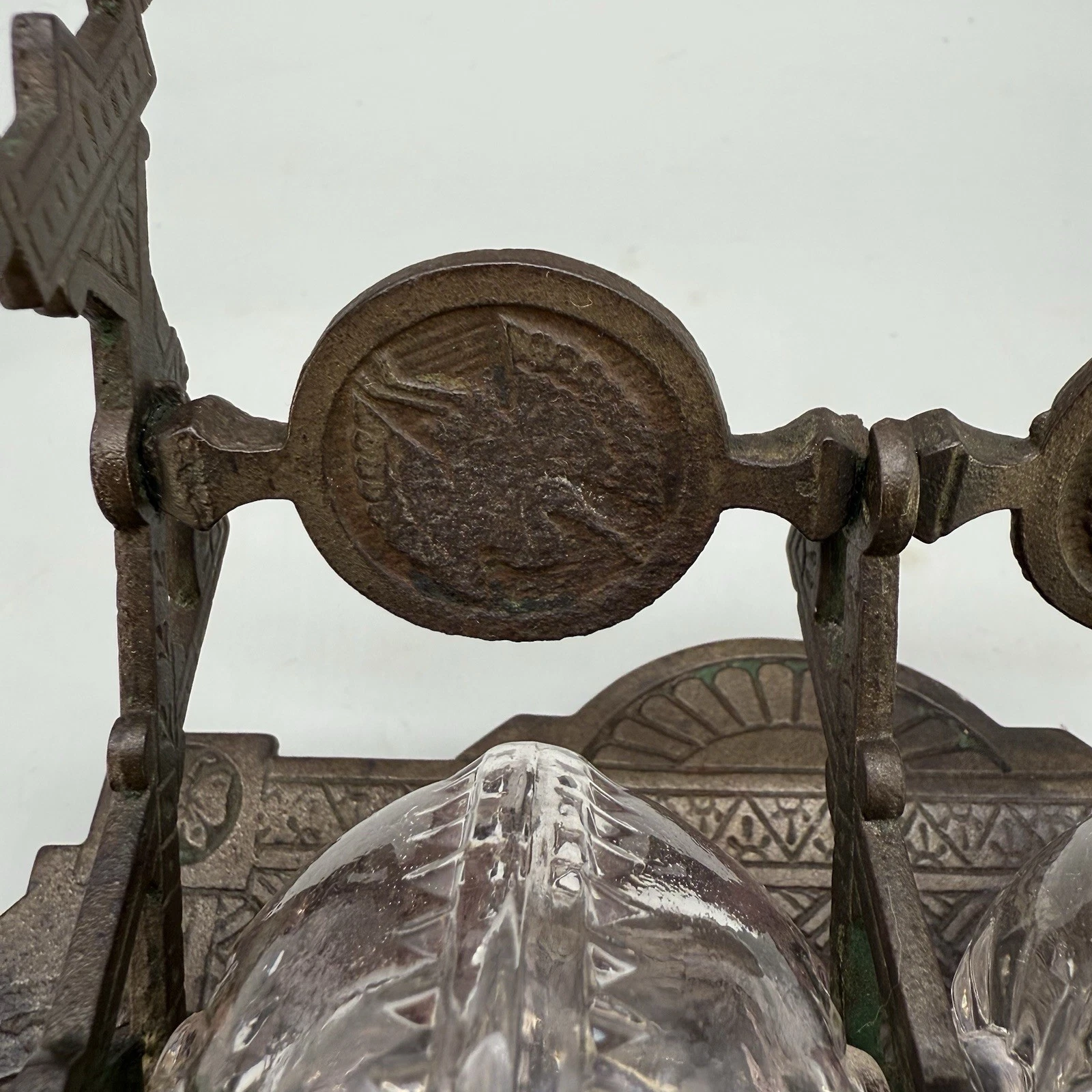
- Closing: To prevent evaporation or spilling, you tip the shell back. The mouth of the glass shell then seats itself firmly against the stopple plate—the stationary metal disc embossed with the stork. This plate acts as a permanent, air-tight lid that the glass “plugs” into.
Detailed Aesthetic Features
- Dragonfly Corners: These are corner accents of the heavy cast iron base, a classic Aesthetic Movement theme celebrating nature’s smaller creatures.
- The Stoppel Plate Stork: In the H. L. Judd catalog, different “stoppel plates” were offered for different themes. While the “Horseshoe” snail inkwell typically featured a horse’s head, this stork version was part of a more ornate botanical/nature-themed set.
- The Base: Made of heavy cast iron, the base features an integrated pen holder and was originally finished in a “Japanese Bronze” or copper-washed lacquer to give it a rich, multi-toned appearance.
Catalog Details of the Dragonfly and Stork Model
The imagery from late 19th-century trade catalogs, such as those from the H. L. Judd Manufacturing Company, illustrates the intricate nature of the Aesthetic Movement designs used for revolving “snail” inkstands.
In these catalogs, the dragonfly and stork motifs were part of a specific series of decorative “Japanesque” bronze-finished goods. The dragonfly appears as a decorative element at the four corners of the cast iron base, with its wings outstretched to form the feet. The stork is most commonly found as a high-relief casting on the circular stoppel plate, the stationary disc that seals the glass inkwell when it is tilted back.
- The Dragonfly Corners: In the original sales sheets, these are often described as “fancy insect corners.” They were designed to provide a wide, stable footprint for the heavy revolving mechanism while adding the naturalistic texture favored in Victorian homes.
- The Stork Stoppel Plate: While other models featured a horseshoe or a plain disc, the stork version was marketed as a premium “Nature Series” item. The stork was a popular symbol in Aesthetic art, often representing longevity and wisdom.
- Finishes: Catalogs listed these items in “Japanese Bronze,” which was a copper and gold wash over the cast iron, highlighted by hand-burnished edges to make the relief of the dragonfly wings and stork feathers stand out.
These models were specifically promoted for their “cleanliness and durability,” noting that the revolving action prevented the ink from drying out while the heavy base ensured the set would not slide during use.
Sold for $106 in December 2025
Content disclaimer. The information posted is the owner’s best knowledge and may not have been vetted by the SOIC. We welcome comments, corrections, and additions, working to make our website information comprehensive and accurate.
Join the Society of Inkwell Collectors (SOIC) – it’s free!
Founded in 1981 as a non-profit organization,
we are documenting inkwells (and accessories).
We’re here to help and inform!