


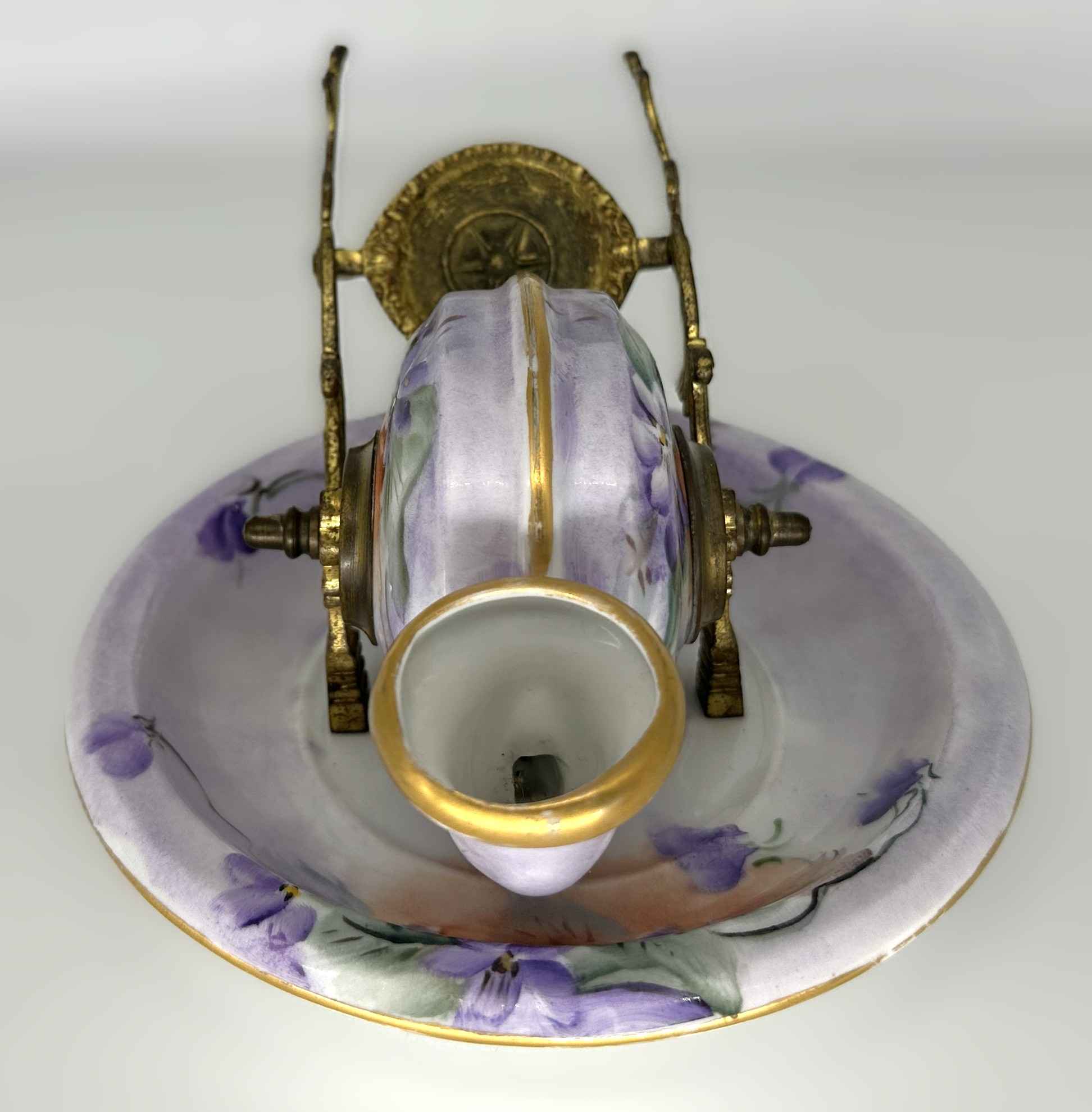
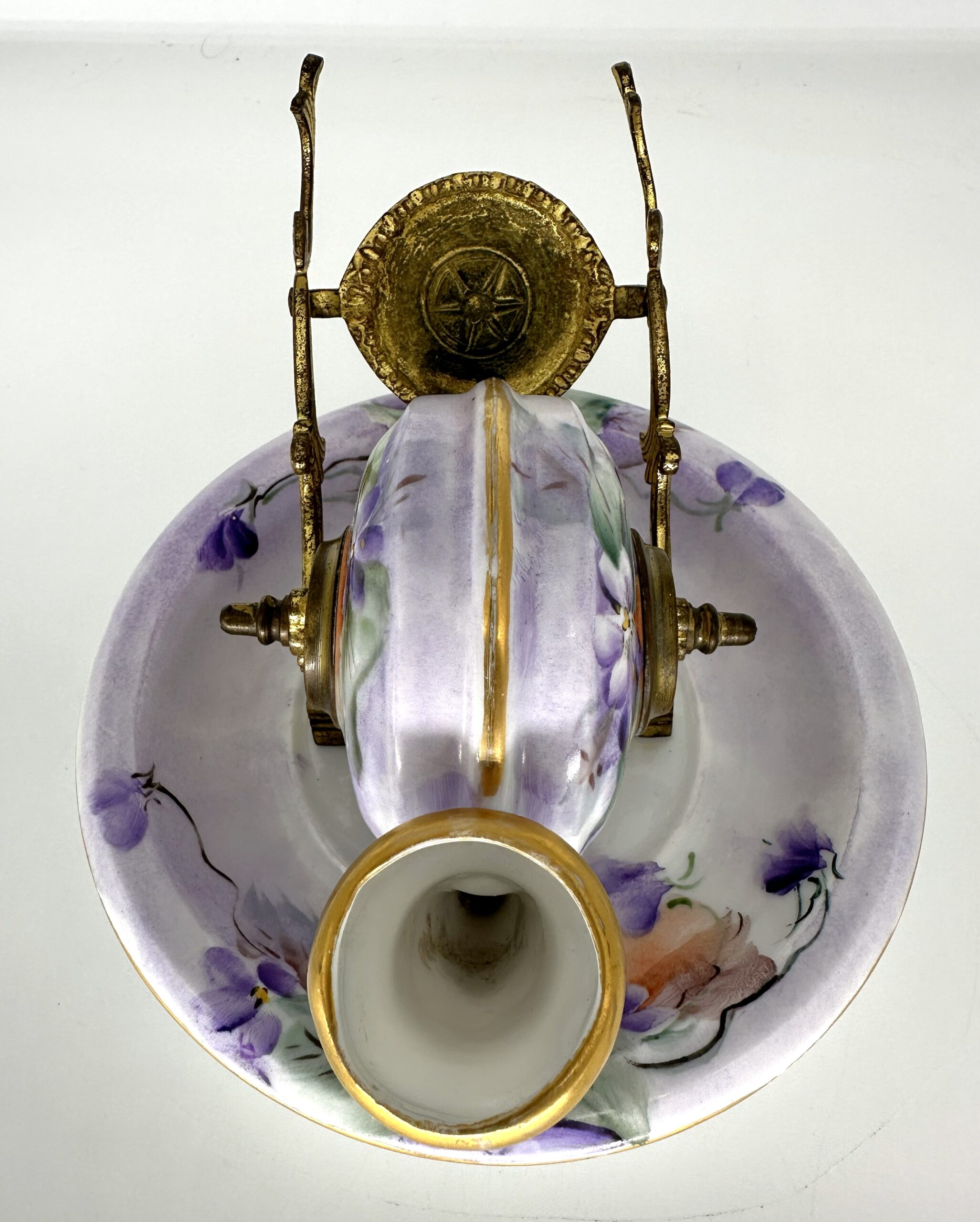
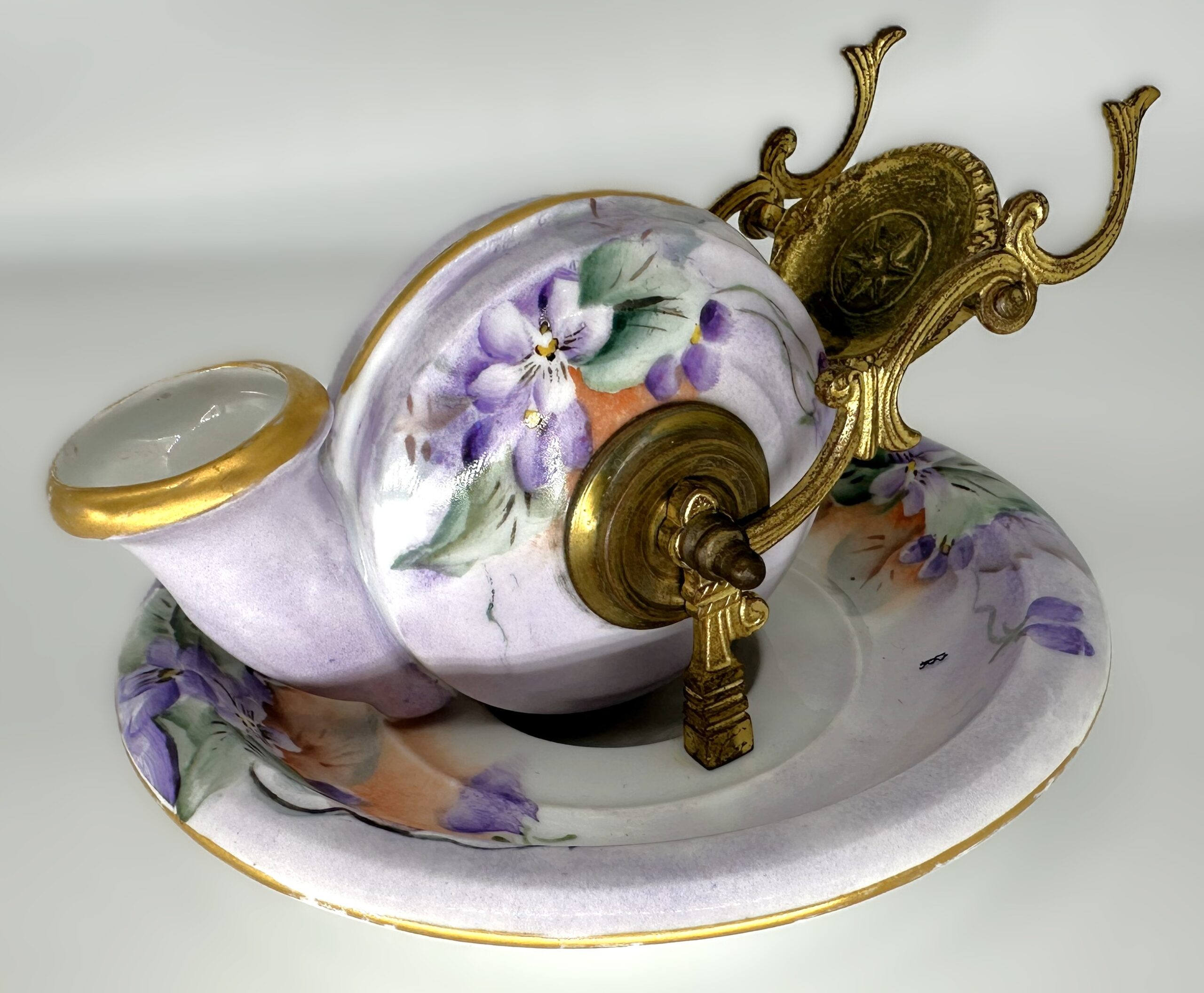

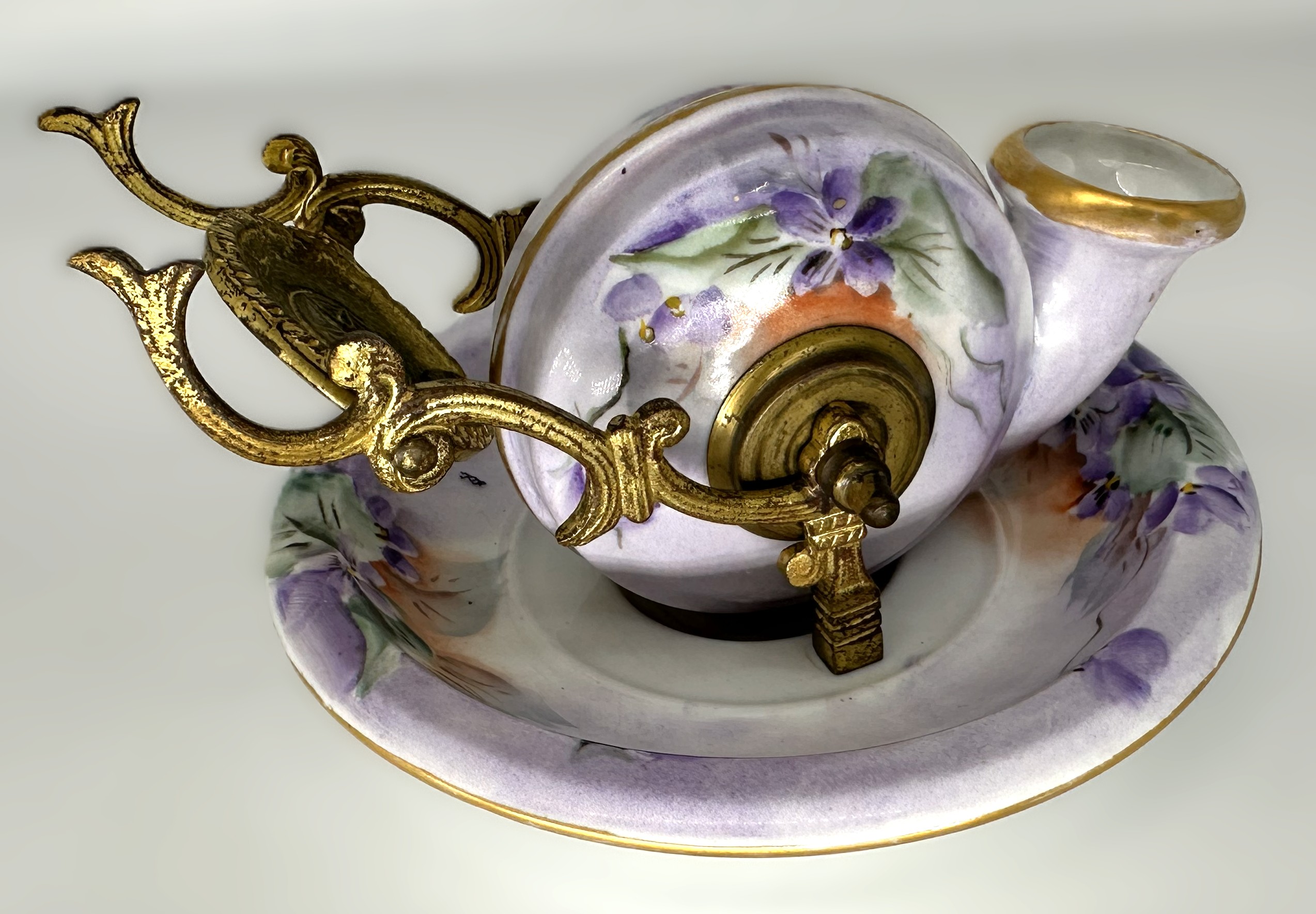


Fischer & Mieg Revolving “Snail” Inkstand
| Categories | Mechanical - Snail / Pivoting |
| Type | Snail |
| Material | Porcelain |
| Markings | See Narrative |
| Manufacturer | Fischer & Mieg |
| Origin | Bohemia |
| Date or Era | circa 1880 |
| Measuring | 6” diameter; 3 ½” high |
This revolving inkstand was designed to be as functional as it is ornamental. Shaped like a snail (or escargot), it represents the era’s fascination with nature-inspired items and clever engineering.
Mechanism and Function
The inkstand operates on a revolving pivot system. The porcelain shell is mounted on a central horizontal brass axle.
- Opening: To access the ink, the user swivels the shell forward within its brass frame. This movement brings the “mouth” of the shell—which houses the ink reservoir—to an upright, accessible position.
- Closing: When not in use, the shell is rotated back. This action effectively “seals” the inkwell against the base or a stopper, preventing the ink from evaporating or collecting dust—a common problem for 19th-century writers.
Detailed Parts and Design
- The “Stoppel” Plate: Behind the revolving shell sits an ornamental brass plate, often referred to as a “stoppel” or stopper plate. It is circular and decorated with a low-relief six-pointed star or wheel motif. This plate serves as a decorative backstop for the revolving mechanism.
- Pen Holder: Integrated into the brass frame are two elegant, upward-curving arms with trifid-style tips. These serve as a cradle or rest for a single pen, allowing it to be displayed horizontally above the shell.
- Decoration: The porcelain shell and its matching under-saucer feature a delicate hand-painted floral pattern in shades of purple (violets), orange, and gold. The rim of the saucer and the mouth of the inkwell are finished with a rich gold gilt.
Manufacturer History: Fischer & Mieg (Pirkenhammer)
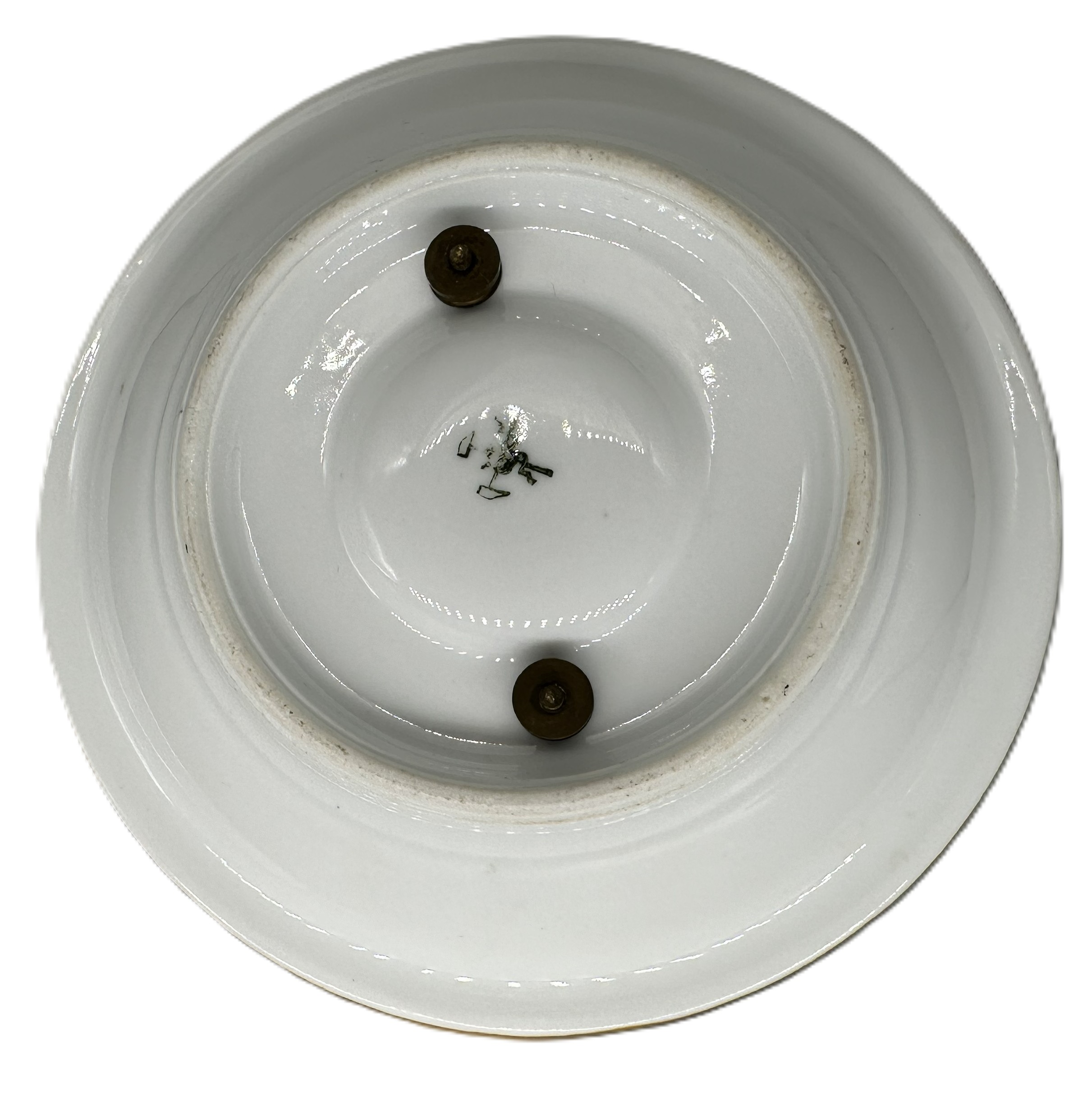
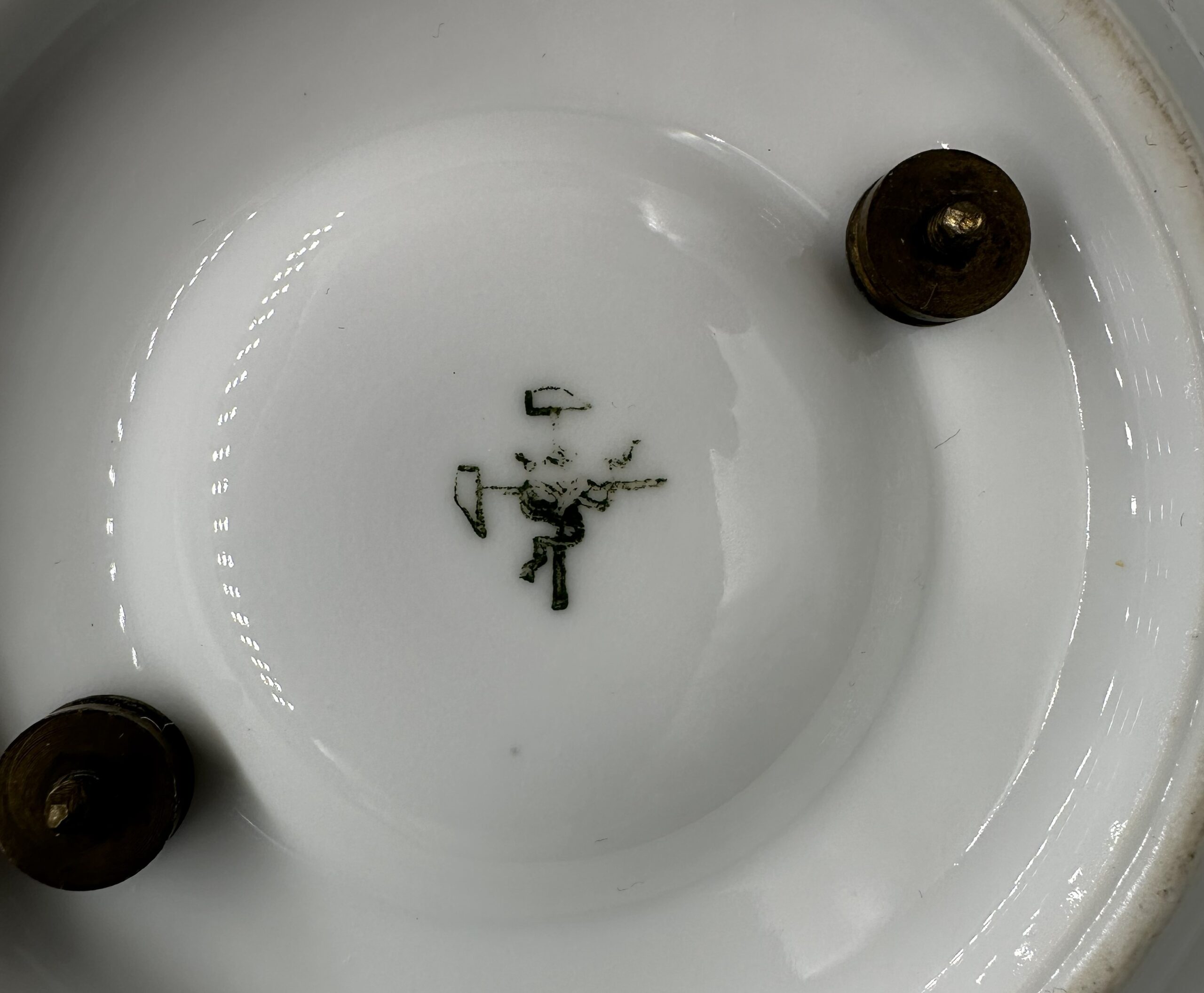
The green underglaze mark on the base—crossed hammers topped with a crown—identifies this as a product of the Pirkenhammer factory, under the ownership of Fischer & Mieg.
- Location: Founded in 1803 in Pirkenhammer, Bohemia (near Karlovy Vary in the modern-day Czech Republic).
- Prestige: Under Christian Fischer and later the Fischer & Mieg partnership (starting in 1853), Pirkenhammer became one of the most prestigious porcelain manufacturers in the world. They were renowned for their “hard-paste” porcelain, which was exceptionally white, translucent, and durable.
- Era: This specific revolving “snail” model was popular in the late 19th century (circa 1870–1900). During this time, Pirkenhammer won numerous awards at International Expositions (including Paris and Vienna), often competing directly with top French firms like Sèvres.
This inkstand is a prime example of why Pirkenhammer was so successful: it combined superior porcelain quality with intricate metalwork.
Estimated Value: $250
Content disclaimer. The information posted is the owner’s best knowledge and may not have been vetted by the SOIC. We welcome comments, corrections, and additions, working to make our website information comprehensive and accurate.
Join the Society of Inkwell Collectors (SOIC) – it’s free!
Founded in 1981 as a non-profit organization,
we are documenting inkwells (and accessories).
We’re here to help and inform!