






Pump Inkstand with Winding-Chain Mechanism
| Categories | Mechanical - Pump / Siphon |
| Type | Pump |
| Material | Porcelain |
| Markings | Unmarked |
| Manufacturer | Undetermined |
| Origin | France |
| Date or Era | circa 1860 |
| Measuring | 8” x 7 ½” x 5” high |
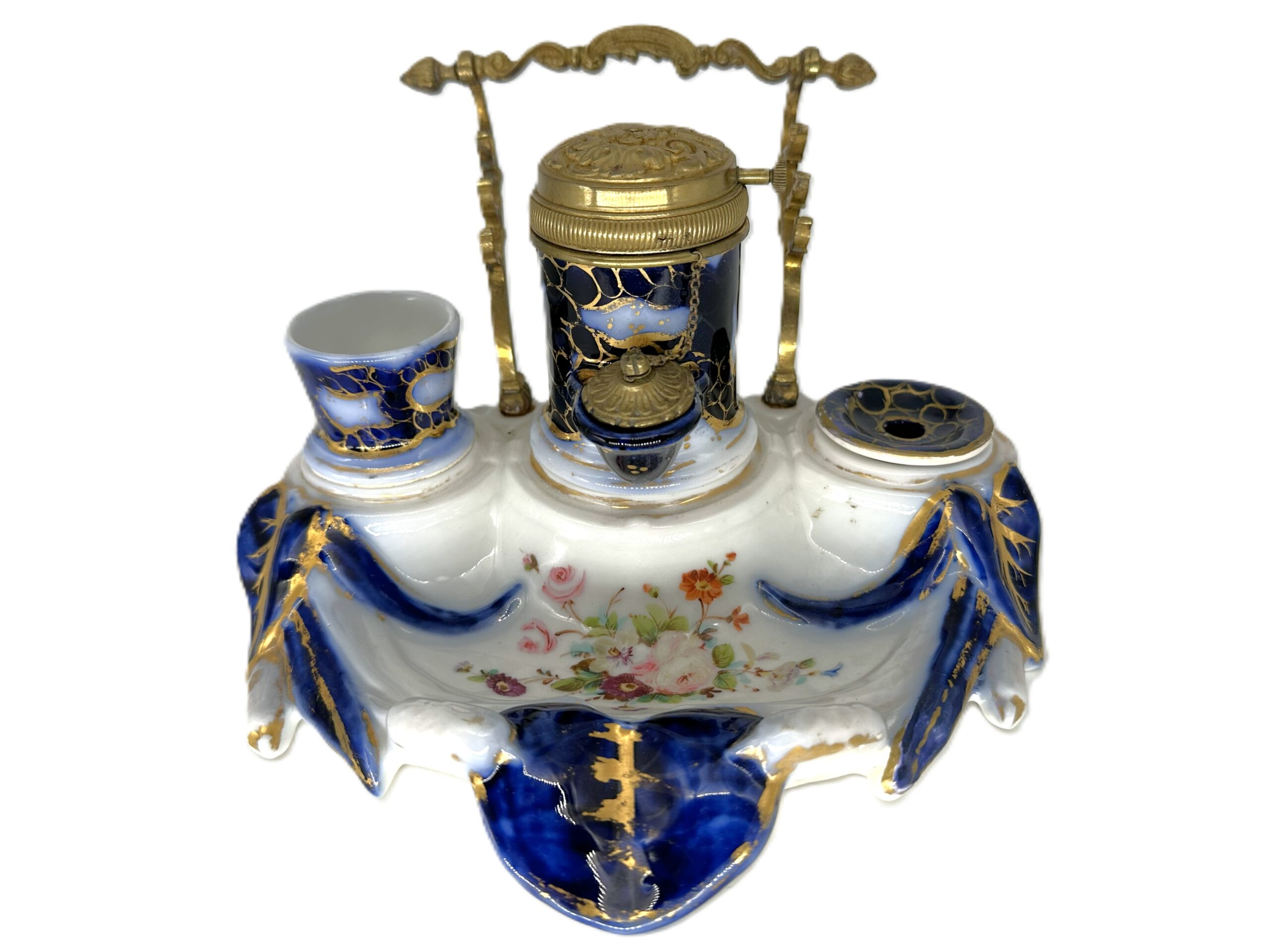
This inkstand combines a complex winding-chain pump mechanism with the ornate artistry of cobalt blue and gold-gilt porcelain.
Description and Components
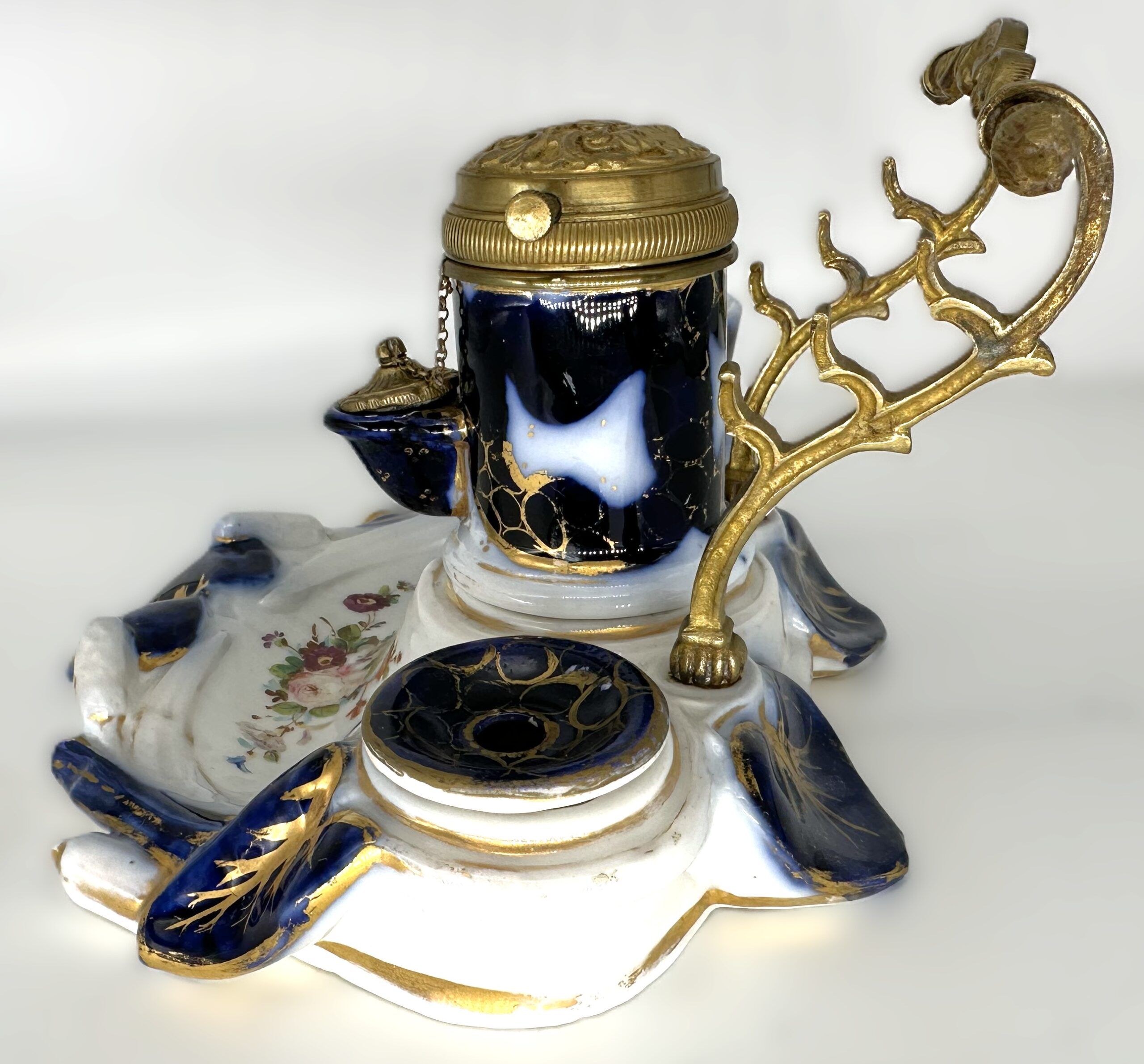
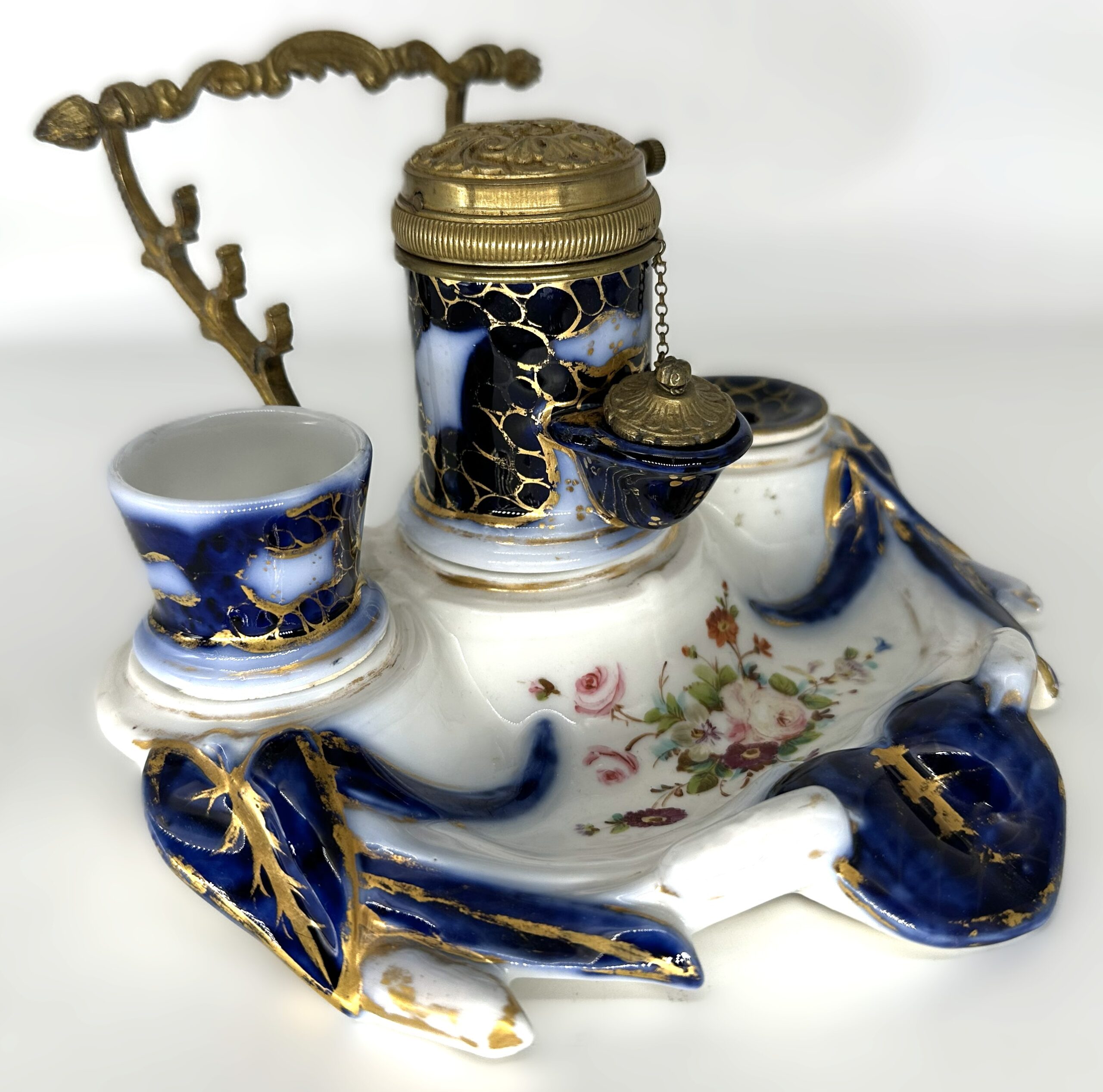
- The Porcelain Base: The stand features a large, asymmetrical rococo-style porcelain base. It is decorated with deep cobalt blue “vignettes” accented by heavy gold-gilt scrollwork and hand-painted floral sprays in the central well.
- The Storage Cups: Right Side: Features a “conventional” ink pot with a wide rim, decorated in matching cobalt and gold.
- Left Side: A smaller, open cup that likely served as a container for small desk items like wafers or seals.
- Writing Tray: The front portion of the base is molded into a shallow, curved tray designed to hold an array of pens, nibs, or other writing paraphernalia.
- The Pen Rack: An ornate, horizontal brass rack is mounted behind the inkwell, featuring two multi-tiered arms designed to hold pens at different levels.
The “Boquet Winding Mechanism”
The center of this set is a mechanical pump inkwell that operates on the 1844 Louis Honoré Boquet patent for a winding displacement system.
Unlike the standard screw-top models, this one uses a windlass and chain:
- The Windlass: A small brass knob (or key) on the side of the inkwell lid acts as a windlass.
- The Chain: Turning this side knob winds a miniature internal chain.
- The Plunger: This chain is attached to a lead-weighted porcelain plunger. By winding or unwinding the chain, the writer raises or lowers the plunger into the ink reservoir.
- Displacement: Lowering the plunger forces the ink to rise through an internal channel and out into the front dipping font.
Historical Significance
This winding mechanism was a bold but ultimately less successful experiment than the conventional turning knob. The thin chains and internal springs were often too fragile for daily use, making surviving, functional examples like this somewhat rare.
The presence of the cobalt blue and gold “cracked ice” or “trellis” pattern suggests this was a high-end luxury piece, possibly produced to compete with the finest output from factories like Sèvres or Limoges in the mid-to-late 19th century.
Estimated Value: $300
Content disclaimer. The information posted is the owner’s best knowledge and may not have been vetted by the SOIC. We welcome comments, corrections, and additions, working to make our website information comprehensive and accurate.
Join the Society of Inkwell Collectors (SOIC) – it’s free!
Founded in 1981 as a non-profit organization,
we are documenting inkwells (and accessories).
We’re here to help and inform!