


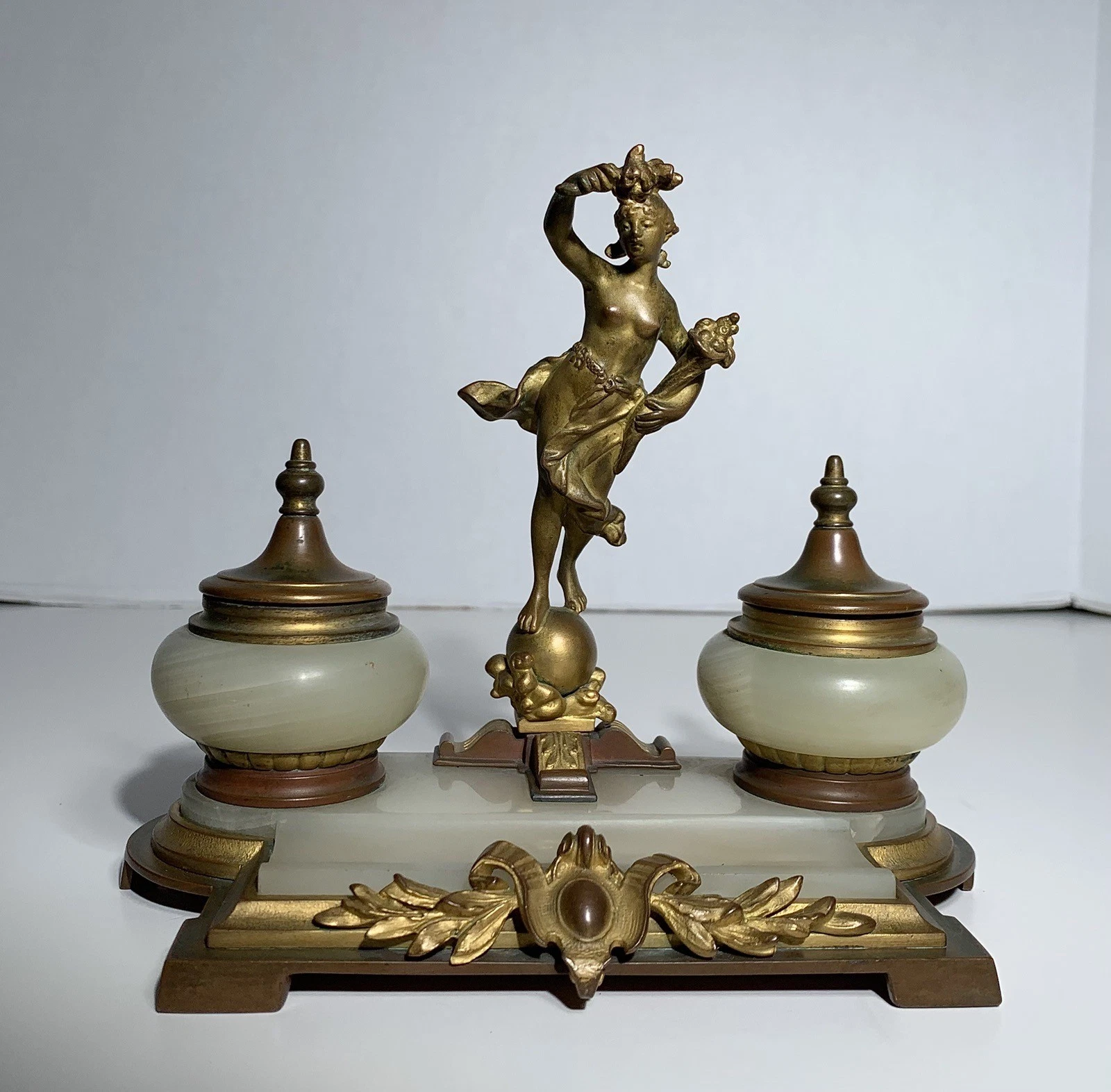
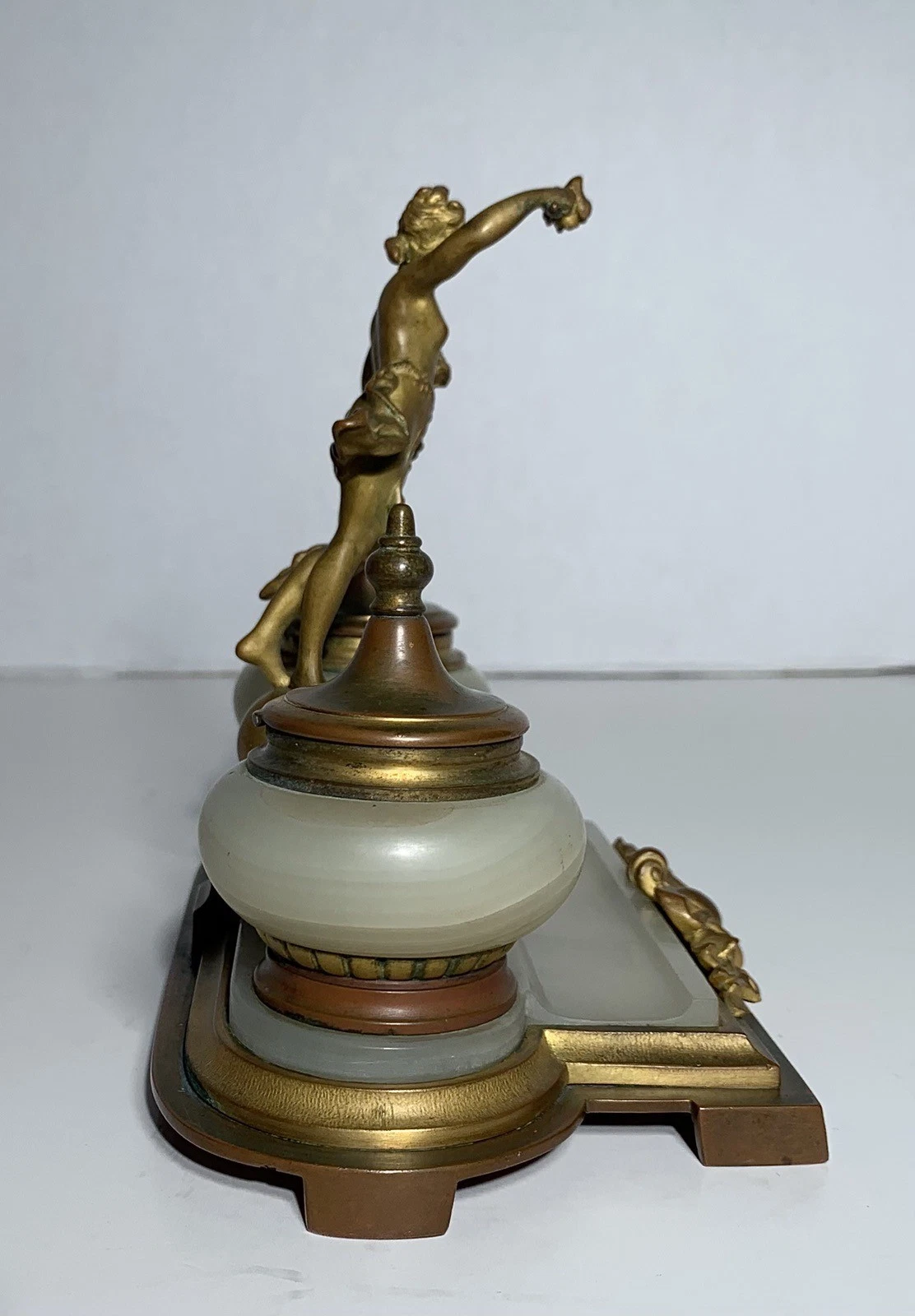
Onyx Inkstand – Roman Goddess Fortuna
| Categories | Figural - Mythology; Literature; Religion; Fictional |
| Type | Mythology |
| Material | Bronze, Onyx |
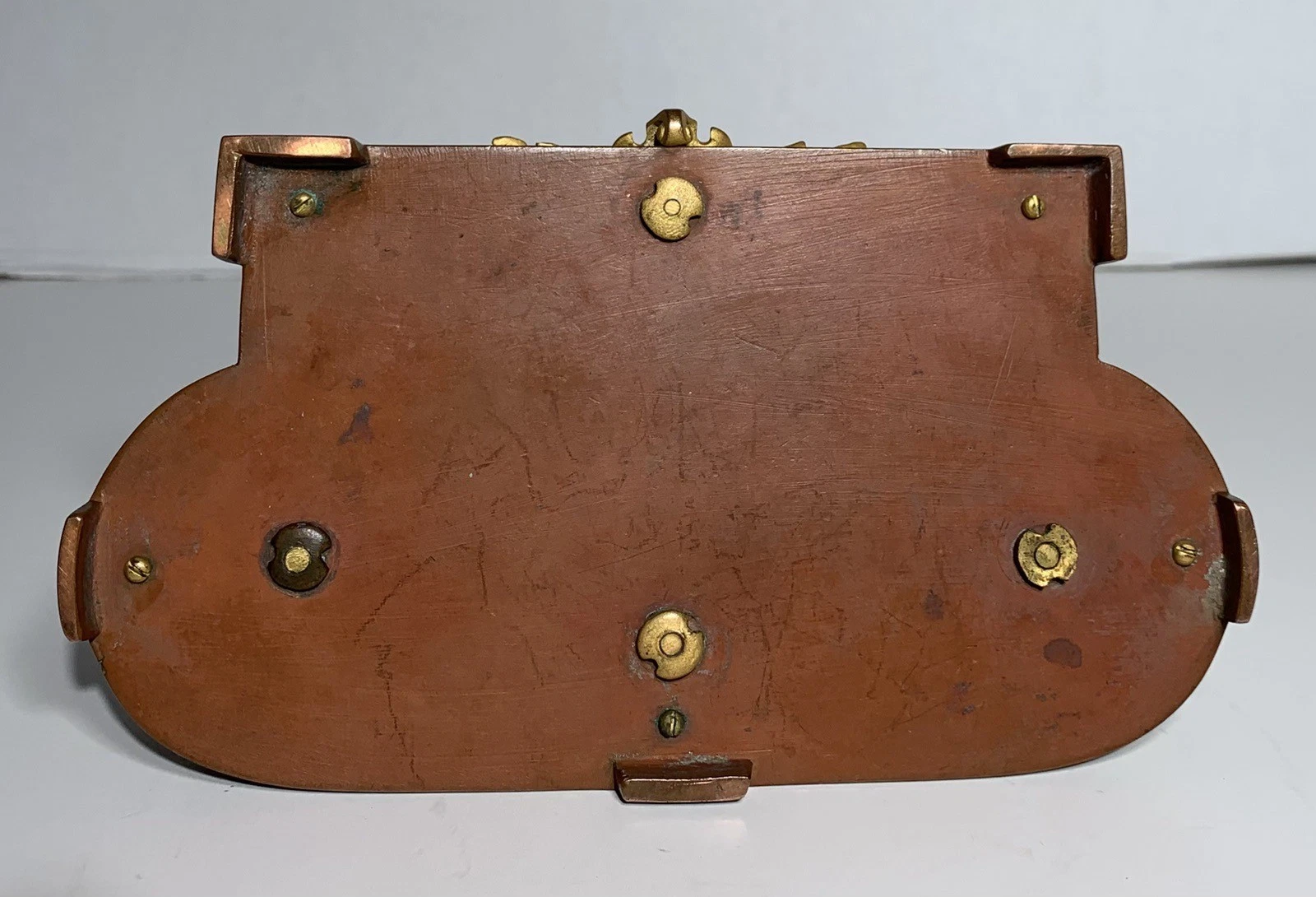
| Markings | Unmarked |
| Manufacturer | Undetermined |
| Origin | France |
| Date or Era | circa 1880 |
| Measuring | 7 ⅝” x 4 ¼” x 6” high |
Description
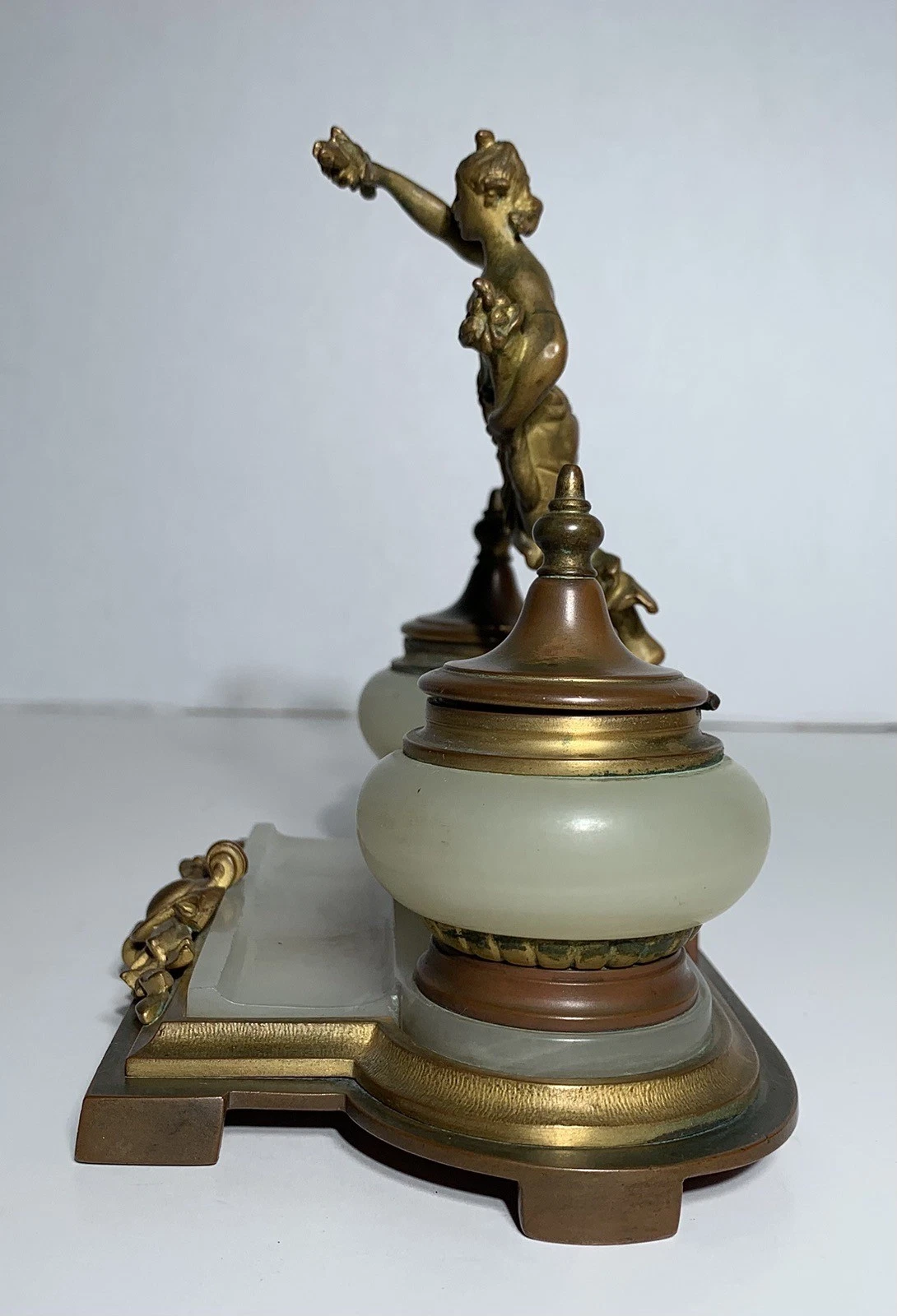
- Base: The primary tray is made from a light, translucent greenish-white onyx or alabaster panel set with a grooved pen-rest at the front. It is framed by a cast-bronze or brass stepped border featuring an ornate, classical foliate cartouche (with stylized acanthus leaves and a central oval medallion) on the front lip.
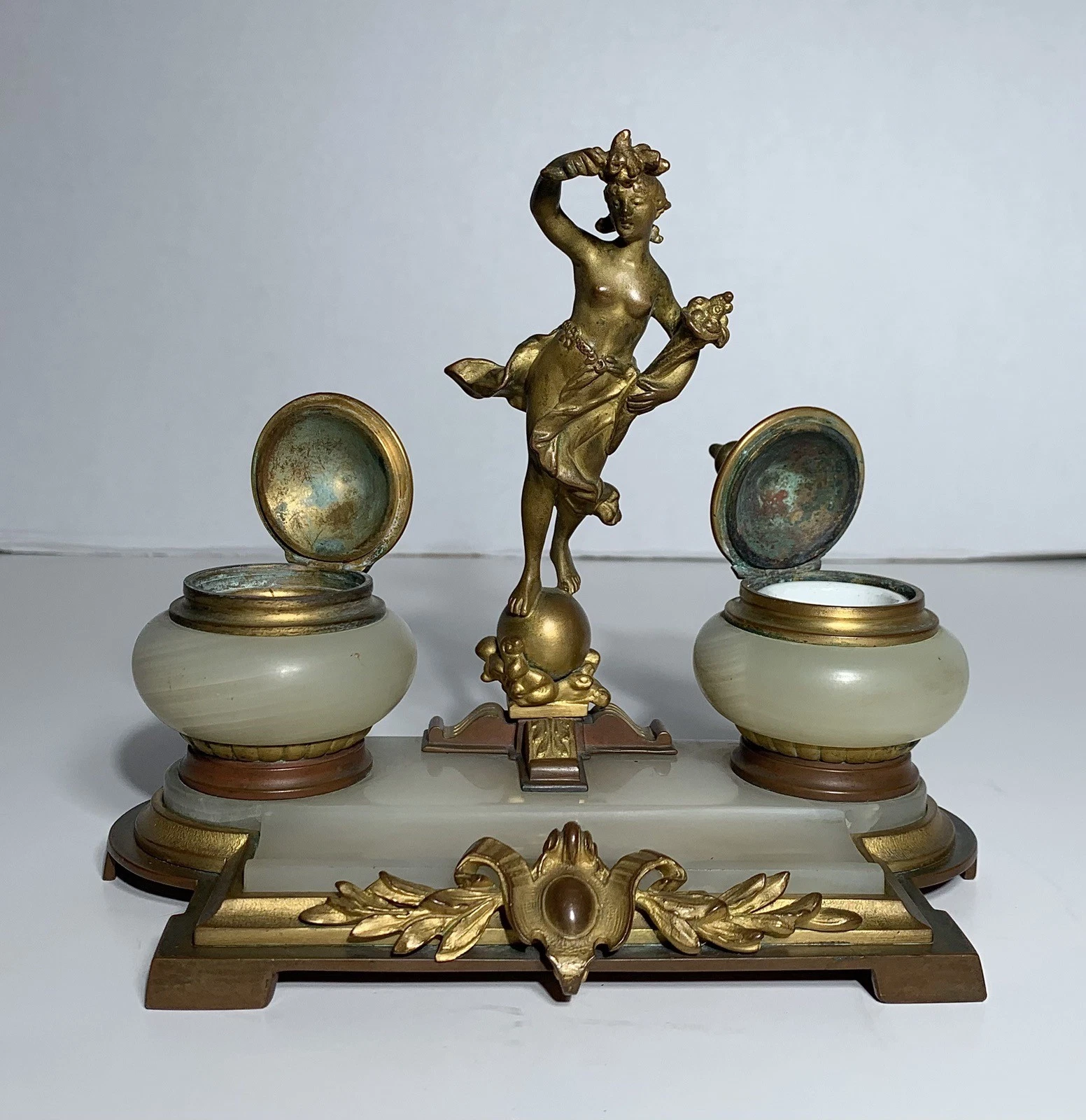
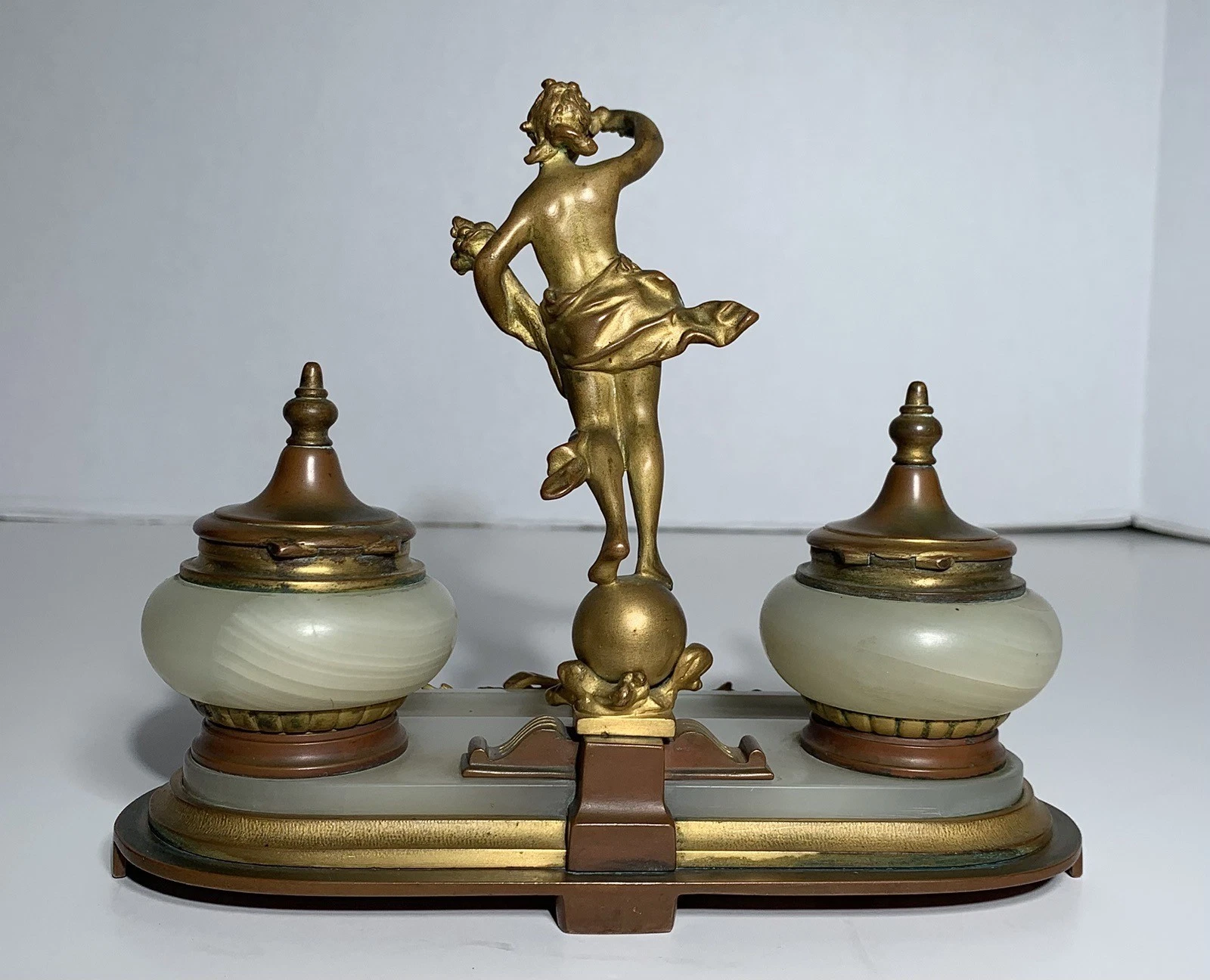
- Inkwells: The piece features a symmetrical pair of double inkwells flanking the center figurine. Each inkwell consists of a rounded, bulbous onyx/glass body nested into an ornamental bronze base. They are fitted with matching, hinged gilt-bronze domes featuring pointed finials. When lifted, they expose the interior wells (one retains a ceramic/porcelain insert).
- Underside: The base is enclosed by a flat, oxidized metal protective backplate secured with traditional slotted brass screws and threaded nuts, typical of mid-to-late 19th-century casting methods.
Iconography & Identification
The Figure: Fortuna (Tyche)
The central classical female figure can be identified as Fortuna, the Roman goddess of luck, fate, and fortune (equivalent to the Greek goddess Tyche).
The identification is based on her defining classical attributes present in this bronze:
- Standing on a Globe/Sphere: Fortuna is traditionally depicted standing or balancing on a sphere or a wheel, symbolizing the mutable, unstable, and fleeting nature of fate and luck.
- The Cornucopia: In her left arm, she cradles a horn of plenty filled with fruits or riches, representing the abundance, wealth, and gifts she can bestow or take away at a whim.
- Drapery: She is depicted partially nude with flowing, wind-whipped drapery, conveying movement and her transitory nature as she flies or steps across the world.
Maker & Date
- Maker: The piece does not display a foundry stamp, signature, or maker’s mark on the top or underside, which is very common for late 19th-century French decorative table wares. These decorative “encriers” (inkstands) were heavily produced by Parisian foundries (fondeurs) for the retail luxury and export market, often drawing inspiration from monumental sculptures by famous Renaissance or Baroque artists.
- Period: Circa 1870–1890 (Late 19th Century / Napoleon III or Early Third Republic era). The specific combination of cast patinated/gilt bronze paired with machined onyx slabs, the shape of the slotted assembly screws, and the Revivalist classical theme are characteristic of French decorative arts from this time.
Sold for $210 in June 2026
Content disclaimer. The information posted is the owner’s best knowledge and may not have been vetted by the SOIC. We welcome comments, corrections, and additions, working to make our website information comprehensive and accurate.
Join the Society of Inkwell Collectors (SOIC) – it’s free!
Founded in 1981 as a non-profit organization,
we are documenting inkwells (and accessories).
We’re here to help and inform!