

Inkipedia
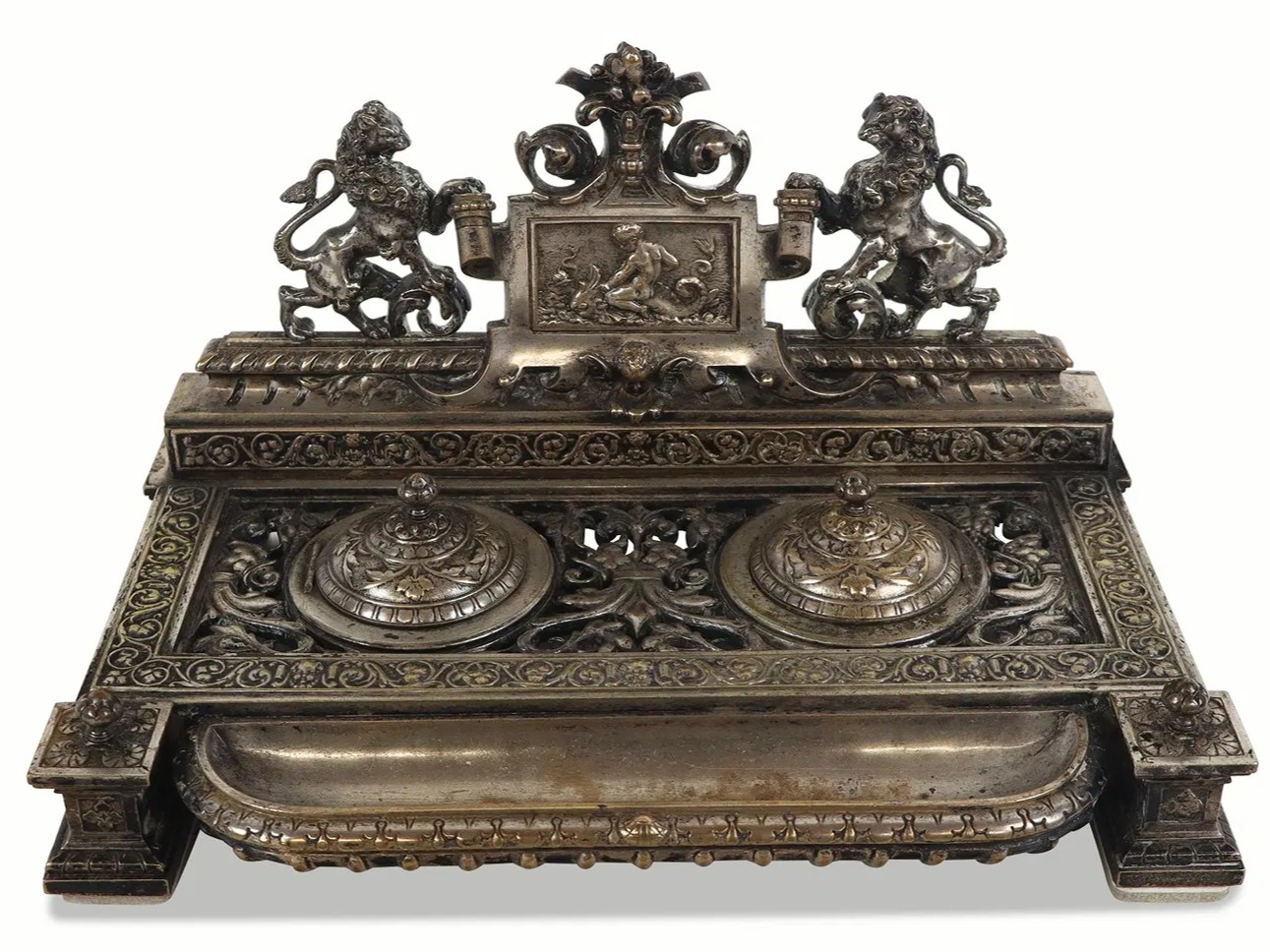
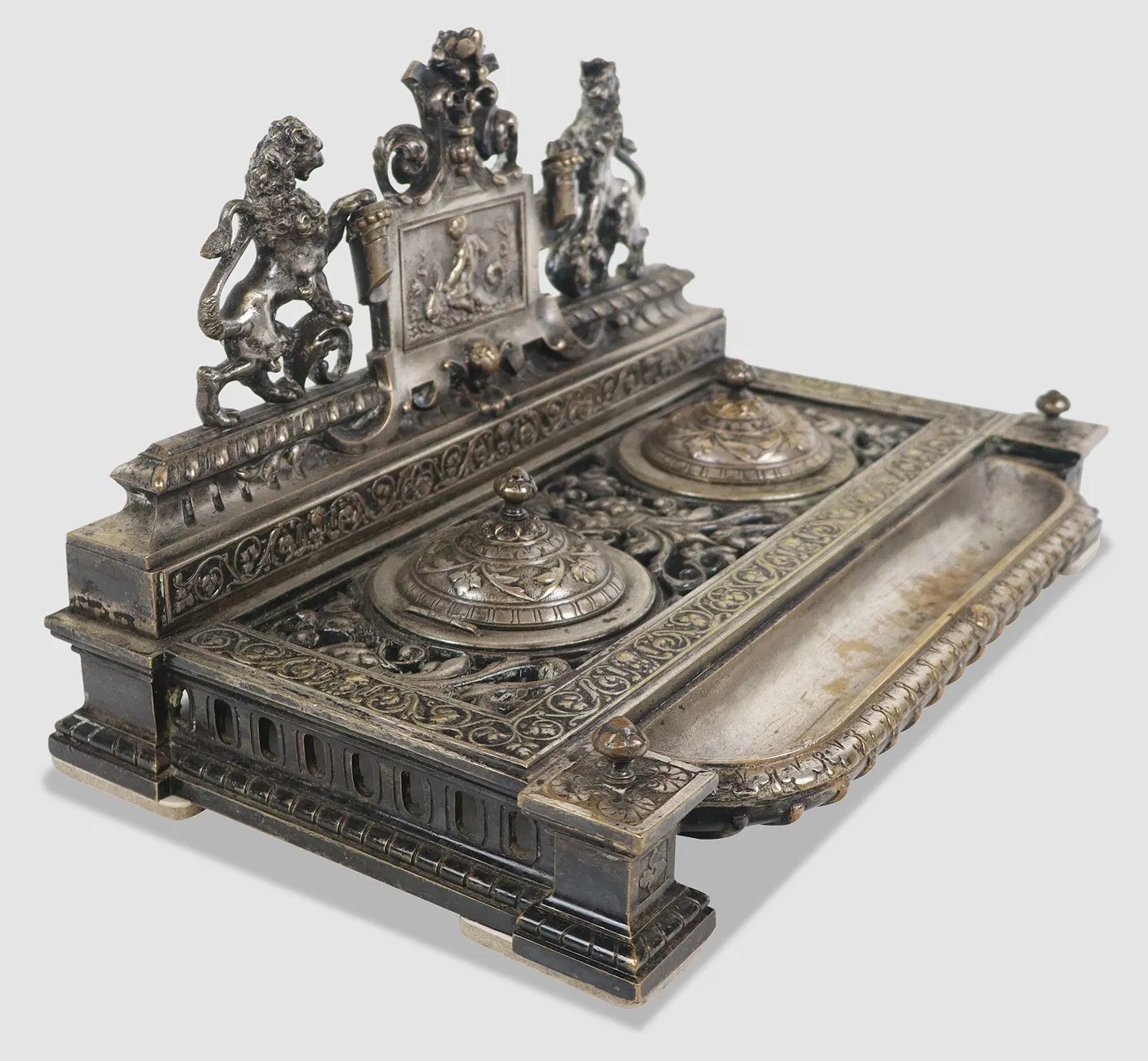
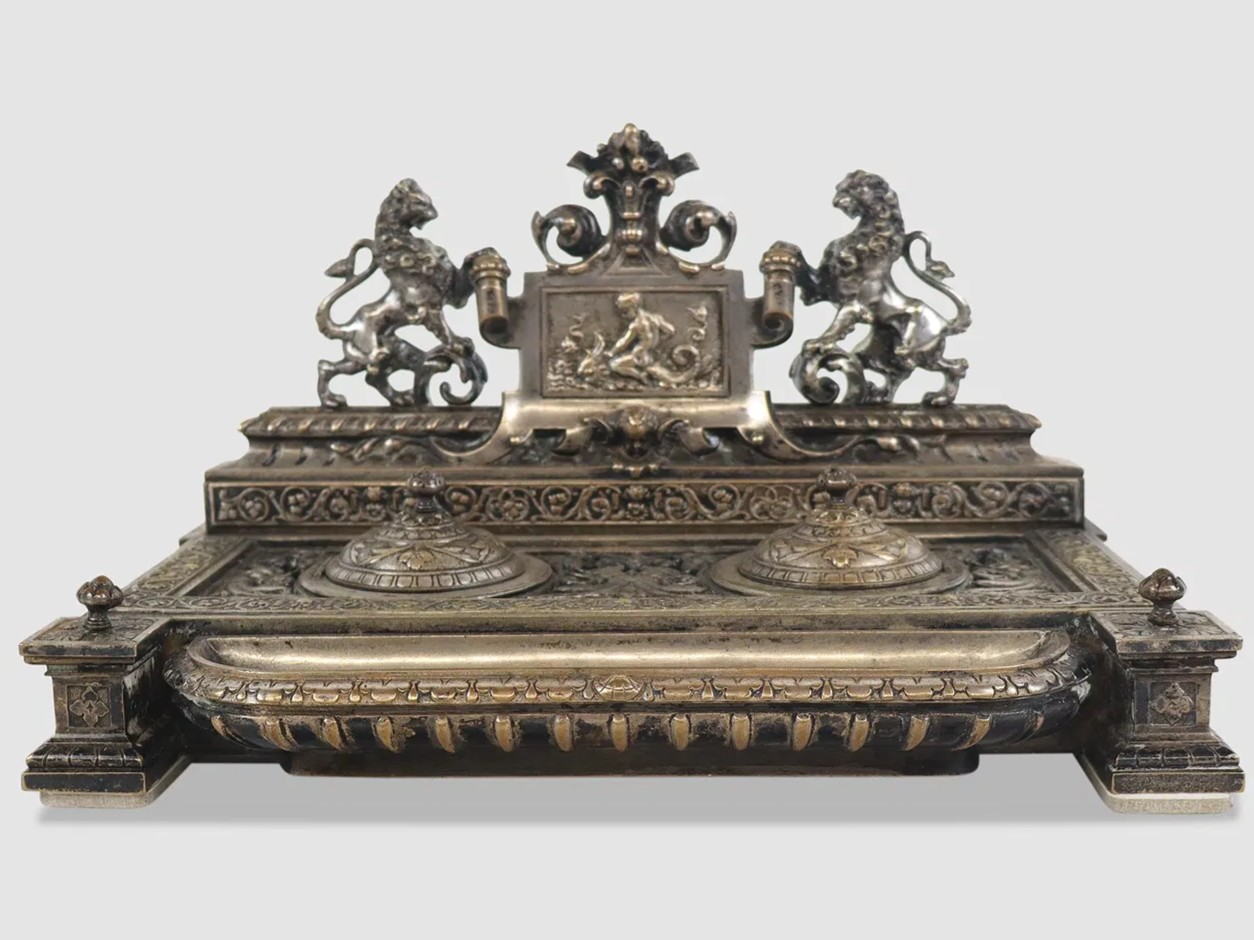
Neoclassical (Renaissance Revival) Inkstand
| Categories | Figural - Mythology; Literature; Religion; Fictional |
| Type | Mythology |
| Material | White metal |
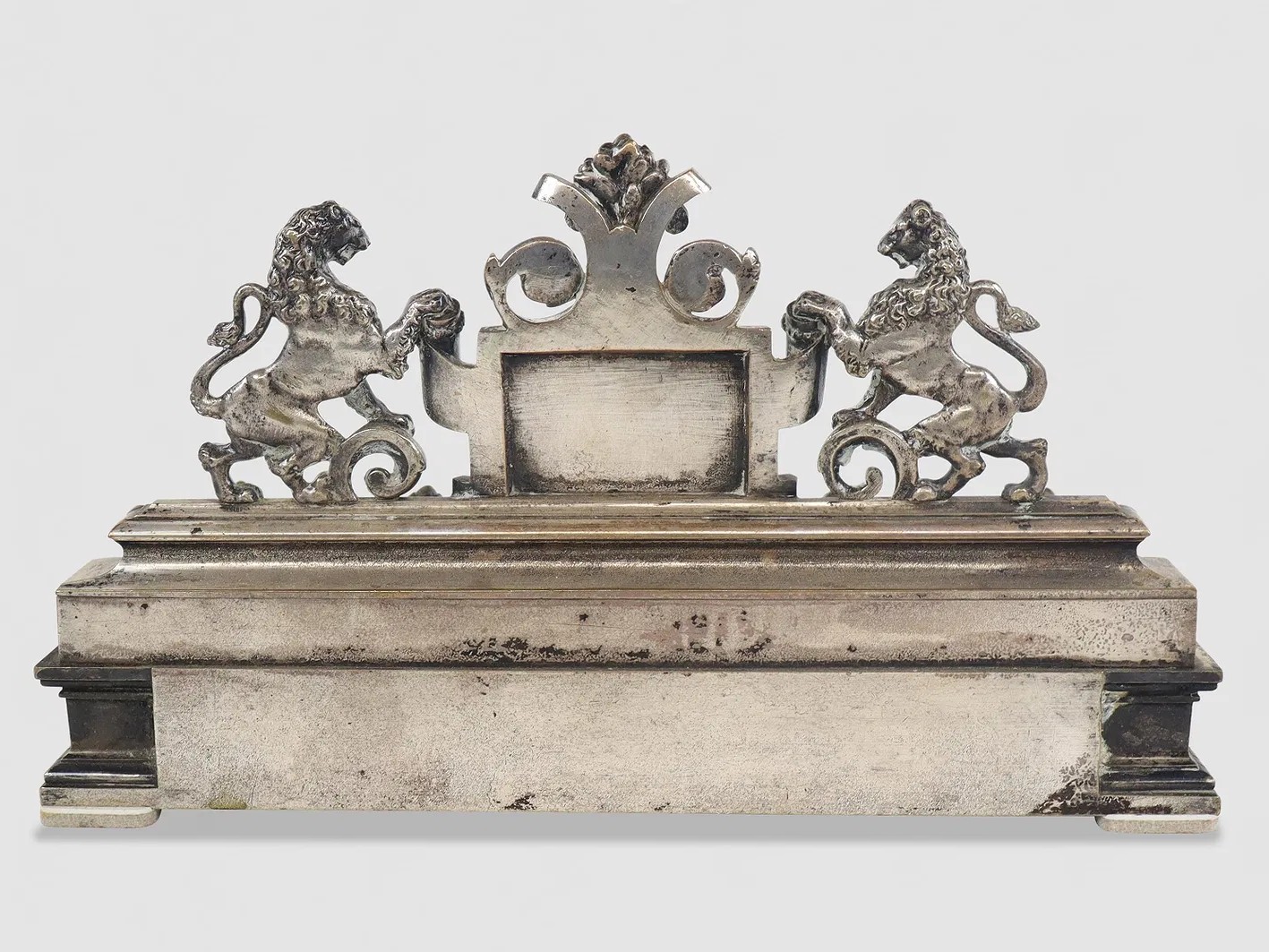
| Markings | Unmarked |
| Manufacturer | Undetermined |
| Origin | Undetermined |
| Date or Era | circa 1880 |
| Measuring | 12” x 6 ¾” x 7” high |
Description
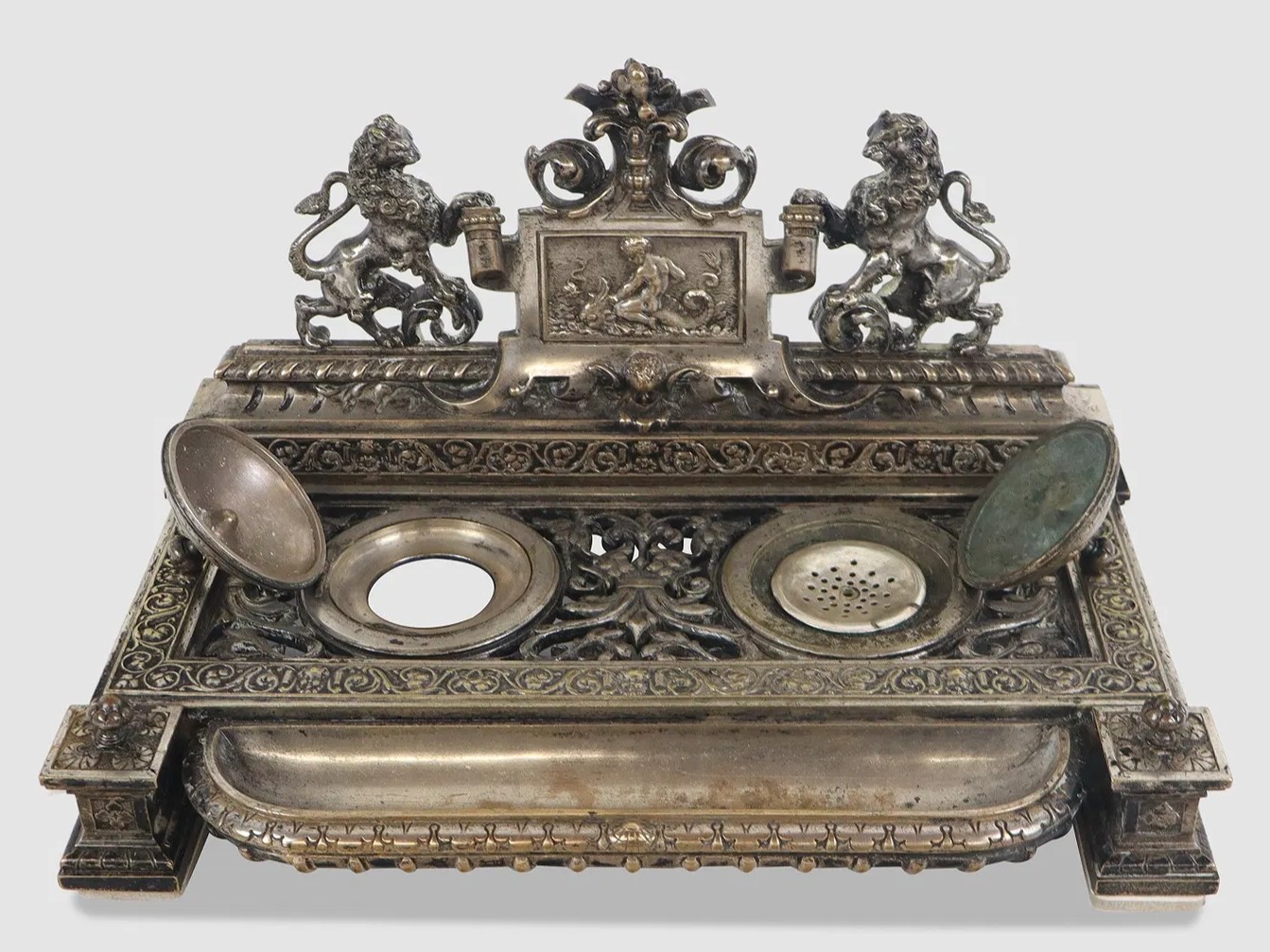
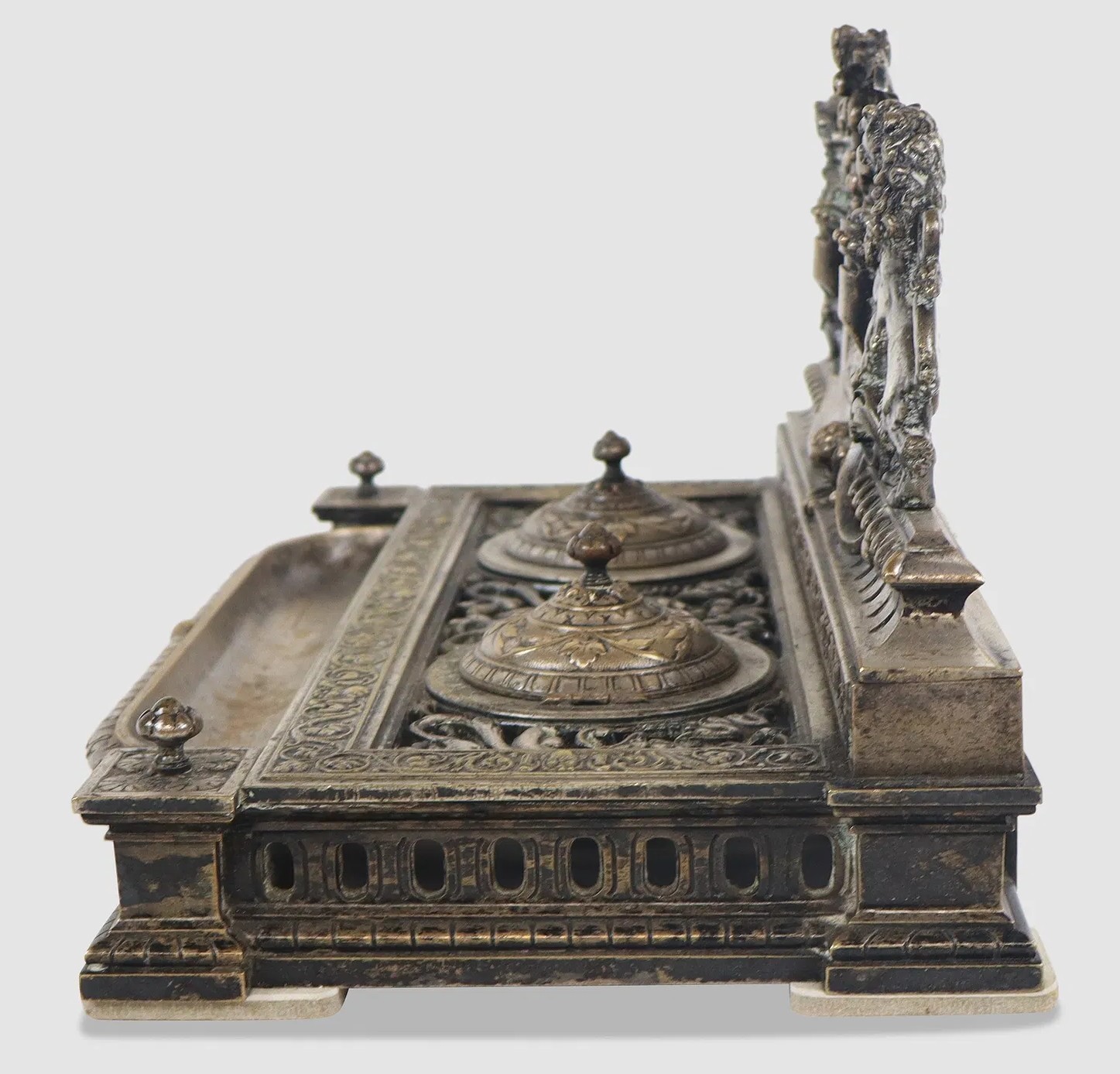
- Structure & Layout: A broad rectangular base with a deep, curved front pen tray, two circular wells inset into an openwork scrollwork plate, and a high architectural backplate.
- Lids & Fittings:
- Right Well: Features a fitted sander/pounce pot insert with a perforated top (used to sprinkle pounce/sand to dry ink or smooth rough paper).
- Left Well: Features an open ring collar designed to hold a removable glass or ceramic insert (currently missing).
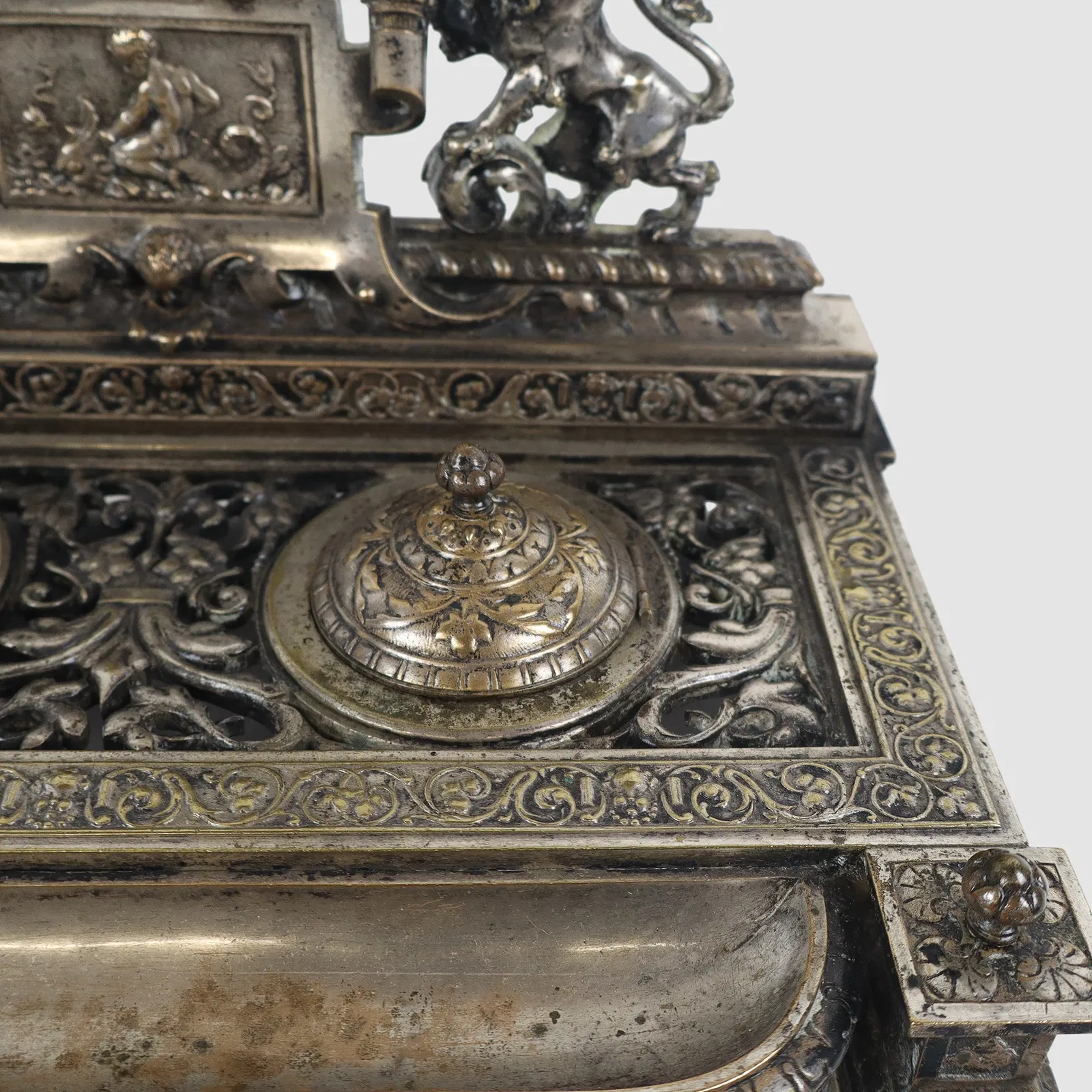
- Both wells feature matching hinged, domed lids with floral/acanthus chasing and finial knobs.
- Backplate & Crest:
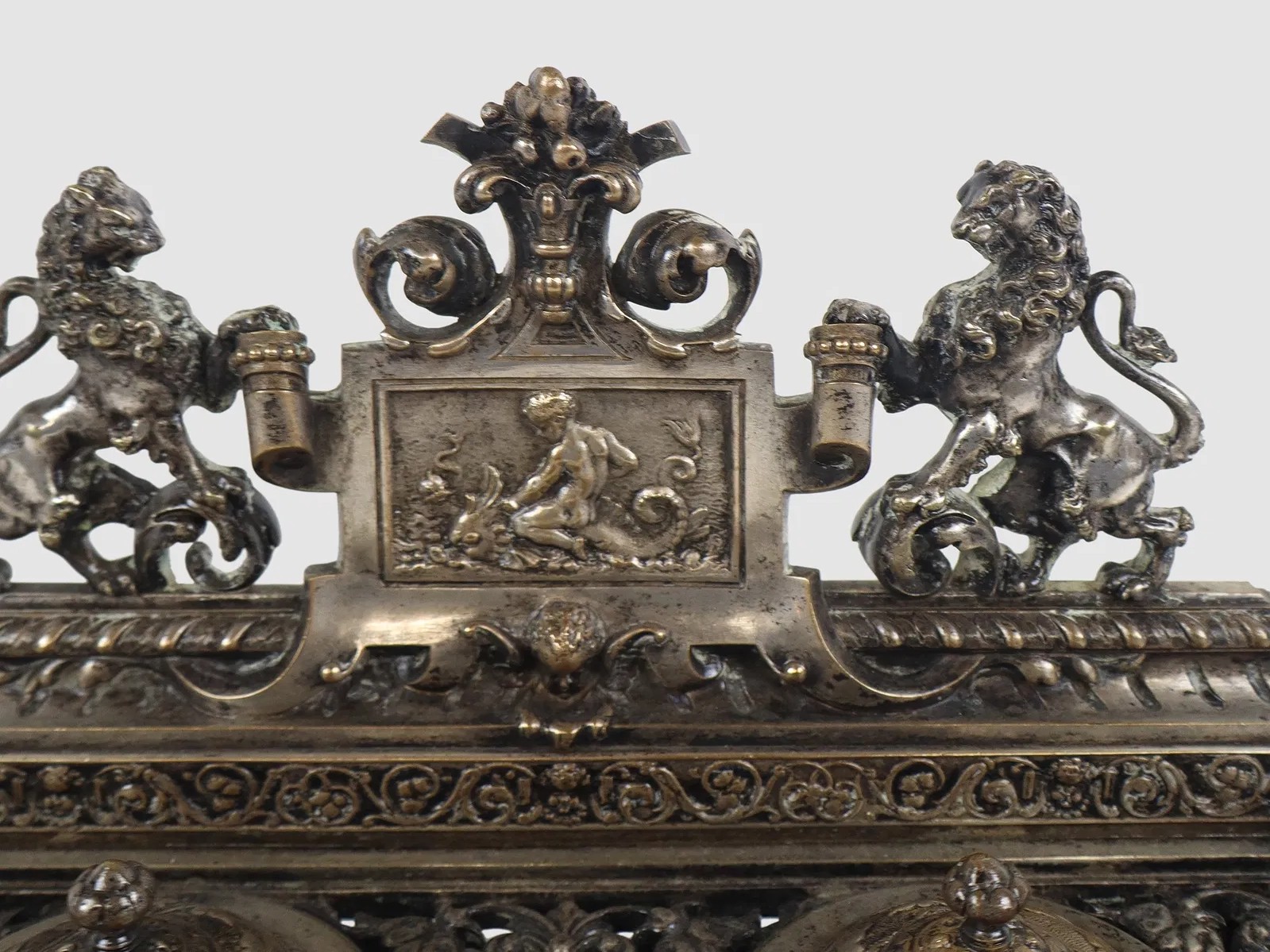
- Central Plaque: Depicts a bas-relief scene of a putto (naked winged or unwinged boy/cherub) riding a classical dolphin/sea monster amidst stylized waves.
- Flanking Lions: Two rampant heraldic lions face outwards, each resting a front paw on a scroll or cartouche flank.
- Lower Rim: Fine openwork arcade along the sides, scrolled foliage, and decorative corners.
Identification & Origin
- What is it made of?
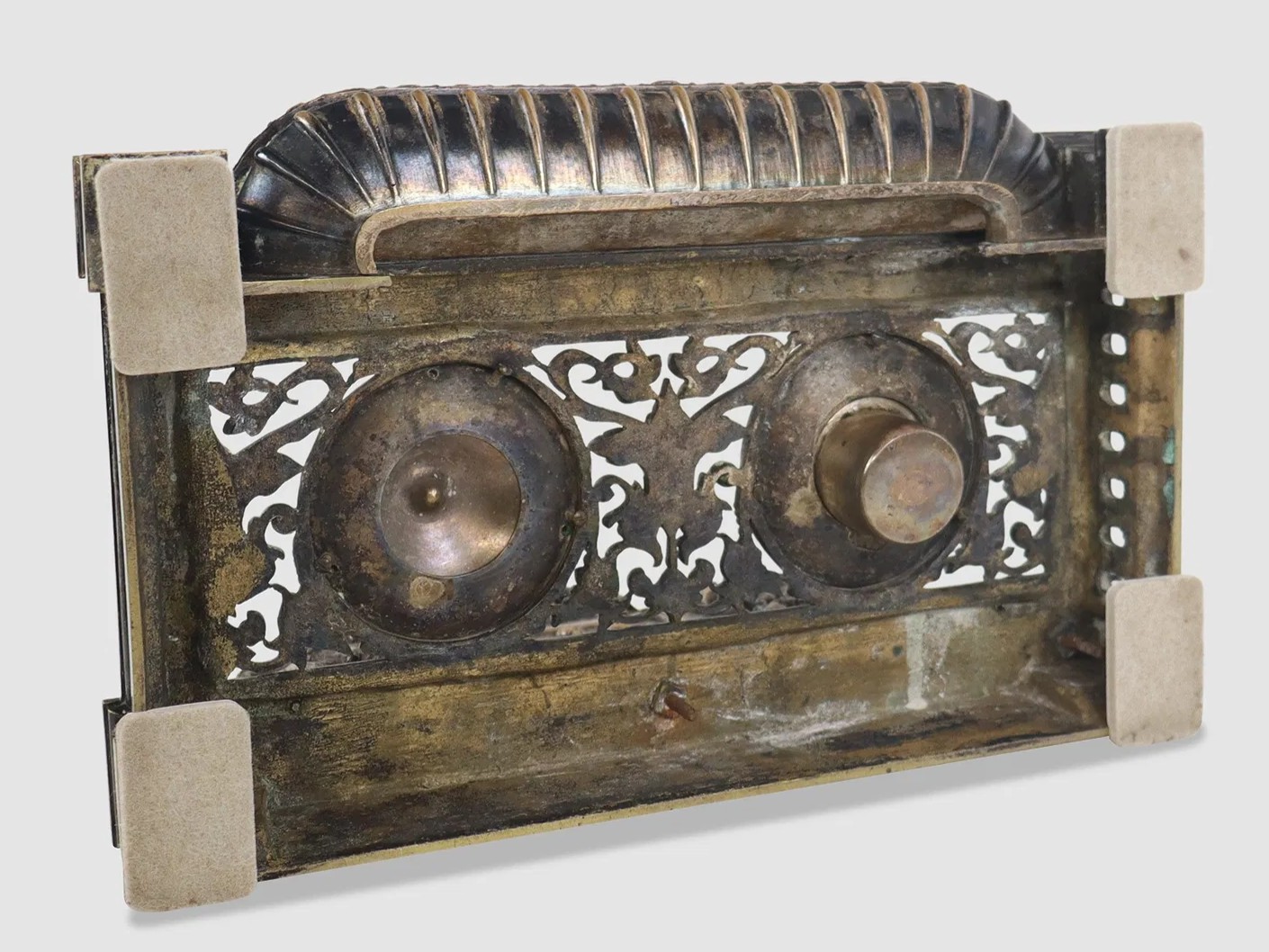
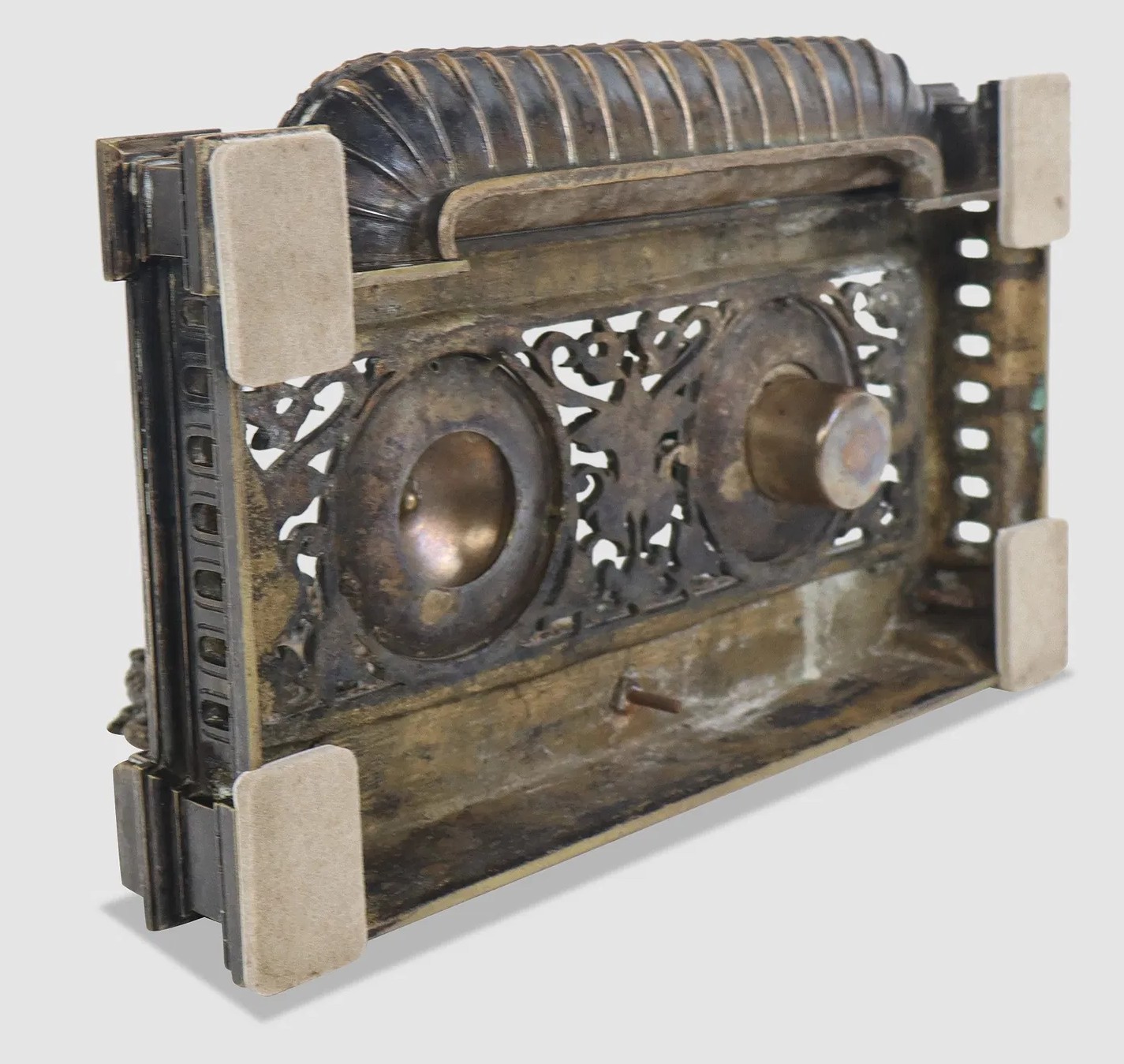
It is made of silvered brass or spelter (white metal/zinc alloy) with a dark patinated finish.
- Evidence: Viewing the underside, the metal has a distinct golden-yellow brass hue with minor oxidation and threaded iron rod fasteners. The top surface was originally electroplated with silver or dark-patinated (gilt/silvered finish), which has worn down over time in high-touch areas like the pen tray.
- Who made it, where, and when?
- Era: Late 19th Century (c. 1870–1890), during the Victorian / Renaissance Revival era.
- Region: Most likely Continental Europe (France, Italy, or Germany/Austria) or Great Britain.
- Maker: Unmarked (typical of cast decorative metalware from late 19th-century foundries that produced high-end Grand Tour desk accoutrements).
Iconography & Classical Meaning
The Boy (Putto) Riding a Dolphin
- Origin: This classic motif originates in Greco-Roman mythology (e.g., Cupid/Eros riding a dolphin or Palaemon/Arion) and was famously revived during the Italian Renaissance by artists like Andrea del Verrocchio (Putto with Dolphin).
- Meaning:
- Speed, Harmony, & Guidance: In classical antiquity, dolphins were seen as friends to humanity and guides across chaotic waters. A putto taming or riding a dolphin represents love taming wild nature or youthful spirit guiding intellect.
- Water Element: On a writing desk set, aquatic imagery (dolphins, water sprites) was a clever thematic nod to fluidity and liquid ink.
The Heraldic Lions
- Meaning:
- Strength, Dignity, & Majesty: In classical heraldry, rampant lions represent courage, noble guardianship, and sovereignty.
- Architectural Balance: Structurally, they serve as supporters flanking the central medallion, framing the composition in the tradition of Renaissance heraldic coats of arms.
Sold for $195 in July 2026
Content disclaimer. The information posted is the owner’s best knowledge and may not have been vetted by the SOIC. We welcome comments, corrections, and additions, working to make our website information comprehensive and accurate.
Join the Society of Inkwell Collectors (SOIC) – it’s free!
Founded in 1981 as a non-profit organization,
we are documenting inkwells (and accessories).
We’re here to help and inform!