


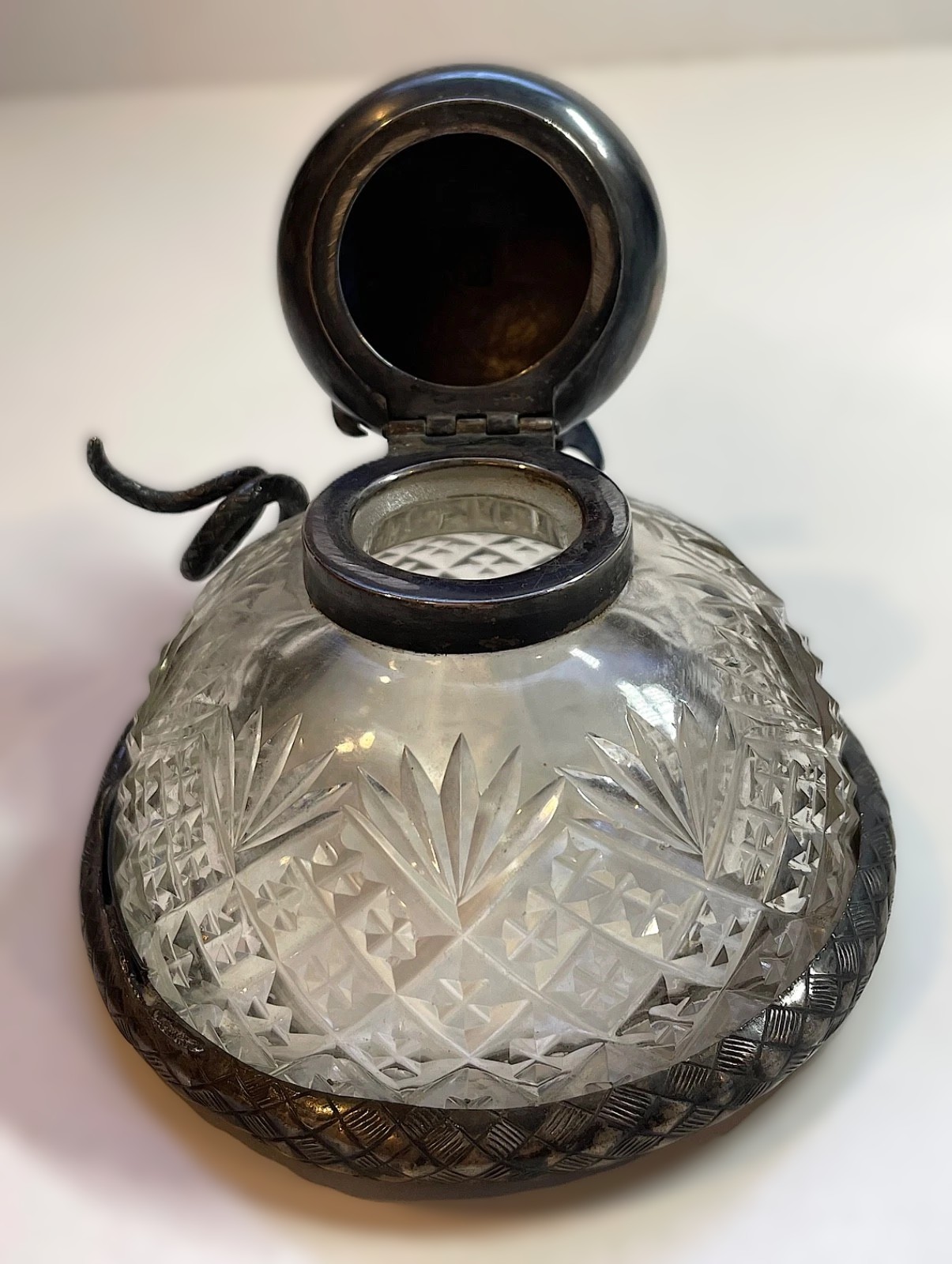







Cut Glass Inkwell with Silver Dragon & Serpent Mounts
| Categories | Figural - Mythology; Literature; Religion; Fictional |
| Type | Dragon, Mythology |
| Material | Glass, Silver |
| Markings | See Narrative |
| Manufacturer | Martin Mayer |
| Origin | Germany |
| Date or Era | circa 1890 |
| Measuring | 4” diameter; 4” high |
This inkwell dates from the late 19th century (circa 1890s).
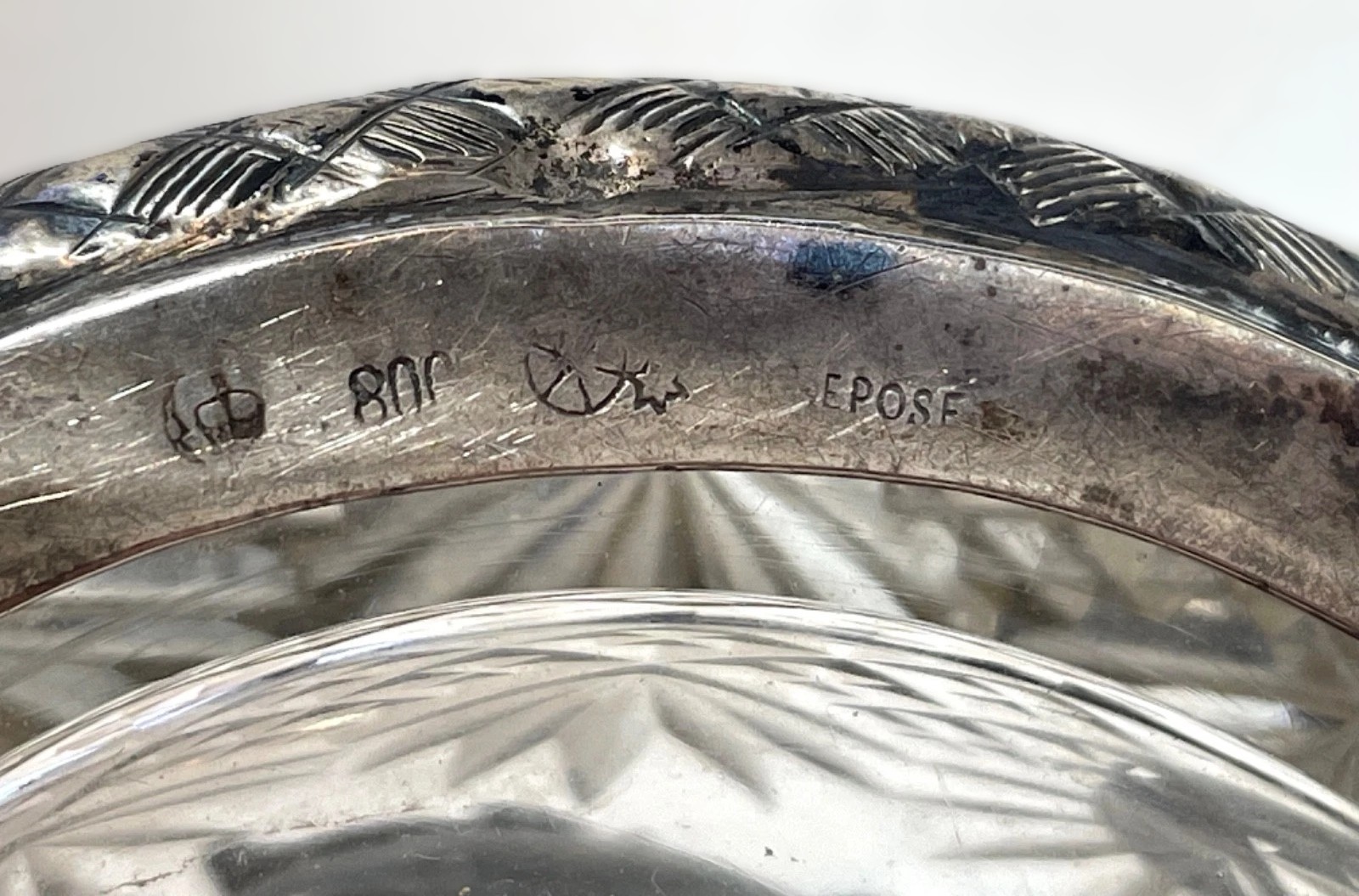
The national uniform hallmarking system in Germany was enacted in 1884 and became strictly compulsory by 1888. The presence of the combined Imperial standard marks confirms that this inkwell was manufactured after this date.
Breakdown of the Hallmarks
Reading from left to right on the silver mount rim, the hallmarks provide a clear history:
- The Imperial Crown (Reichskrone): Represents the unified German State.
- 800: Indicates the millesimal fineness of the silver, meaning it is 80% pure solid silver alloyed with 20% copper for structural durability. This was the standard purity for high-quality German continental silverware of the era. (Note: The crescent moon, which usually pairs closely with the crown, may be worn, integrated into the stamping sequence, or represented by the curved line geometry adjacent to the numeric punch).
- Divided Circle & Star: This configuration functions as the individual maker’s mark or silversmith’s symbol. In late 19th-century German silver design (such as pieces coming out of Hanau or Pforzheim), master silversmiths registered unique geometric, celestial, or guild-traditional icons to sign their work.
- EPOSE: This is a partial strike of the word DEPOSE (the letter ‘D’ has simply worn off or missed the strike cleanly due to the curvature of the silver rim). Short for Modèle Déposé, this is the Continental European equivalent of a “Registered Design” or patent mark, legally protecting the unique casting of the dragon and snake from being copied by rival workshops.
Identifying Which Silversmith
The “divided circle” and star are the hallmark symbols of Martin Mayer, a prestigious manufacturing silversmithing firm based in Mainz, Germany.
About the Maker’s Mark
- The “Divided Circle”: This is a depiction of the Wheel of Mainz (Mainzer Rad), a historic heraldic symbol from the coat of arms of the city where the factory was situated.
- The Star: Martin Mayer paired the Mainz wheel with a small, six-pointed star stamped right alongside or above it. This perfectly matches the sequence on this inkwell’s rim.
Firm History
The firm was established in 1887 and quickly earned a stellar reputation for its high-quality luxury silver wares, complex bijouterie, and mixed-media decorative objects. They were prominent enough to exhibit their luxury pieces internationally, including at the World’s Columbian Exposition in Chicago in 1893. The business was eventually dissolved in the late 1937–1939 period.
Knowing the maker is Martin Mayer further solidifies the circa 1890s dating, as this exact combination of the 1888-mandated Imperial crown/800 mark alongside their early registered company hallmark represents the peak of their late 19th-century luxury production.
Visual & Aesthetic Description
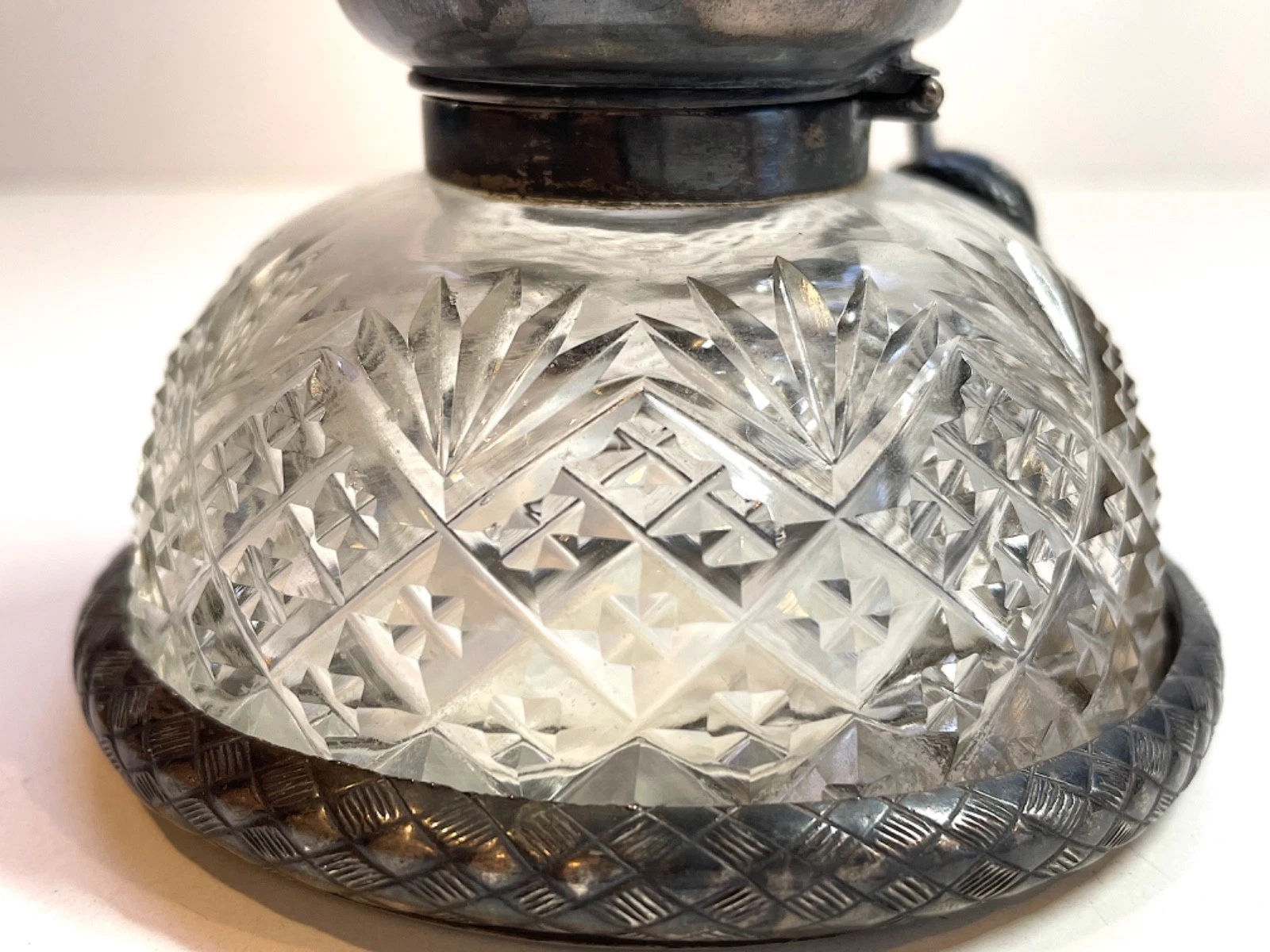
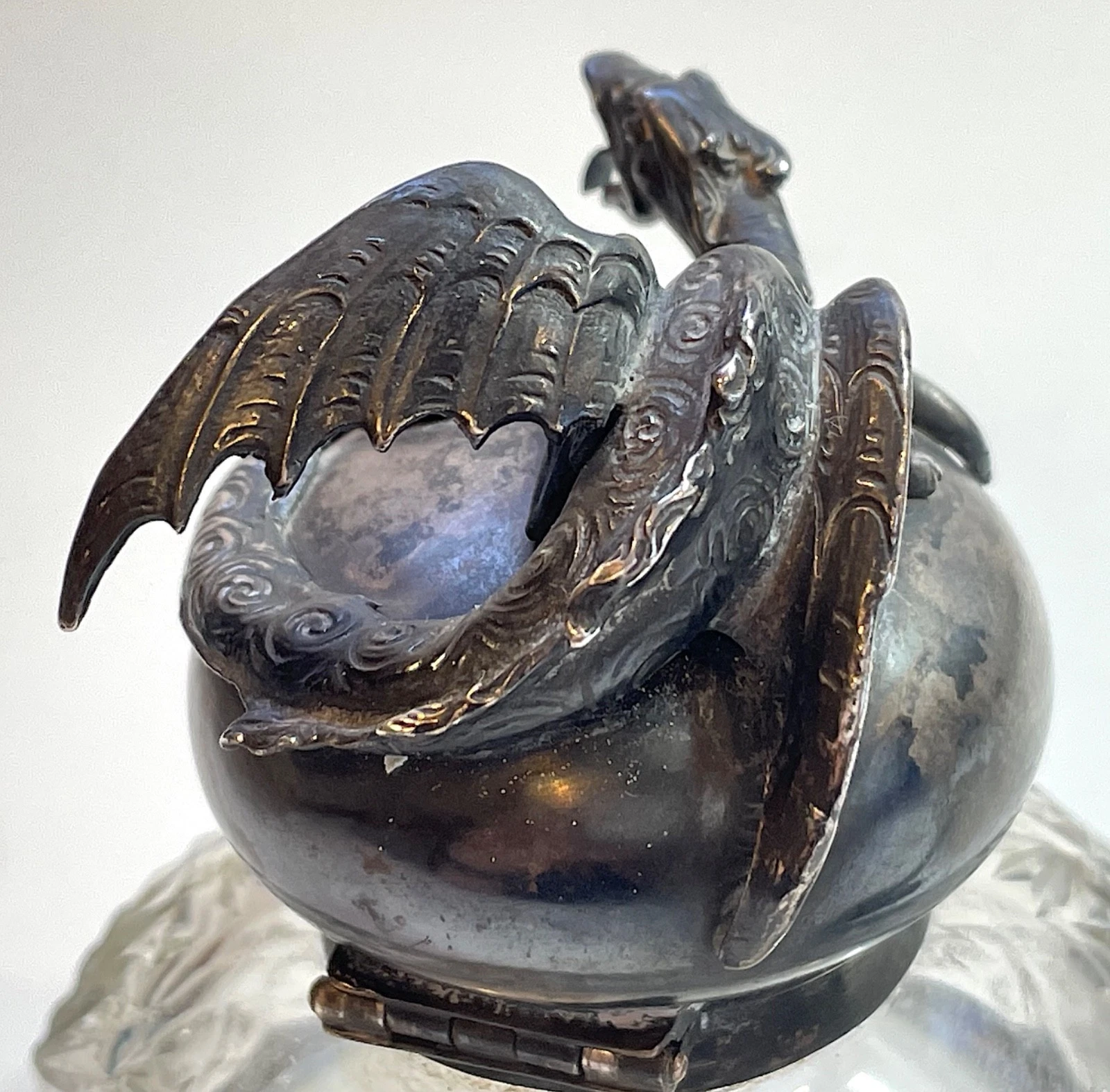
This inkwell is a magnificent example of Late Victorian/Historicist desktop art, combining heavy, brilliantly crafted lead crystal with detailed, oxidized silver mountings.
The Glass Body
- Style: Heavy, hand-cut clear lead crystal designed in a domed, monumental profile.
- Cut Pattern: Features a complex combination of deeply cut strawberry diamonds, fine cross-hatching, and fan-shaped palmette bursts near the upper shoulders.
The Silver Elements & Symbolism
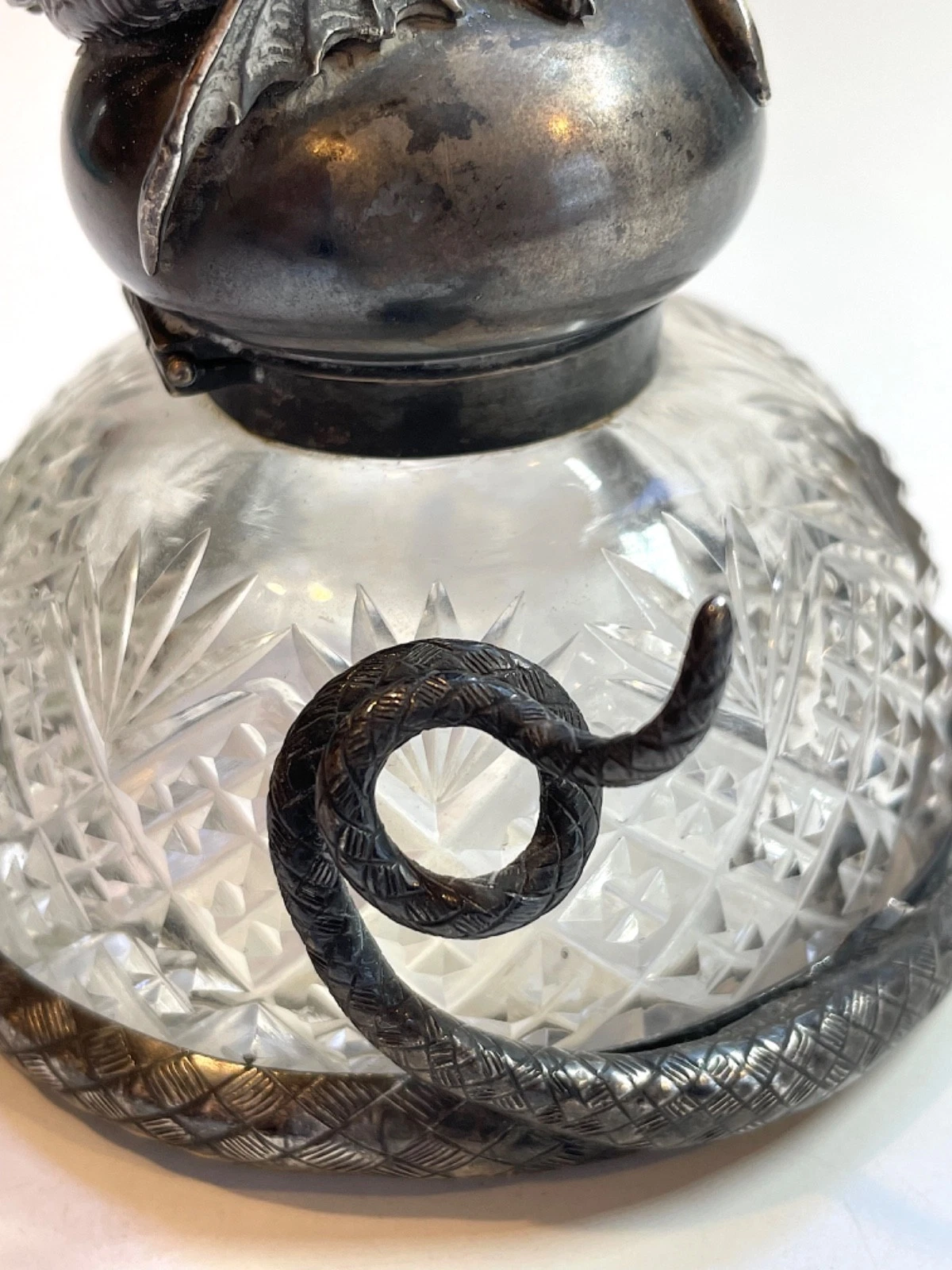
- The Coiled Snake Base: A heavily textured, cross-hatched silver serpent serves as the foundational collar wrapping entirely around the bottom diameter. The snake’s tail dramatically curls upward away from the glass, functioning as a stylized pen rest or a functional side handle to stabilize the inkwell when lifting the lid.
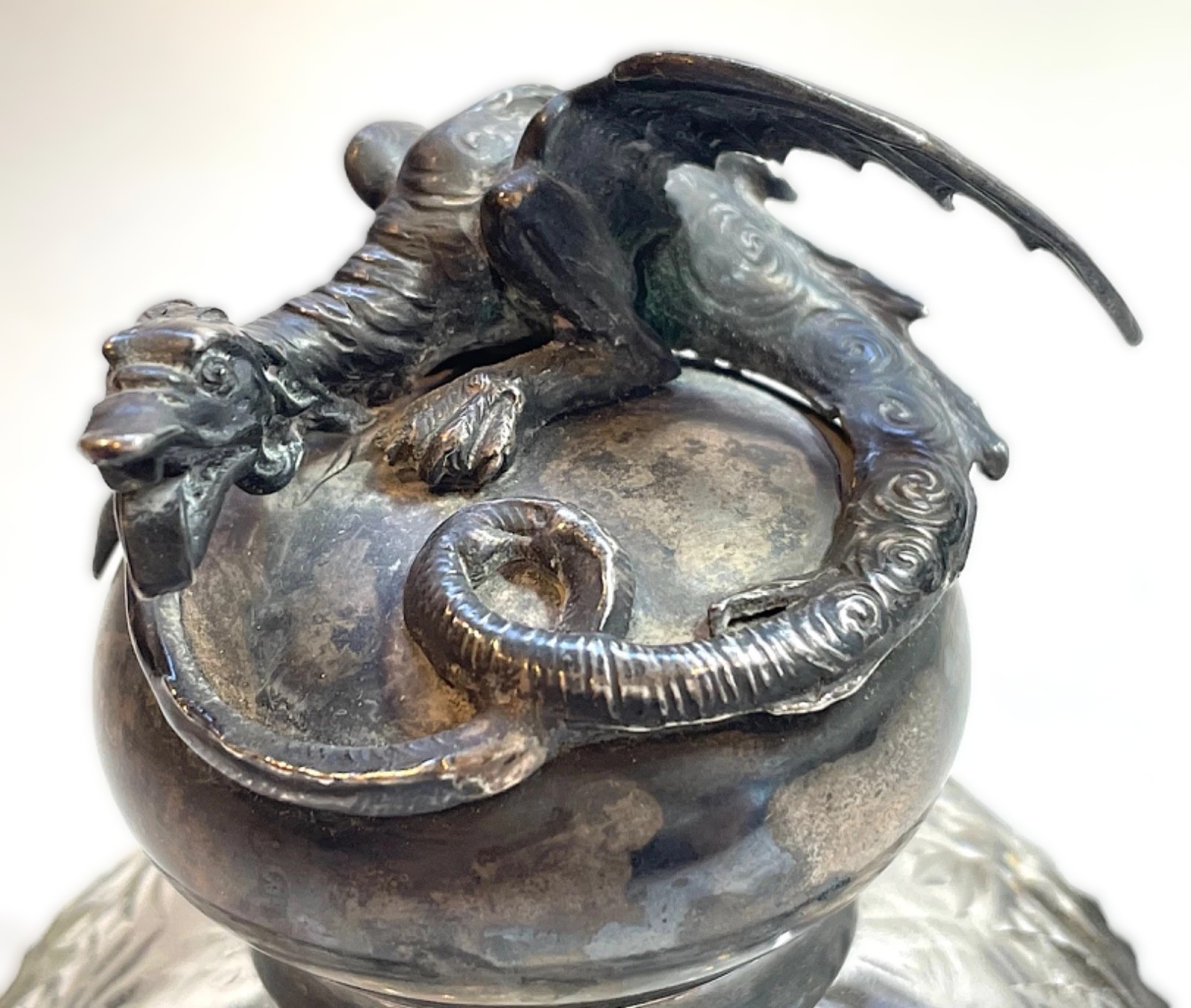
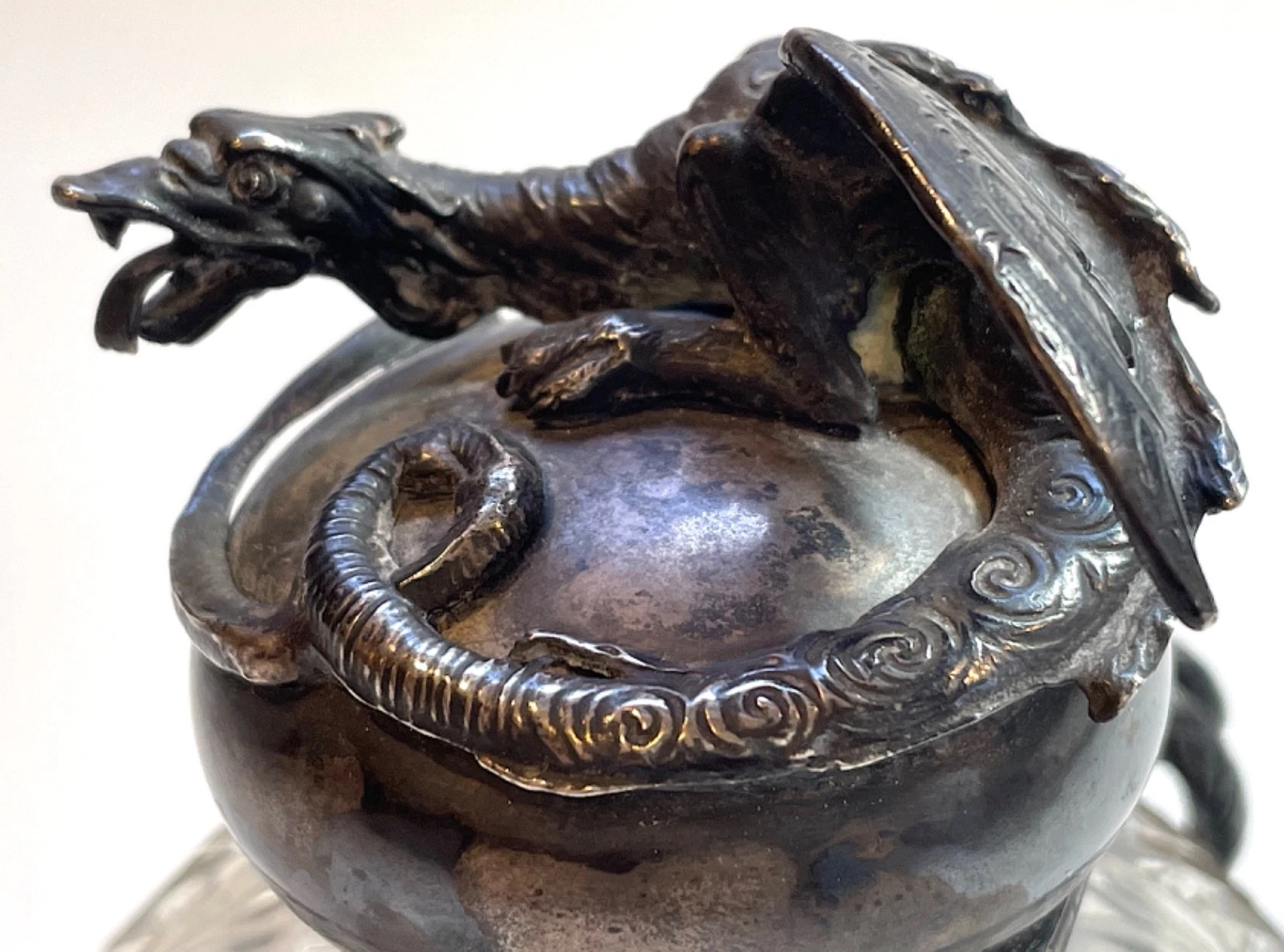
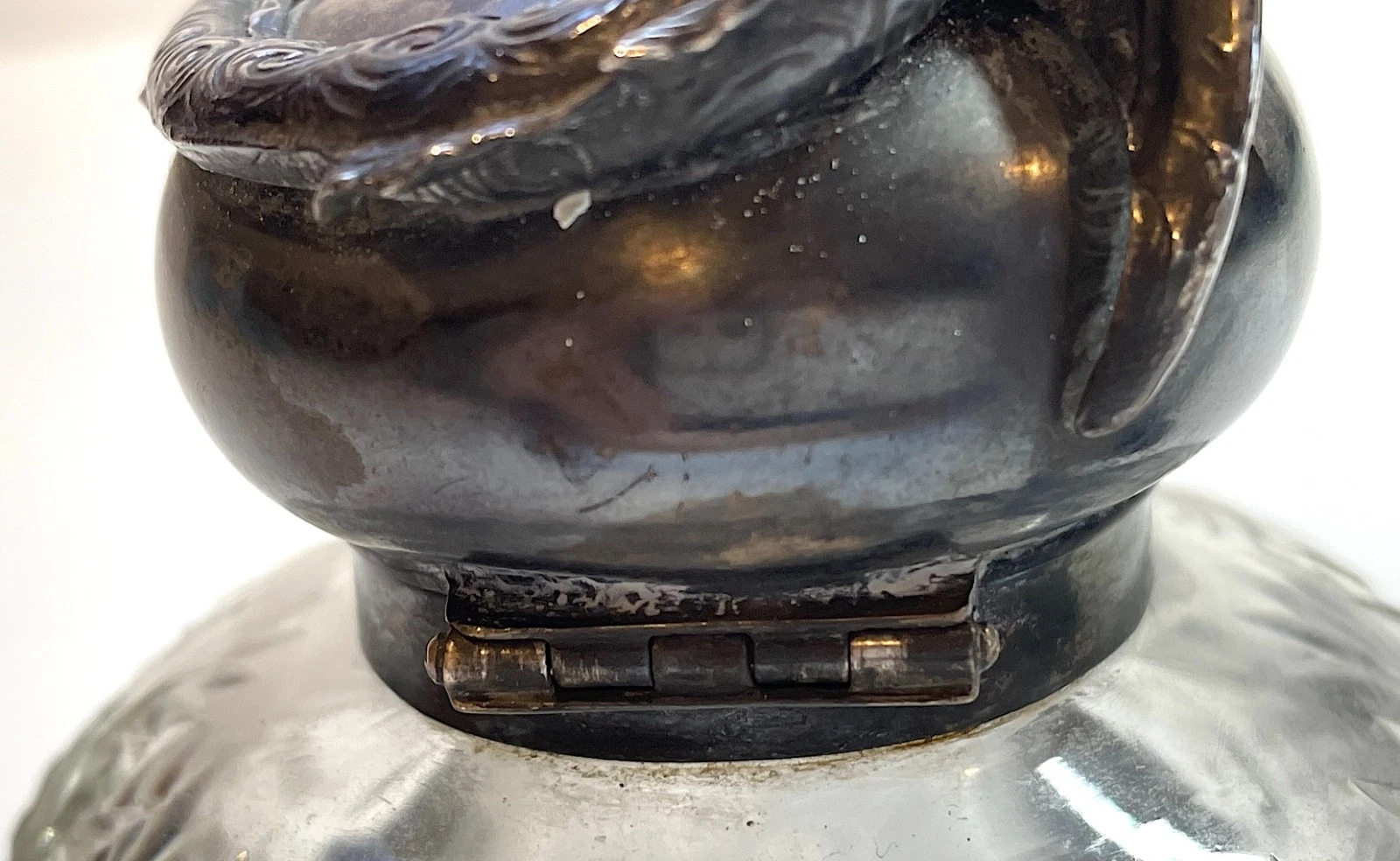
- The Dragon Lid: A fully three-dimensional, expressive figural dragon guards the ink reservoir. The casting shows exceptional chasing work—from the ribbed webbing on its bat-like wings to the distinct scales traveling down its back, ending in a curled tail across the dome of the hinged lid. Its open jaw gives the piece a classic, mythical presence.
This juxtaposition of a dragon on top and a serpent below suggests a unified mythological or allegorical theme, a popular taste in German high-style decorative arts at the turn of the century.
Sold for $408 in May 2026
Content disclaimer. The information posted is the owner’s best knowledge and may not have been vetted by the SOIC. We welcome comments, corrections, and additions, working to make our website information comprehensive and accurate.
Join the Society of Inkwell Collectors (SOIC) – it’s free!
Founded in 1981 as a non-profit organization,
we are documenting inkwells (and accessories).
We’re here to help and inform!