

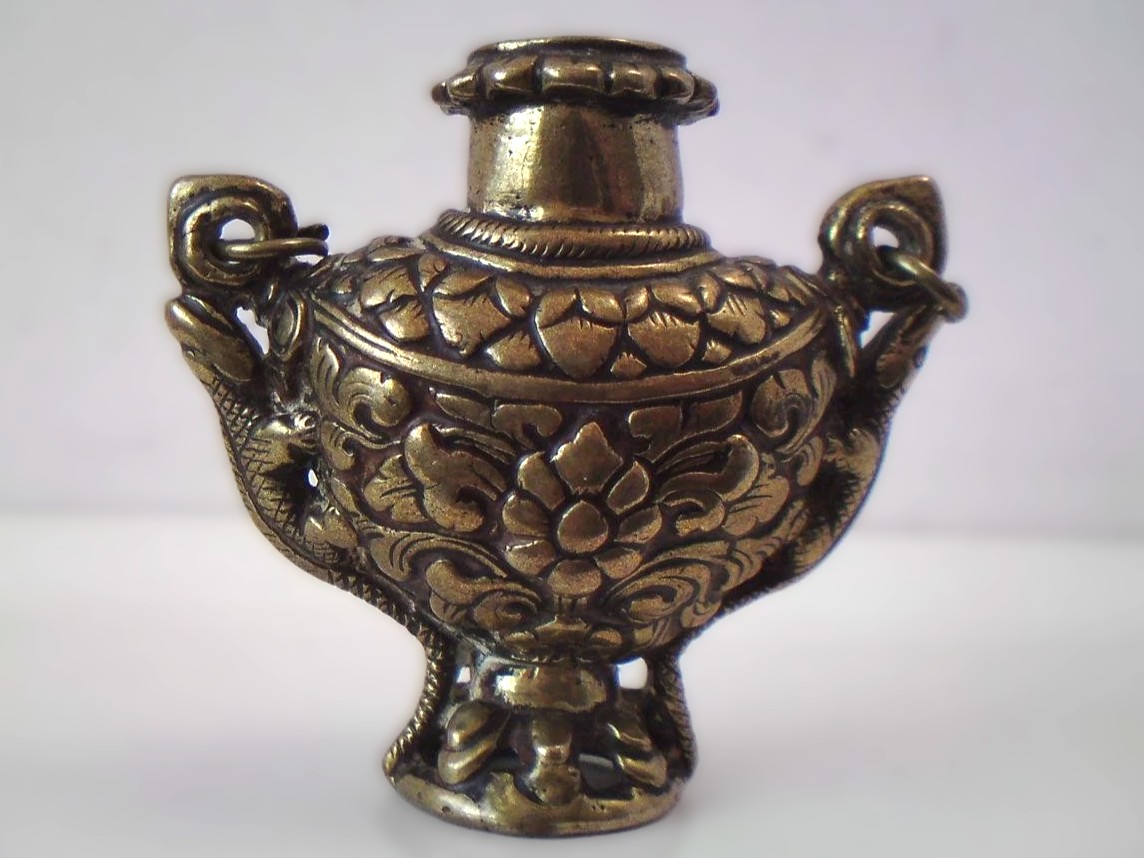
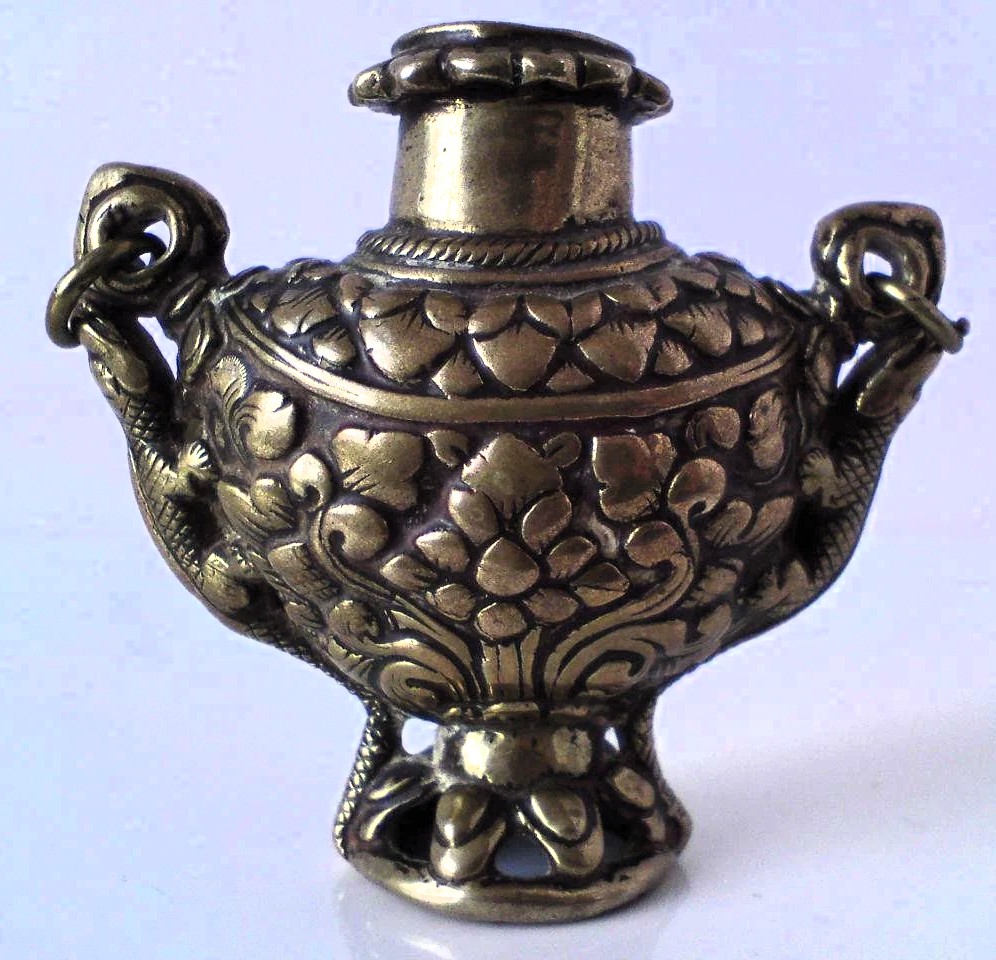
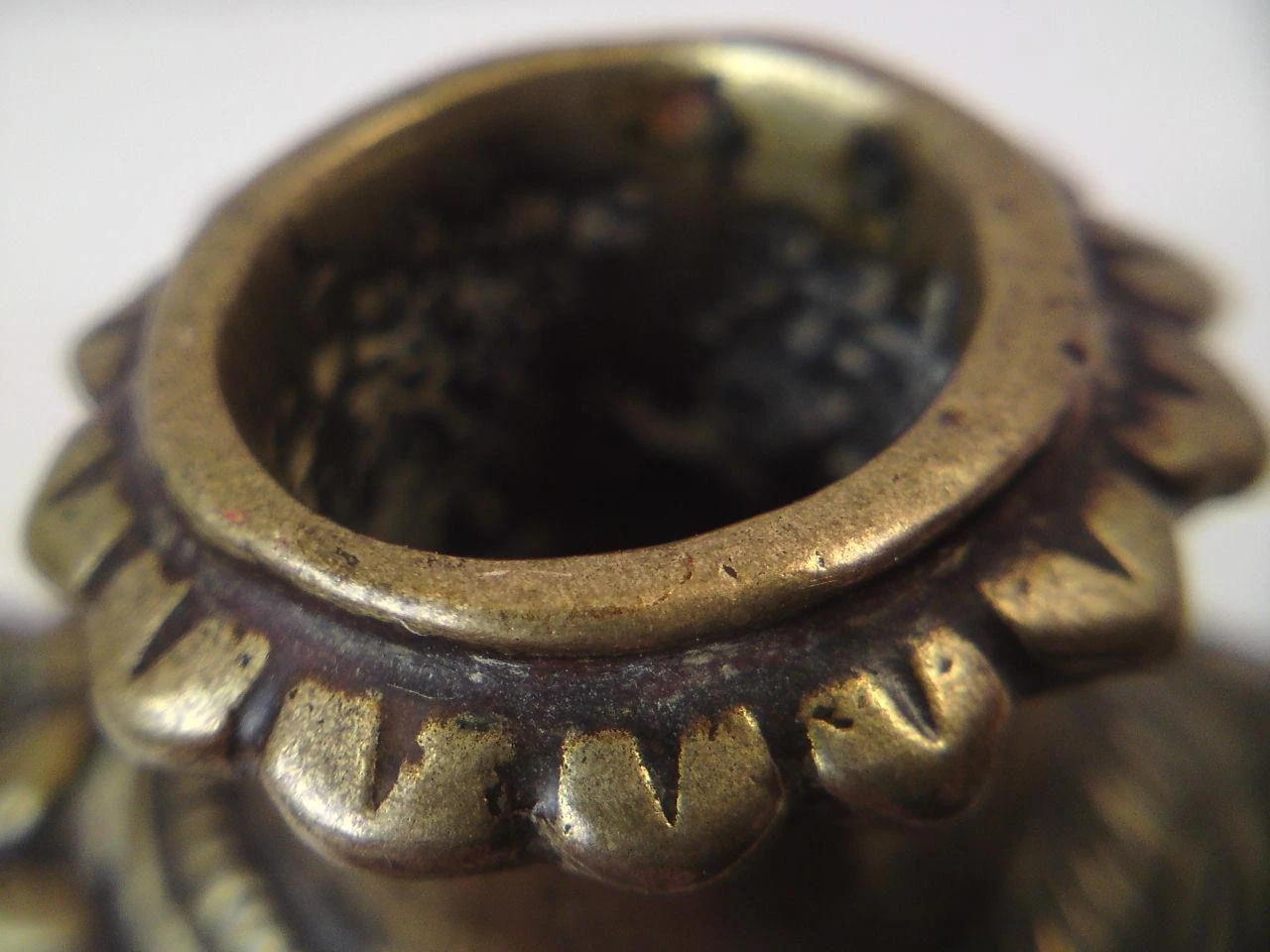
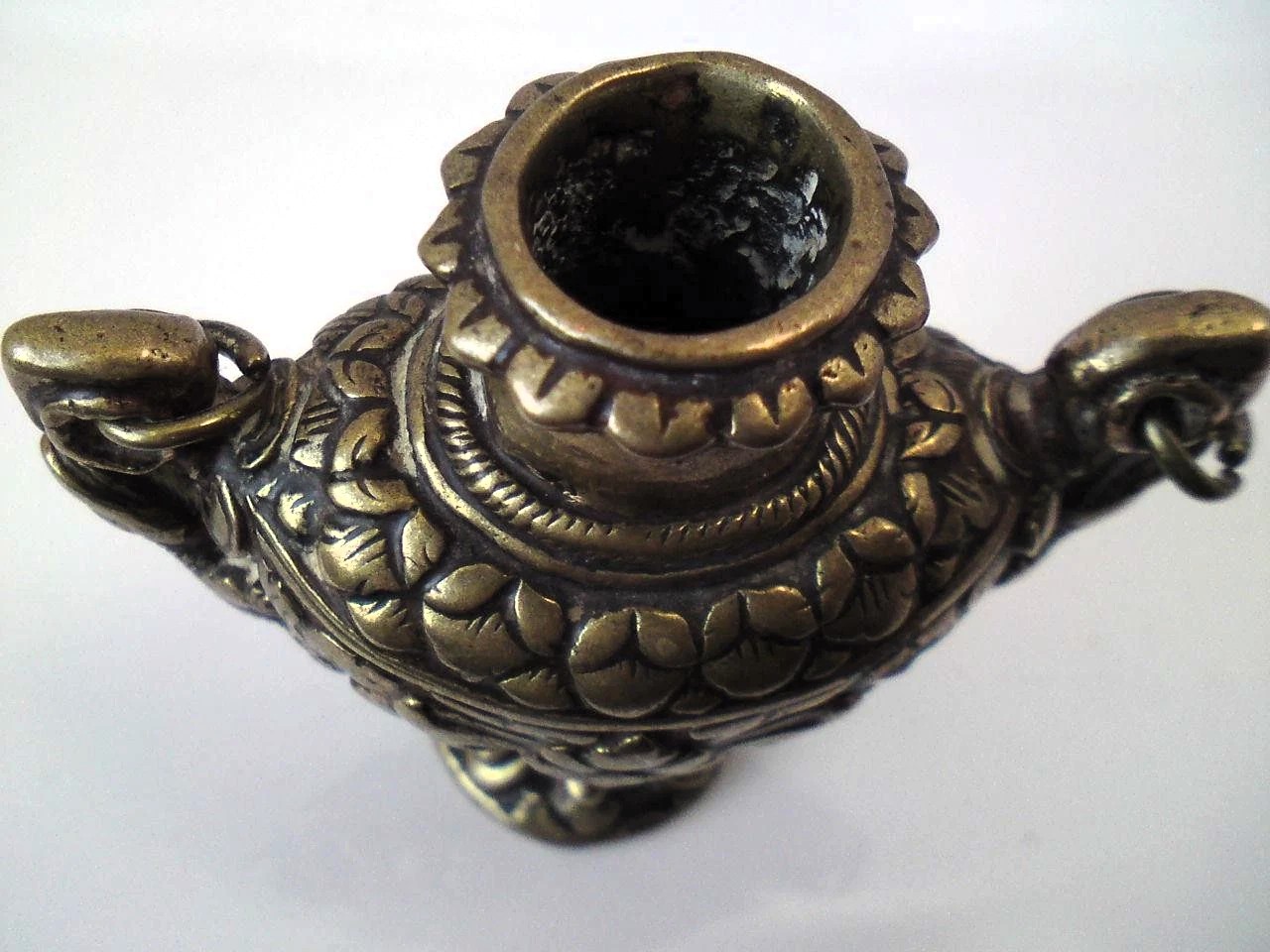
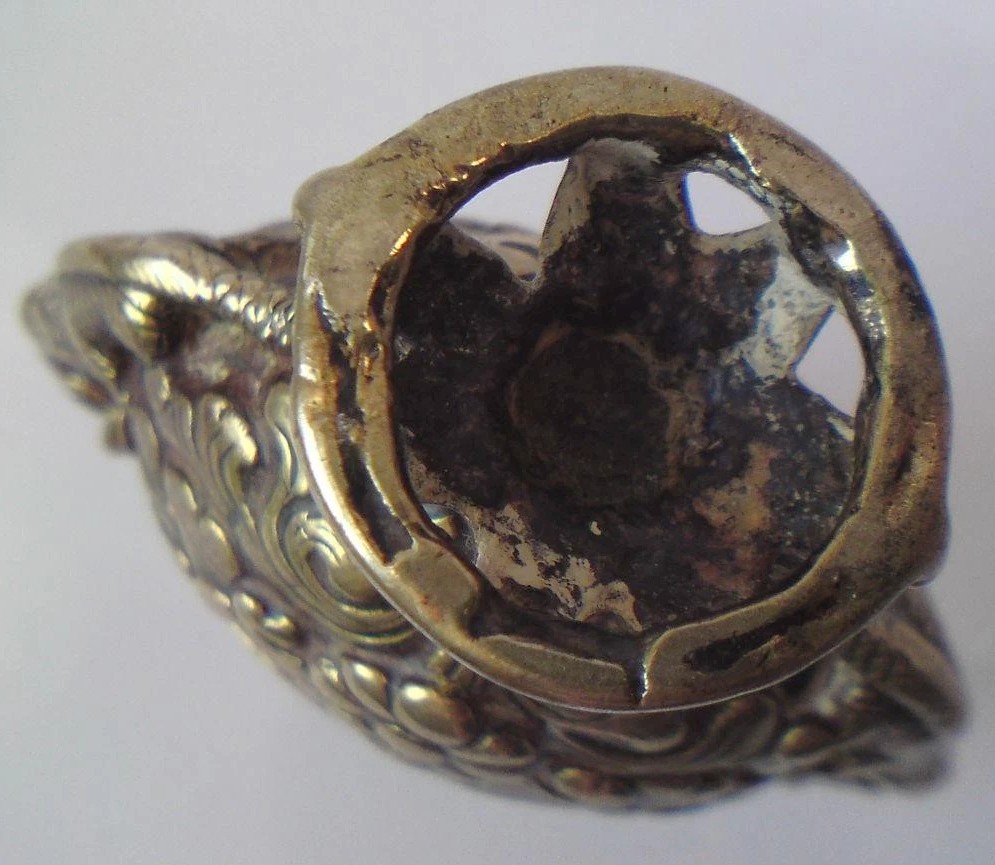
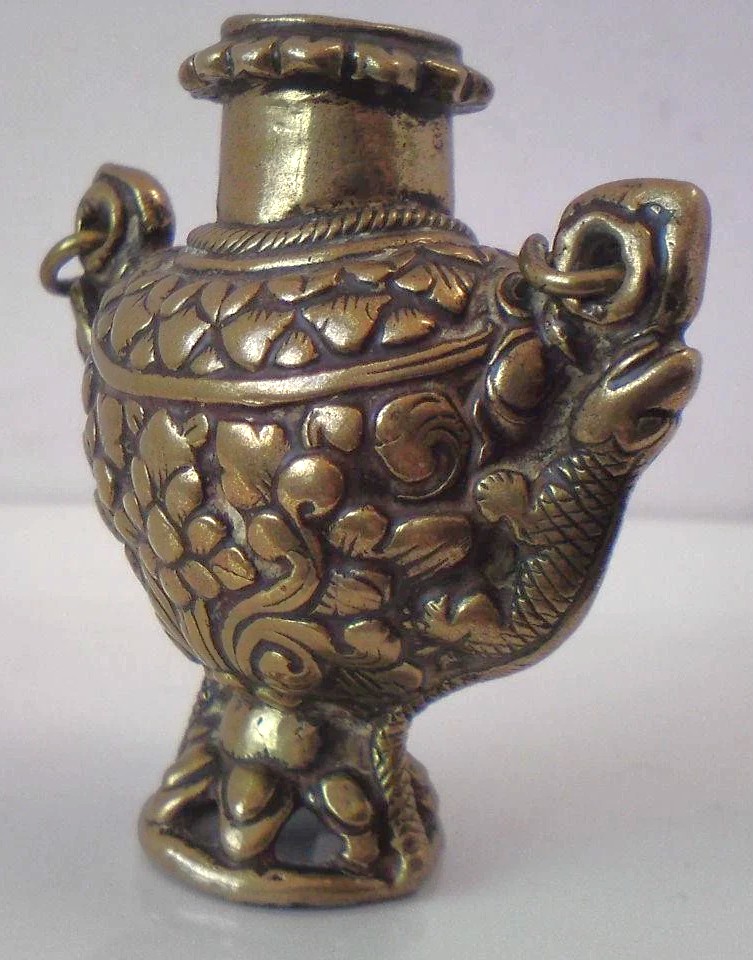
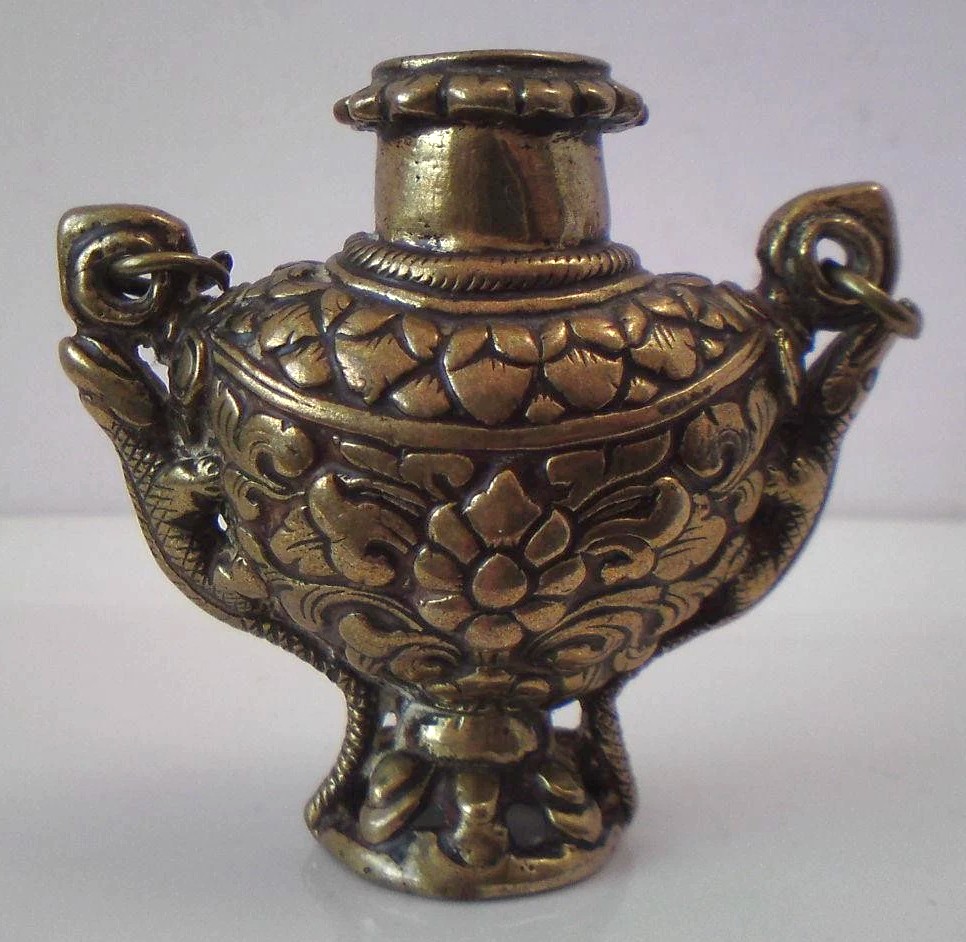
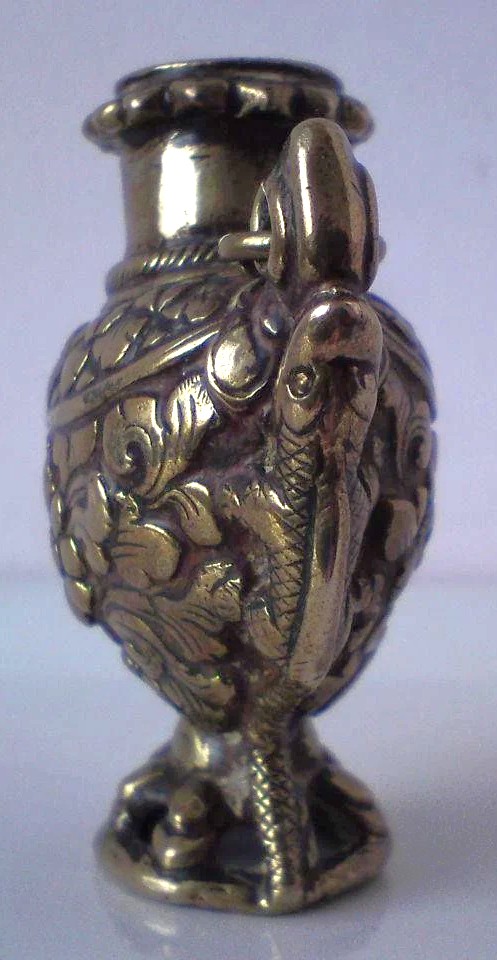
Nepalese Traveling Inkwell
| Categories | Far East / Oriental, Travel |
| Material | Brass |
| Markings | Unmarked |
| Origin | Nepal |
| Date or Era | circa 1830 |
| Measuring | 3 ⅛” wide across the lugs; 3” high |
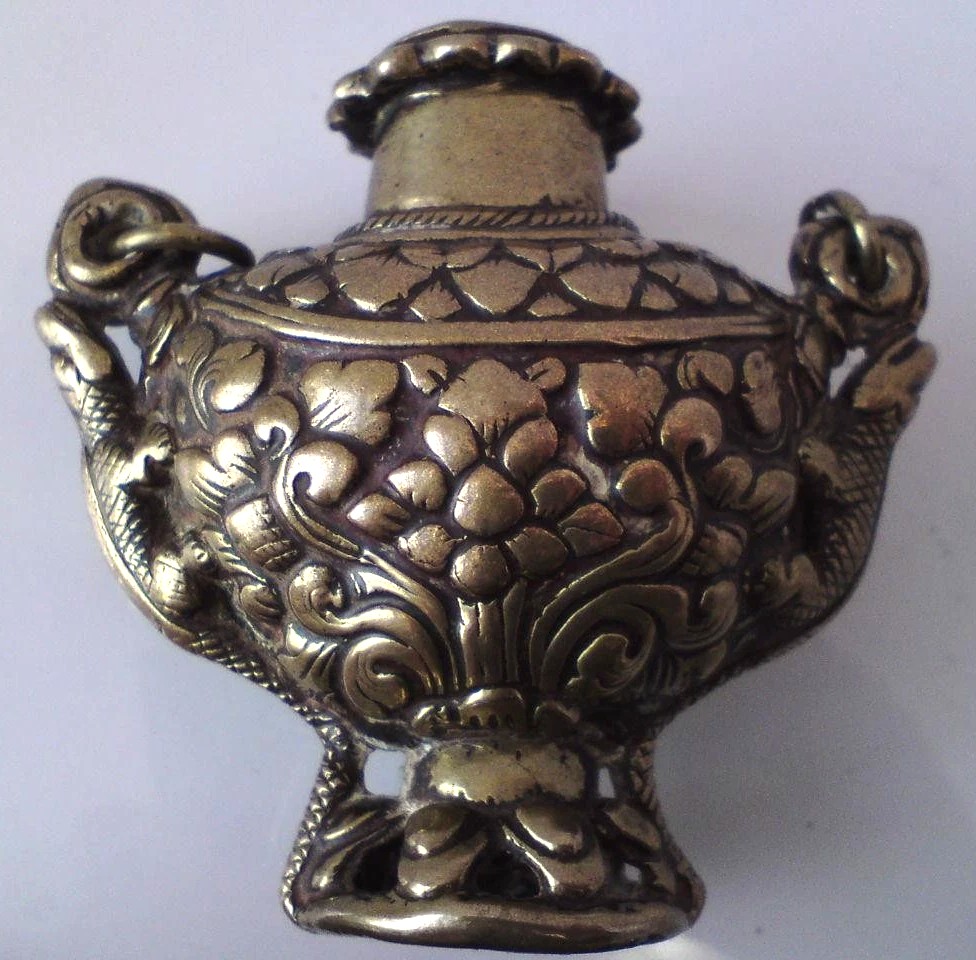
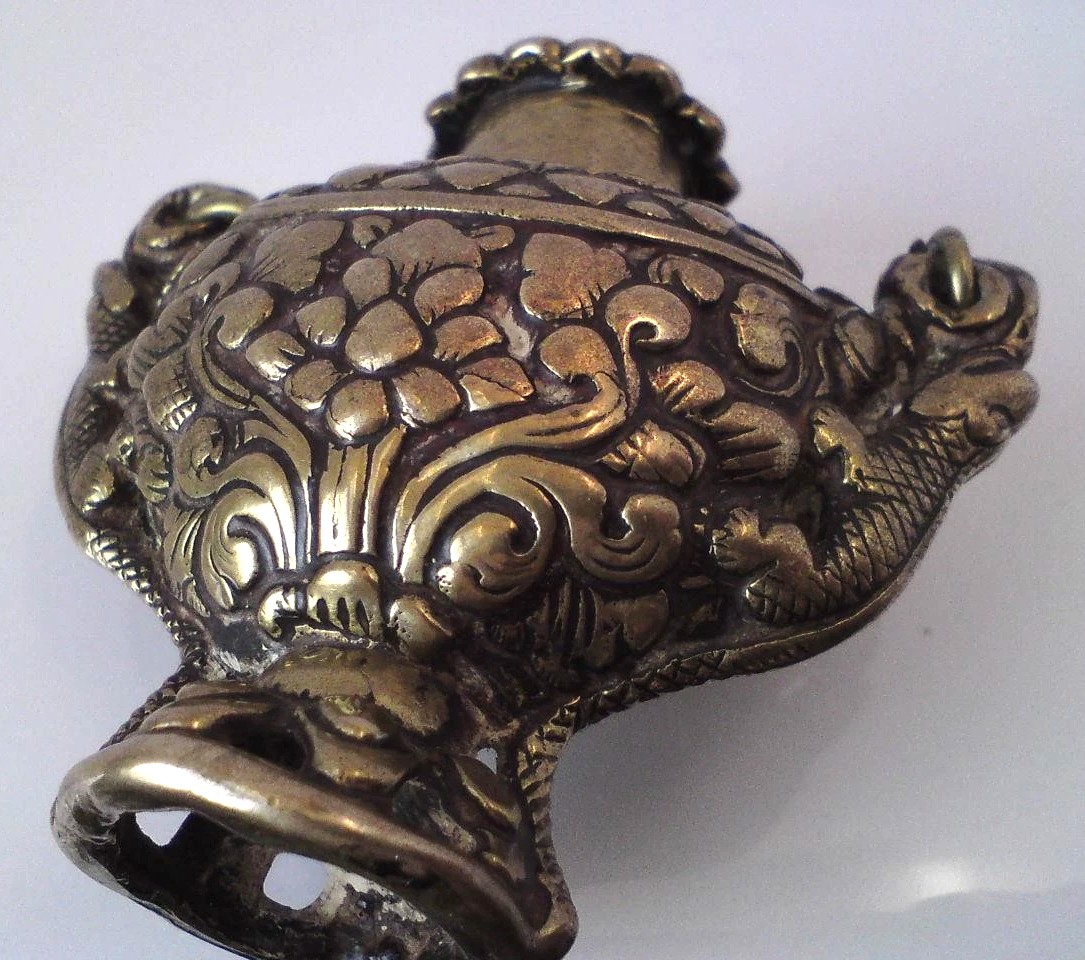
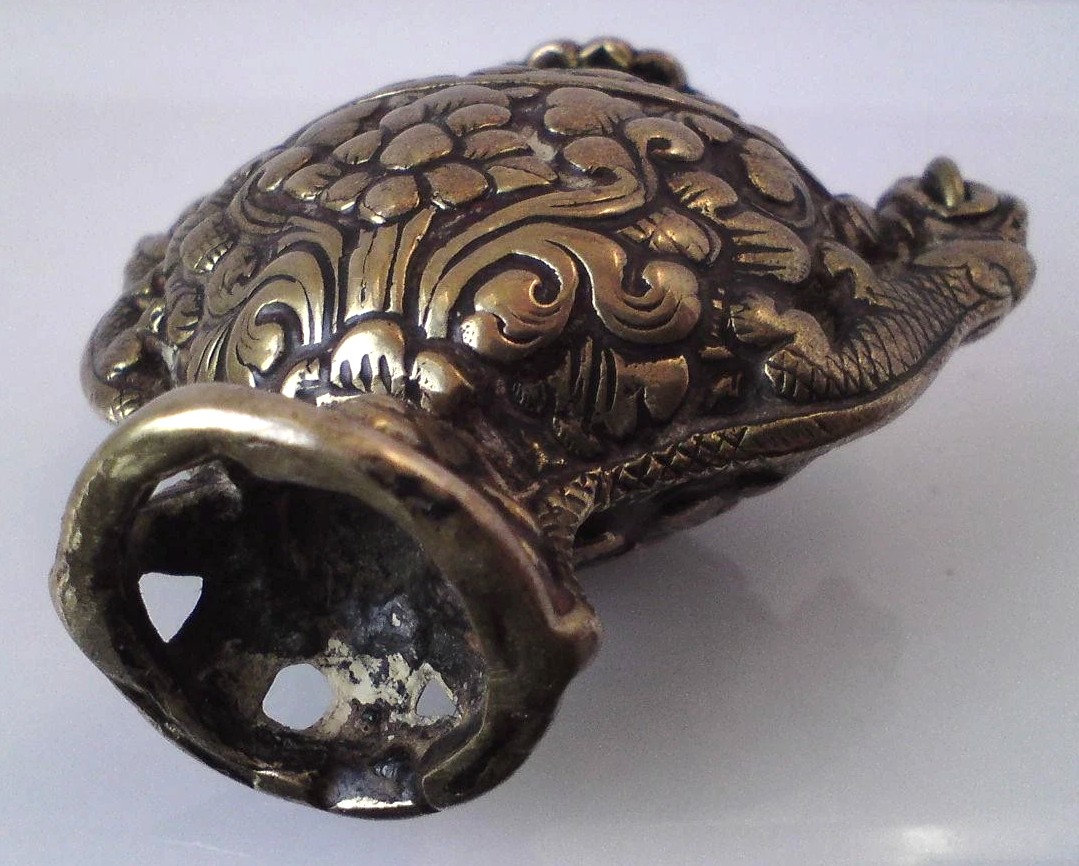
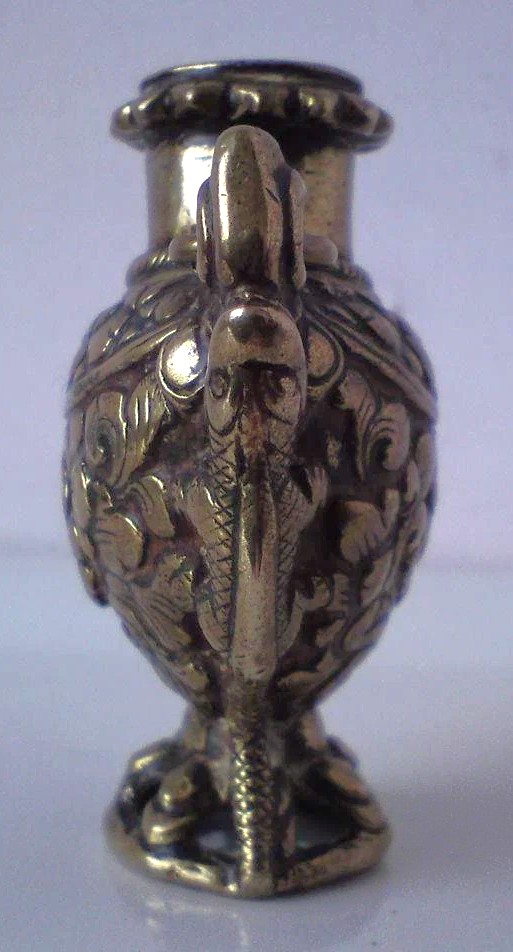
This is an example of a traditional Nepalese traveling inkwell, likely dating from the late 18th to the mid-19th century.
Description & Symbolism
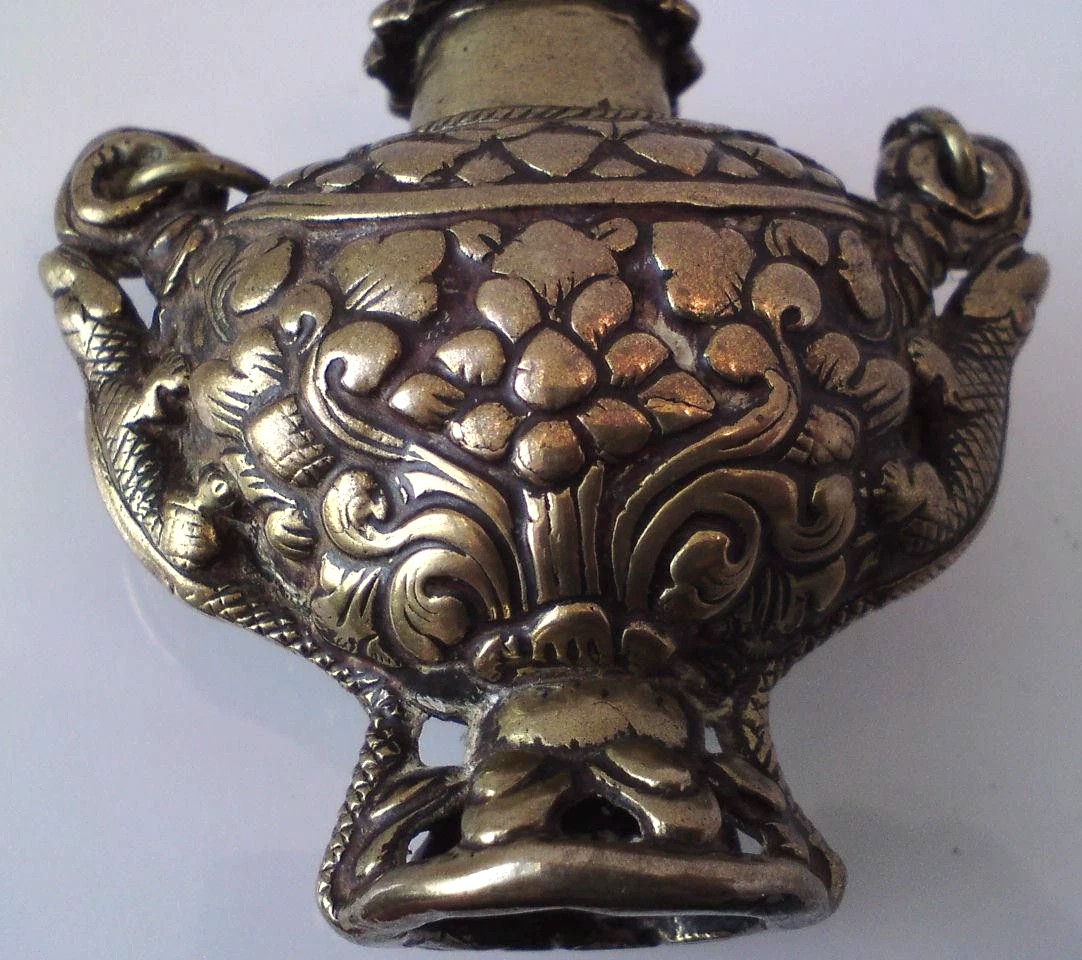
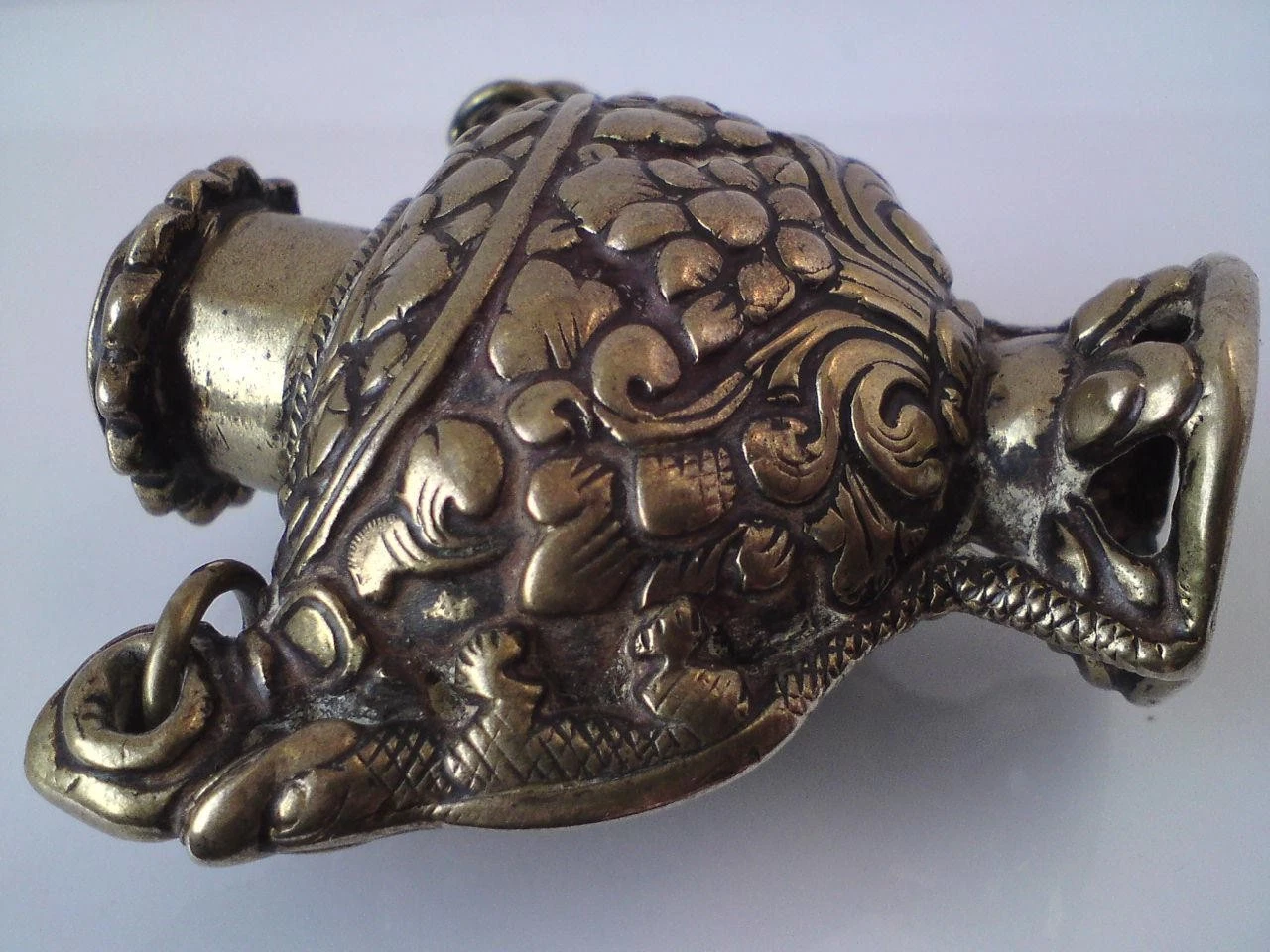
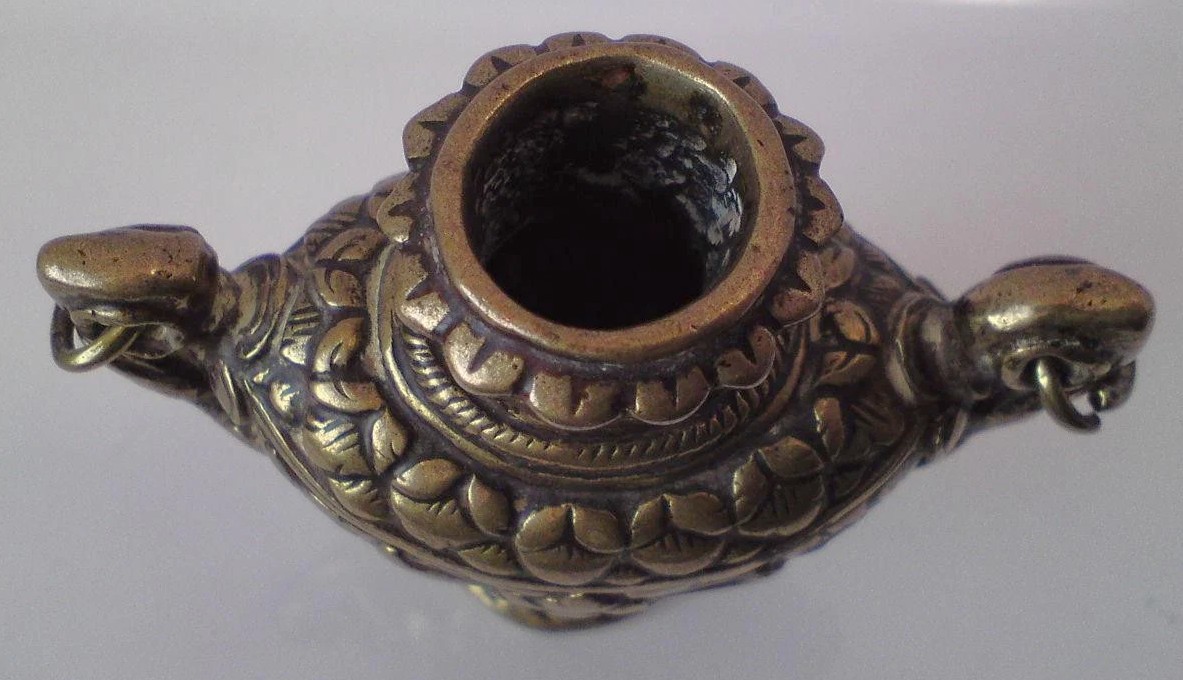
The form is a Purna Kalasha (often called the “Treasure Vase” or Bhum-pa in Tibetan Buddhism). It is one of the Eight Auspicious Symbols (Ashtamangala), representing spiritual abundance and the inexhaustible quality of the Buddha’s teachings.
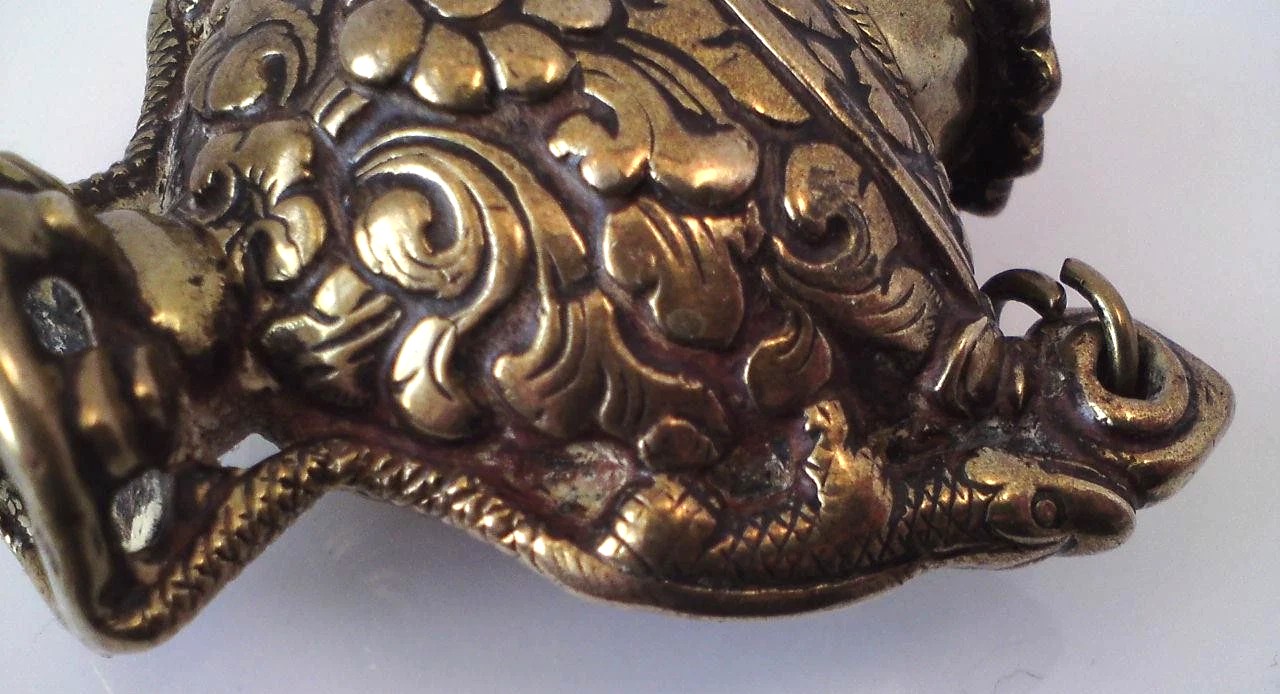
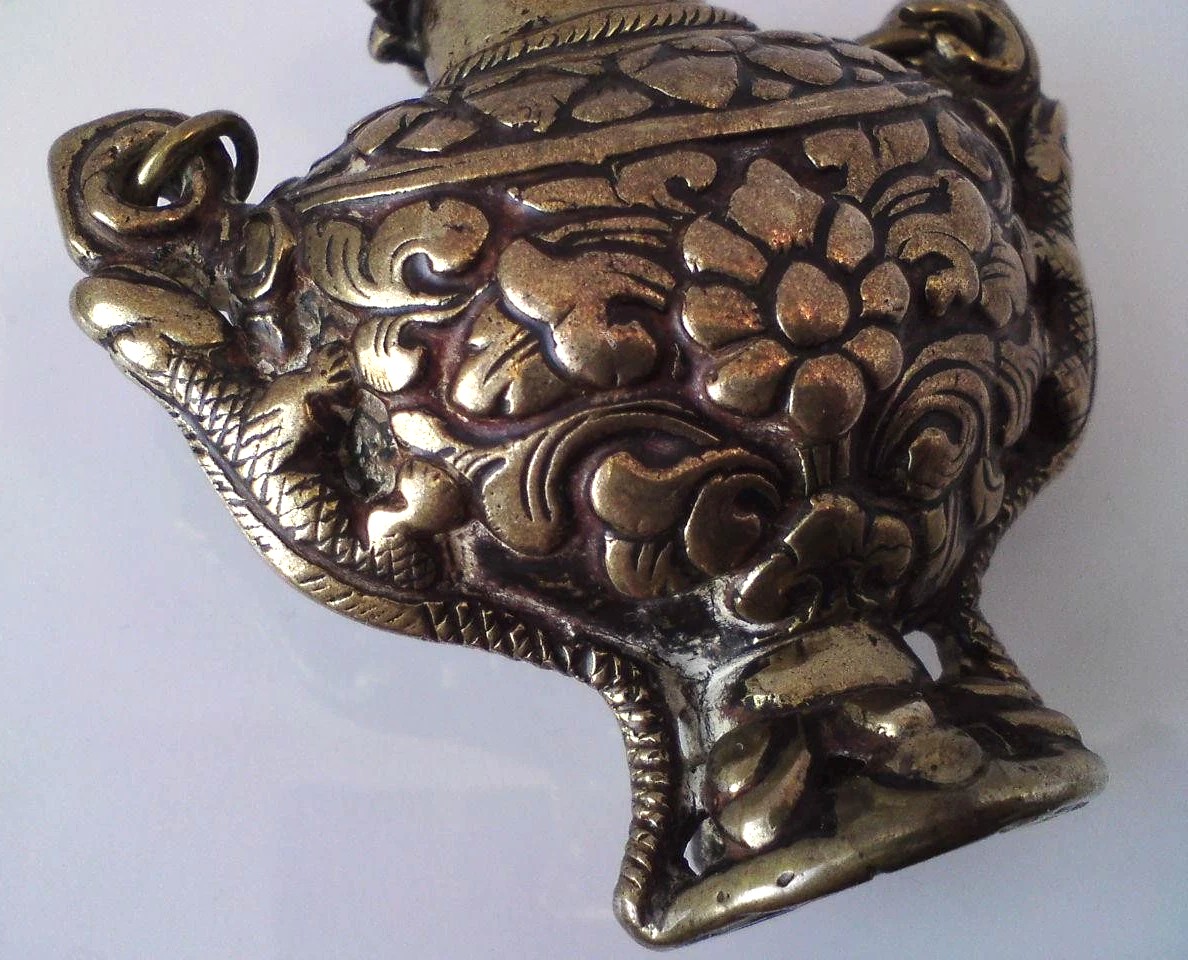
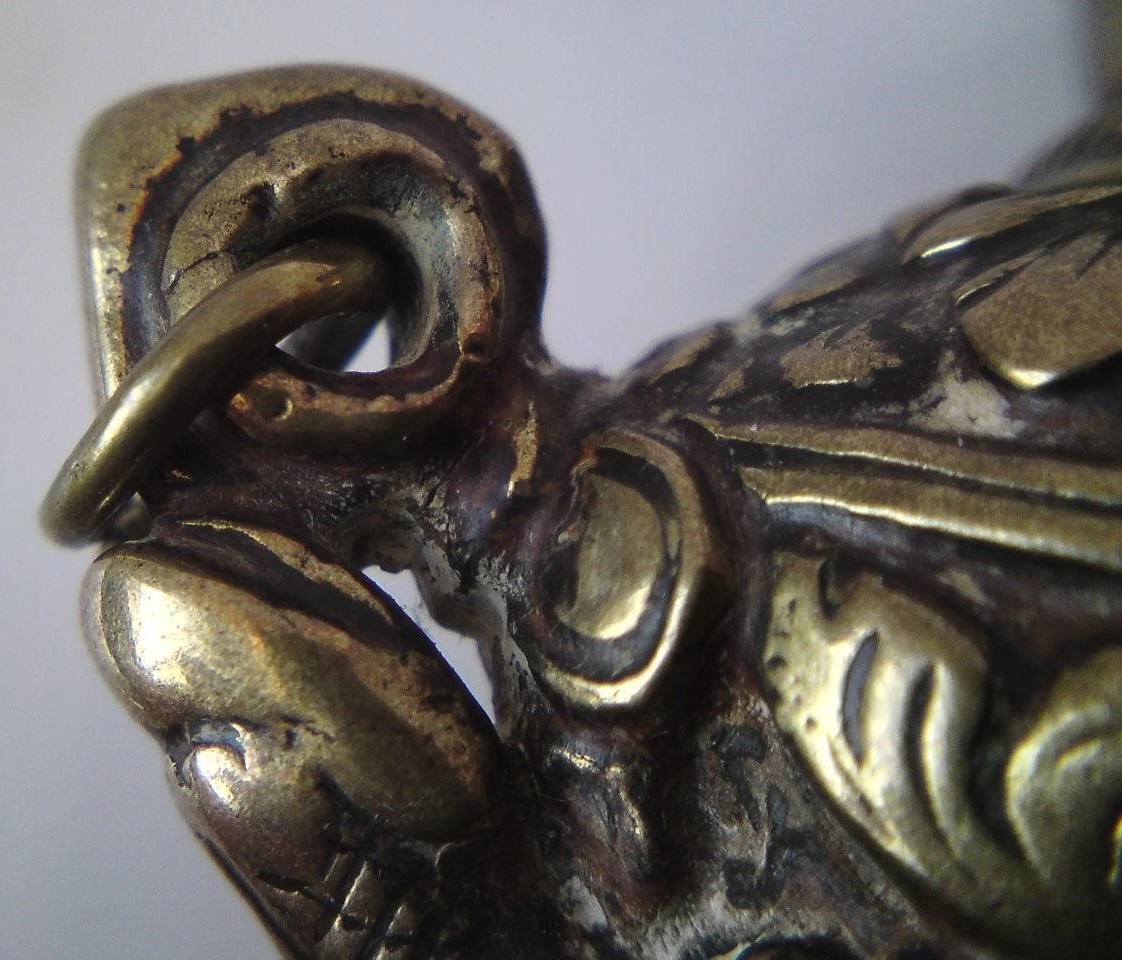
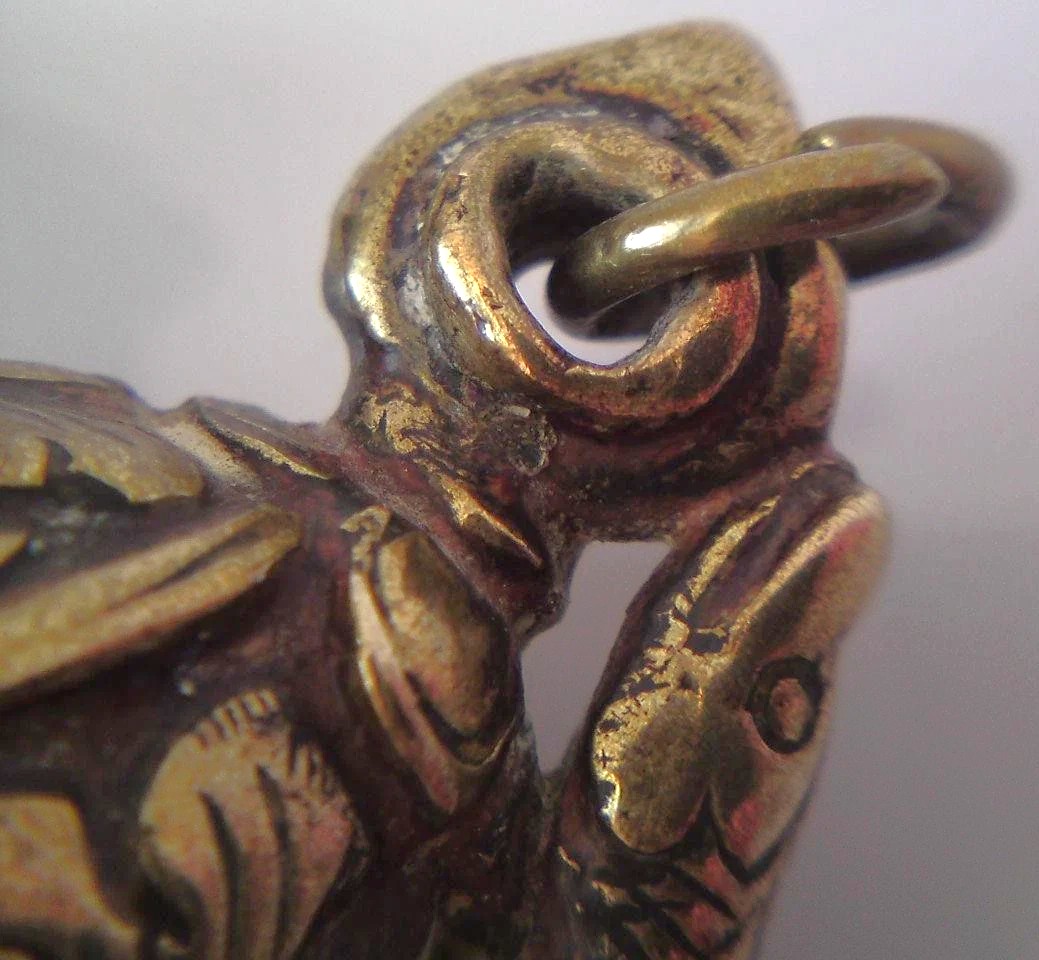
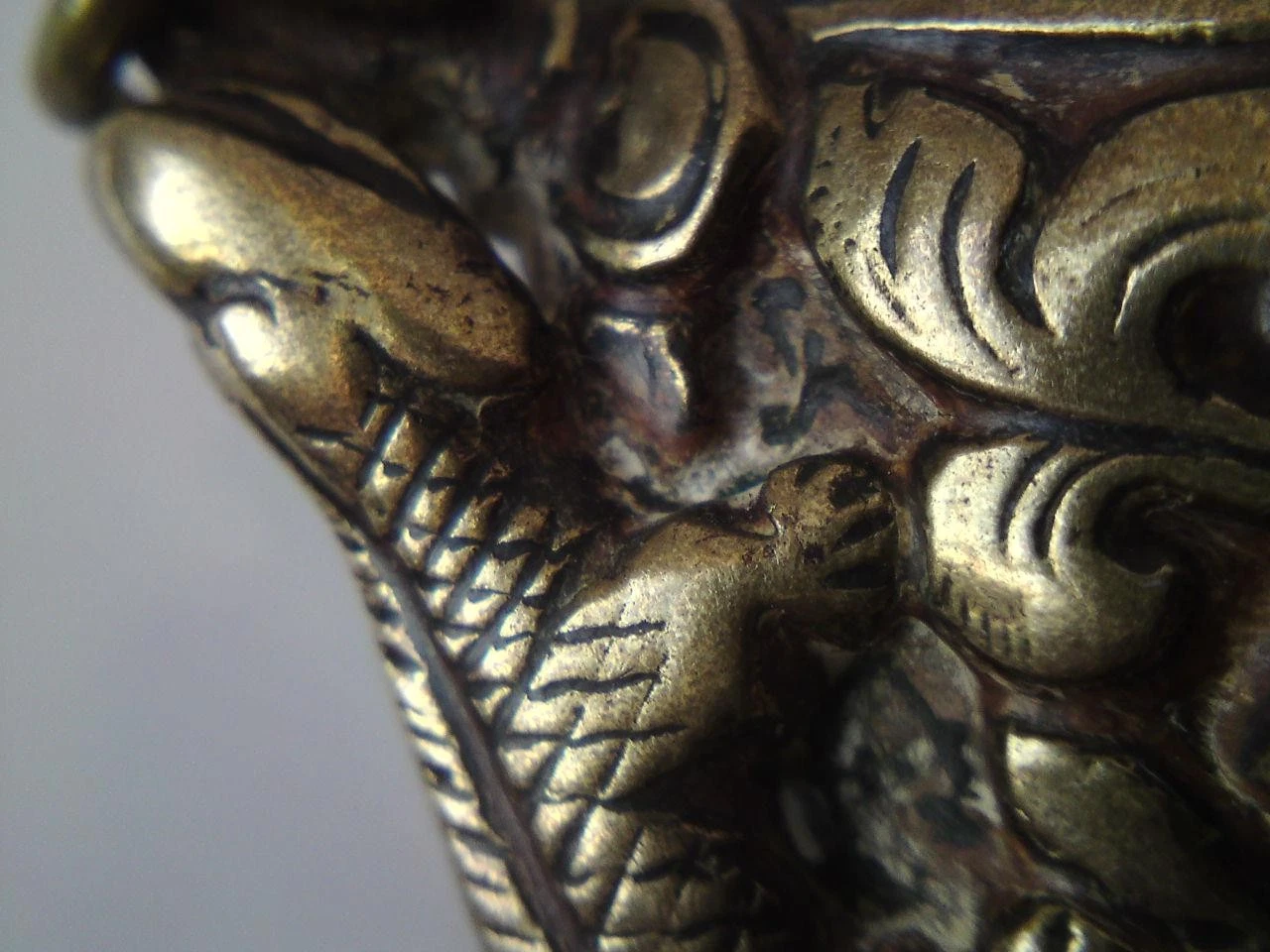
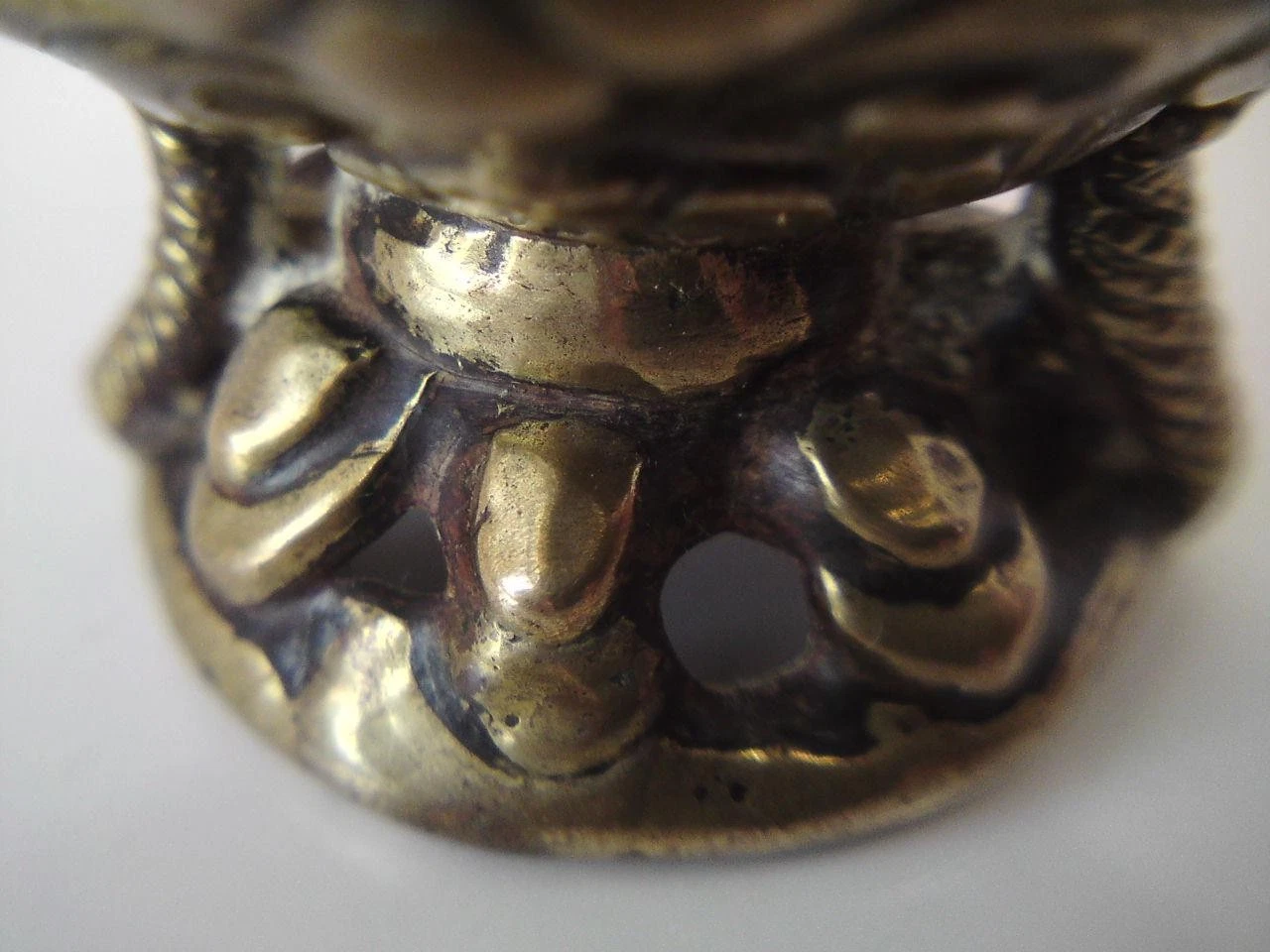
- The Lizards: The “lizards” flanking the body are often interpreted as Makaras (mythical sea creatures) or dragons. In Nepalese metalwork, these serve as protective guardians of the “sacred water” (the ink) inside.
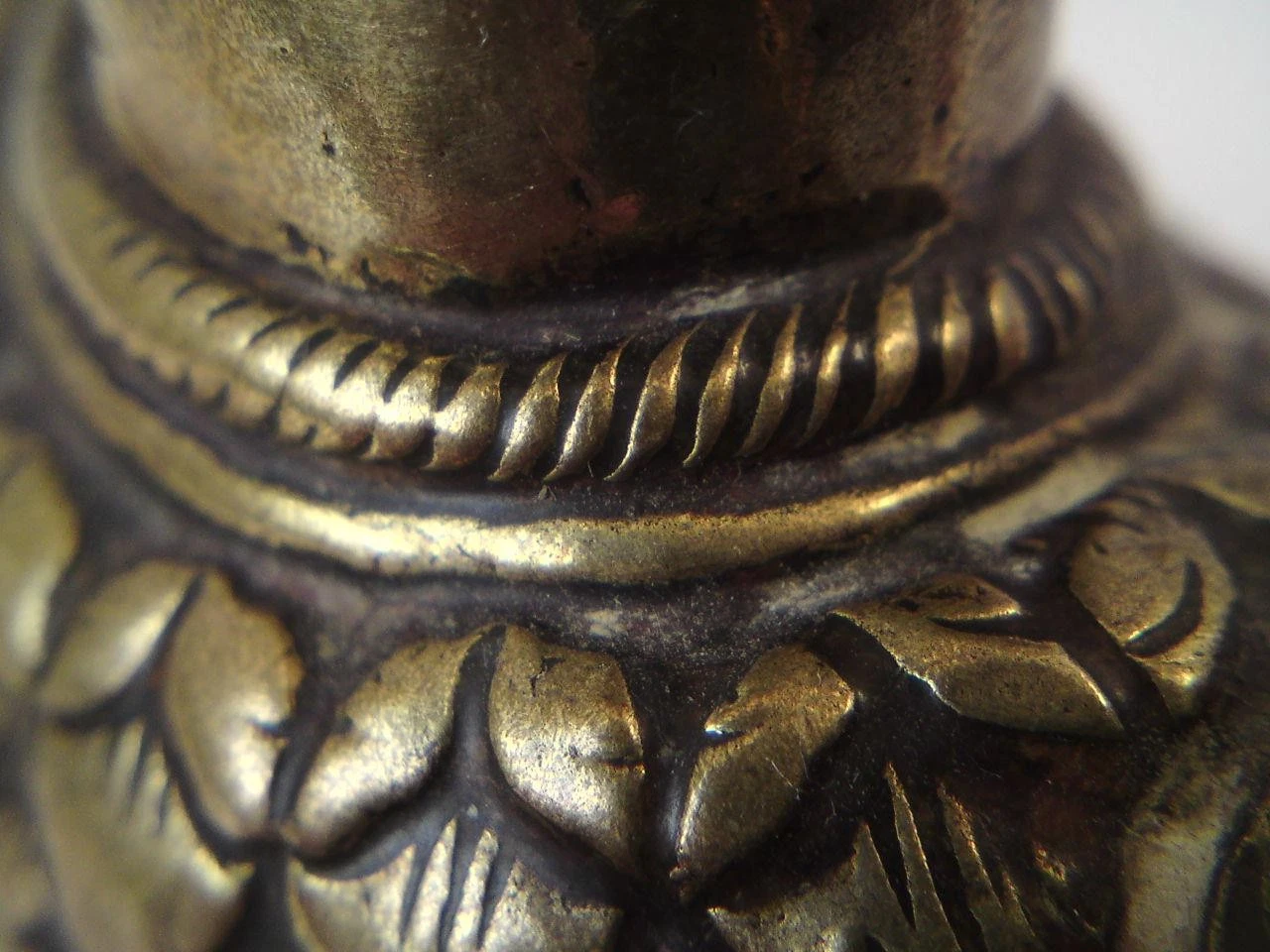
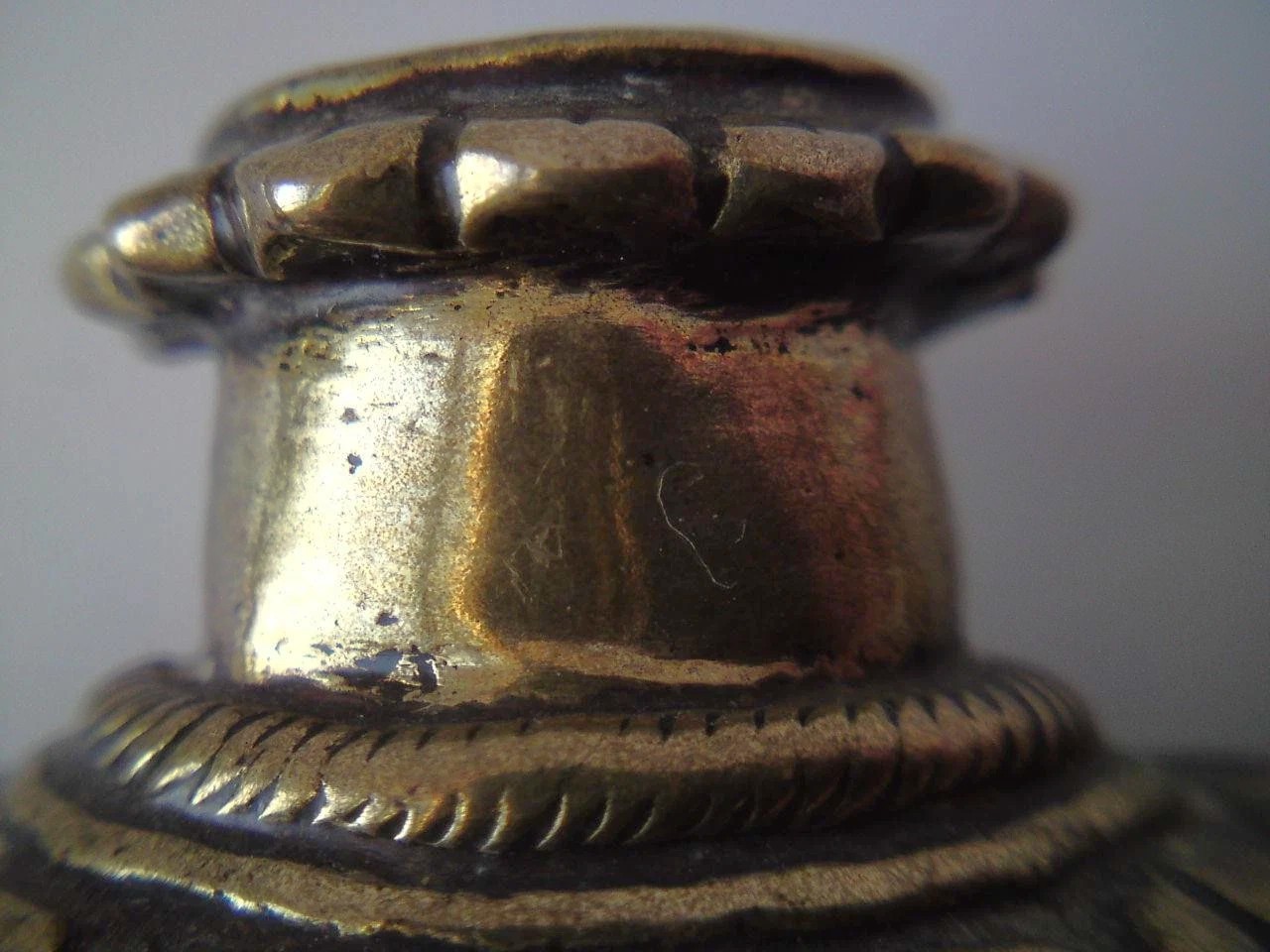
- The Lotus: The high-relief scrollwork and petal-shaped neck/foot symbolize purity. The lotus is a central motif because it rises from the mud to bloom in the light—much like the “knowledge” produced by the ink within.
How was it made?
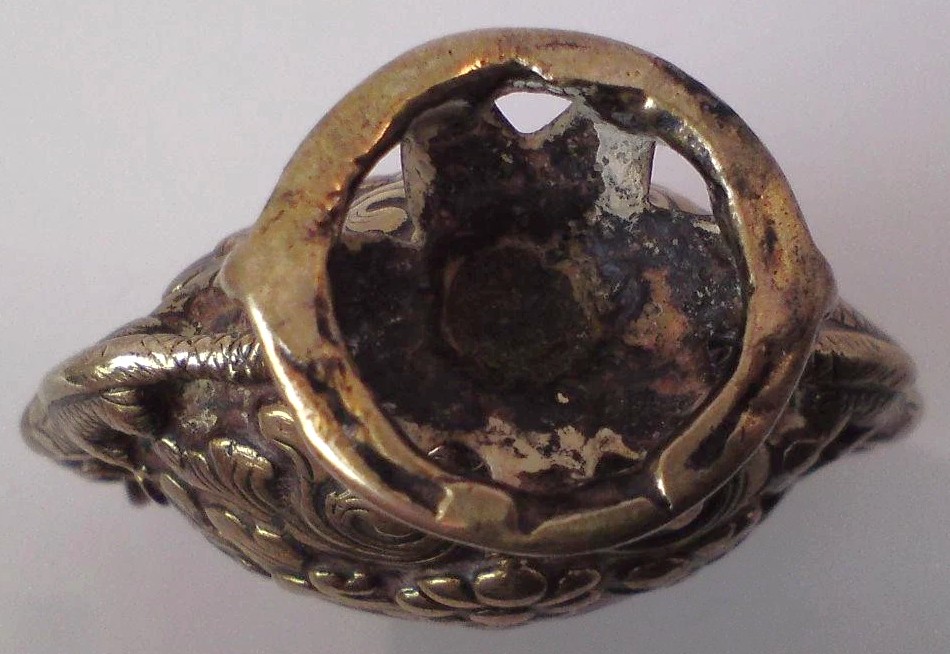
This inkwell was created using the lost-wax casting process (cire perdue), a specialty of the Newar craftsmen of the Kathmandu Valley.
- Modeling: A detailed wax model was carved. For high-relief items like this, the artisan would use fine tools to sculpt the lizards and lotus petals.
- Molding: The wax was coated in layers of clay to create a hard shell.
- Casting: The mold was heated to melt out the wax, leaving a cavity that was then filled with molten brass (a copper-zinc alloy).
- Finishing: After the metal cooled and the clay mold was broken, the piece was hand-chiseled and polished. The dark, recessed areas you see (the patina) are a mix of oxidation and centuries of handling.
How old is it?
Based on the style of the relief and the wear on the lugs (the loops where chains once attached), it is most likely from the 1800s. Similar pieces held in the British Museum or the Victoria & Albert Museum often date to this period, when government officials and professional scribes (Kayastha) traveled through the valley to record religious texts or official documents.
What a complete set looks like
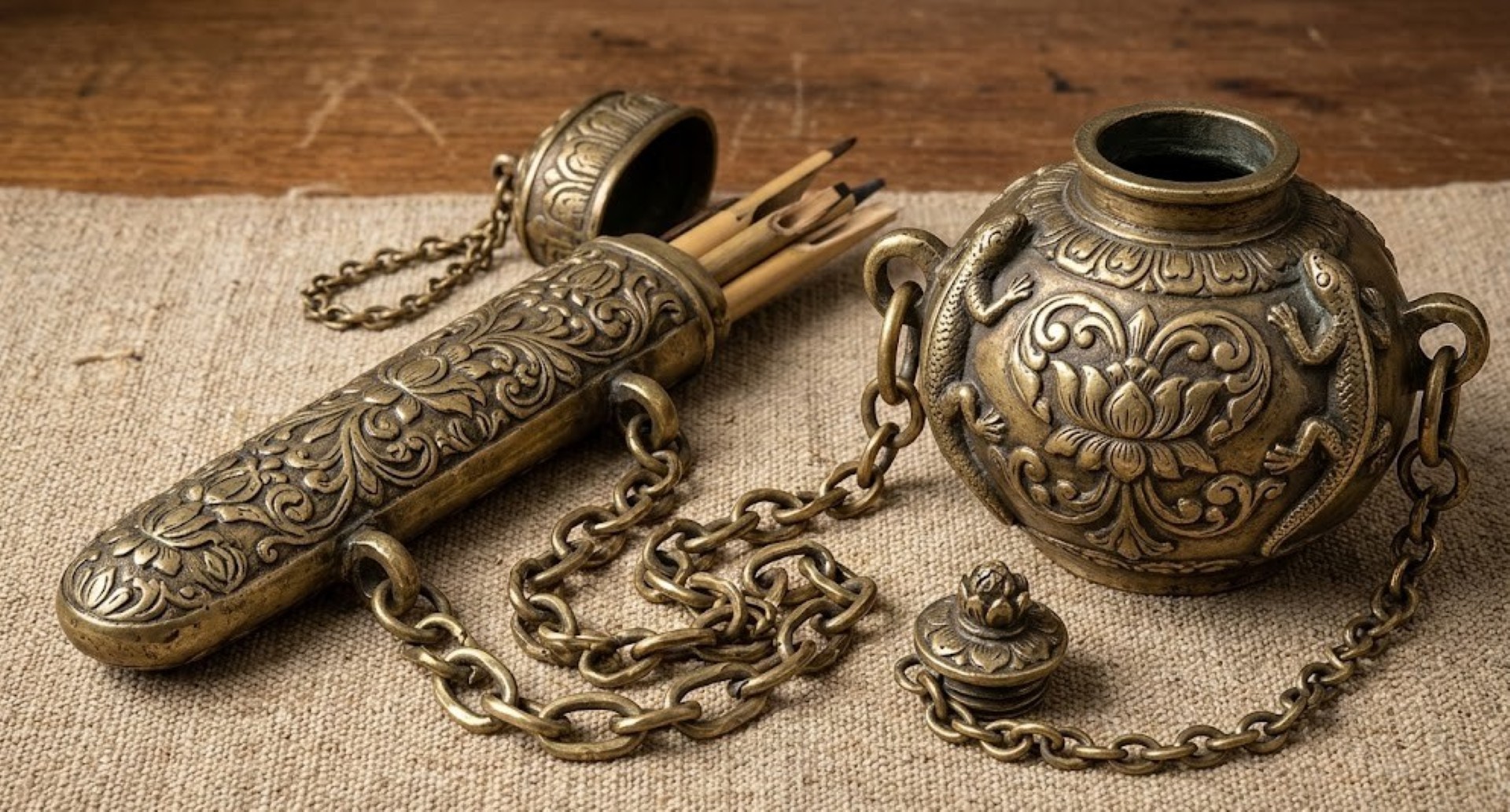
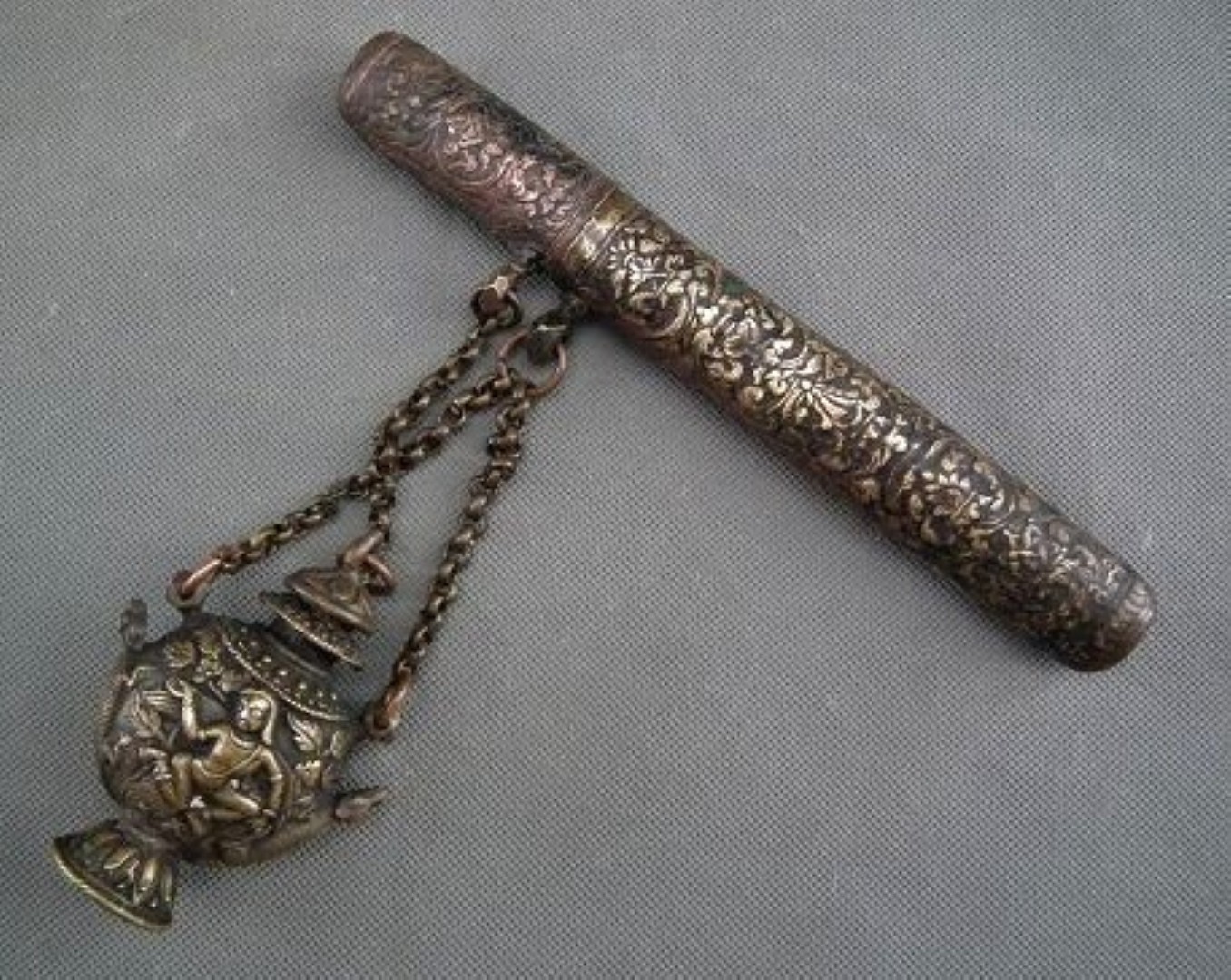
A complete example would be a three-part system connected by chains. Since this example is missing the pen case and stopper, here is how they would have looked:
- The Pen Case: A long, slender, cylindrical tube (usually 7–9 inches) cast with matching lotus or dragon patterns. It held bamboo or reed pens.
- The Chain-Stopper: A domed lid with a finial (sometimes shaped like a small bird or lotus bud) that fit snugly into the top of the pot. A short chain would connect this lid to the lugs on the side of the pot so it wouldn’t get lost.
- The Main Chain: A longer, heavy-link brass chain connected the inkwell to the pen case, allowing the scribe to sling the entire set over a belt or saddle.
Two examples of a complete set are pictured.
Inkwell (alone) sold for $450 in February 2026
Content disclaimer. The information posted is the owner’s best knowledge and may not have been vetted by the SOIC. We welcome comments, corrections, and additions, working to make our website information comprehensive and accurate.
Join the Society of Inkwell Collectors (SOIC) – it’s free!
Founded in 1981 as a non-profit organization,
we are documenting inkwells (and accessories).
We’re here to help and inform!