

Meissen Porcelain Writing Set
| Categories | Ceramics/Porcelain "Named" Makers |
| Material | Porcelain |
| Markings | See Narrative |
| Manufacturer | Meissen |
| Origin | Germany |
| Date or Era | circa 1770 |
| Measuring | 2 ¼” x 2 ¼” x 2” high |
Description
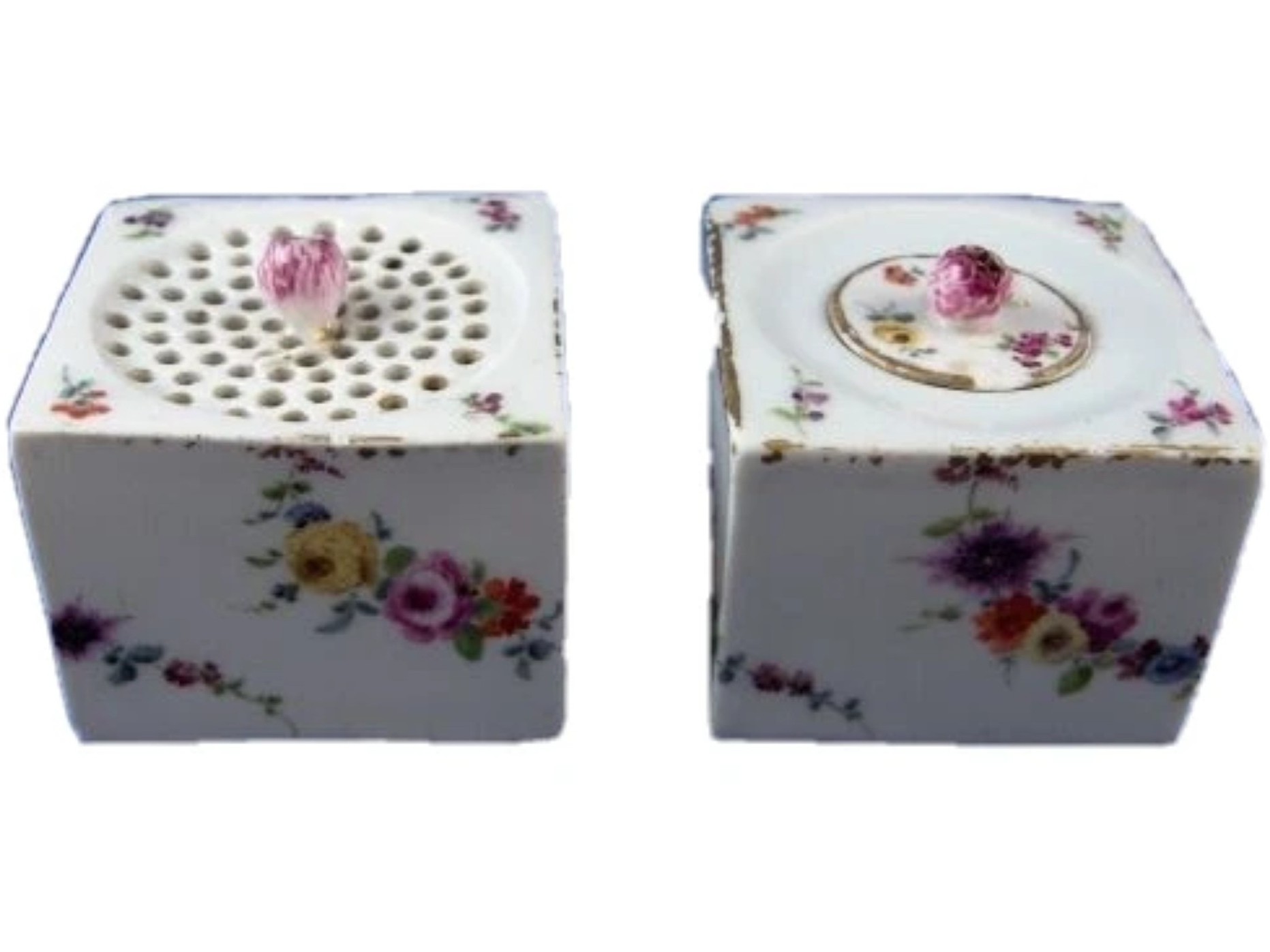
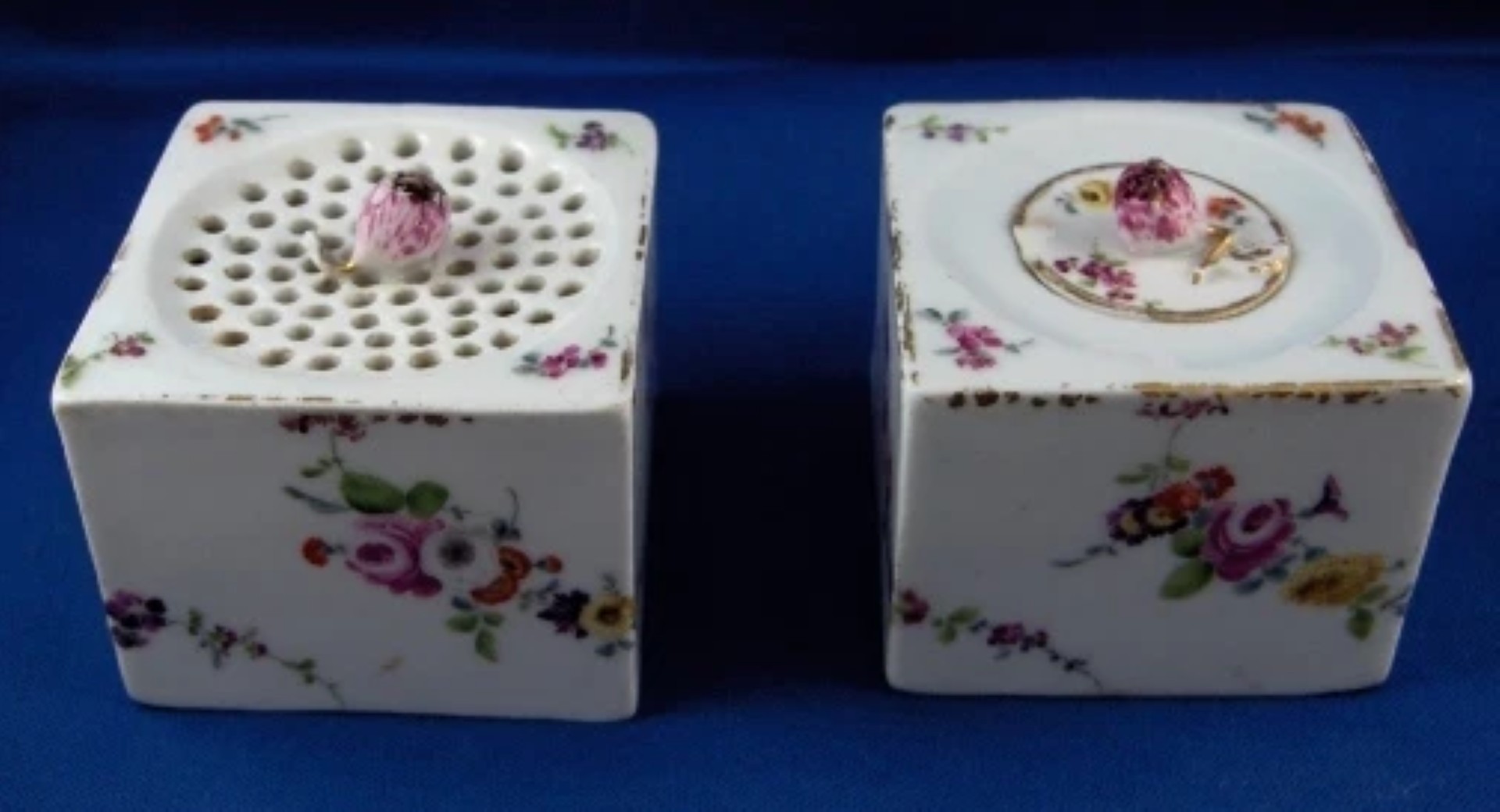
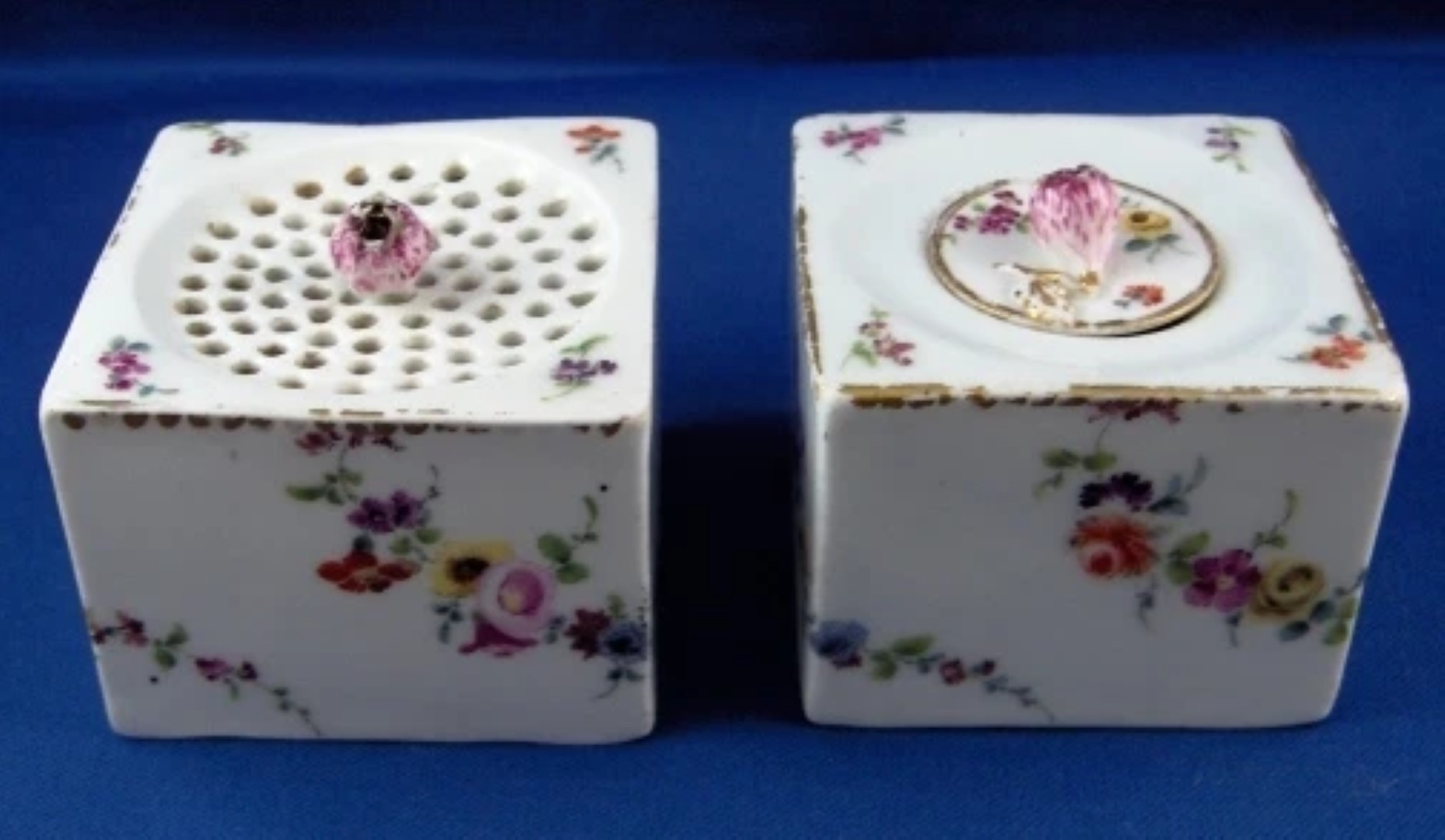
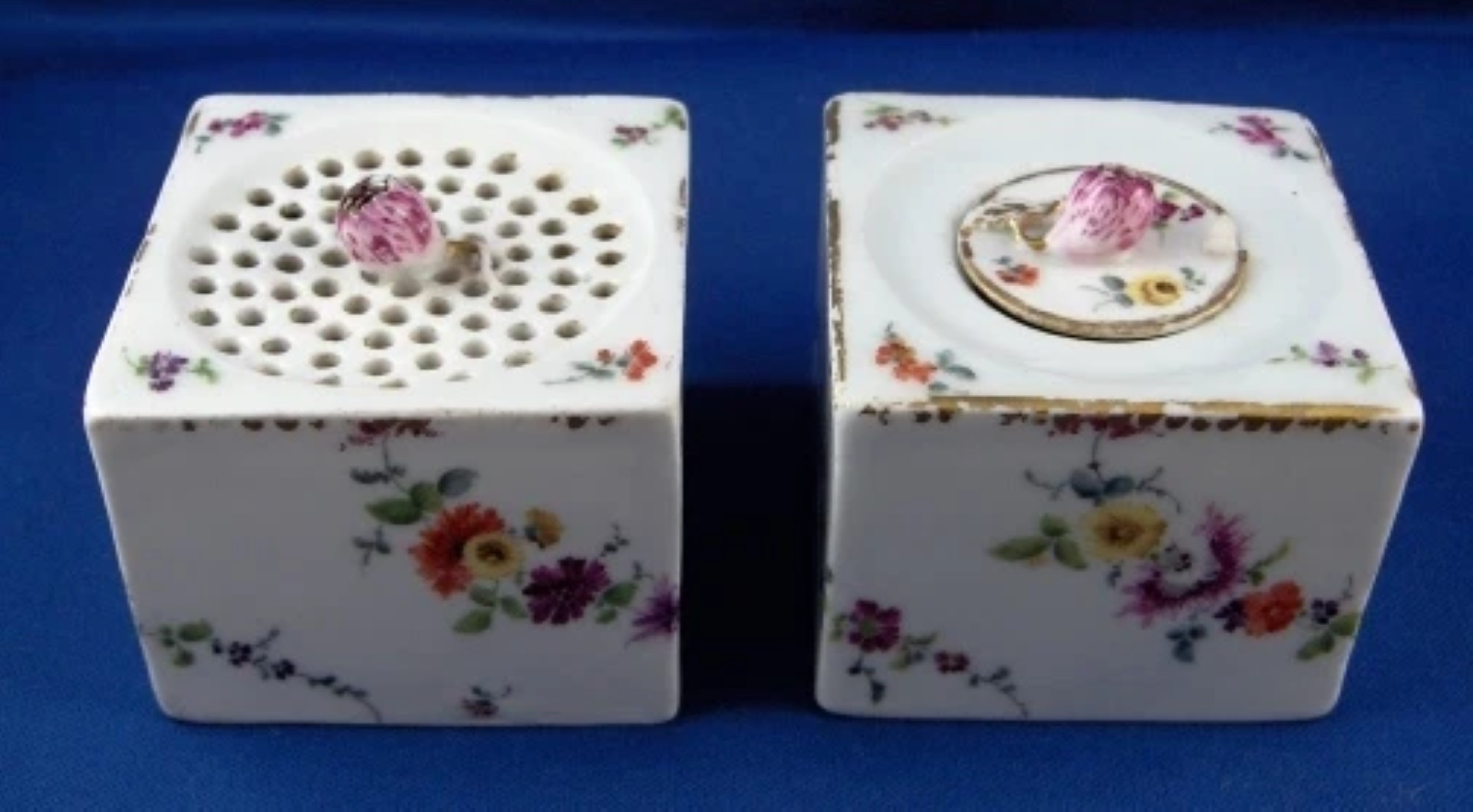
This eighteenth-century Meissen porcelain writing set consists of a matching inkwell with its original fitted lid and a sander (pounce pot).
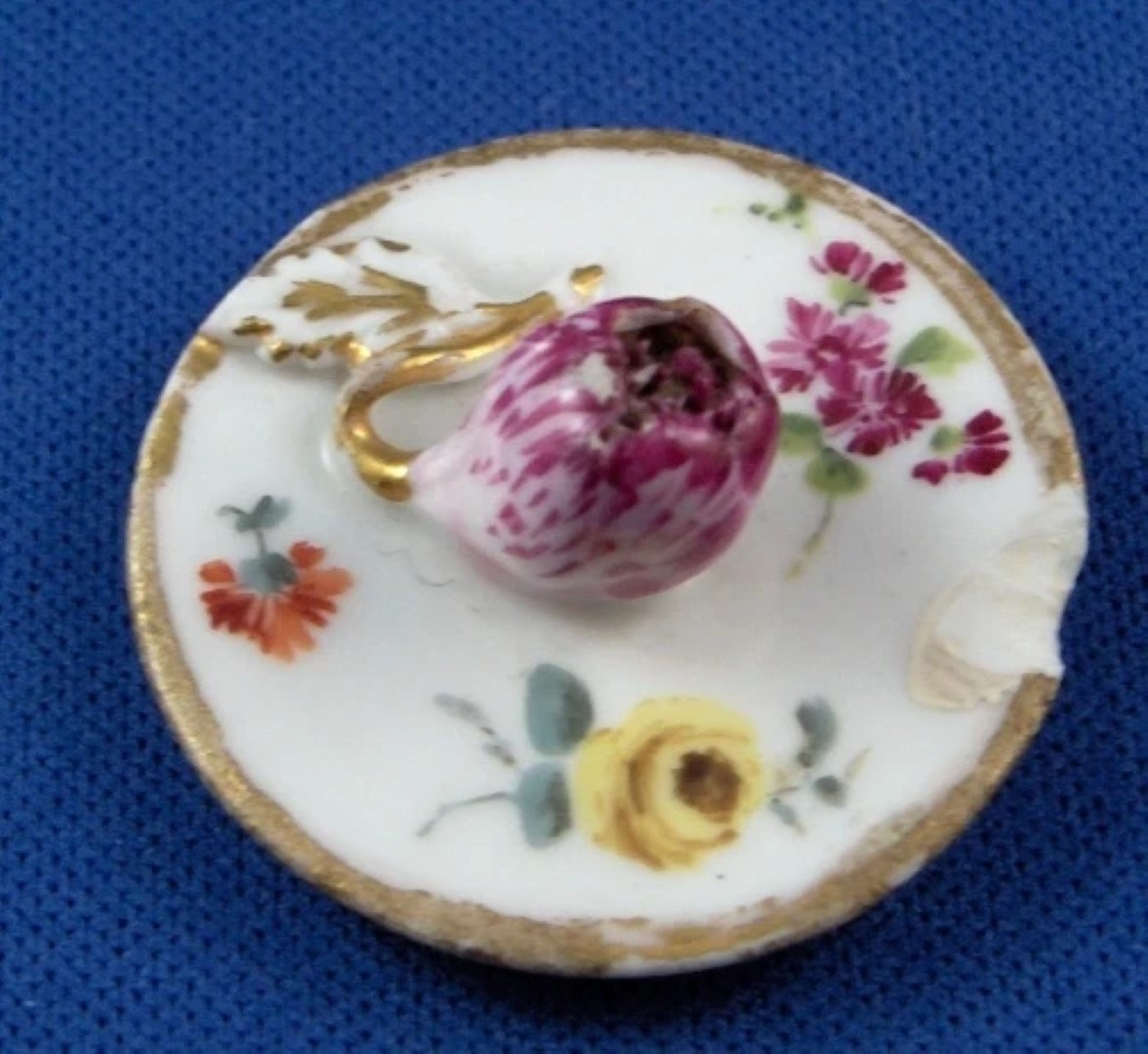
- Form & Structure: Both pieces are designed as small, matching square blocks (cubes) with sunken circular wells at the top. The sander features a perforated dome grate for sprinkling pounce or sand over freshly inked paper, capped by a hand-modeled flower finial. The inkwell has an inset, flush-fitting lid topped with a matching floral finial.
- Decoration: Hand-painted in vibrant polychrome enamel with classic Deutsche Blumen (German flowers) and trailing leafy floral garlands. Delicate traces of original gilding outline the square upper borders, lid rims, and raised moldings.
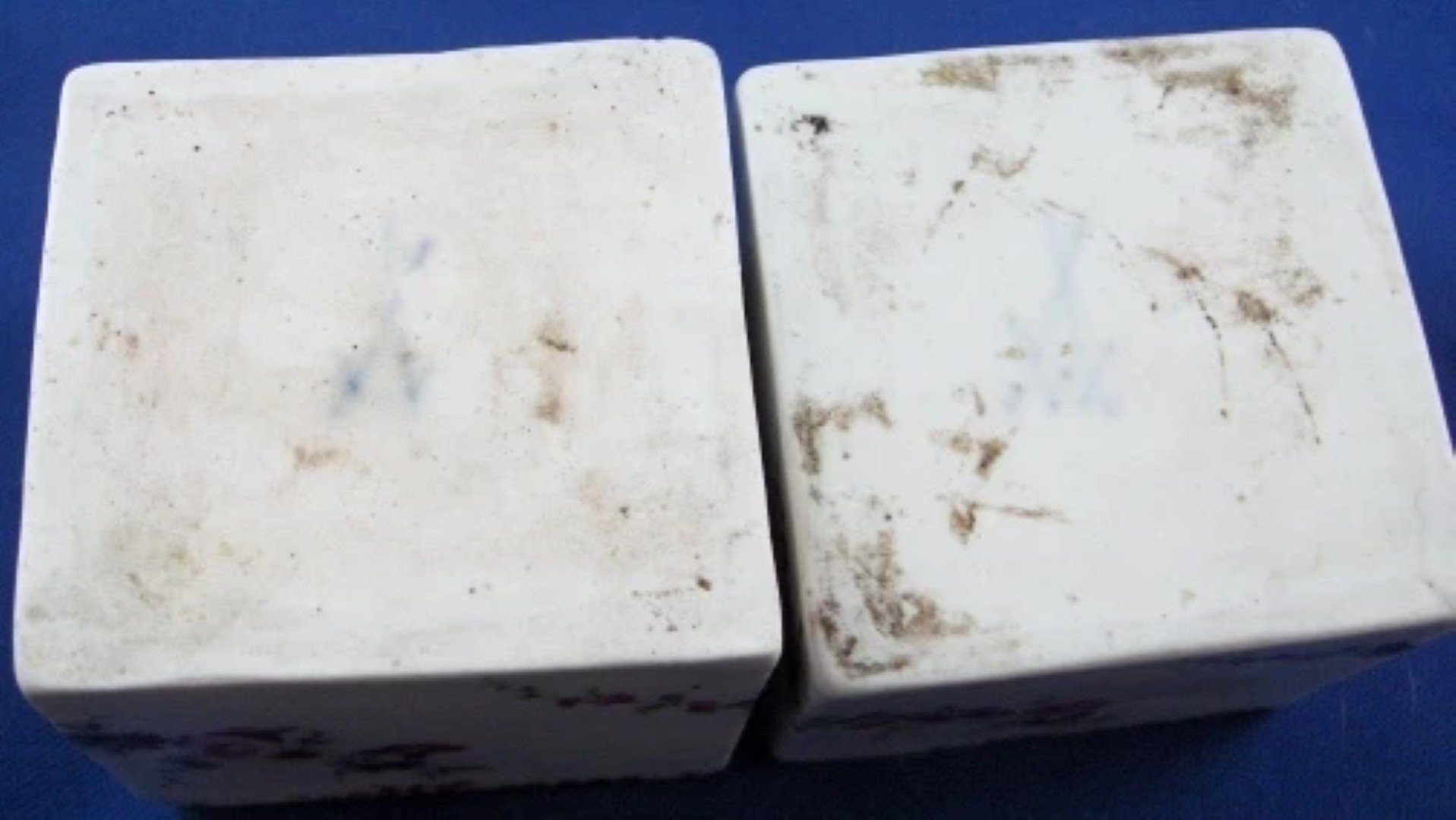
- Marks: Both bases feature the iconic underglaze blue crossed swords mark with a central dot between the hilts.
Dating & Age Evaluation
Estimated Age: c. 1763–1774 (Dot Period / Punktzeit)
While blue crossed swords were used throughout the 18th century, the dot positioned between the hilts/crosspieces specifically denotes the famous Dot Period (Punktzeit):
- The Dot Period (1763–1774): Introduced right after the Seven Years’ War under the directorship of Carl Wilhelm Boehme, the factory added a small blue dot between the sword hilts to signify a new era of production.
- Stylistic Evidence: The naturalistic floral sprays (Deutsche Blumen) combined with light, asymmetrical garlands reflect the transitional Rococo-to-Neoclassical style typical of the 1760s and 1770s.
Condition Assessment
- Gilding: Expectable age-related wear and loss to the gilded borders along high-contact edges.
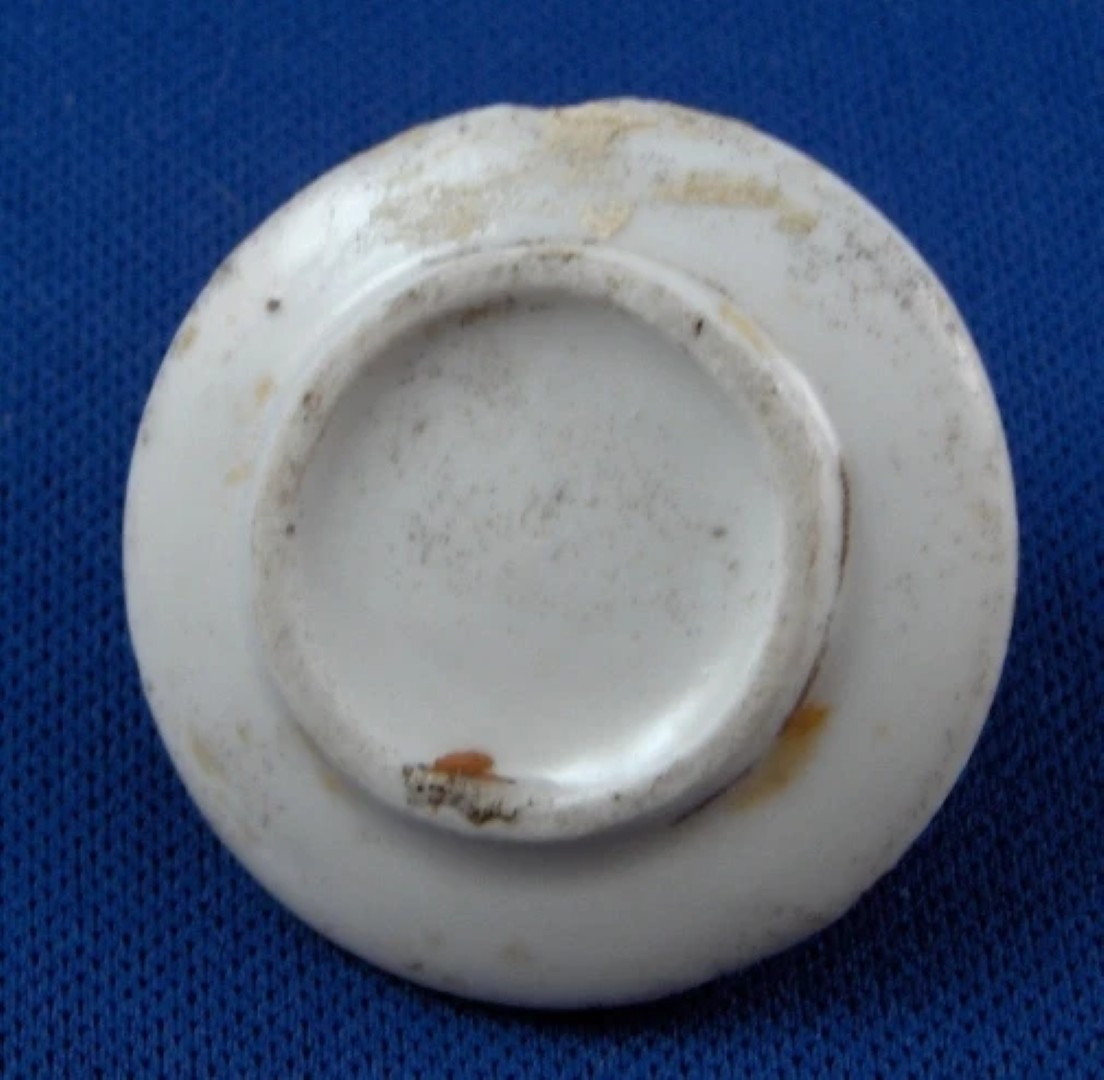
- Inkwell Lid: Visible chip along the outer rim edge and minor loss to the delicate petal tips of the flower finial.
- Sander: Minor nibbles/fleabites along the top outer rim and slight wear/chipping to the flower finial petals.
- Inkwell Body: Internal rim nibbles and minor fleabites underneath the inner lip (consistent with repeated dip-and-fill use of quill pens).
Note: For 250+ year-old hard-paste porcelain, these minor defects and wear are typical, honest signs of authentic age and period use.
Historical Background
The Meissen Manufactory
Founded in 1710 by Augustus the Strong, Elector of Saxony and King of Poland, Meissen was the first true hard-paste porcelain manufactory in Europe. Prior to Böttger and Tschirnhaus discovering the secret formula in Dresden/Meissen, Europeans imported true porcelain at exorbitant costs from East Asia. To protect against counterfeits, Meissen adopted the crossed swords mark (derived from the Electoral Saxony coat of arms) in 1722.
Writing Sets in the 18th Century
In the 18th century, writing was an elite art, and porcelain writing sets were luxurious accoutrements for a gentleman’s library or a lady’s writing desk.
- The Inkwell: Held liquid gall ink.
- The Sander (Pounce Pot): Held pounce (ground sand, powdered gum sandarac, or cuttlebone) used to prepare rough paper prior to writing or to absorb excess wet ink to prevent smudging.
Surviving complete matching sets—especially those retaining their original delicate lids and sander grates—are prized examples of 18th-century European ceramic history.
Also see this Inkipedia entry: Meissen Inkwell and Sander – The Society of Inkwell Collectors (SOIC)
Sold for $600 in July 2026
Content disclaimer. The information posted is the owner’s best knowledge and may not have been vetted by the SOIC. We welcome comments, corrections, and additions, working to make our website information comprehensive and accurate.
Join the Society of Inkwell Collectors (SOIC) – it’s free!
Founded in 1981 as a non-profit organization,
we are documenting inkwells (and accessories).
We’re here to help and inform!