

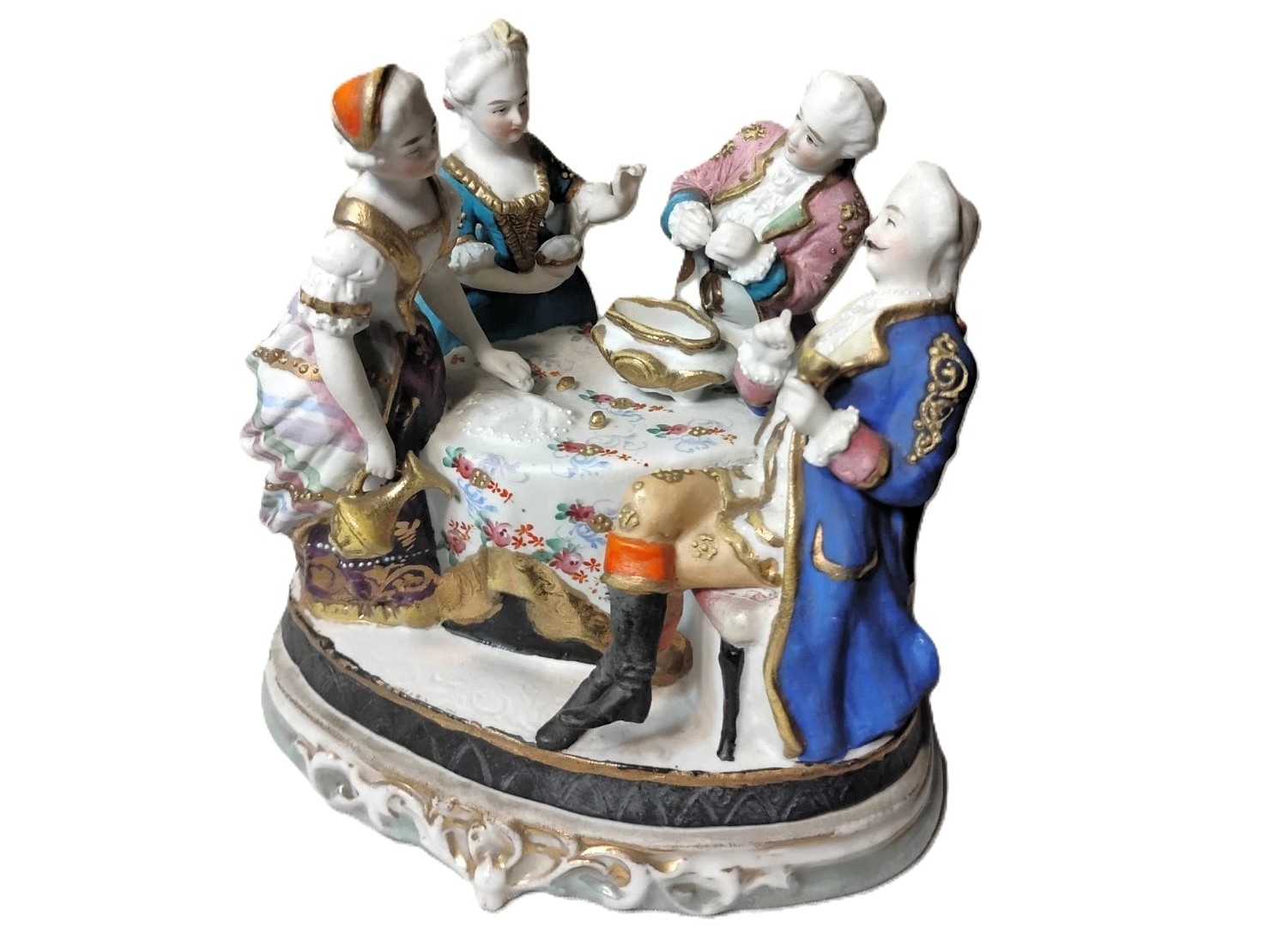
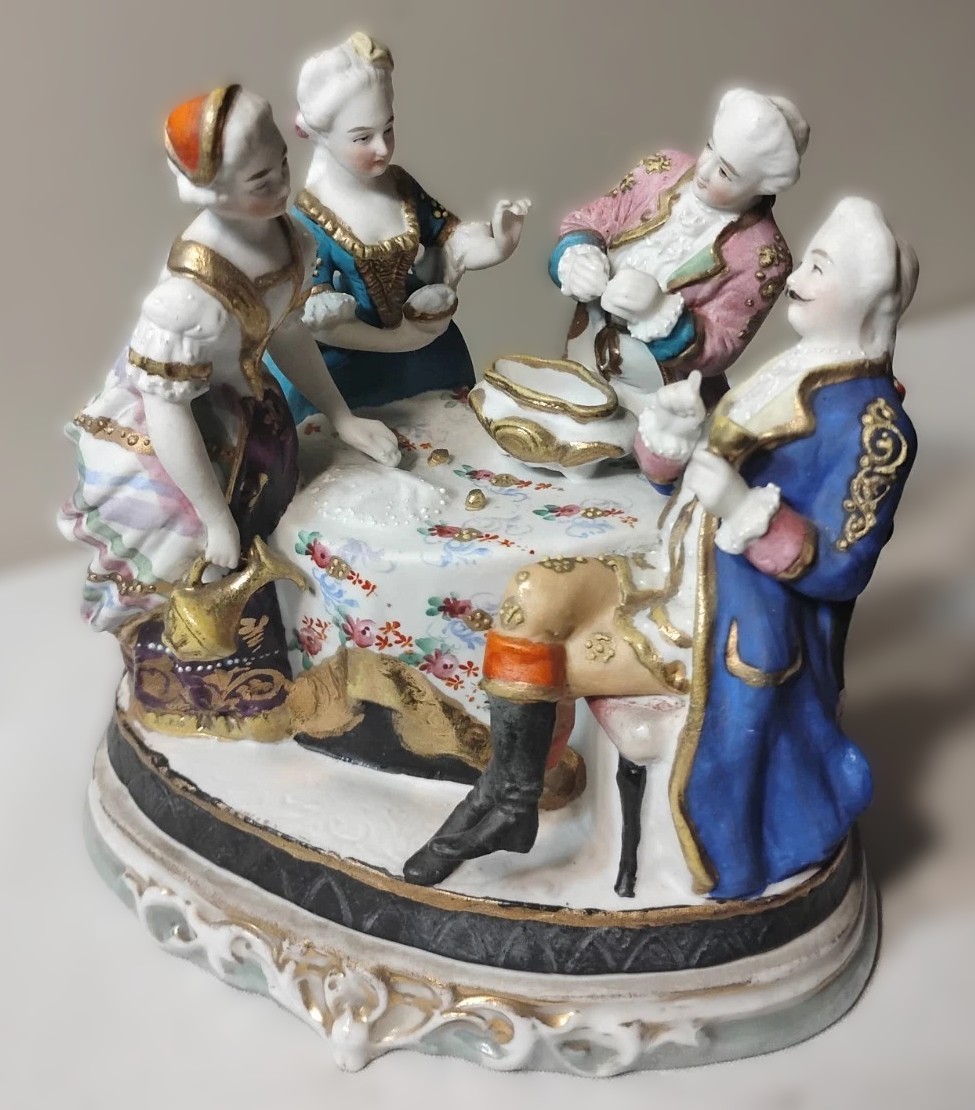
Conta & Boehme Porcelain Grouping – Four Courtesans
| Categories | Ceramics/Porcelain "Named" Makers |
| Material | Porcelain |
| Markings | See Narrative |
| Manufacturer | Conta & Boehme |
| Origin | Germany |
| Date or Era | circa 1880 |
| Measuring | 9” across |
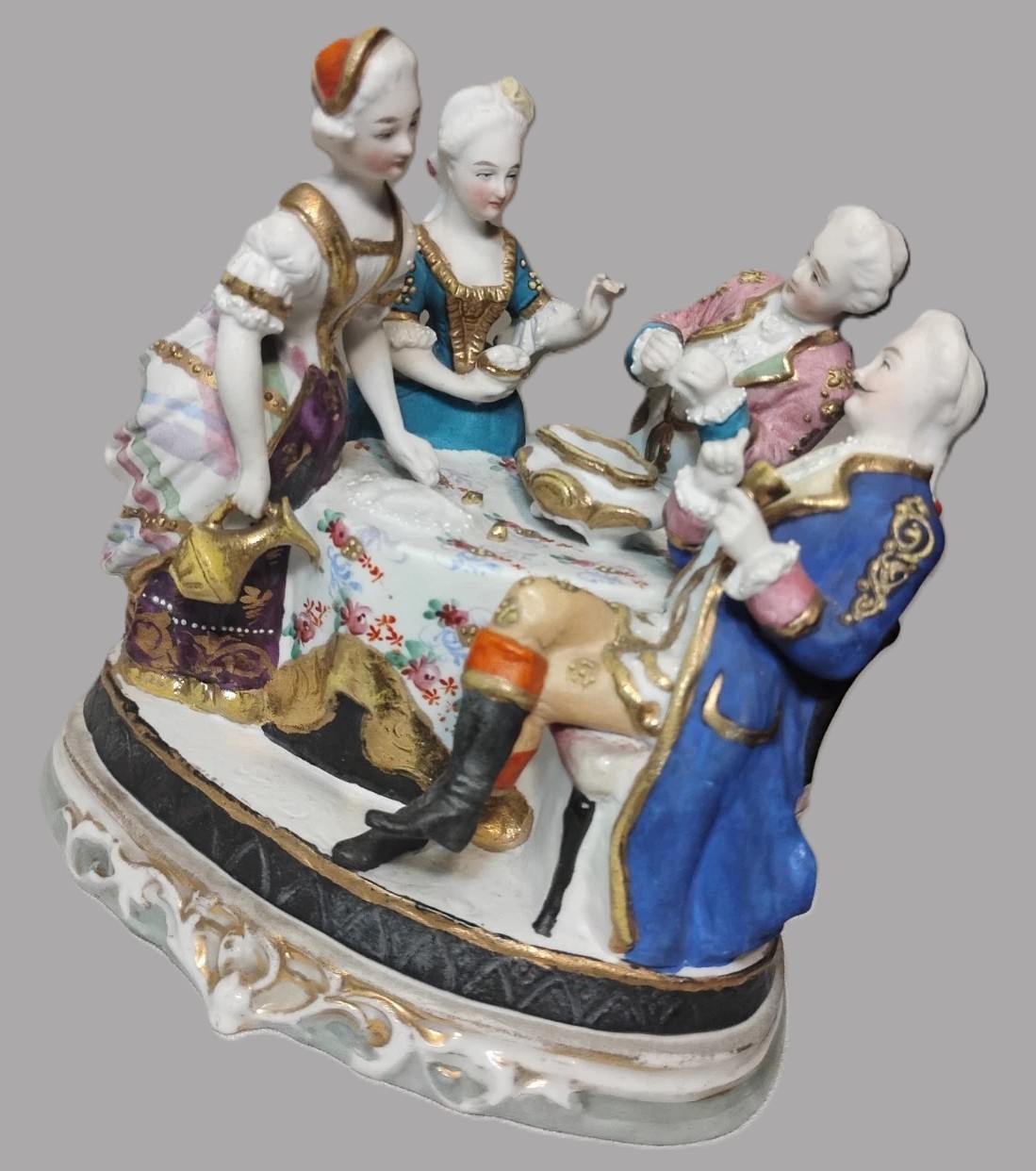
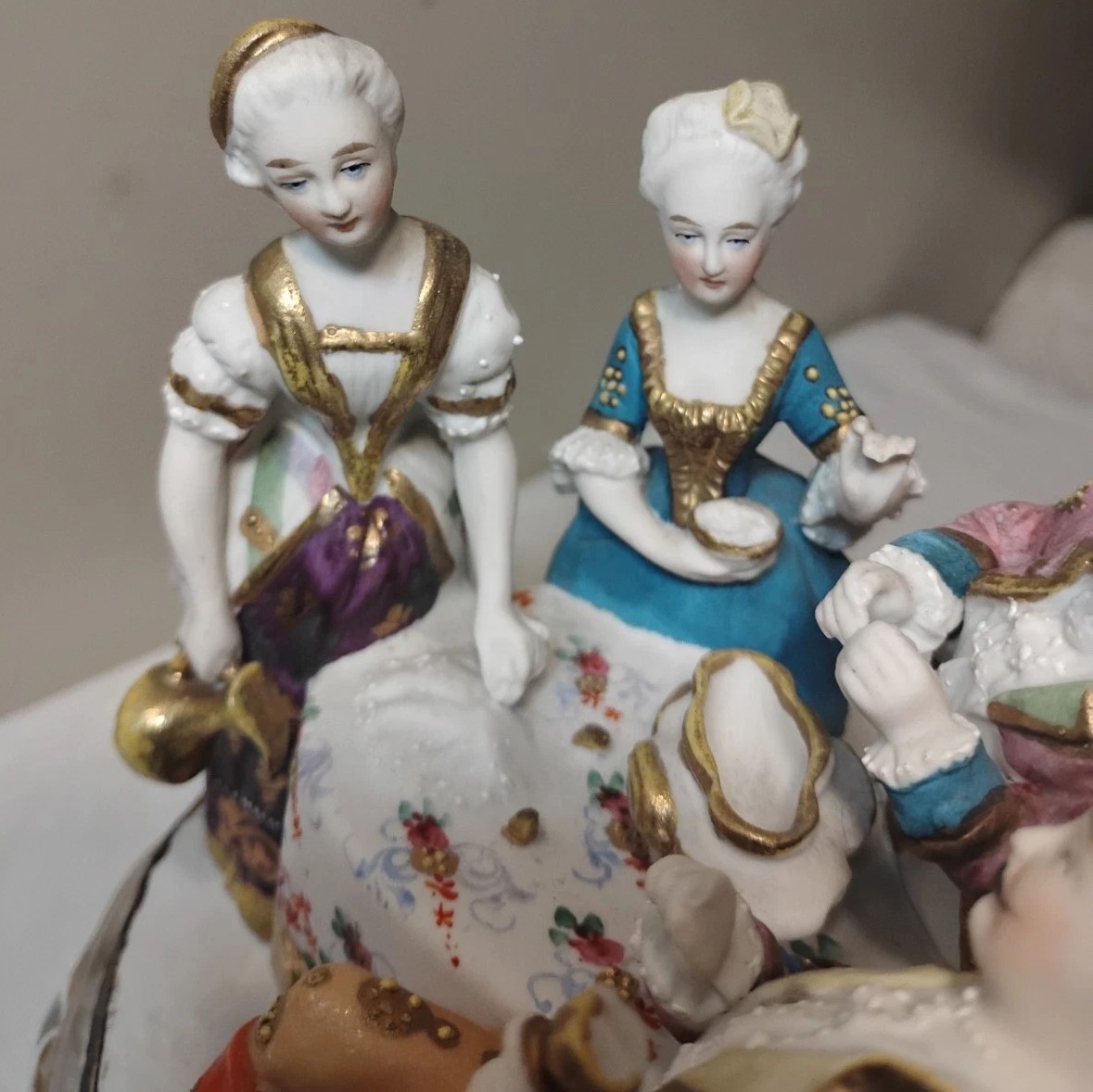
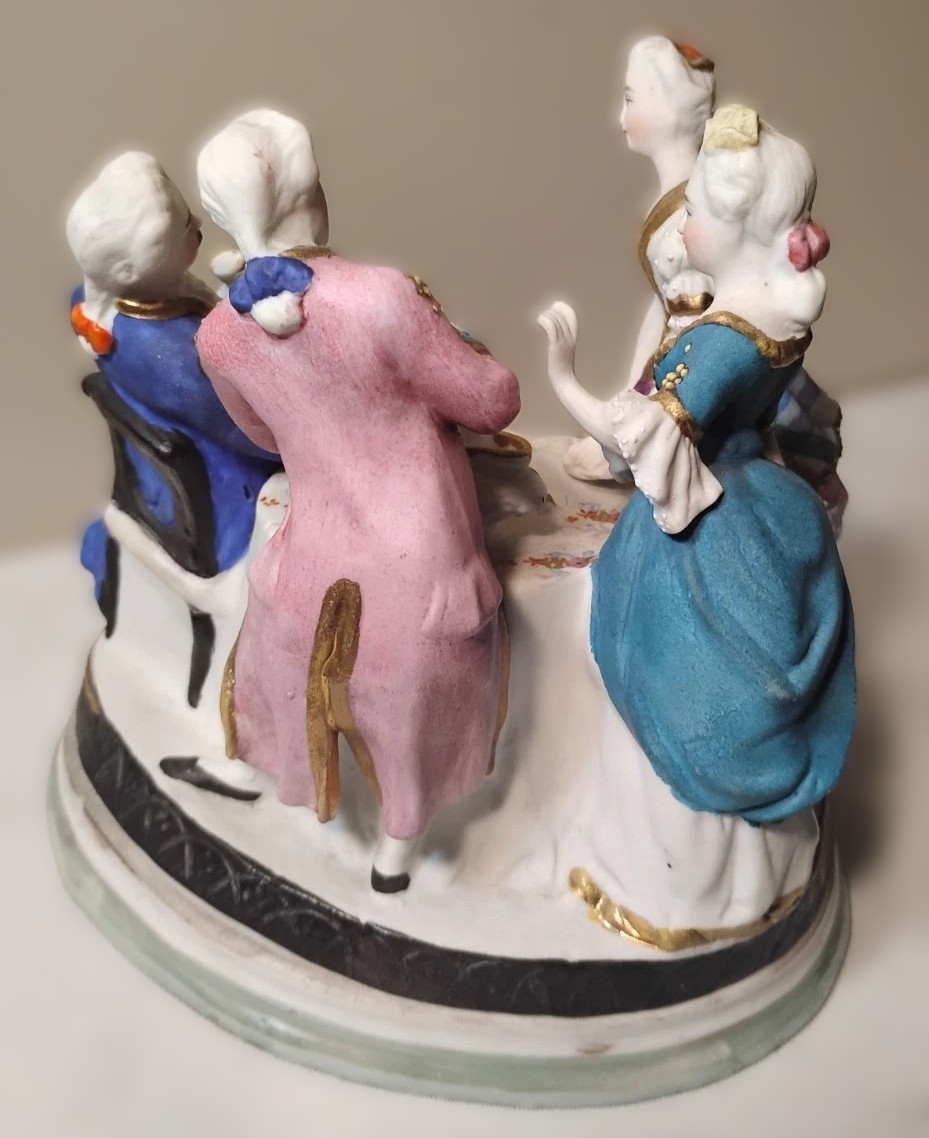
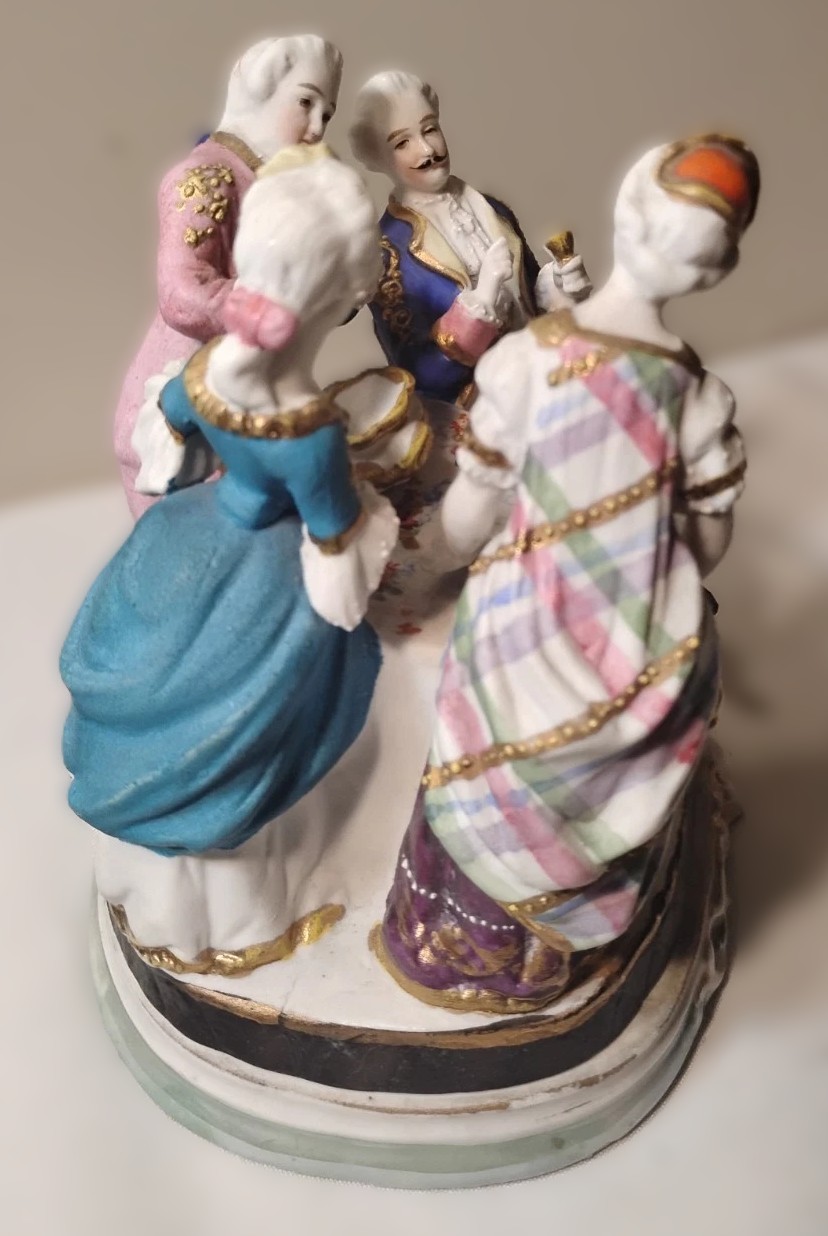
This late 19th-century German porcelain figural inkstand by Conta & Boehme, depicts a lively 18th-century Rococo social scene centered around a dining table.
Description
The Figural Group & Table
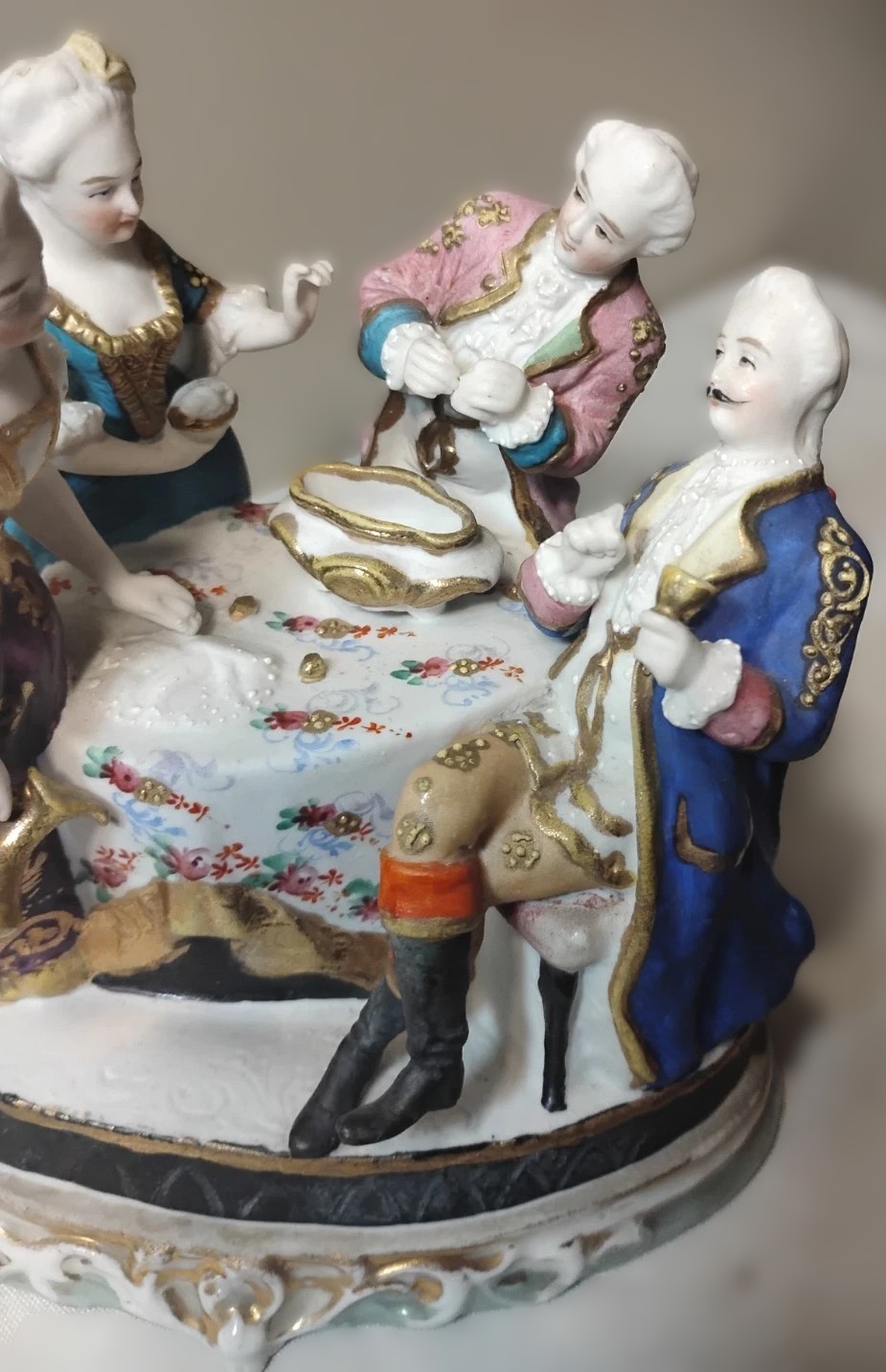
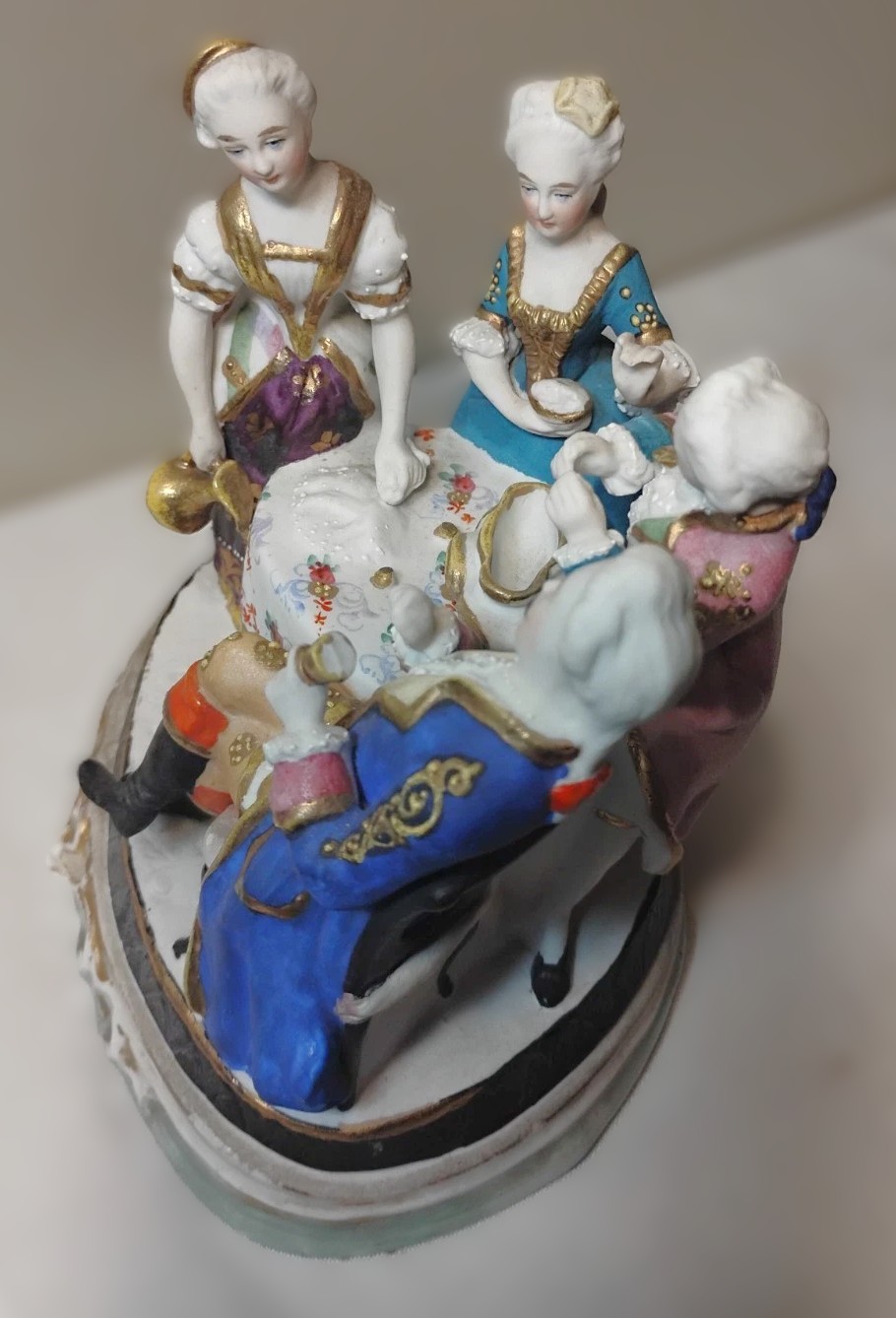
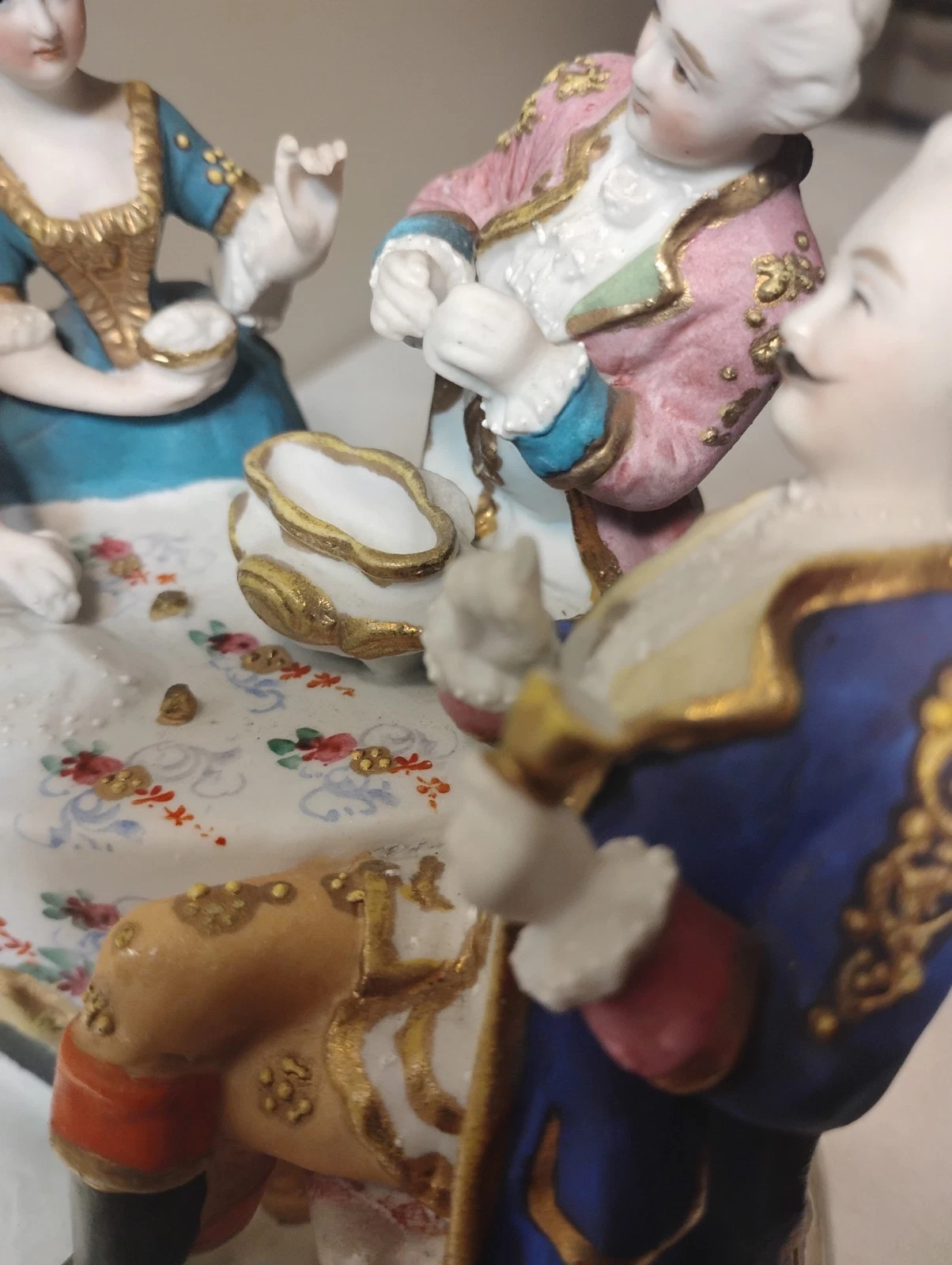
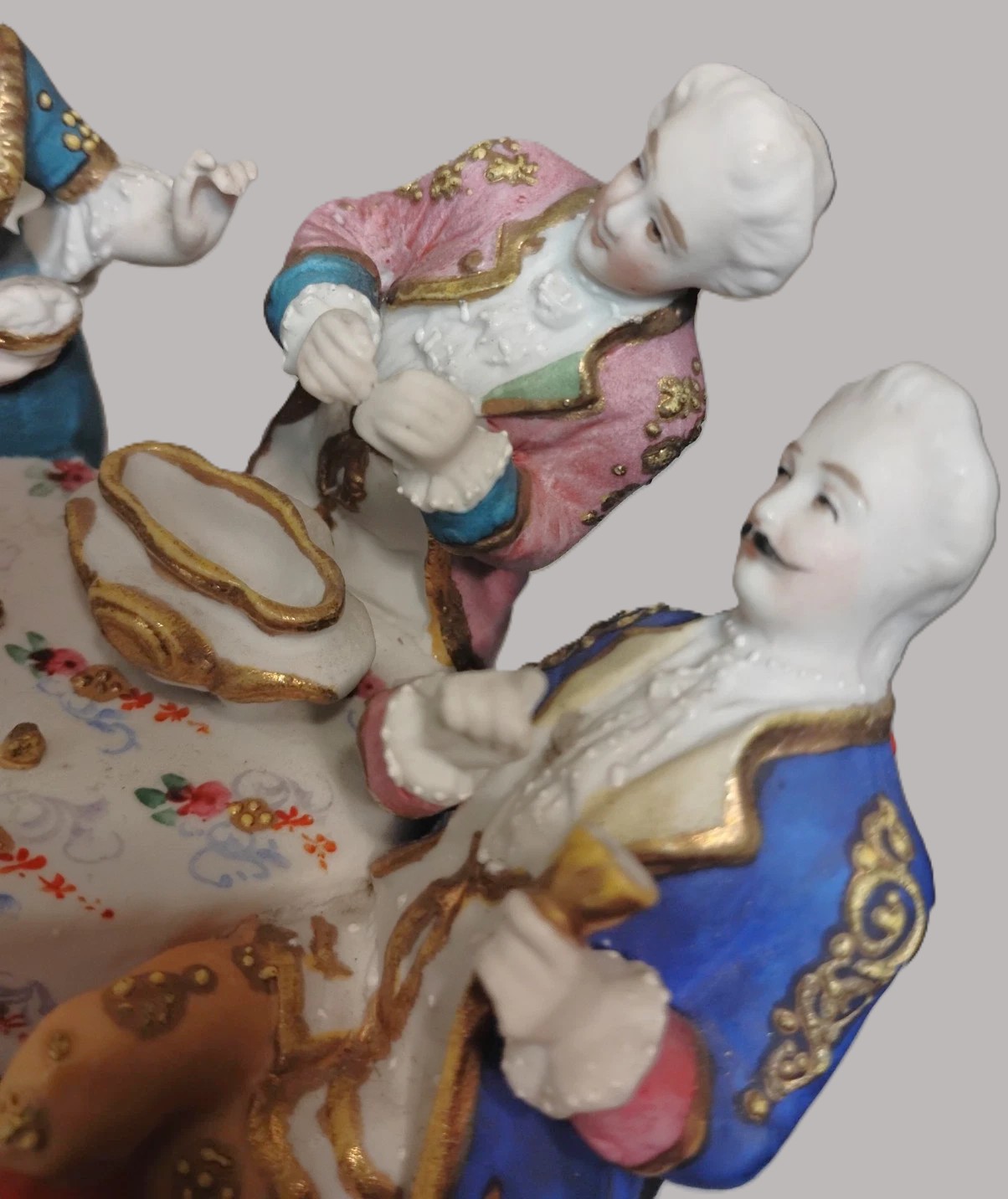
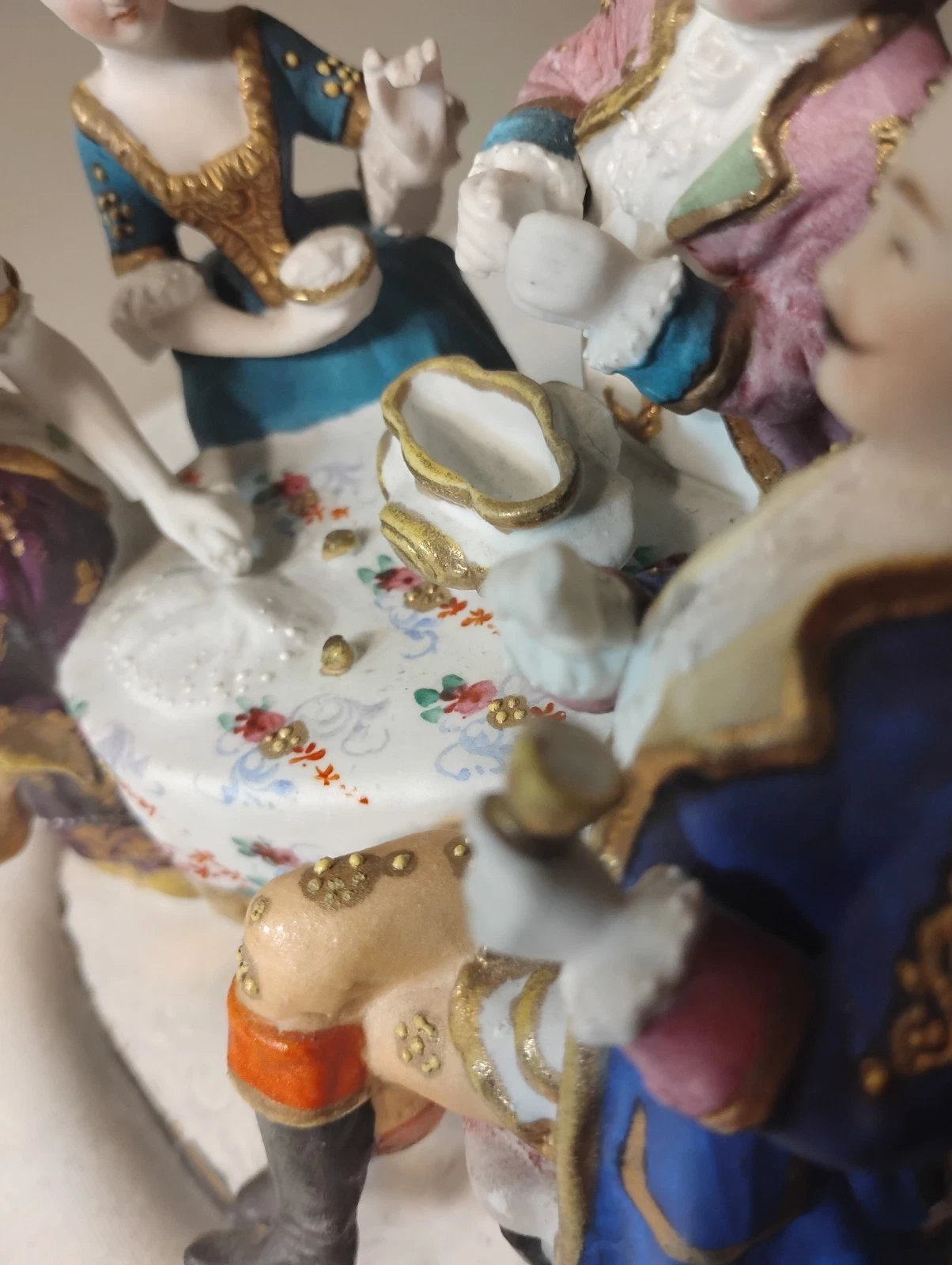
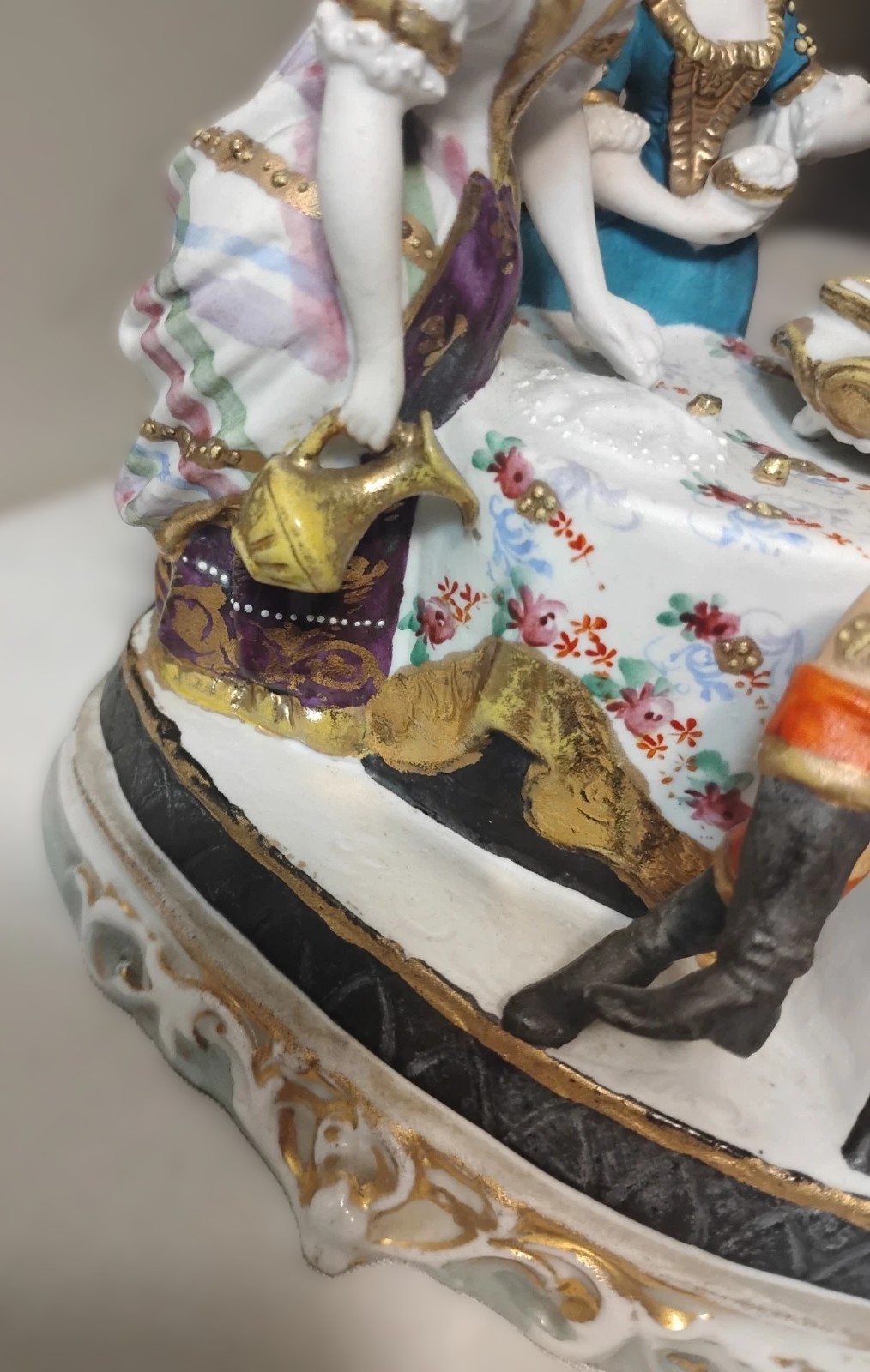
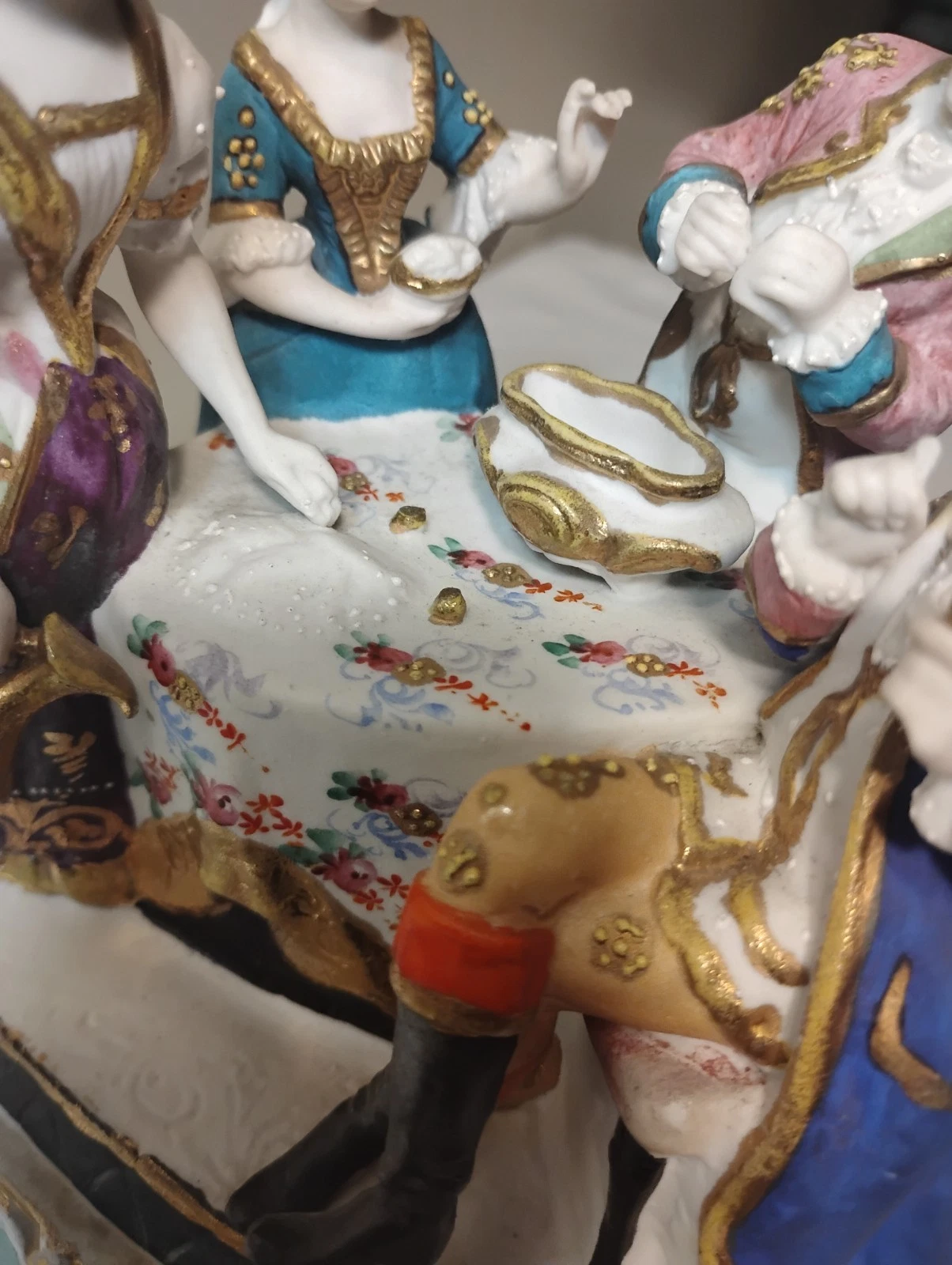
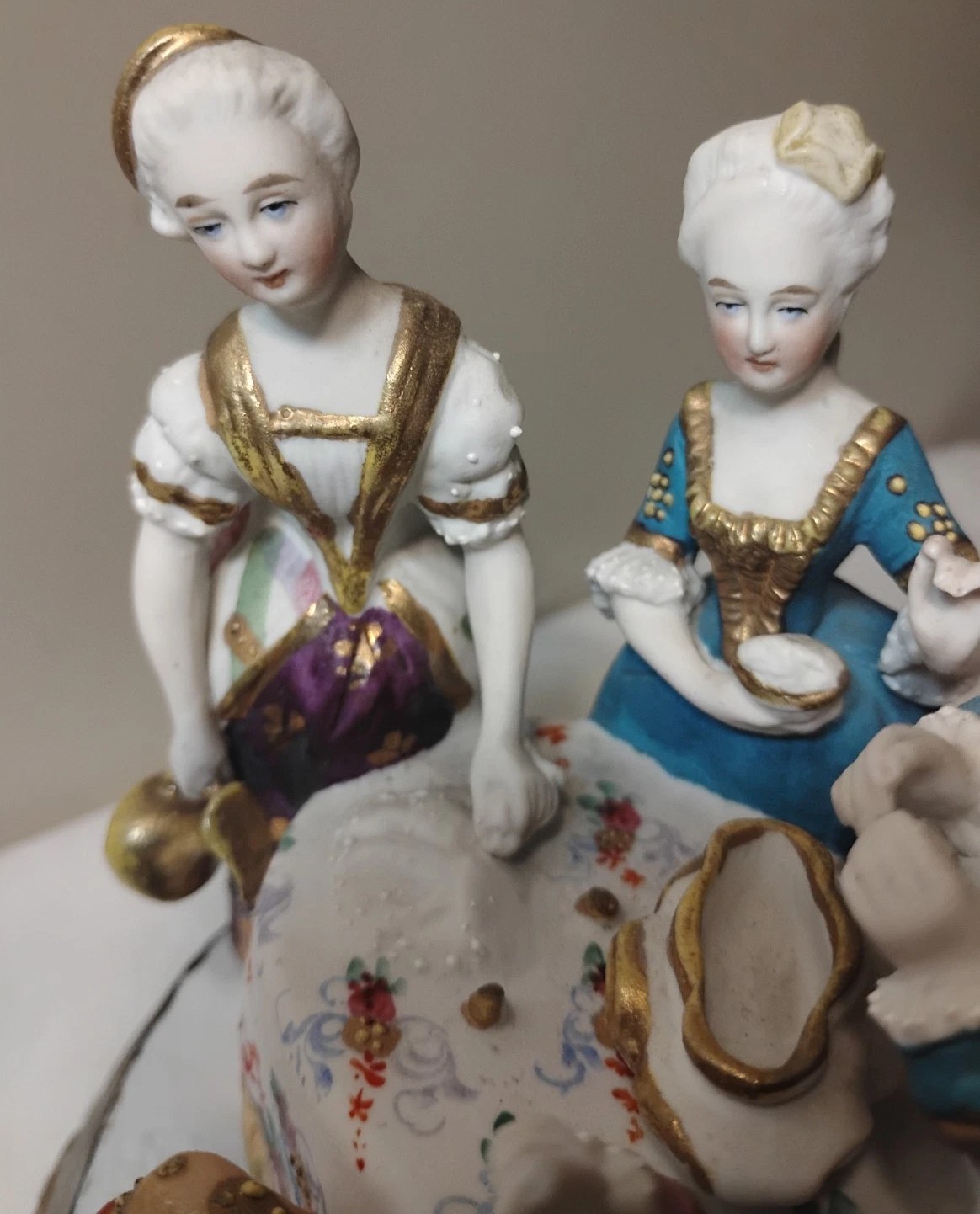
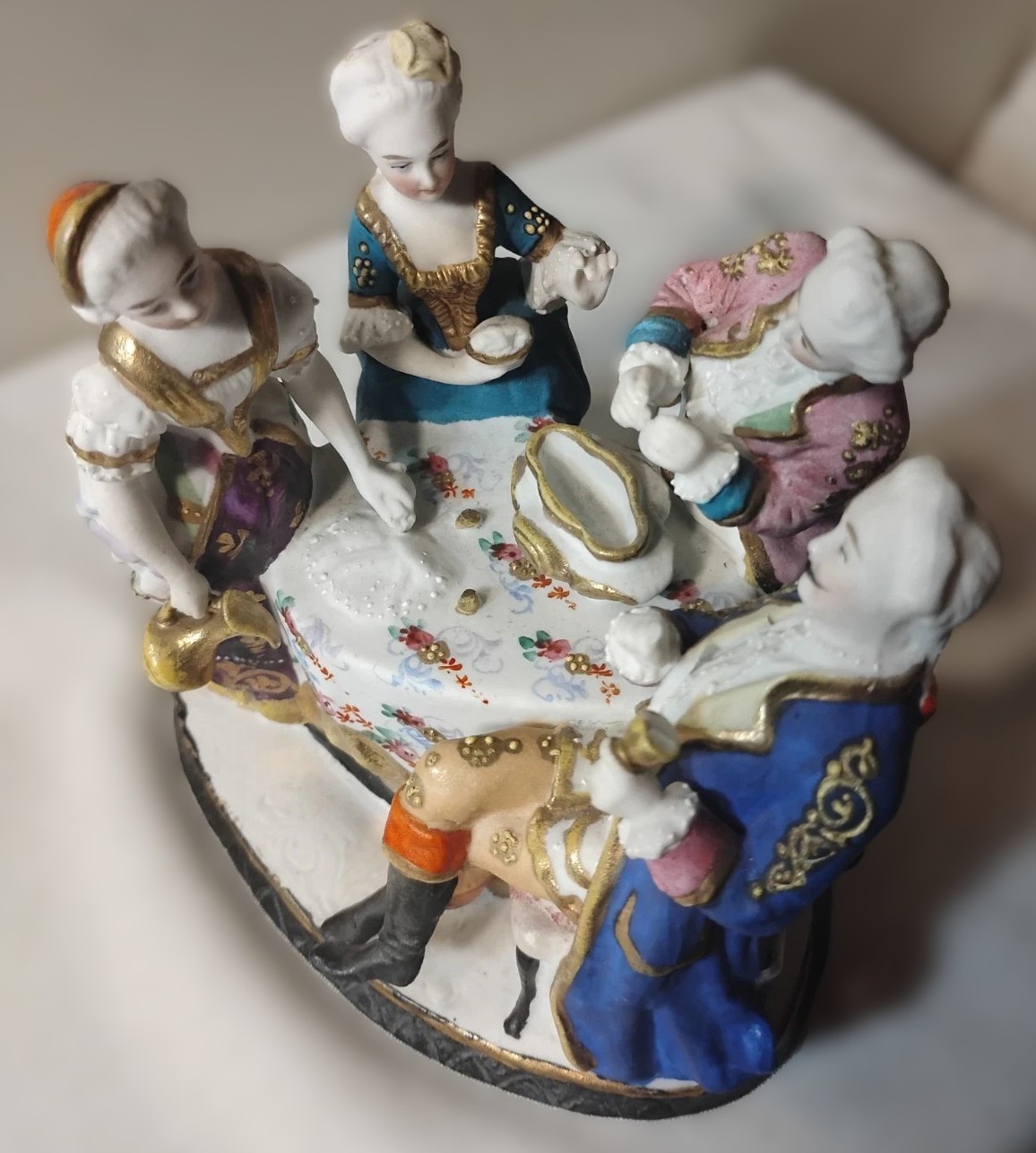
- The Scene: Four 18th-century courtly figures (two men and two women) in period attire surround an oval table dressed in a floral-painted tablecloth.
- The Figures:
- A gentleman in a bold royal blue coat with gold filigree and orange trim sits in the foreground with his legs crossed.
- Beside him, a second gentleman in a pink and teal coat reaches toward the center.
- A lady in a vibrant teal bodice sits holding a small cup or bowl.
- A lady standing wears a plaid/patterned skirt and gold bodice, and pours from a golden pitcher.
- The Lid & Base: The entire top scene acts as a lift-off cover. The oval base is detailed with a dark rim, molded Rococo scrollwork around the bottom, and heavy gilded highlights throughout.
The Inkwell & Sander Wells
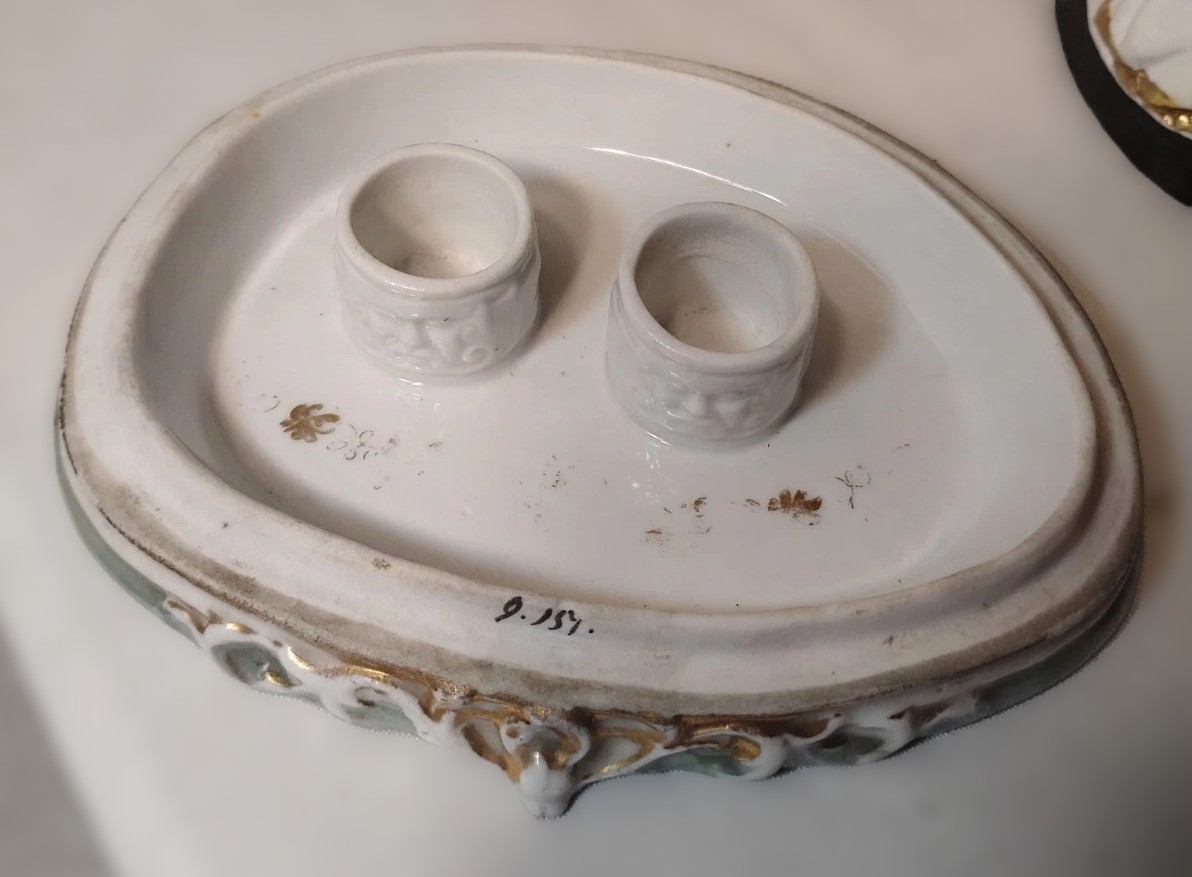
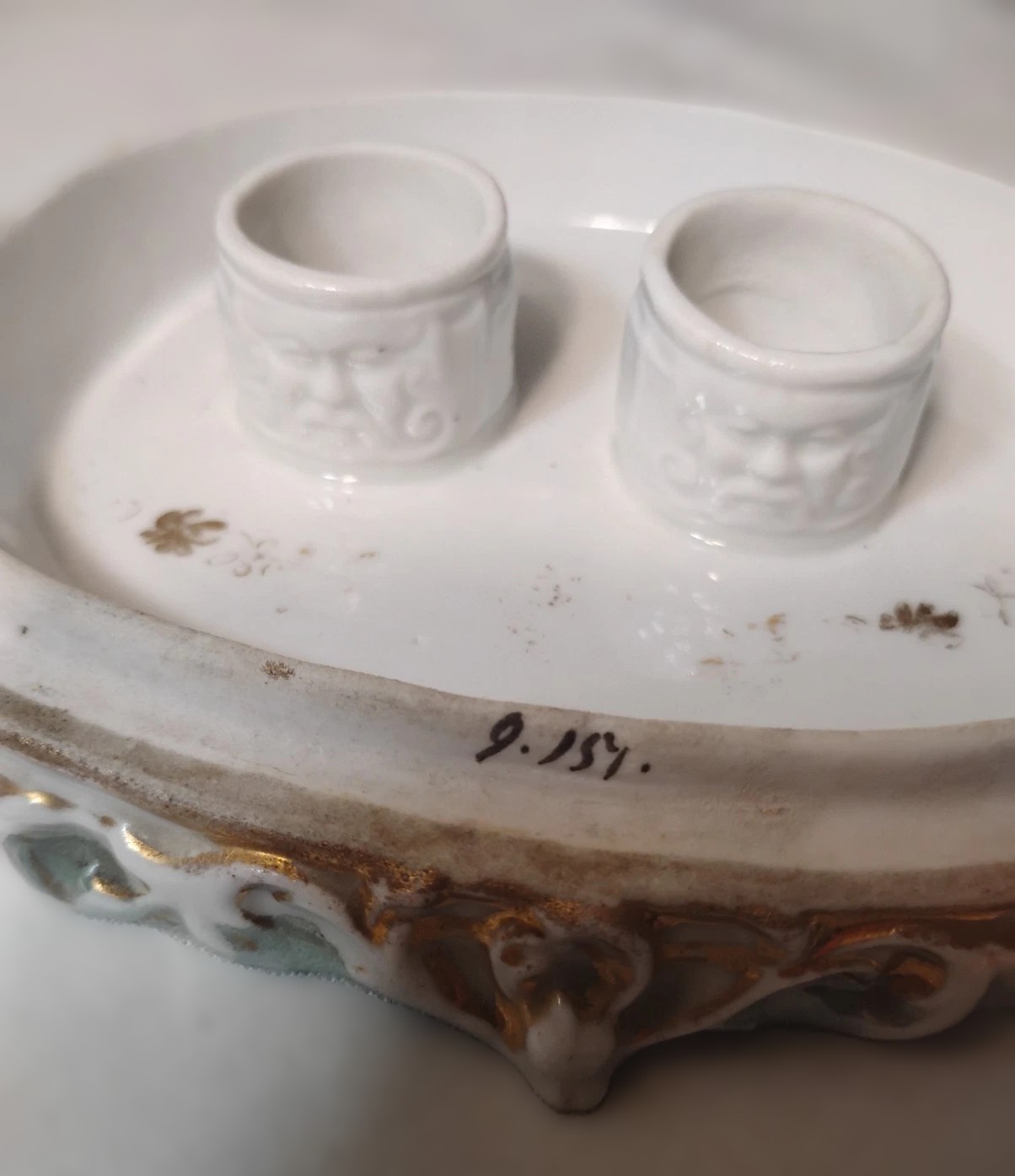
When the figural top is lifted, it reveals a recessed porcelain tray containing two small, molded wells:
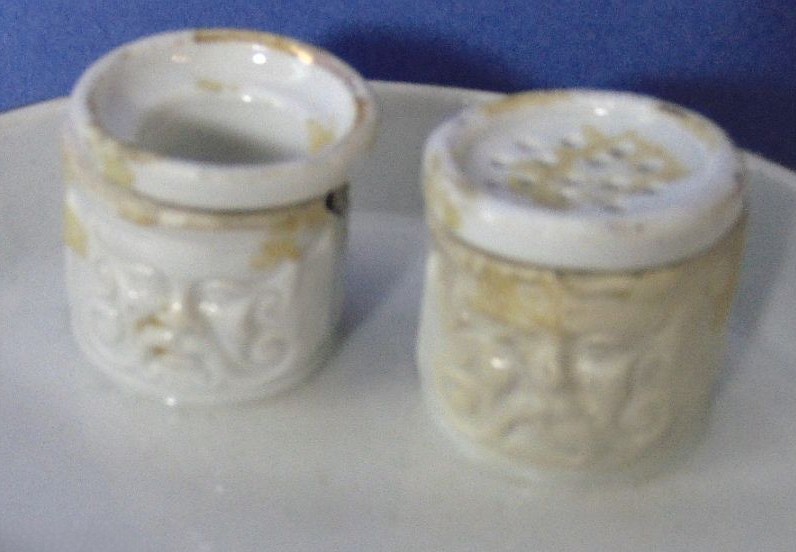
- Design: Both cylindrical vessels are decorated on the sides with relief-molded classicist faces.
- Functionality:
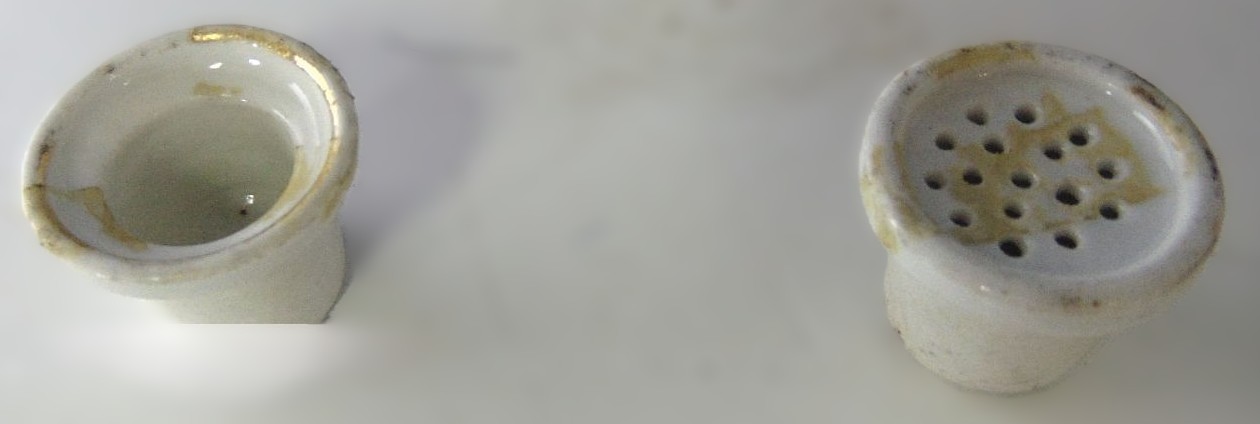
- One vessel is an open inkwell.
- The other is a sander (pounce pot) featuring a perforated porcelain top used to sprinkle pounce/sand onto wet ink to dry it.
- Details: The rim of the base tray bears an incised/hand-painted model production number (appears to be 9.157. or similar script).
Date of Manufacture
- Estimated Production Date: c. 1870 – 1890 (Late Victorian / German Historicism Period).
- Context: Conta & Boehme experienced their peak export era for elaborate, fairings, and “useful novelties” (such as inkstands and watch stands) between 1860 and 1890. The color palette (cobalt blue, pink, bright gold gilding) and hand-painted facial detailing are classic hallmarks of their late 19th-century export production for the British and American markets.
History of Conta & Boehme
- Founding: The porcelain factory was established in Pössneck, Thuringia (Germany) around 1790.
- Partnership: The formal partnership between the Conta and Boehme families was formed in 1804.
- Specialization: By the mid-to-late 19th century, the firm became world-famous for manufacturing porcelain figurines, novelty pin trays, “fairings” (inexpensive trinkets won at fairs), and functional figural desk accessories such as inkstands, match strikers, and sanders.
- Export Market: A significant portion of their output was produced specifically for export to Great Britain and North America.
- Marks: While their official mark is an arm holding a dagger/sword within a shield, many of their elaborate figural pieces only bear incised four-digit mold/model numbers on the underside or inner lip of the porcelain, as seen here.
Sold for $175 in July 2026
Content disclaimer. The information posted is the owner’s best knowledge and may not have been vetted by the SOIC. We welcome comments, corrections, and additions, working to make our website information comprehensive and accurate.
Join the Society of Inkwell Collectors (SOIC) – it’s free!
Founded in 1981 as a non-profit organization,
we are documenting inkwells (and accessories).
We’re here to help and inform!