

Joseph Heinrichs Inkstand and Blotter
| Categories | Arts & Crafts |
| Material | Coppered metal, Wood |
| Markings | Unmarked |
| Manufacturer | Joseph Heinrichs |
| Origin | United States |
| Date or Era | circa 1910 |
| Measuring | The base of the ink well measures 7 ½” x 4 ¾”. The blotter measures 6” x 3”. |
This is a nice example of American Arts & Crafts metalwork, showcasing the distinctive “industrial-meets-artisan” aesthetic that Joseph Heinrichs perfected.
Description of the Writing Set
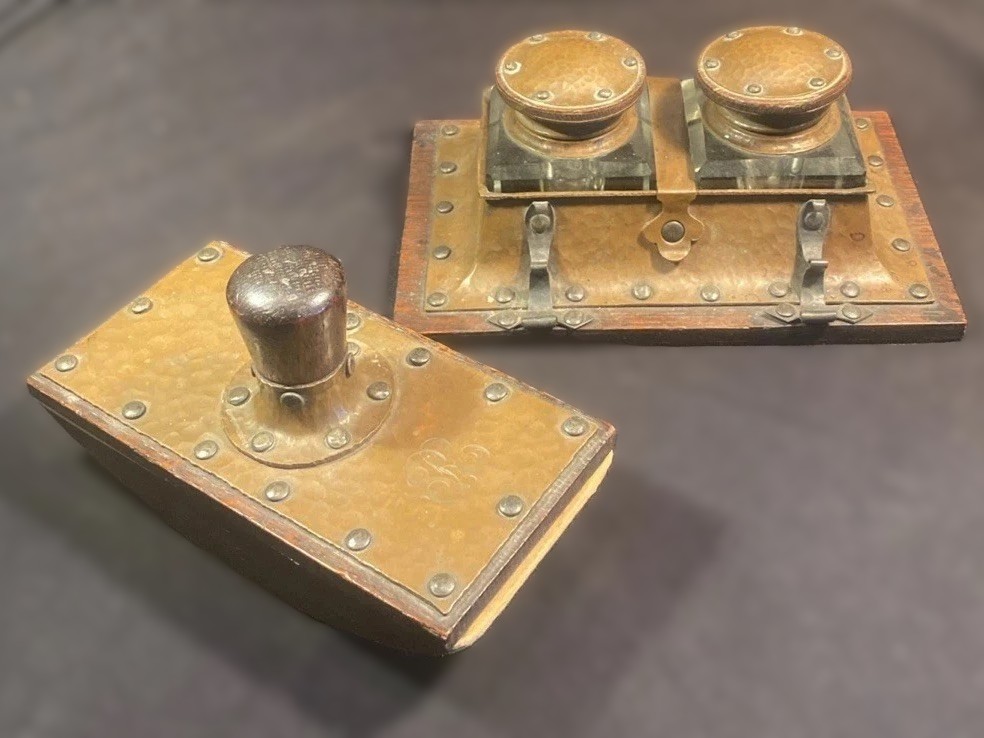
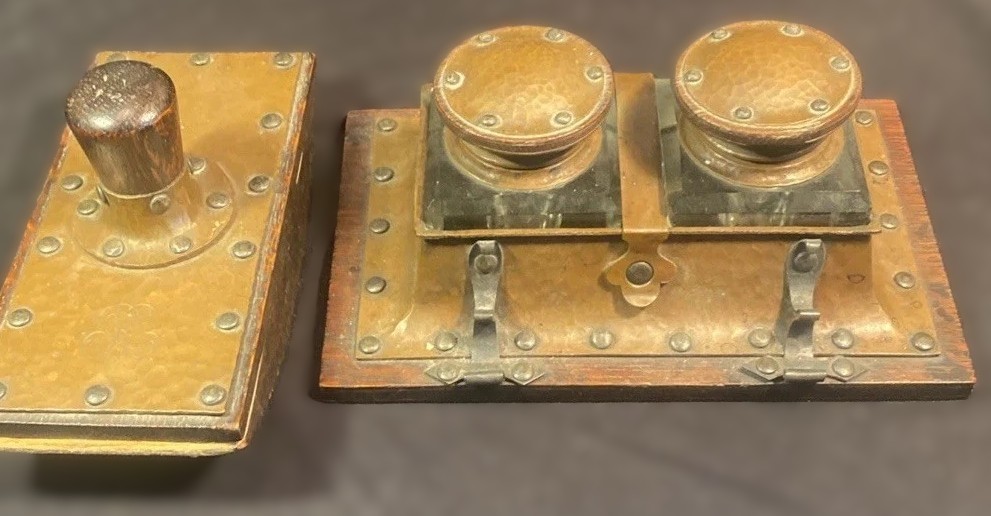
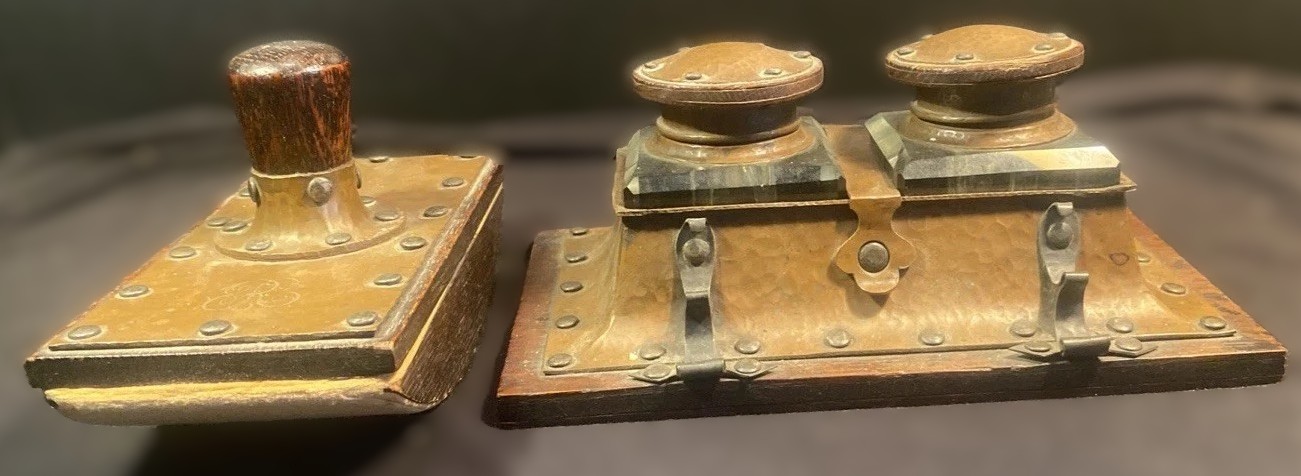
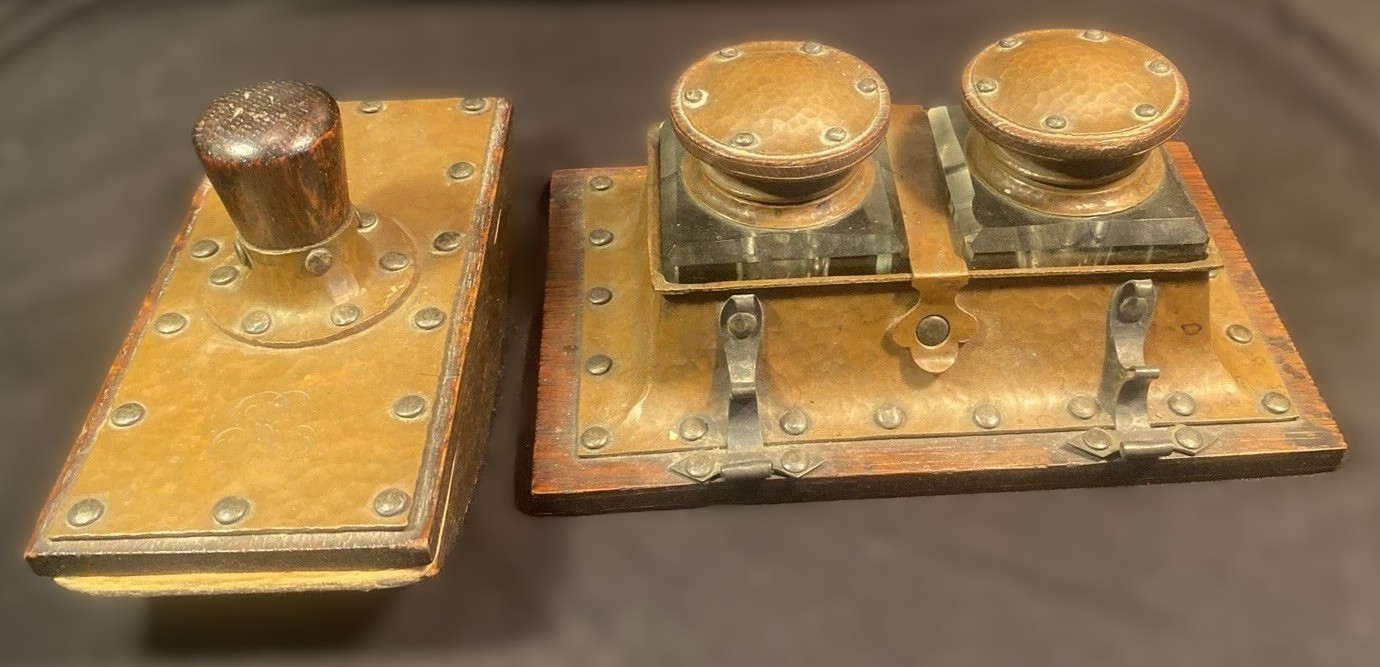
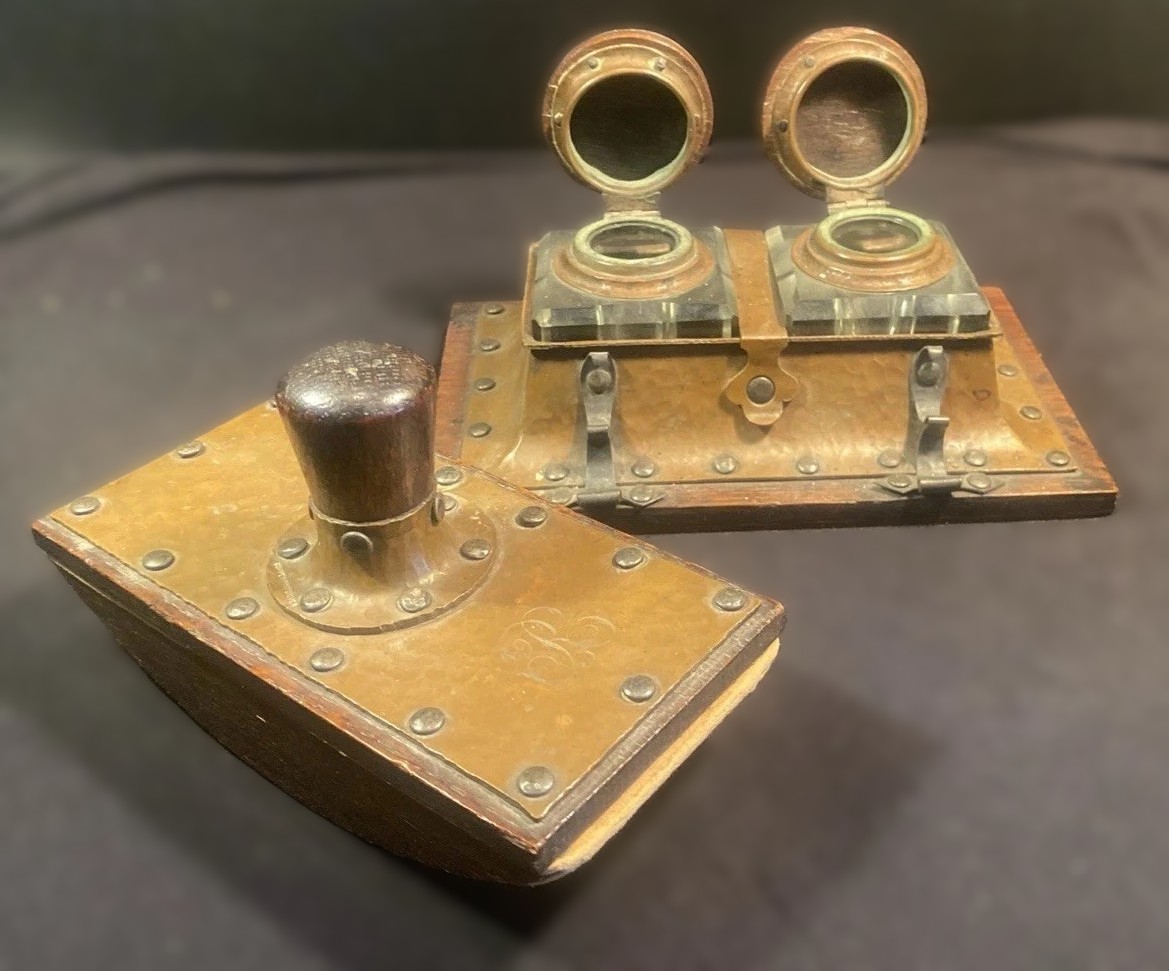
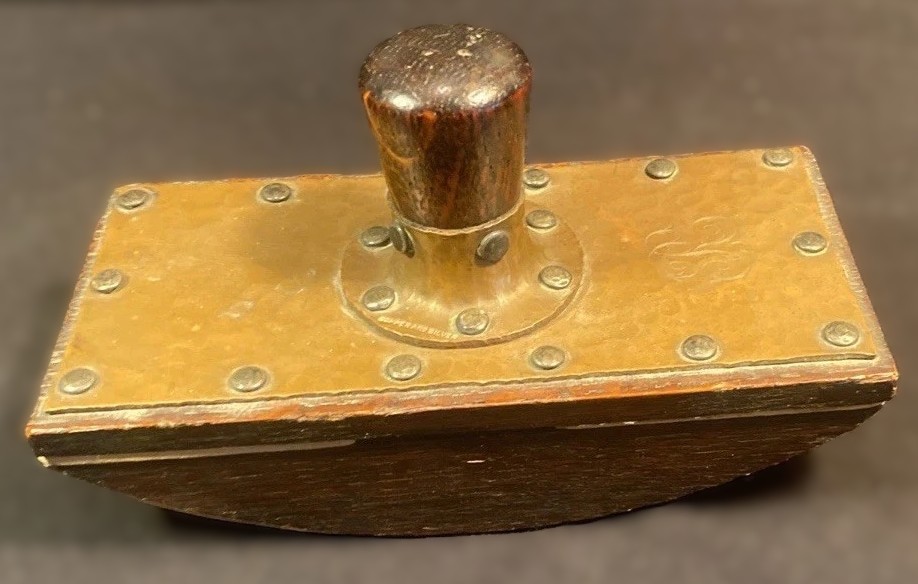
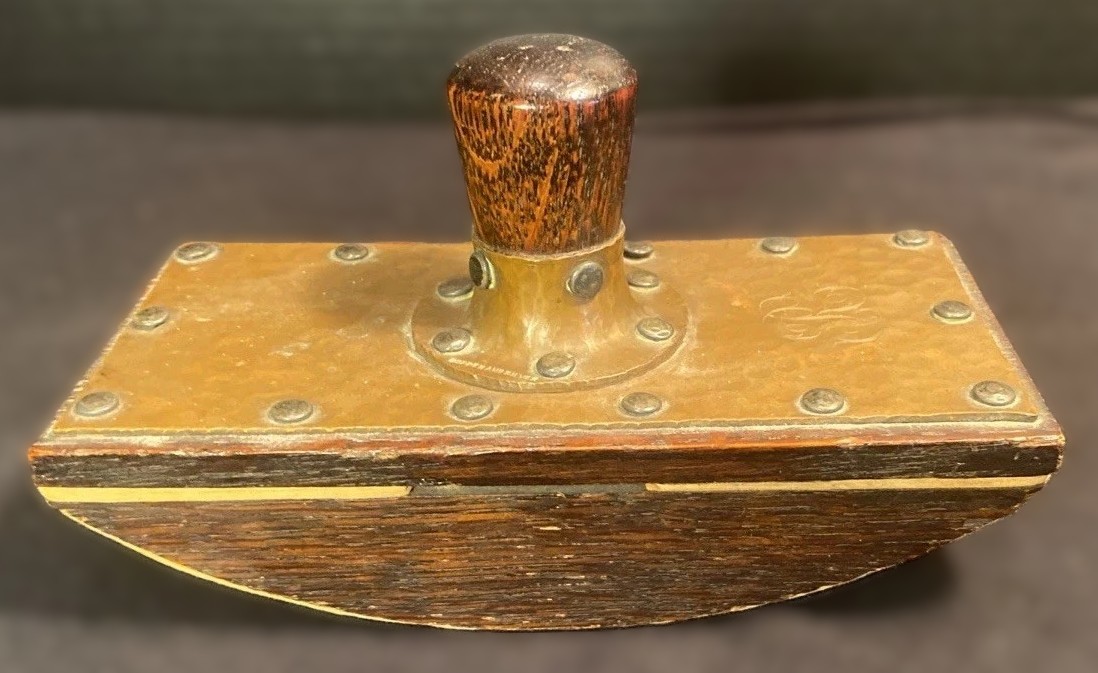
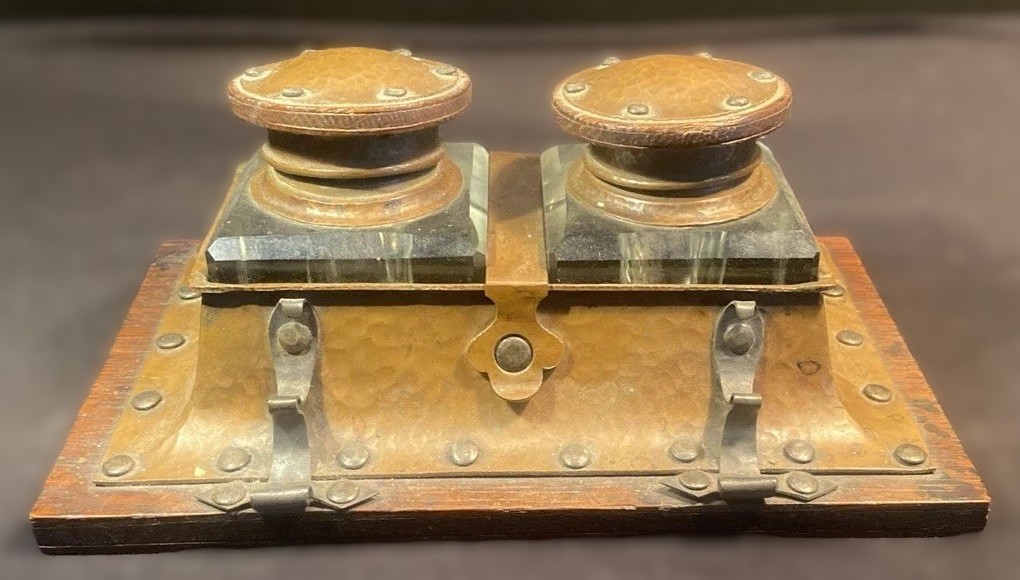
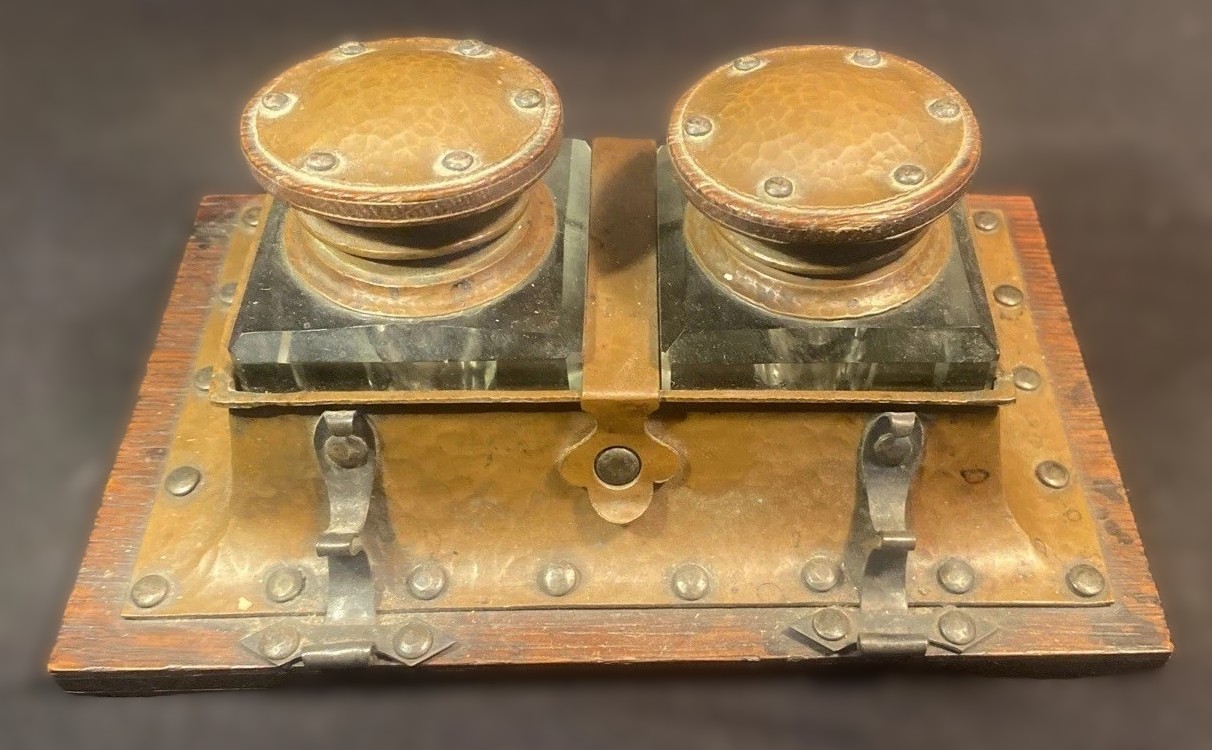
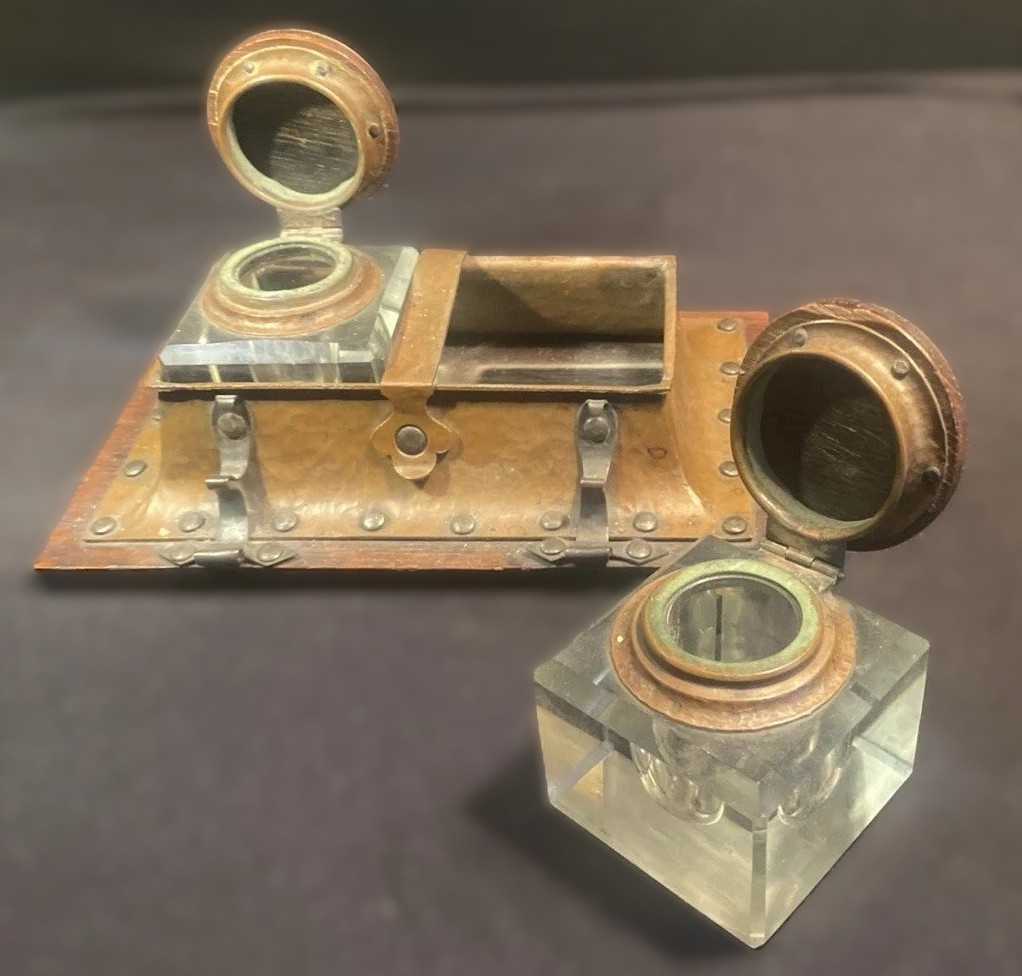
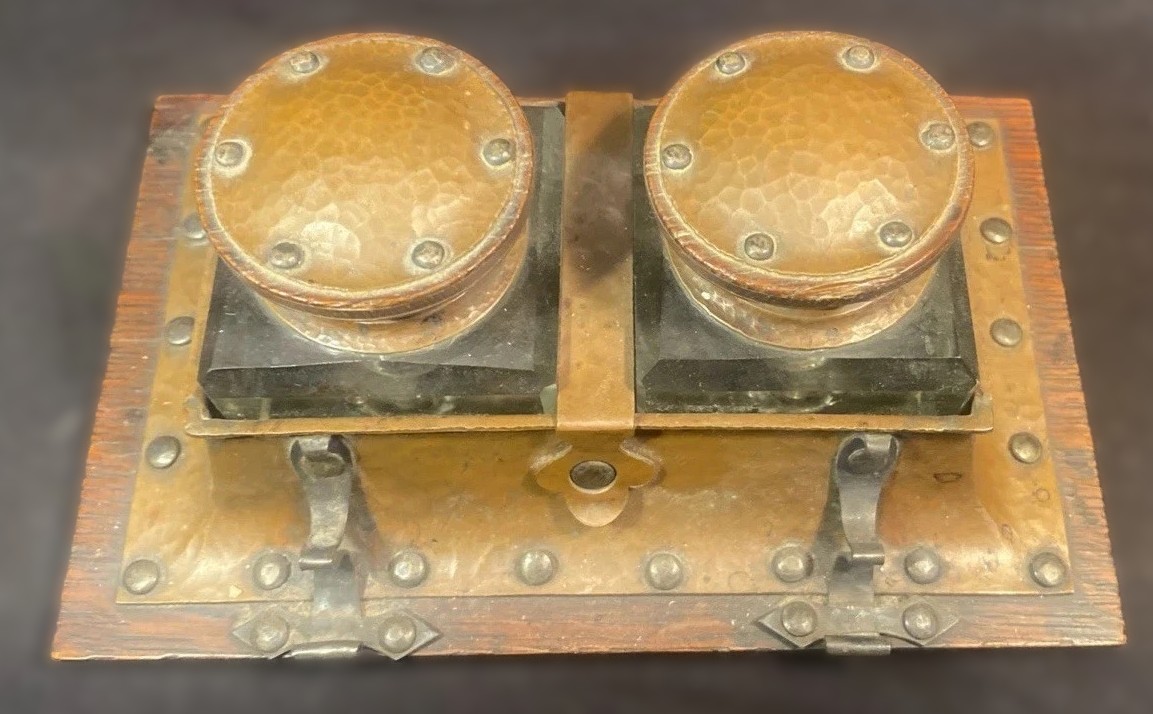
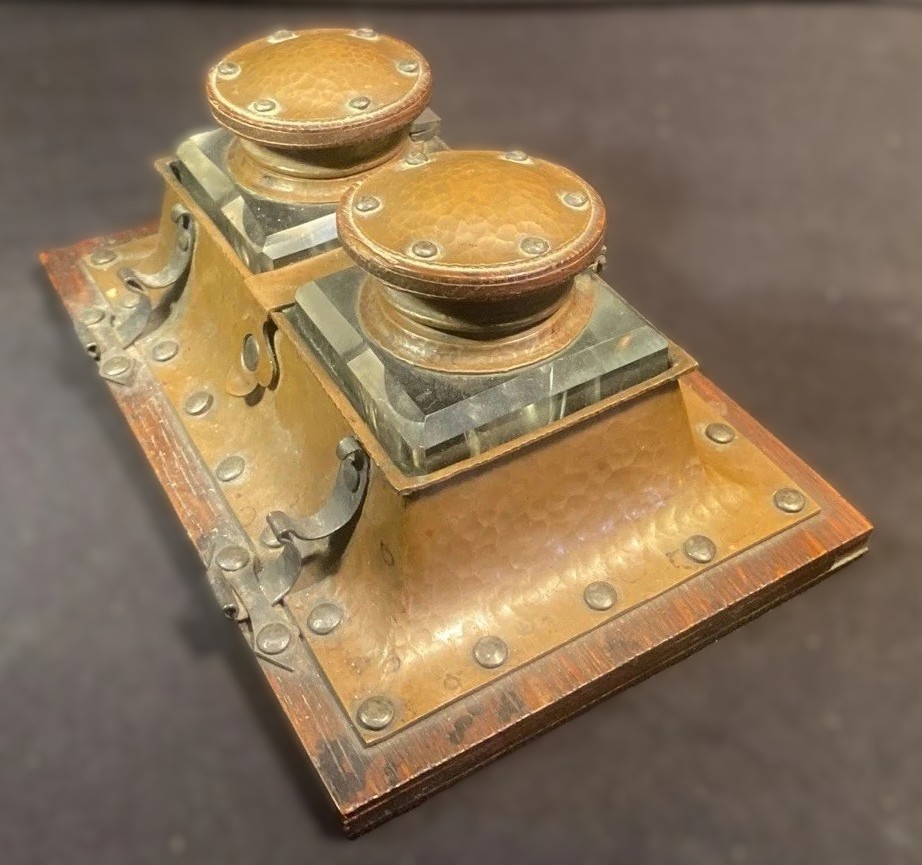
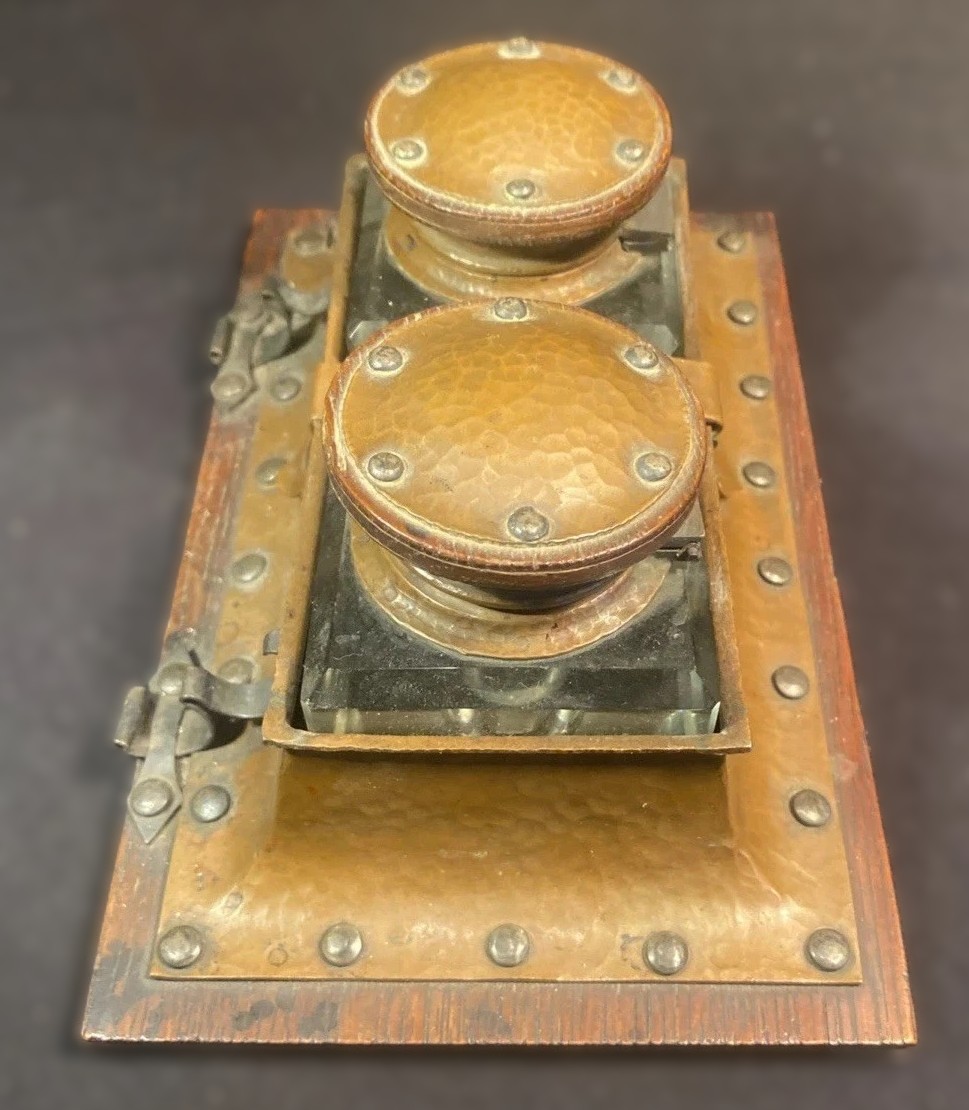
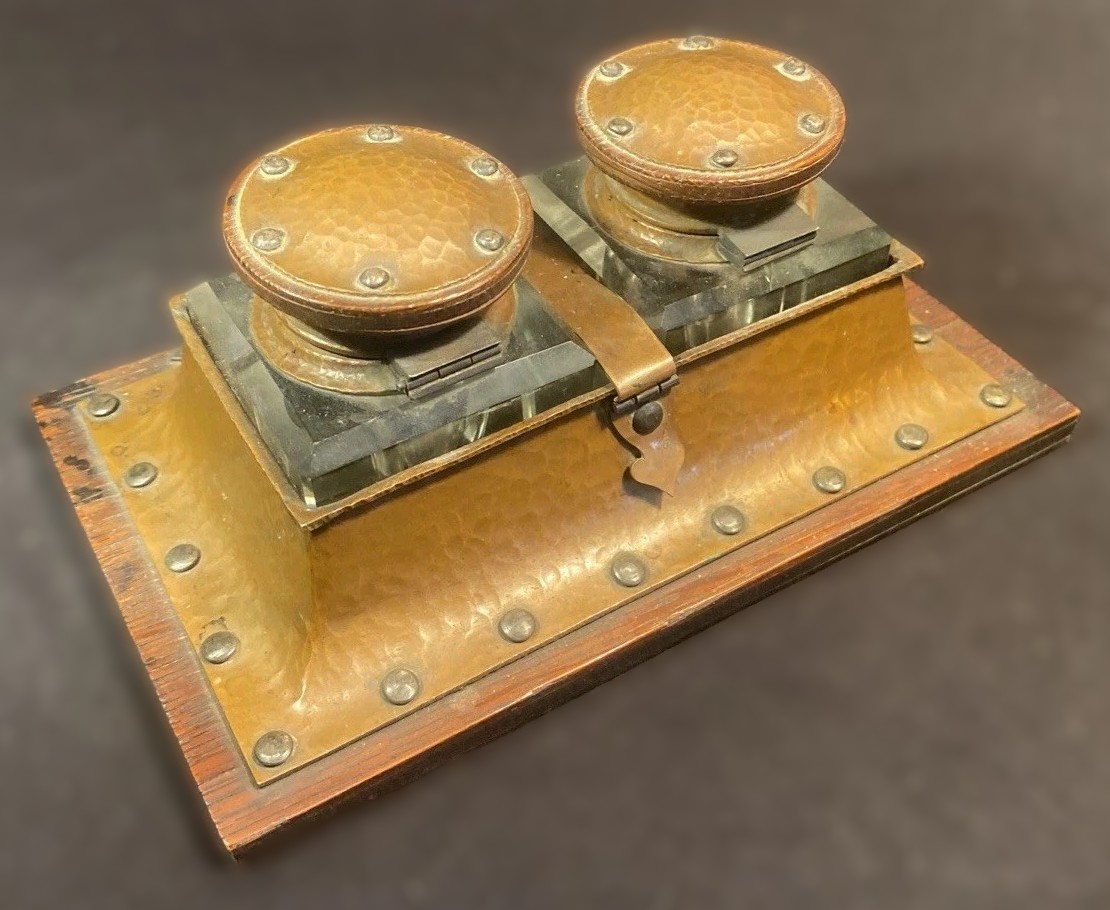
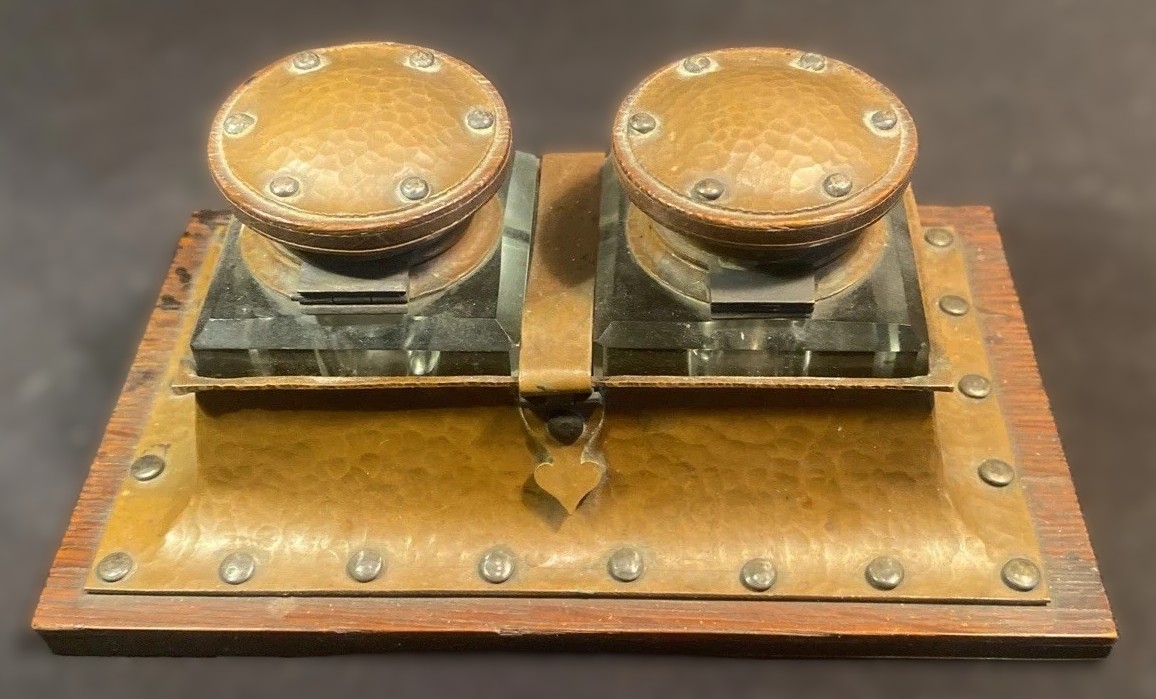
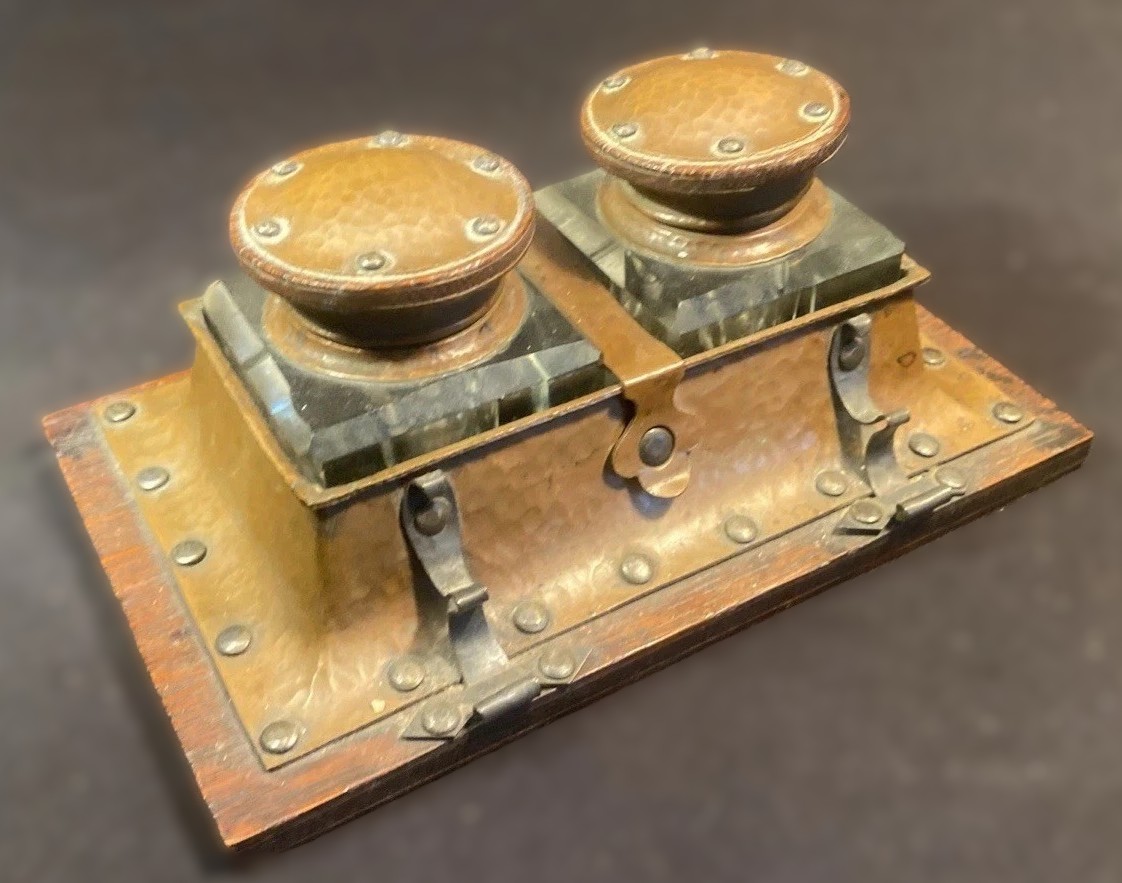
This set consists of a double inkstand and a matching rocker blotter, both executed in hand-hammered copper over wood.
The Double Inkstand
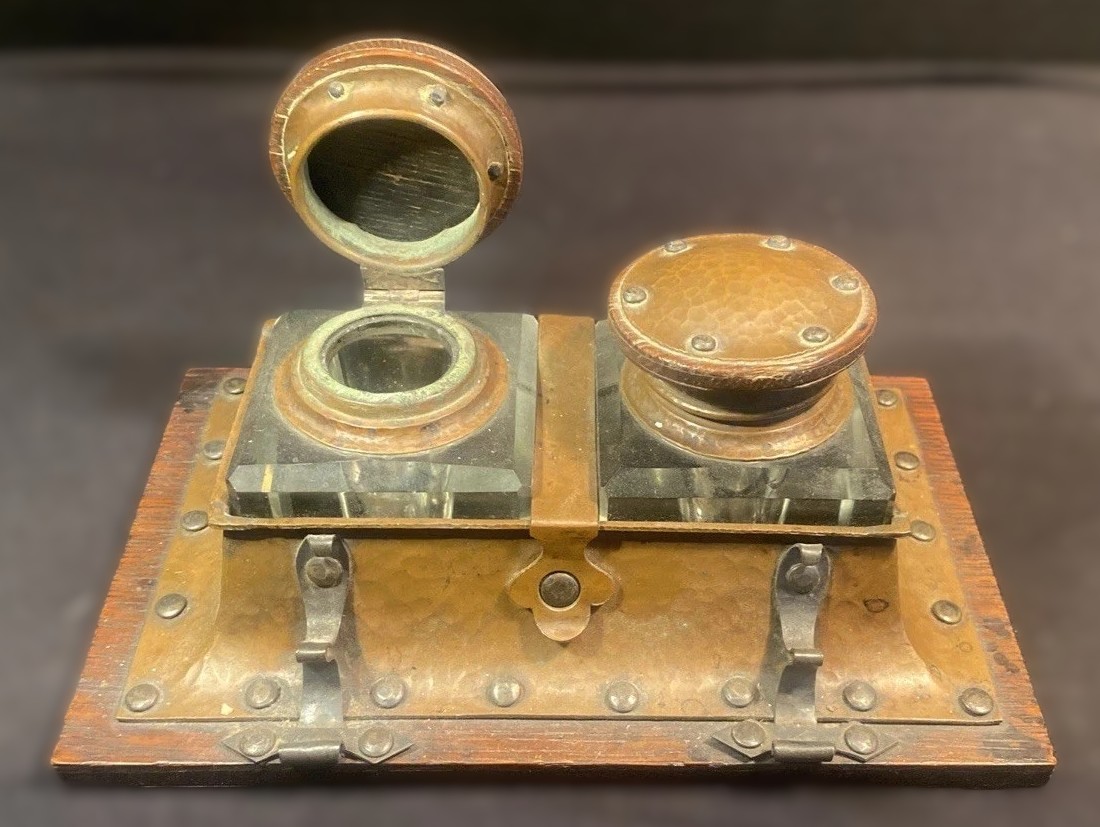
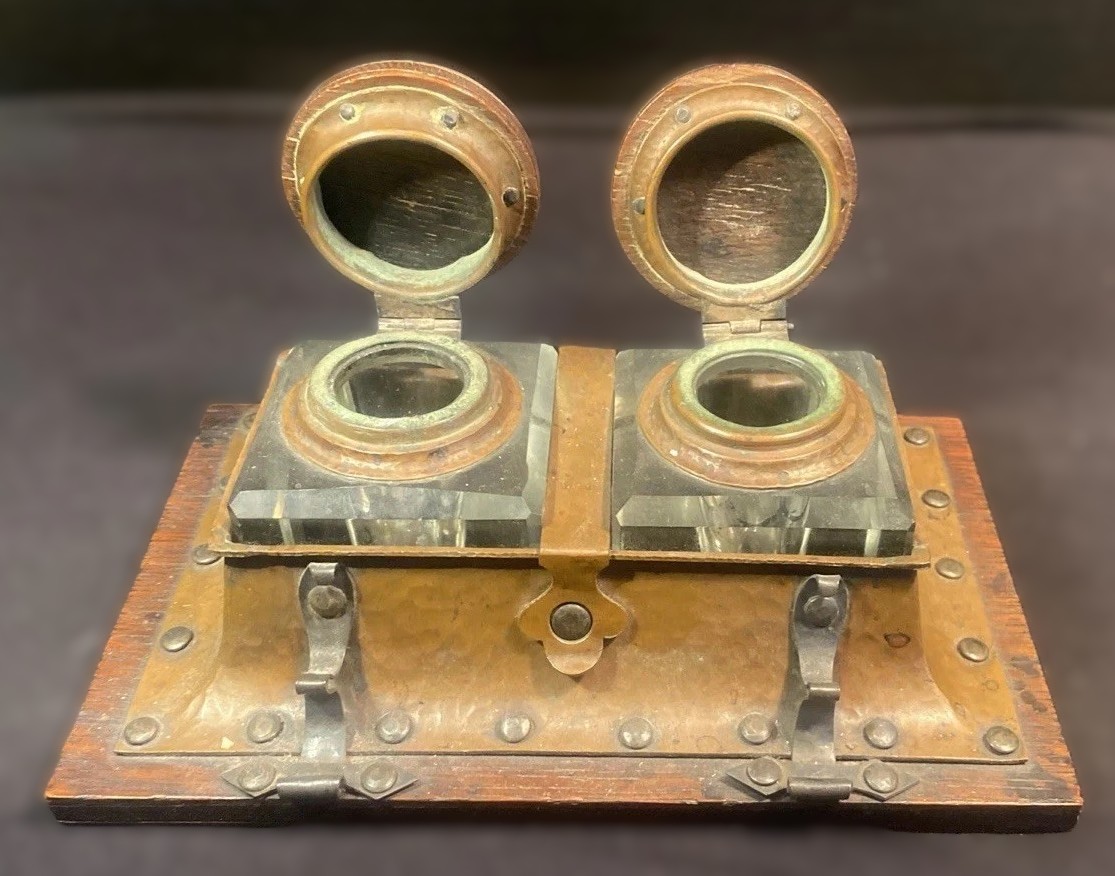
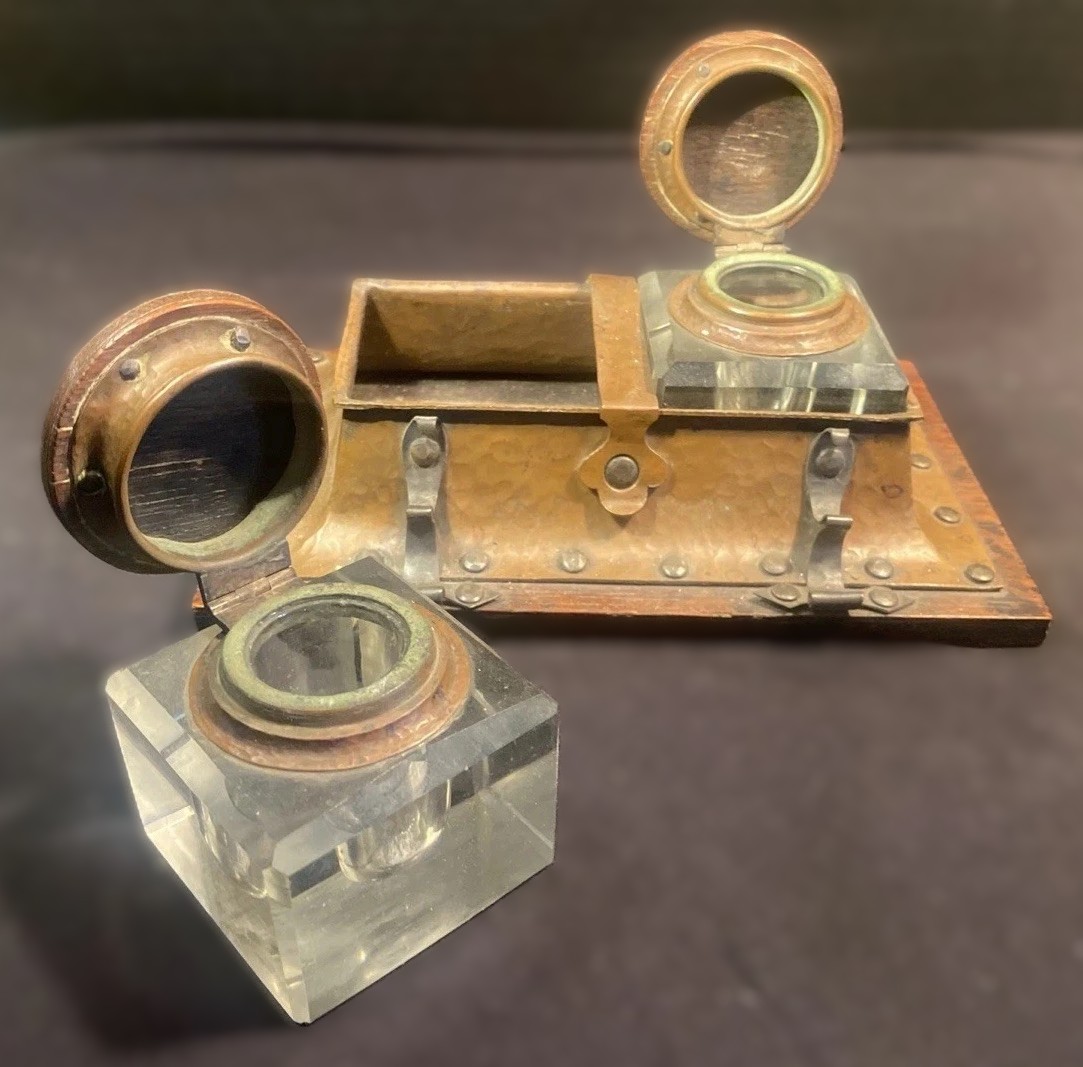
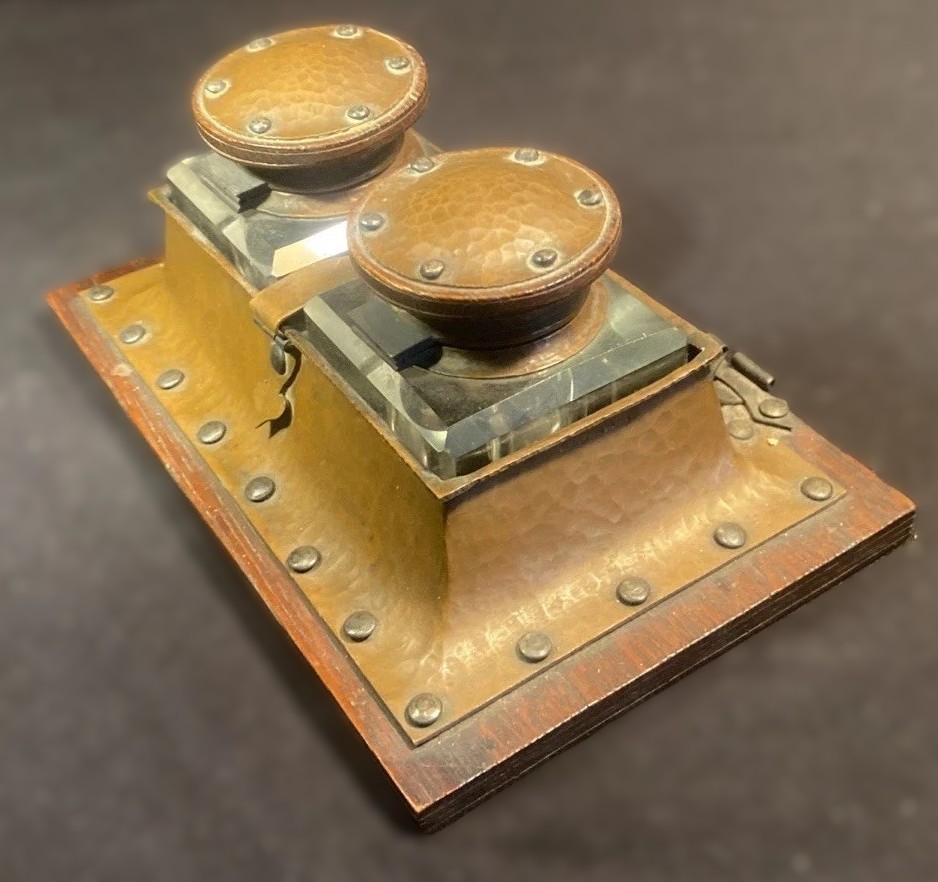
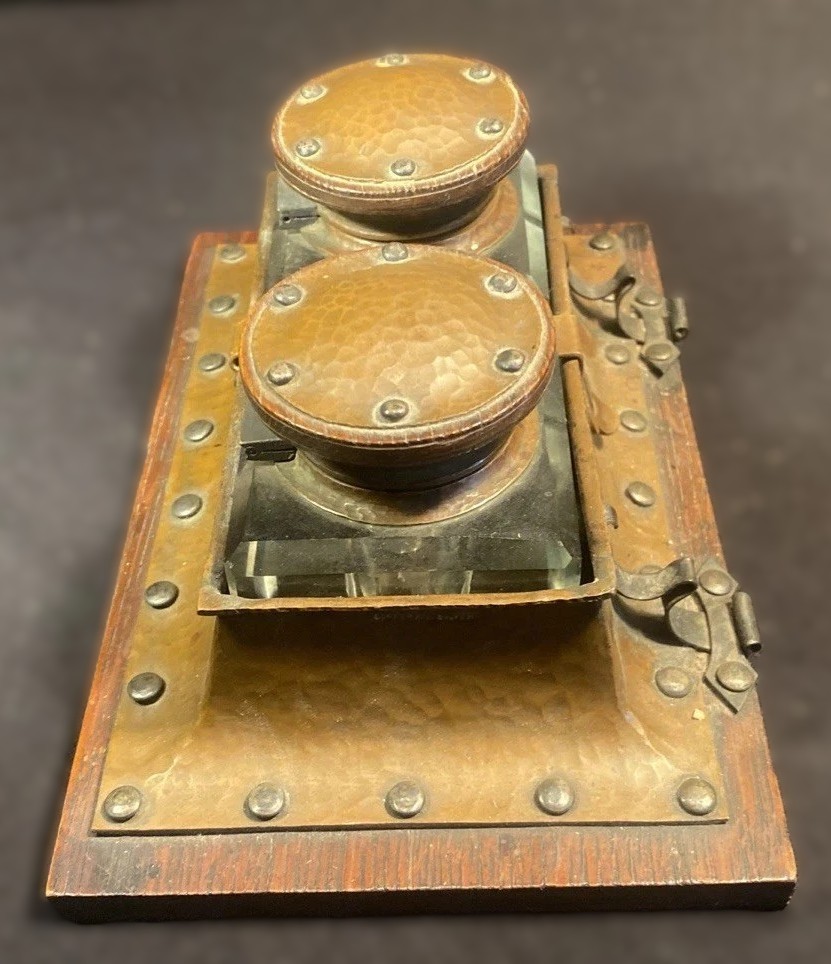
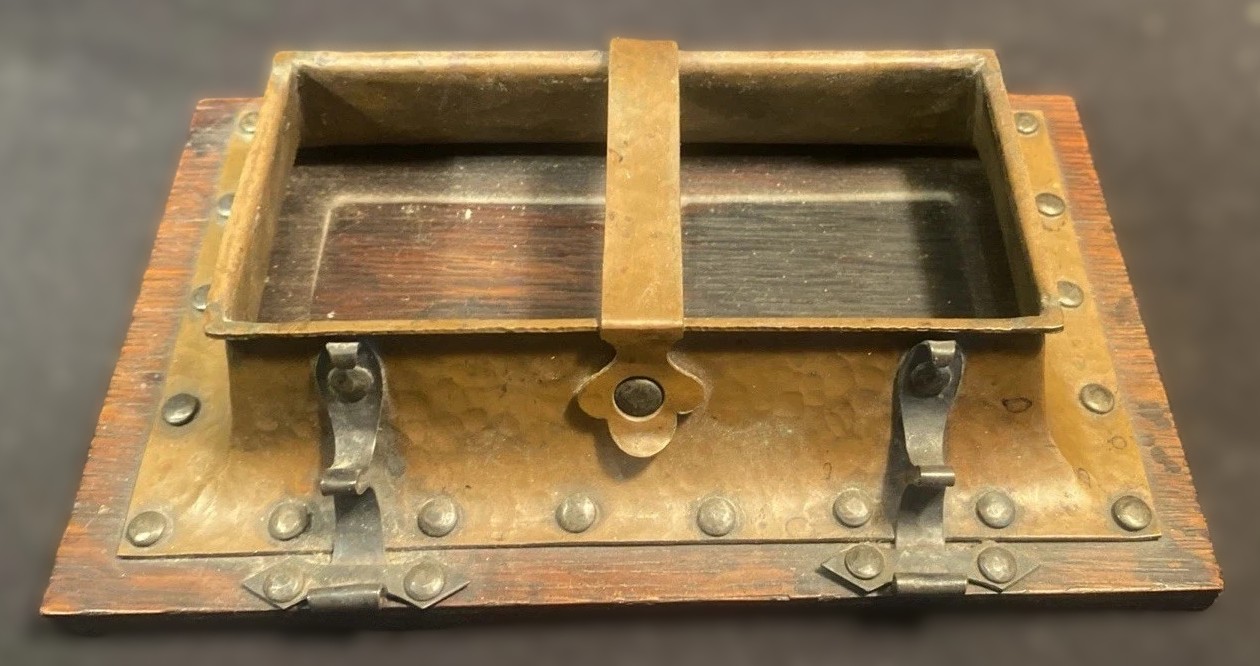
- Structure: The inkstand features a flared, rectangular copper base secured to a thick wood plank with prominent, decorative copper rivets.
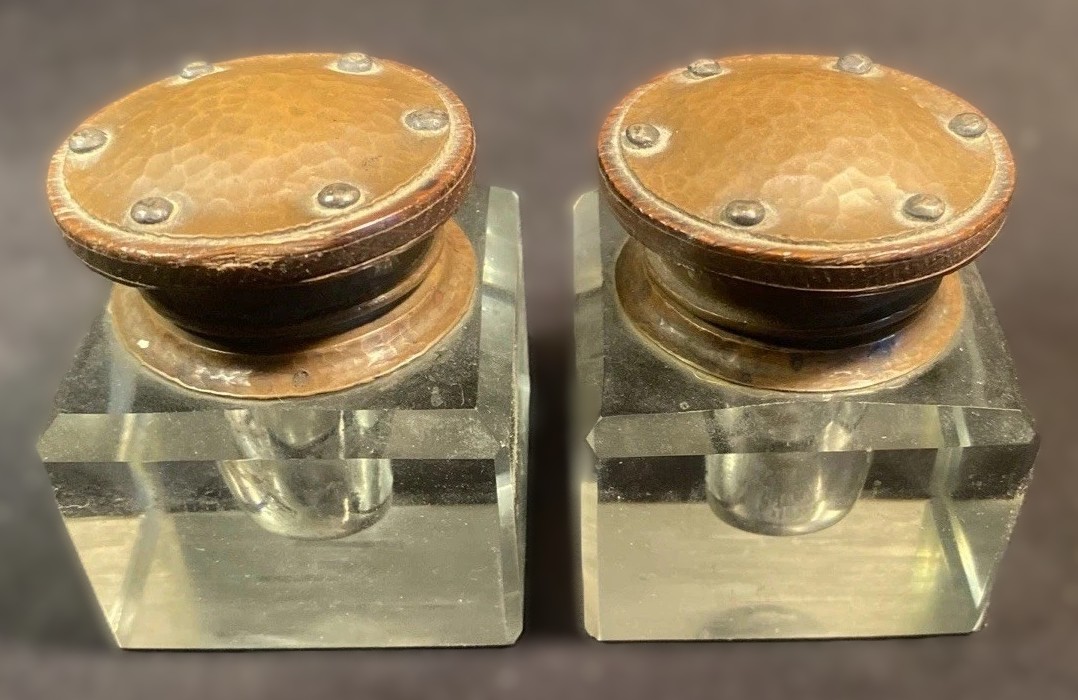
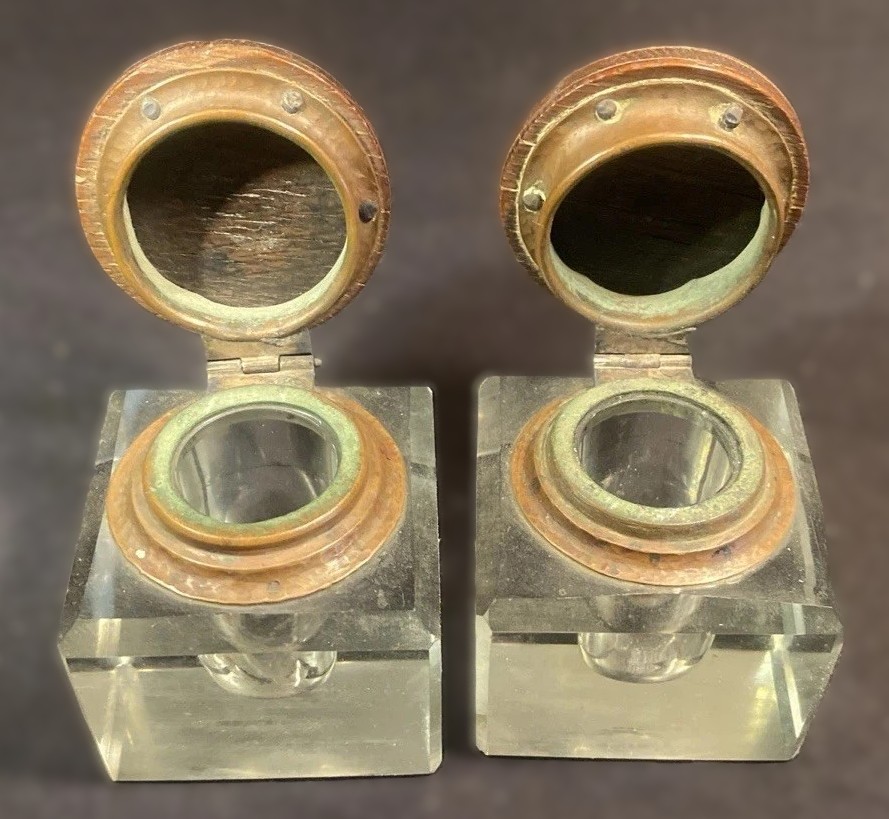
- Inkwells: Two heavy, block-cut clear glass inkwells with beveled edges sit within the copper frame.
- Lids & Latch: The copper lids are also hand-hammered and finished with a circle of rivets. A unique feature of this set is the hinged locking latch located centrally between the two wells. When closed, this horizontal strap secures both wells in place, a practical design for a “portable” or busy desk.
- Pen Rests: The front of the stand features two integrated, curved copper hooks that serve as a dual pen rest.
The Rocker Blotter
- The matching blotter follows the same design language: a hammered copper top plate with a decorative border of rivets and a central, turned wooden handle for ease of use.
Joseph Heinrichs & Shreve & Co. Connection
Joseph Heinrichs (active c. 1889–1925) was a master metalsmith based in New York City, but his work had a significant reach through high-end retailers.
- The Partnership: Heinrichs acted as a primary supplier for Shreve & Co. of San Francisco. Many of his copper and silver-over-copper pieces are found with a dual hallmark: the Heinrichs “H” or “JOS. HEINRICHS” stamp alongside the Shreve & Co. retail mark.
- The Aesthetic: Shreve & Co. was known for their “XIVK” and “Hammered” lines. Heinrichs’ rugged, hand-hammered copper pieces—often featuring silver interiors (though these appear to be pure copper/wood)—complemented the West Coast preference for the “Mission” or “California Arts & Crafts” style.
About the Maker
Joseph Heinrichs (New York) Heinrichs was an enigmatic but highly influential figure in American metalwork. Unlike many Arts & Crafts makers who focused on purely “folk” methods, Heinrichs combined traditional hand-hammering with heavy-duty construction, often for the hotel and restaurant trade (chafing dishes, coffee urns).
- Materials: He was a pioneer in using copper as a luxury medium, often plating the interiors with sterling silver or using silver rivets for contrast.
- Distinguishing Features: His work is characterized by the use of oversized rivets, thick-gauge metal, and a “Planished” (hammered) finish that catches the light in facets.
Age of the Set
Based on the construction style, the specific latch mechanism, and the height of the Arts & Crafts movement in America, this set was likely produced between 1905 and 1915.
By 1920, the aesthetic in desk sets began to shift toward more streamlined Art Deco forms, making the heavy, rivet-laden “Industrial-Craft” look of your set a classic product of the early 20th-century American “Golden Age” of copper.
For examples of similar inkstands by Joseph Heinrichs, see these Inkipedia entries:
Arts & Crafts – Joseph Heinrichs – The Society of Inkwell Collectors (SOIC)
Shreve & Co. Arts & Crafts Inkstand – The Society of Inkwell Collectors (SOIC)
The set sold for $600 in March 2026.
Content disclaimer. The information posted is the owner’s best knowledge and may not have been vetted by the SOIC. We welcome comments, corrections, and additions, working to make our website information comprehensive and accurate.
Join the Society of Inkwell Collectors (SOIC) – it’s free!
Founded in 1981 as a non-profit organization,
we are documenting inkwells (and accessories).
We’re here to help and inform!