

Sterling on Bronze – SilverCrest
| Categories | Arts & Crafts |
| Material | Silver on Bronze |
| Markings | See narrative |
| Manufacturer | Smith Metal Arts |
| Origin | United States |
| Date or Era | circa 1925 |
This is an example of Arts and Crafts era metalwork, specifically the “Sterling on Bronze” technique that became a signature of high-end desk accessories in the early 20th century.
Physical Description
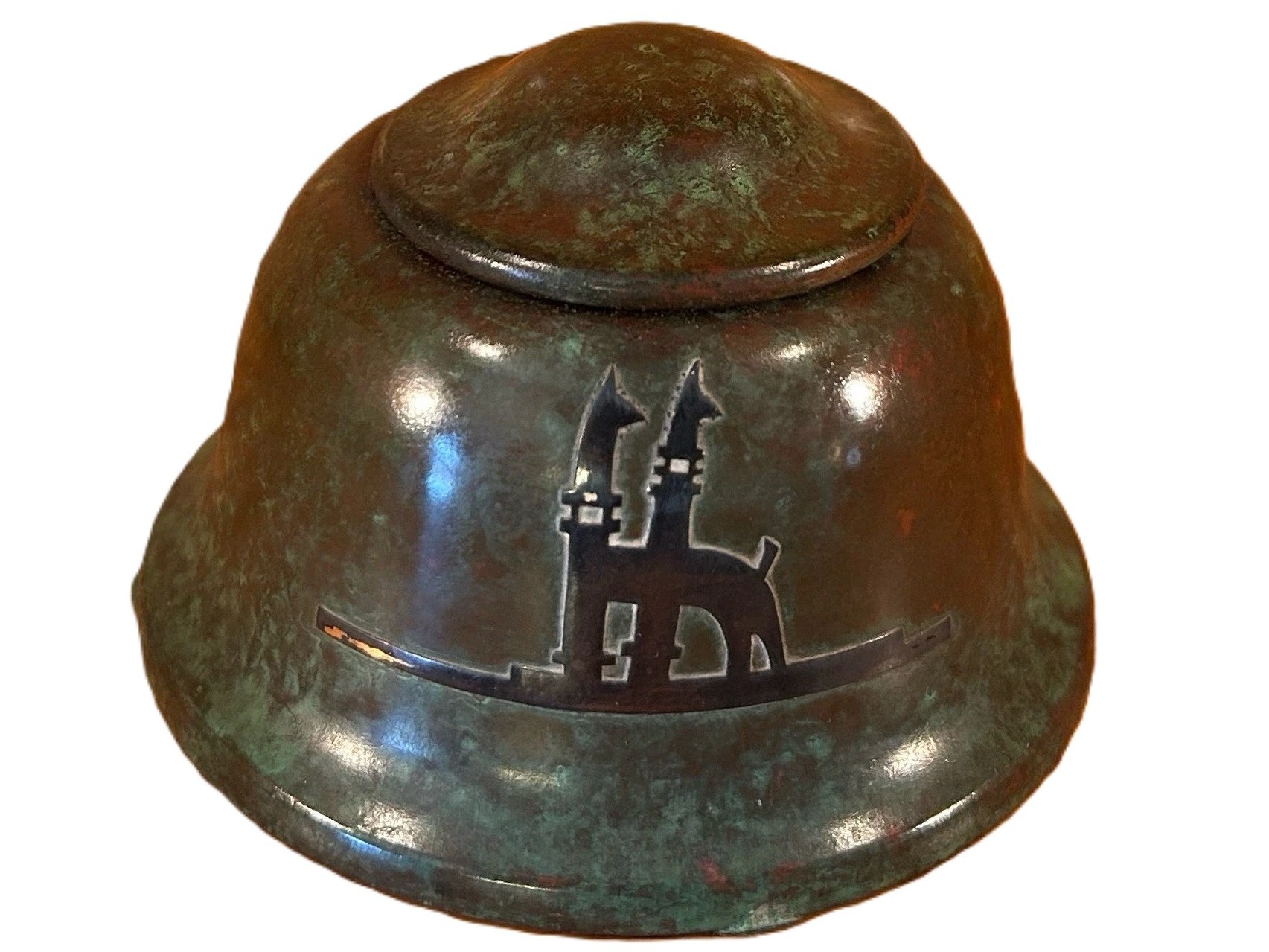
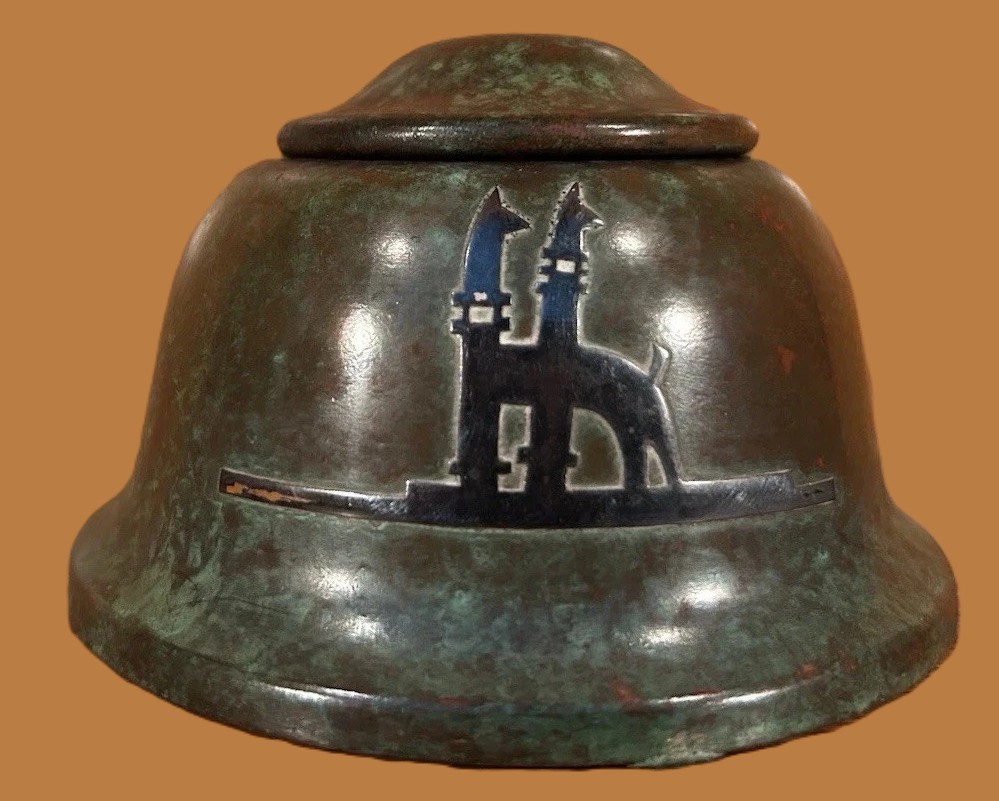
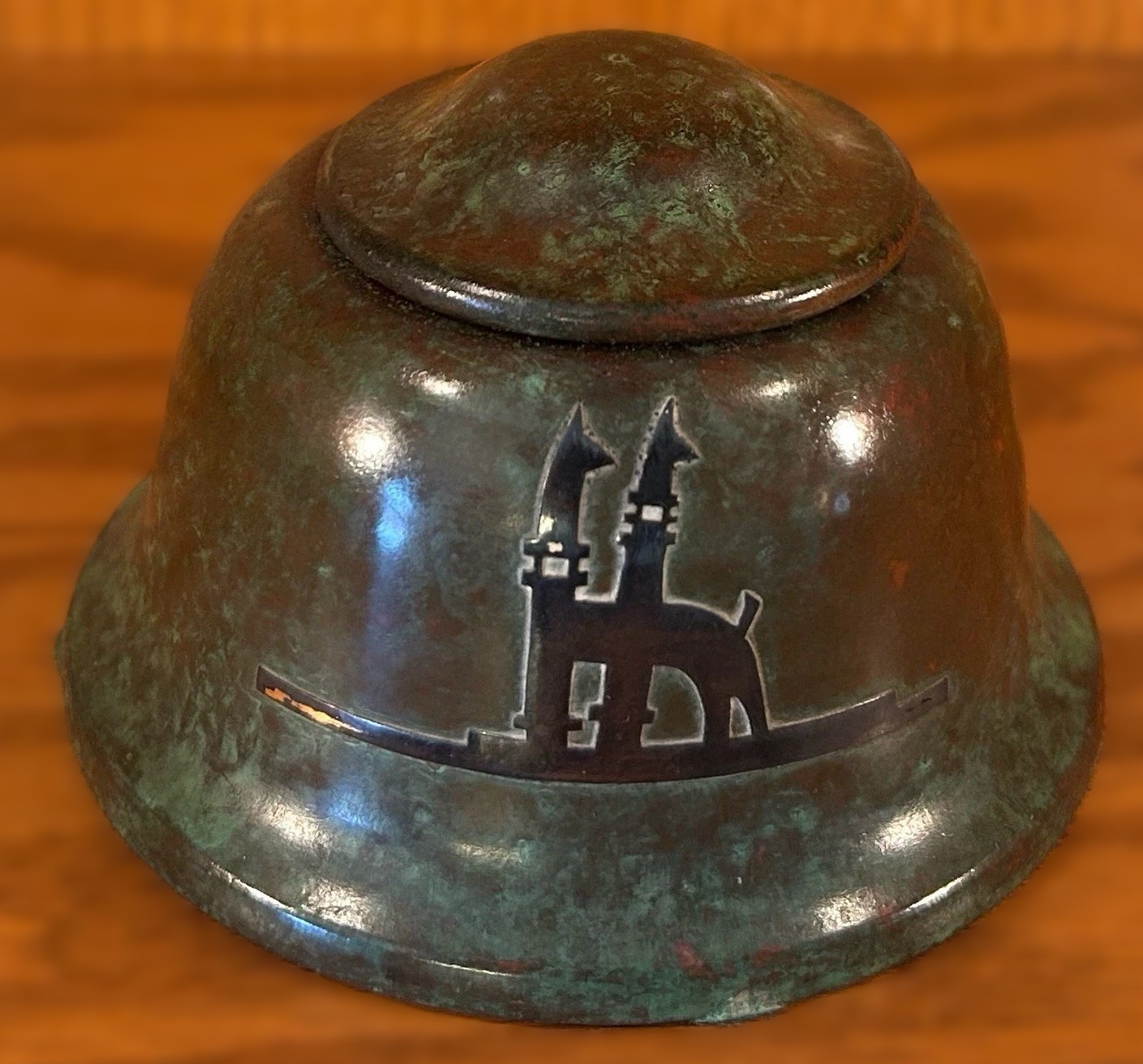
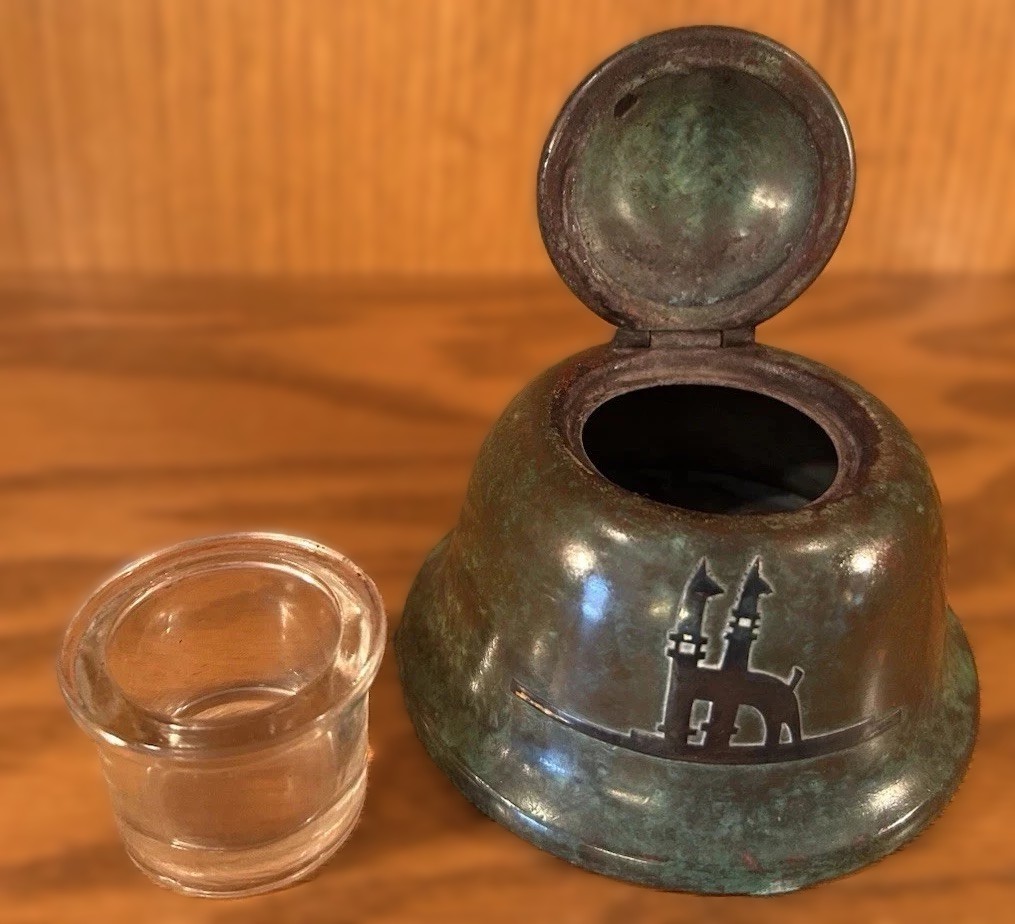
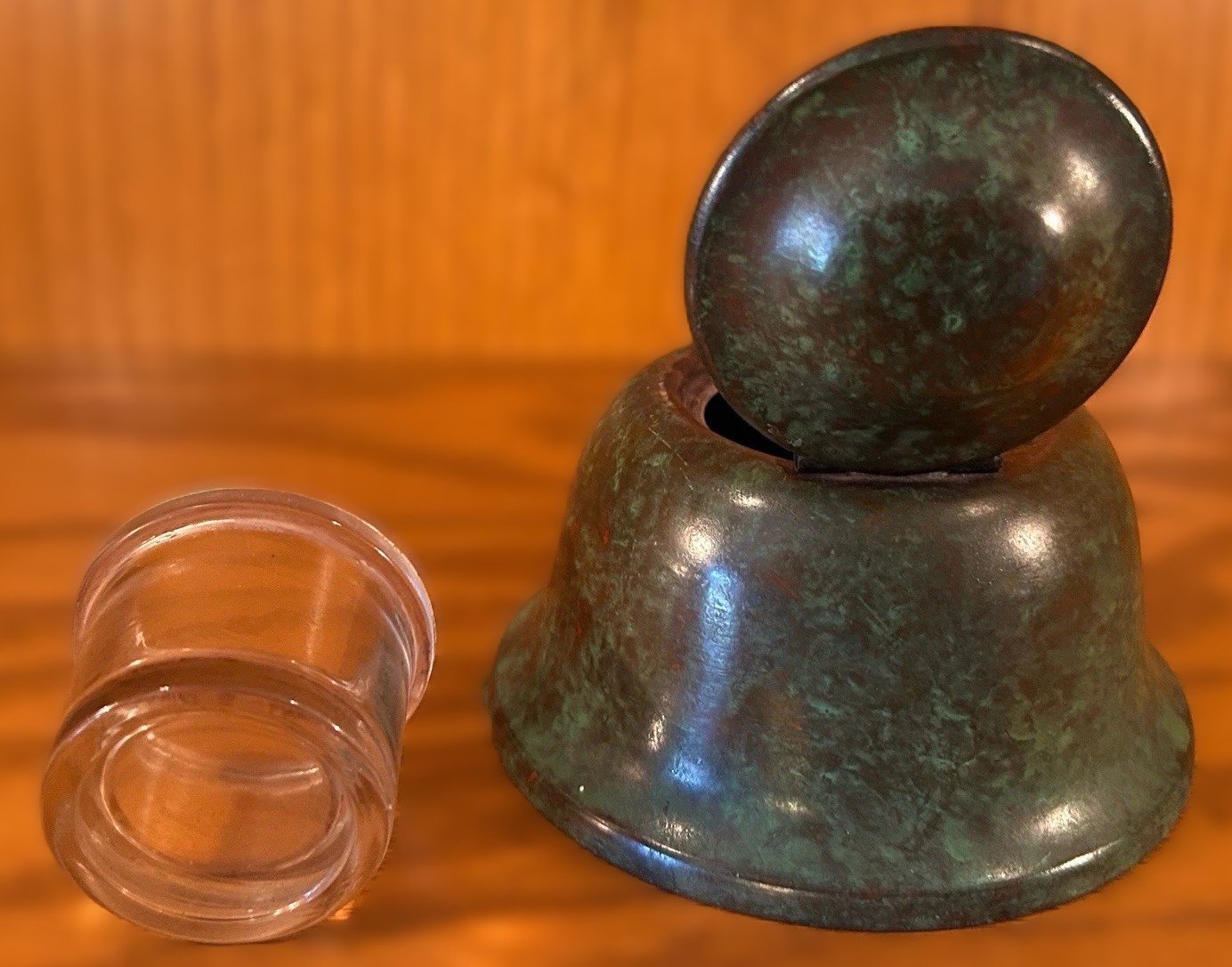
- Form: The inkwell has a heavy, weighted bell-shaped body with a subtly flared base. Its profile is clean and architectural, characteristic of the transition between late Arts and Crafts and early Art Deco styles.
- Finish: The bronze body exhibits a rich, multi-toned verdigris patina. The deep greens and mottled browns, the manufacturer’s original “Antique Green” finish, which has matured over decades.
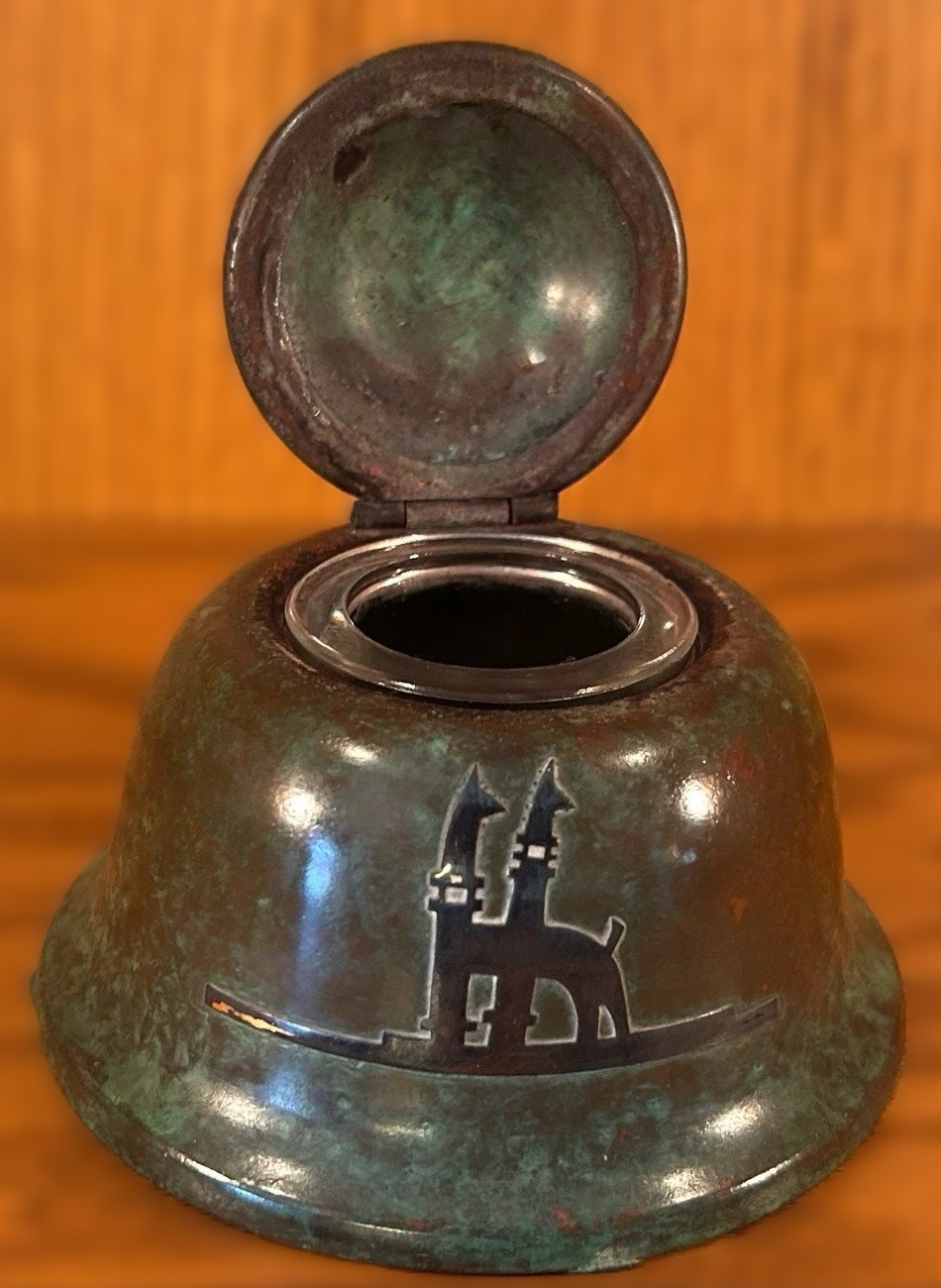
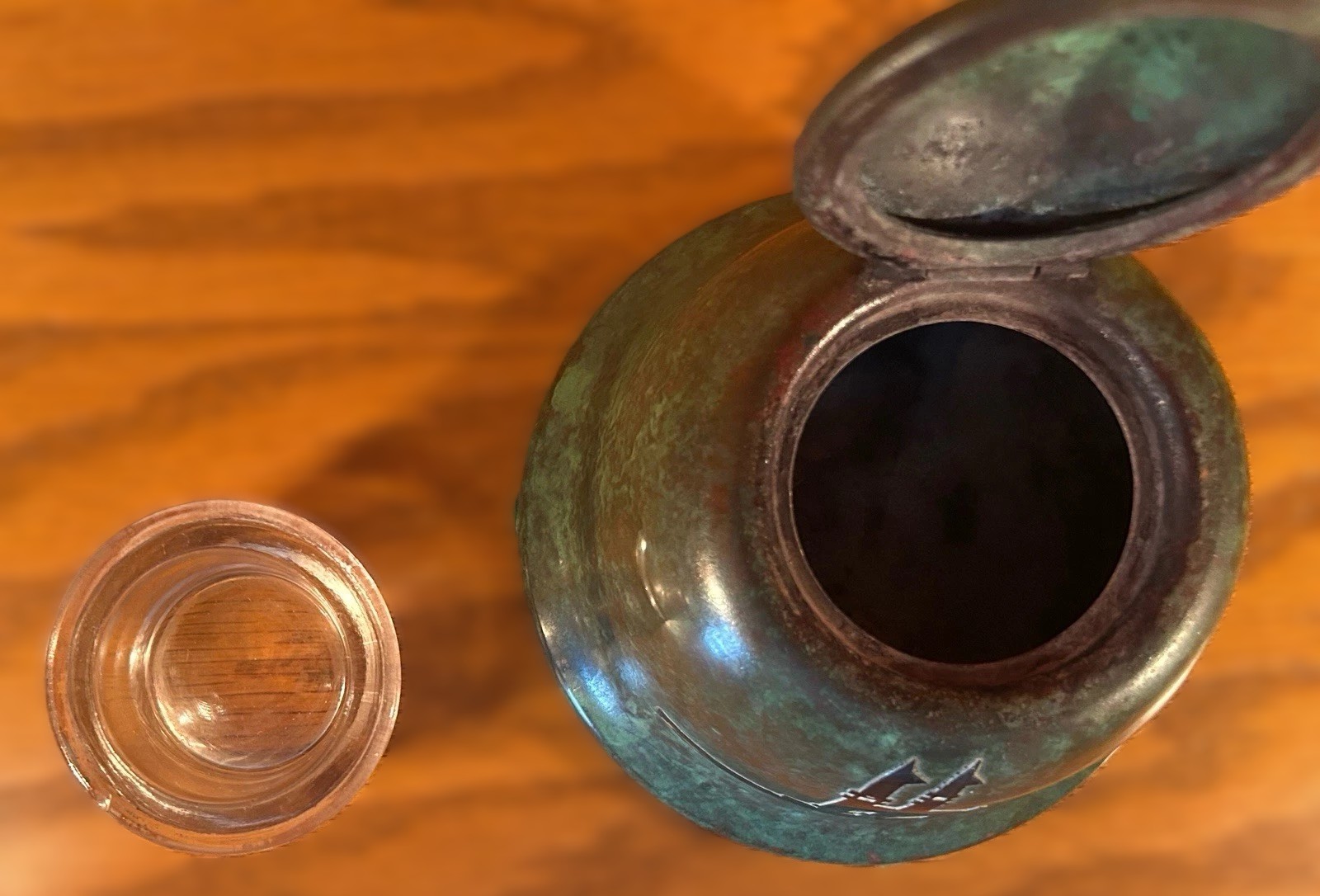
- Lid & Interior: The top features a circular, low-domed hinged lid. When opened, it reveals the inkwell with its original clear glass liner.
The “Two-Llama” Motif
The sterling silver overlay is the standout feature. While the figures are highly stylized, “Two-Llama Motif” is an accurate description.
- Stylization: The animals are rendered in profile with elongated necks, upright ears, and sturdy bodies typical of South American camelids.
- Composition: They stand upon a stylized horizontal “ground” or “line” that wraps slightly around the curve of the bronze, a common design element in Silver Crest pieces to ground the subject matter.
- Craftsmanship: The silver is a “fused” overlay, a process where sterling silver is applied to the bronze and then hand-chased or etched to create the detail.
Markings and Provenance
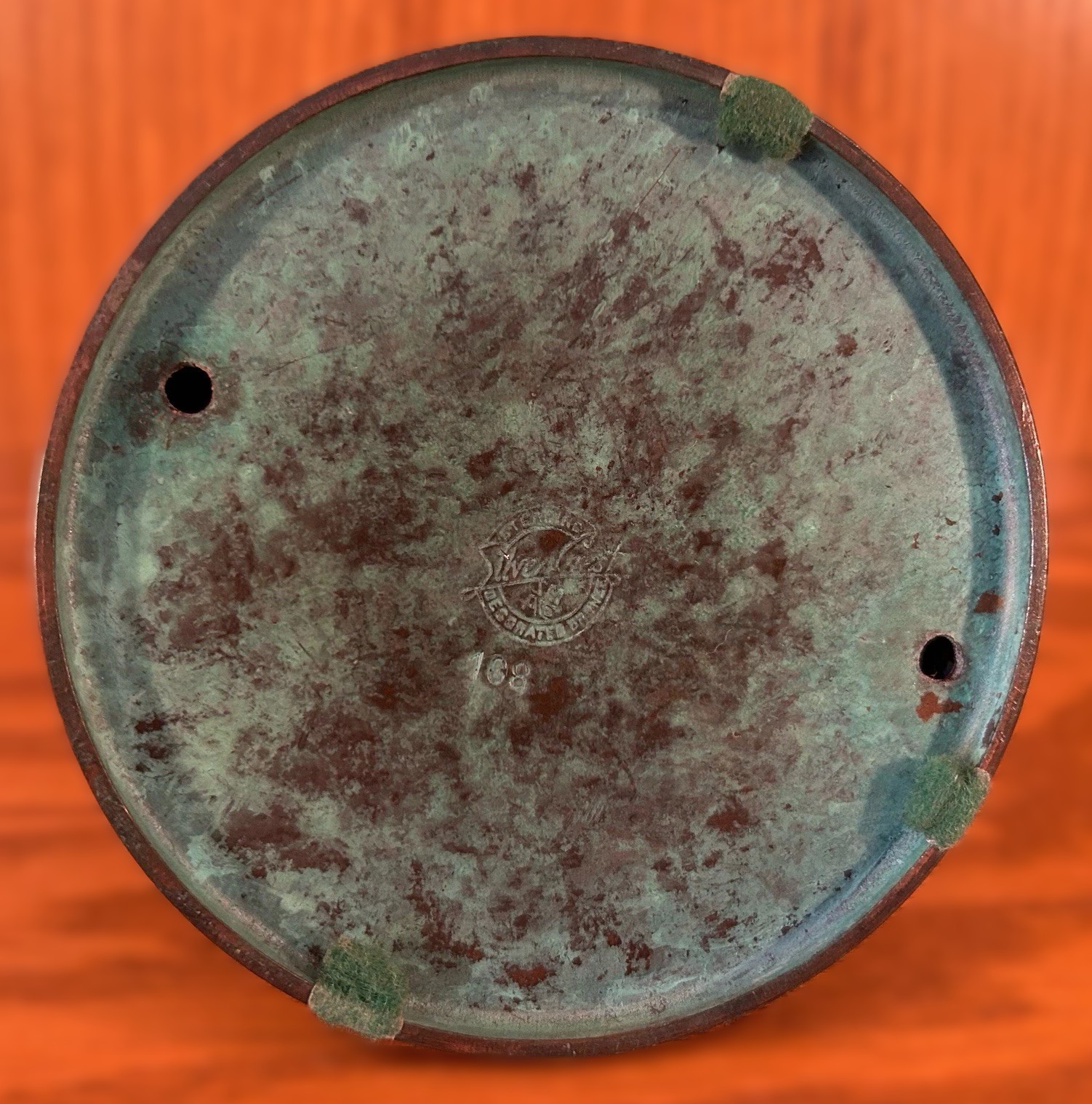
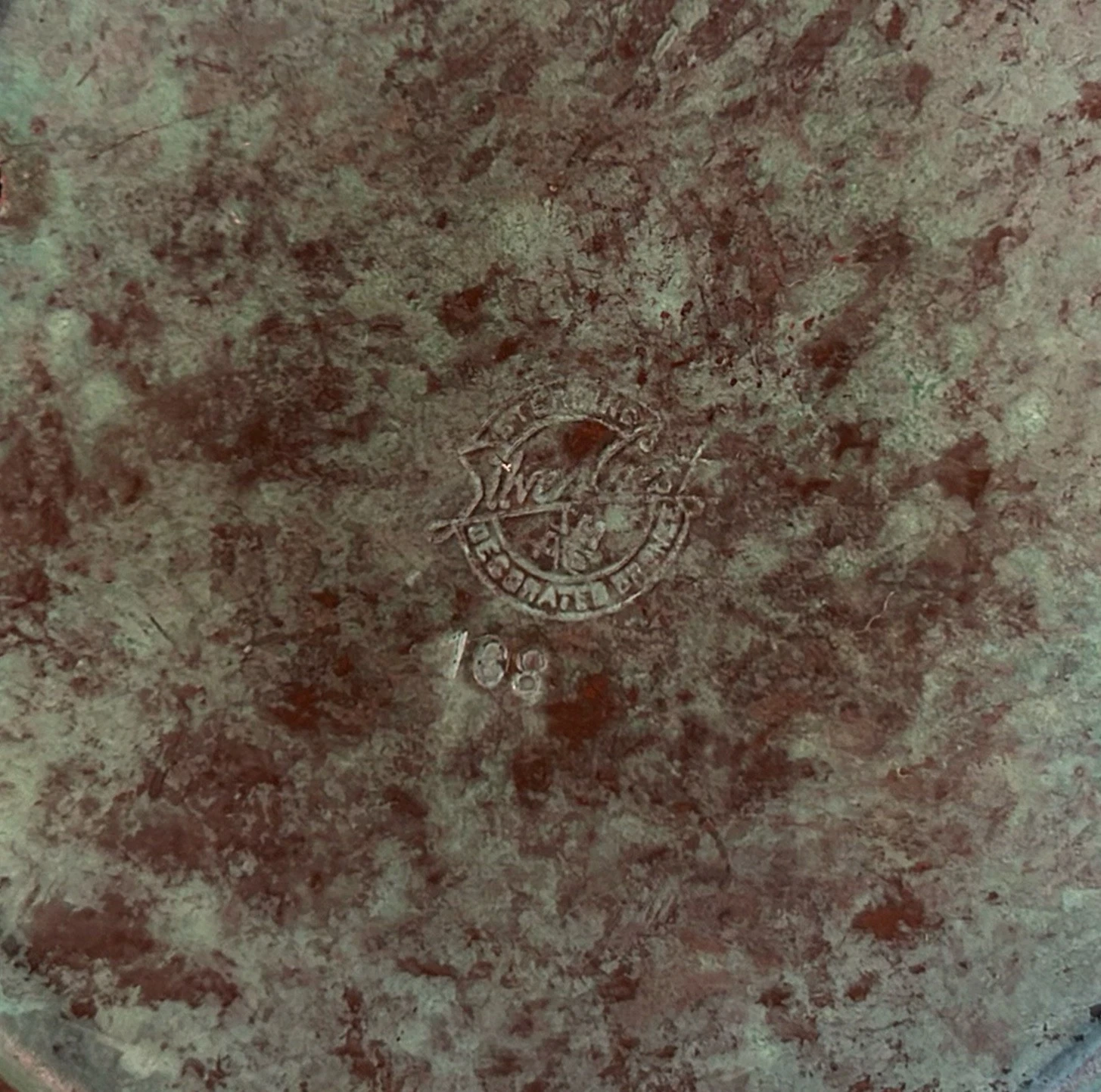
The underside confirms its origin from the Smith Metal Arts Company of Buffalo, New York:
- The Hallmark: The circular “SilverCrest Sterling Decorated Bronze” stamp was the primary mark for the company’s premium line.
- The “SH / AR” Initials: These letters within the logo refer to the brand’s lineage. The “S” stands for Smith (Frederick Smith) and the “H” for Heinz (Otto Heinz). The company evolved from the famous Heinz Art Metal Shop.
- Model 168: This specific number identifies the pattern and shape within the Silver Crest catalog.
Date of Manufacture
Based on the brand history, technical craftsmanship, and design style, this Silver Crest inkwell was most likely manufactured in the 1920s (roughly 1920–1929).
This era represents the peak of the “Sterling on Bronze” desk accessory trend, which transitioned from the earlier Arts and Crafts movement into the sleeker Art Deco style.
Dating Evidence
- Brand History (The “Post-Heintz” Era)
The Silver Crest trademark belonged to the Smith Metal Arts Company (SMAC), founded in 1919 by Frederick Smith. Smith was previously the head salesman for the famous Heintz Art Metal Shop. After Otto Heintz died in 1918, Smith started his own firm, bringing many of the craftsmen and patterns with him. Because this piece bears the Silver Crest mark rather than the Heintz diamond mark, it cannot pre-date 1919.
- The “Llama” Motif and Art Deco Style
While early pieces from this company featured traditional Arts and Crafts motifs (like grapes or roses), the 1920s saw a pivot toward more stylized and “exotic” animal subjects. The llama motif is particularly characteristic of the period’s fascination with South American and “Andean” Art Deco themes. The simplified, silhouette-style execution is a hallmark of the mid-1920s aesthetic.
- Technical Details
- Model 168: Smith Metal Arts used a numeric cataloging system. While catalogs from this period are rare, model numbers in the 100s–200s range typically correlate to their earlier production runs in the 1920s.
- Patina: The “Antique Green” or verdigris finish on this bronze was one of their most popular options in the 1920s, designed to give the items an immediate sense of “ancient” prestige for high-end office desks.
By the mid-1930s, the company began to move away from these ornate sterling overlays in favor of more industrial, solid-metal office designs, making the 1920s the definitive “golden age” for this inkwell.
Sold for $75 in March 2026
Content disclaimer. The information posted is the owner’s best knowledge and may not have been vetted by the SOIC. We welcome comments, corrections, and additions, working to make our website information comprehensive and accurate.
Join the Society of Inkwell Collectors (SOIC) – it’s free!
Founded in 1981 as a non-profit organization,
we are documenting inkwells (and accessories).
We’re here to help and inform!