

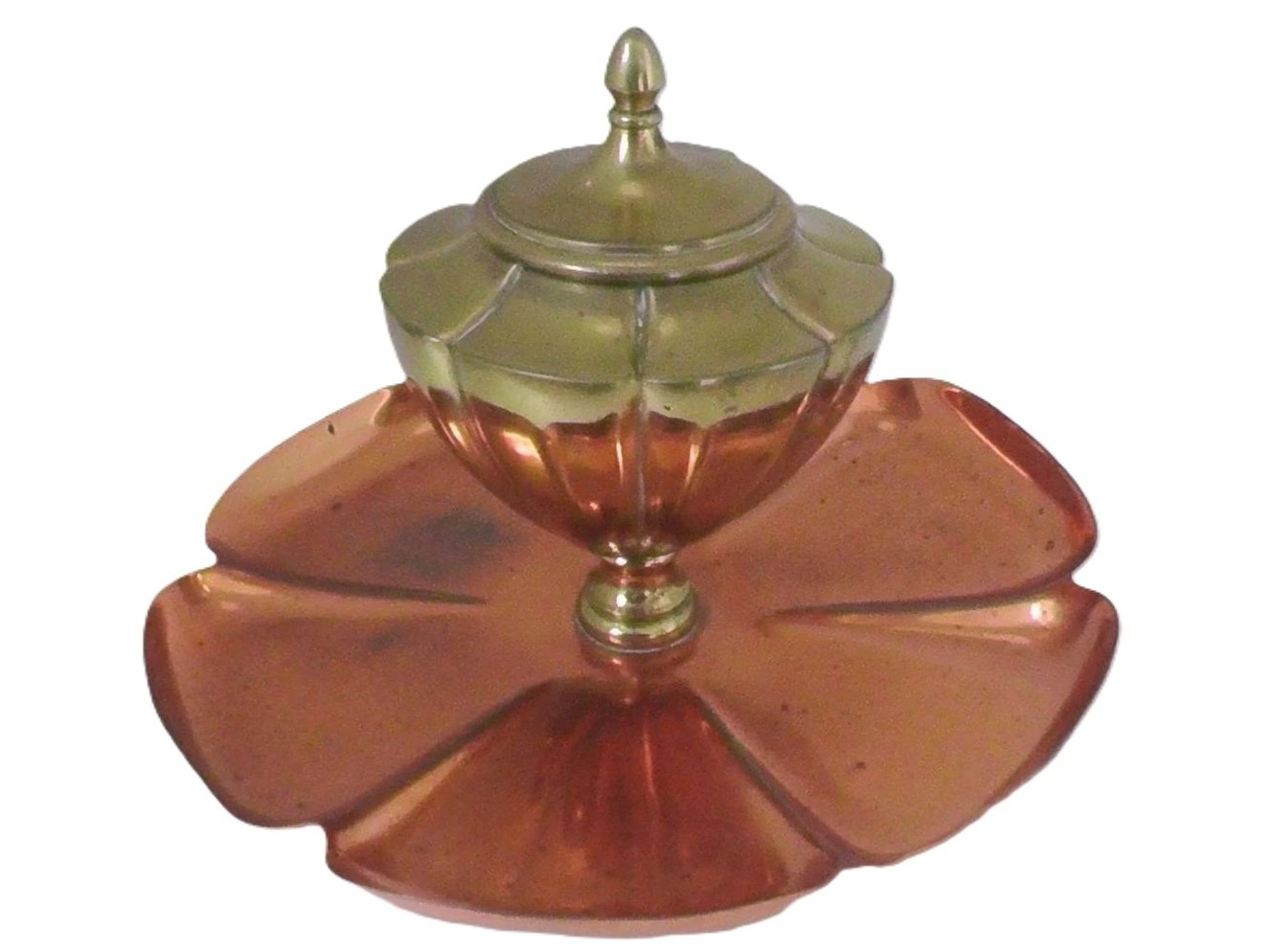
Benedict Art Studio Mixed Metal Inkstand
| Categories | Arts & Crafts |
| Material | Brass, Coppered metal |
| Markings | Unmarked |
| Manufacturer | Benedict Art Studios |
| Origin | United States |
| Date or Era | circa 1907 |
| Measuring | 7” diameter; 4 ¾” high |
This Arts and Crafts period mixed-metal inkstand dates to the first decade of the 20th century (circa 1906 – 1912).
Physical Description
This inkstand features a striking contrast between its two primary metals:
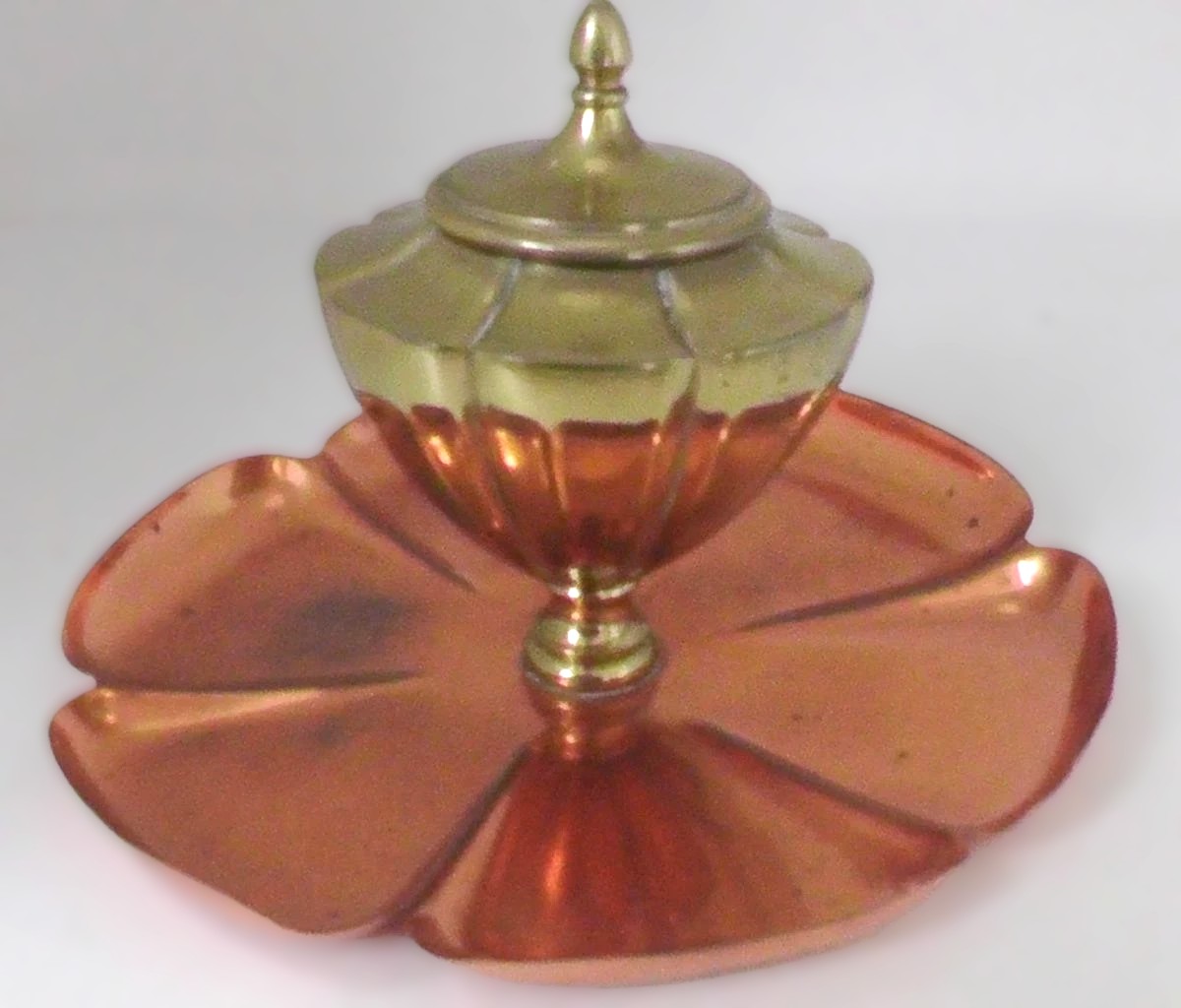
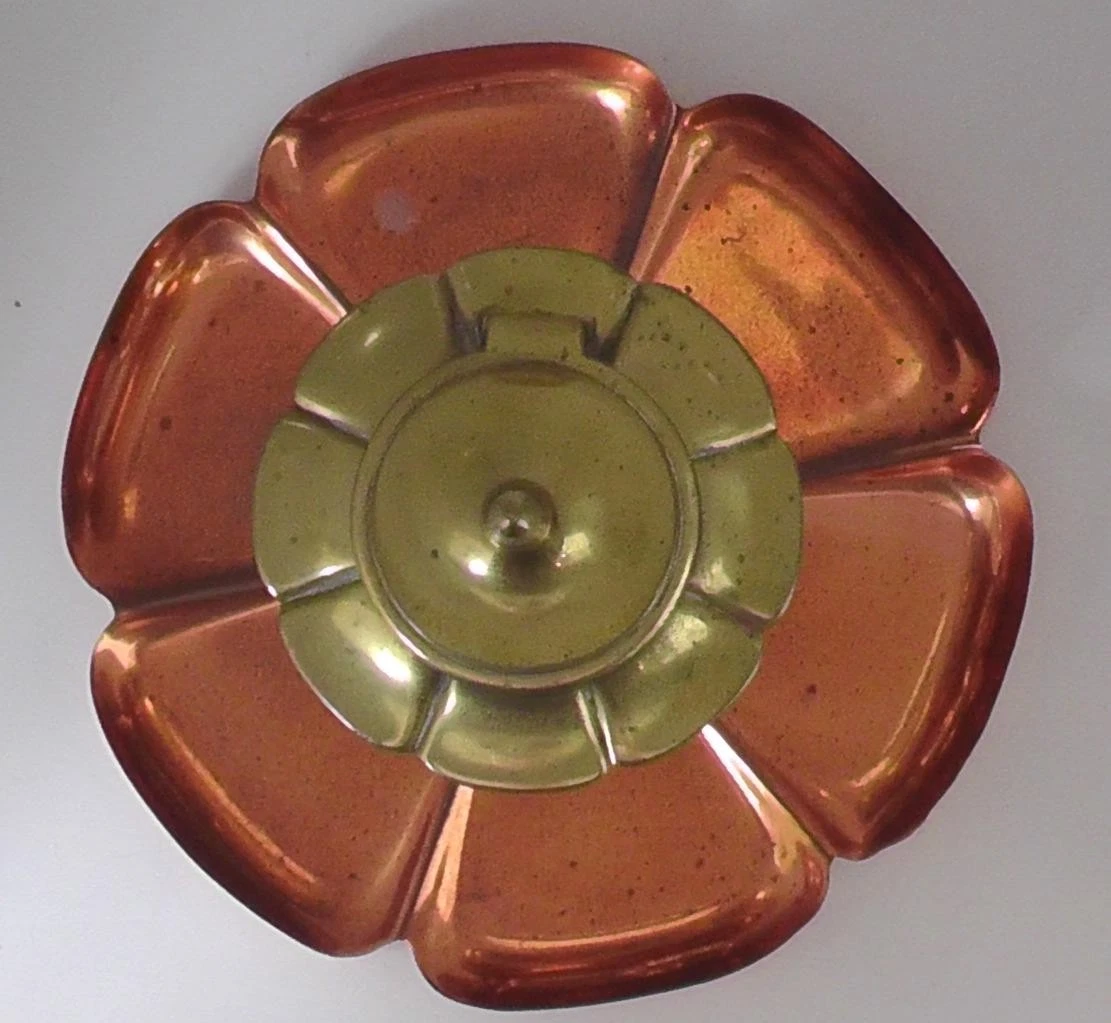
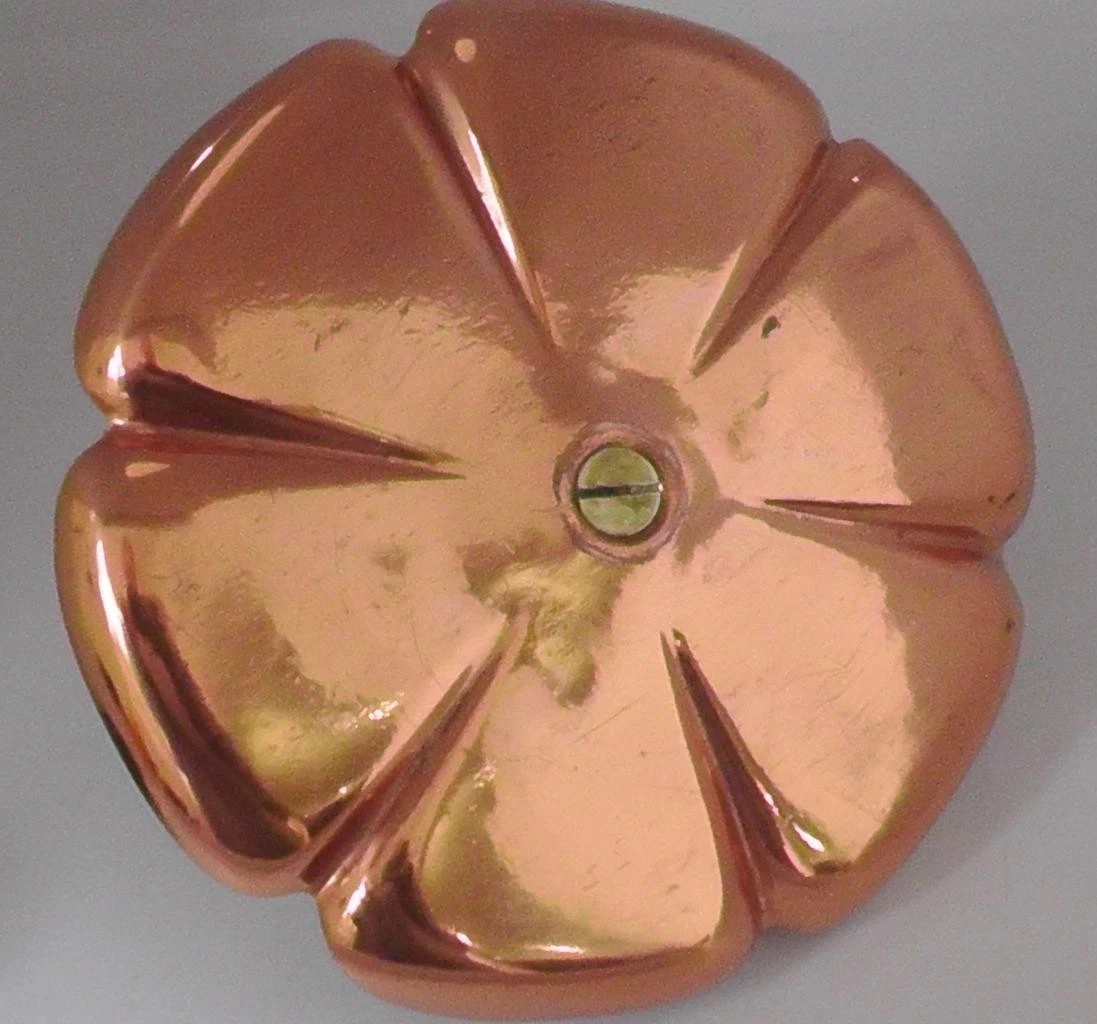
- The Base: A warm copper tray fashioned in a six-petaled floral motif, resembling a lotus or poppy. The “petals” are slightly concave, which would have served as a convenient resting place for a dip pen or writing supplies.
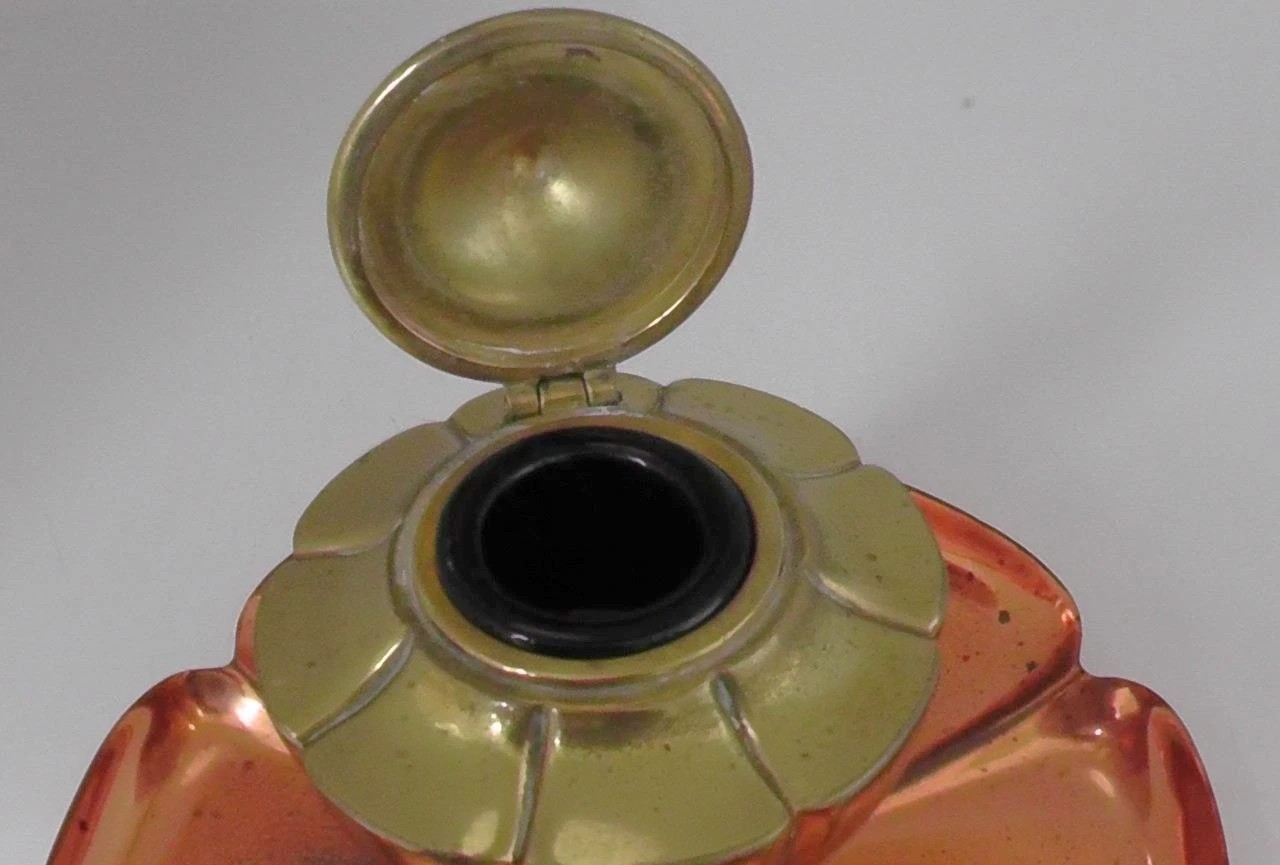
- The Well: A brass, urn-shaped central vessel with vertical fluting on the lower half that mirrors the petal design of the base. It features a hinged lid with a delicate, bulbous finial.
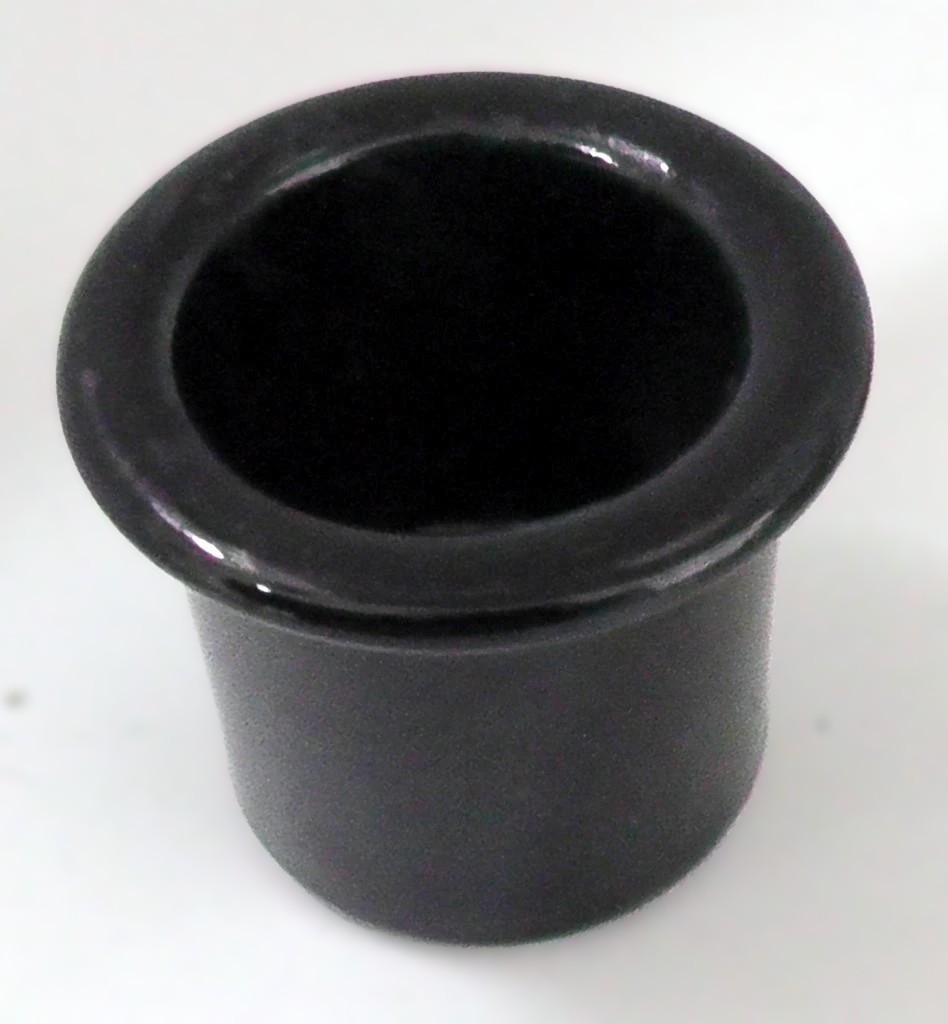
- The Interior: The piece retains its original removable black ceramic liner (or “well”).
- Construction: The underside shows a central slotted brass screw and washer. This modular “screw-together” assembly is characteristic of commercial metalwork from this era rather than a custom-forged artisan piece.
Maker and Production Line
This inkstand was made by Benedict Art Studio, a specialized division of the T.N. Benedict Manufacturing Company in East Syracuse, New York.
It belongs to their “Golden Bronze” line, which was introduced around 1906–1910. This line was famous for its distinctive mixed-metal look—using a firing process to blend copper and brass, giving pieces a rich, aged patina that was very popular in the Arts and Crafts (Mission) era.
Why it’s likely Benedict Art Studio:
- Mixed Metals: As noted in historical archives of Syracuse metalwork, Benedict was one of the few studios that regularly combined brass and copper in this specific way. Most other shops, like Onondaga Metal Shops or Roycroft, preferred single-metal designs.
- The Assembly: The central brass screw on the underside is a classic Benedict “factory-artisan” assembly method. It allowed them to swap various “wells” onto different “trays” to create different catalog offerings.
- The Ceramic Liner: Benedict desk sets almost always included these removable black ceramic or glass inserts to protect the “Golden Bronze” finish from the corrosive ink of the time.
Age and Model Series
- Date: Circa 1907–1912.
- Motif: This is their “Lotus” or “Poppy” pattern. Benedict produced a wide range of “Lotus Bud” and “Floral Petal” accessories. Other pieces in this specific set would have included a matching blotter, a letter opener, and a stamp box.
- Model Number Context: Based on similar documented Benedict pieces, the model number for this inkstand is likely in the 400s (associated with their early “Golden Bronze” line) or the 1400s (associated with their later “Athenic” and decorative lines).
Sold for $175 in February 2026
Content disclaimer. The information posted is the owner’s best knowledge and may not have been vetted by the SOIC. We welcome comments, corrections, and additions, working to make our website information comprehensive and accurate.
Join the Society of Inkwell Collectors (SOIC) – it’s free!
Founded in 1981 as a non-profit organization,
we are documenting inkwells (and accessories).
We’re here to help and inform!