






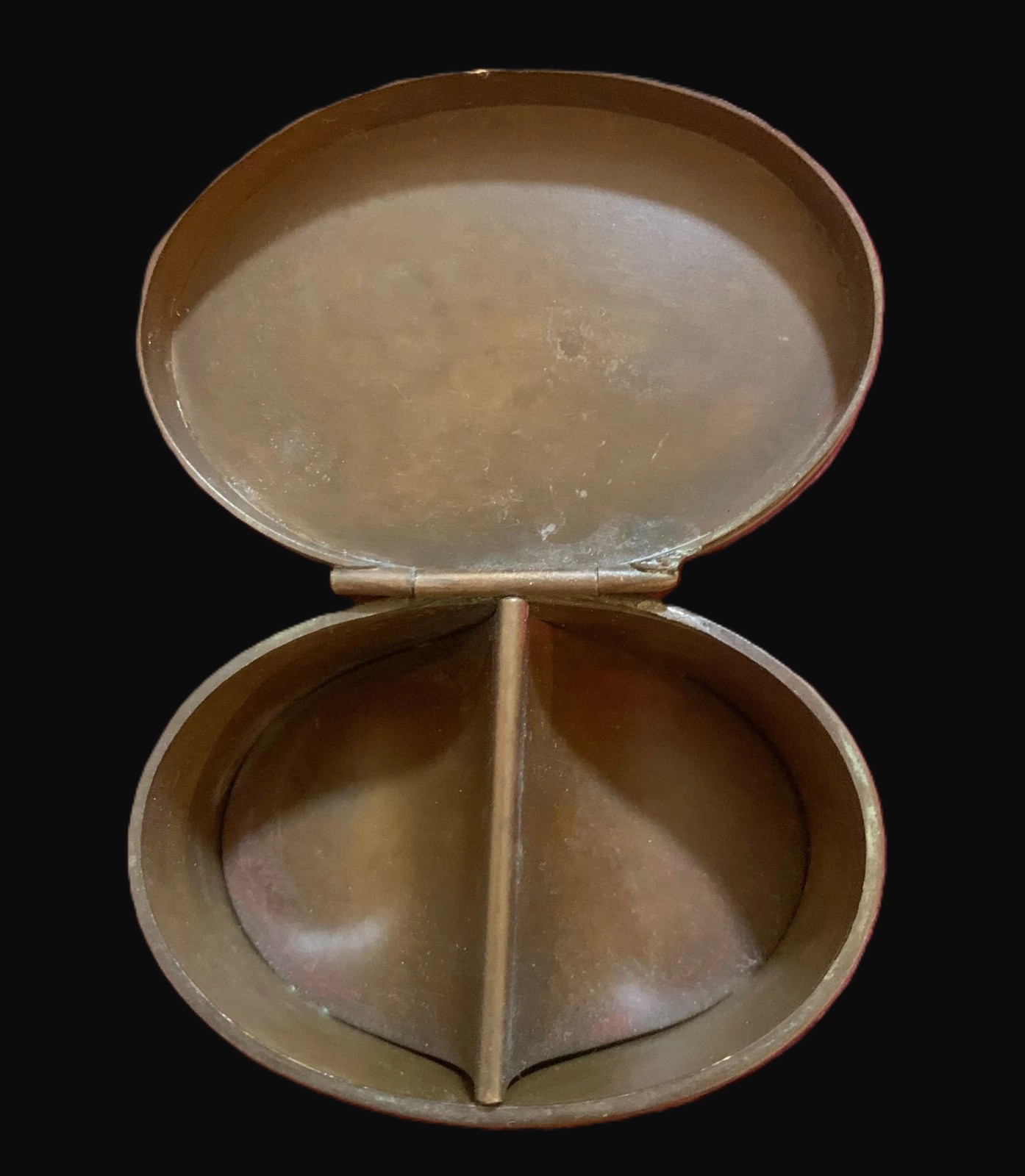

Heintz “Sterling on Bronze” Desk Set
| Categories | Arts & Crafts |
| Material | Silver on Bronze |
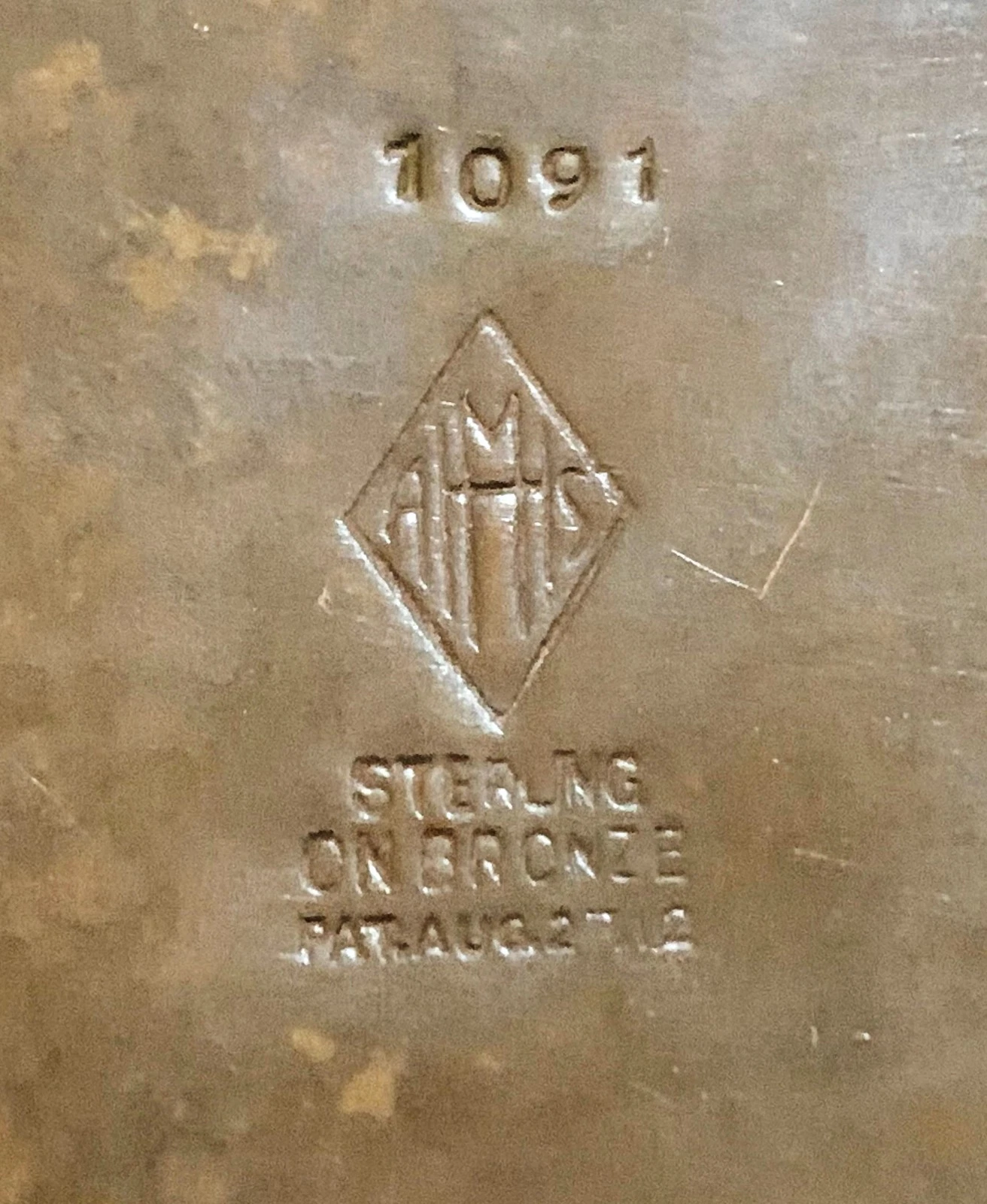
| Markings | See Narrative |
| Manufacturer | Heintz |
| Origin | United States |
| Date or Era | circa 1915 |
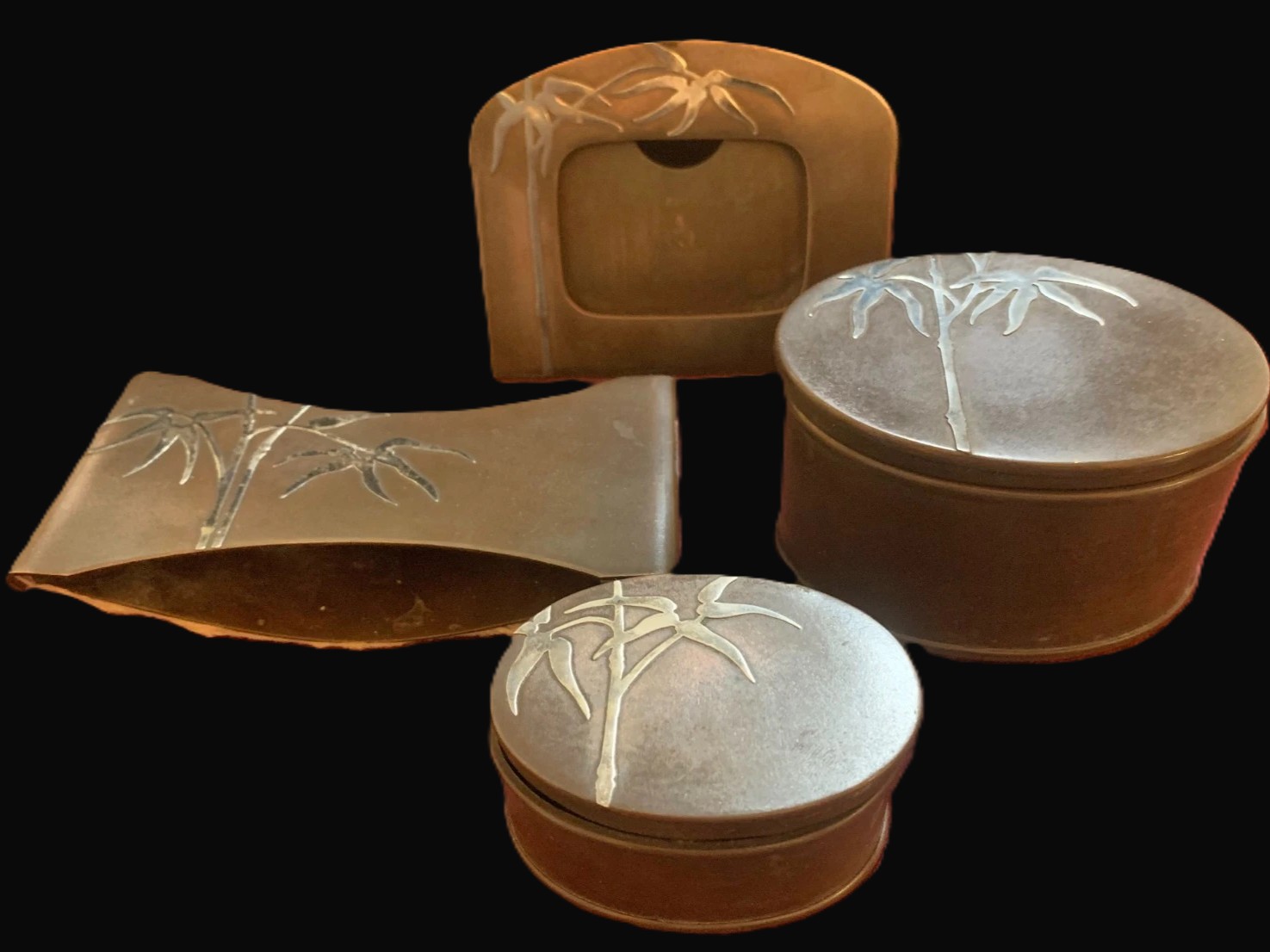
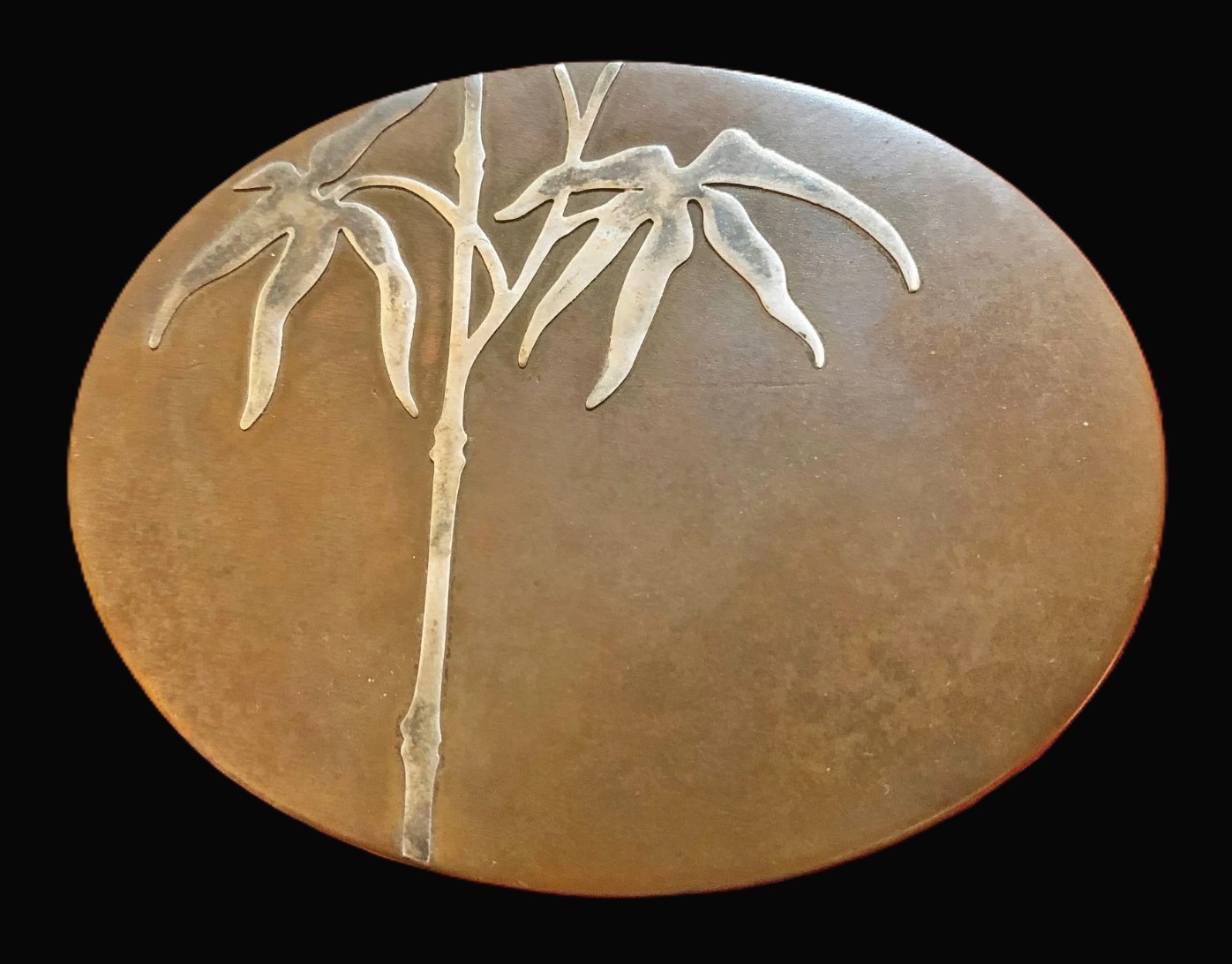
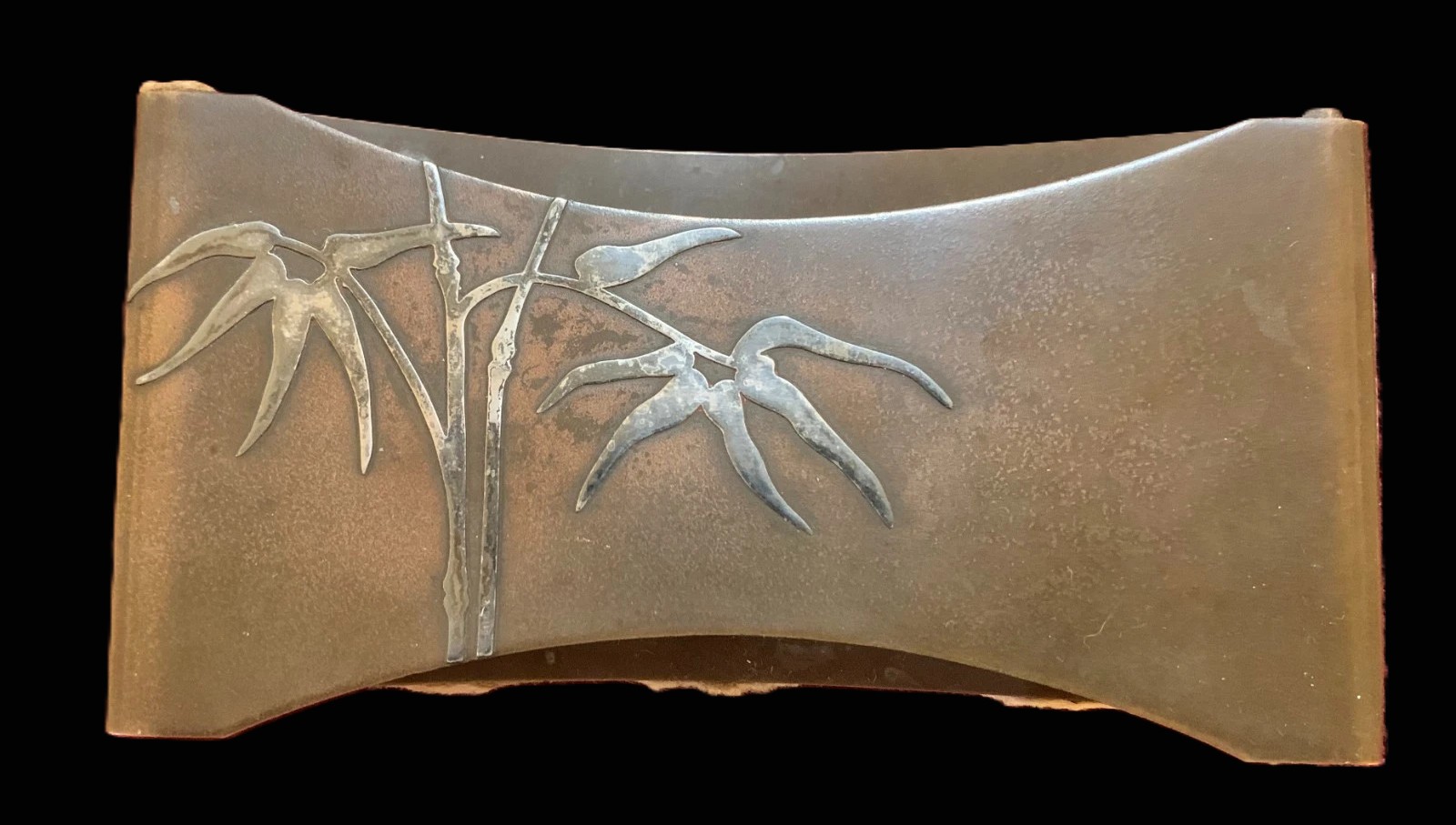
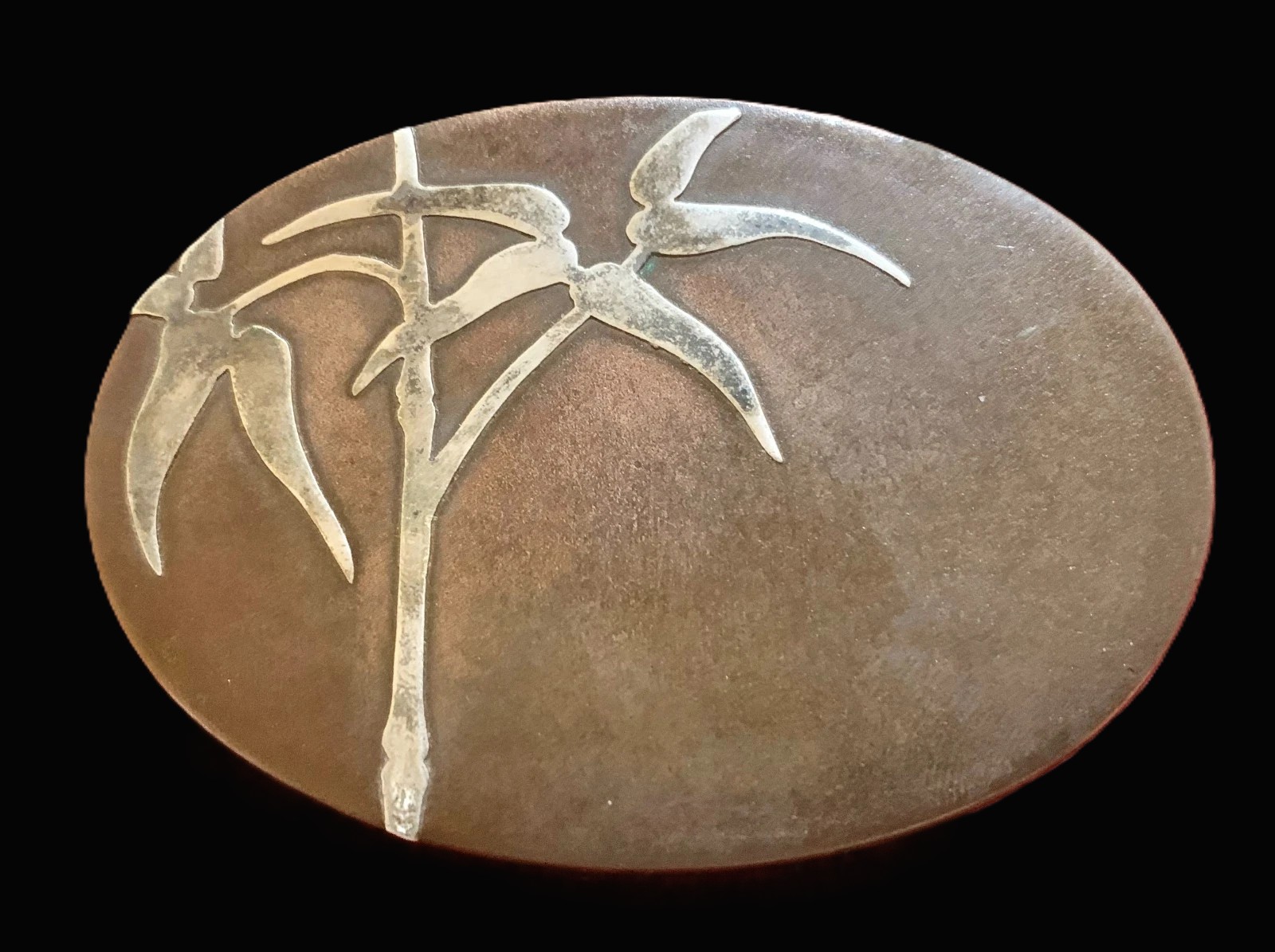
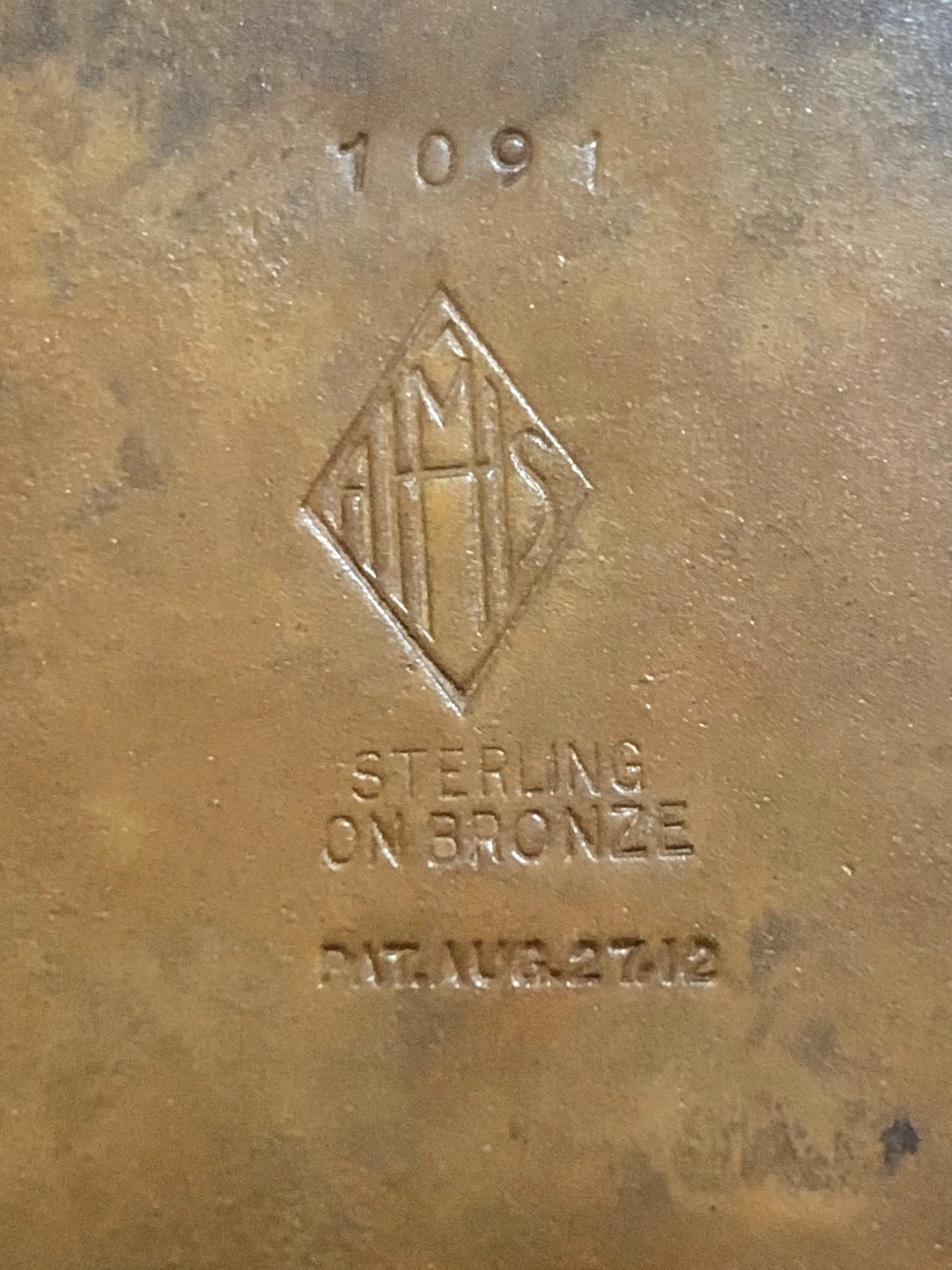
This four-piece set features the iconic Heintz Art Metal aesthetic: a warm, patinated bronze body decorated with a “Sterling on Bronze” overlay. The specific design here is the Bamboo pattern, one of their most popular and enduring motifs, characterized by minimalist, Japanese-influenced sterling silver bamboo stalks and leaves. The pieces are all marked with the number 1091.
Piece-by-Piece Analysis
- Inkwell: This is a heavy, oval-shaped piece with a hinged lid. Inside, it retains its original removable glass reservoir.
- Stamp Box: The oval box with the internal divider is a stamp box. The central divider was designed to hold two different denominations of coil or sheet stamps.
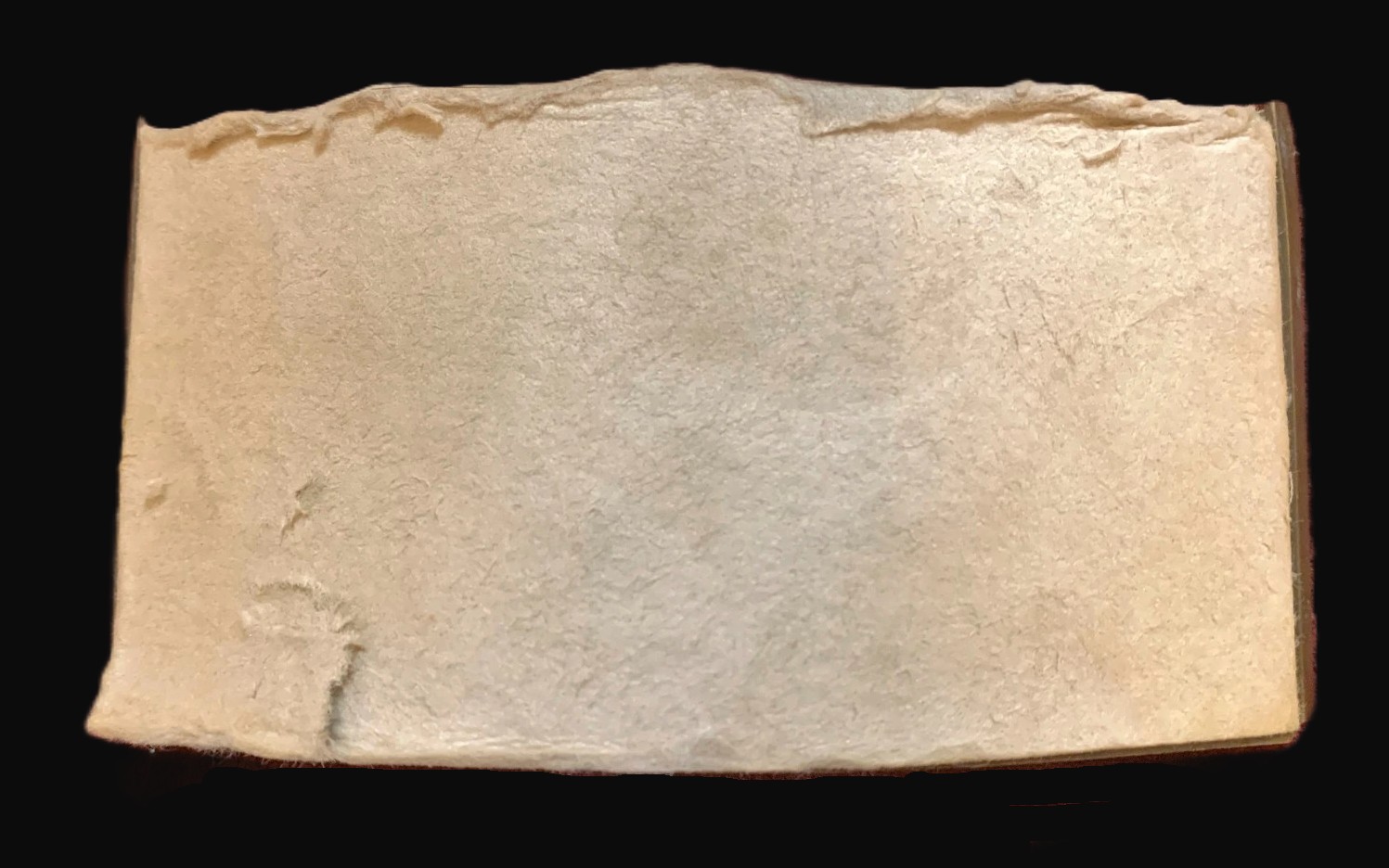
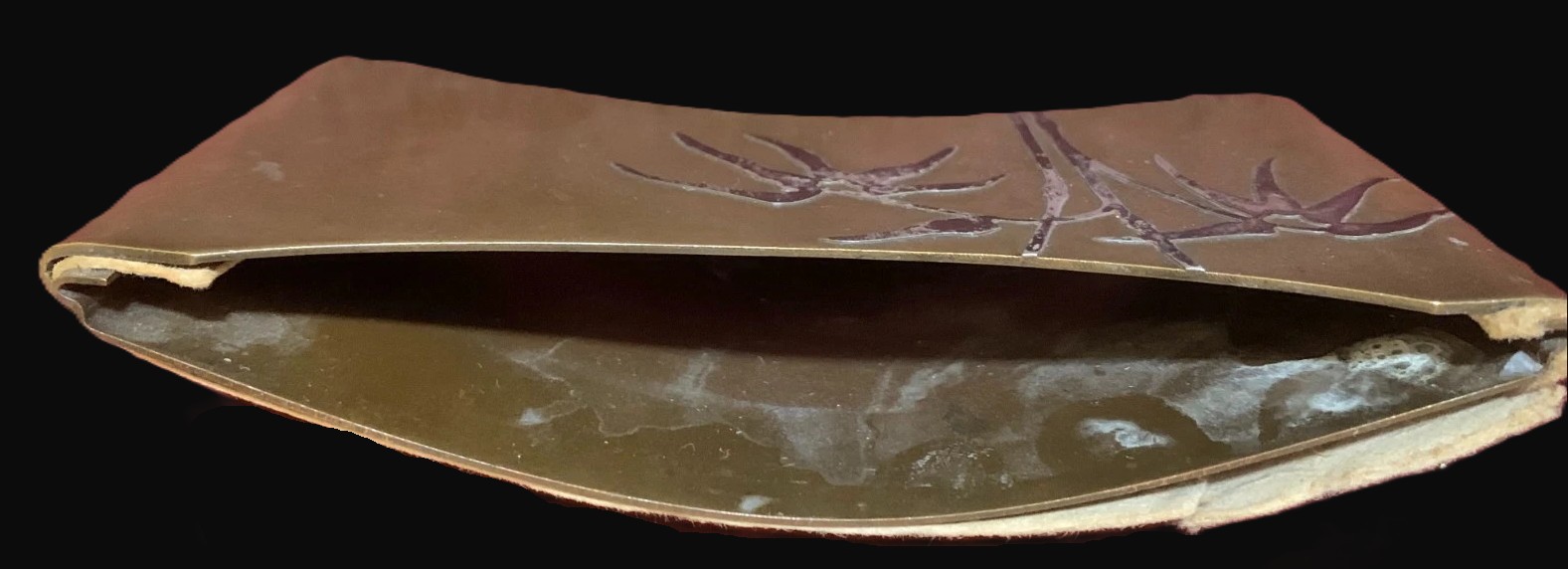
- Rocker Blotter: This piece features the curved “rocking” base. It was used to dry wet ink on a page by rocking the blotting paper across the text.
- Perpetual Calendar Holder: This upright frame held a set of cards (usually celluloid or heavy cardstock) for the month, date, and day of the week. The cutout at the top of the backplate allowed the user to easily slide the cards out to change them.
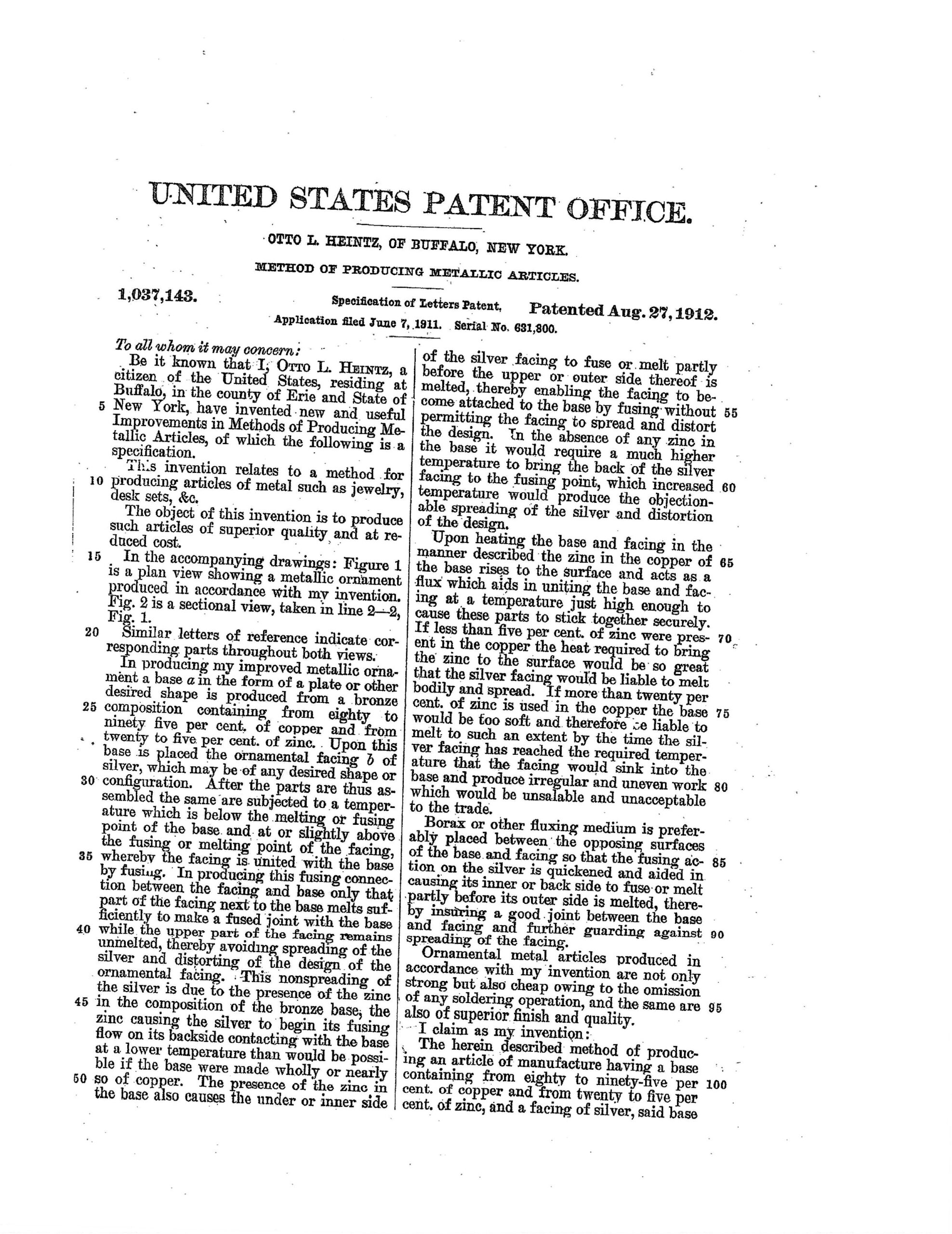
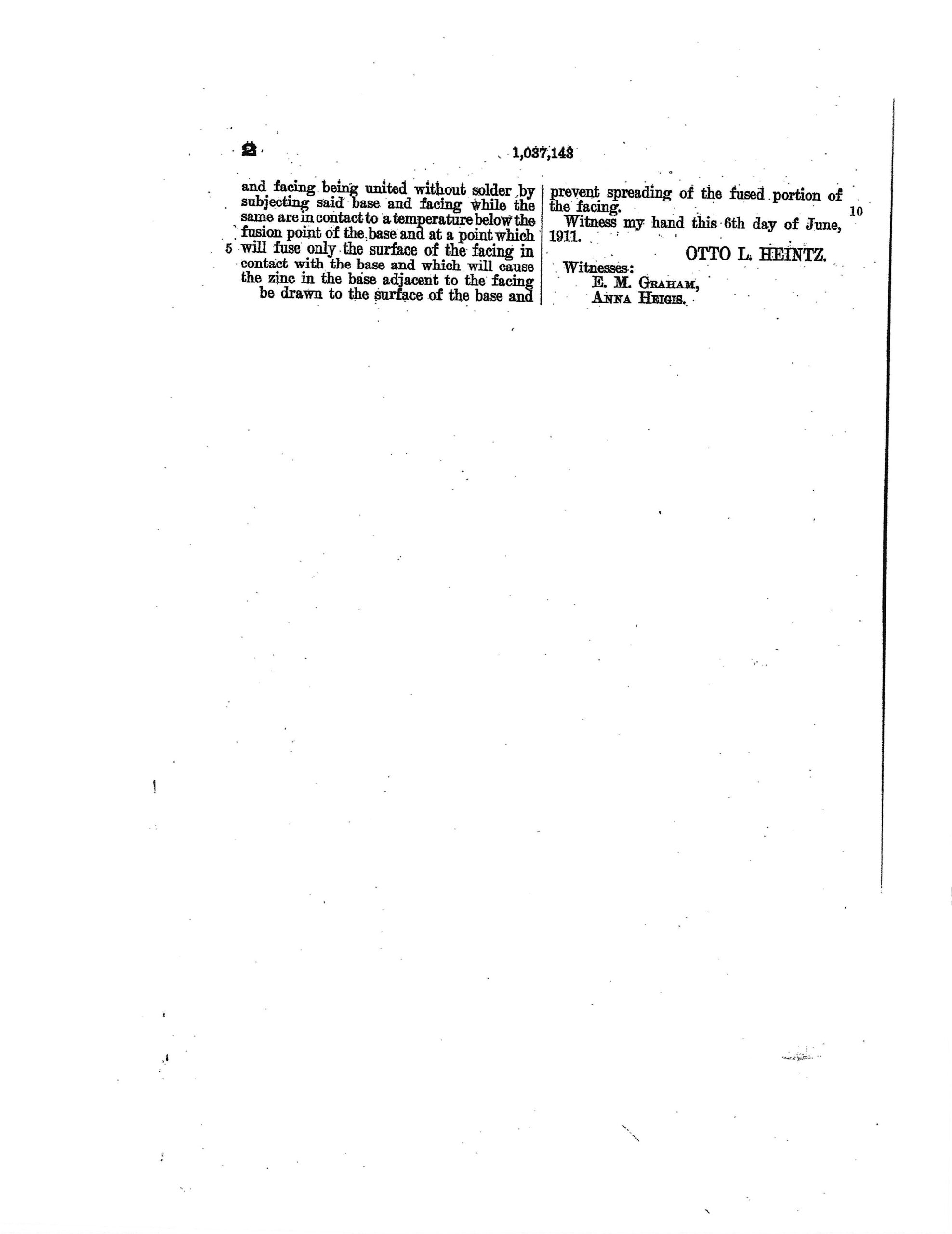
Patent Summary: U.S. Patent #1,037,143
Issued on August 27, 1912, to Otto L. Heintz, this patent is the “holy grail” for the company. It did not cover the design of the desk set itself, but rather the technical process of applying sterling silver to base metals without the use of solder.
The Innovation: Prior to this, silver was often soldered onto bronze, which left visible seams or required high heat that could damage the finish. Heintz patented a method of electro-chemically bonding the sterling silver overlay directly to the bronze. This allowed for the incredibly fine, flush, and detailed “paper-thin” silver designs (like bamboo leaves) that became the company’s trademark. This process made Heintz pieces uniquely durable and gave them a seamless, high-art look that competitors struggled to replicate.
Dating This Set
While the patent was granted in 1912, Heintz Art Metal Shop operated from roughly 1906 to 1930. Because these pieces are stamped with the August 27, 1912 patent date, we can date this set with high confidence:
- Earliest Possible Date: Late 1912 (immediately following the patent approval).
- Likely Production Range: 1912 – 1918.
The Bamboo pattern was a staple of their “Middle Period.” By the mid-1920s, the company began moving toward more geometric Art Deco designs and different patinas. The rich “florentine” bronze finish on this set is classic for the 1910s.
Historical Note
The “AMS” in a diamond mark seen on the base of these pieces stands for Art Metal Shop. Otto Heintz originally took over the “Buffalo Art Craft Shop” and renamed it Heintz Art Metal Shop around 1906. Pieces marked with the 1912 patent date are generally considered the “prime” era of their production.
Set of four sold for $216 in January 2026
Content disclaimer. The information posted is the owner’s best knowledge and may not have been vetted by the SOIC. We welcome comments, corrections, and additions, working to make our website information comprehensive and accurate.
Join the Society of Inkwell Collectors (SOIC) – it’s free!
Founded in 1981 as a non-profit organization,
we are documenting inkwells (and accessories).
We’re here to help and inform!