


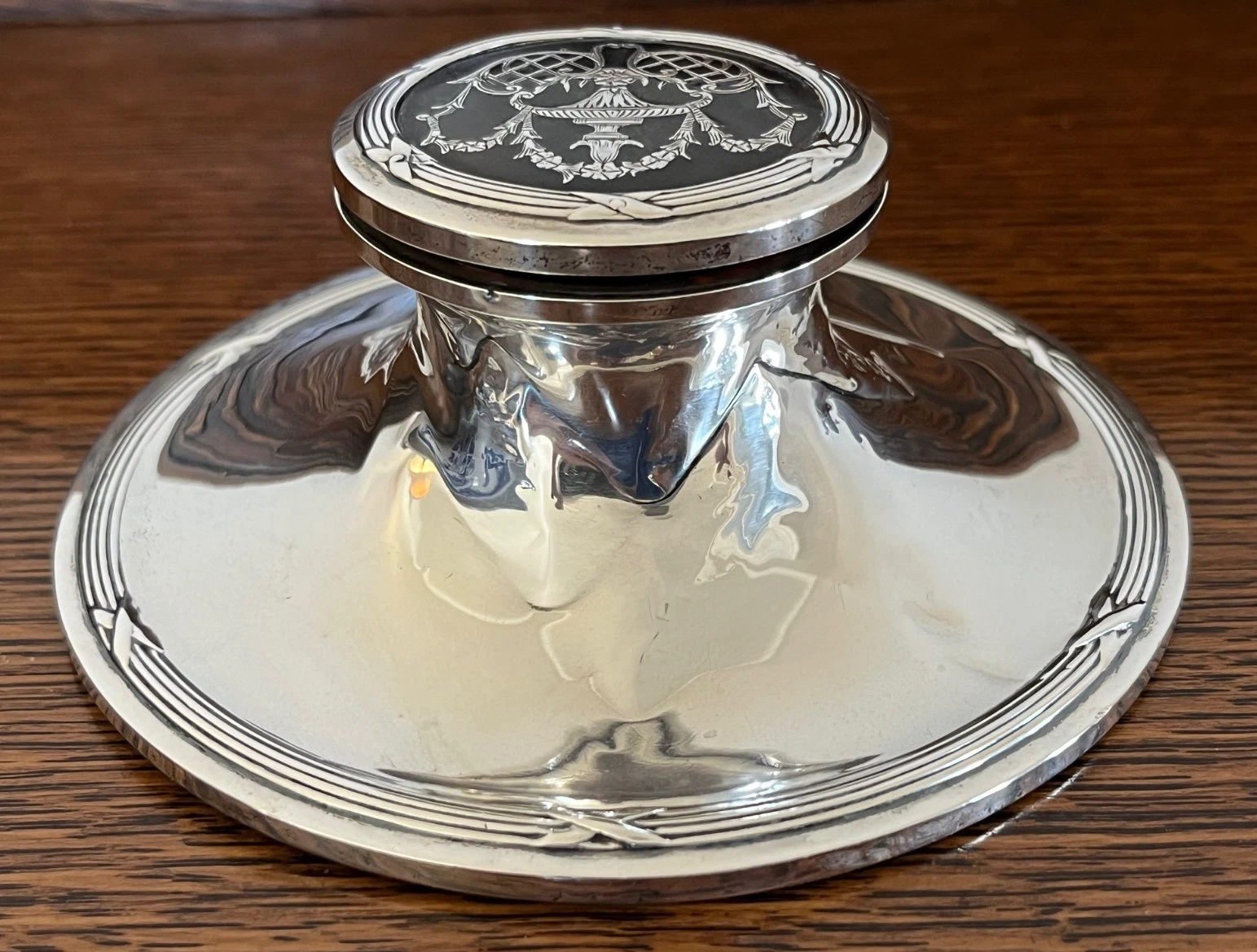
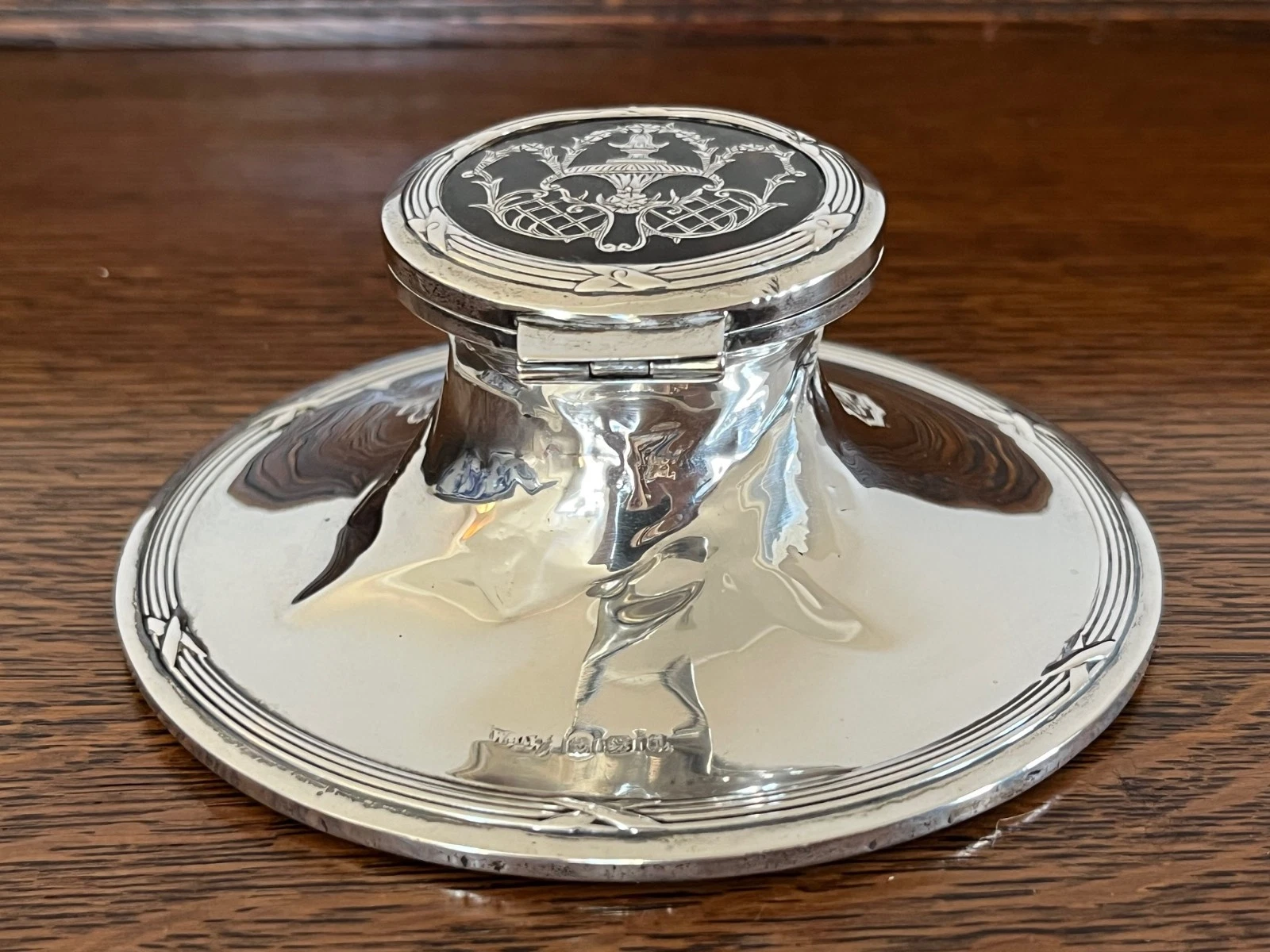
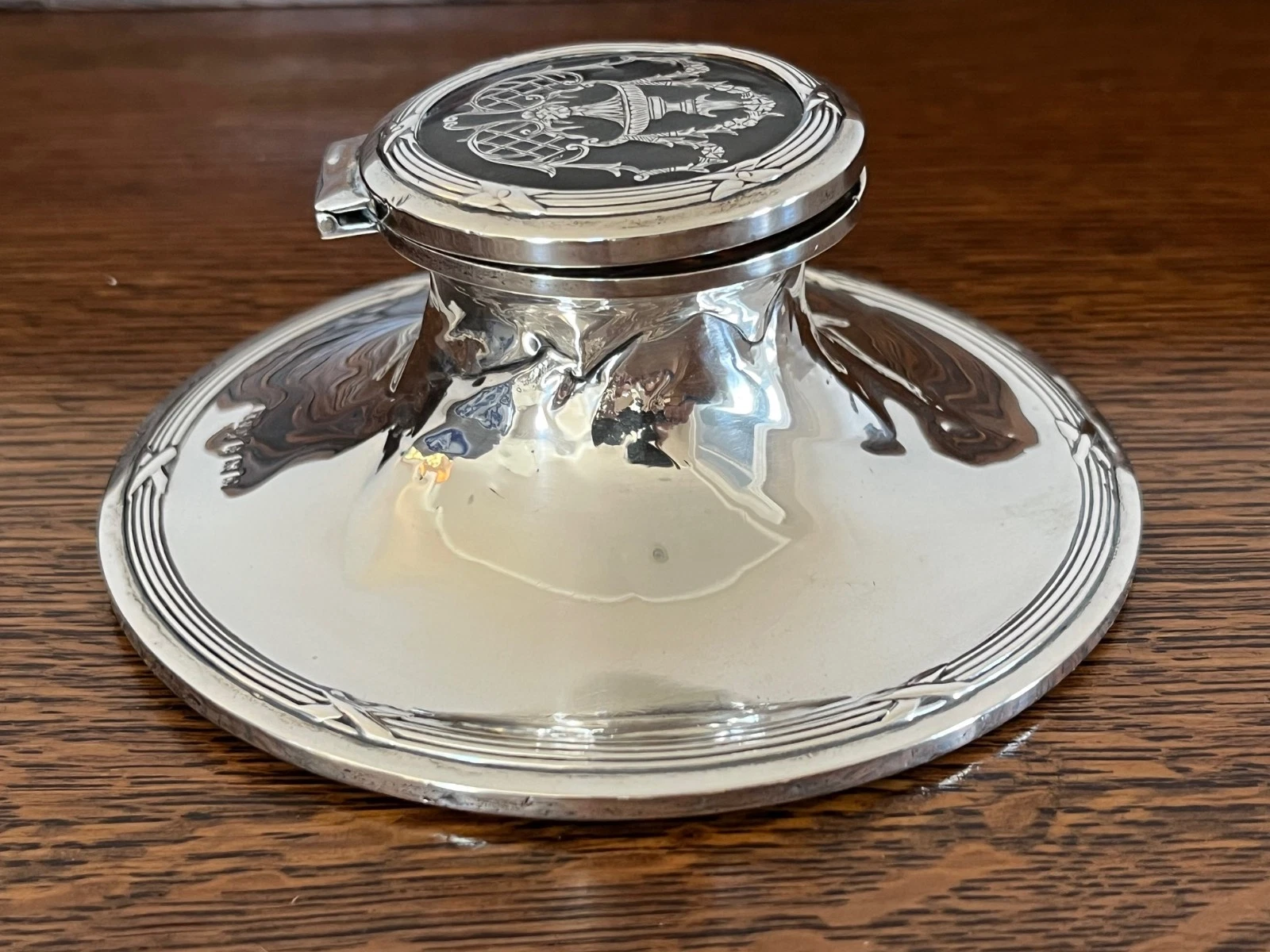
Hallmarked English Silver Capstan Inkwell
| Categories | Silver |
| Type | Capstan |
| Material | Silver, Tortoiseshell |
| Markings | See Narrative |
| Manufacturer | William Aitken |
| Origin | England |
| Date or Era | circa 1908 |
| Measuring | 5” diameter; 2” high |
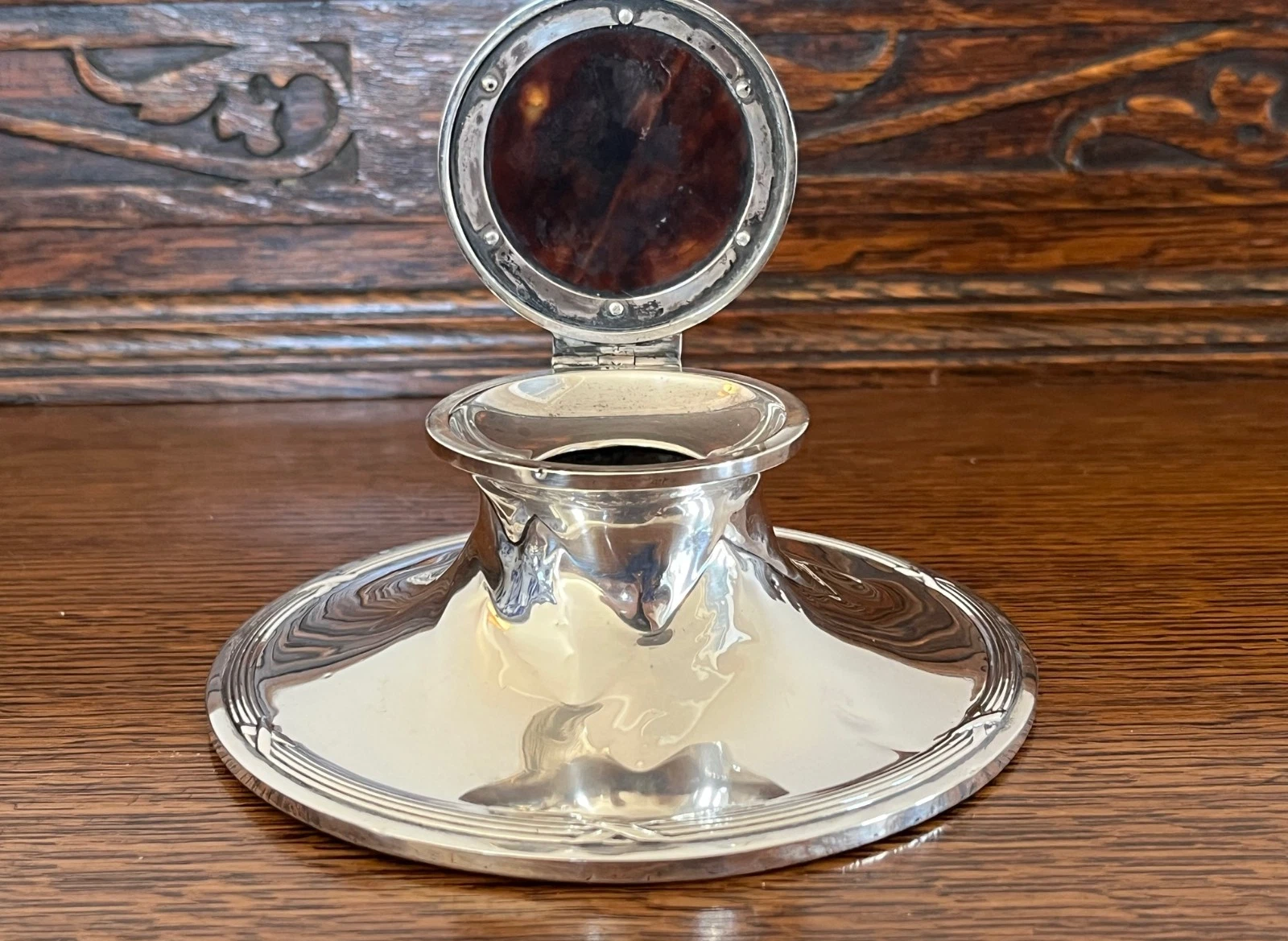
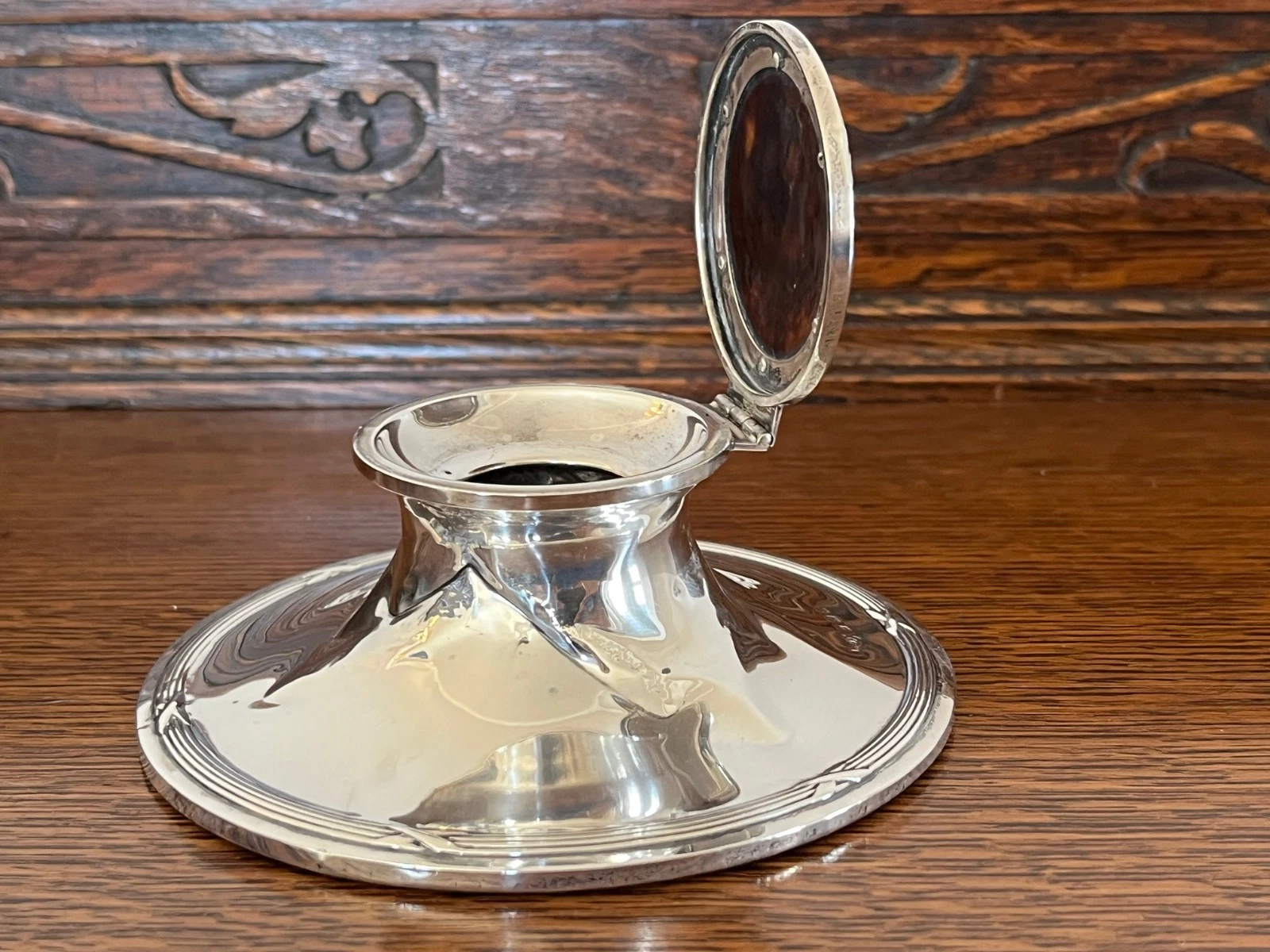
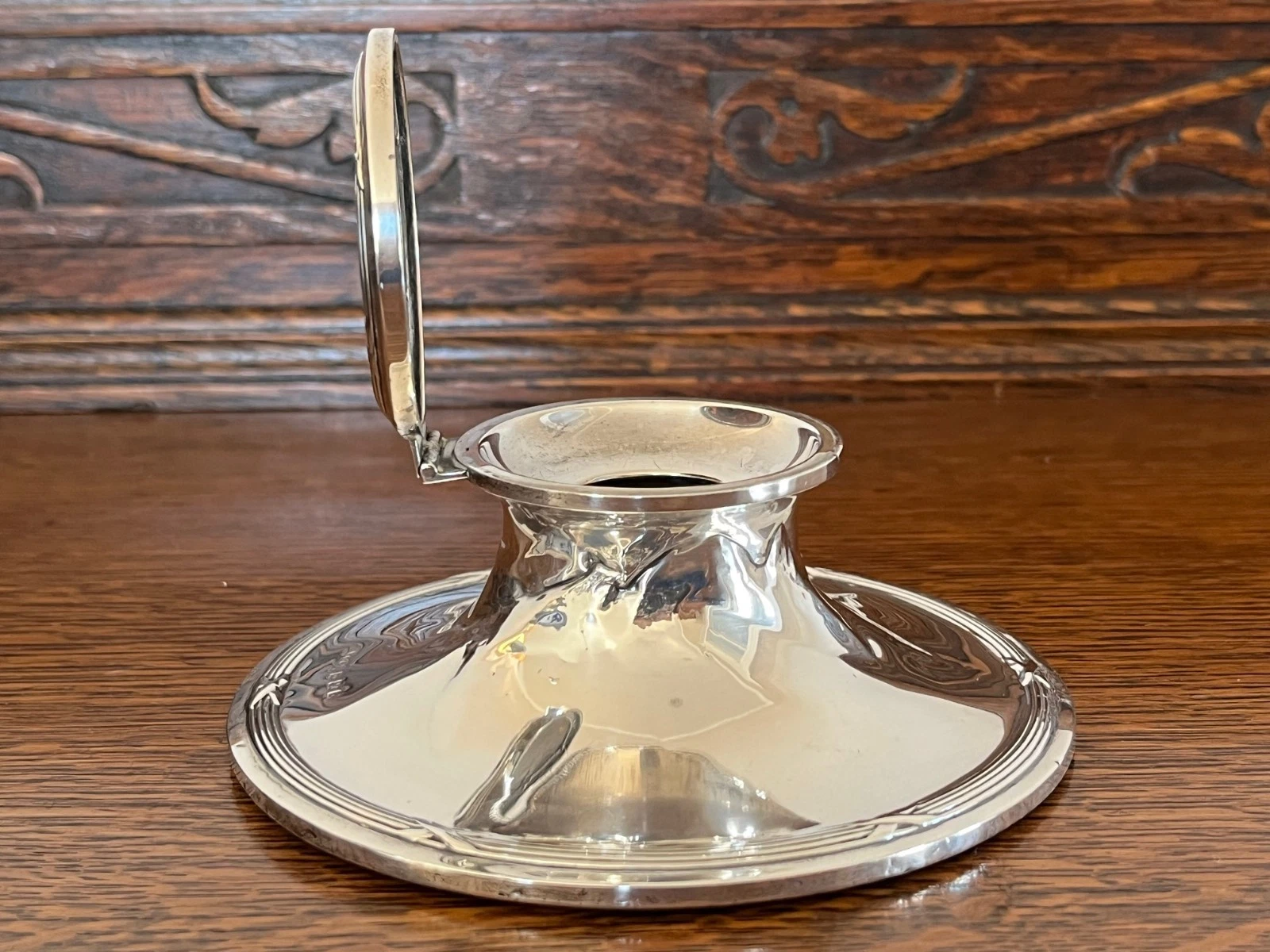
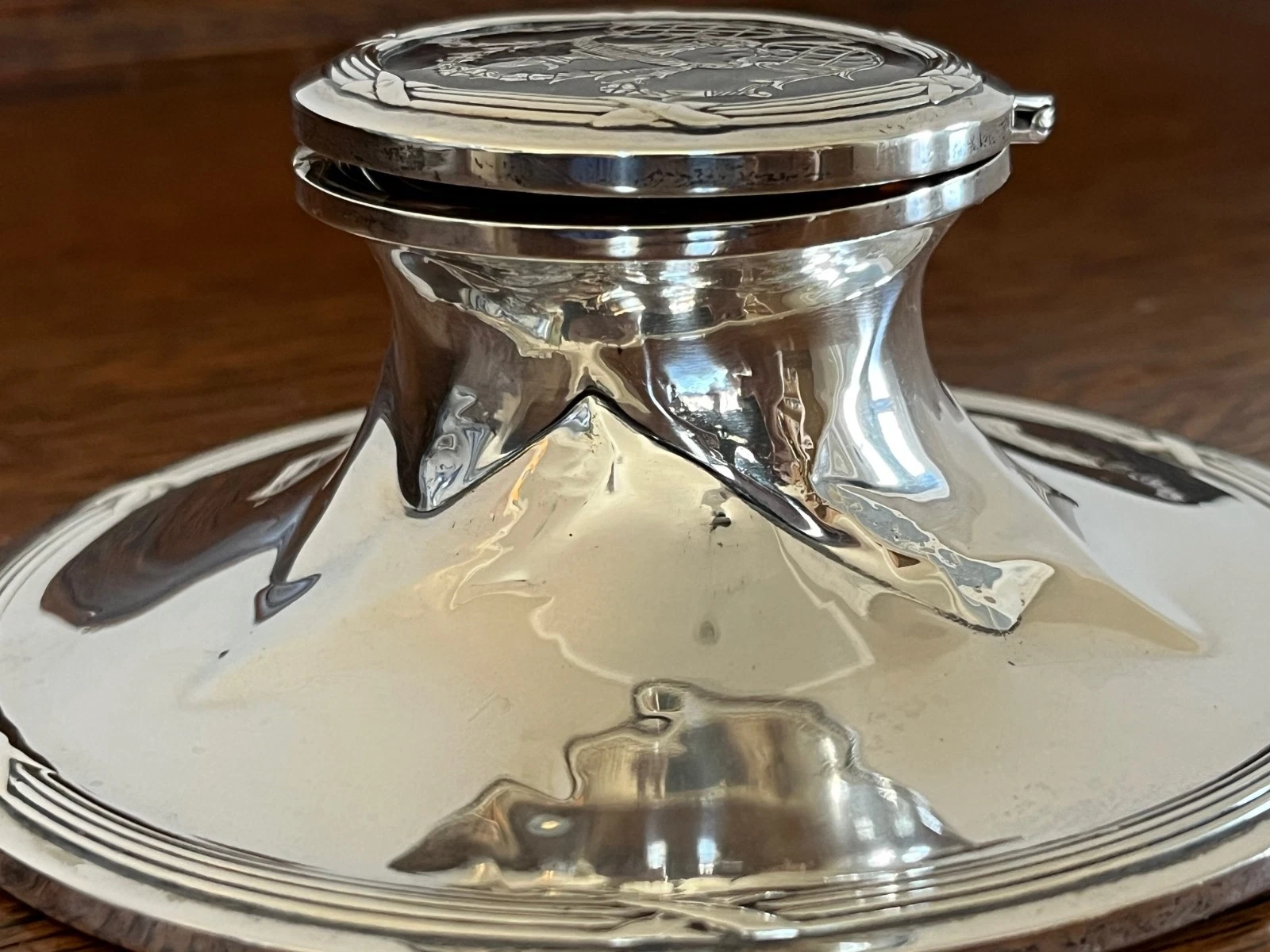
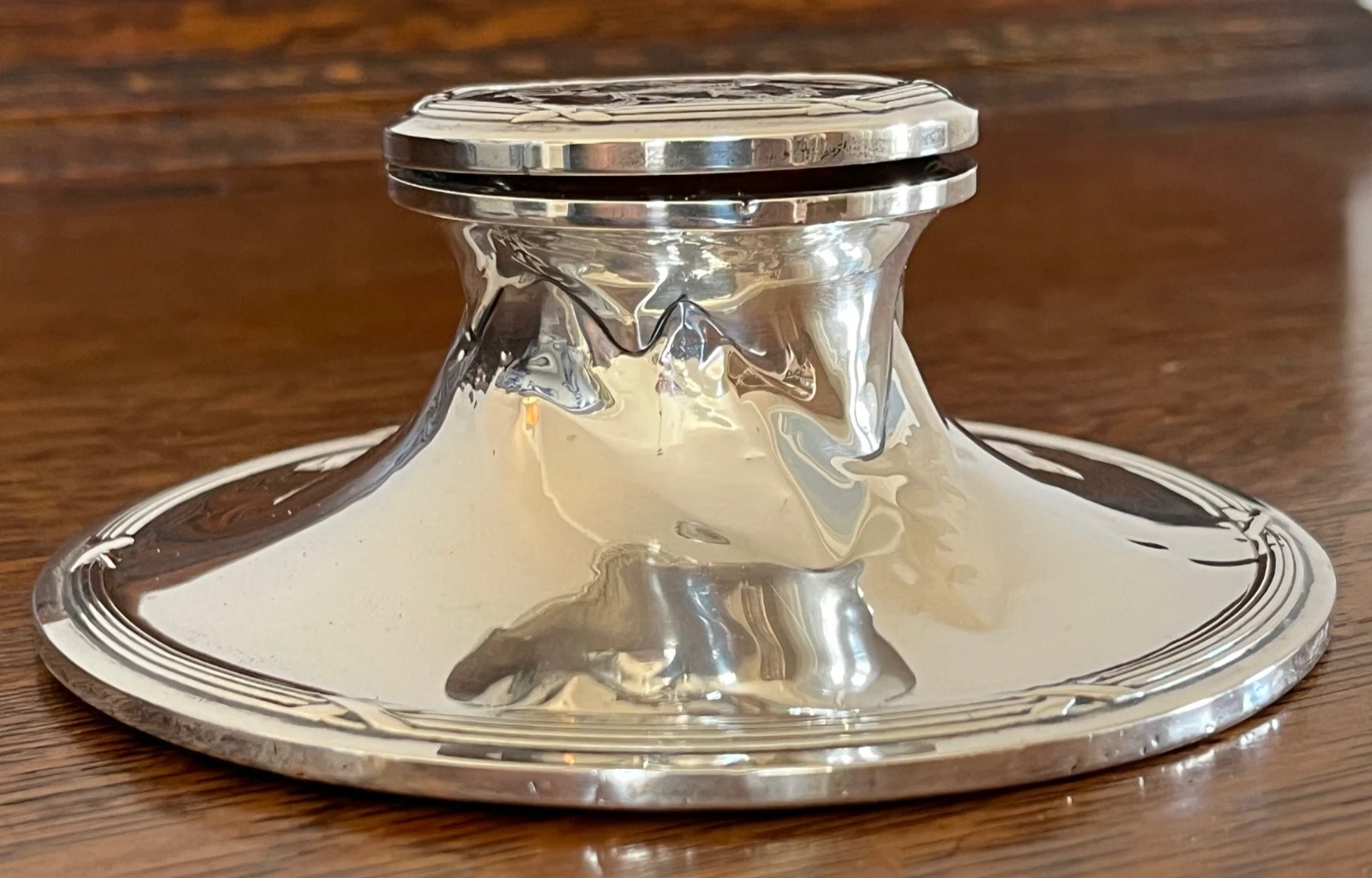
This is a English sterling silver capstan inkwell is named for its sloping, circular shape that resembles a nautical capstan.
The Hallmarks
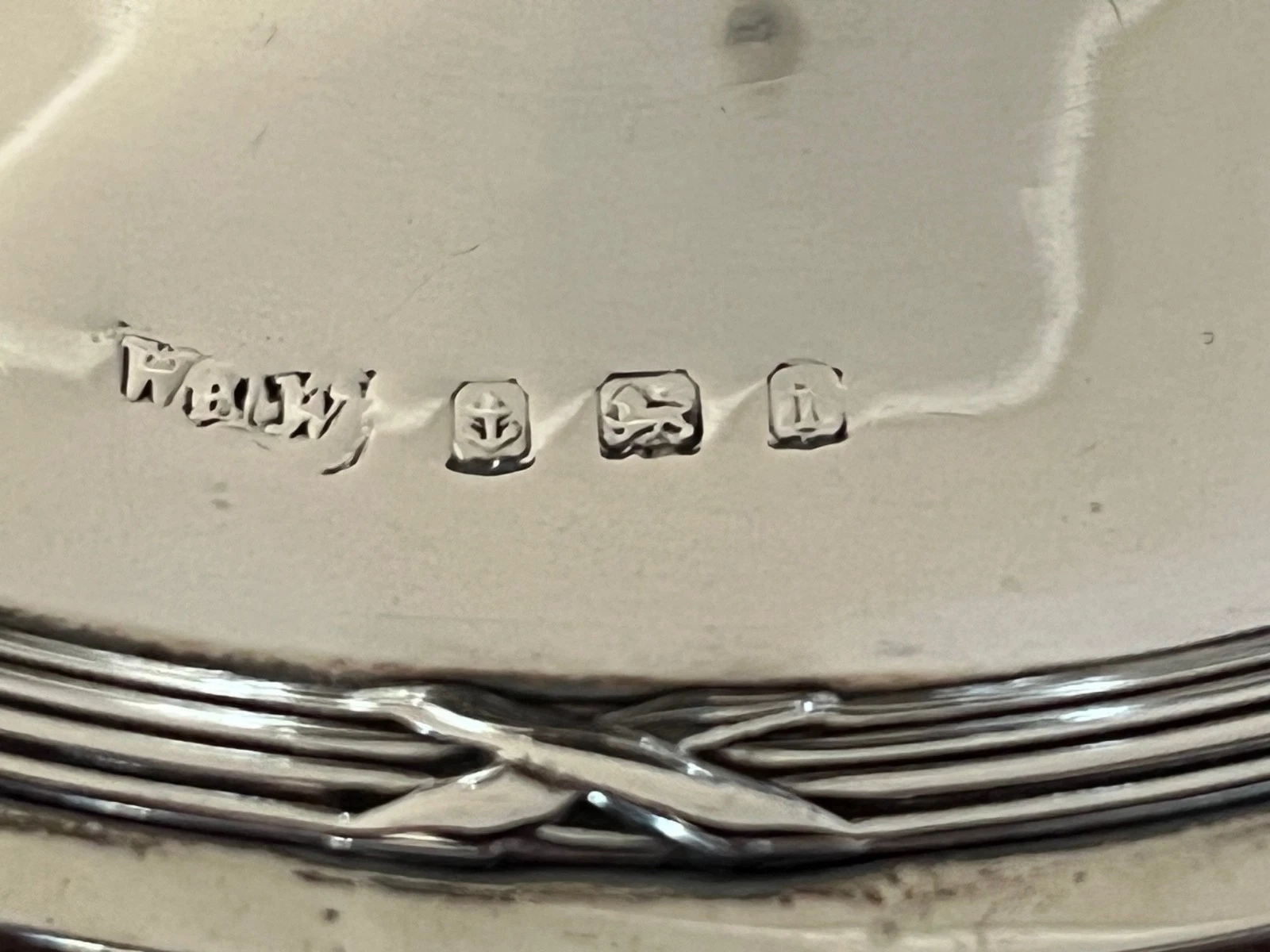
The hallmarks are located on the base, confirming its British origin and age:
- Maker’s Mark (“W.A”): This is the mark for William Aitken, a well-known Birmingham silversmith active in the late 19th and early 20th centuries.
- The Anchor: The city mark for Birmingham, England.
- The Lion Passant: The certification of Sterling Silver (.925 purity).
- Date Letter (“i”): The lowercase “i” in this specific shield frame represents the year 1908.
The Piqué Lid Design
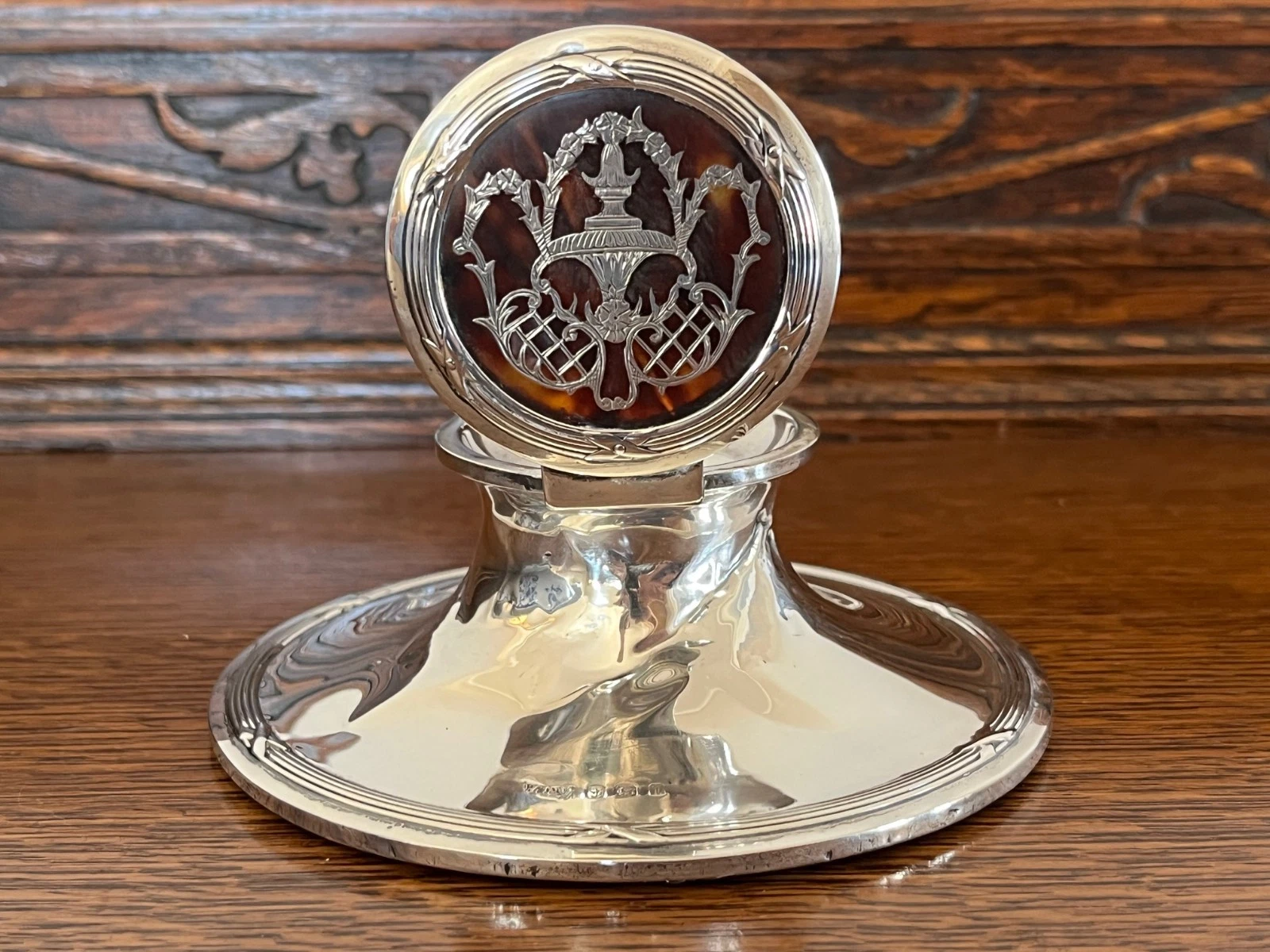
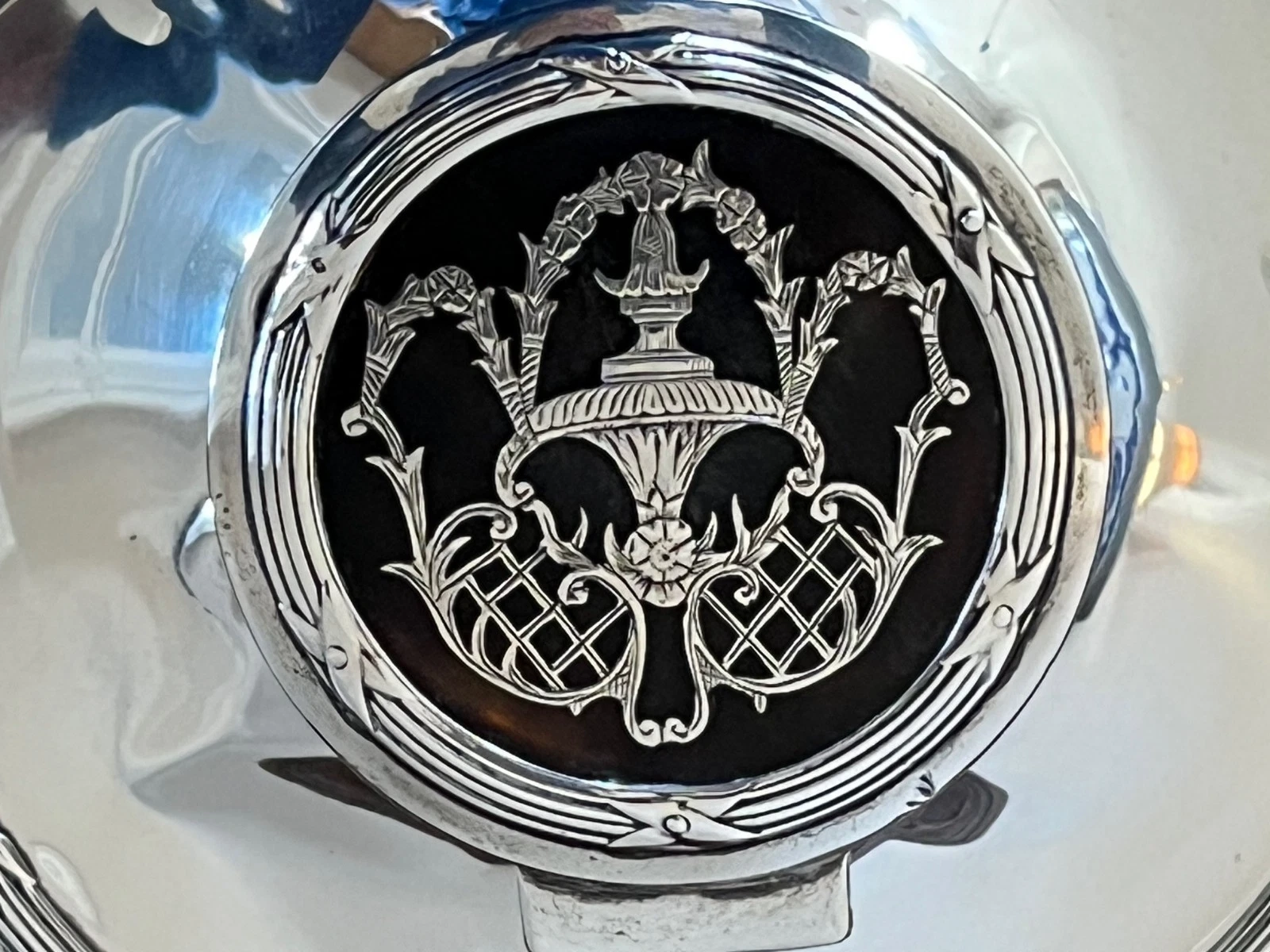
The top of the lid features an exquisite piqué work medallion.
- The Design: The central motif is a neoclassical urn or vase from which elaborate floral garlands and swags drape. Beneath the urn are two lattice-work (cross-hatched) panels that add geometric contrast to the organic floral elements. The entire scene is framed by a silver border of stylized ribbons and leaves.
- The Material: This is genuine tortoiseshell. You can identify it by the characteristic translucent “mottling” of deep amber and reddish-brown visible when the lid is open and light passes through it.
- The Process: “Piqué” is a specialized craft where precious metal (silver or gold) is inlaid into a organic material, usually tortoiseshell or ivory.
- The tortoiseshell is heated until it becomes soft and pliable.
- The artisan then presses small pieces of silver wire or carved silver sheet into the surface.
- As the shell cools, it shrinks and hardens, permanently “locking” the metal into the design without the need for adhesives.
Physical Details
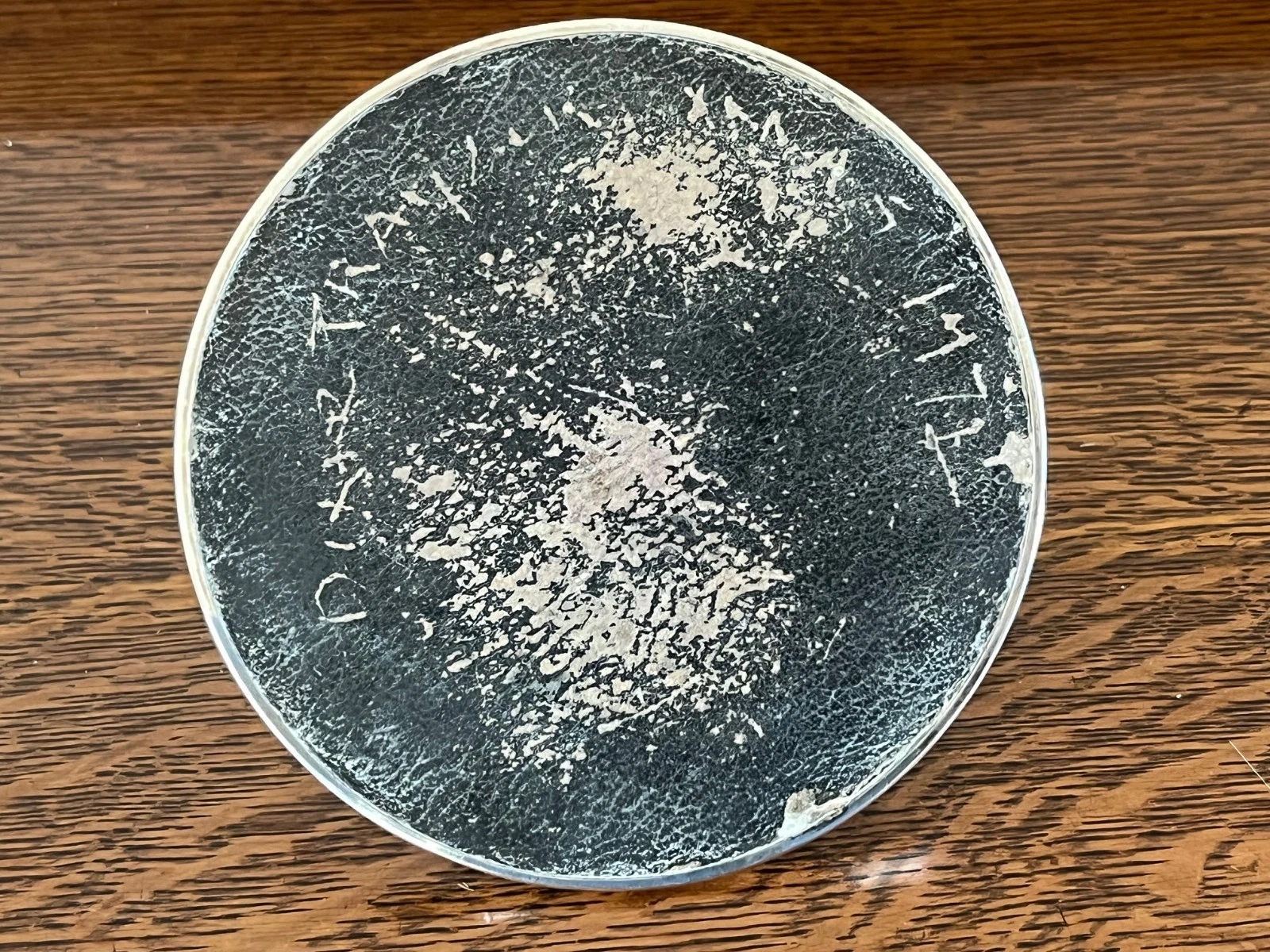
- Construction: The silver body is weighted at the base with a leather pad.
- Interior: The hinged lid opens to reveal a recessed well designed to hold a removable glass liner -missing on this piece.
William Aitken was a prolific and well-regarded manufacturing silversmith based in Birmingham, England, during the late Victorian and Edwardian eras. His work is frequently associated with high-quality desk accessories and small silver luxuries that often combined sterling silver with intricate materials like tortoiseshell.
The Firm of William Aitken
Aitken established his business in the heart of Birmingham’s industrial center, a city world-renowned for its silver trade:
- Operating Years: He was officially active from roughly 1887 to 1916.
- Location: His primary workshop, known as the “Vittoria Works,” was located on Vittoria Street in Birmingham’s famous Jewelry Quarter.
- London Presence: Like many successful Birmingham smiths, he maintained a London showroom, specifically at Holborn Viaduct, to cater to the elite metropolitan market and international exporters.
Style and Specialization
Aitken was particularly noted for his skill in producing “small-work” – items that required high precision and decorative flair:
- Inkwells and Desk Sets: He specialized in capstan and bell-shaped inkwells, often featuring the piqué tortoiseshell lids seen here.
- Vanity Items: His firm produced a wide range of silver-mounted dressing table sets, including brushes, mirrors, and scent bottles.
- Artistic Influence: His later pieces, produced around the time of this 1908 inkwell, frequently moved away from heavy Victorian ornamentation toward the cleaner, more refined lines of the Edwardian Neoclassical style.
The Maker’s Mark
The “W.A” mark on this inkwell is the standard signature for his firm.
- The mark was typically struck in a lozenge or rectangular frame with clipped corners.
- Because he was a “manufacturing” smith, his pieces were often sold through high-end retailers like Liberty & Co. or luxury stationery boutiques, who valued his consistent quality.
Sold for $200 in January 2026
Content disclaimer. The information posted is the owner’s best knowledge and may not have been vetted by the SOIC. We welcome comments, corrections, and additions, working to make our website information comprehensive and accurate.
Join the Society of Inkwell Collectors (SOIC) – it’s free!
Founded in 1981 as a non-profit organization,
we are documenting inkwells (and accessories).
We’re here to help and inform!