





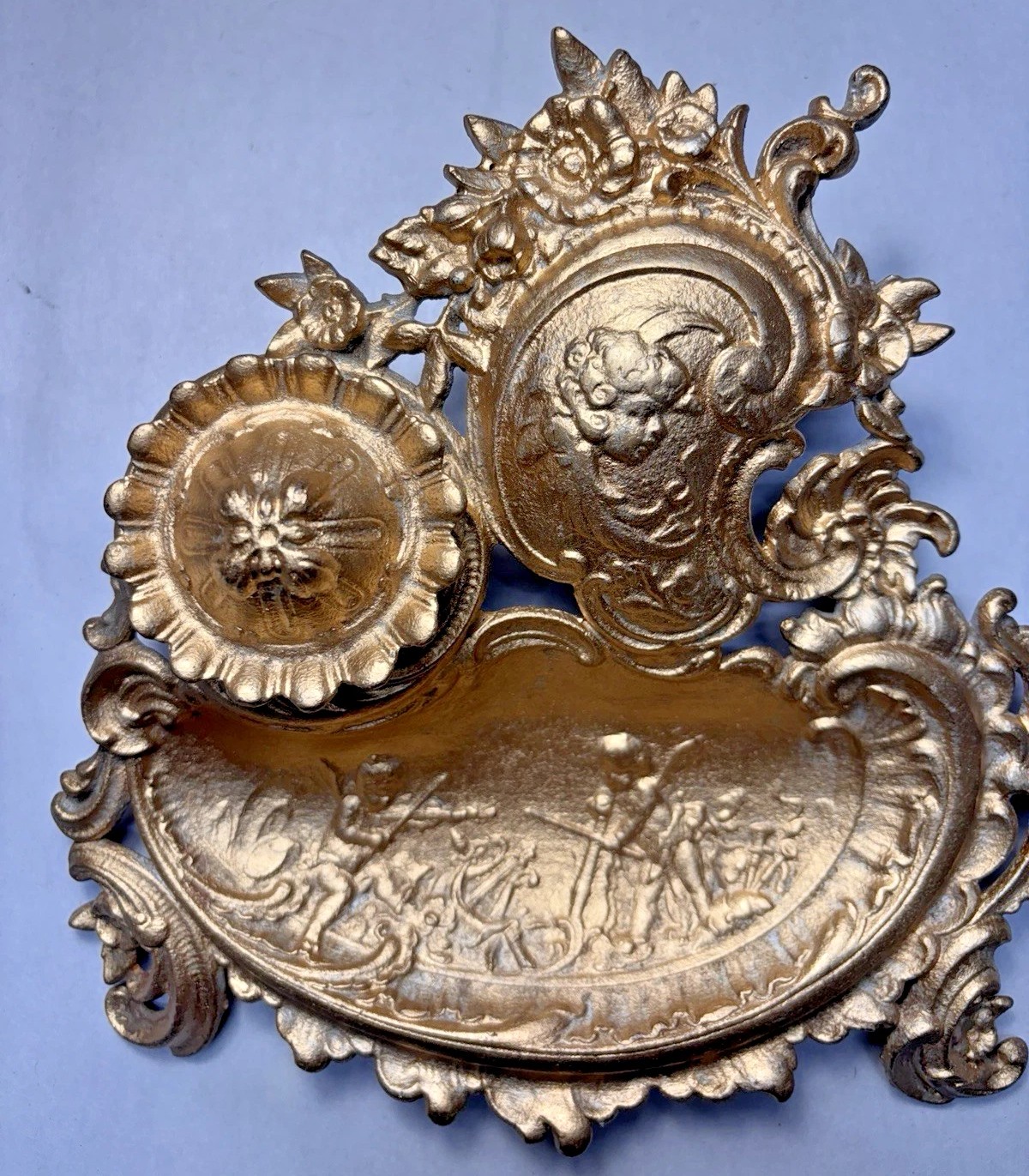
Cherub-Themed Inkstand
| Categories | Figural - Mythology; Literature; Religion; Fictional |
| Type | Cupid / Cherub / Angel |
| Material | Spelter |
| Markings | Unmarked |
| Manufacturer | Undetermined |
| Origin | Undetermined |
| Date or Era | circa 1900 |
| Measuring | 8” x 7 ½” x 2 ¾” high |
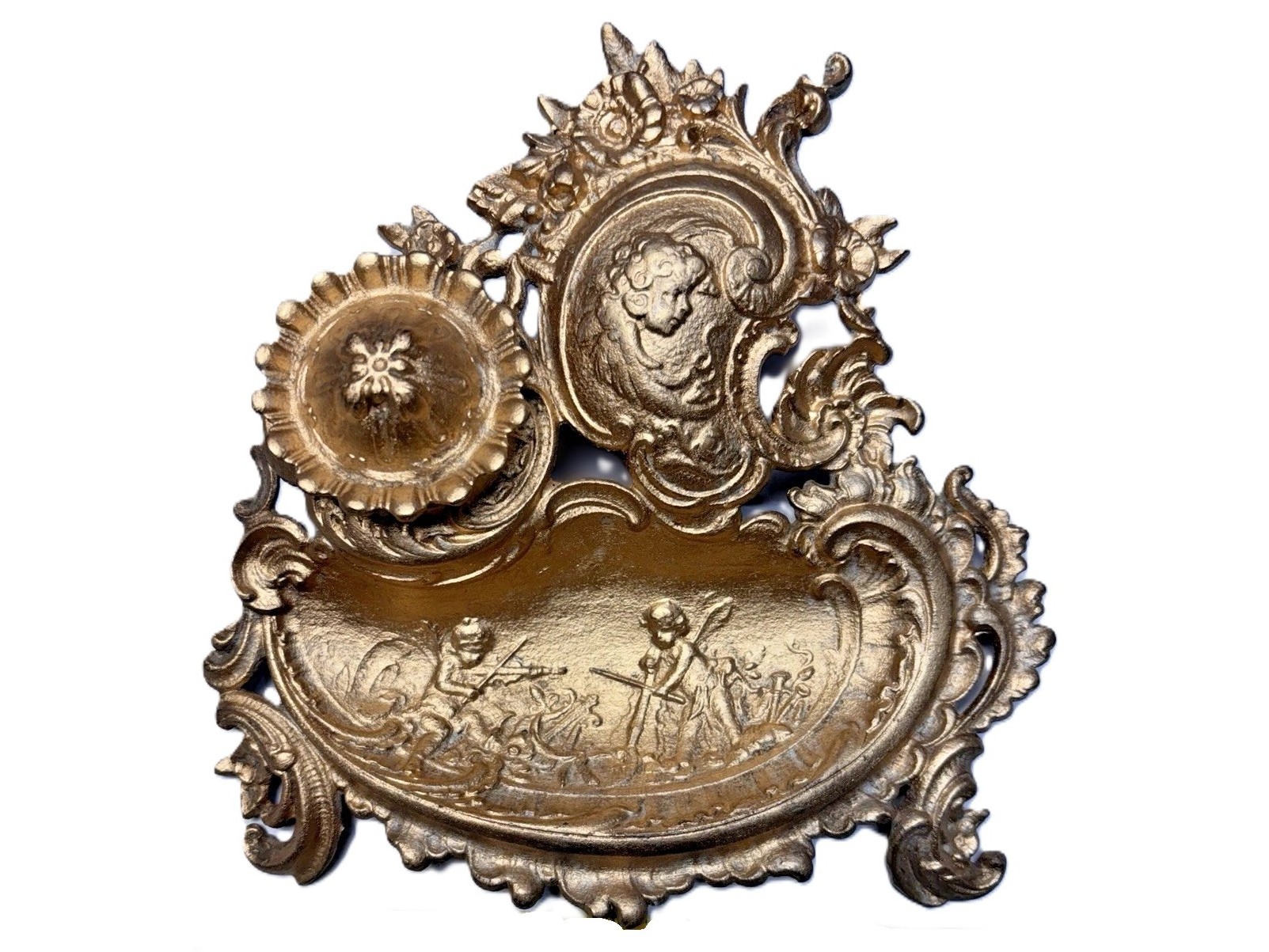
This is an ornate, gilded inkstand designed in a flamboyant Rococo Revival style. It features a heavy focus on asymmetrical “rocaille” elements—scrolling foliage, shells, and floral motifs—alongside a prominent cherub theme.
Description
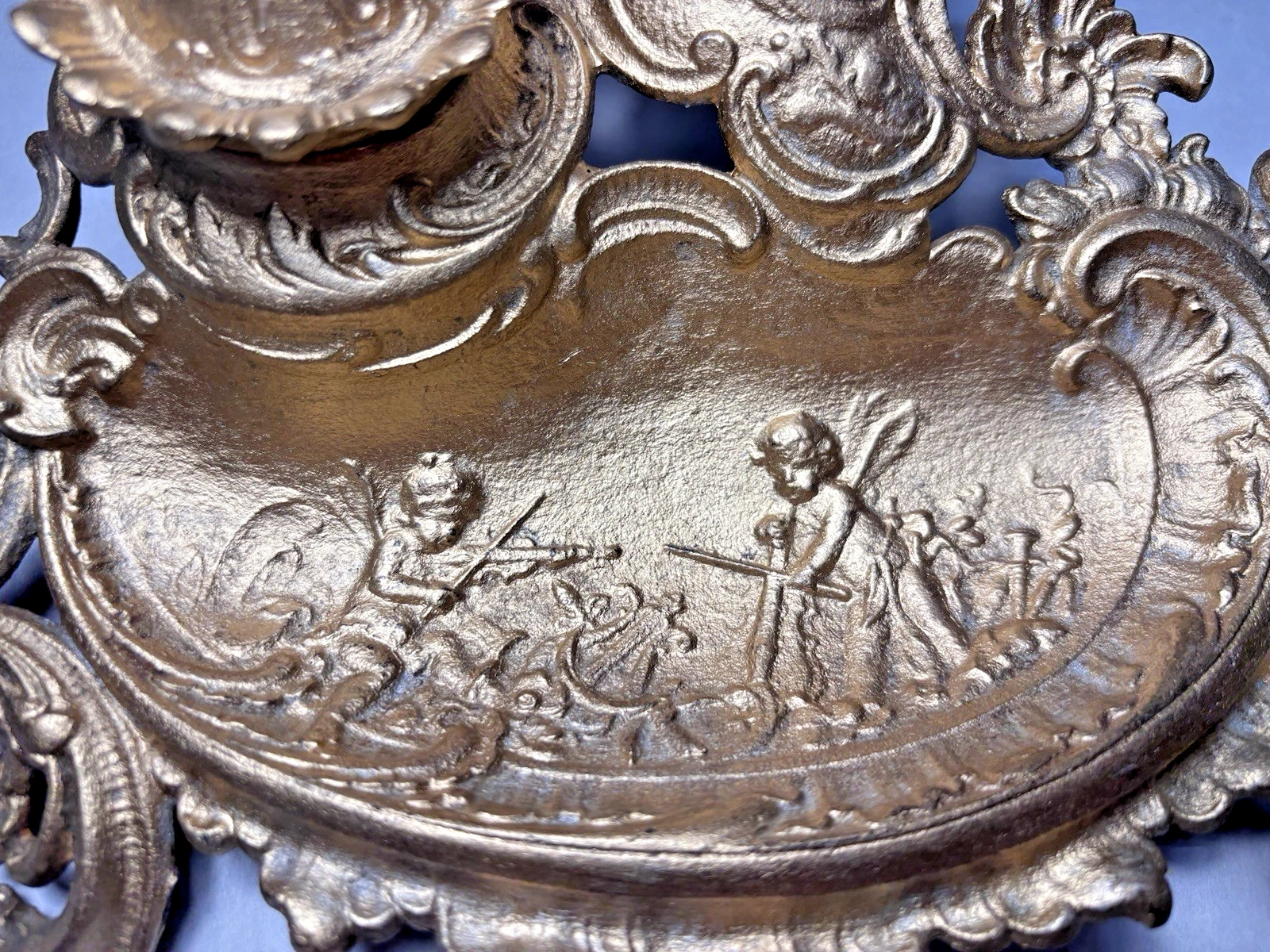
- Central Motif: The base of the inkstand serves as a shallow, curved pen tray. It is decorated with a bas-relief scene of two cherubs (or putti) in a garden setting; one appears to be playing a violin while the other holds a staff or flute.
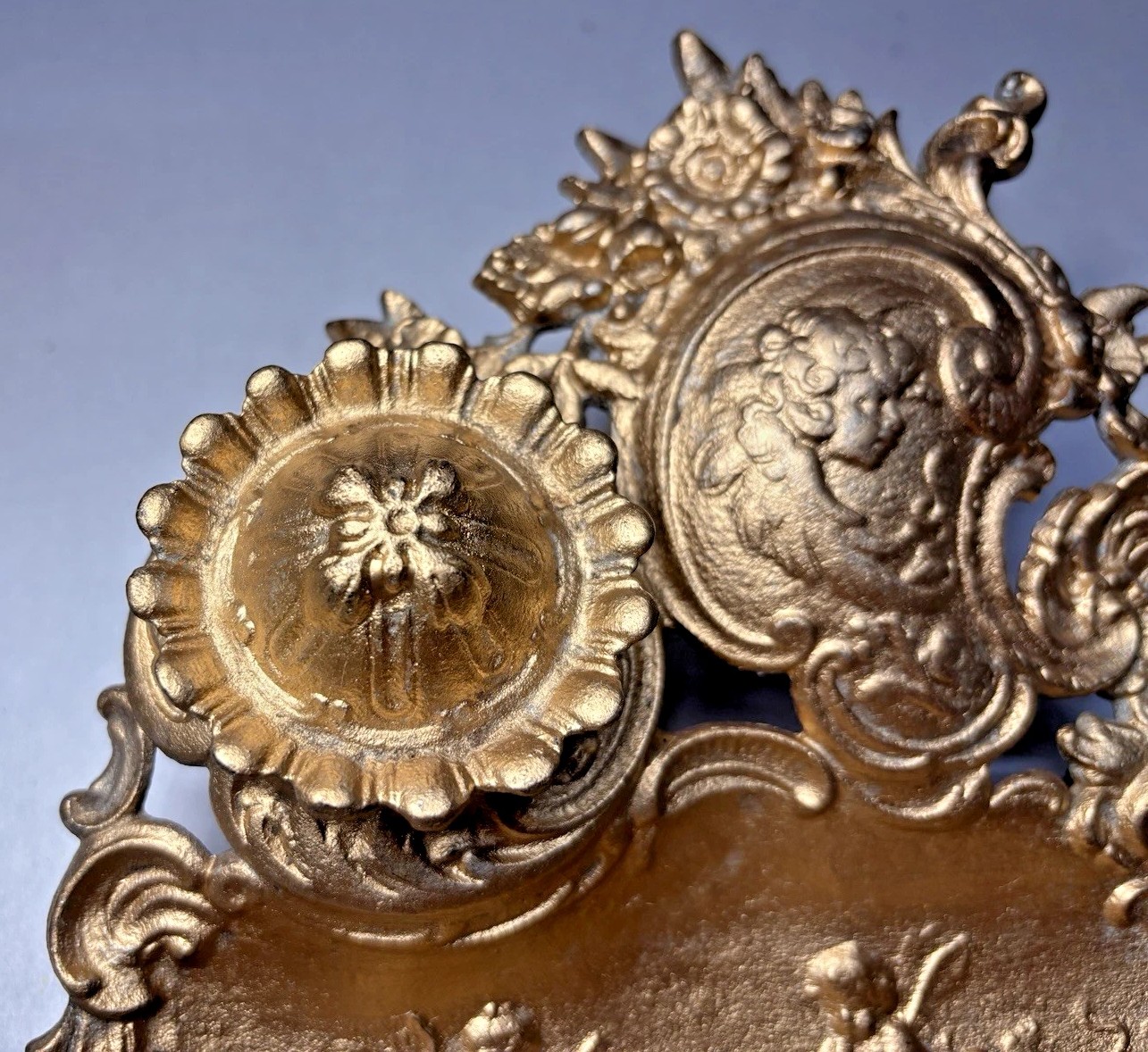
- The Inkwell: On the left side, there is a single, integrated inkwell. The lid is hinged and features a scalloped, petal-like rim with a floral finial. The interior shows signs of significant oxidation and age.
- Backplate: Rising from the rear is an asymmetrical, pierced backplate. It showcases a third cherub in profile, framed within a large C-scroll and surrounded by cast flowers and acanthus leaves.
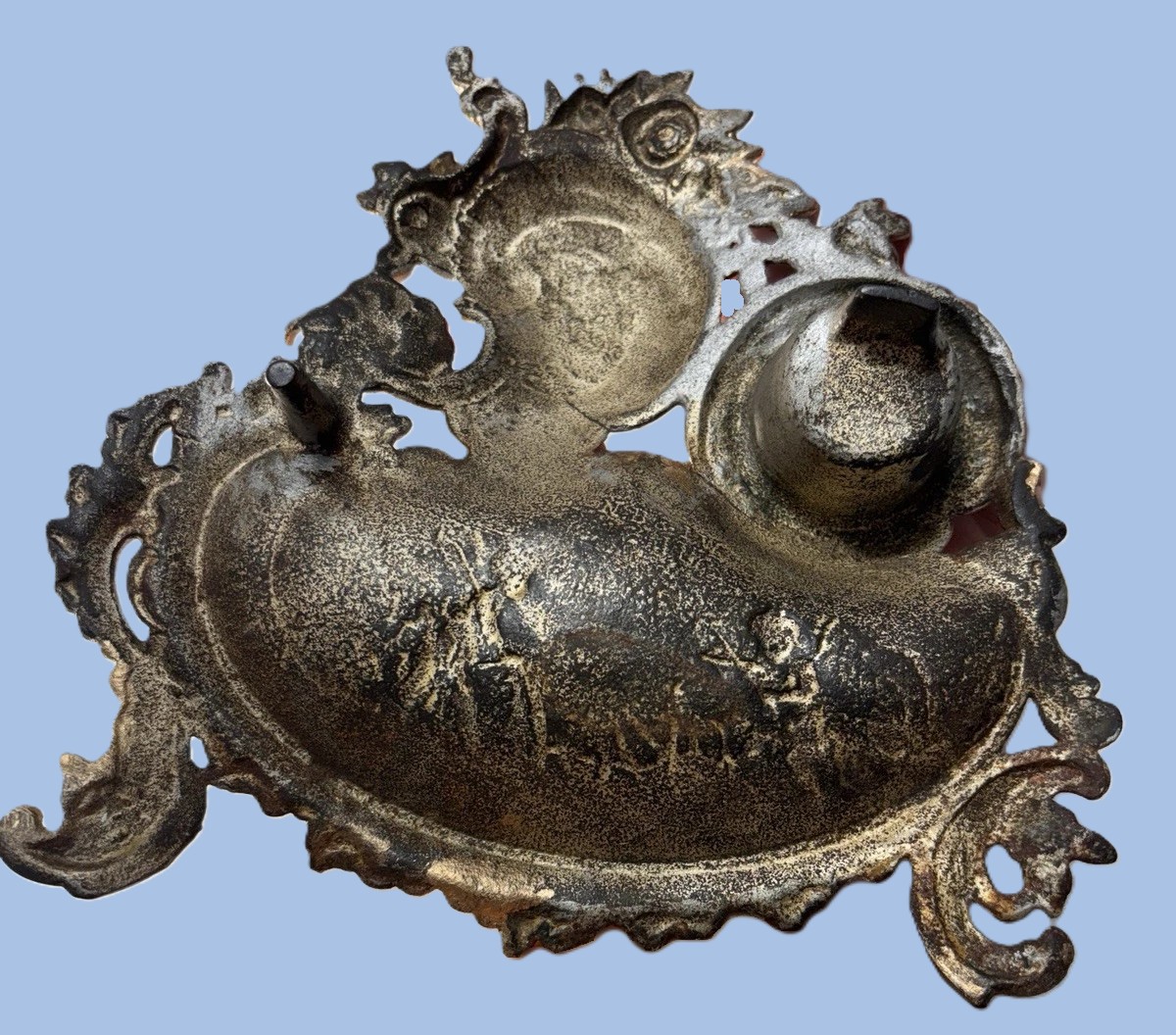
- Material and Finish: The piece is made of cast spelter metal (a zinc alloy) which has been finished with a bright gold or “d’ore” gilt. The underside reveals the raw, dark casting and a single support peg, typical of mass-produced decorative castings from the late 19th century.
Origin and Attribution
While there are no visible maker’s marks, we can consider its possible origin based on the style and construction:
| Feature | Detail |
| Likely Origin | France or Germany. This specific style of ornate “Cherub” deskware was a hallmark of French Belle Époque design and German Historismus (Historicist) manufacturers. |
| Manufacturer | Without a stamp, it is difficult to name a specific foundry. However, it is very similar to pieces produced by French firms like L.V.E. or various foundries in the Iserlohn region of Germany, which specialized in cast “fancy goods” for export. |
| Estimated Age | Circa 1880–1910. It belongs to the Rococo Revival period, which peaked during the late Victorian and Edwardian eras. |
Sold for $34 in January 2026
Content disclaimer. The information posted is the owner’s best knowledge and may not have been vetted by the SOIC. We welcome comments, corrections, and additions, working to make our website information comprehensive and accurate.
Join the Society of Inkwell Collectors (SOIC) – it’s free!
Founded in 1981 as a non-profit organization,
we are documenting inkwells (and accessories).
We’re here to help and inform!