

Inkipedia
English Traveling Writing Set
| Categories | Travel |
| Type | Etui |
| Material | Leather, Silver |
| Markings | Unmarked |
| Manufacturer | Undetermined |
| Origin | England |
| Date or Era | circa 1800 |
| Measuring | 1 ⅜” across; 2 ¼” high |
Overview
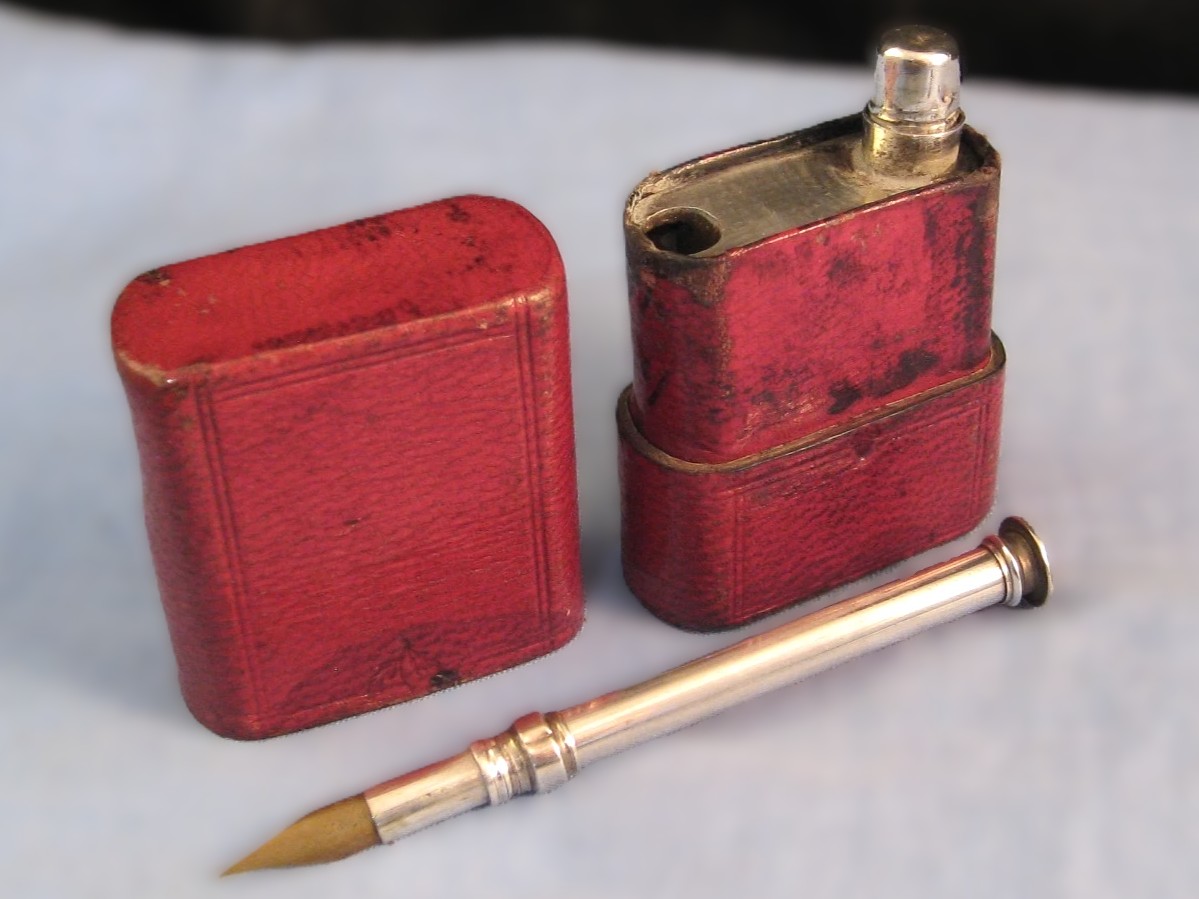
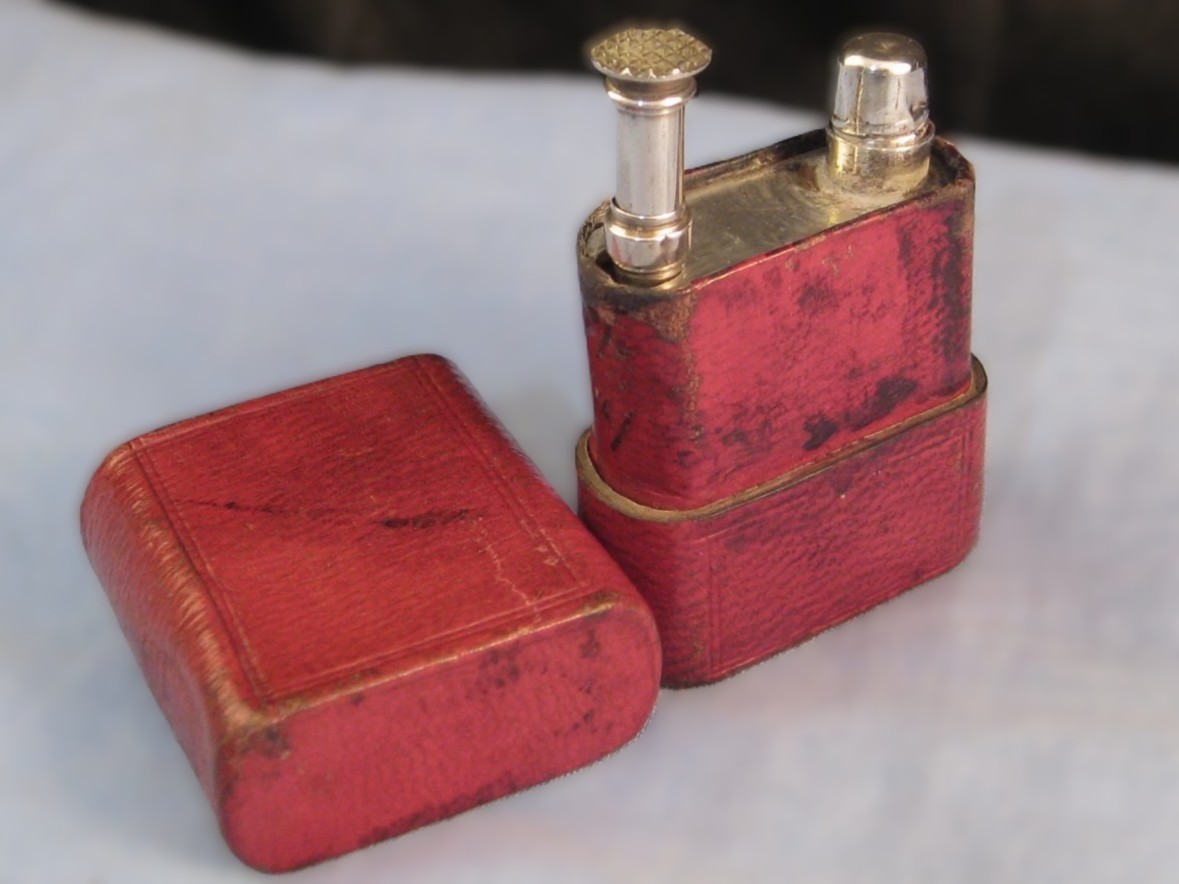
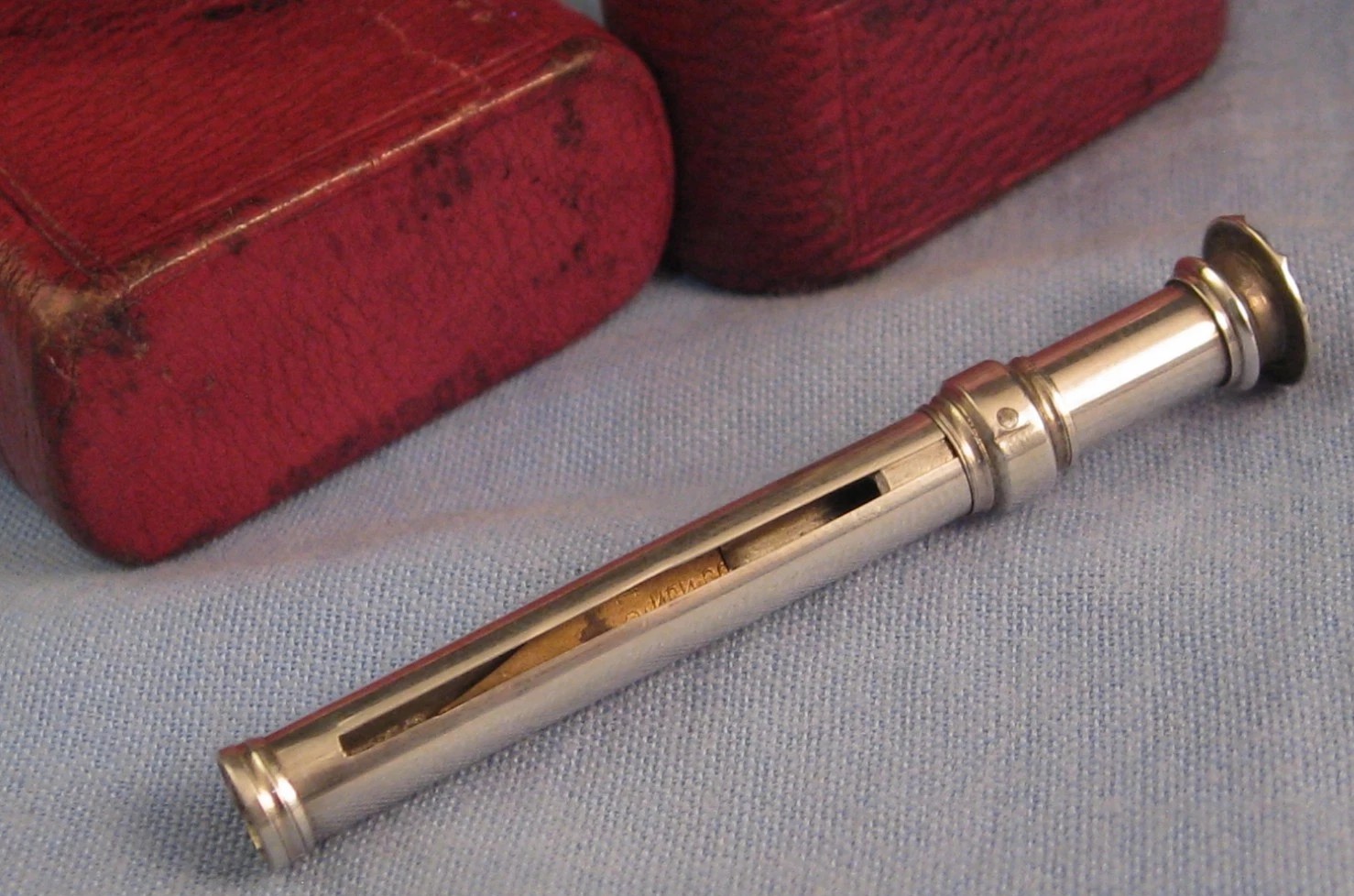
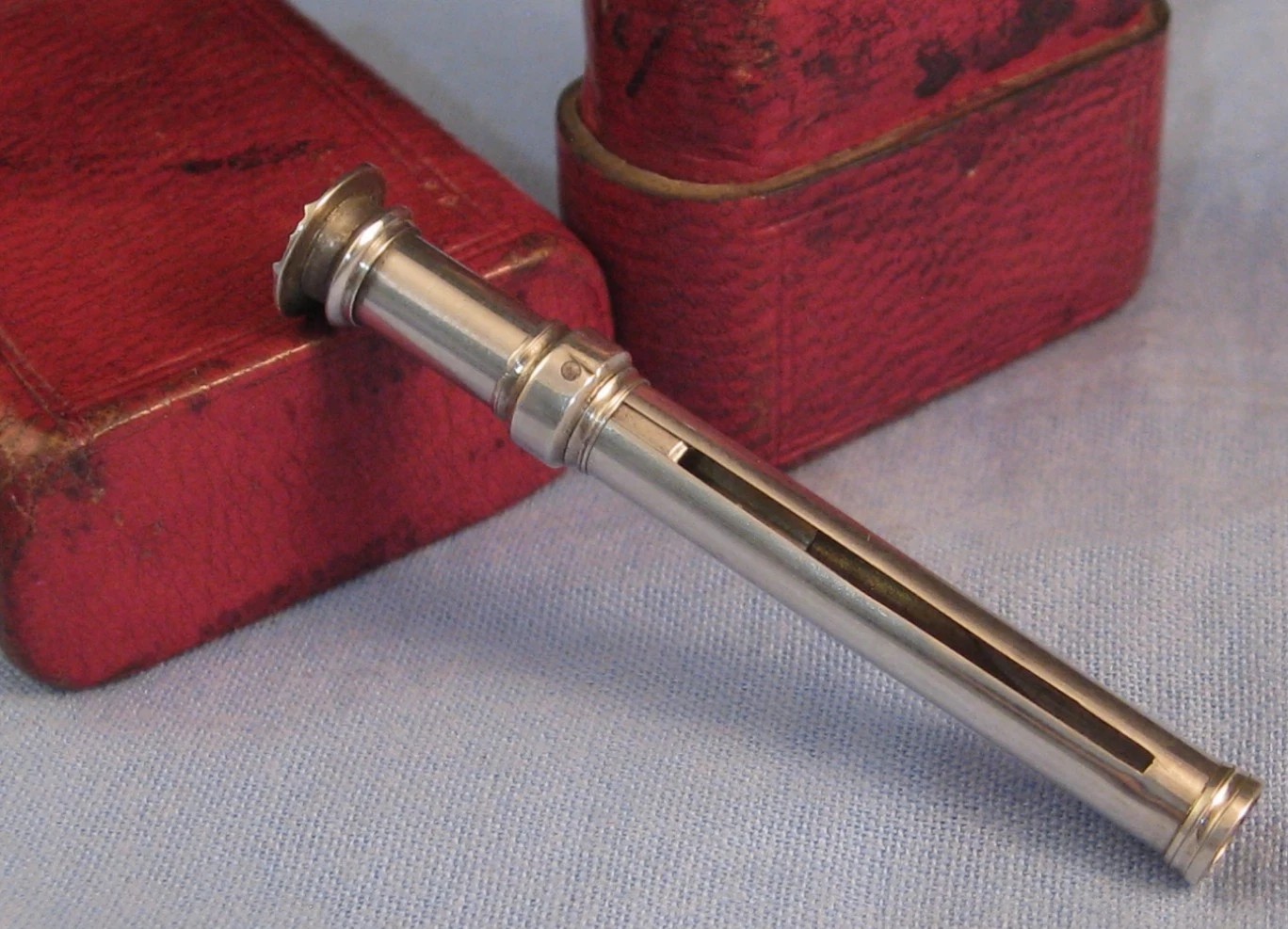
This is a compact traveling writing set (an etui or campaign writing case), designed for the portable needs of a gentleman, scholar, or officer on the move.
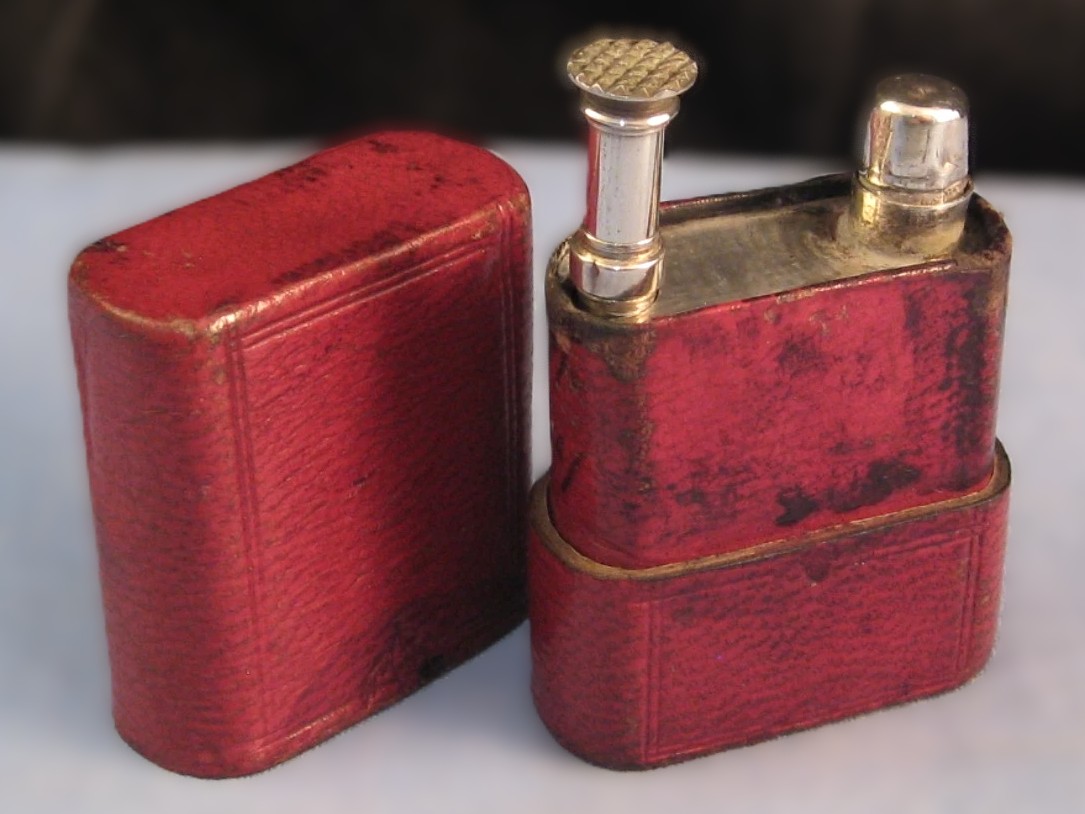
- The Red Leather Outer Case
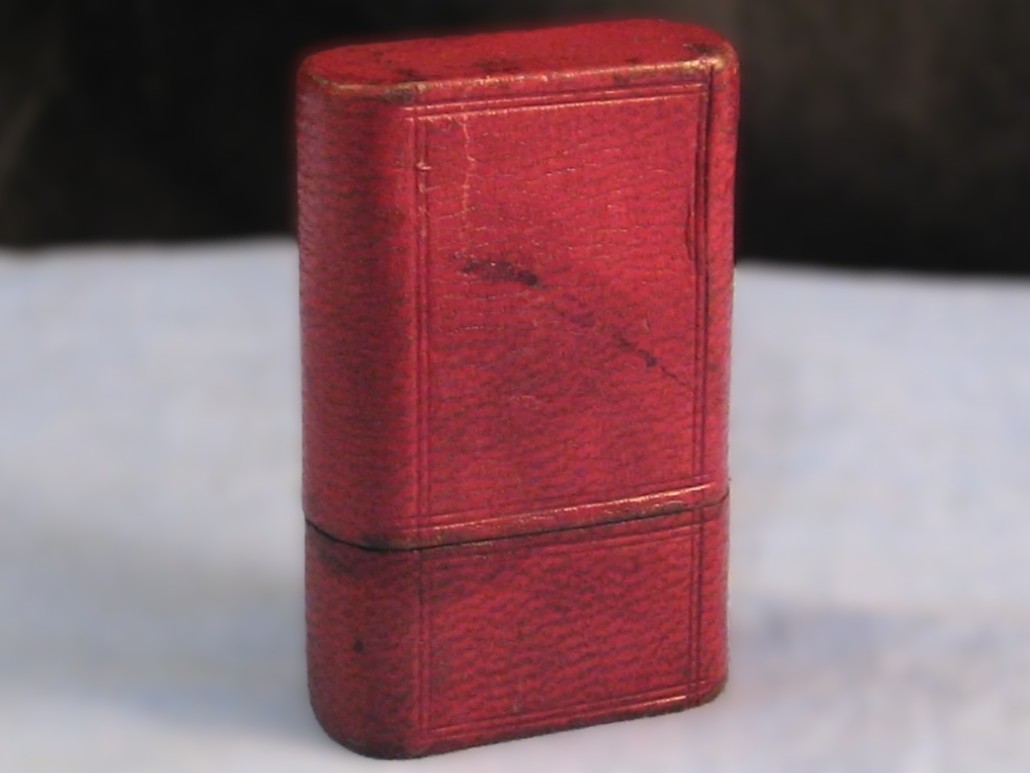
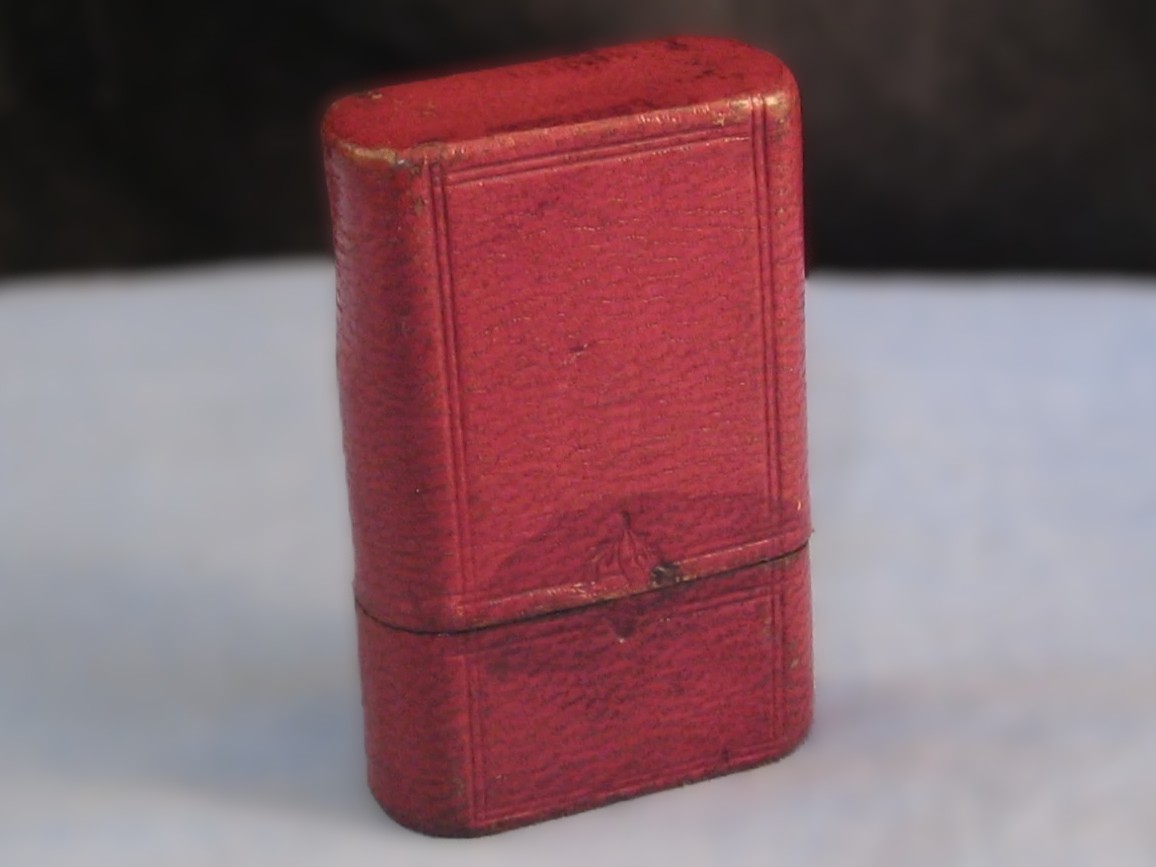
- Material & Finish: The set is bound in rich, Morocco-grained red leather (traditionally dyed goat skin) with blind-tooled border lines framing the perimeter.
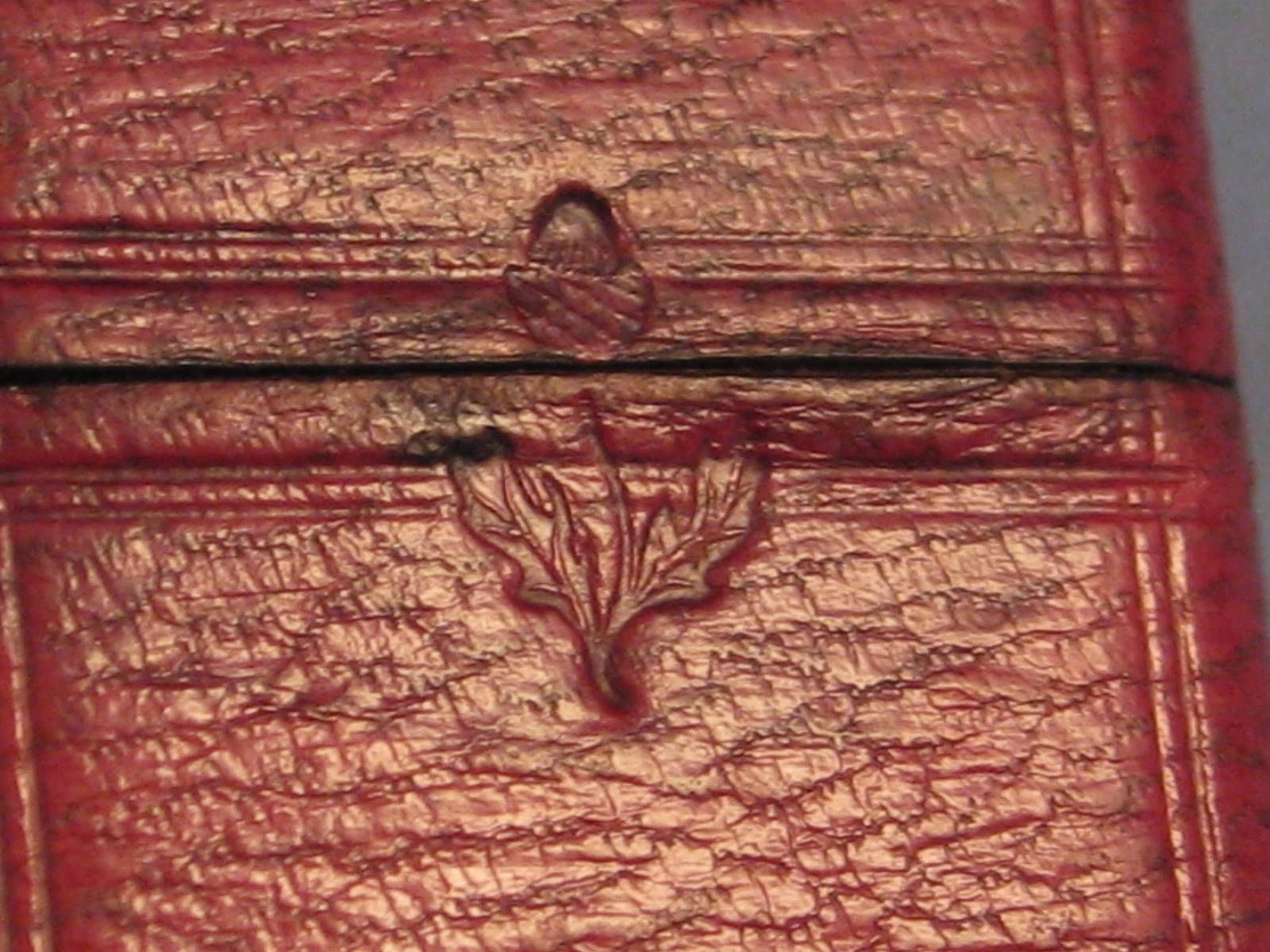
- Acorn Motif: On the front facing edge, near the closure seam, is a delicate blind-stamped/embossed acorn motif featuring an acorn cap on the upper rim and oak leaves extending below. In 18th and early 19th-century design, the acorn was a popular symbol representing strength, prosperity, and endurance.
- Construction: The top section lifts off to reveal the fitted interior, which houses both the inkwell and the pen.
- The Silver & Glass Inkwell Reservoir
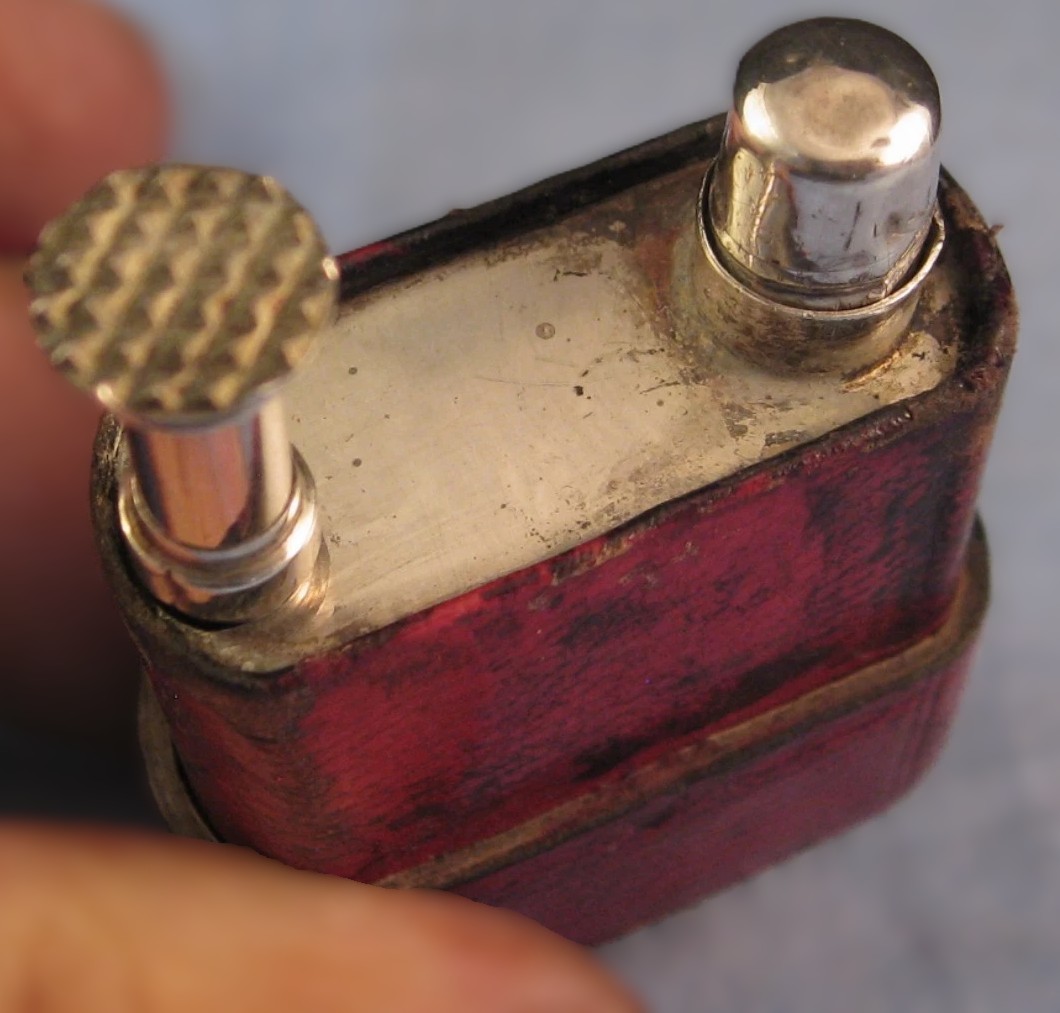
- Lid: The top of the case features a raised, polished silver push-cap / stopper lid, designed to create a tight friction seal for liquid ink during transit.
- Top Plate: Mounted on a clean, solid silver top plate that keeps the inkwell and pen receptacle flush and structurally secure.
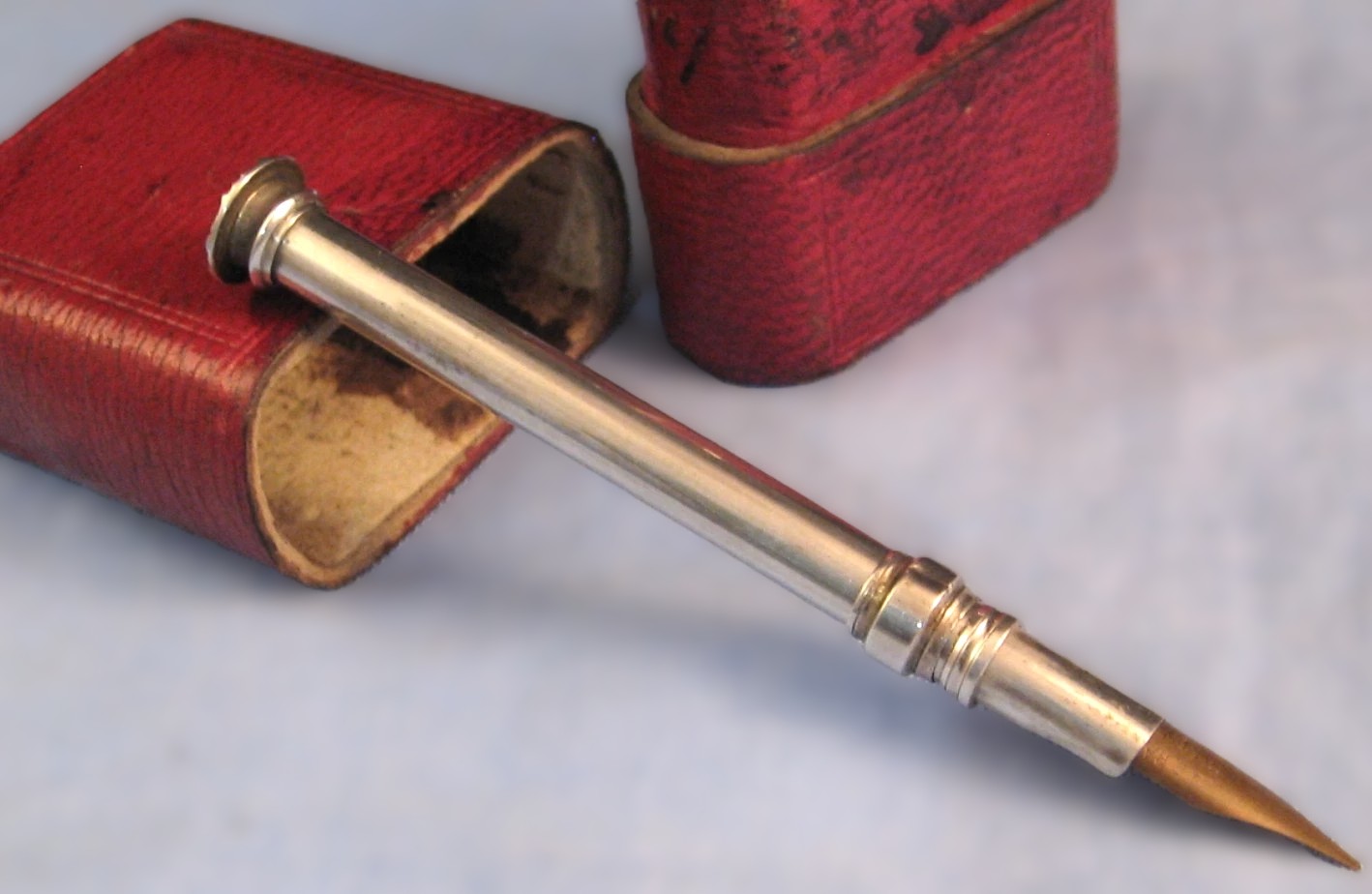
- The Extending Silver Dip Pen & Seal
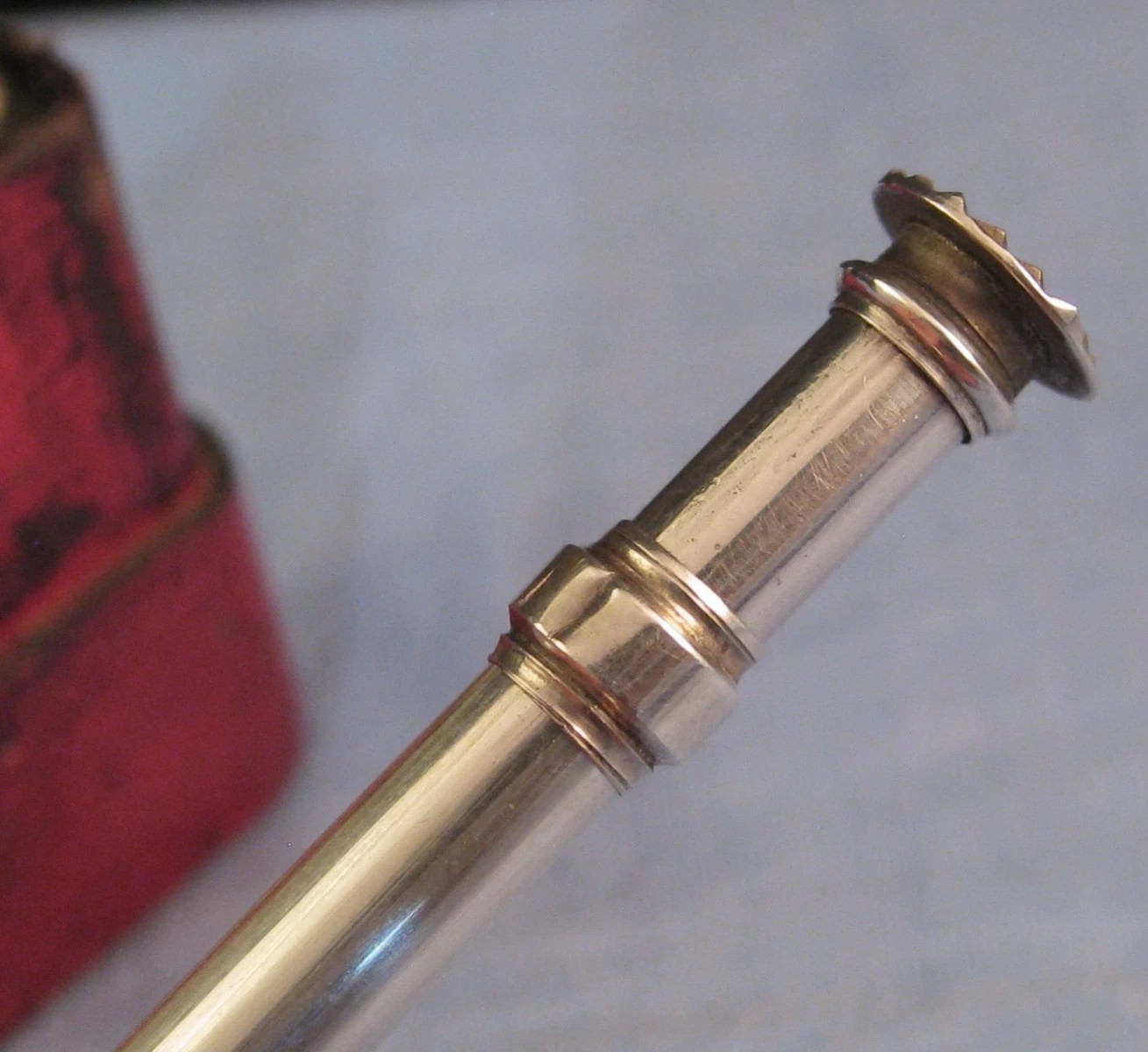
- Extending Mechanism: The silver pen barrel features a beaded ring slider that moves along a track to extend or retract the nib mechanism, protecting the nib when stowed inside the case slot.
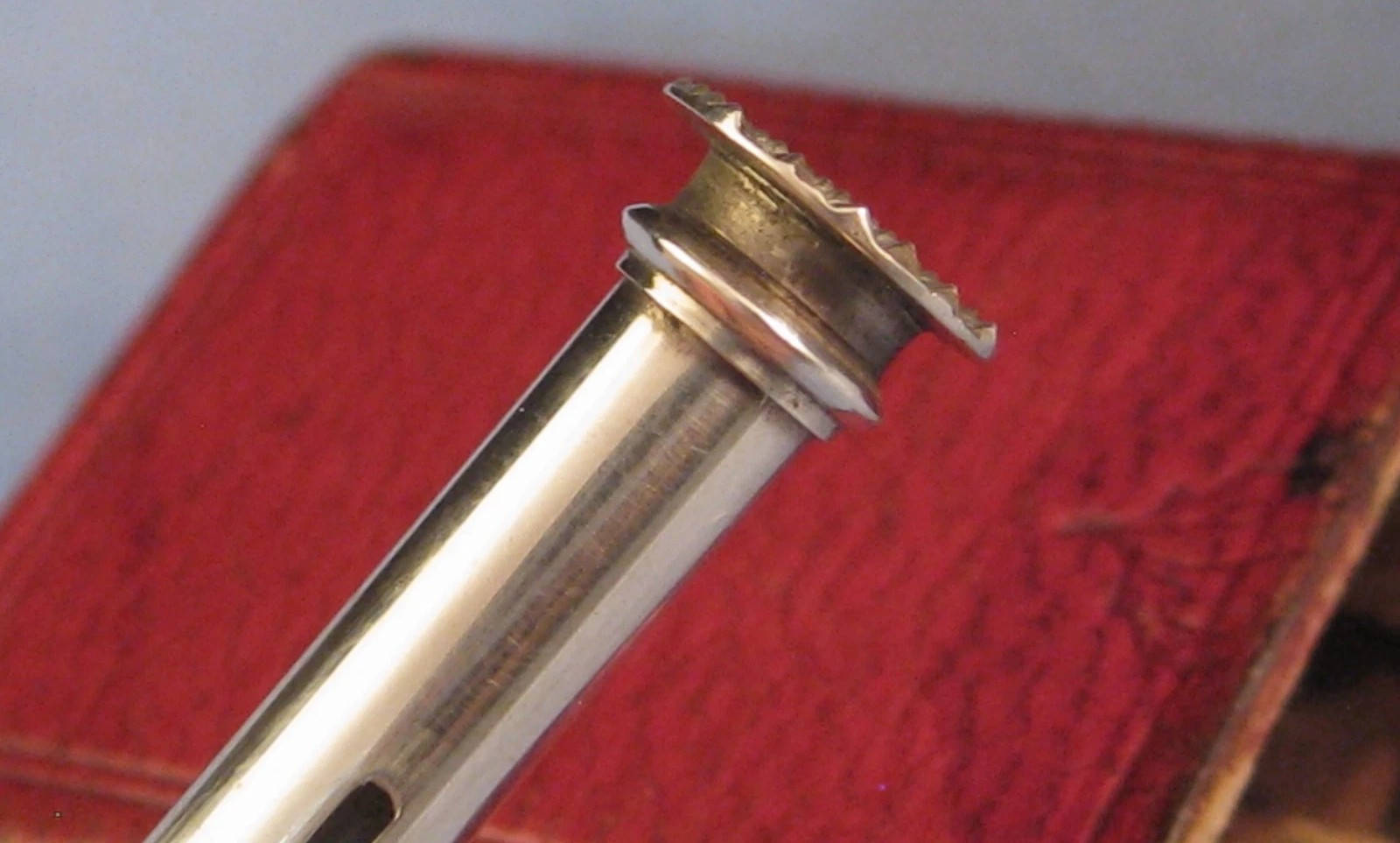
- Hobnail Seal (Matrix): The top end of the pen is finished with a flat, circular hobnail-patterned seal (wax stamp). In addition to signing letters on the go, the writer could use the hobnail seal to press distinct textures into hot sealing wax.
- Nib: The pen holds a traditional steel/bronze dip nib inserted into the silver collar.
Dating & Provenance Assessment
- 1790–1820
Here is why that circa 1800 date holds up so well:
- Morocco Leather & Tooling: Brightly dyed red Morocco leather cases with simple blind-tooled line borders and small botanical dies (like acorns and oak sprigs) were signature features of late 18th- to early 19th-century English leatherwork.
- Mechanism Style: Extendable sliding ring pens (often called propelling or telescoping dip pens) were first heavily patented and produced in England in the late 1790s through the 1820s.
- Combination Tools: Integrating a wax seal into the terminal finial of a pocket pen or pencil was standard practice in the Regency era before pre-gummed envelopes became ubiquitous in the 1840s.
Origin & Maker Notes
- Country of Origin: English – the combination of red-tooled Morocco leather, the specific form of the silver slider pen, and the hobnail seal matrix are quintessential markers of London silversmiths and desk-accessory makers of the Regency period.
- Makers: Unmarked personal silver items of this small scale often lacked full hallmarks due to size constraints, though they frequently bore maker’s initials (such as S.M. or I.S.) stamped on the pen barrel track or near the inkwell rim. Prominent London makers known for high-quality pocket writing sets, silver pens, and telescoping pencil cases during this era include S. Mordan & Co. (though usually marked after 1815–1822), Joseph Willmore, and Samuel Pemberton (Birmingham/London).
Sold for $150 in June 2026
Content disclaimer. The information posted is the owner’s best knowledge and may not have been vetted by the SOIC. We welcome comments, corrections, and additions, working to make our website information comprehensive and accurate.
Join the Society of Inkwell Collectors (SOIC) – it’s free!
Founded in 1981 as a non-profit organization,
we are documenting inkwells (and accessories).
We’re here to help and inform!