

Inkipedia


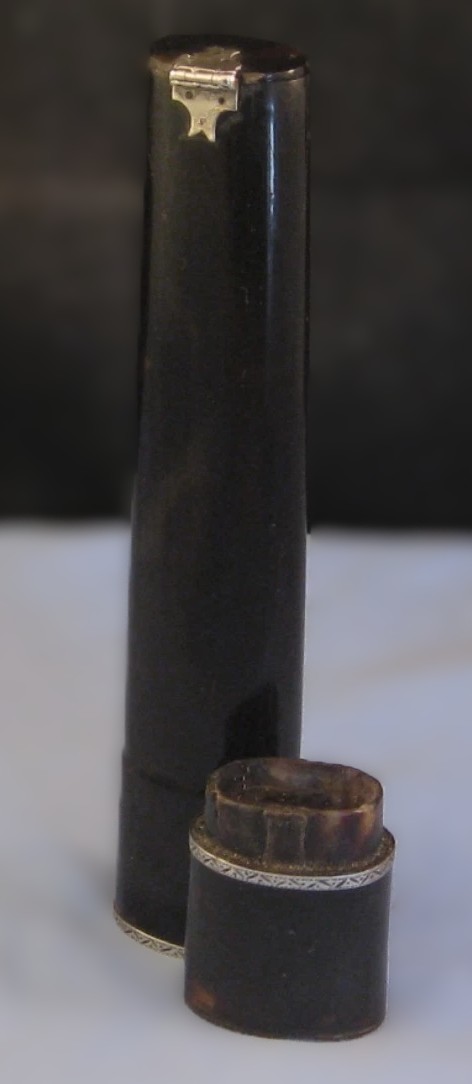


English Buffalo Horn Penner (c. Early 1800s)
| Categories | Travel |
| Type | Penner |
| Material | Horn/Bone/Tusk, Silver |
| Markings | Unmarked |
| Manufacturer | Undetermined |
| Origin | England |
| Date or Era | circa 1810 |
| Measuring | 6” x 1” |
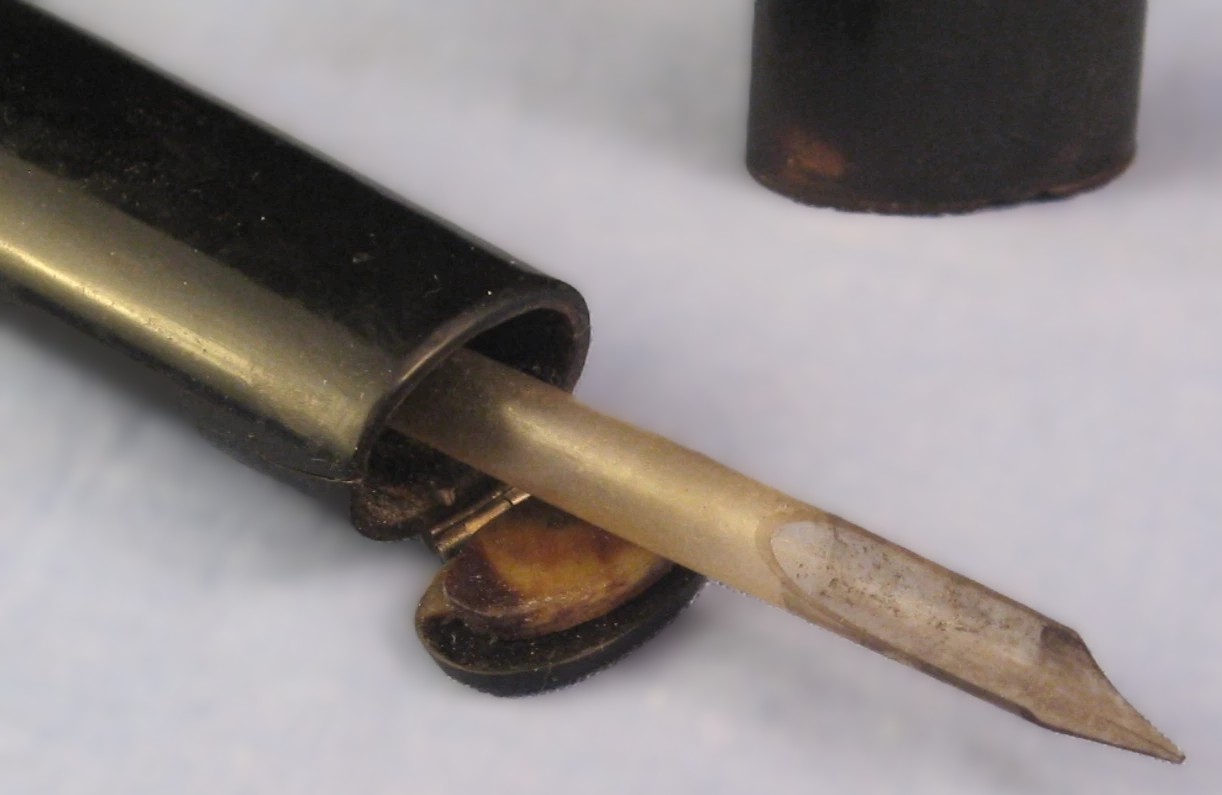
This artifact is a portable writing case designed for an aristocratic traveler, merchant, or scholar who required a compact, all-in-one writing kit before the rise of the fountain pen.
- Materials and Construction
- Primary Material: The main body of the penner is constructed from polished buffalo horn. This material, known for its deep, rich color (ranging from dark brown to black) and naturally swirling grain, was a popular choice for practical luxury items in the early 19th century due to its lightness and durability.
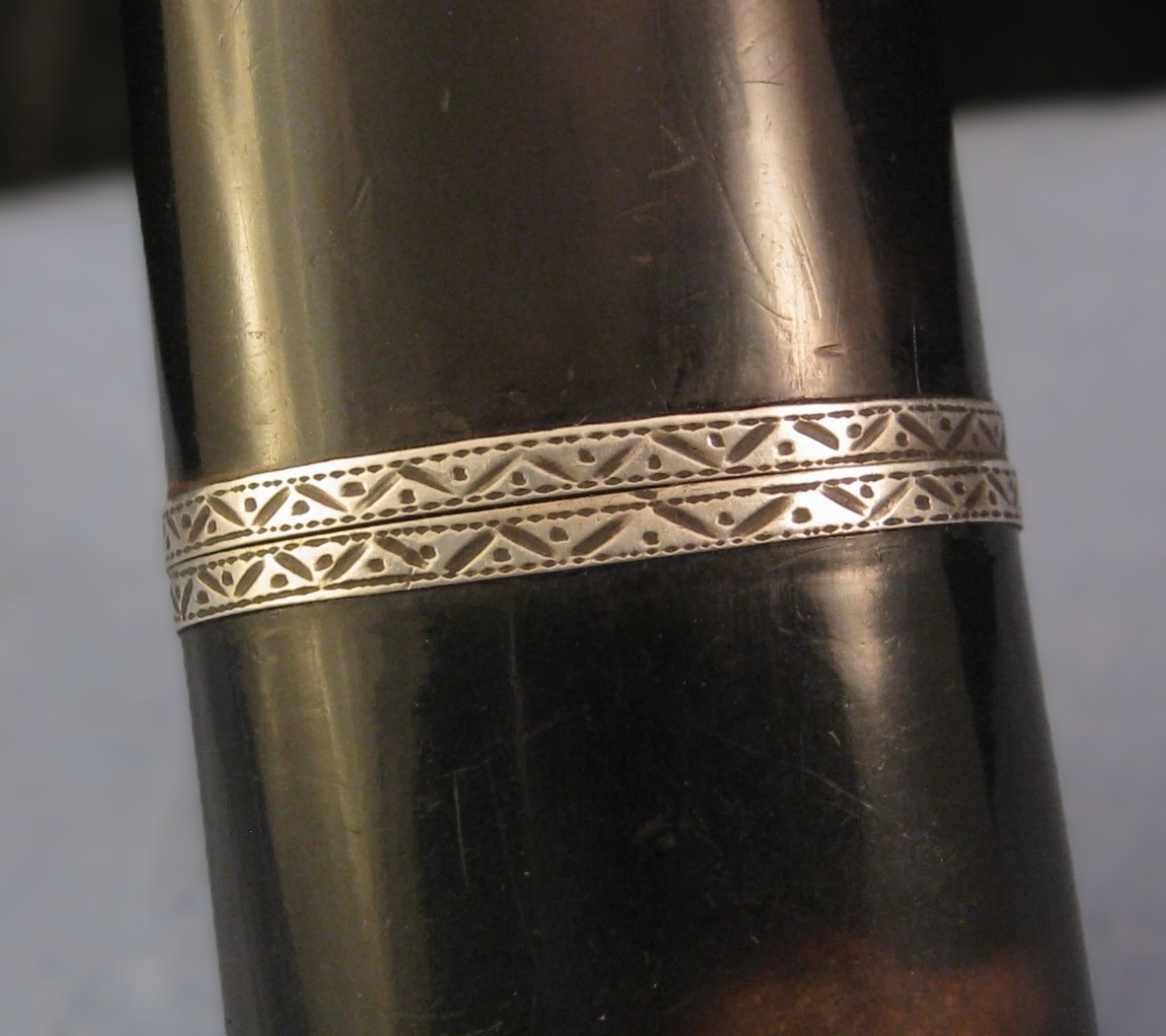
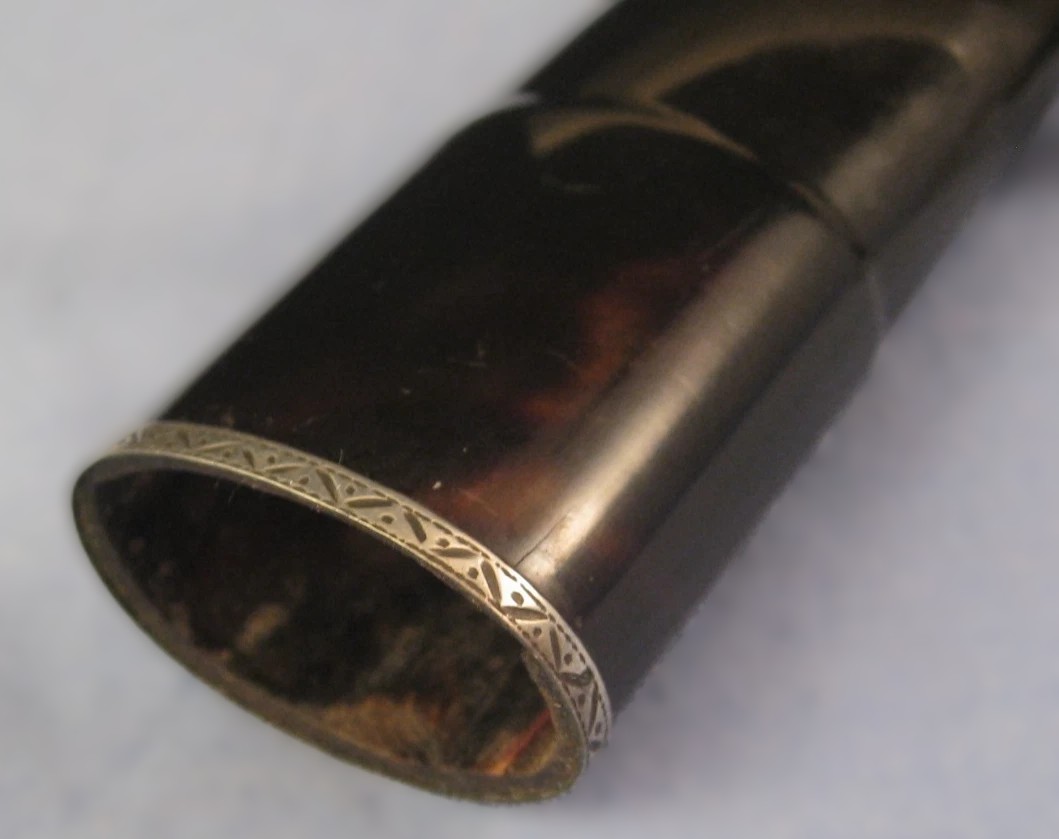
- Metal Fittings: The mounting and decorative elements are made of silver. The silver contrasts beautifully with the dark horn.
- Dating: The materials, craftsmanship, and function place this object firmly in the Regency or George IV period (c. 1800–1830s) in England.
- Functionality and Components
The penner is a true multi-tool, combining storage and ink containment:
- Quill Storage (The Main Tube):
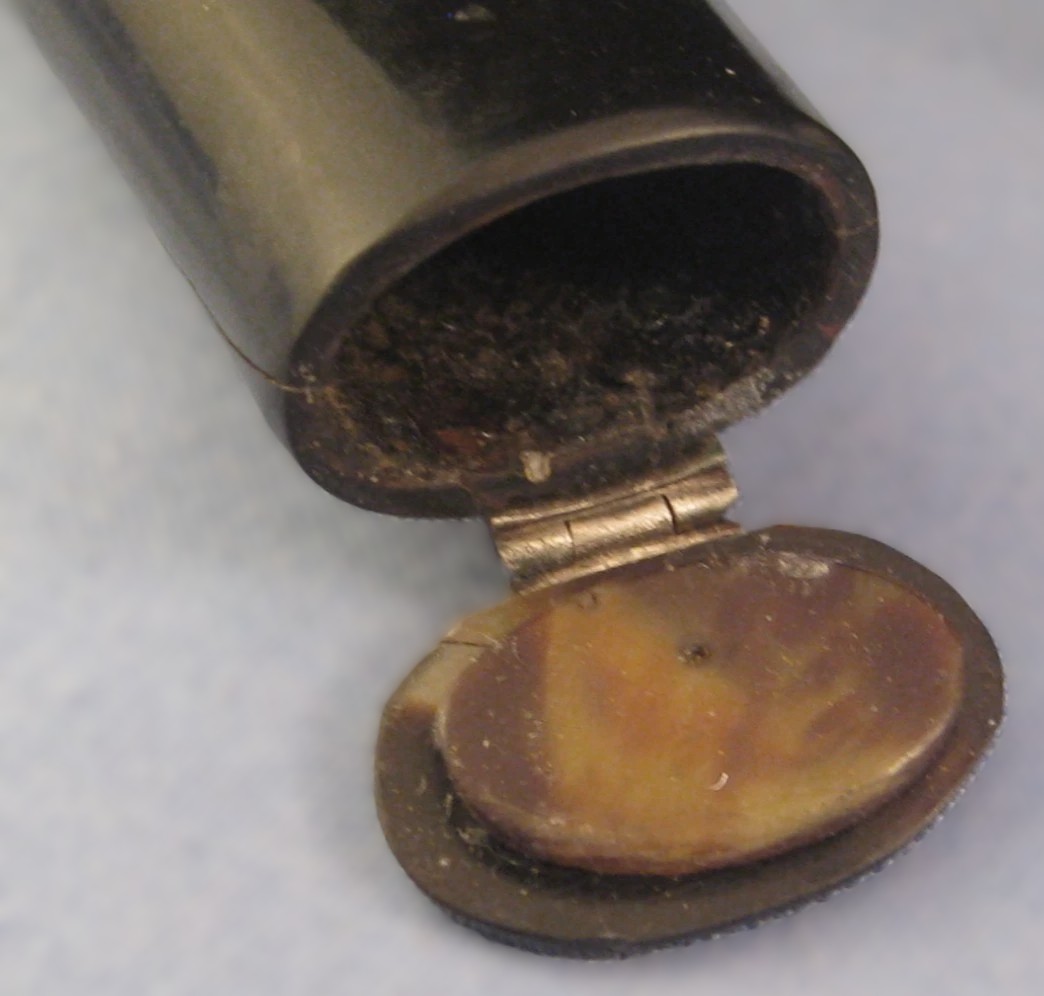
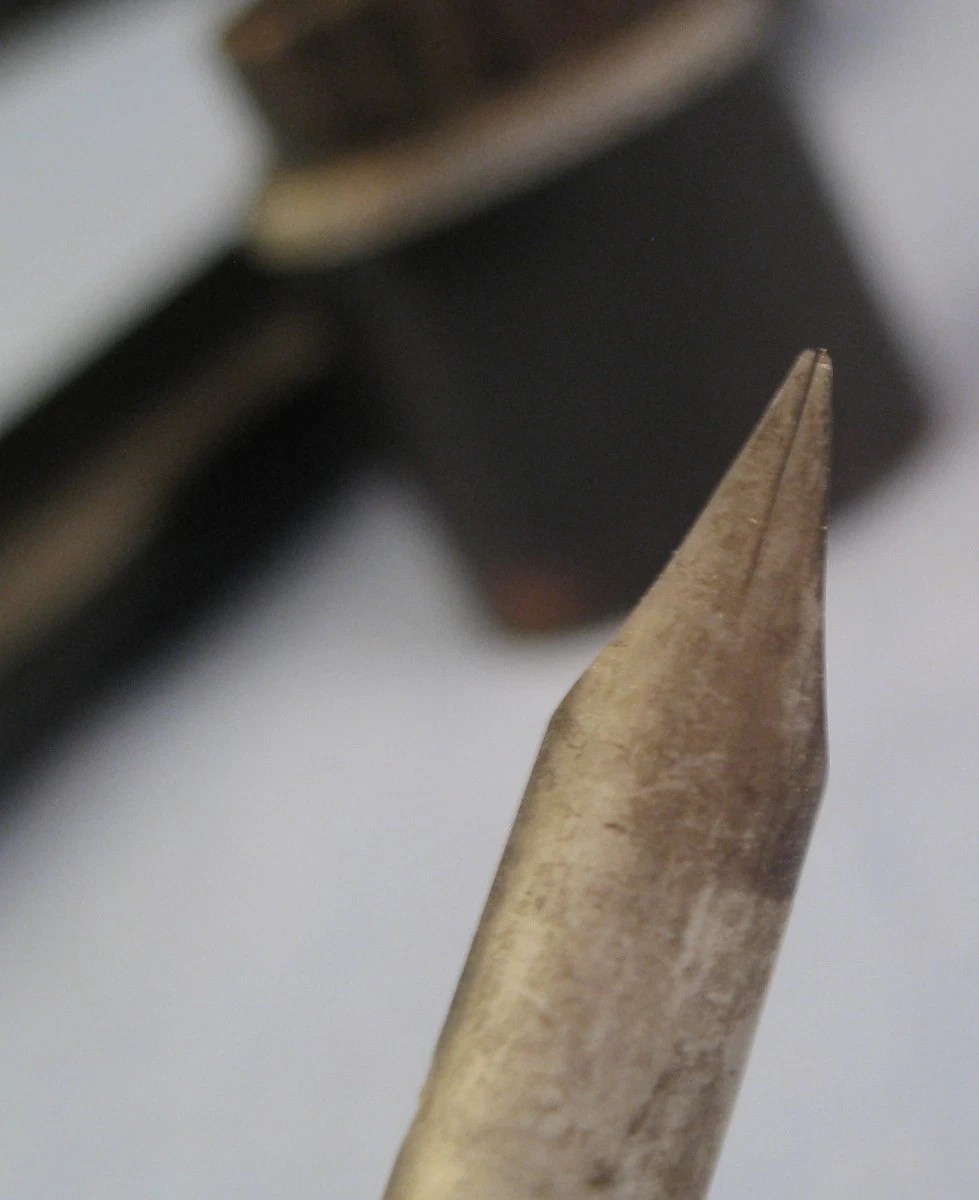
- The long, tubular section functions as a storage case to protect several quills during travel.
- The top is secured by a hinged silver lid featuring an elegant, shaped hinge, which would have been individually cut and fitted by a silversmith.
- Inkwell (The Base):
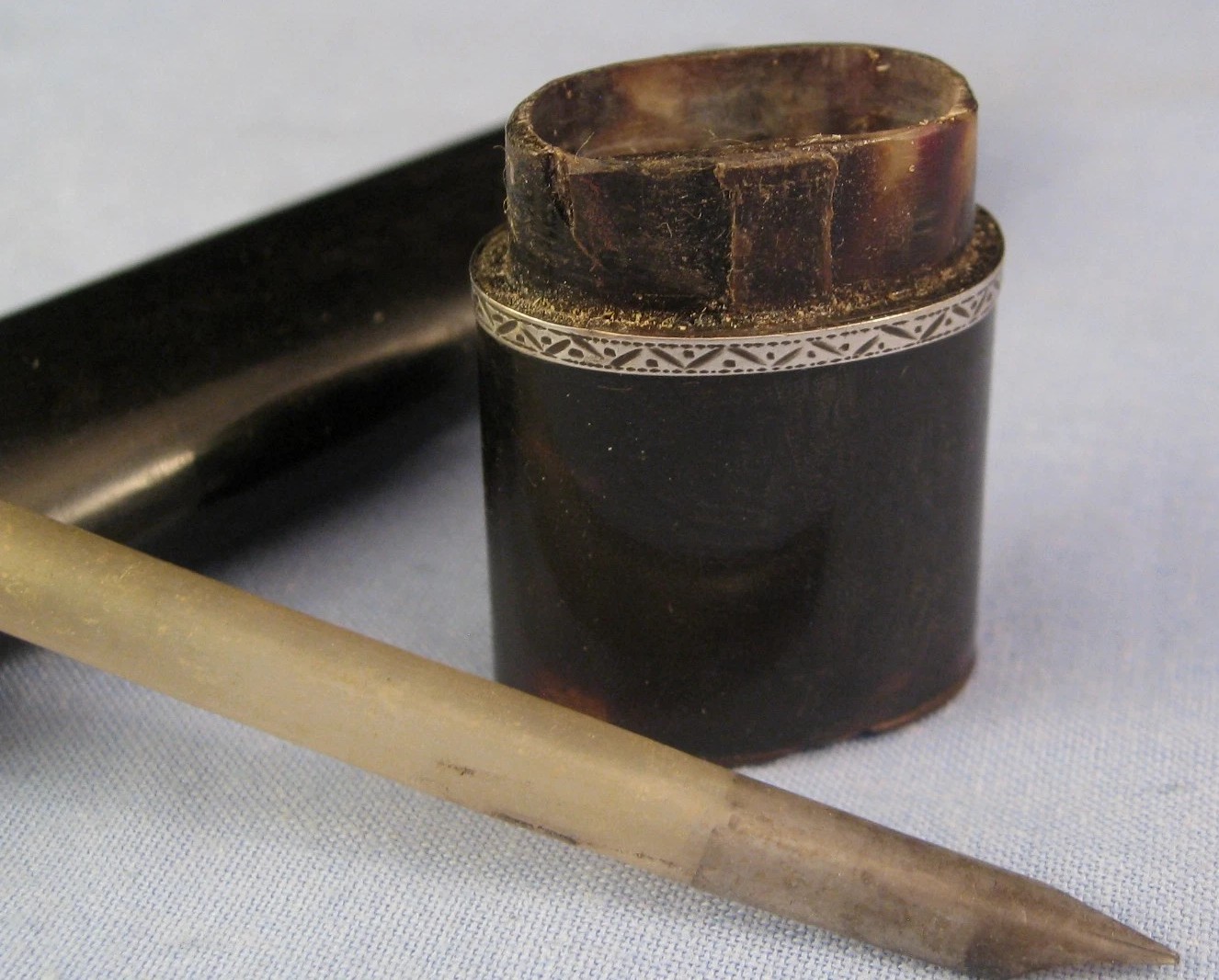
- The bottom section is designed to pull off, revealing a hollow cavity in the horn that acts as a makeshift portable inkwell.
- Historical Use: The practice of filling the well with wool, sponge, or cotton was essential. This absorbent material prevented the liquid ink from sloshing and spilling while traveling, effectively creating a saturated ink-pad that a quill could be dipped into. The well would have been sealed with a separate cork or leather plug to prevent the absorbent material from drying out.
III. Decoration
- Silver Bands: The piece features two rings (bands) of hand-engraved silver where the main body meets the base. This engraving serves both a decorative purpose and reinforces the structural joint. The style of the hand-engraving is simple, characteristic of the period.
Sold for $256 in October 2025
Content disclaimer. The information posted is the owner’s best knowledge and may not have been vetted by the SOIC. We welcome comments, corrections, and additions, working to make our website information comprehensive and accurate.
Join the Society of Inkwell Collectors (SOIC) – it’s free!
Founded in 1981 as a non-profit organization,
we are documenting inkwells (and accessories).
We’re here to help and inform!