

Inkipedia
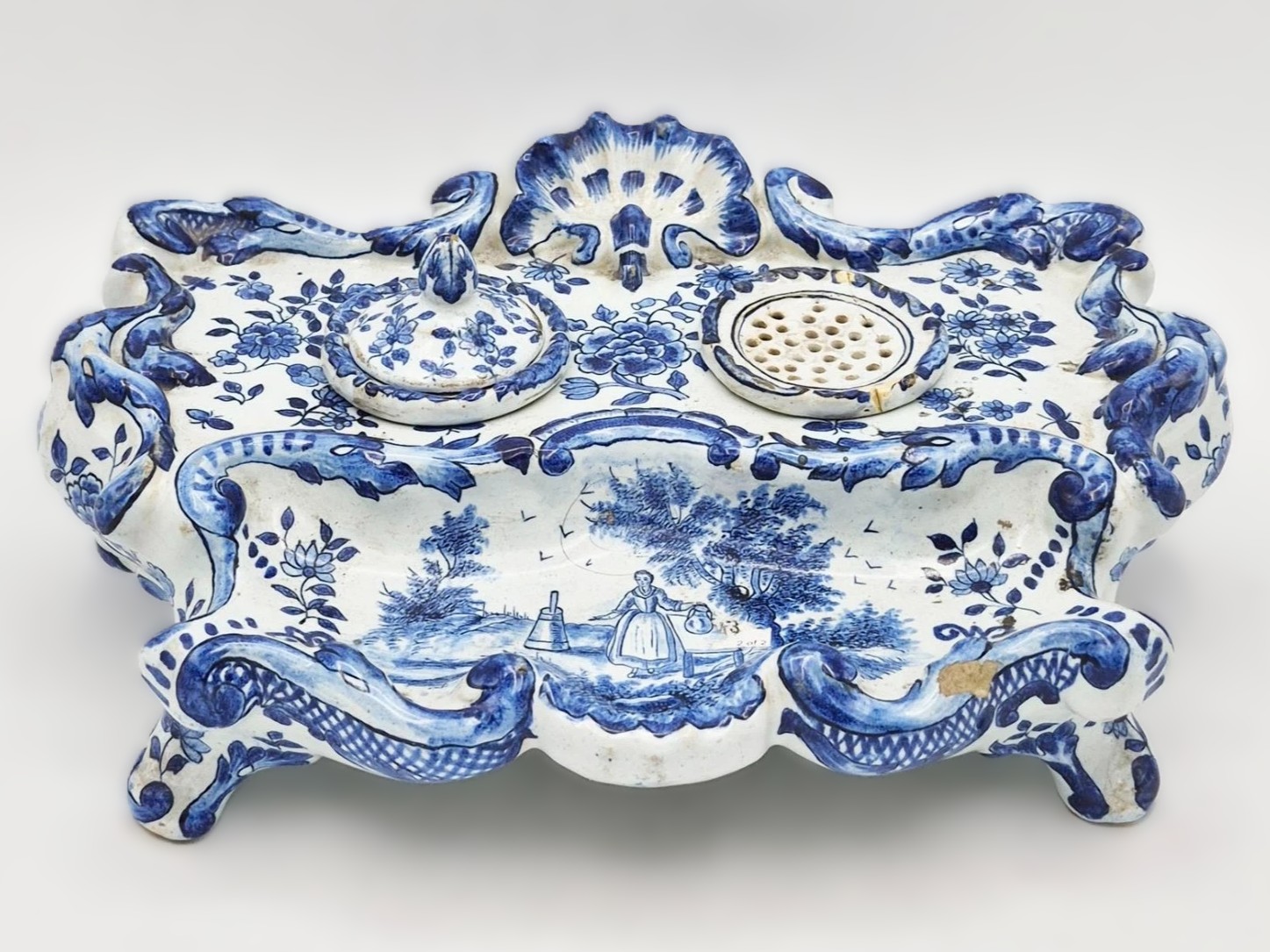
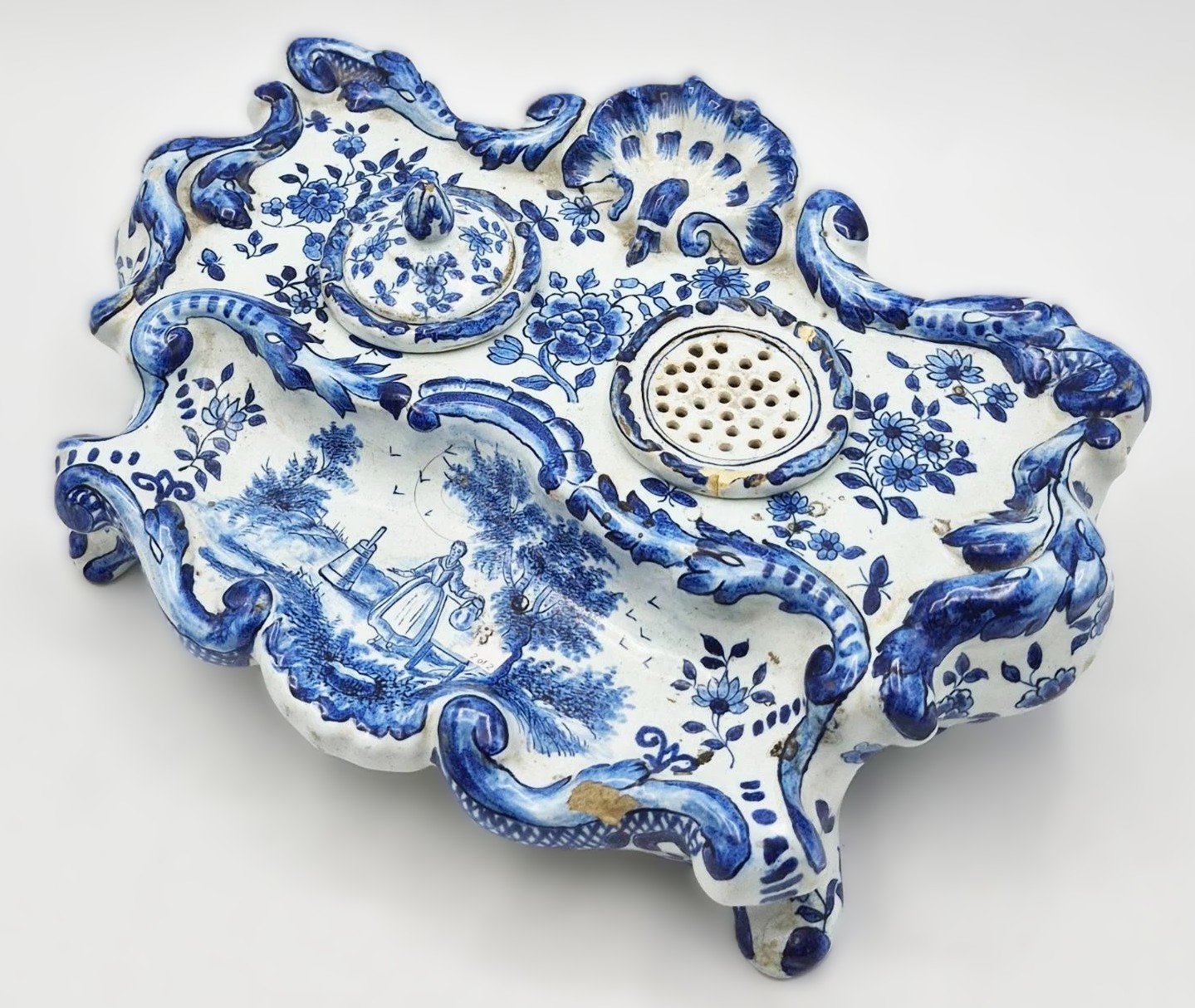
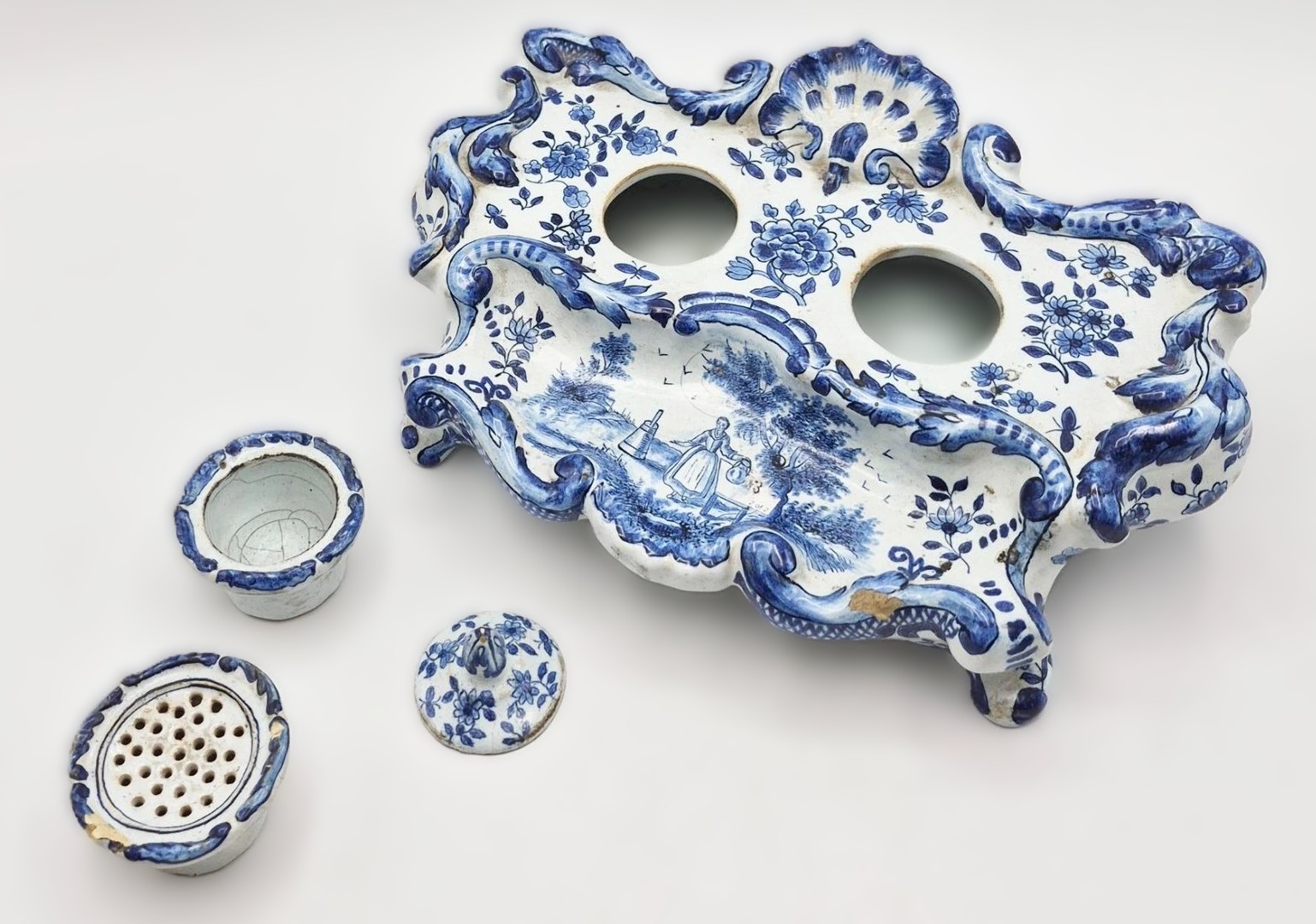
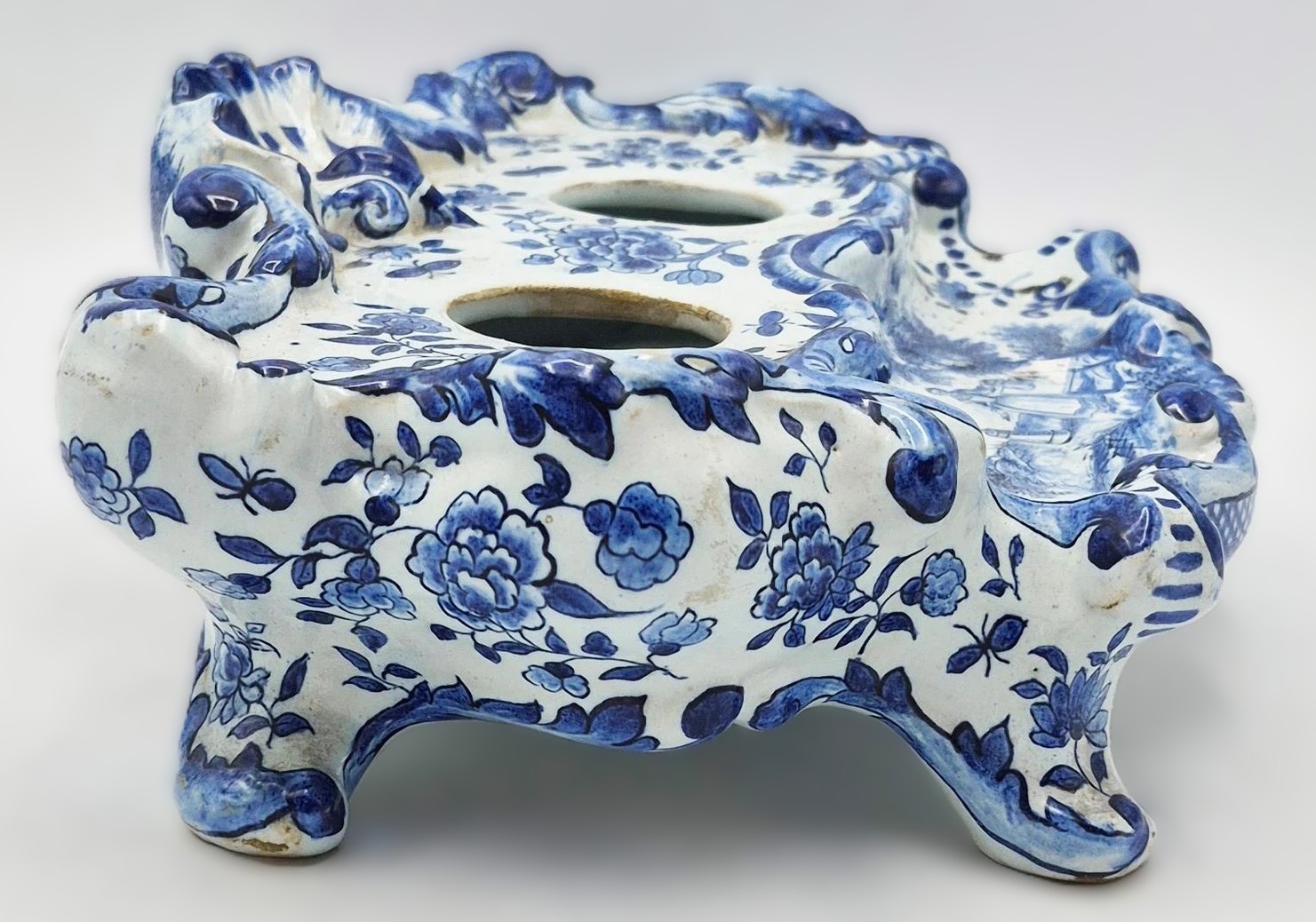
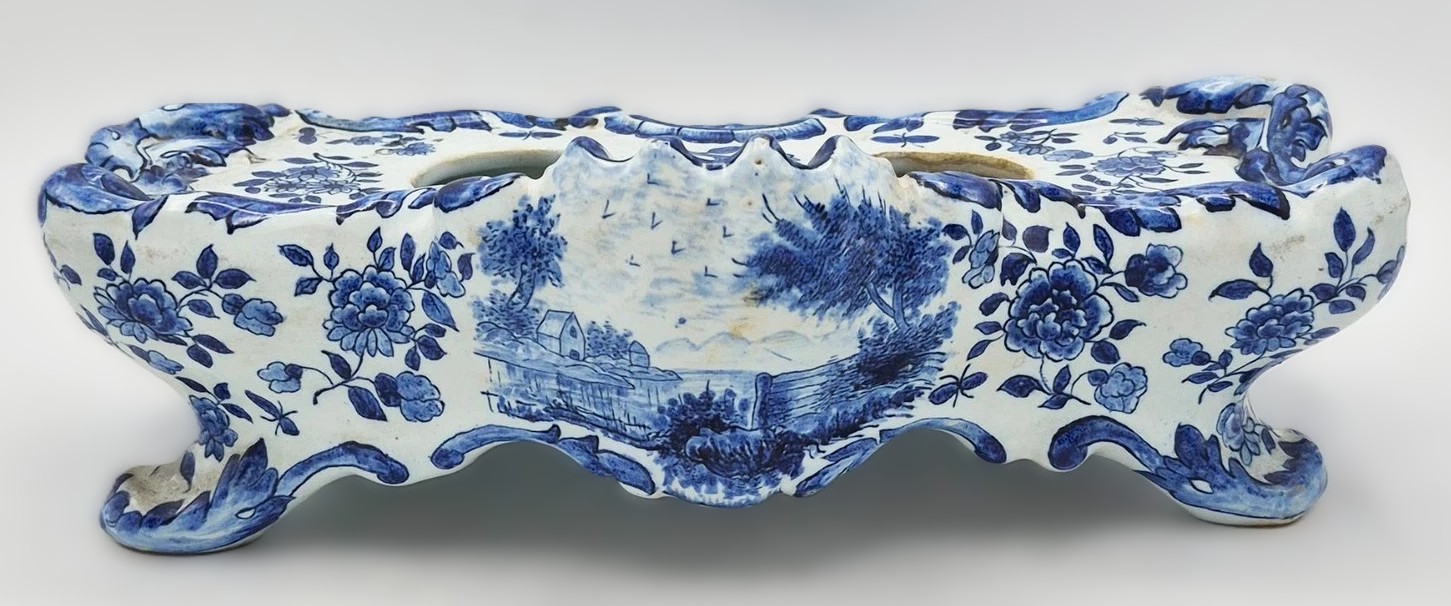
Delft Blue & White Tin-Glazed Earthenware Inkstand
| Categories | Ceramics/Porcelain non-Figural |
| Material | Faience Pottery |
| Markings | See Narrative |
| Origin | Netherlands |
| Date or Era | circa 1770 |
| Measuring | 11” across |
Description
This is an 18th-century Dutch Delft blue and white tin-glazed earthenware (faience) inkstand in the Rococo style.
Components & Features
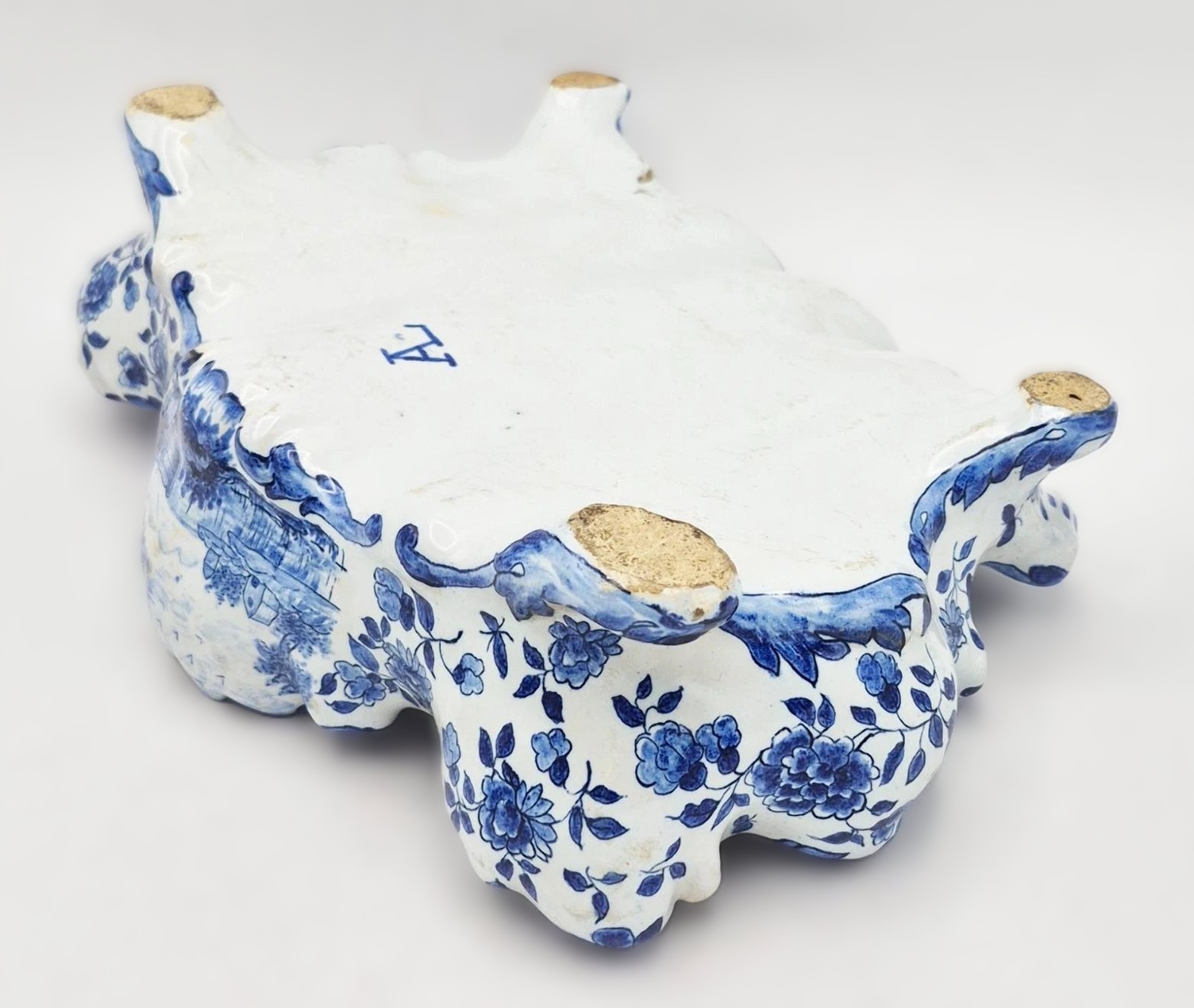
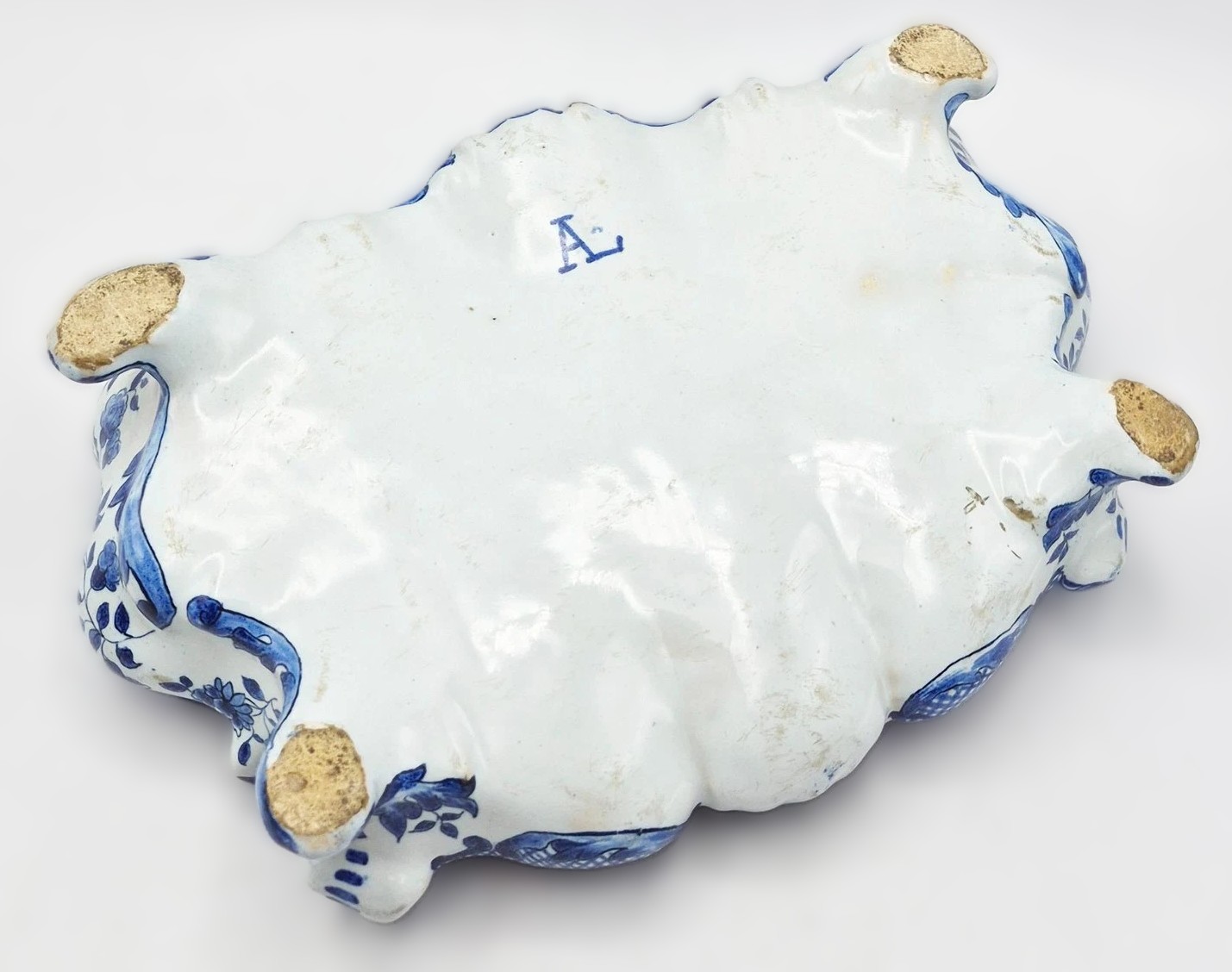
- Base Structure / Tray: A footed desktop tray supported on four scrolling bracket feet. The rim features a scalloped, serpentine contour decorated with molded acanthus leaves, scrollwork, and a prominent shell motif at the rear center. A built-in, curved pen trough runs along the entire front apron.
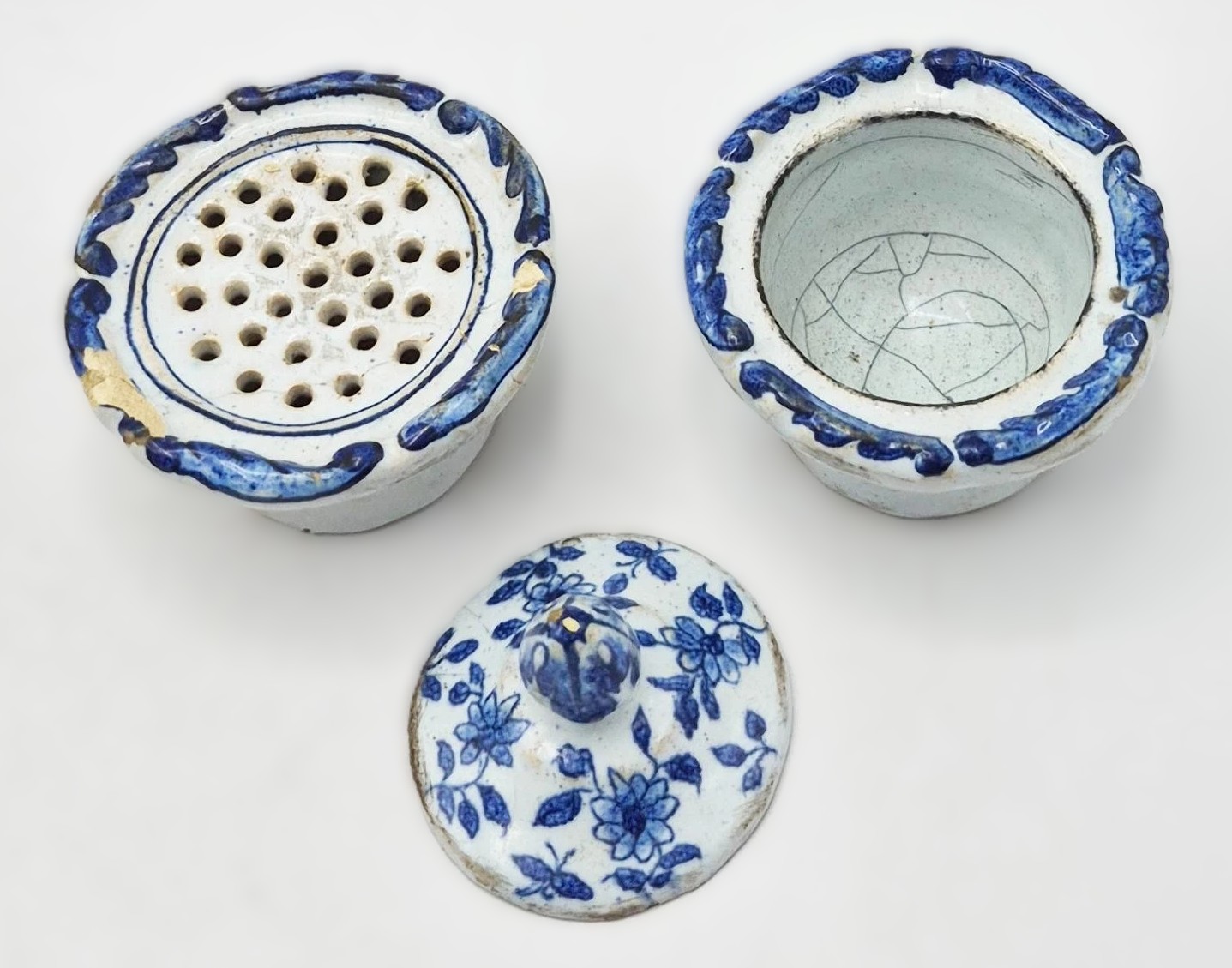
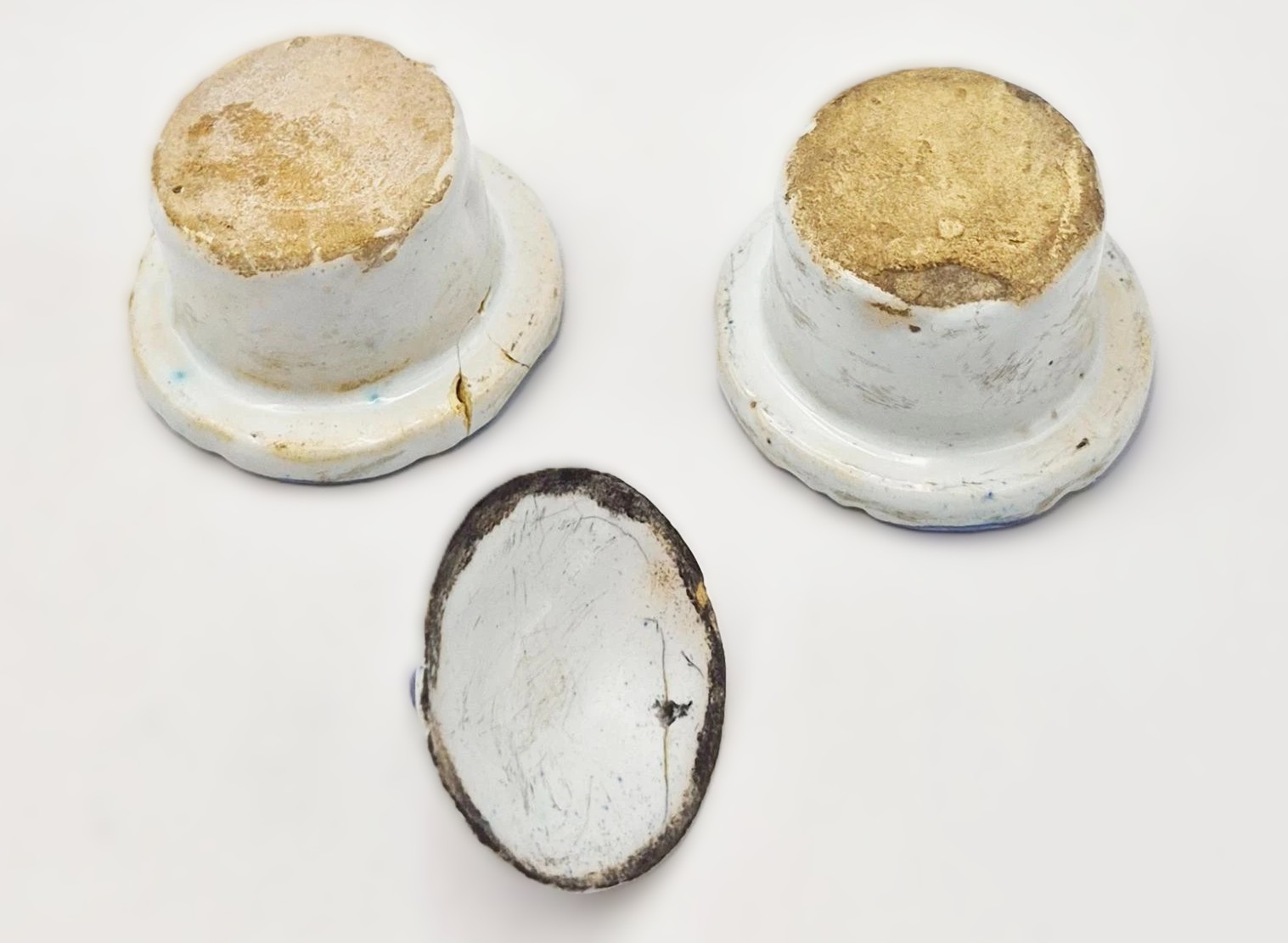
- Removable Inkwell & Lid: A circular insert with an unglazed exterior base and glazed interior, accompanied by a matching domed lid topped with a floral bud finial.
- Removable Sander (Pounce Pot): A matching circular insert with a perforated, sieve-like top. Sanders were filled with pounce (powdered gum sandarac or pulverized cuttlefish bone) or fine sand to sprinkle over fresh wet ink to prevent smudging and dry paper faster.
Decoration & Painted Vignettes
- Pen Trough Vignette: Hand-painted in underglaze cobalt blue, depicting a Dutch genre landscape featuring a milkmaid or country woman in traditional attire carrying a jug near a fence, surrounded by trees and birds flying overhead.
- Rear Wall Vignette: A serene rural scene displaying farm cottages, wooden fencing, trees, and distant rolling hills.
- Floral & Scroll Motifs: The flat upper surface and curved sides are decorated with hand-painted floral sprays (peonies and chrysanthemums) and flying insects. High-relief molded Rococo scrolls and shell accents are defined with deep cobalt blue striping.
Age & Attribution
- Estimated Age: Mid-to-late 18th Century (c. 1760–1780).
- Style Influences: The asymmetrical scrollwork, shell molding (rocaille), scrolling cabriole feet, and rural pastoral vignettes are hallmark traits of the Louis XV Rococo revival popular in Dutch Delftware during the third quarter of the 18th century.
Analysis of the Bottom Mark
- The Mark: Painted in underglaze cobalt blue on the unglazed underside is the monogram “AL”.
- Maker: On 18th-century Delftware, the “AL” monogram is attributed to Anthony Pennis, proprietor and master potter at the “De Twee Wildemans” (The Two Wildemen) factory in Delft (who directed the workshop from approximately 1750 through the 1770s).
Background Information on Delft Pottery
- Origins: Delftware (Delfts blauw) originated in the early 17th century in the city of Delft, Netherlands. It was initially developed by Dutch potters seeking a local, affordable alternative to costly Chinese Ming dynasty porcelain imported by the Dutch East India Company (VOC).
- The Tin-Glaze Technique: Because true hard-paste porcelain clay was not available in Holland at the time, potters used red/yellow earthenware clay covered with an opaque white tin glaze. Cobalt blue motifs were hand-painted onto the raw, unfired white glaze. During firing, the pigments fused into the glaze, creating the characteristic soft blue-on-white appearance mimicking Asian porcelain.
- The Golden Age: Between 1650 and 1780, Delft was home to over 30 thriving pottery factories (plateelbakkerijen). By the late 18th century, competition from English creamware (such as Wedgwood) led to the decline of most traditional Delft factories.
Sold for $300 in July 2026
Content disclaimer. The information posted is the owner’s best knowledge and may not have been vetted by the SOIC. We welcome comments, corrections, and additions, working to make our website information comprehensive and accurate.
Join the Society of Inkwell Collectors (SOIC) – it’s free!
Founded in 1981 as a non-profit organization,
we are documenting inkwells (and accessories).
We’re here to help and inform!