

Inkipedia
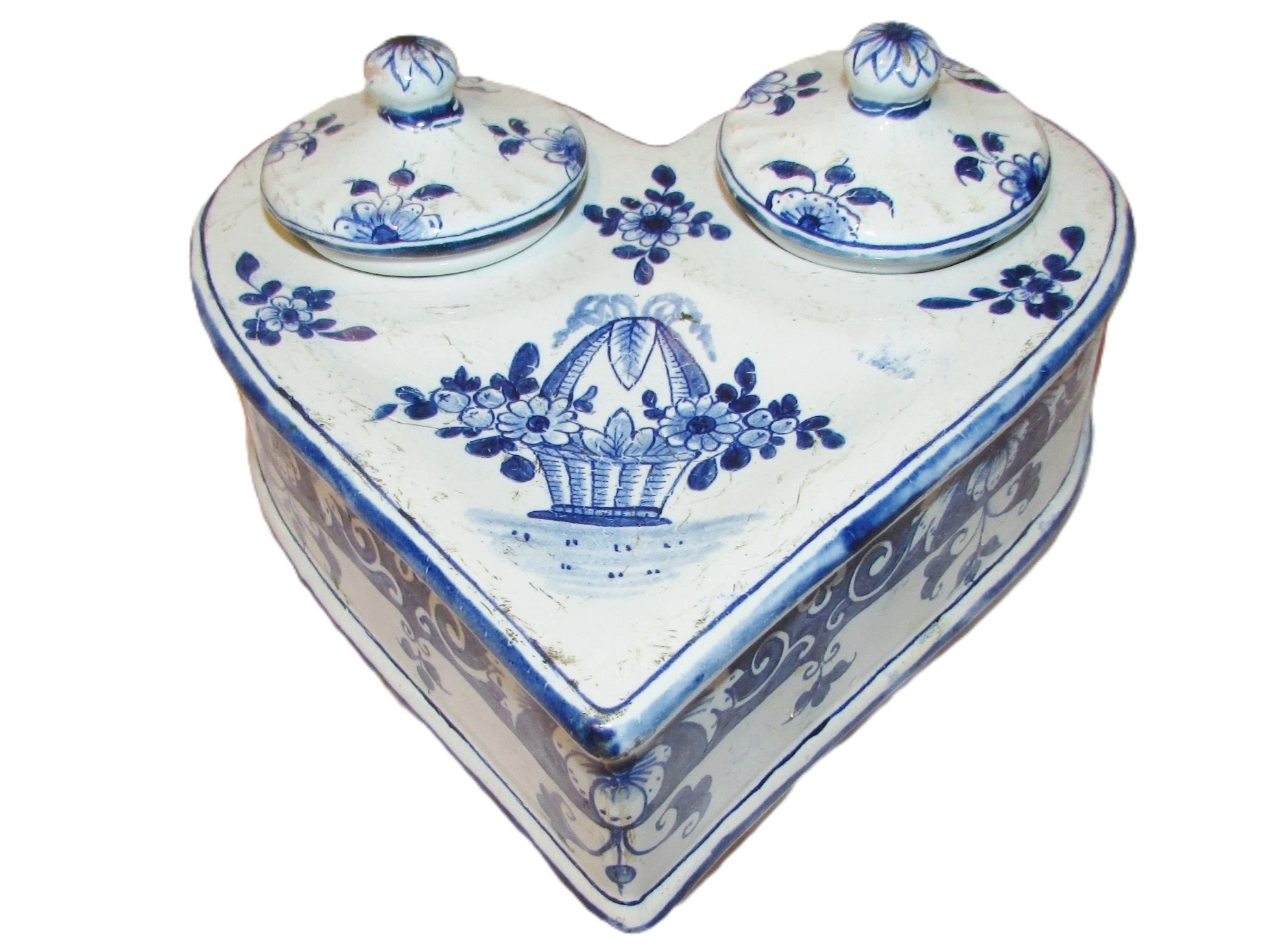
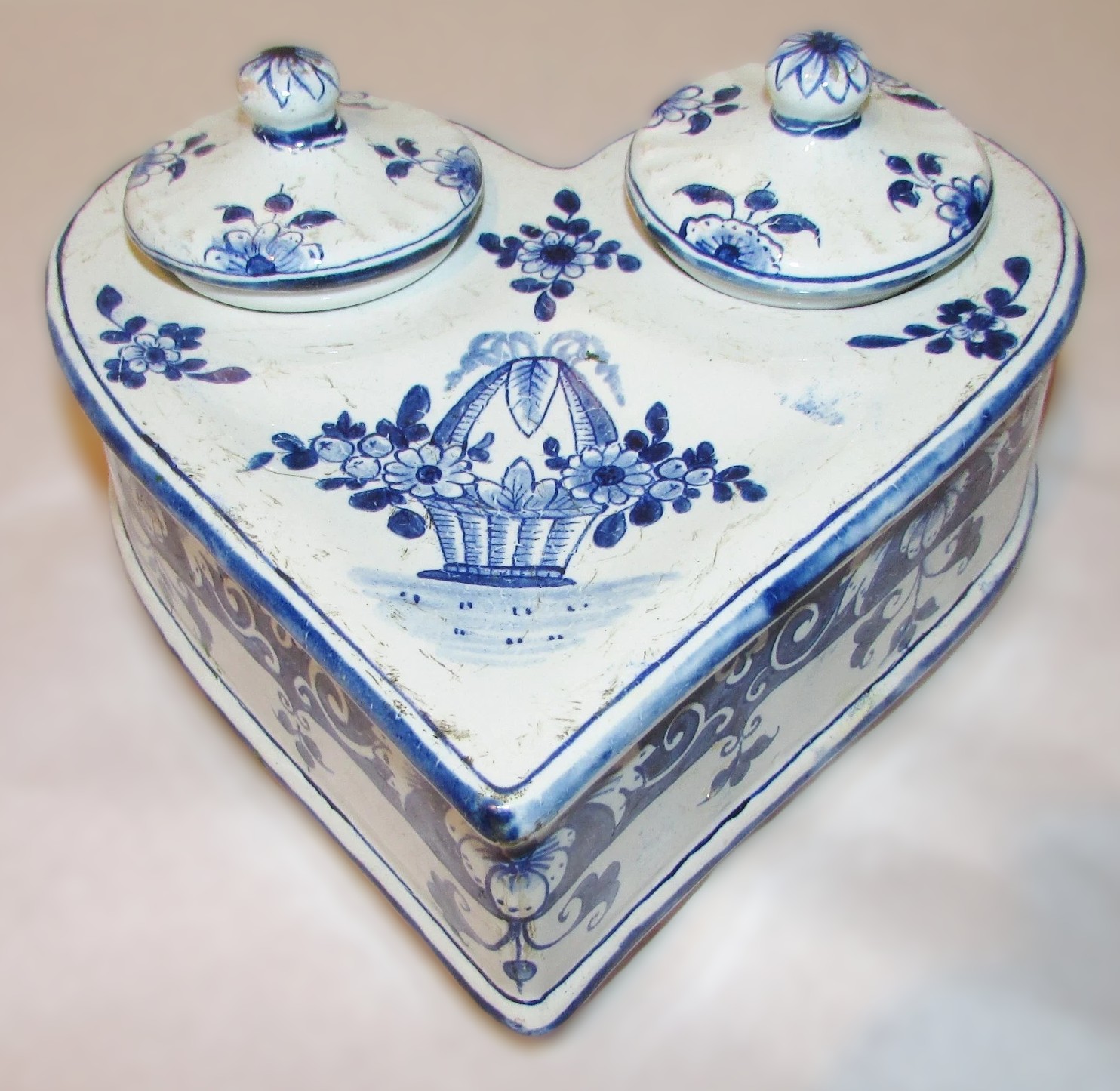
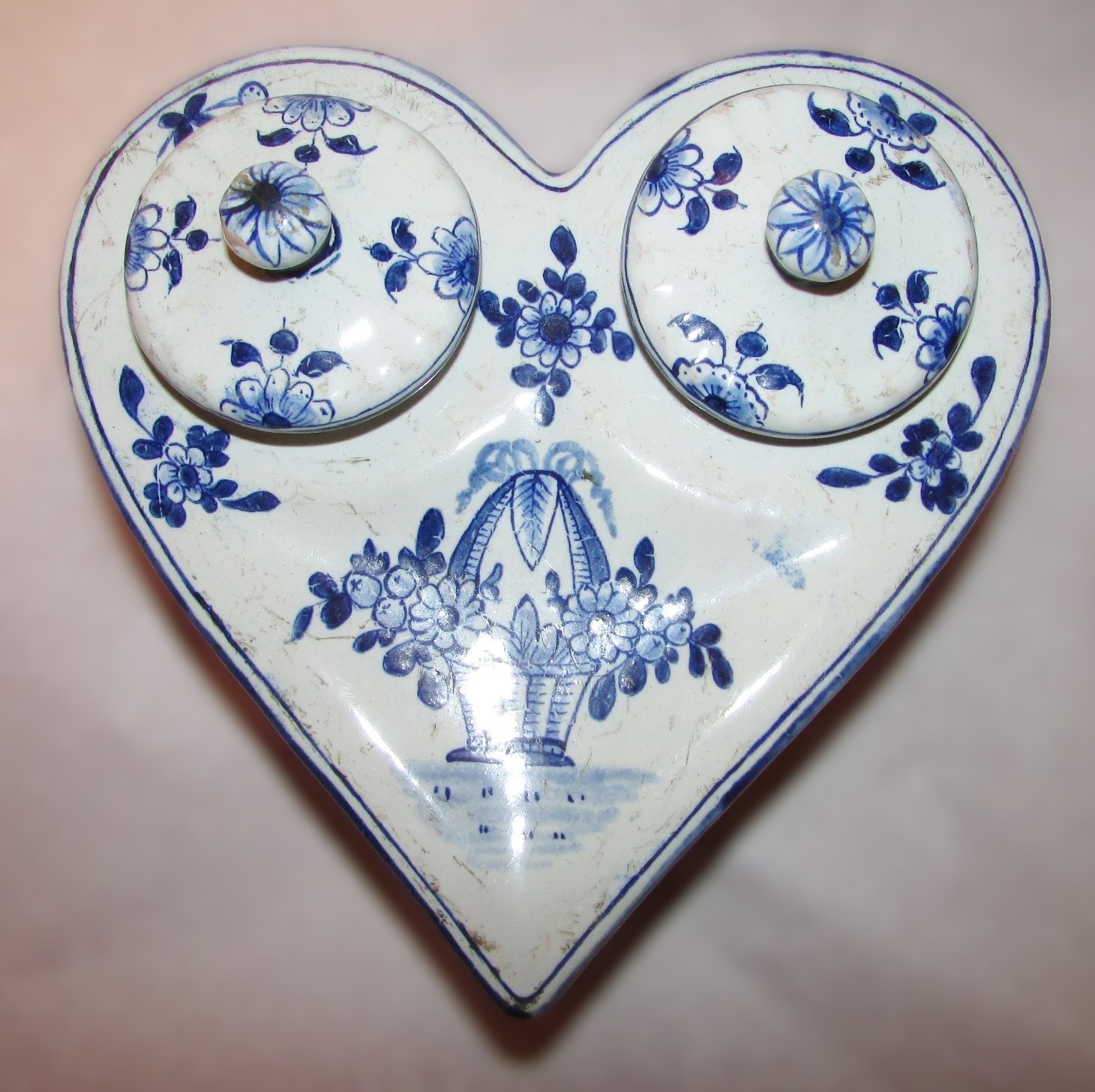
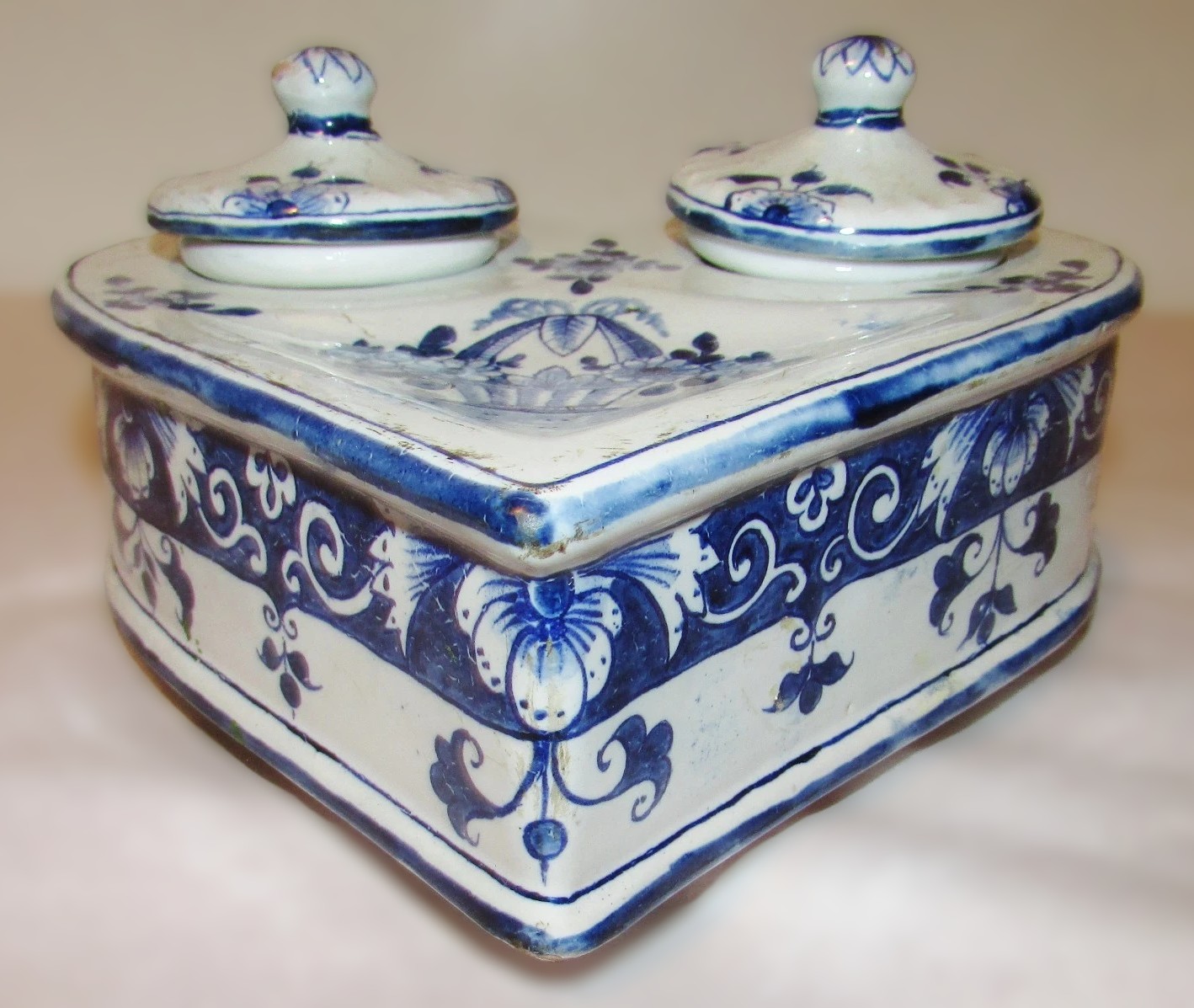
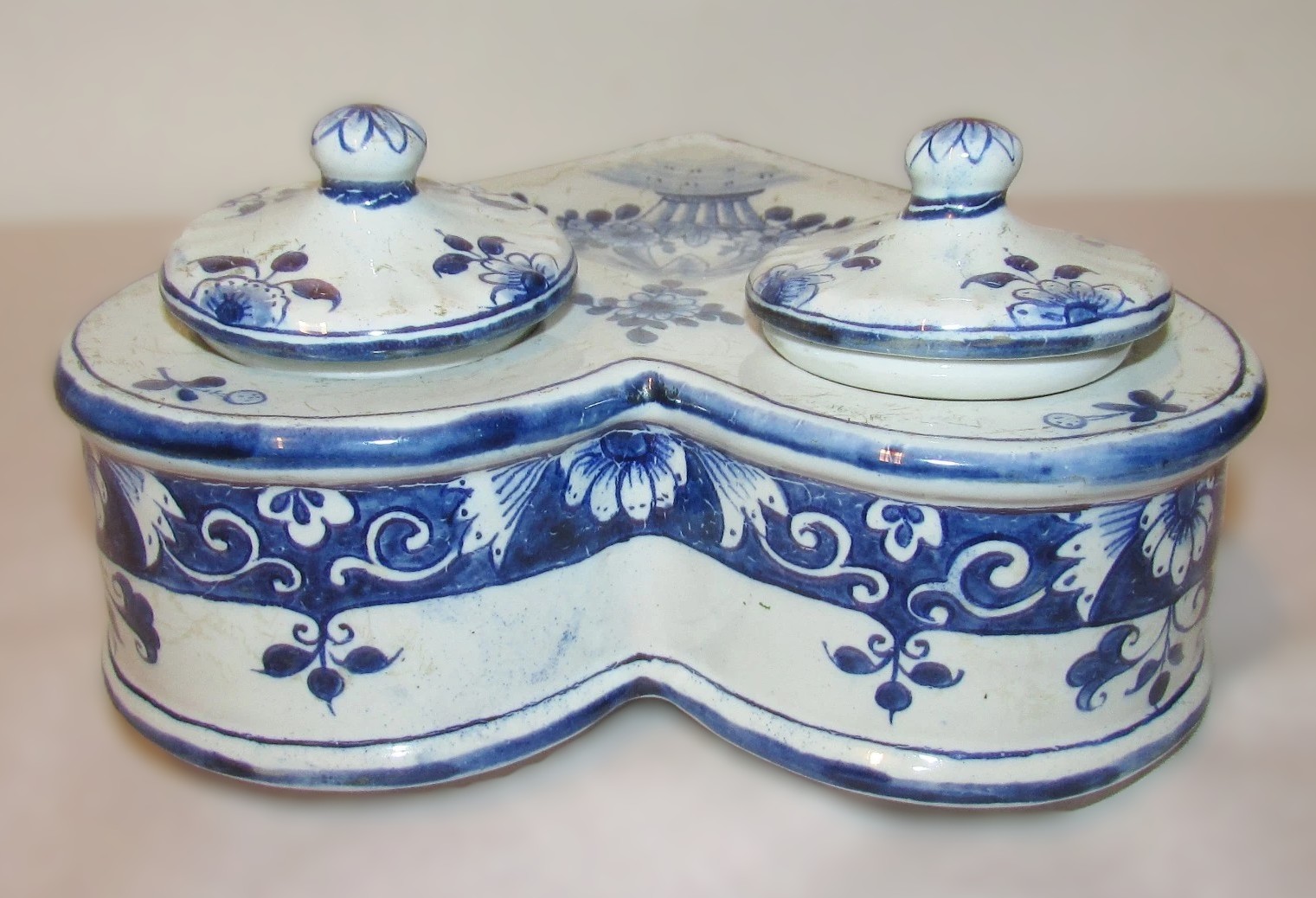
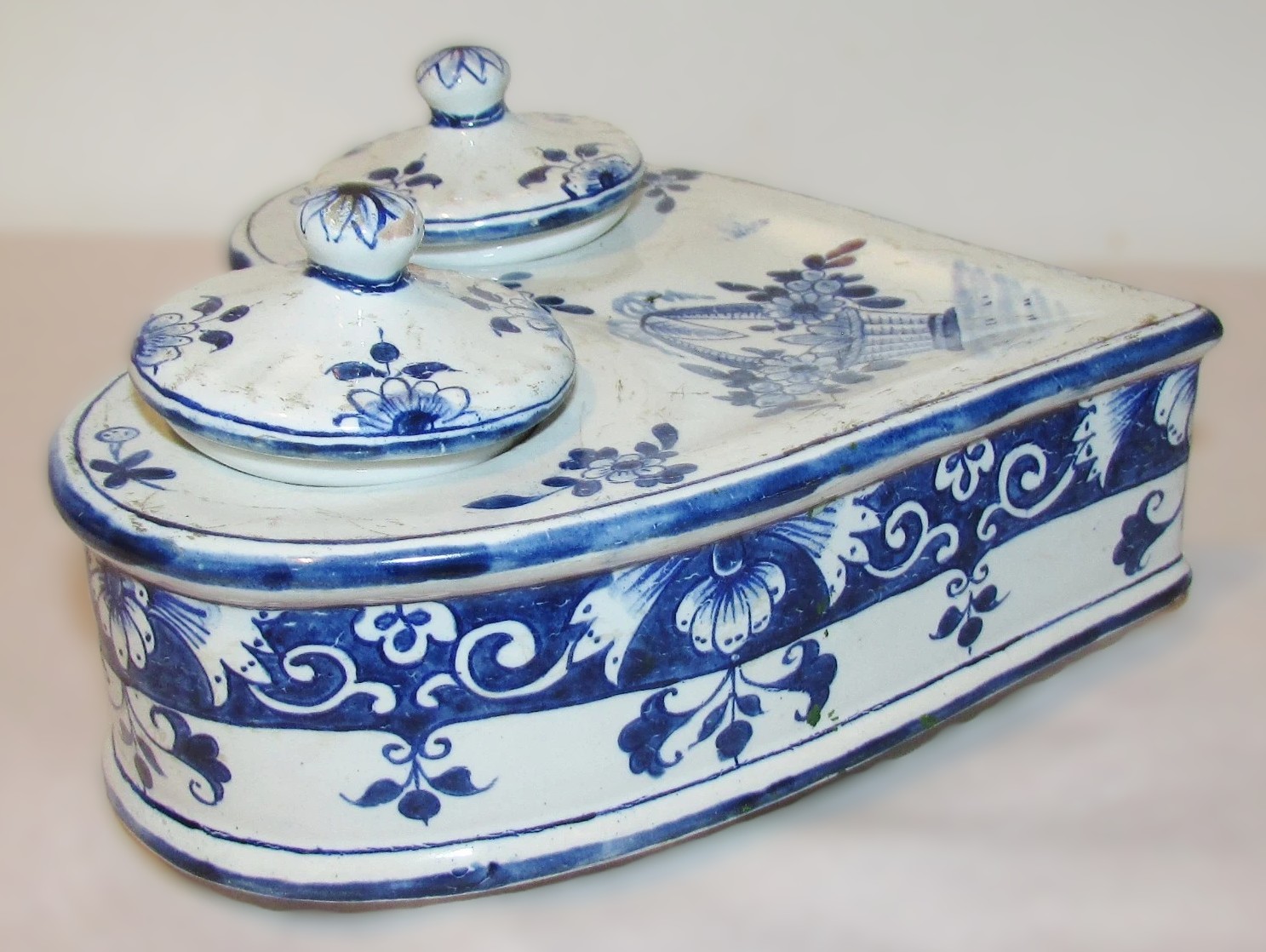
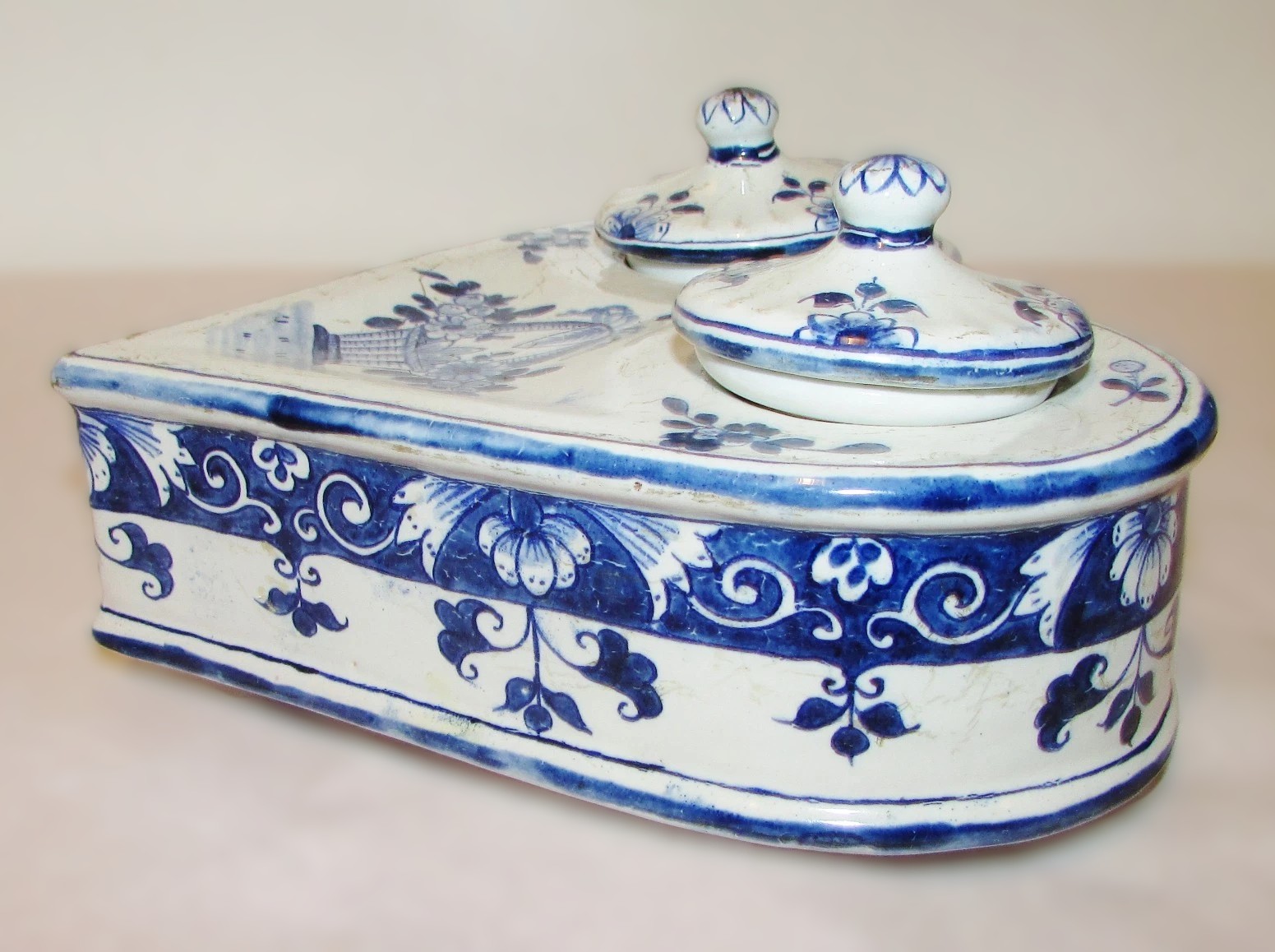
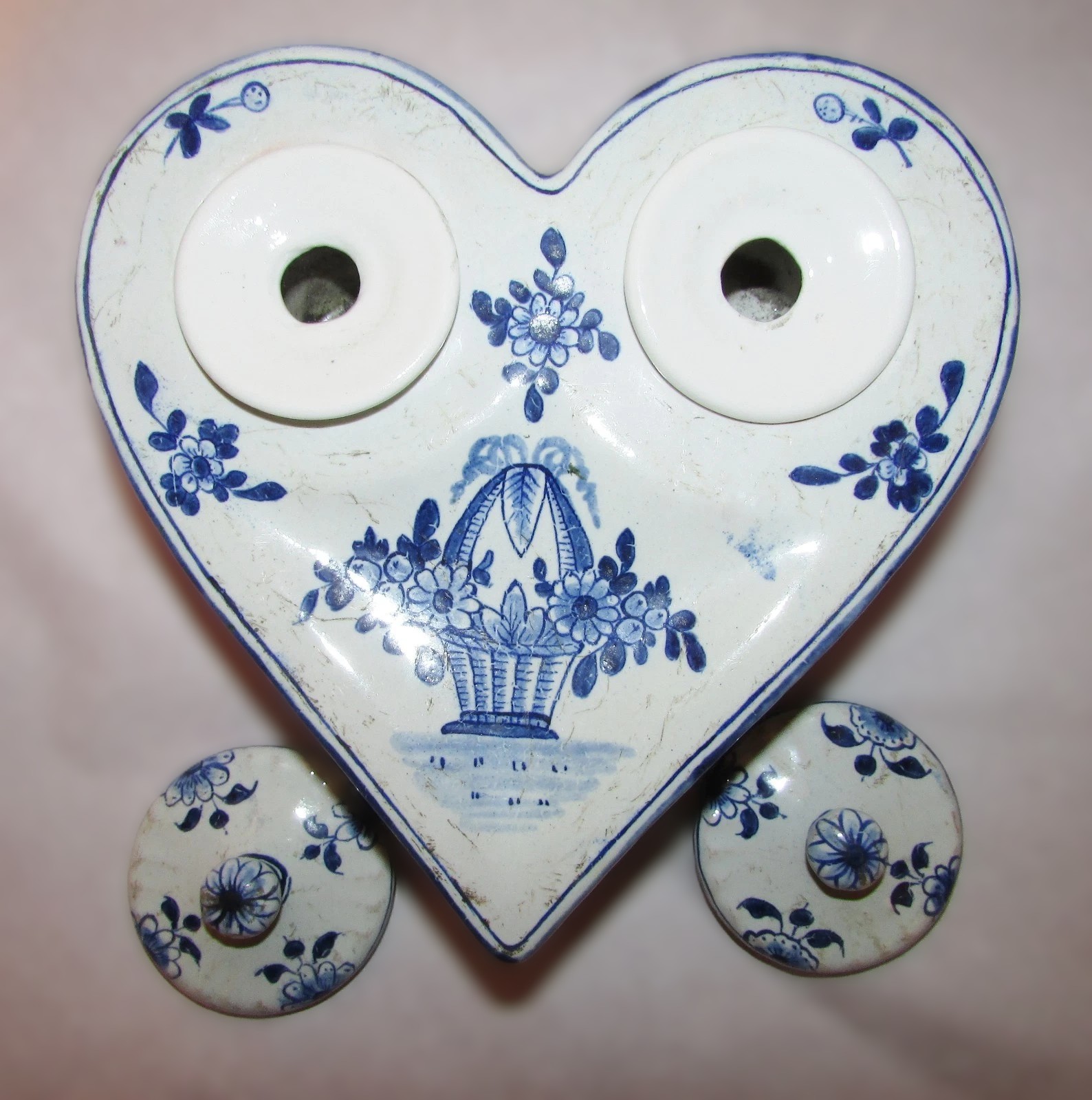
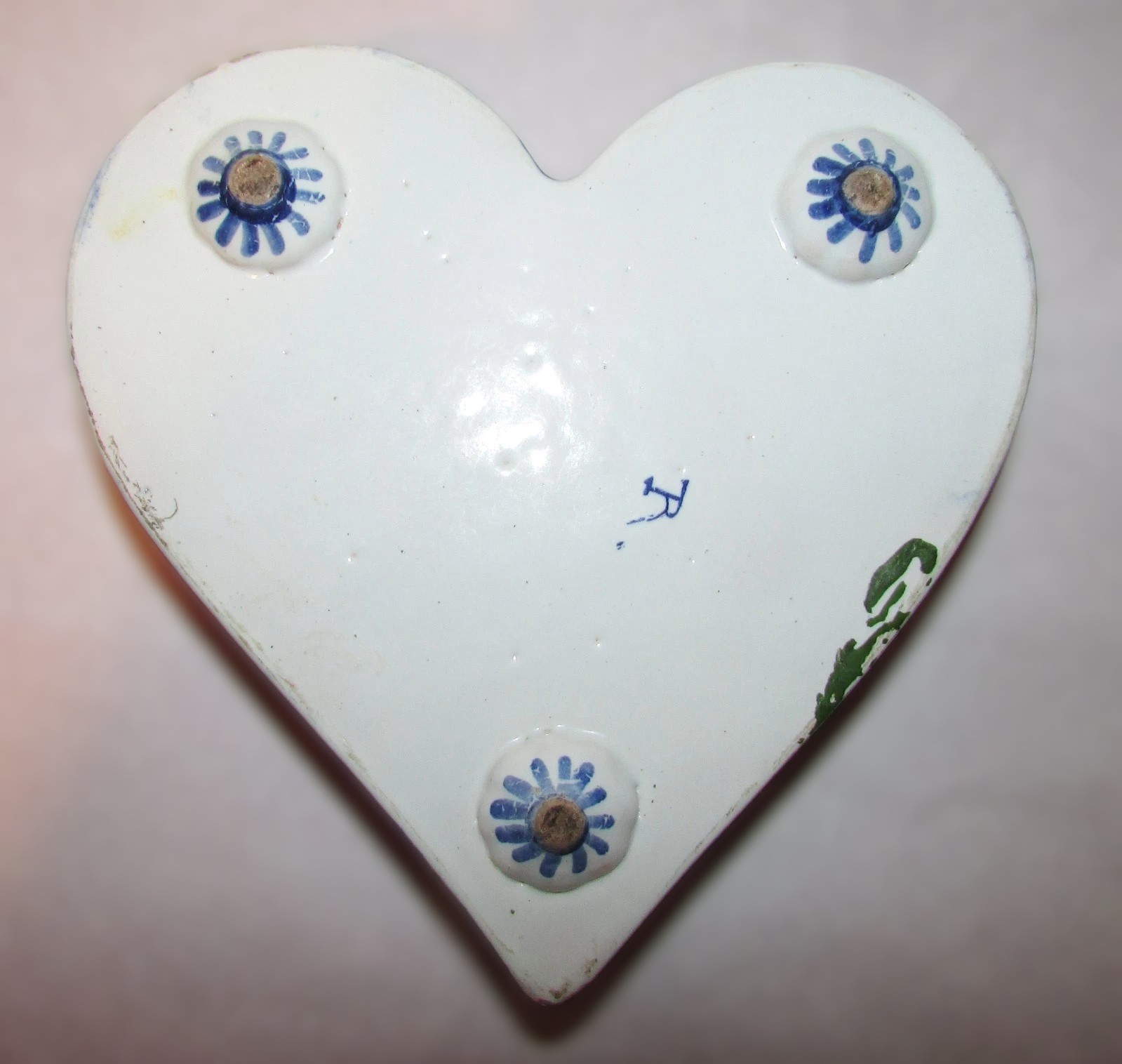
French Faience Heart-Shaped Inkstand
| Categories | Ceramics/Porcelain non-Figural |
| Material | Faience Pottery |
| Markings | See Narrative |
| Manufacturer | Undetermined |
| Origin | France |
| Date or Era | circa 1840 |
| Measuring | 6 ¾” x 6 ¾” x 3 ¾” high |
Description
- Shape & Configuration
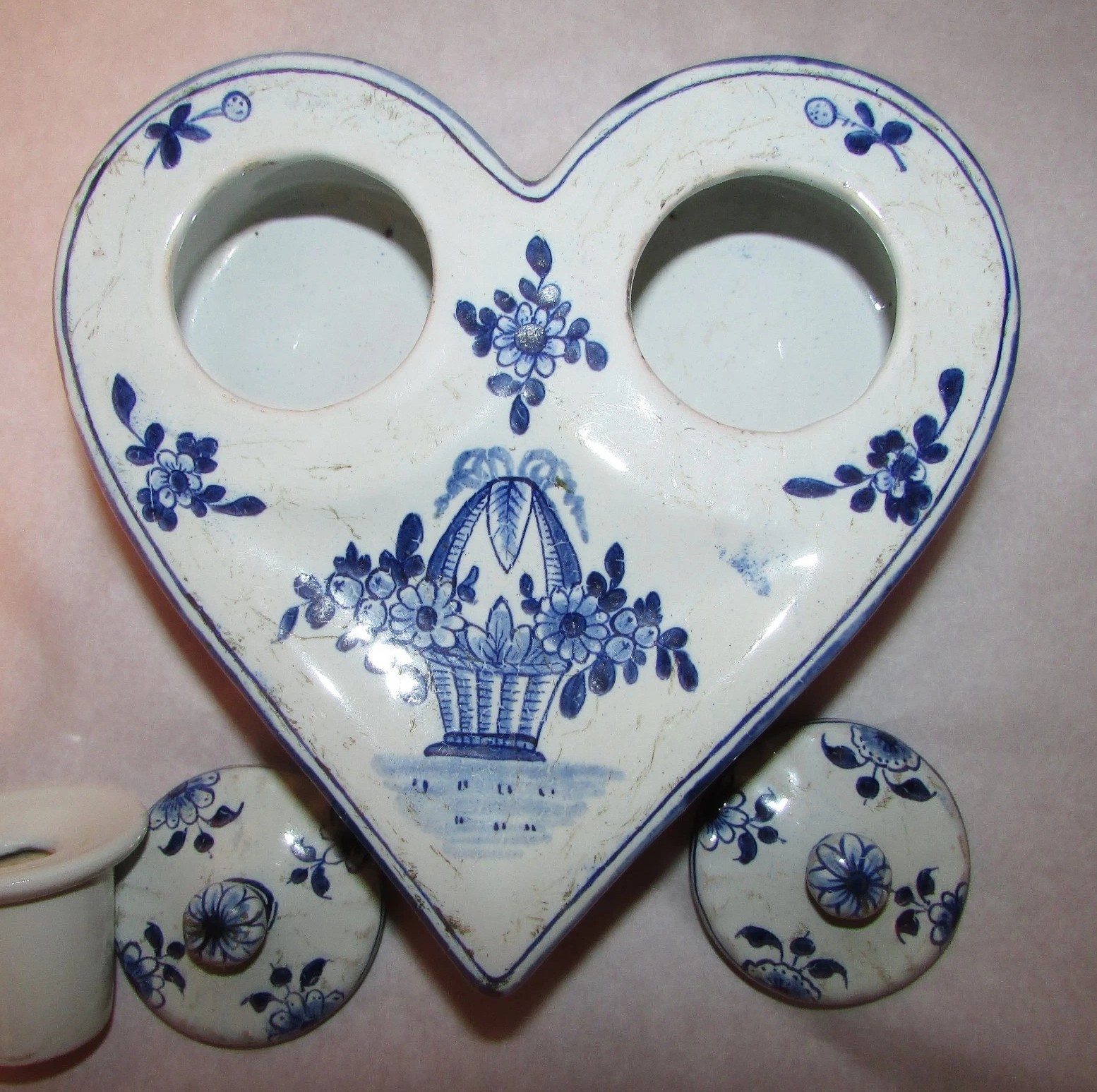
- Form: The piece features a distinct heart-shaped body supported by three raised circular feet underneath.
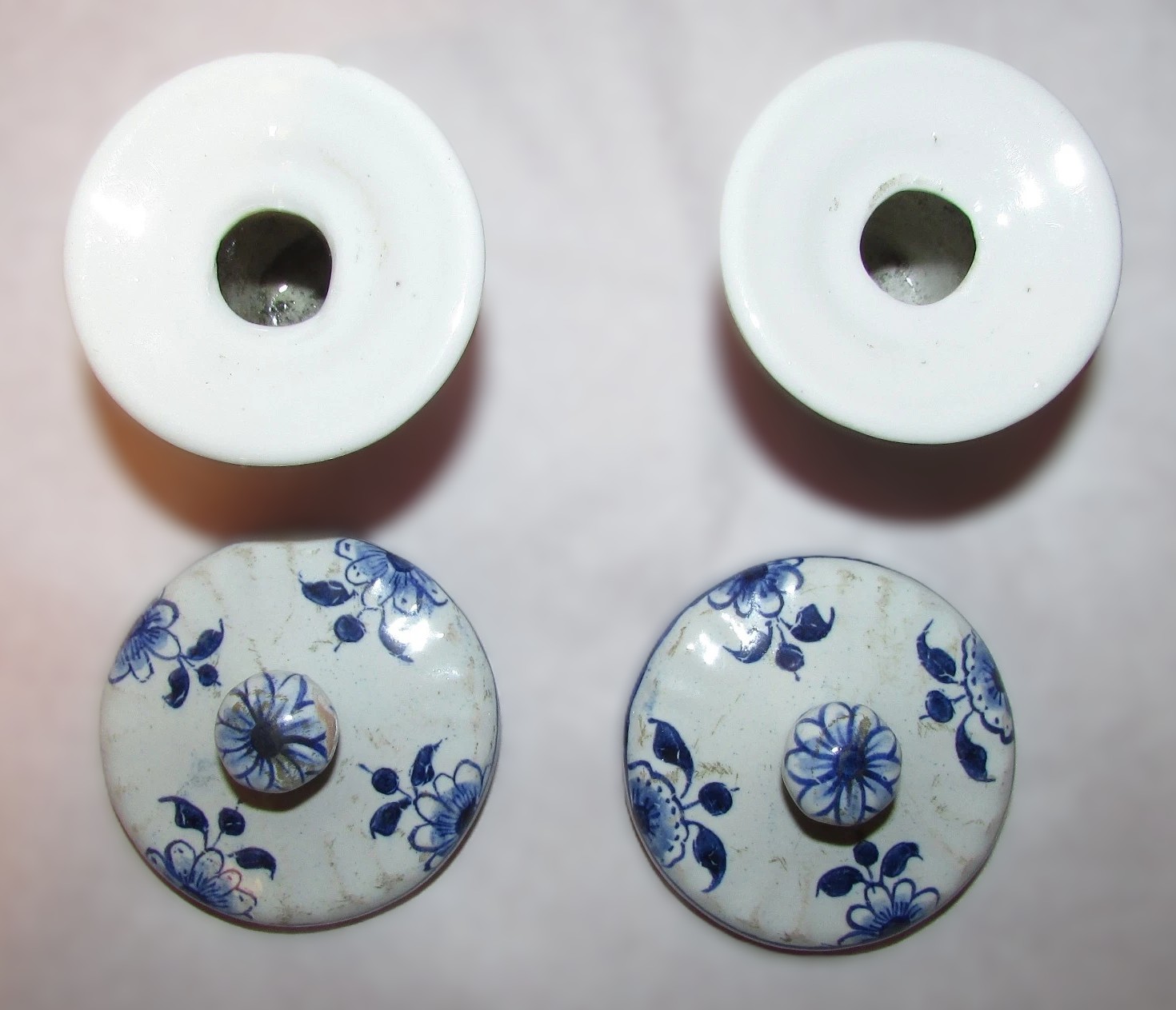
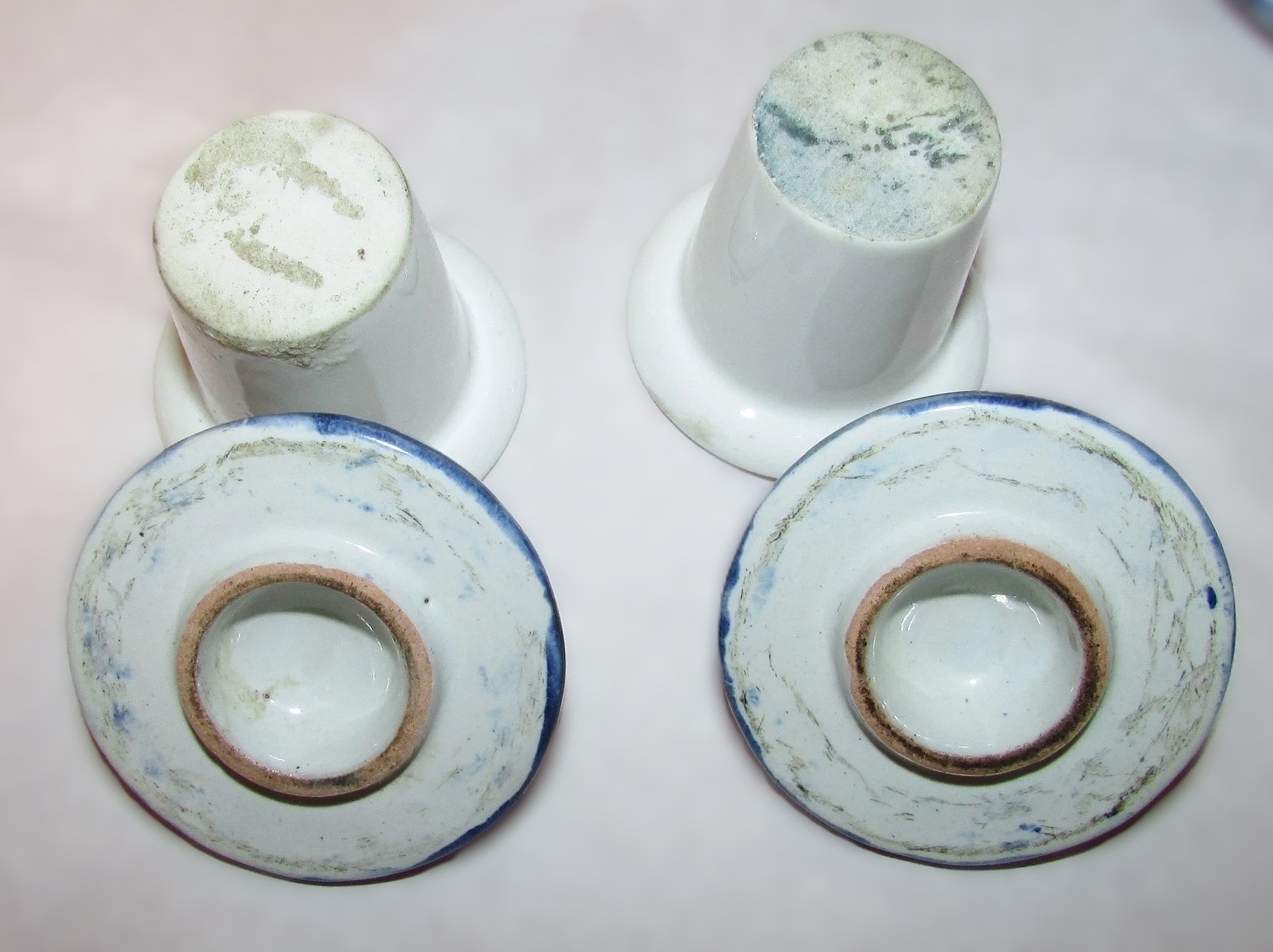
- Wells: It is a double inkstand (encrier double) designed with two round recessed openings that house two removable cylindrical inserts topped with matching fitted lids.
- Feet: The underside reveals three applied, button-like feet painted with radial blue starburst/flower motifs.
- Materials & Construction
- Medium: It is crafted from tin-glazed earthenware (faïence).
- Technique:
- The porous earthenware body was dipped in an opaque white tin glaze.
- Decorative patterns were hand-painted directly onto the unfired or raw glaze before firing (a traditional grand feu technique typical of classic French faience).
- Underneath, the unglazed clay foot rings on the lids and the raw pottery base show the buff-colored earthenware body.
- Decoration & Painting Style
- Hand-Painted: The piece is entirely hand-painted in a classic blue-and-white cobalt monochrome palette (bleu et blanc).
- Central Motif: The top surface highlights a central flower-filled basket (panier de fleurs) flanked by delicate floral sprays and a small floral medallion between the two wells.
- Side Frieze (Lambrequins): The outer perimeter/sides are decorated with an intricate band of lambrequins—scrollwork, palmettes, and lace-like drapery motifs that originated in 17th–18th century French lace and embroidery designs and became the signature motif of Rouen faience.
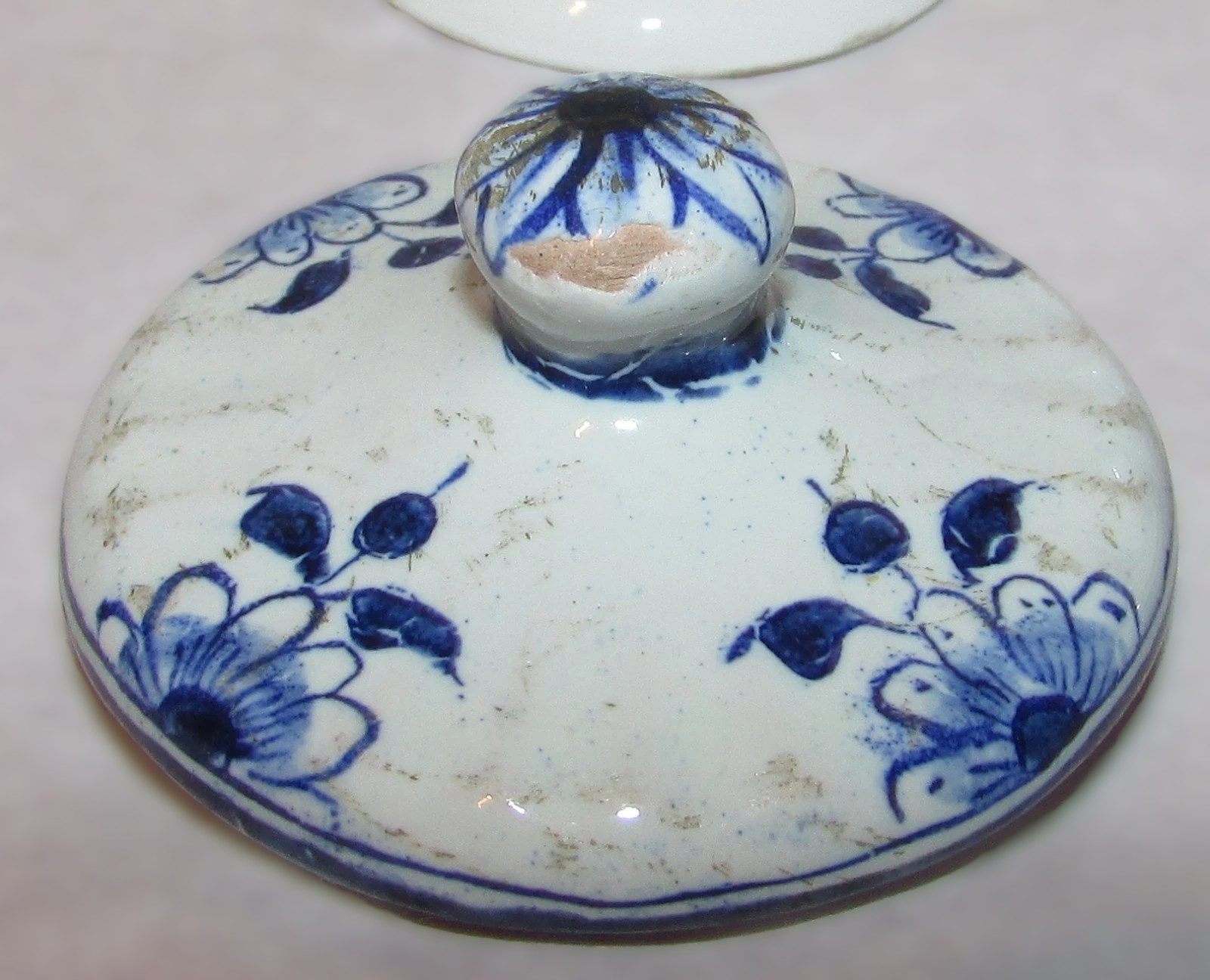
- Lids: The two removable lids feature matching floral sprays, blue rim borders, and textured, flower-bud-shaped knobs.
- Origin & Maker
- Origin/Style: Produced in the style of Rouen (Normandy, France), famous for pioneered blue-and-white lambrequin tin-glazed pottery.
- Maker: Faience pieces of this era were rarely signed by individual artisans; however, the base features a hand-painted painter’s mark or factory monogram (a cursive “JR” or similar initials) written in cobalt blue, which signifies the workshop or decorator who finished the piece.
- Age (When It Was Made)
- Period: Dated to the first half of the 19th century (circa 1800–1850), continuing the popular 18th-century French regional faience traditions.
Sold for $180 in June 2026
Content disclaimer. The information posted is the owner’s best knowledge and may not have been vetted by the SOIC. We welcome comments, corrections, and additions, working to make our website information comprehensive and accurate.
Join the Society of Inkwell Collectors (SOIC) – it’s free!
Founded in 1981 as a non-profit organization,
we are documenting inkwells (and accessories).
We’re here to help and inform!