

Inkipedia
Old Paris Porcelain Inkstand
| Categories | Ceramics/Porcelain non-Figural |
| Material | Porcelain |
| Markings | Unmarked |
| Manufacturer | Undetermined |
| Origin | France |
| Date or Era | circa 1860 |
| Measuring | 4 ⅜” x 3 ⅜” x 2 ⅞” high |
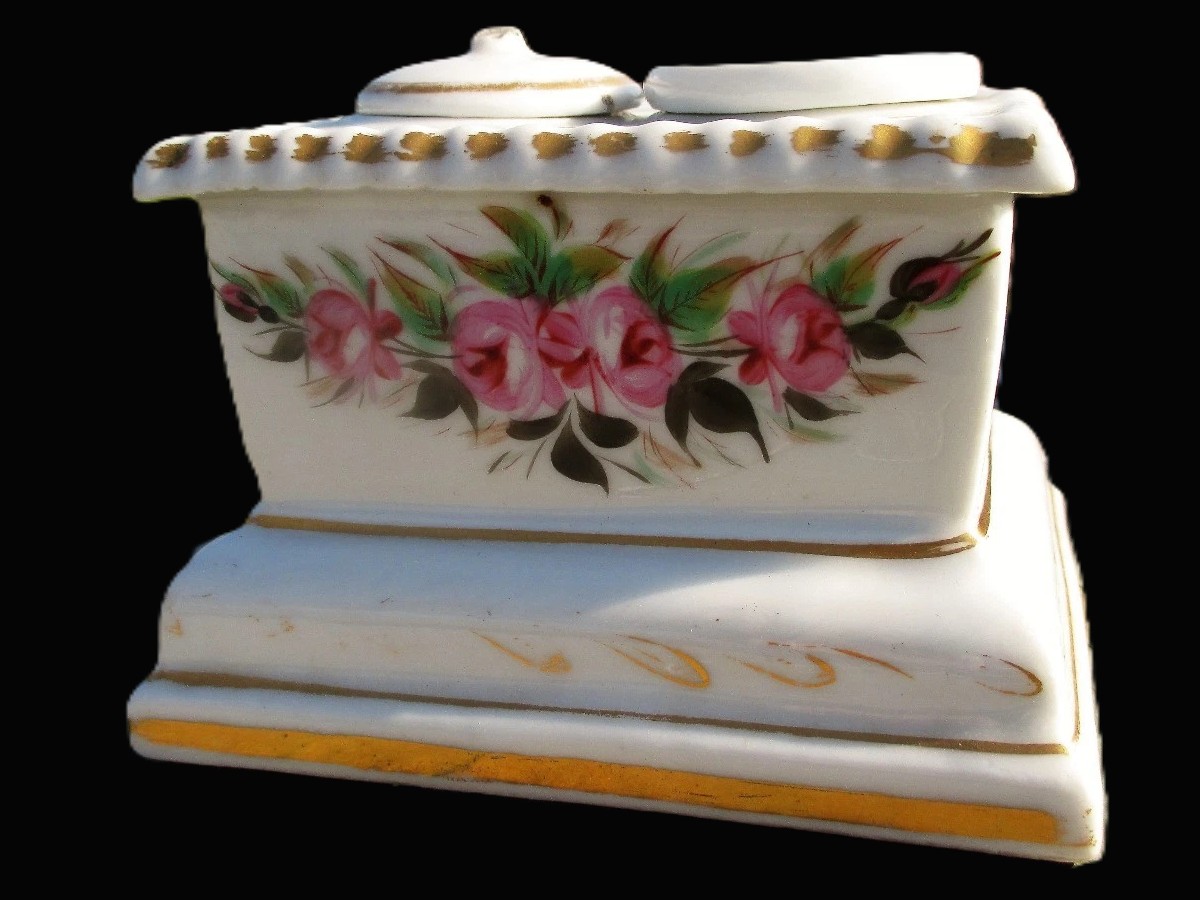
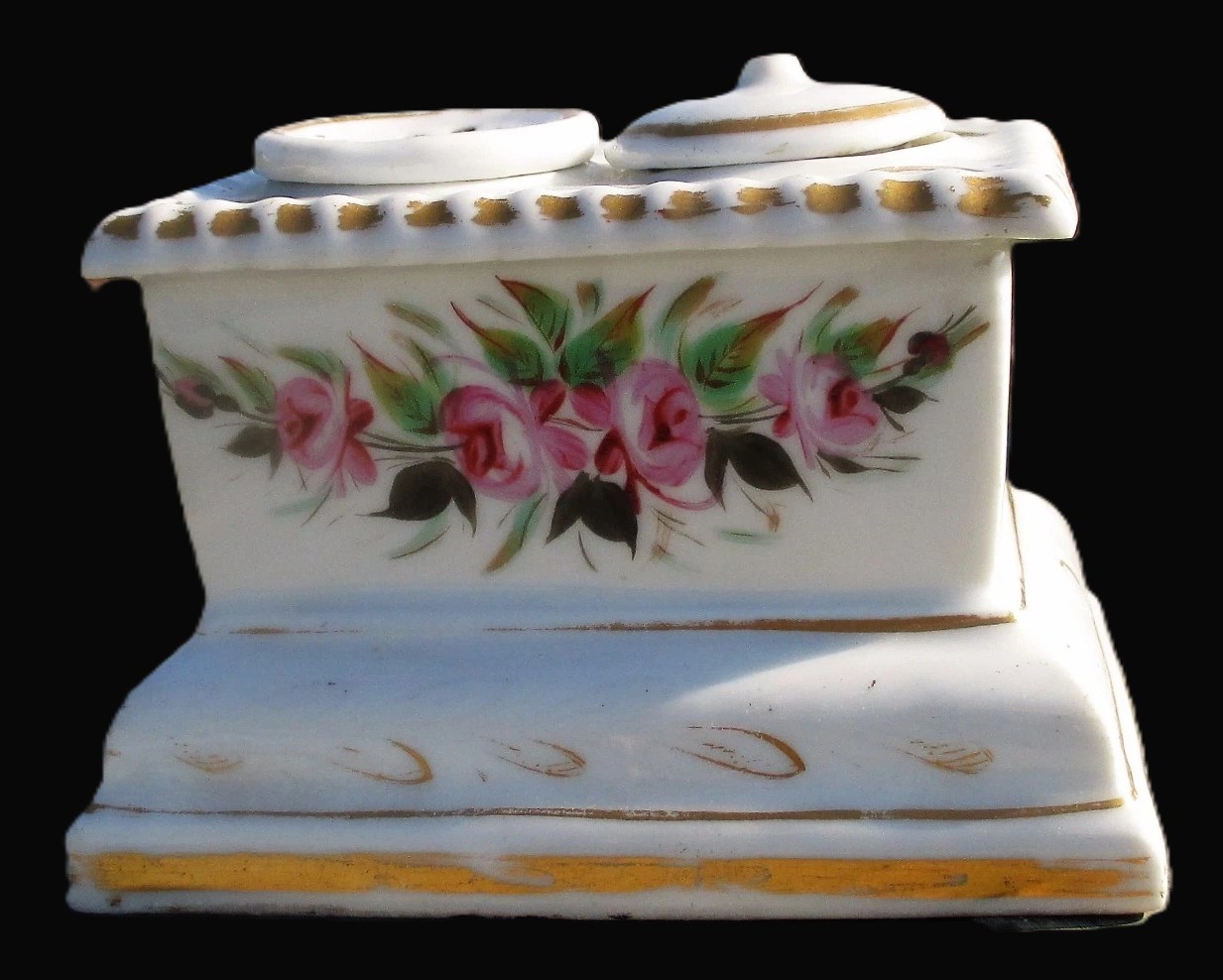
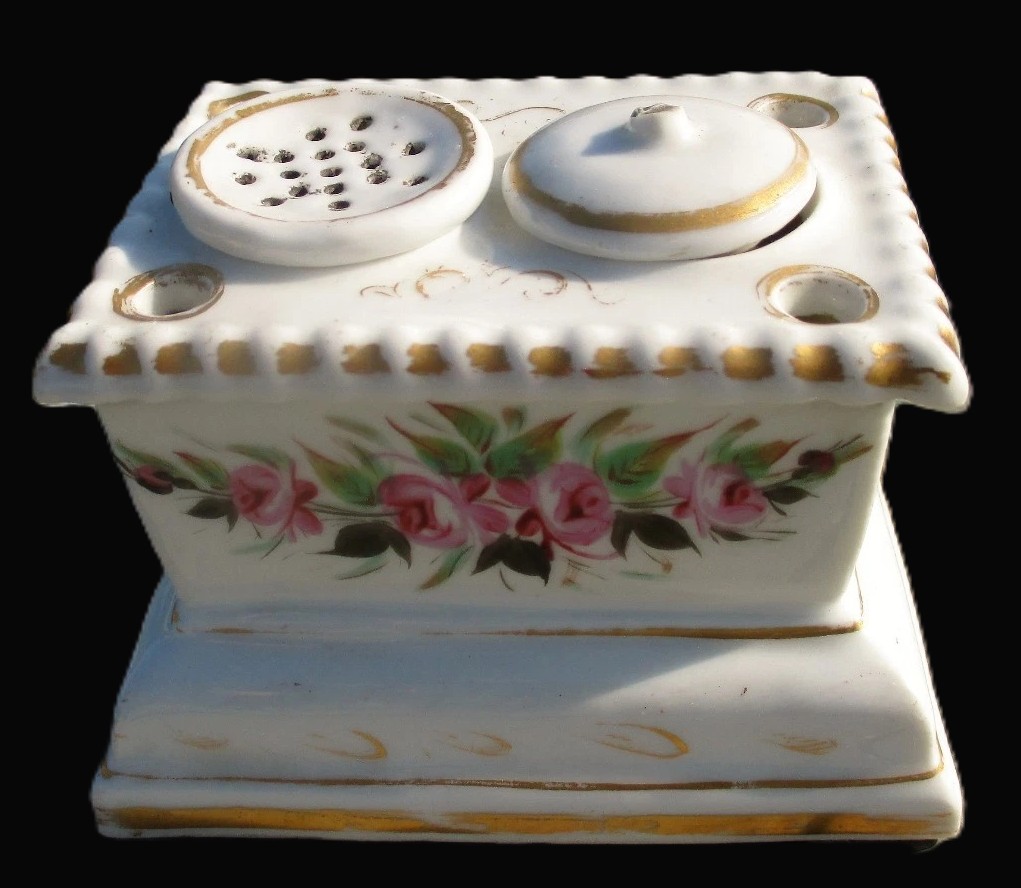
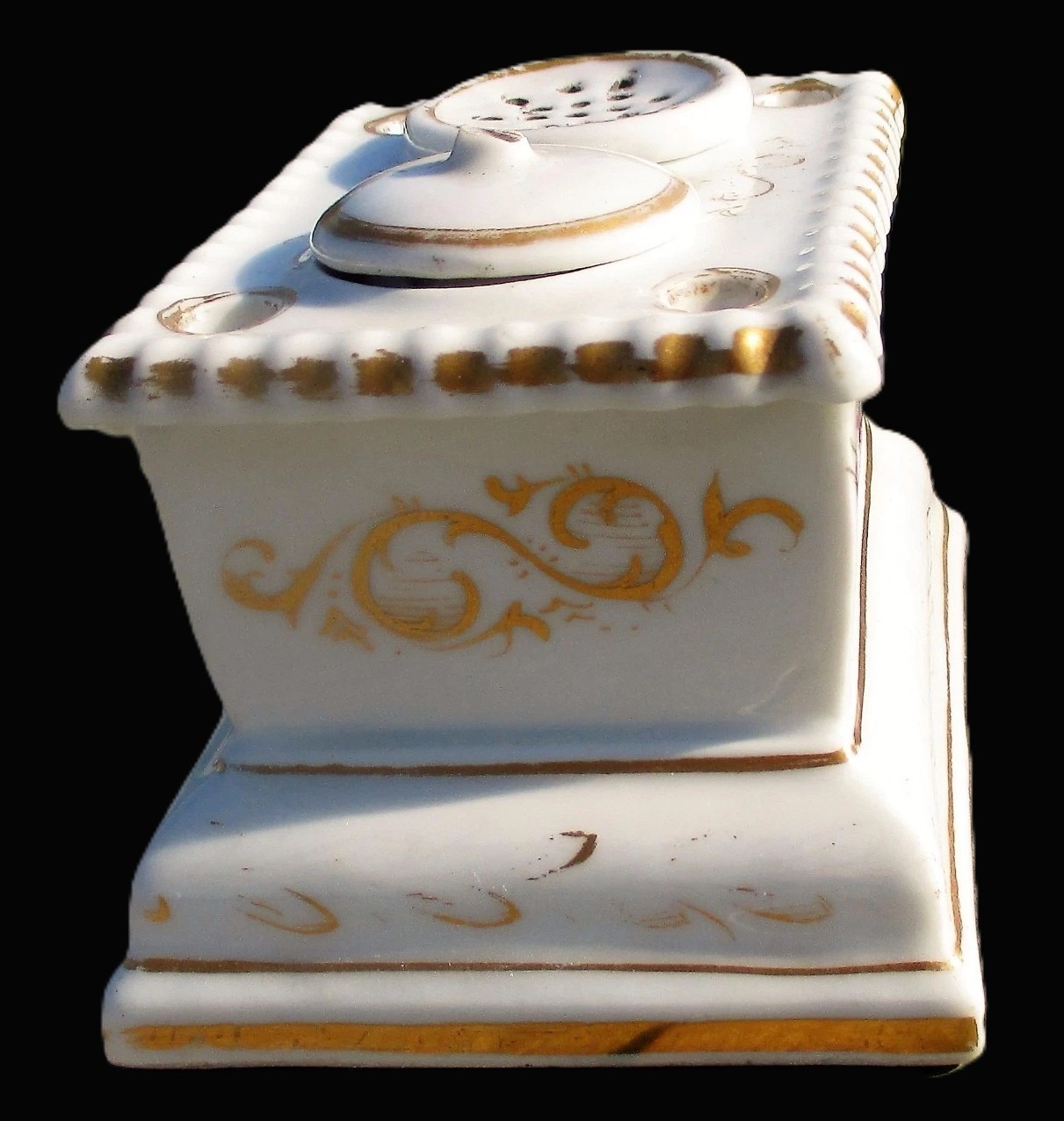
This Vieux Paris (Old Paris) porcelain inkstand features a classic rectangular, stepped-pedestal form decorated with hand-painted floral motifs and heavy gilt trim.
Description
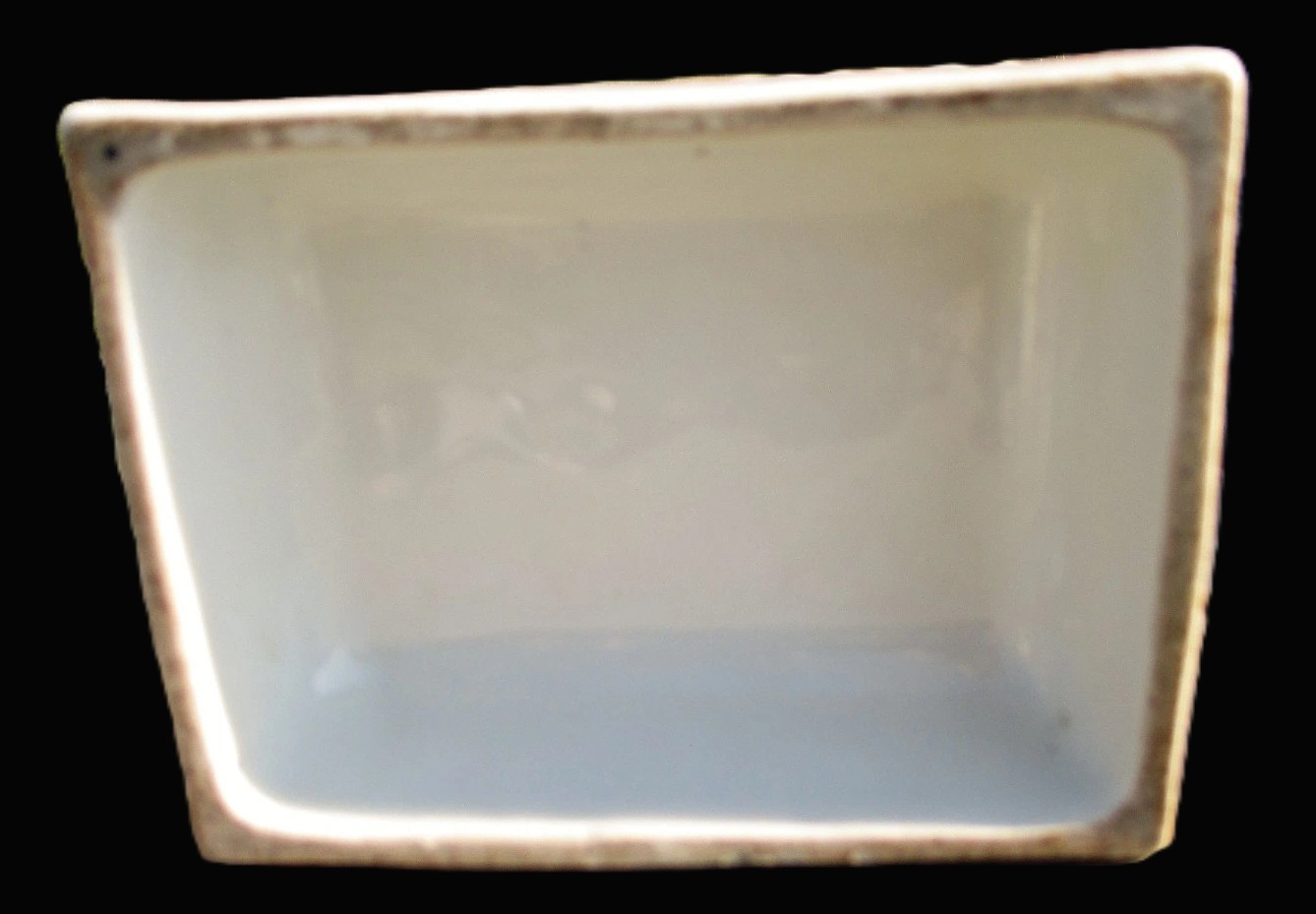
- Form & Structure: Built as a single glazed porcelain block on a flared, stepped pedestal base with a hollow underside, typical of slip-cast 19th-century French ceramics.
- Surface Ornamentation:
- Front & Back: A vibrant spray of hand-painted pink cabochon roses flanked by lush green leaves and dark accent foliage.
- Sides: Fine gold-gilt hand-flourished scrollwork.
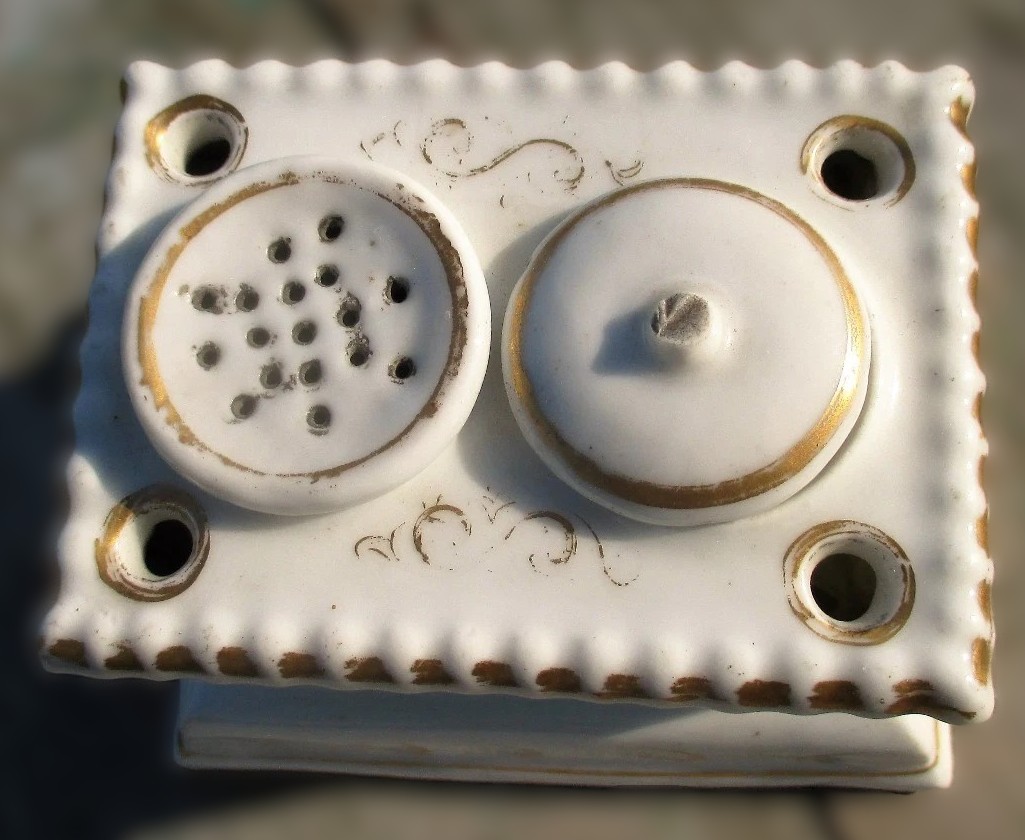
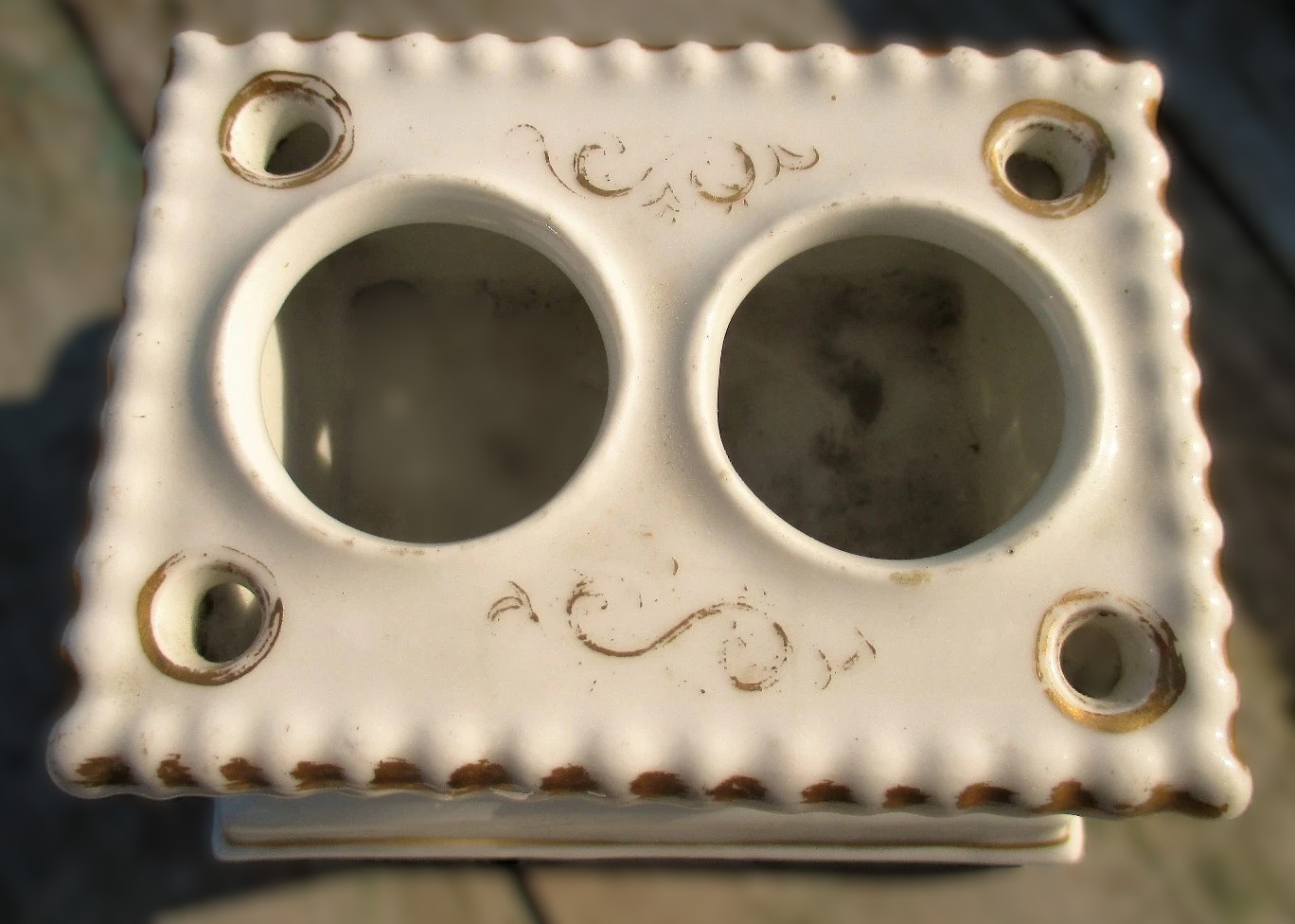
- Top Surface: A scalloped rim with beaded/gadrooned gilt accents along the perimeter. Fine gilded line flourishes surround the central wells.
- Base: Gilded accent bands around the lower moldings and stepped rim.
- Functional Elements:
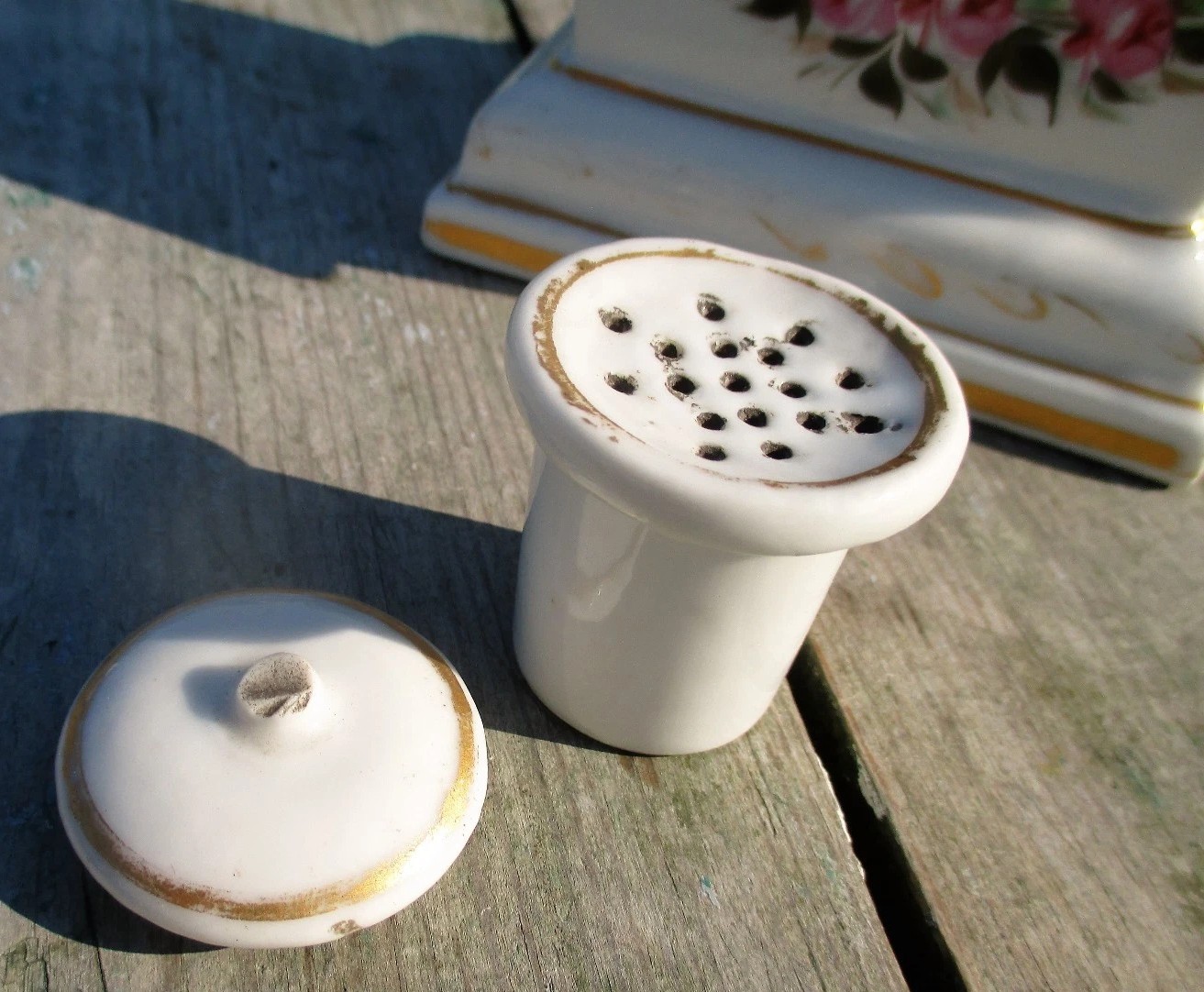
- Wells: Two large main circular openings. One is fitted with its original perforated porcelain sander/pounce pot (used to sprinkle sand or pounce onto wet ink to absorb excess ink). The second circular well is designed to hold a matching porcelain inkwell insert, which is missing on this piece.
- Lid: Comes with its original domed porcelain cover edged in gilt, meant to sit directly over the inkwell insert to prevent evaporation. (Note: The small central finial/knob on top of the lid is chipped/broken off).
- Quill Holes: Four circular holes (one at each corner) rimmed in gilt, meant to hold quills or pens upright when not in use.
Estimated Age & Period
- Date: Circa 1850–1880 (Mid-to-late 19th century).
- Style Period: Second Empire / Napoleon III era. During this period, Paris ceramic workshops heavily produced Rococo Revival and Neoclassical revival writing desk accessories featuring hand-painted roses and rich gilding for the bourgeois market.
Additional Historical & Manufacturing Information
- Manufacturer / Origin: Attributed to Vieux Paris (Old Paris), France. “Vieux Paris” does not refer to a single factory, but rather to the group of independent porcelain decorators and kilns operating in and around Paris from the late 18th to the late 19th century. The smooth white glaze, hand-painted roses, and brushed gilt trim are hallmark traits of Old Paris desktop items.
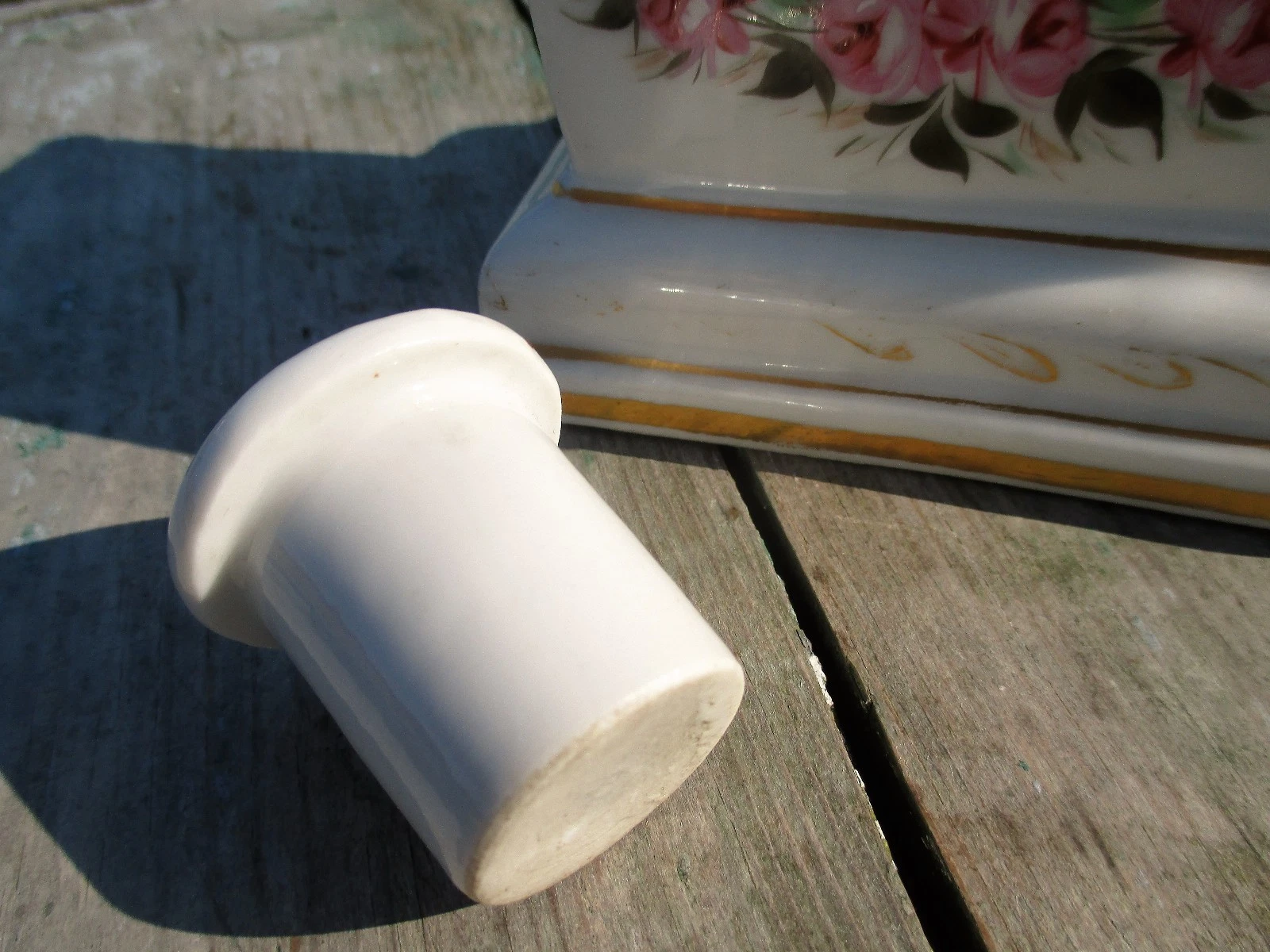
- Marks: As seen in the underside image, the base is completely unglazed and unmarked (or “in the white”), which was standard for many 19th-century French workshop pieces sold through retail boutiques.
- Usage: The presence of both a sander (for pounce) and four quill holes indicates a design crafted during the transitional period of writing instruments—when quills were still widely used alongside dip pens before fountain pens dominated.
Sold for $137 in July 2026
Content disclaimer. The information posted is the owner’s best knowledge and may not have been vetted by the SOIC. We welcome comments, corrections, and additions, working to make our website information comprehensive and accurate.
Join the Society of Inkwell Collectors (SOIC) – it’s free!
Founded in 1981 as a non-profit organization,
we are documenting inkwells (and accessories).
We’re here to help and inform!