


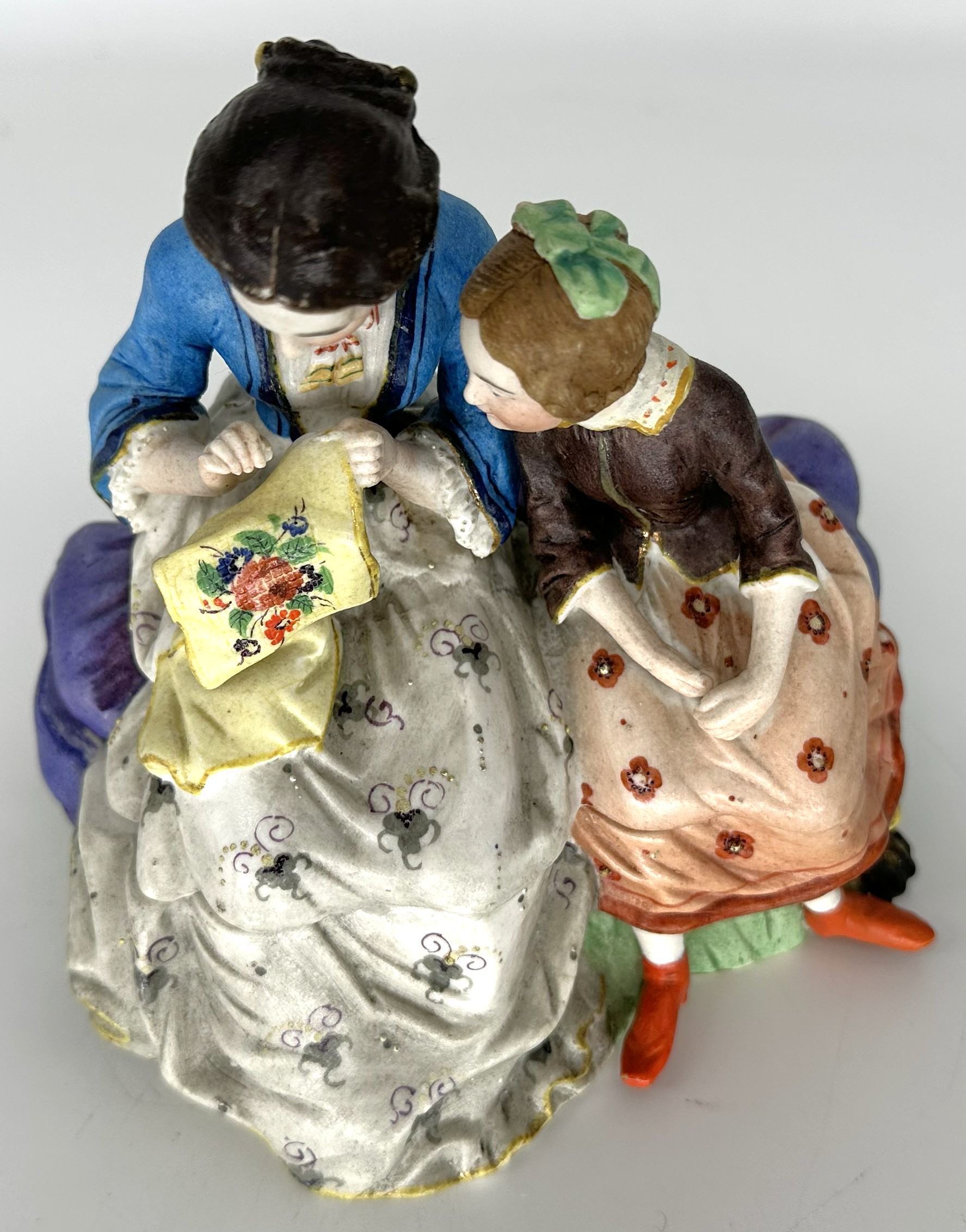


Conta & Boehme Bisque Inkstand: “The Sewing Lesson”
| Categories | Ceramics/Porcelain Figural, Ceramics/Porcelain "Named" Makers |
| Type | Family |
| Material | Porcelain |
| Markings | Unmarked |
| Manufacturer | Conta & Boehme |
| Origin | Germany |
| Date or Era | circa 1870 |
| Measuring | 6 ¾” x 5” x 7” high |
- Material and Construction
- Maker and Era: Conta & Boehme, Pößneck, Thuringia, Germany (Late 19th Century).
- Material: Porcelain Bisque (or Biscuit Porcelain). The entire figural group is crafted from unglazed porcelain, resulting in a matte, soft texture that mimics carved marble—a highly sought-after finish for ornamental figures of the era.
- Functionality: This is a Lift-Top Inkstand. The upper half above the settee forms a removable lid, which lifts to reveal the functional compartments below. The base contains recessed holders for the inkwell and pounce pot (sander).
- The Figural Scene: “The Lesson”
The piece depicts a detailed and tender genre scene—a quiet, instructional moment between two females, likely a mother and daughter:
- The Mother: The woman (mother) is seated comfortably on a finely molded settee. Her posture is attentive as she holds a piece of needlework or lacework (sewing or tatting). Her hands are positioned as if demonstrating or actively working the thread.
- The Daughter: The young girl is seated very close to the mother, leaning in with her entire focus fixed on the needlework. Her pose conveys eager observation and instruction, a classic Victorian image of a daughter learning domestic skills.
- The Setting: The figures are seated on an intricately molded settee. The settee is a piece of furniture art itself, featuring decorative tassels molded along the edges and deeply cushioned seats, emphasizing the comfortable, enclosed parlor setting.
III. Intricate Decoration and Painting
The piece is distinguished by its meticulous parcel-painting applied directly to the unglazed bisque:
- Intricate Painting: The painting is executed with a small palette of muted, sophisticated colors, a technique that allows the details of the mold to remain primary while adding realistic accents:
- Faces and Expressions: The facial features are finely painted with great care, focusing on the eyes and subtle expressions (concentration for the mother, eager curiosity for the daughter).
- Clothing Texture: The figures’ clothing is painted to define folds and borders. The mother’s dress and the settee are painted in deep tones (e.g., maroon, dark blue, or brown) to simulate rich, heavy fabric, contrasting with the stark white of the bisque.
- Marks and Provenance
While the piece is not marked, its highly detailed modeling, the subject matter, and the quality of the bisque finish are definitive features of Conta & Boehme production during their peak period (late 19th century).
Estimated value: $175
Content disclaimer. The information posted is the owner’s best knowledge and may not have been vetted by the SOIC. We welcome comments, corrections, and additions, working to make our website information comprehensive and accurate.
Join the Society of Inkwell Collectors (SOIC) – it’s free!
Founded in 1981 as a non-profit organization,
we are documenting inkwells (and accessories).
We’re here to help and inform!