









Conta & Boehme Inkstand – a Dozing Mother
| Categories | Ceramics/Porcelain Figural, Ceramics/Porcelain "Named" Makers |
| Type | Family |
| Material | Porcelain |
| Markings | See Narrative |
| Manufacturer | Conta & Boehme |
| Origin | Germany |
| Date or Era | circa 1870 |
| Measuring | 5 ½” diameter; 6” high |
- Material and Construction
- Maker and Origin: Conta & Boehme, Pößneck, Thuringia, Germany. The factory operated from 1790 (or 1851 for the partnership) until 1931, specializing in ornamental and whimsical figural items, often known as “Fairings” when they feature humorous or sentimental scenes.
- Material: Porcelain Bisque: The material is unglazed porcelain, identified as bisque (or biscuit) porcelain. This finish leaves the porcelain matte and dull, deliberately created to imitate the refined texture of carved marble sculpture.
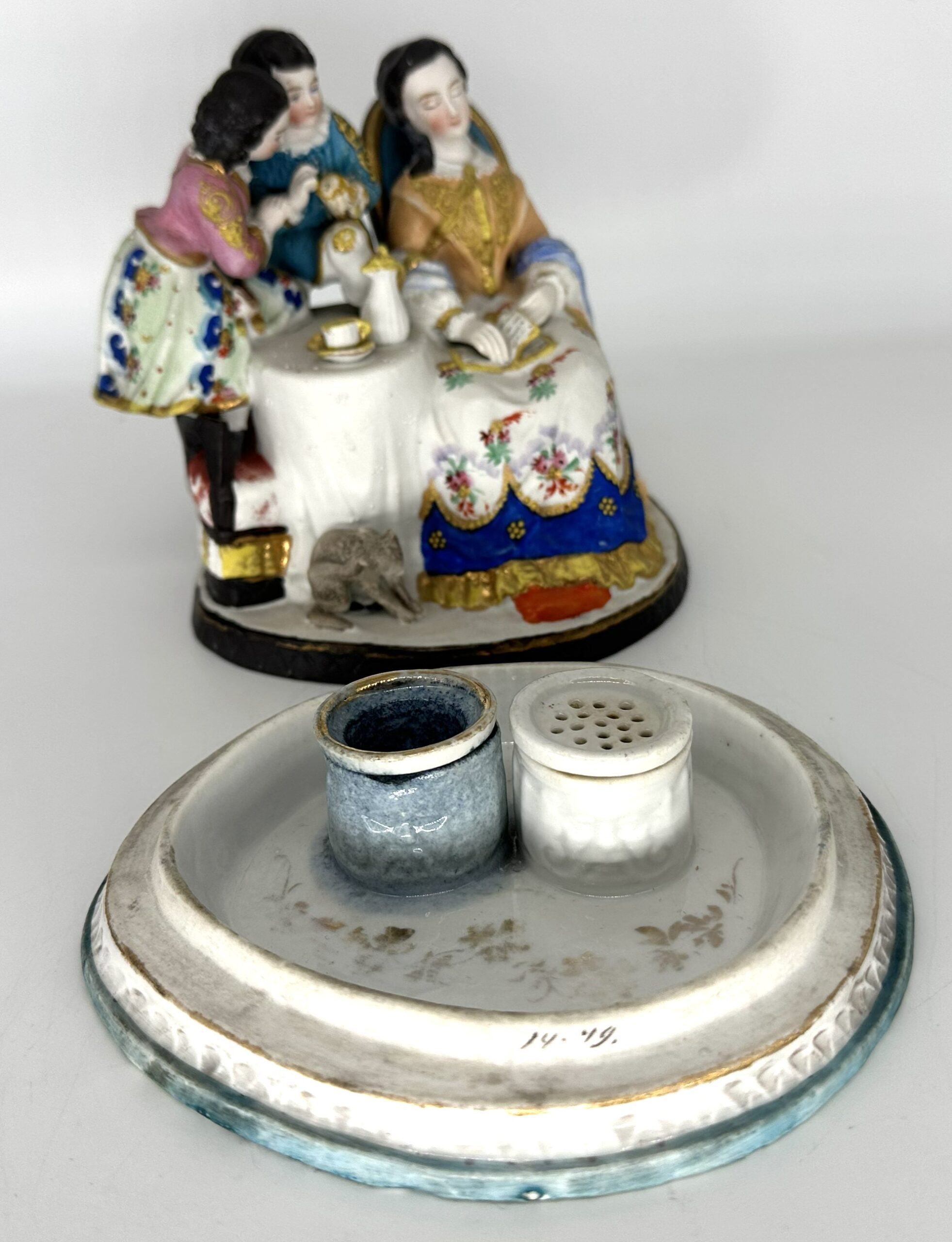
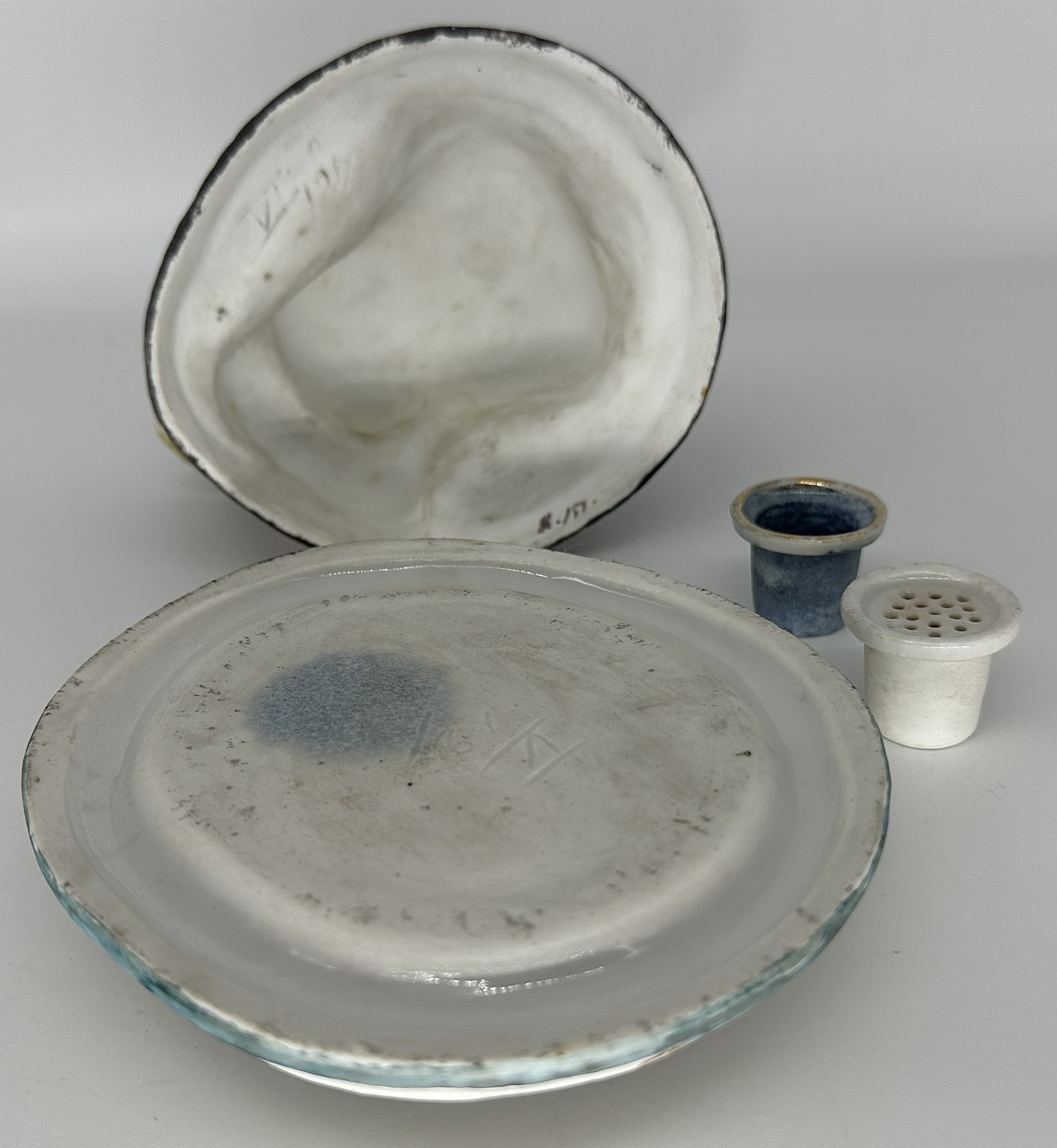
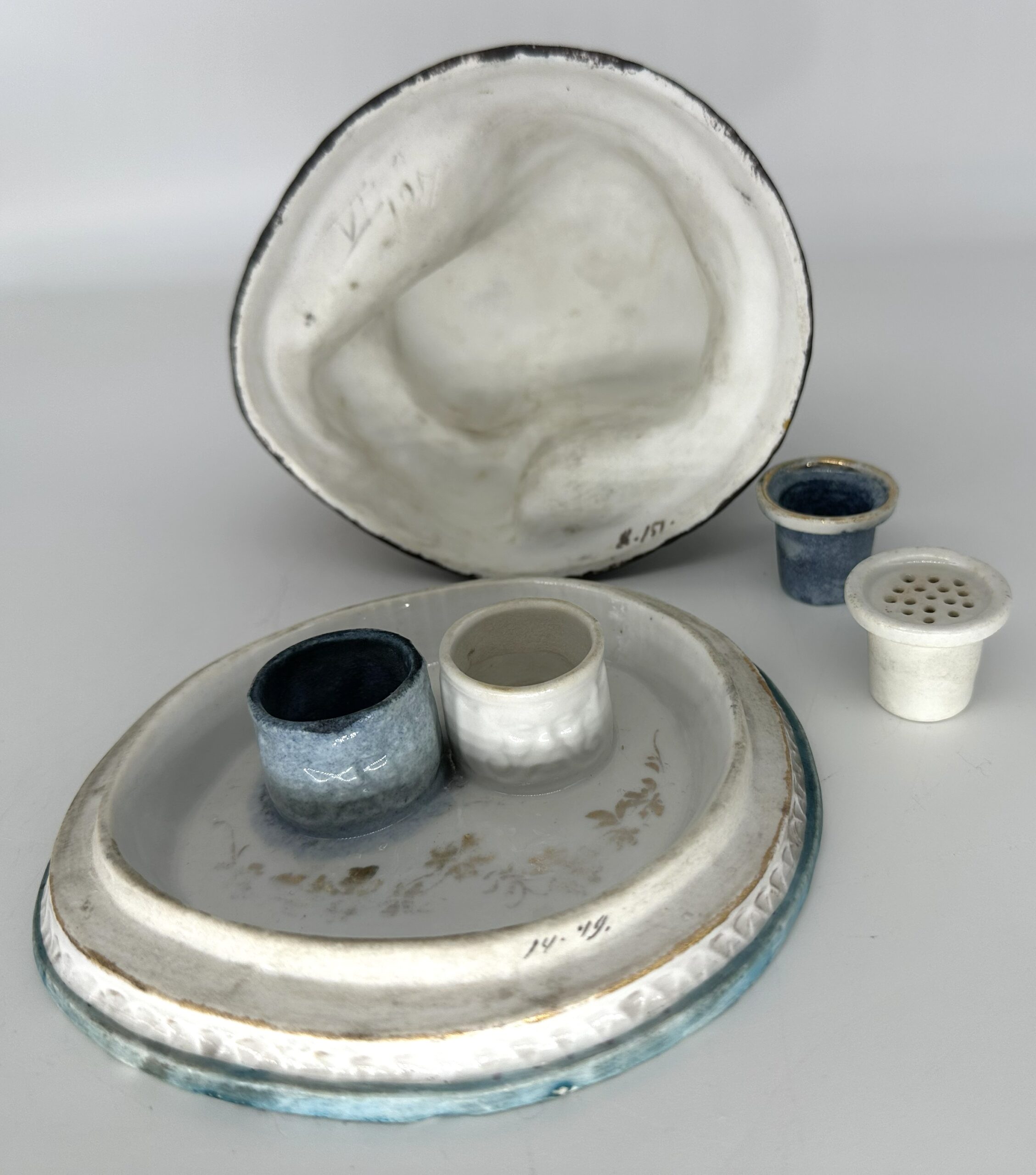
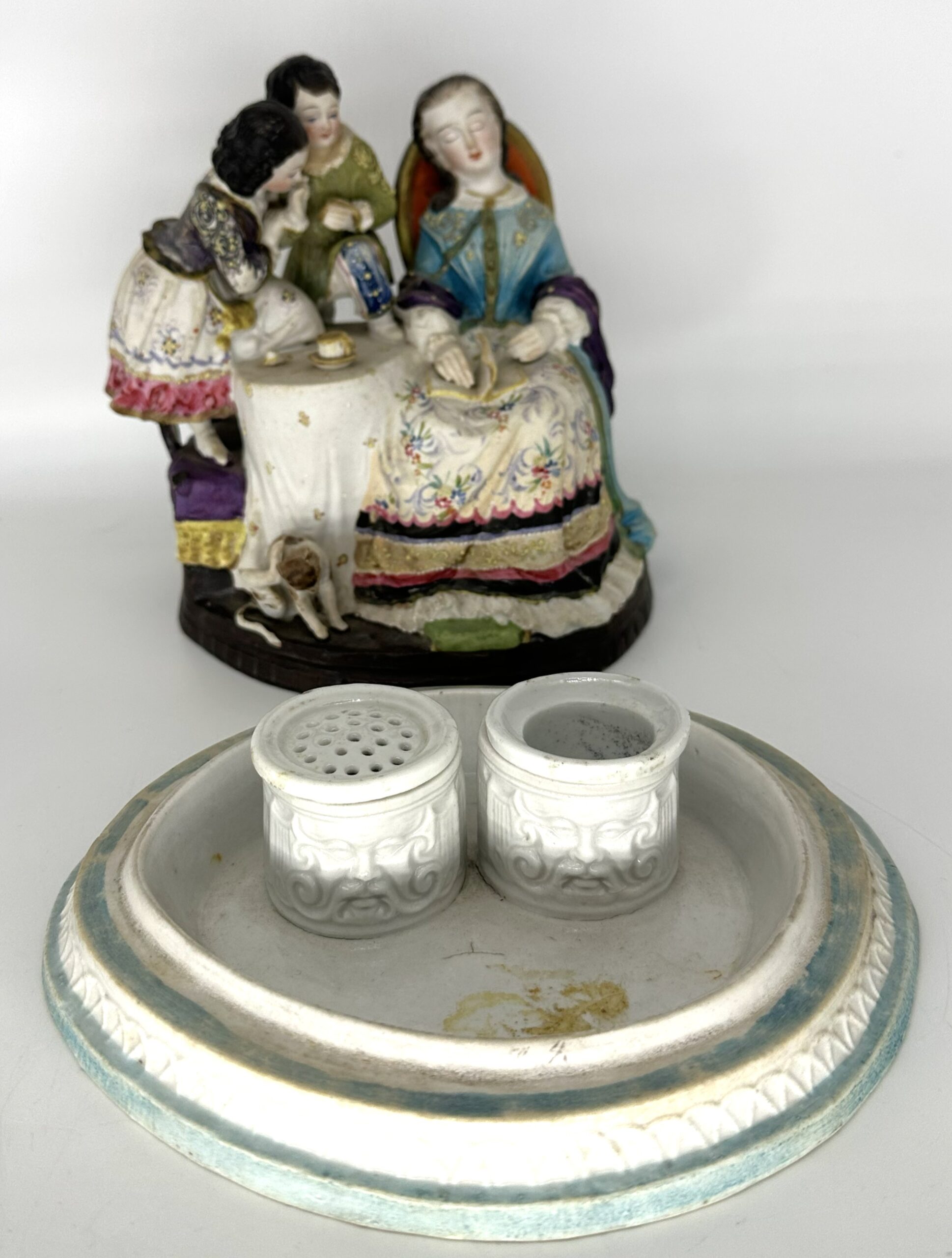
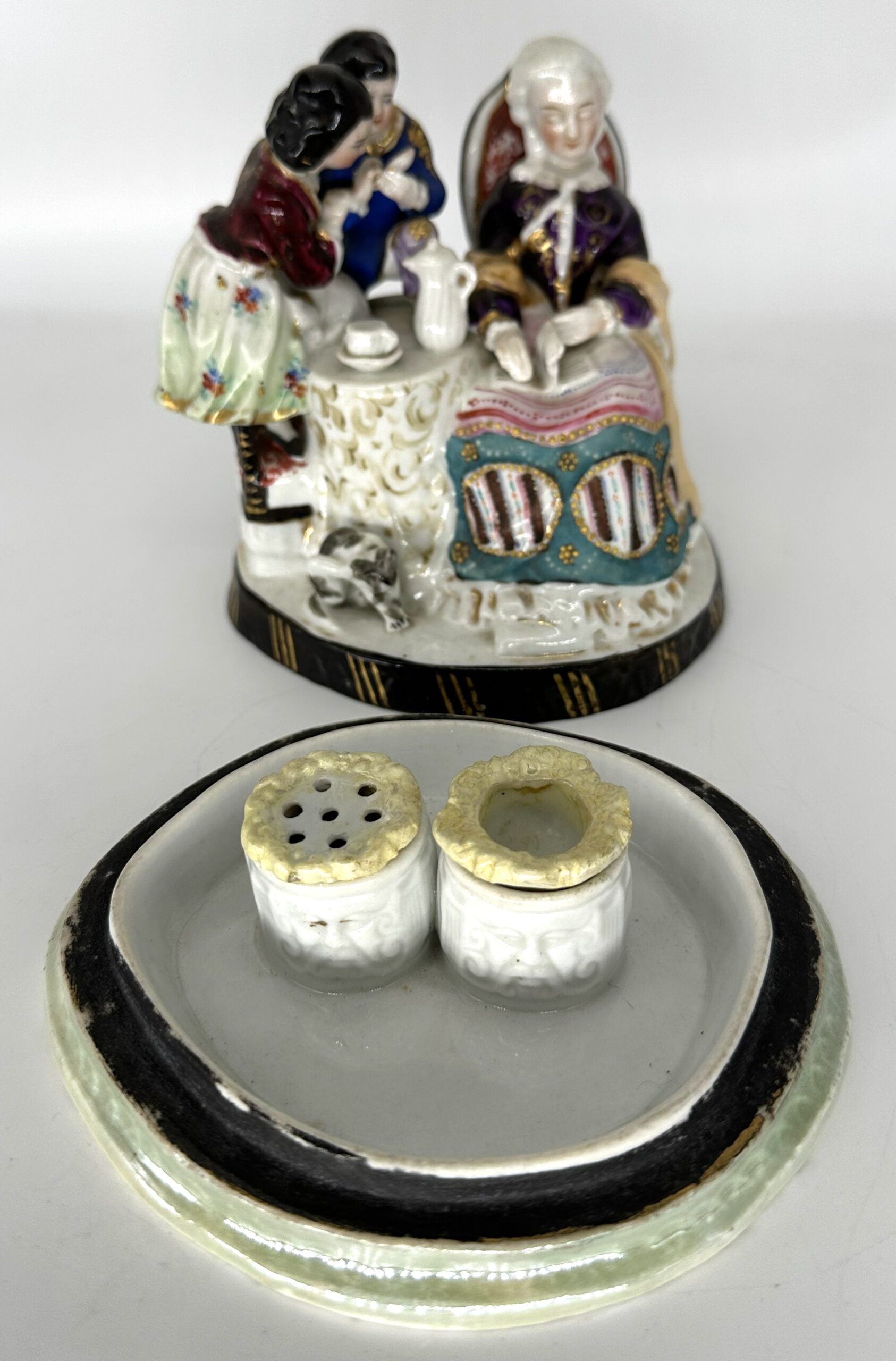
- Functionality: This is a Lift-Top Inkstand. The entire figural group serves as the lid, which lifts off the base to access the two functional cavities below, designed to hold the removable porcelain insert for ink and pounce (sander).
- The Figural Scene: “The Dozing Mother”
The piece depicts a detailed and classic Victorian genre scene—a slice of everyday domestic life, carrying a subtle moral or humorous message about childhood mischief:
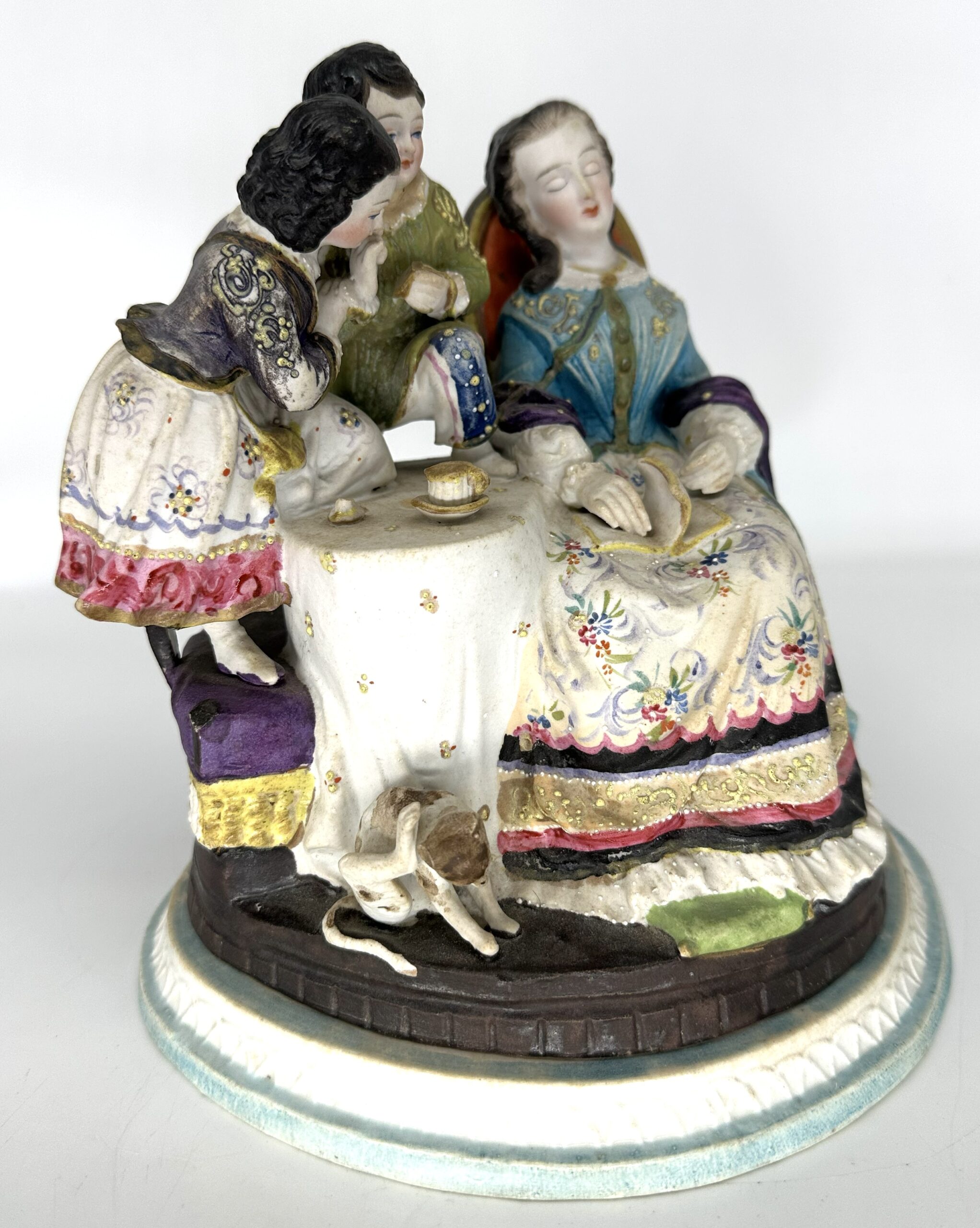
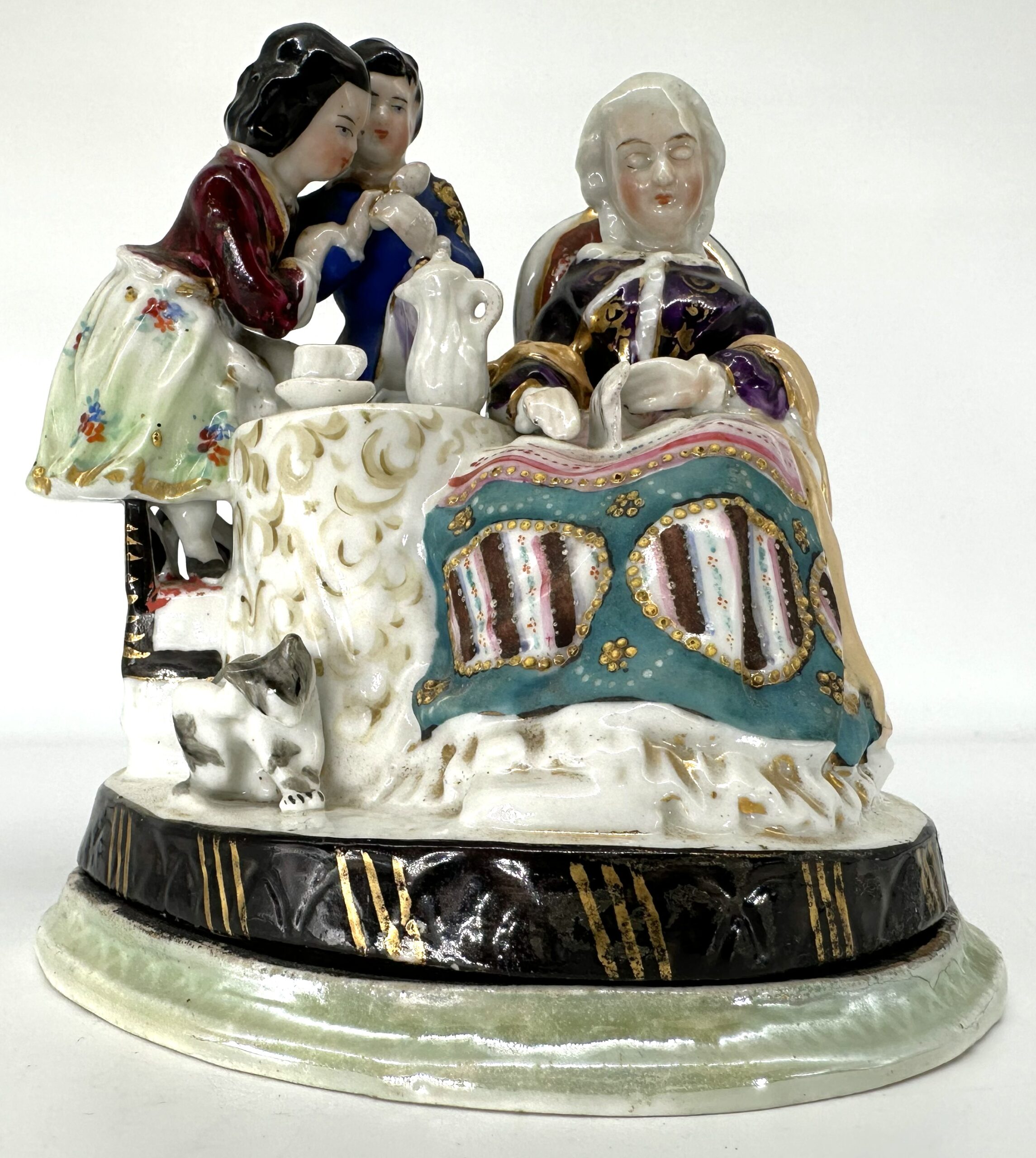
- Central Action: A seated mother, dressed in period attire, is leaning back, holding a book with one hand raised, as if she was turning a page or had just stopped reading. Her pose and closed eyes clearly suggest she is dozing off or nodding to sleep.
- The Children’s Mischief: The central action is counterbalanced by the playful, silent mischief of the two children (a boy and a girl). They are depicted carefully clambering onto a small table, attempting to reach the objects atop it. The table is set with a teapot, cup, and saucer.
- Supporting Figures:
- The Cat: A small cat is seated near the base of the table, contributing to the domestic realism by being actively distracted, molded in the act of scratching itself.
- The Base: The figures are arranged on a molded, oval base.
III. Decoration and Hand-Painting
The decoration combines hand-painting with ornate three-dimensional detailing:
- Detailed Hand-Painting: The figures are parcel-painted with great precision.
- Faces and Eyes: Exquisite detail is reserved for the faces, where the artist has rendered the eyes with tiny pupils and fine lids, giving the mother a genuinely sleepy expression. Rosy blush adds warmth to the cheeks, and the hair is finely painted in shades of brown or blonde.
- Clothing: The clothing is defined by rich, detailed color. The mother’s dress and the children’s outfits are accented with contrasting colors, highlighting the folds and textures of the fabric.
- Raised Embellishments: This is a distinctive mark of high quality:
- Gilded Relief: The paint includes gilded, raised embellishments (gold applied in thick enamel or paste) used on the clothes to simulate expensive embroidery, trim, or buttons.
- “Beads” Detail: Tiny, molded raised “beads” are visible along the edges of the collars, sleeves, and the tablecloth.
- Functional Interior: The inkwell holders inside the base are adorned with a molded mustachioed face.
- Marks and Provenance
The underside of the piece contains factory markings that help verify its origin:
- Incised Mark: The underside of the base is incised with the Roman numeral “V”. This is a factory-applied size mark. The numeral’s value often corresponds to the size category, with a smaller number traditionally indicating a larger (or premium) piece in that series.
- Painted Mold Numbers: The presence of mold numbers painted on both the base and the top further confirms its factory production and helps catalog the specific mold used for this figural scene.
Historical Context: Conta & Boehme
Conta & Boehme (established fully in 1851 in Pößneck, Thuringia) was one of the most prominent German porcelain manufacturers specializing in figural ornamental wares during the Victorian era.
- Fairings Market: They dominated the market for “fairings”—small, colorful porcelain figures given as prizes at fairs or sold as souvenirs. This piece, while an inkstand, is an example of the larger, more complex figural groups they produced for home display and use.
- Style: Their pieces are known for their high quality of molding, sentimentality, and detailed painting. They specialized in adapting popular themes and prints of the day into three-dimensional, humorous, or tender ceramic sculptures.
- Bisque vs. Glaze: The choice of bisque for this piece was a conscious decision to give it a more refined, sculptural, and art-like quality, often contrasting with the brighter, fully glazed, and cheaper versions offered by competitors.
Additional Examples:
A second set of pictures show a larger version of this “Dozing Mother” inkstand. It measures 7” in diameter and is 7 ½” high. The size mark is Roman numeral III.
A third set of pictures show the smallest version. It is made of glazed porcelain. There is no Roman numeral size mark. The painted annotation “6.15” shows on both the top and bottom pieces, indicating they belong together. Incised on the bottom is the number 128.
Estimated value: $150
Content disclaimer. The information posted is the owner’s best knowledge and may not have been vetted by the SOIC. We welcome comments, corrections, and additions, working to make our website information comprehensive and accurate.
Join the Society of Inkwell Collectors (SOIC) – it’s free!
Founded in 1981 as a non-profit organization,
we are documenting inkwells (and accessories).
We’re here to help and inform!