

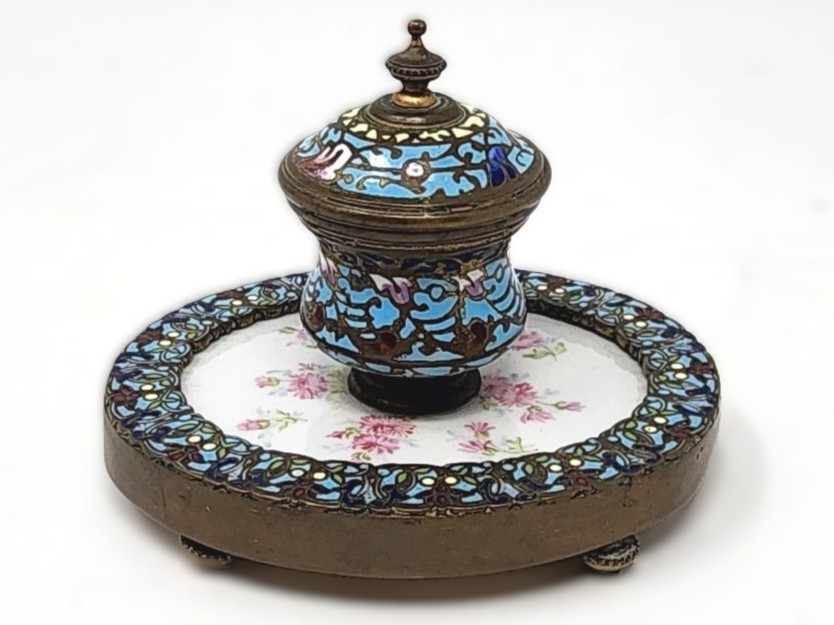
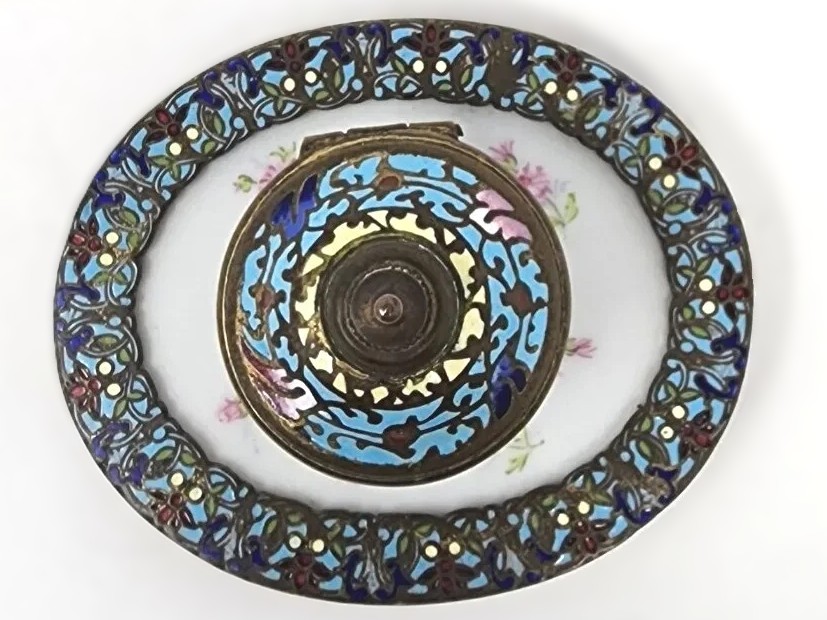
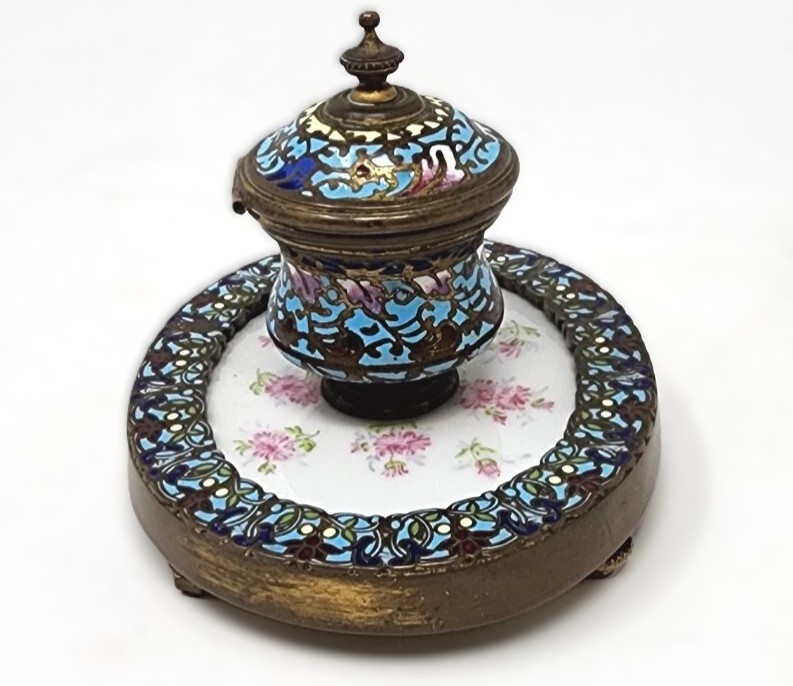
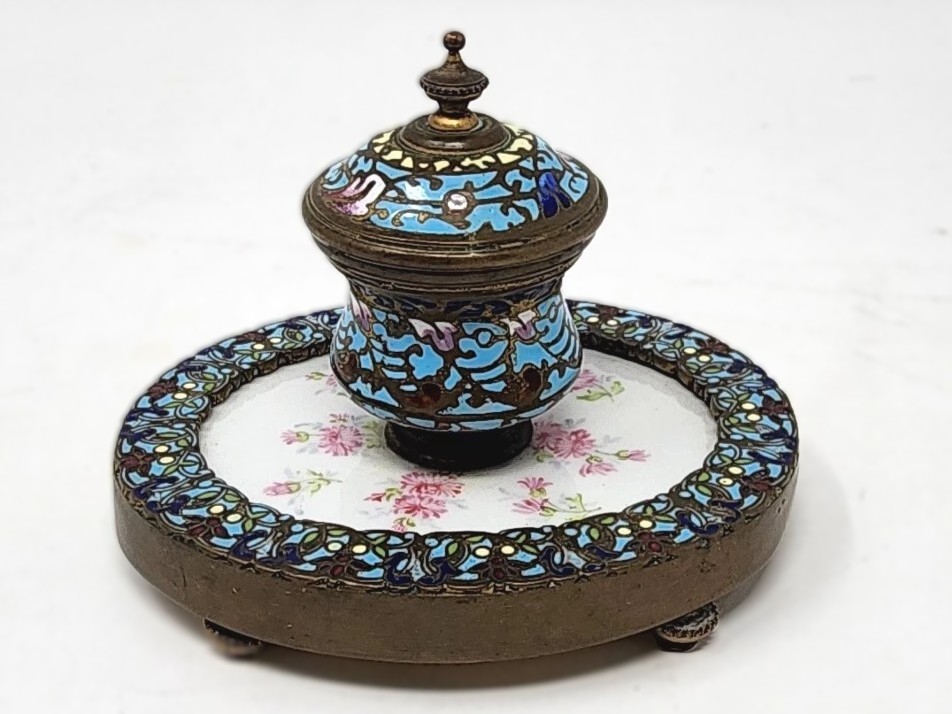
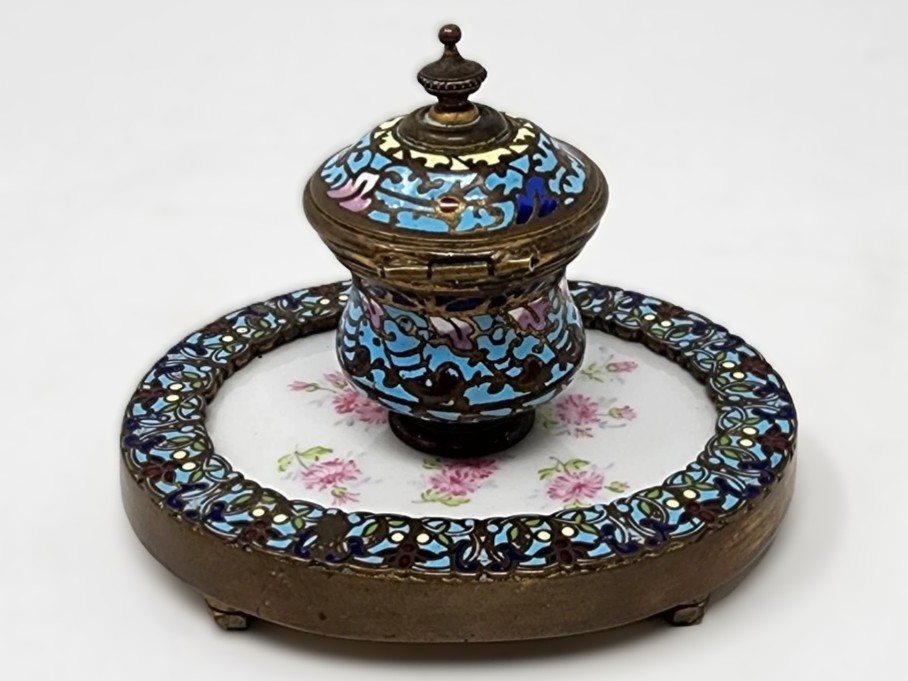
Champlevé Enamel and Floral Porcelain Inkstand
| Categories | Enameled Metal |
| Type | Champlevé |
| Material | Enameled Brass/Bronze/Metal |
| Markings | Unmarked |
| Manufacturer | Undetermined |
| Origin | France |
| Date or Era | circa 1890 |
| Measuring | 4” x 3 ½” x 3 ¼” high |
Description
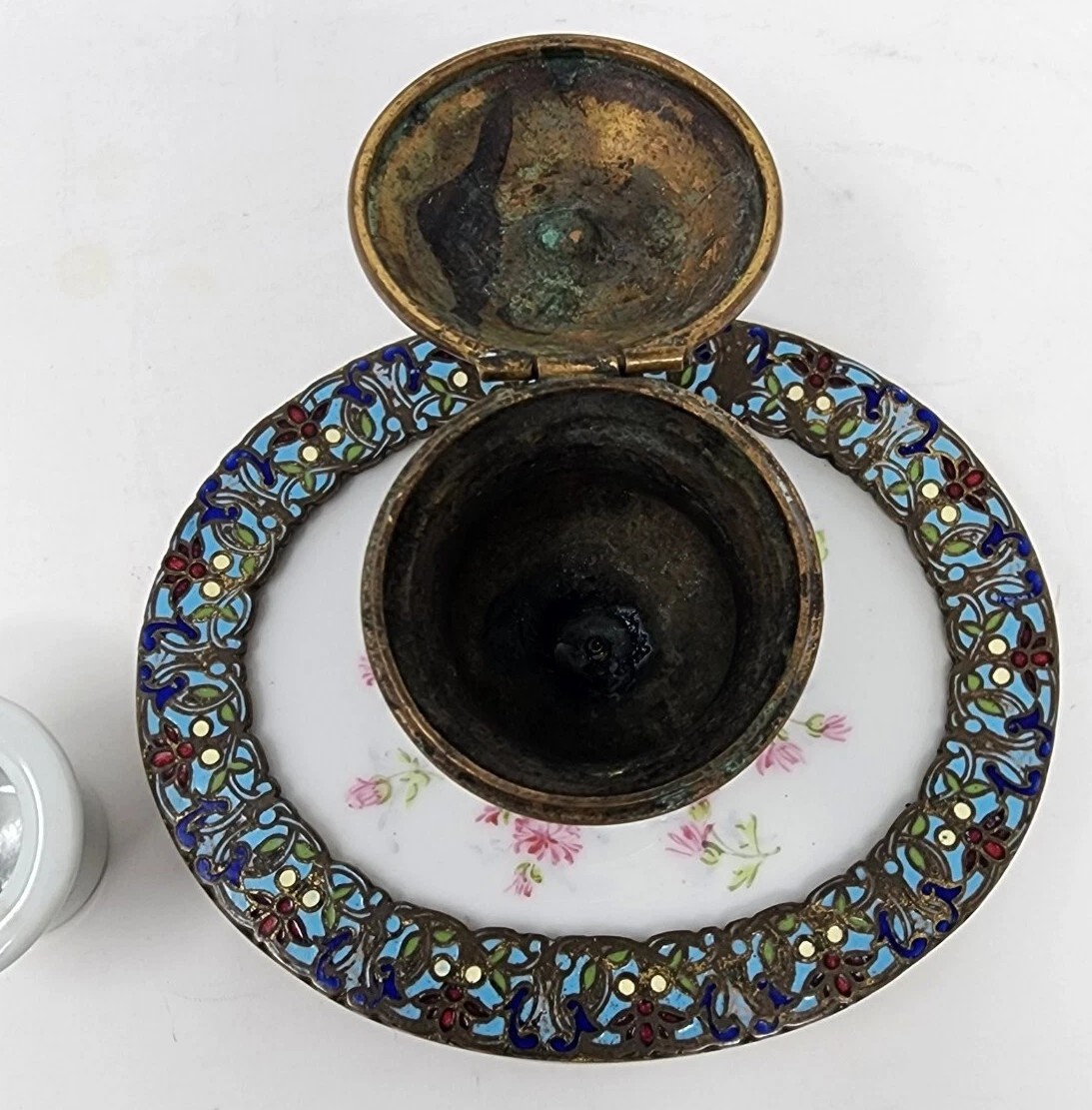
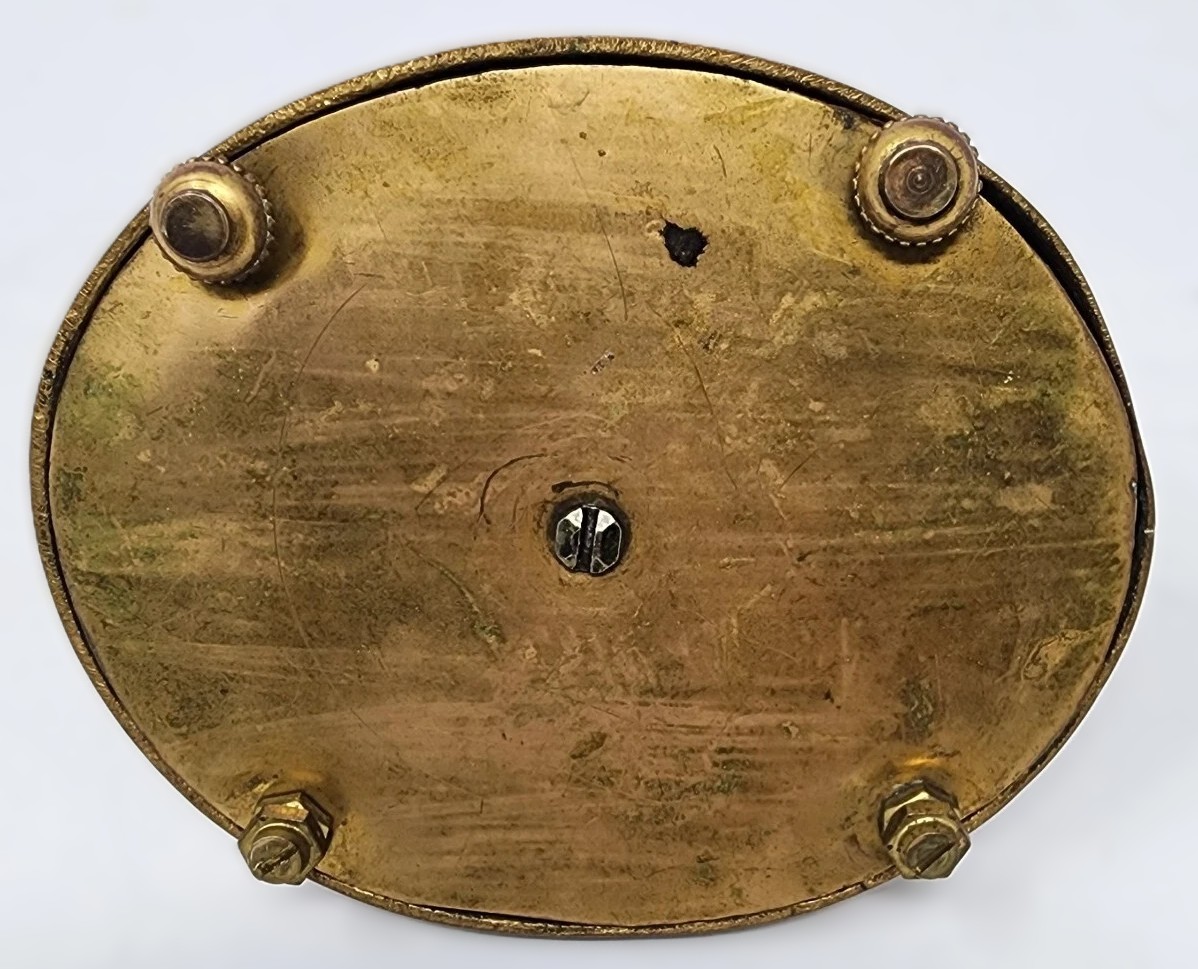
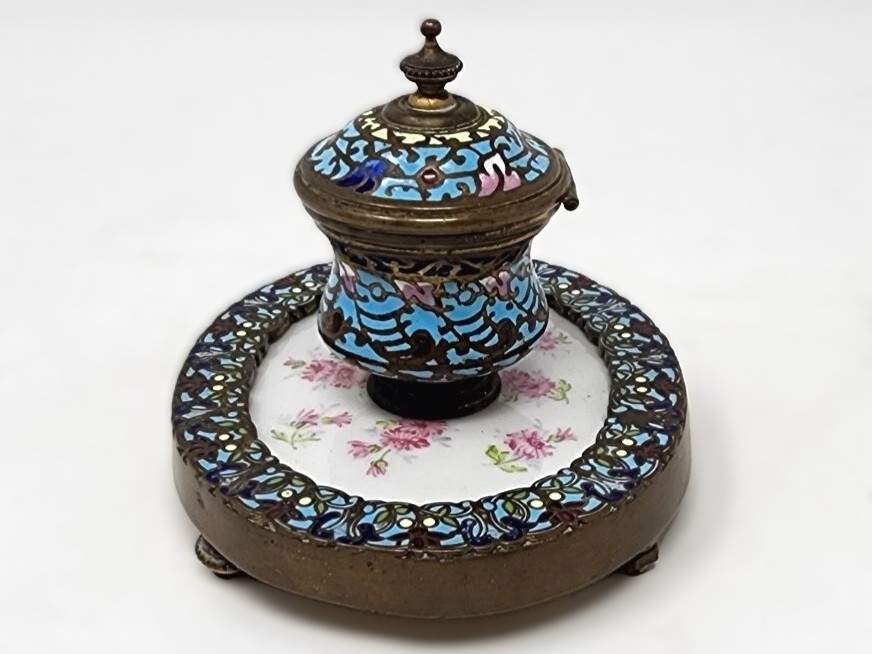
- Base Structure: The inkstand features an oval, raised brass base set on four small, turned button-style feet. The bottom plate is secured with a central machine screw, which holds the urn-shaped inkwell mount in place.
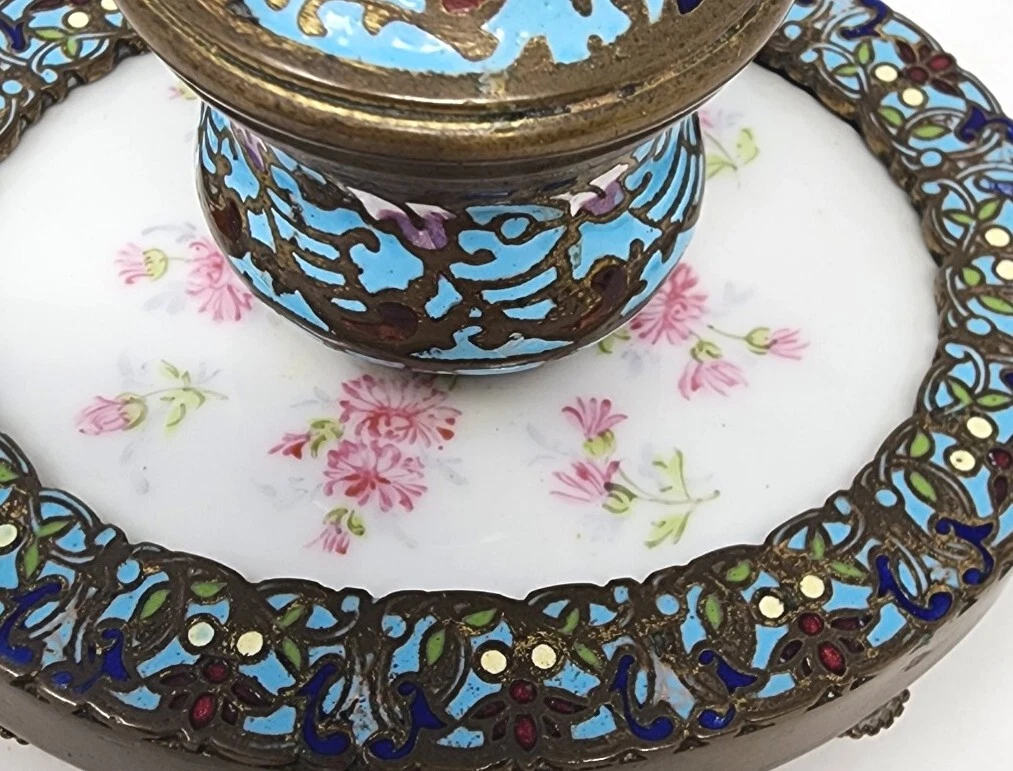
- Porcelain Tray: Embedded within the brass frame is an oval porcelain plate decorated with hand-painted delicate pink and magenta sprigs of flowers against a crisp white ground.
- Enamel Border: Surrounding the central porcelain plate is a decorative rim featuring champlevé enameling. The pattern consists of stylized scrollwork, foliage, and geometric roundels in vibrant shades of sky blue, cobalt blue, dark red, and pale yellow/green.
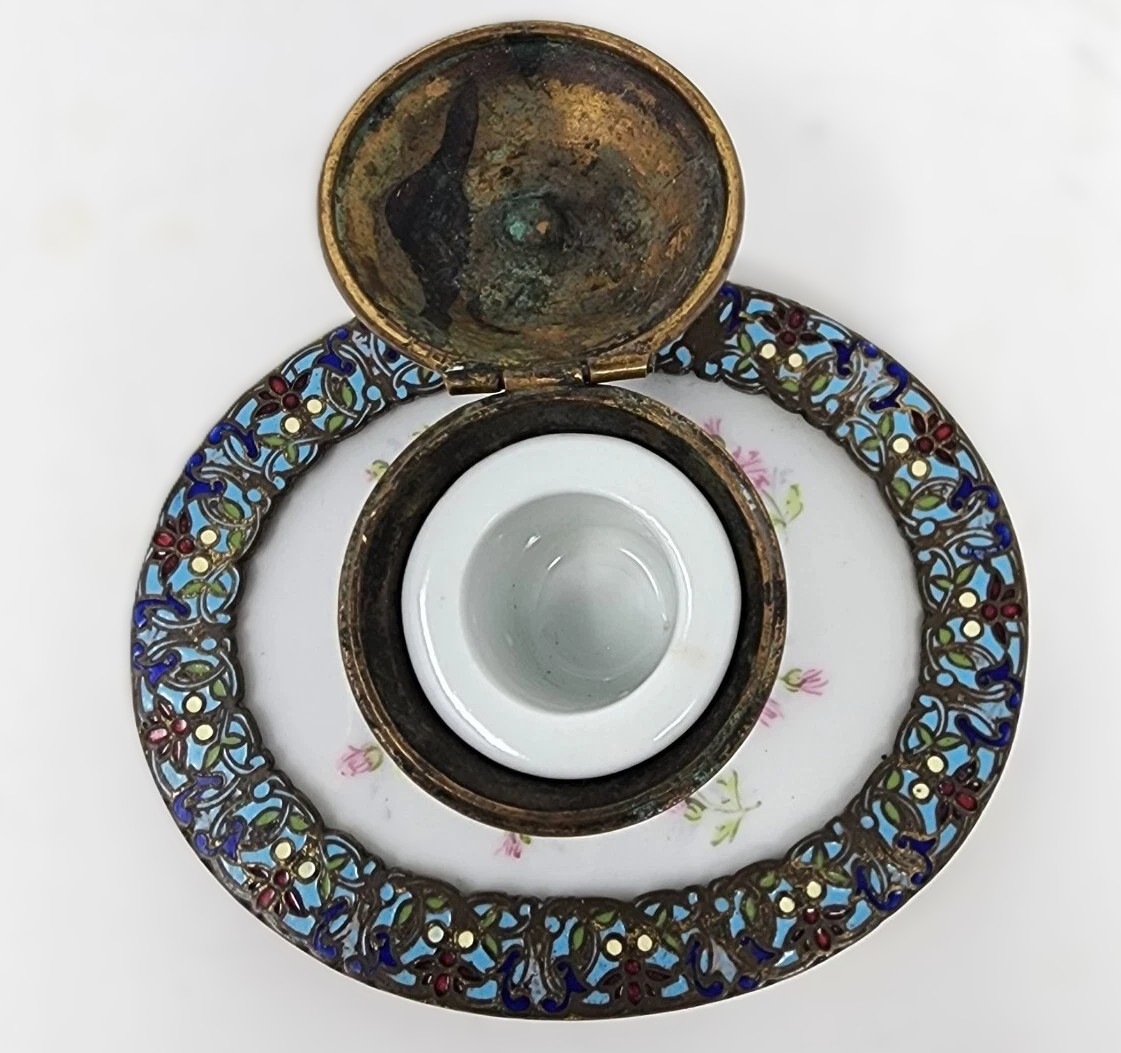
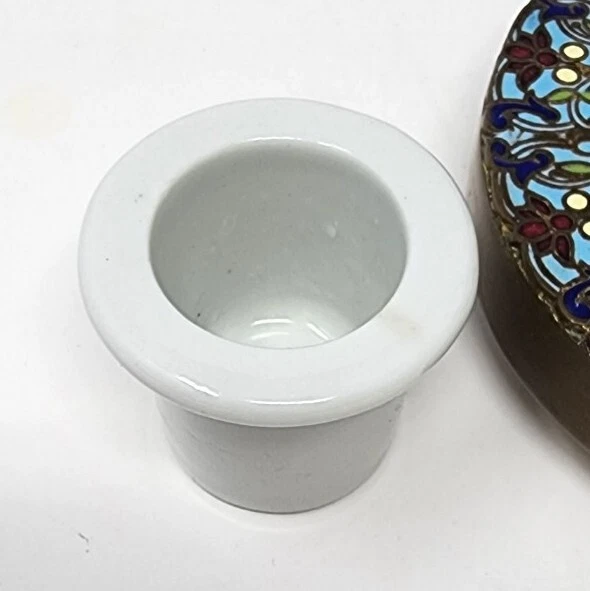
- Inkwell & Lid: Mounted centrally is a small, urn-shaped brass inkwell housing a removable white porcelain insert. The outer surface of the urn and its hinged, finial-topped lid are decorated in matching polychrome champlevé enamel with arabesque scrollwork.
Origin & Date
- Origin: France
- Period: Late 19th Century (c. 1880–1900)
- Context: During the Napoleon III (Second Empire) and early Belle Époque periods, French metalworkers and enamellers specialized in combining gilded bronze mounts, fine porcelain, and colorful champlevé enamel to produce ornate luxury goods for the writing desk.
Explanation of Champlevé Enamel
Champlevé (French for “raised field” or “elevated ground”) is an enameling technique where cells or recessed troughs are carved, etched, cast, or struck into the surface of a metal object (typically copper, bronze, or brass).
- Recessing: Depressions are created in the metal base, leaving thin metal walls or ridges separating the design elements.
- Filling: Powdered glass enamel frit mixed with water or oil is applied into these recessed areas.
- Firing: The object is fired in a kiln so the powdered glass melts, fuses, and adheres to the metal.
- Polishing: Once cooled, the surface is ground smooth and polished level with the surrounding metal borders, leaving a seamless pattern where colored glass and gilt metal sit flush with one another.
Unlike cloisonné (where thin wires are bent and soldered onto a flat metal surface to create cells), champlevé relies on metal that has been carved out or cast directly with built-in channels.
Sold for $300 in July 2026
Content disclaimer. The information posted is the owner’s best knowledge and may not have been vetted by the SOIC. We welcome comments, corrections, and additions, working to make our website information comprehensive and accurate.
Join the Society of Inkwell Collectors (SOIC) – it’s free!
Founded in 1981 as a non-profit organization,
we are documenting inkwells (and accessories).
We’re here to help and inform!