

Inkipedia
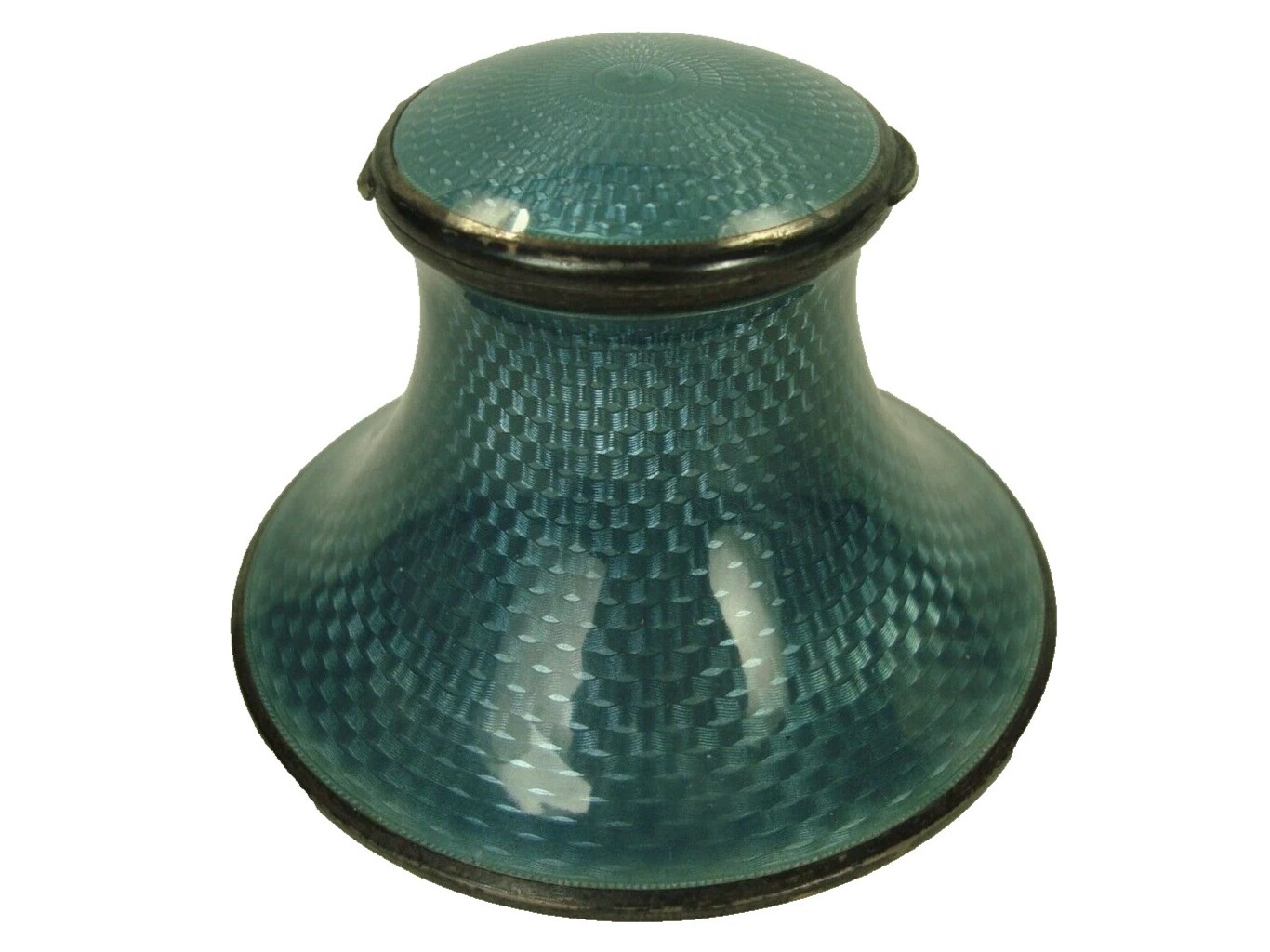
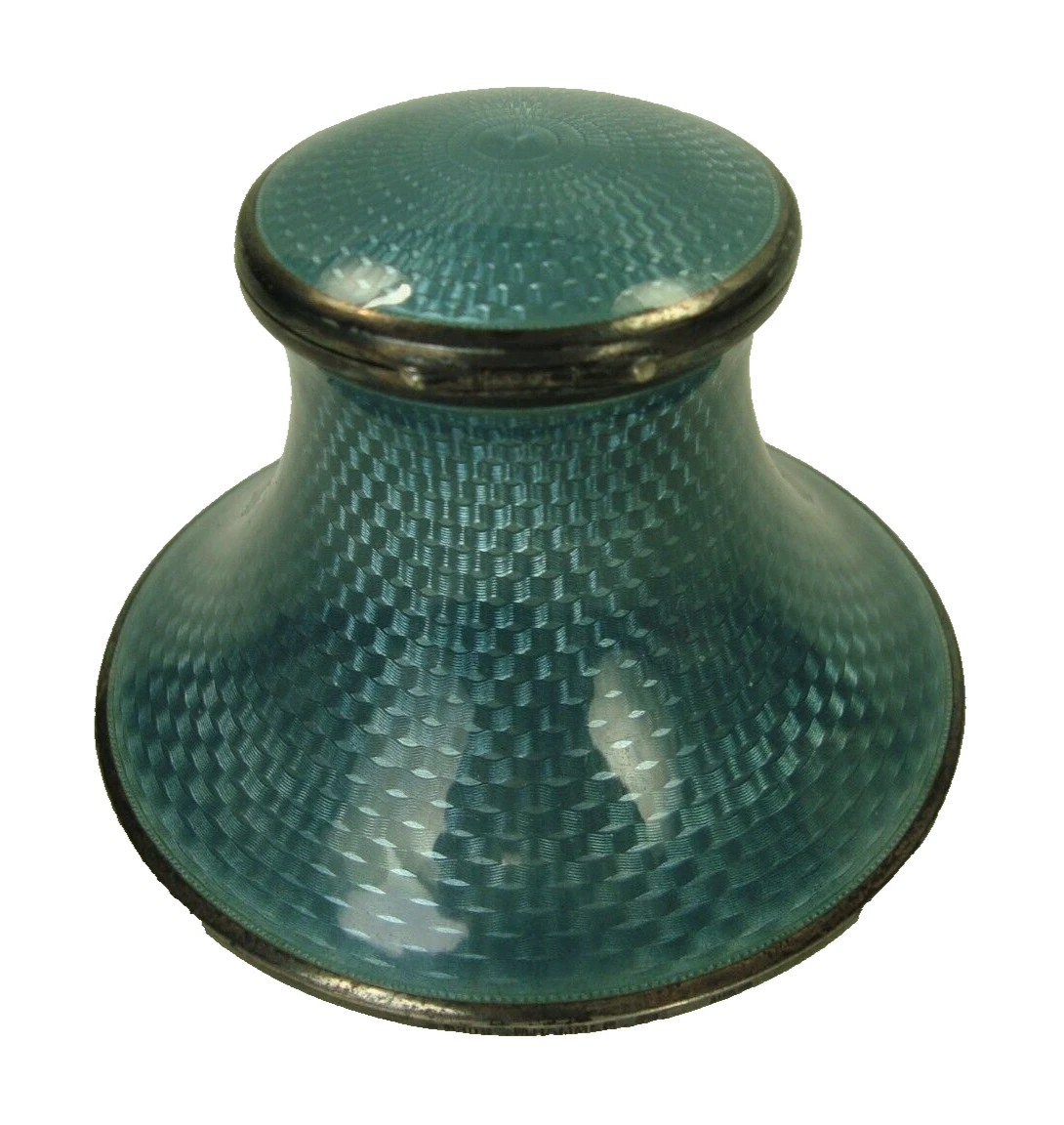
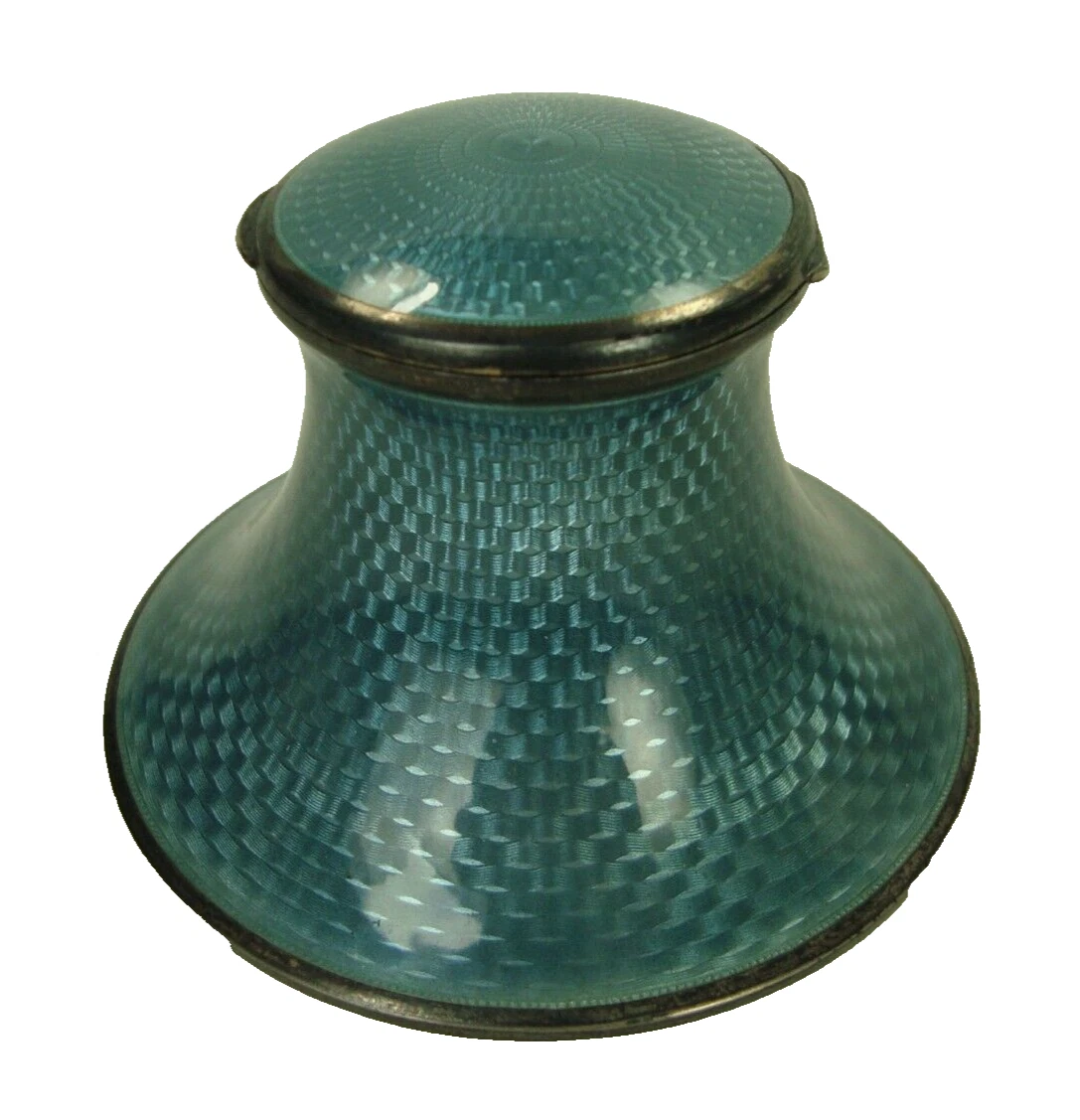
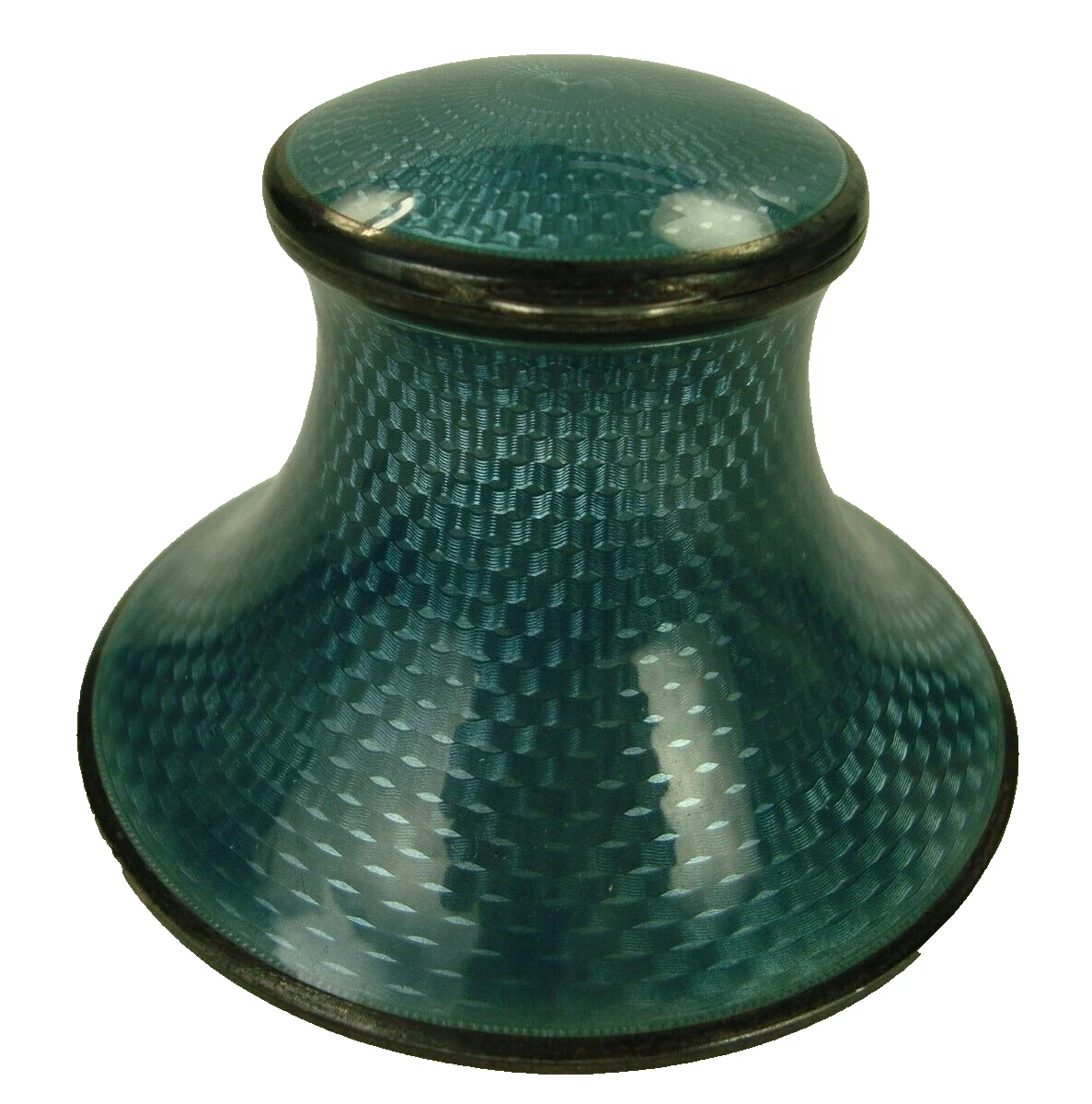
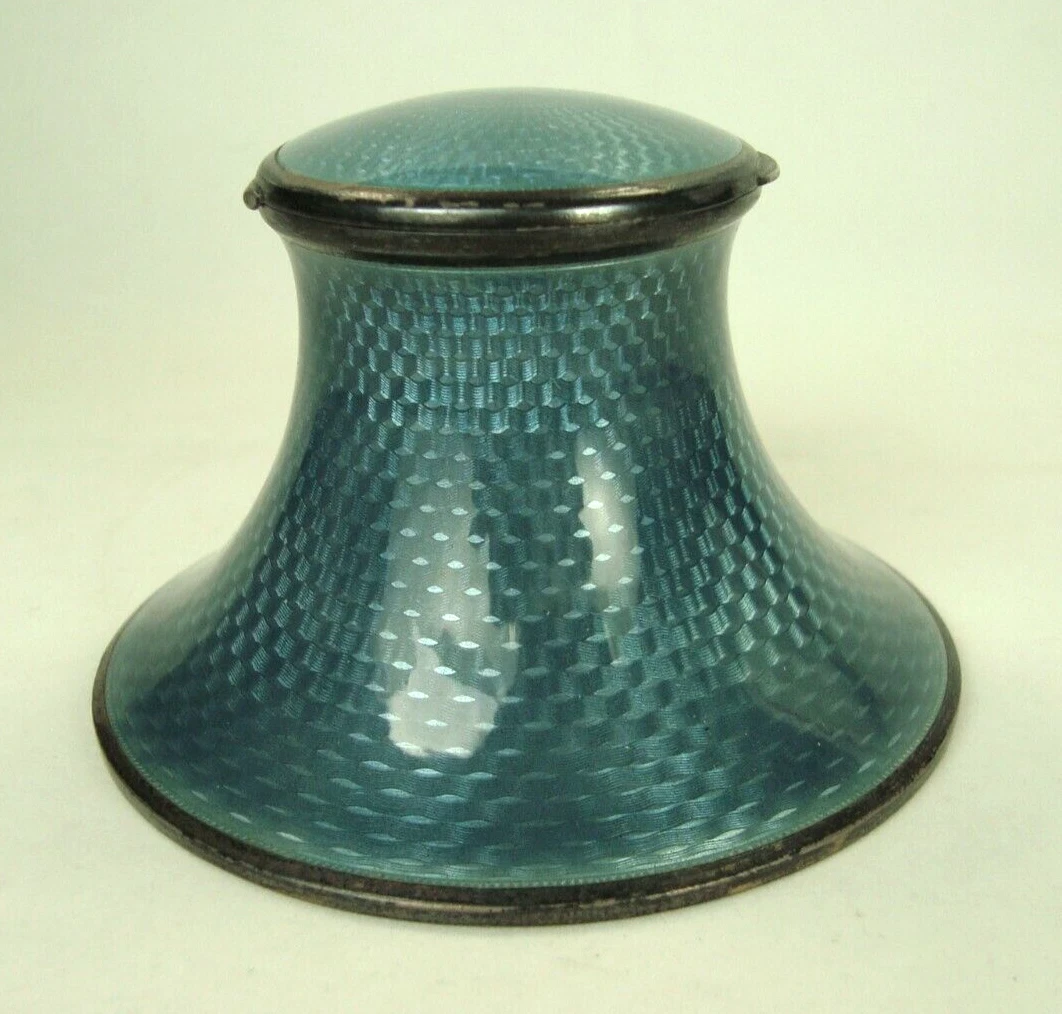
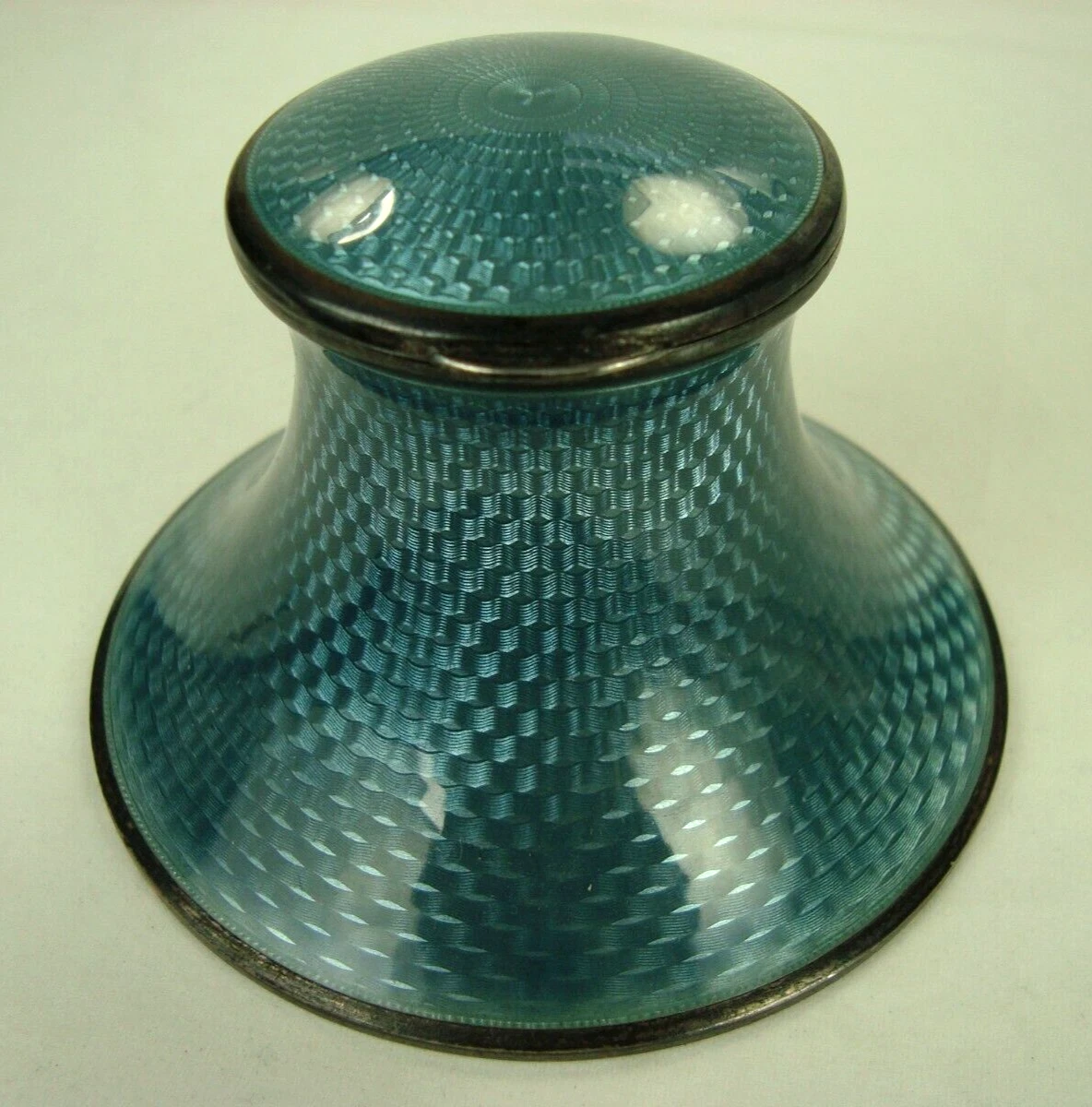
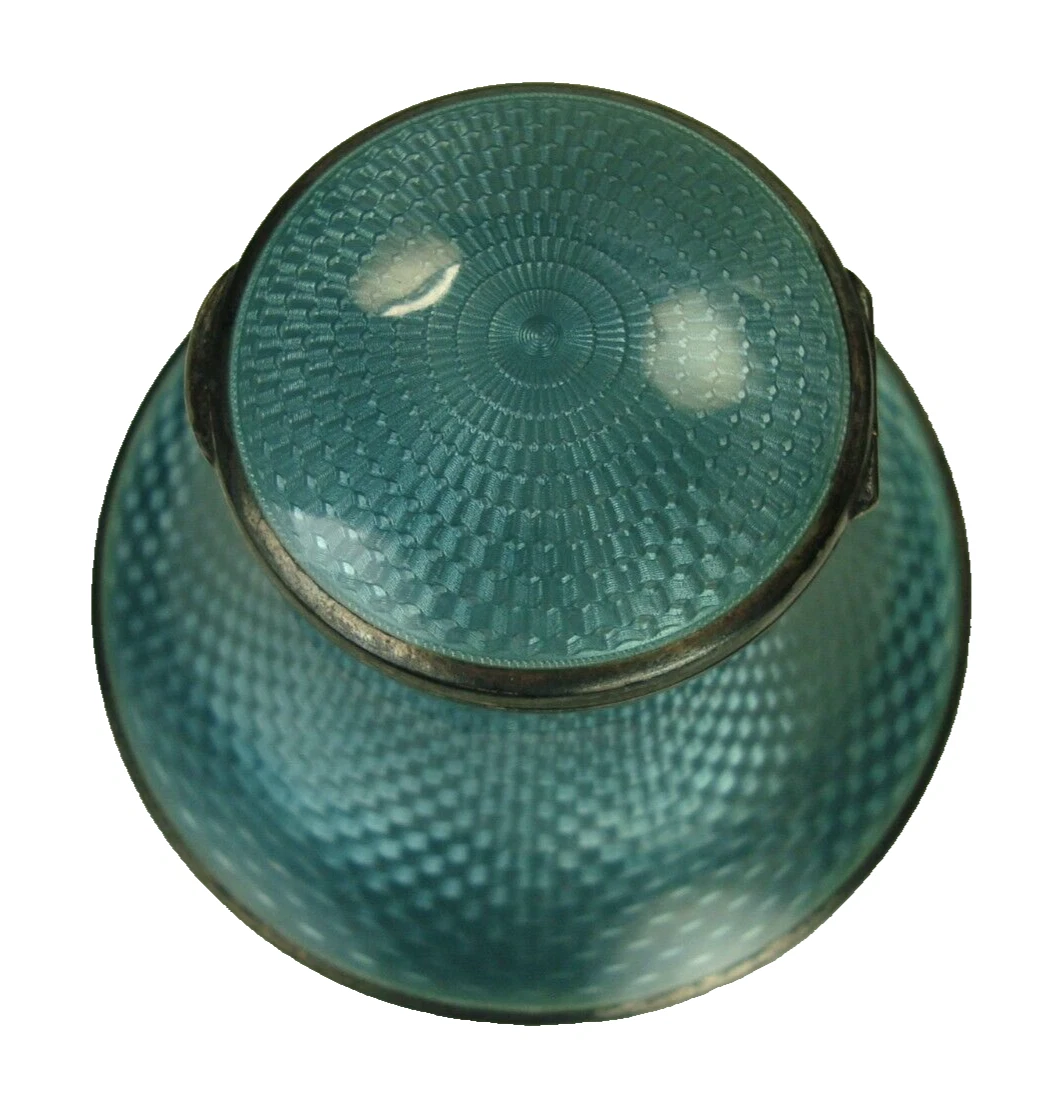
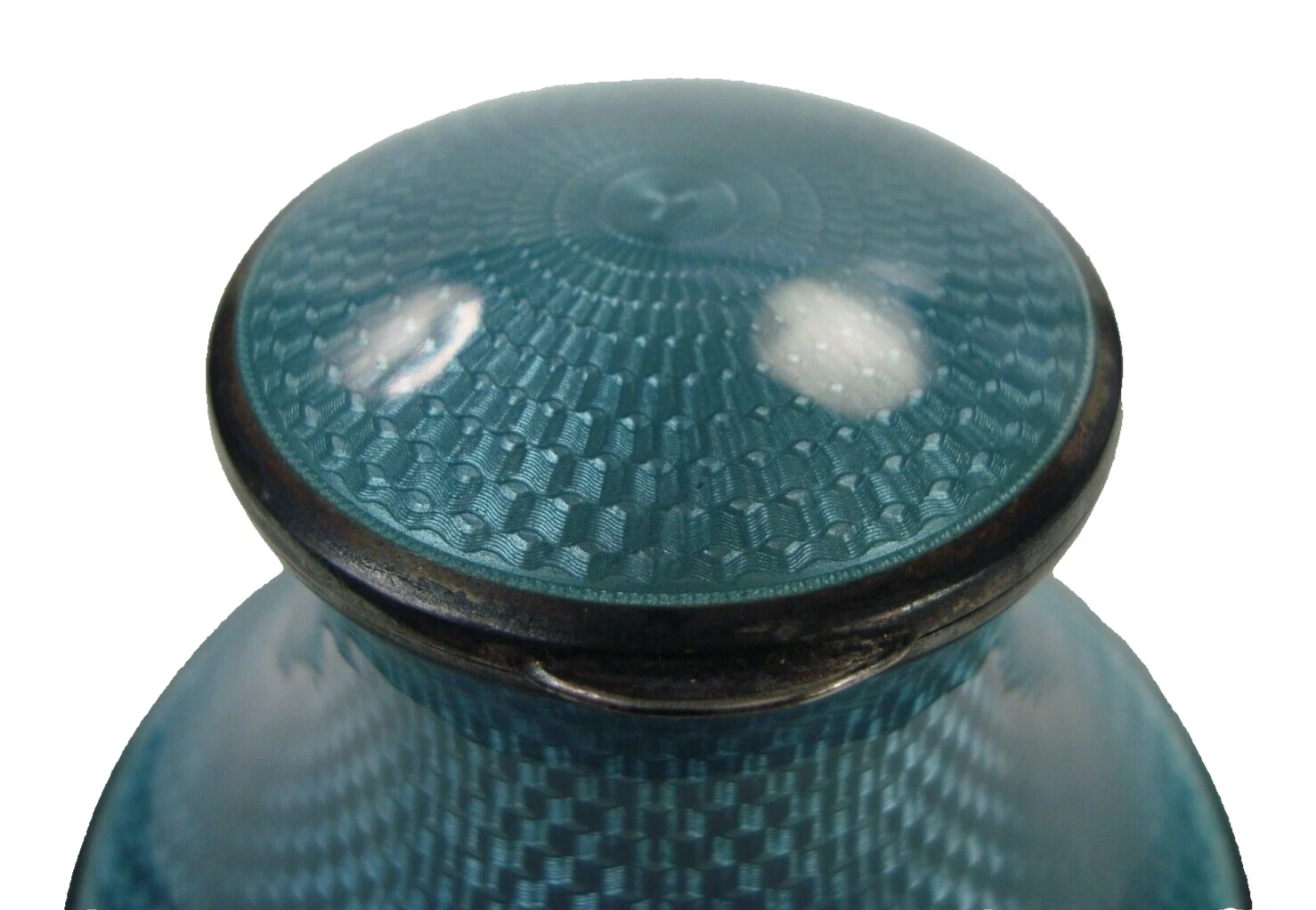
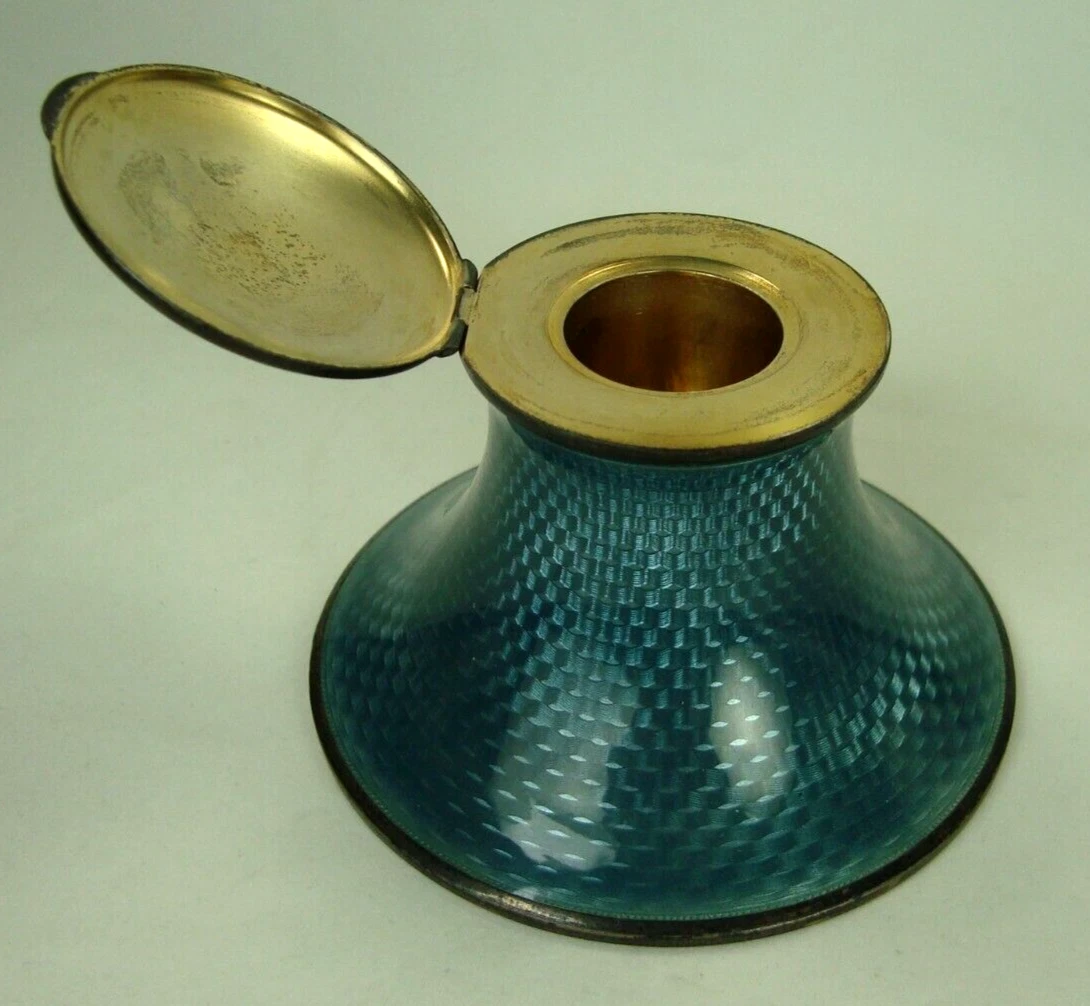
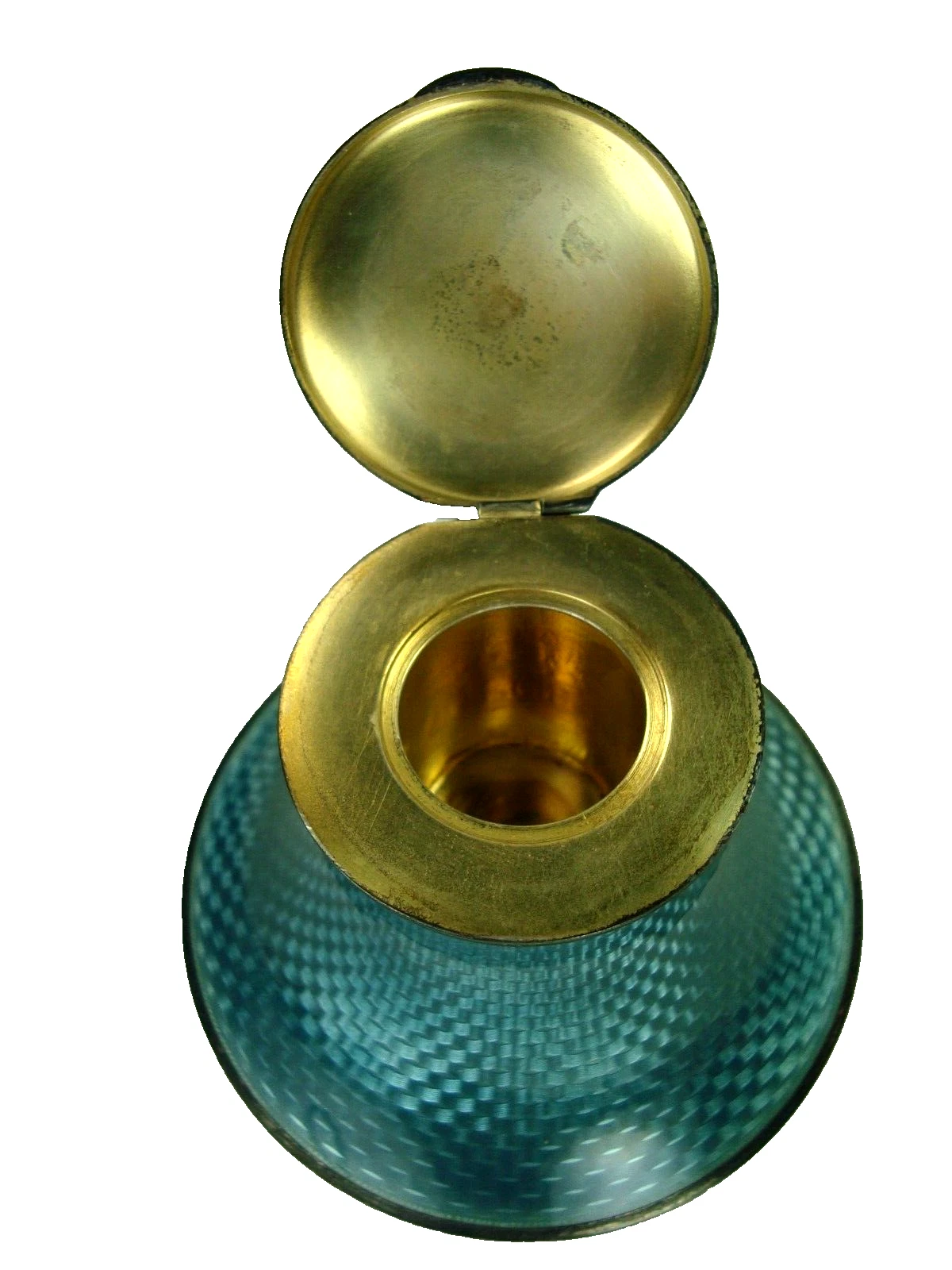
Silver & Aqua Guilloché Inkwell by Marius Hammer
| Categories | Enameled Metal |
| Material | Enameled Brass/Bronze/Metal, Silver |
| Markings | See Narrative |
| Manufacturer | Marius Hammer |
| Origin | Norway |
| Date or Era | circa 1910 |
| Measuring | 3 ½” diameter; 2 ⅜” high |
This inkwell is an example of early 20th-century Norwegian enamel work by silversmith Marius Hammer.
Description
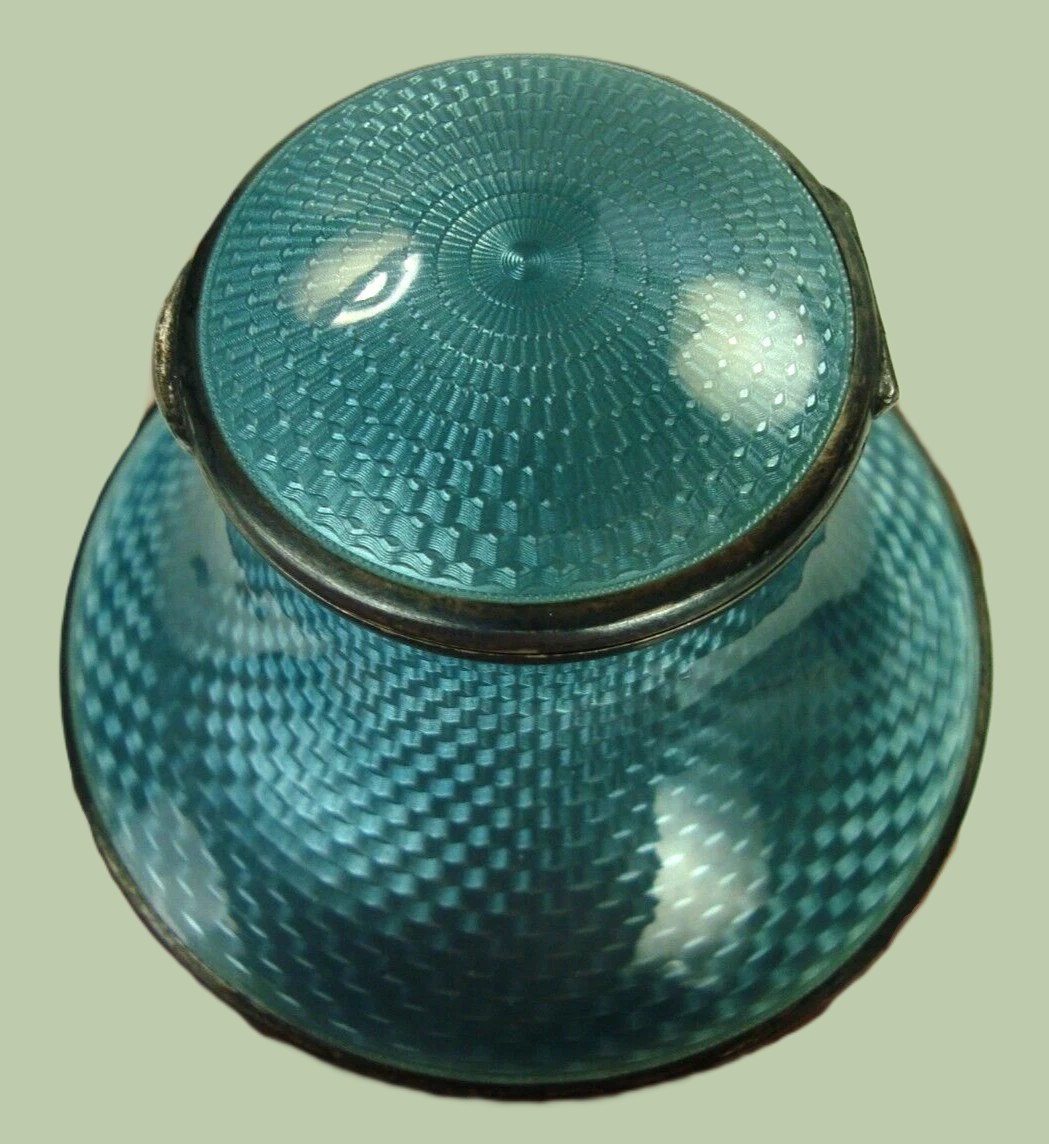
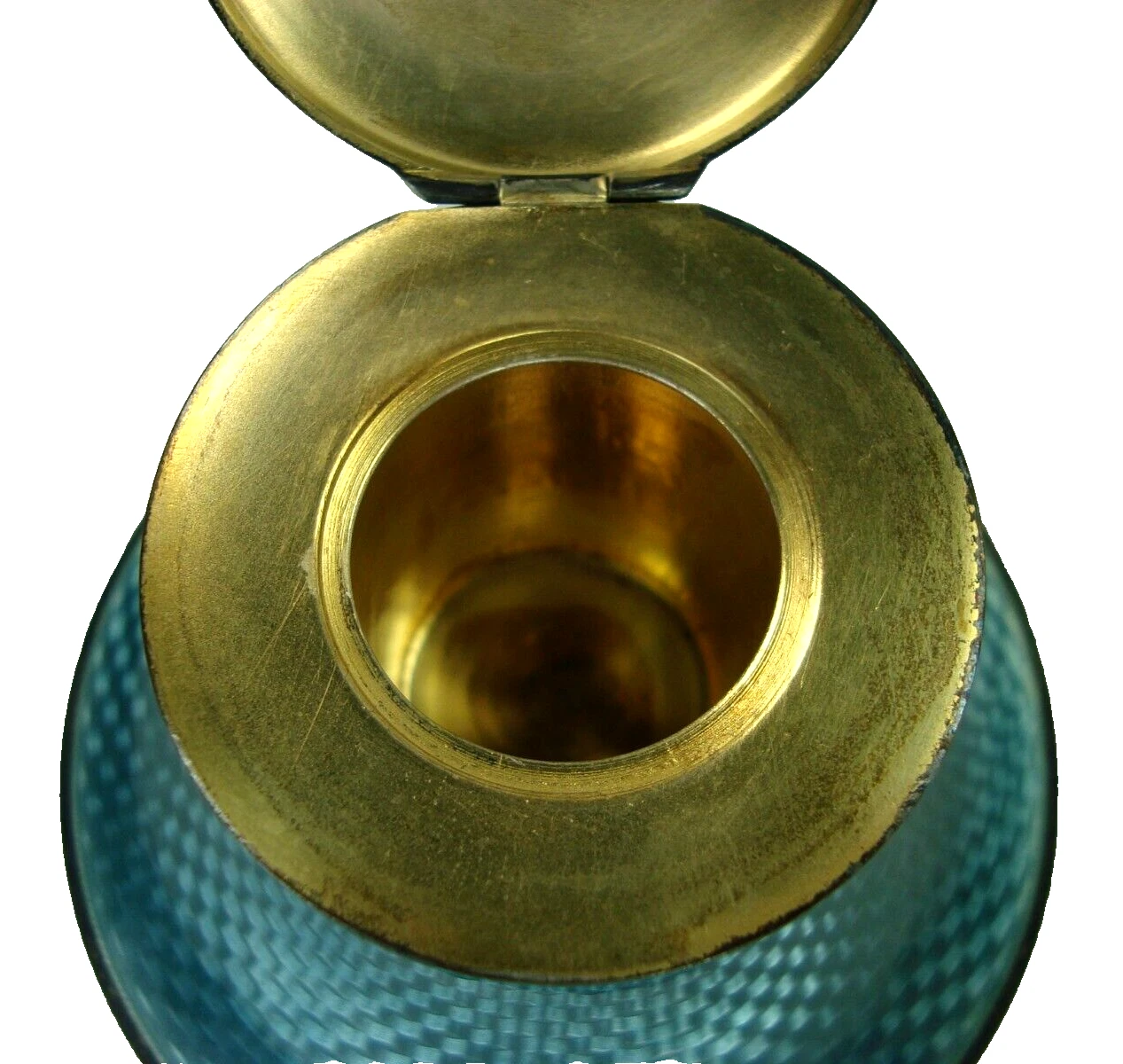
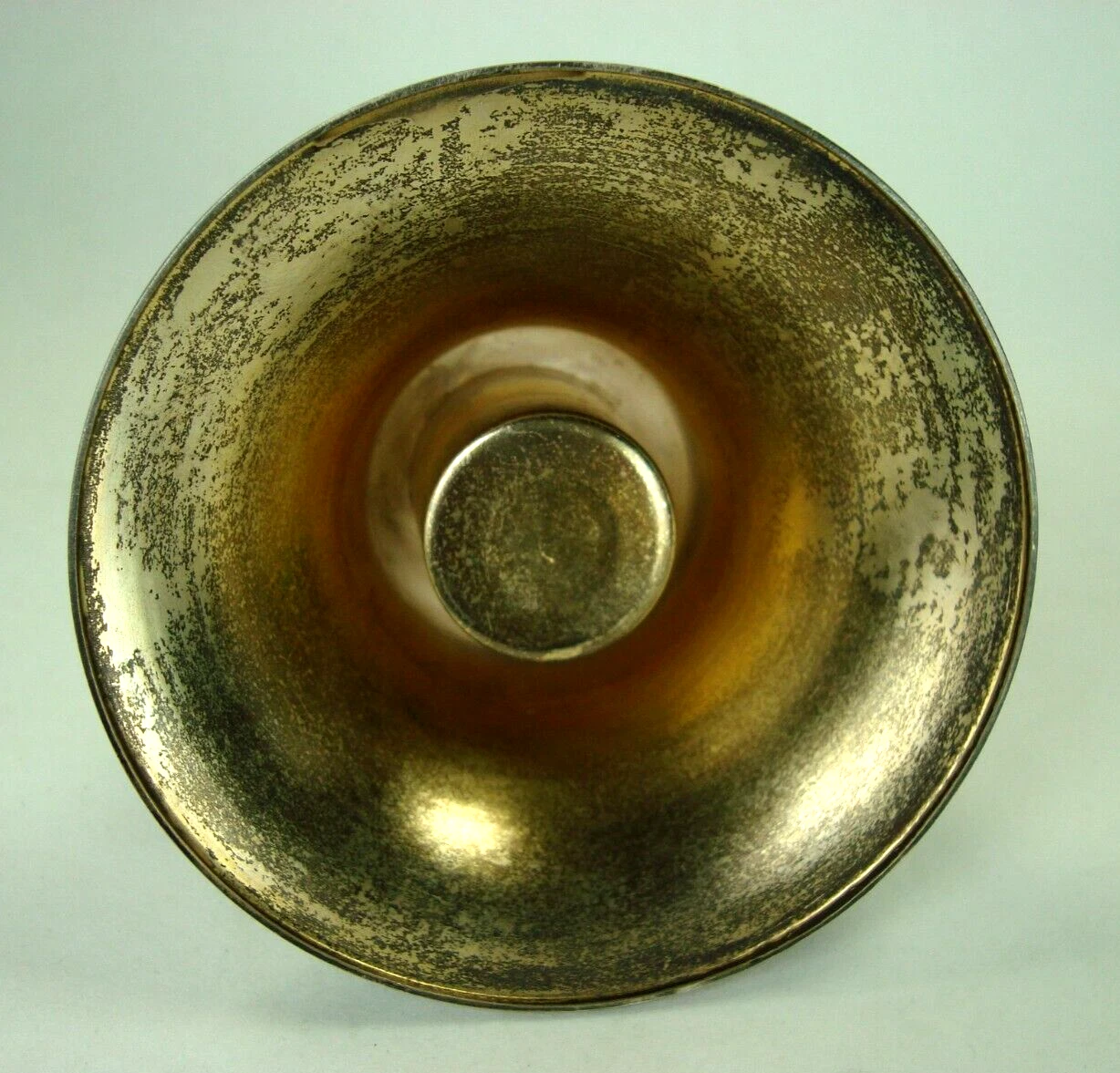
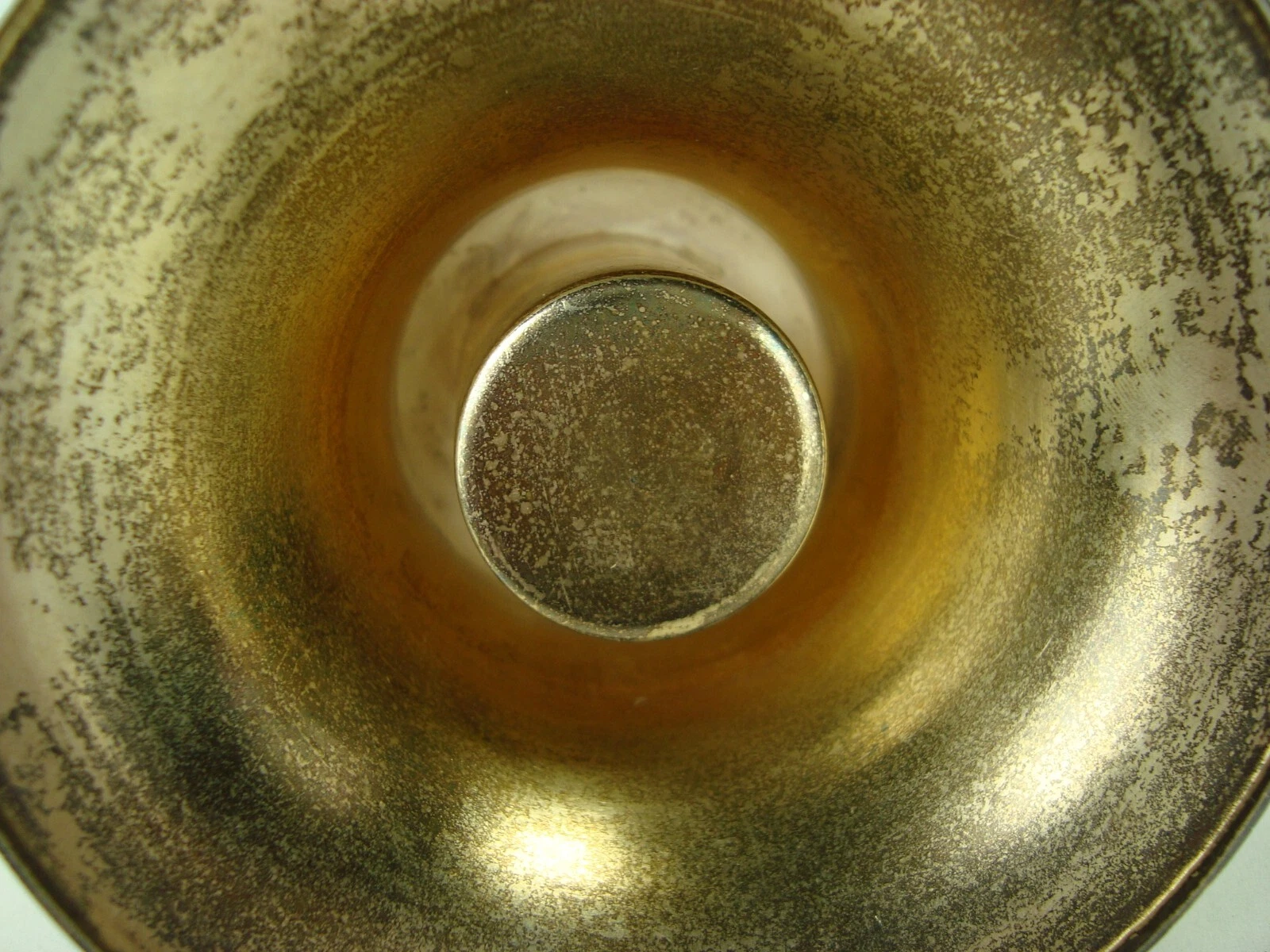
- Form & Color: The inkwell features a flared, bell-shaped base that tapers into a neck topped by a hinged, domed cap. The surface is coated in a translucent sea-green / aqua-blue vitreous enamel applied over engine-turned silver.
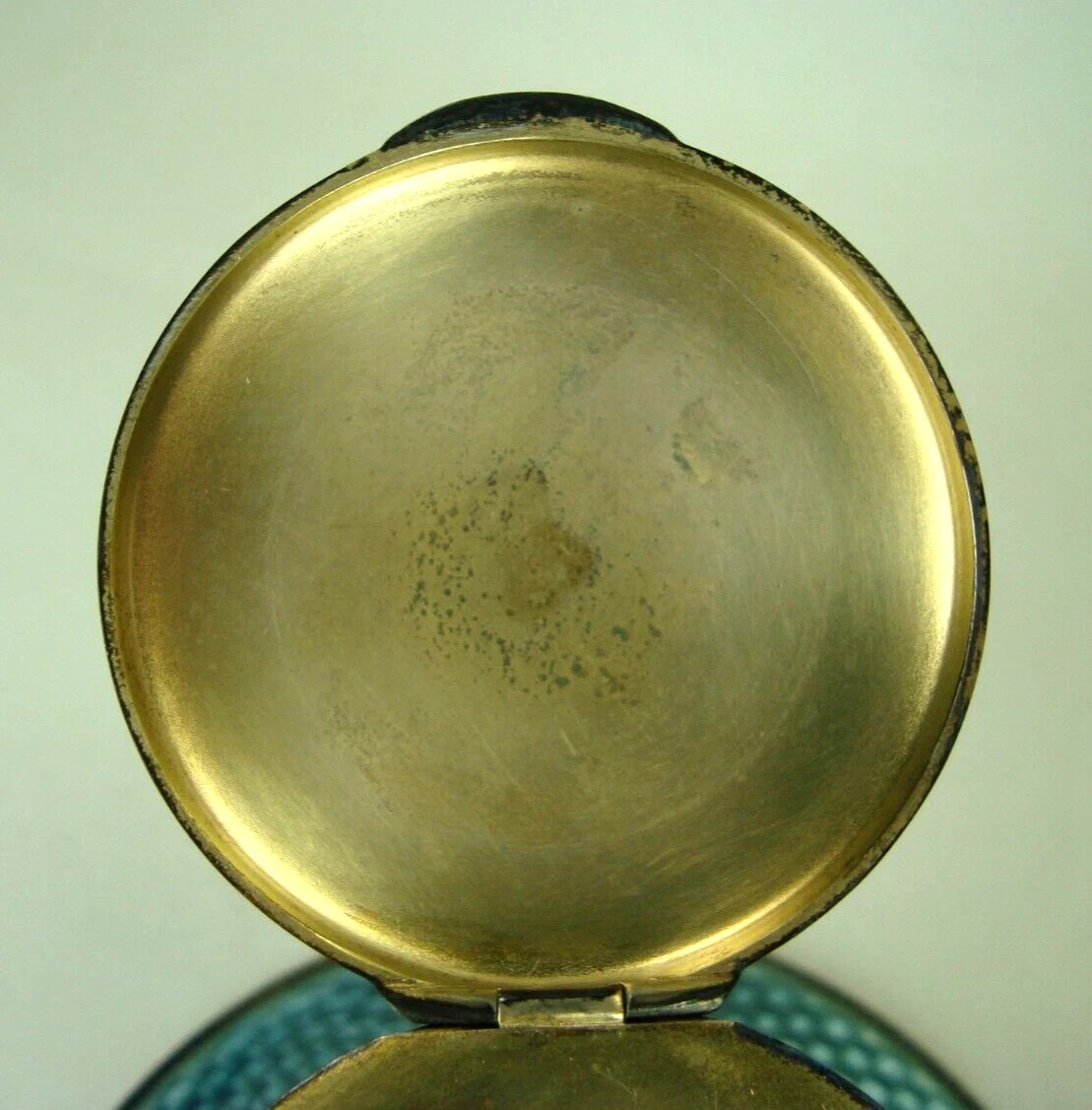
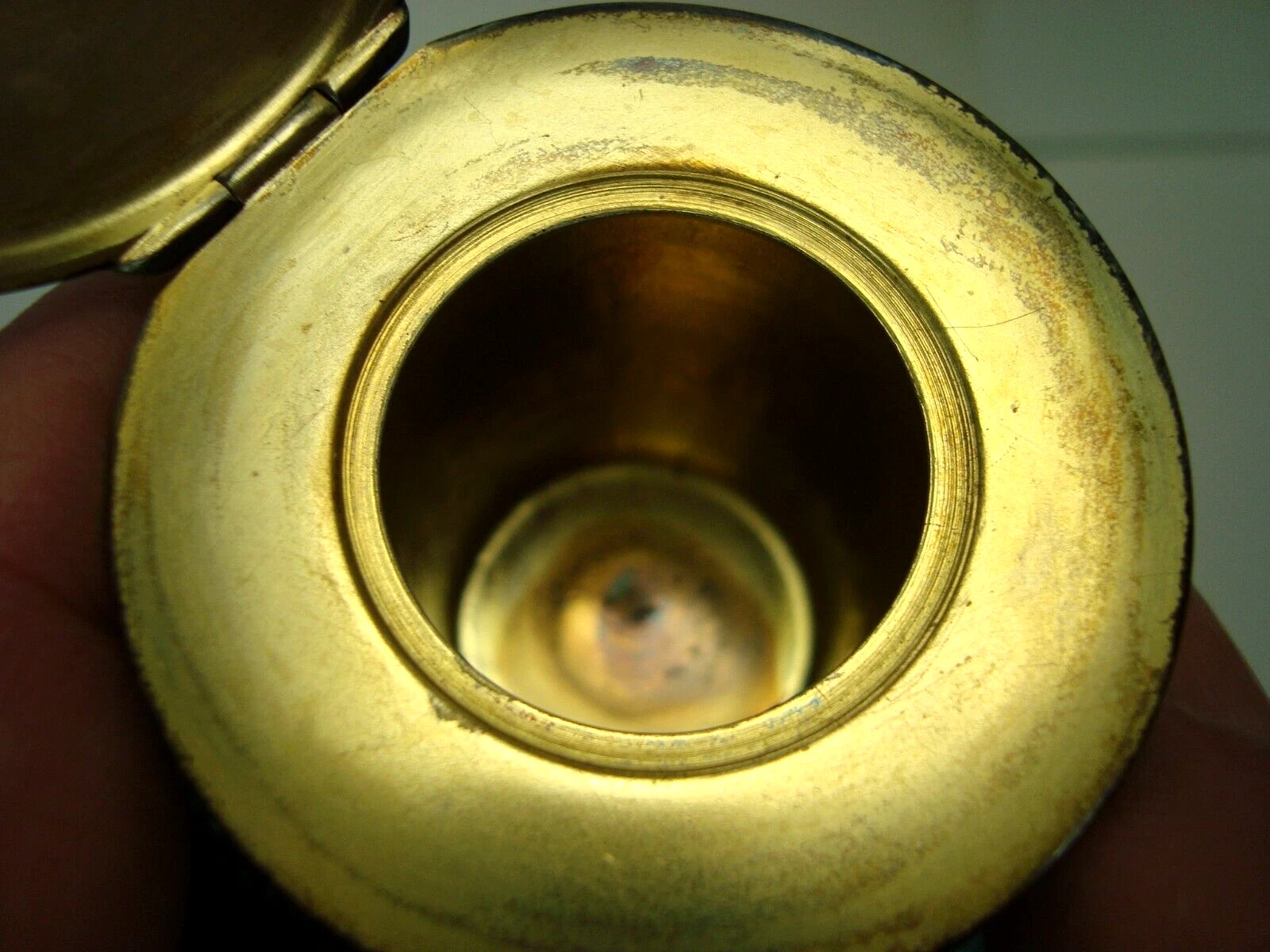
- Gilding & Interior: The interior of the lid and the upper reservoir neck show gilt-silver (vermeil).
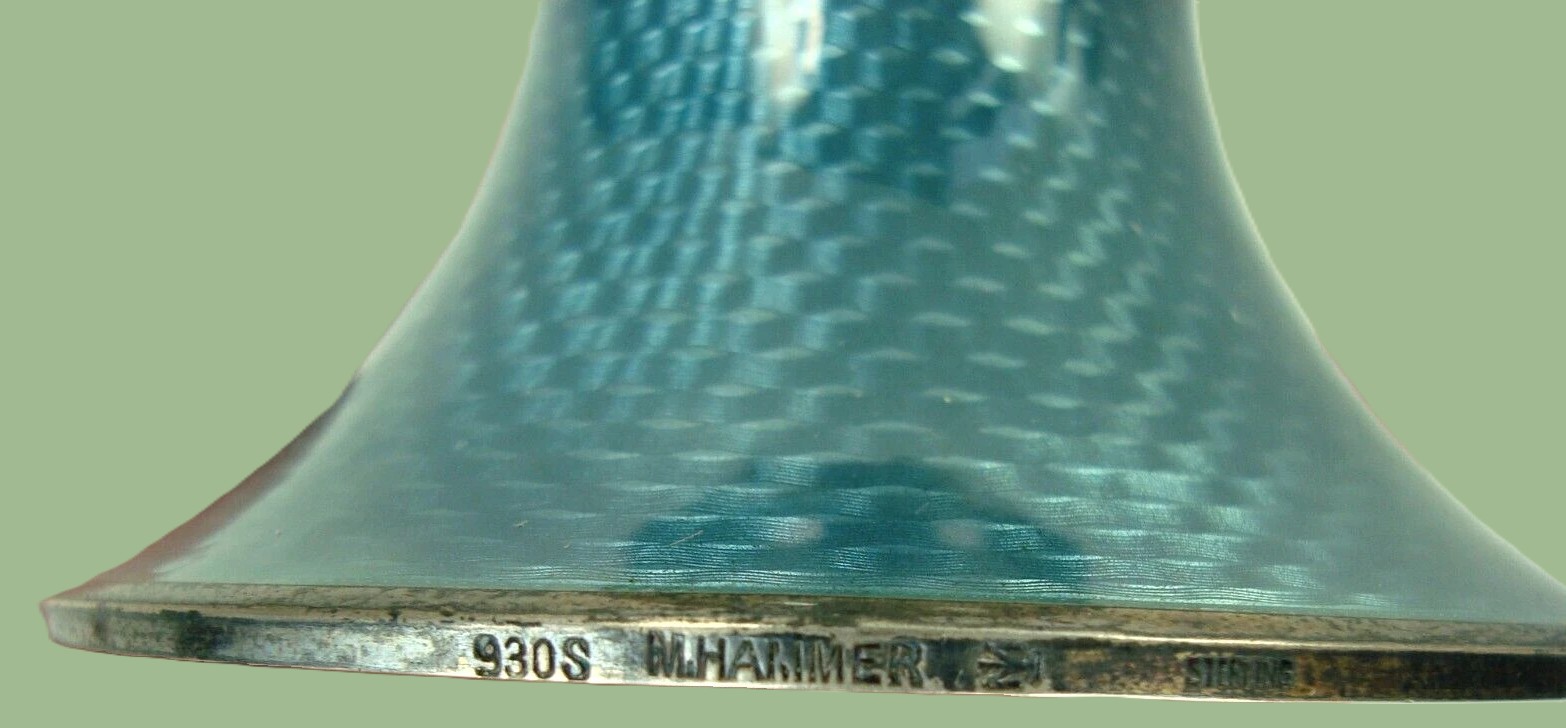
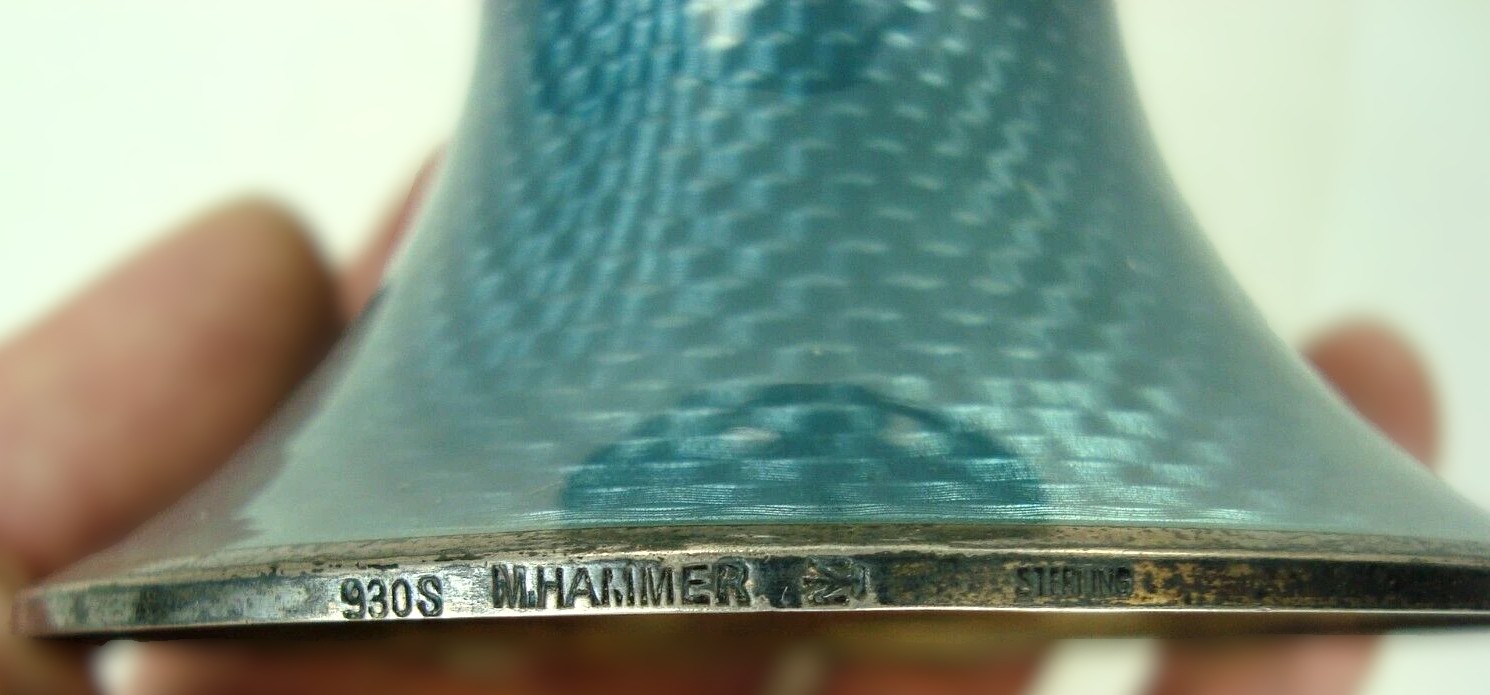
- Markings: The bottom rim edge is stamped with:
- 930S (silver standard mark)
- M. HAMMER (maker’s mark)
- Hammer’s trademark logo (a stylized hammer)
- STERLING (export purity mark)
Materials
- Base Metal: 930 Silver (93% pure silver, a higher purity standard commonly used in Norway during the late 19th and early 20th centuries to better tolerate the heat required during enameling).
- Surface Finishes: Vitreous Enamel (powdered glass fused to the metal) and Gilding (gold plating on the inner lid and ink reservoir to protect the silver from acidic inks).
Guilloché Enameling Process
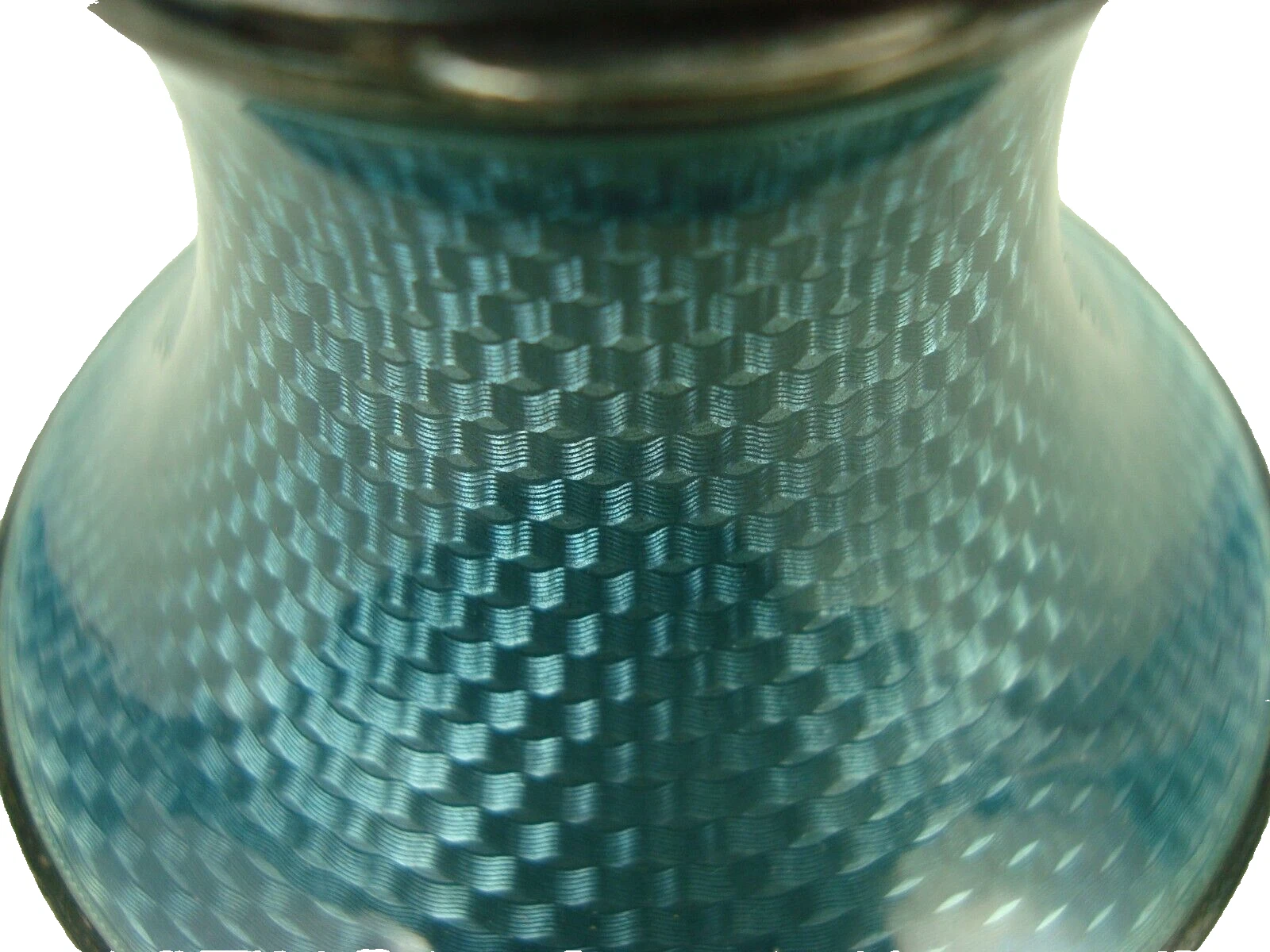
- Engine Turning (Guilloché): A specialized lathe (a rose engine) engraved repetitive geometric patterns directly into the silver base—a radial sunburst pattern on the lid and a basketweave/wave pattern around the flared body.
- Enamel Application: Finely ground glass powder mixed with water or oil was brushed over the engraved silver.
- Kiln Firing: The piece was fired in a high-temperature kiln (around 1,400°F–1,500°F / 750°C–800°C) to melt the glass into a smooth, translucent coat. Because translucent enamel was used, light passes through the glass, reflects off the cut silver pattern underneath, and creates a shimmering depth.
- Finishing & Gilding: After cooling, the surface was ground smooth and hand polished. The interior and collar were gilt-plated to prevent corrosion from ink exposure.
Date of Manufacture
- Circa 1900–1915
- The dual inclusion of 930S alongside the word STERLING indicates it was produced during the height of the Scandinavian enamel export trade to English-speaking markets (such as the UK and US) before World War I.
History of Marius Hammer
- Background: Marius Hammer (1847–1927) was a Norwegian goldsmith and silversmith based in Bergen. He came from a family of silversmiths—his father was goldsmith Lauritz Hammer.
- Training & Career: After studying in Hamburg and Berlin, Hammer established his workshop in Bergen in 1871.
- Specialization: By the 1880s, Hammer specialized in enameling—particularly plique-à-jour (cell enamel) and guilloché—producing luxury tableware, jewelry, and souvenir items sold both locally to wealthy tourists and exported internationally through high-end retailers like Liberty & Co. in London.
- Legacy: Hammer retired in 1915, and the firm was managed by his sons, Torolf and Max, until it closed in 1930. Today, his enamel work is collected worldwide for its technique and color quality.
Sold for $1,000 in July 2026
Content disclaimer. The information posted is the owner’s best knowledge and may not have been vetted by the SOIC. We welcome comments, corrections, and additions, working to make our website information comprehensive and accurate.
Join the Society of Inkwell Collectors (SOIC) – it’s free!
Founded in 1981 as a non-profit organization,
we are documenting inkwells (and accessories).
We’re here to help and inform!