

Capstan Sterling Silver Inkwell with Yellow Guilloche Enameled Lid
| Categories | Enameled Metal |
| Material | Enamel, Silver |
| Markings | See Narrative |
| Manufacturer | Undetermined |
| Origin | England |
| Date or Era | See Narrative - circa 1913? |
| Measuring | 3 ¼” diameter; 2” high |
Description
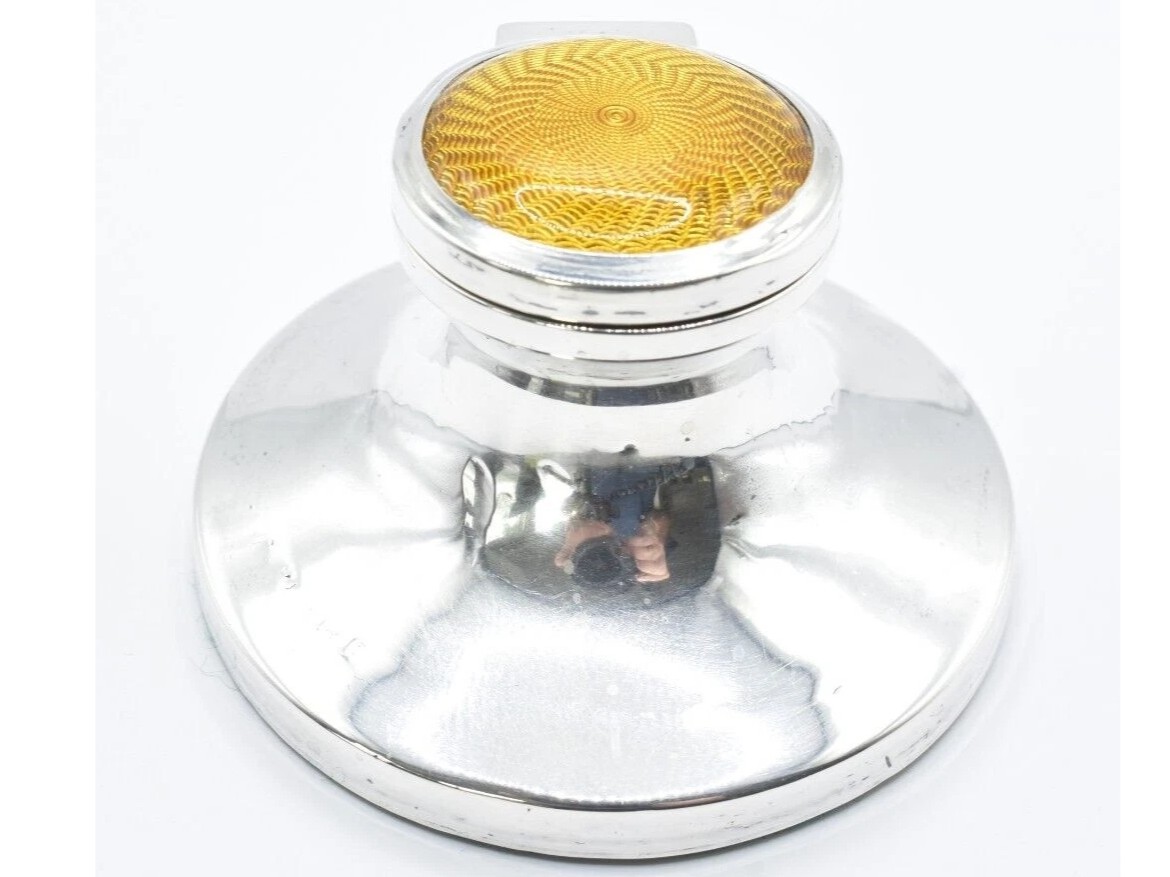
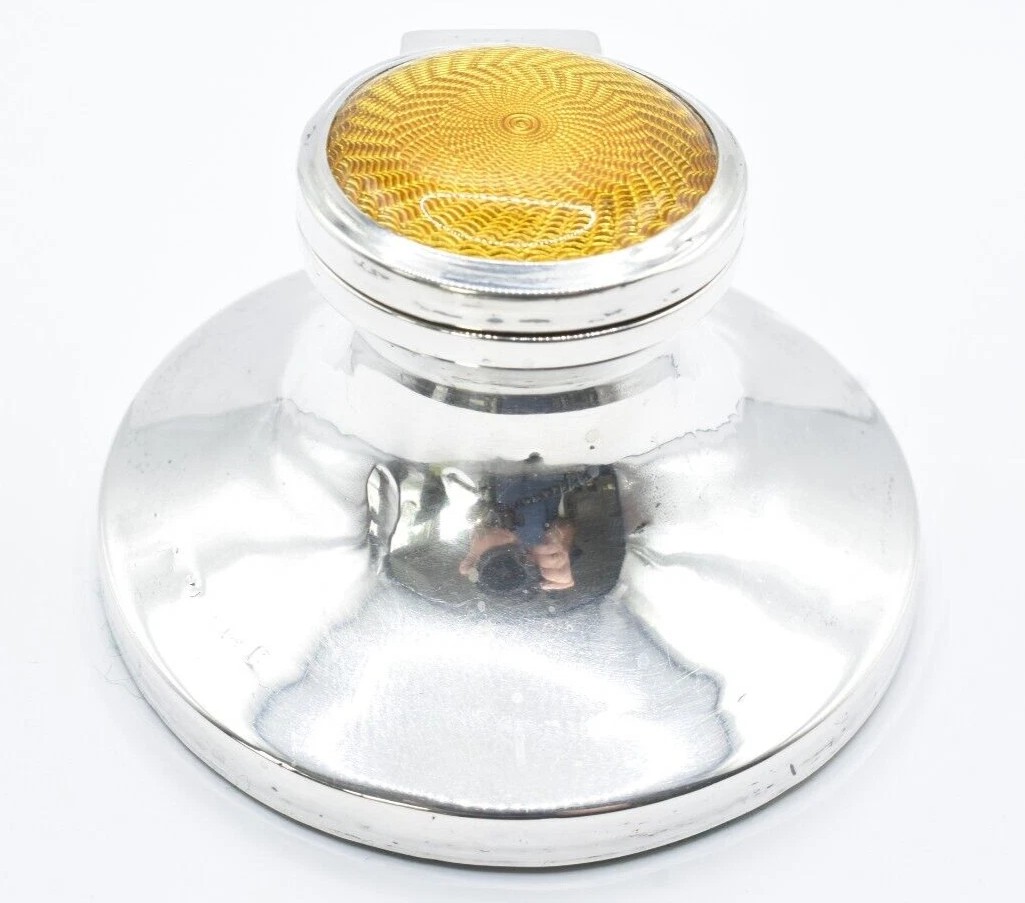
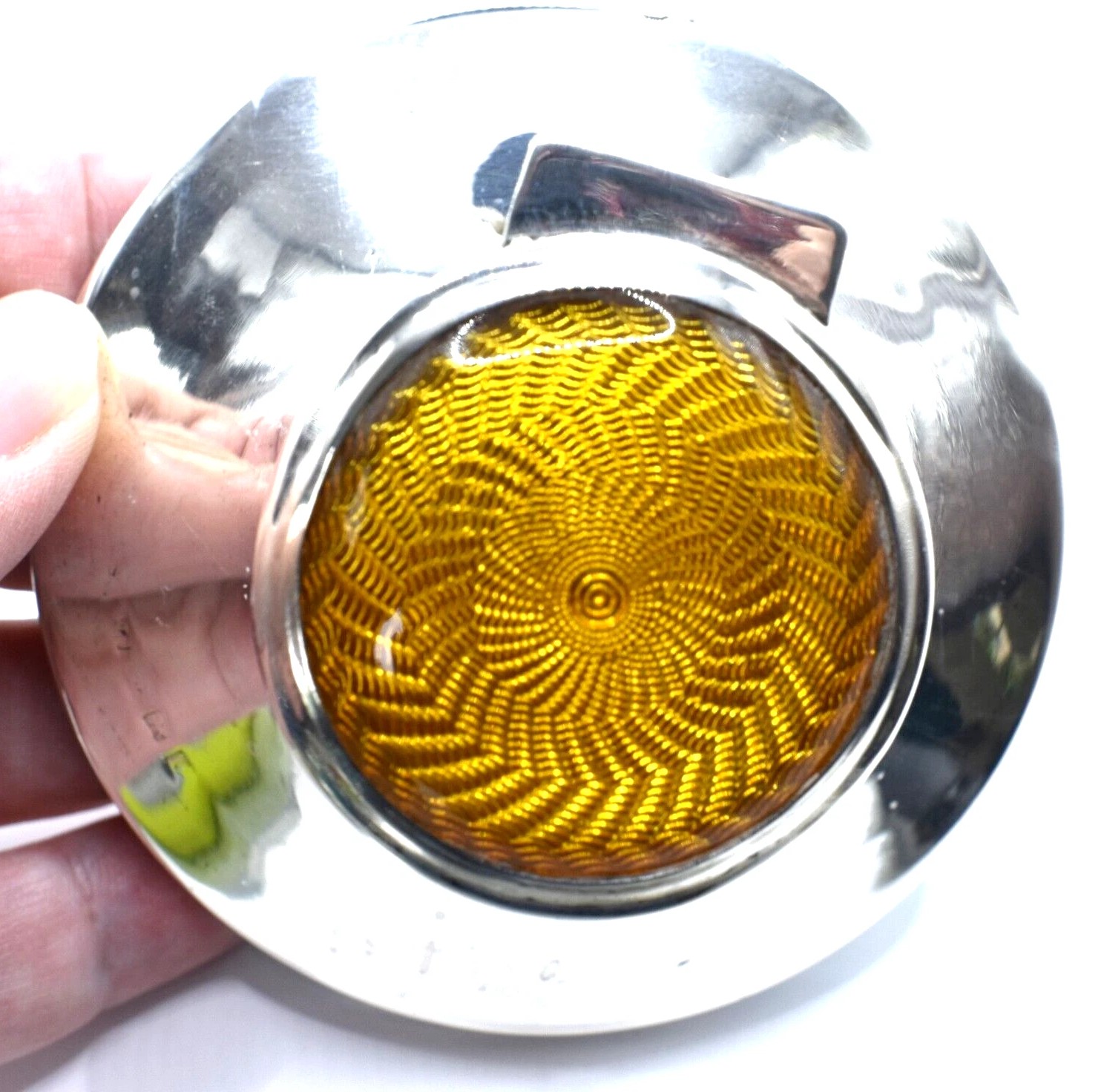
This early 20th-century Capstan-style sterling silver inkwell features a yellow guilloche enameled lid.
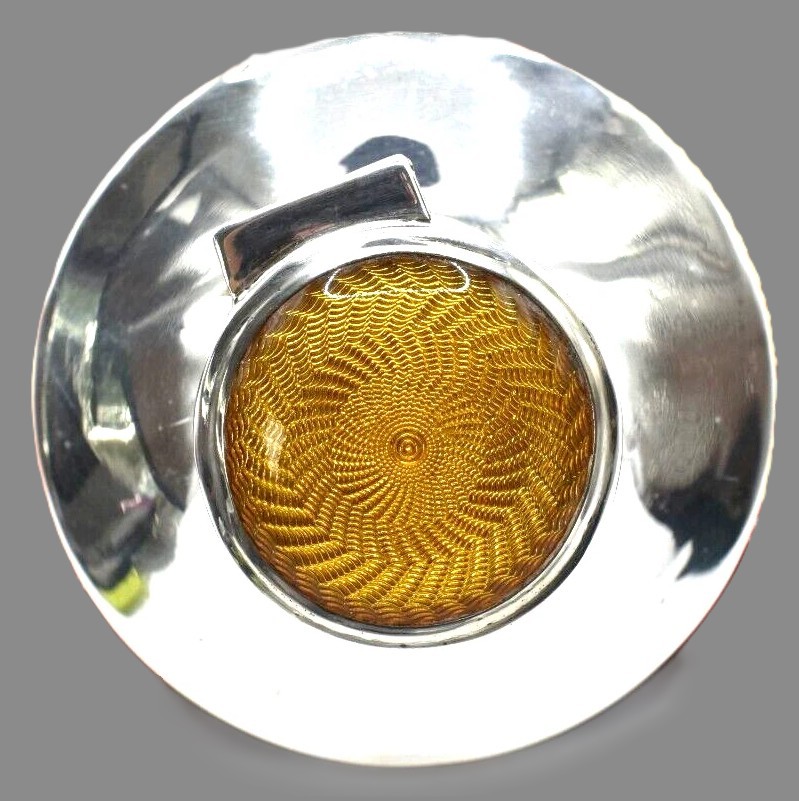
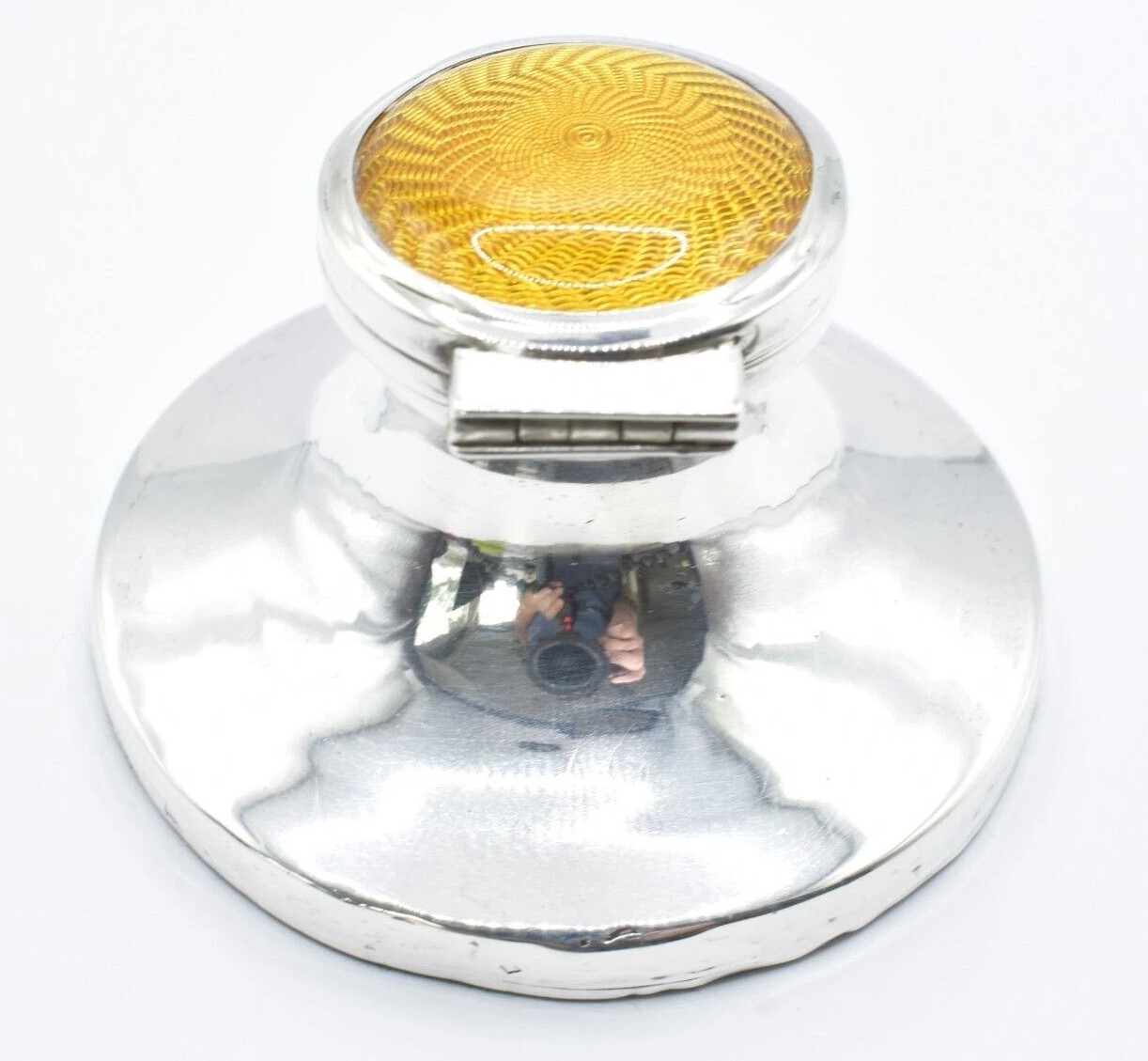
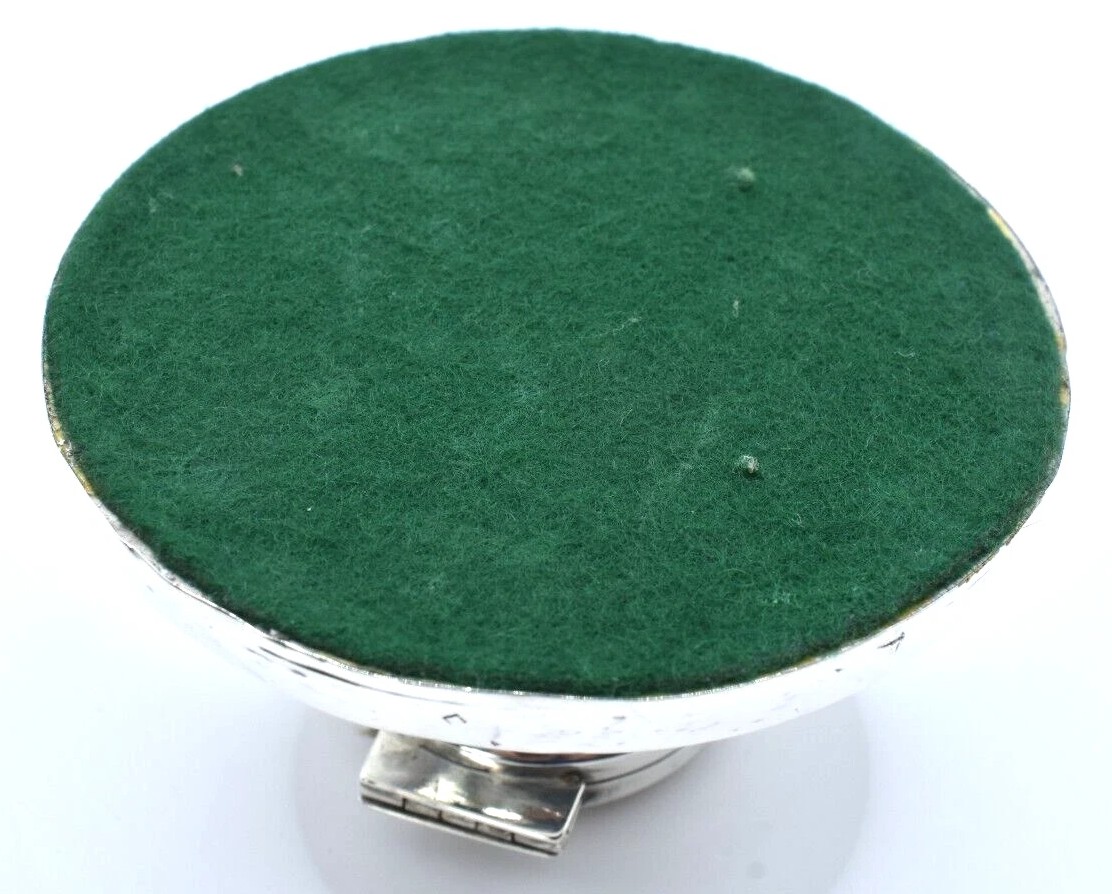
- Body & Form: Constructed with a wide, flared circular “capstan” (or bell-shaped) base that tapers up to a cylindrical neck. The base is weighted internally for stability.
- Lid & Hinge: The hinged silver top is mounted on a five-barrel hinge. The center of the lid is inset with a circular silver disc adorned with bright, translucent yellow-gold vitreous enamel laid over a fine geometric wave/radiating engine-turned pattern (guilloché).
- Interior: A removable clear glass insert beneath the hinged cap.
Hallmark Analysis & Deciphering
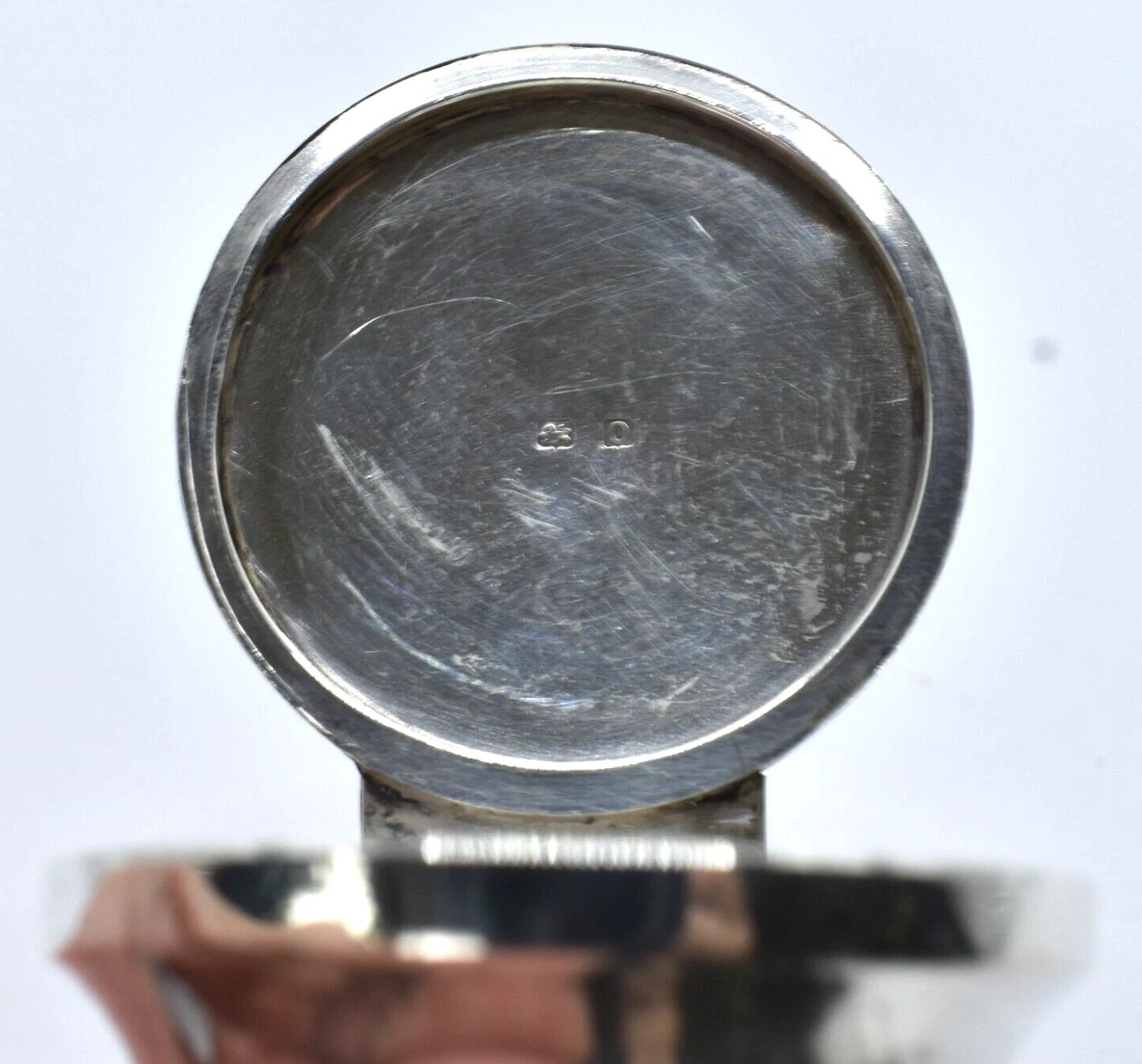
British hallmarking law requires that multi-part items (like hinged holloware) carry a full set of marks on the main body and partial hallmarks on secondary detachable or hinged parts (such as the lid) to certify that both parts are sterling and belong together.
- Inside the Lid Marks:
- Lion Passant: The walking lion facing left guarantees that the lid is solid British sterling silver (minimum .925 purity).
- Date Letter “O” / “o”: A single letter punch indicating the specific year the piece was submitted to the assay office for testing and hallmarking.
- Base Hallmarks & Wear:
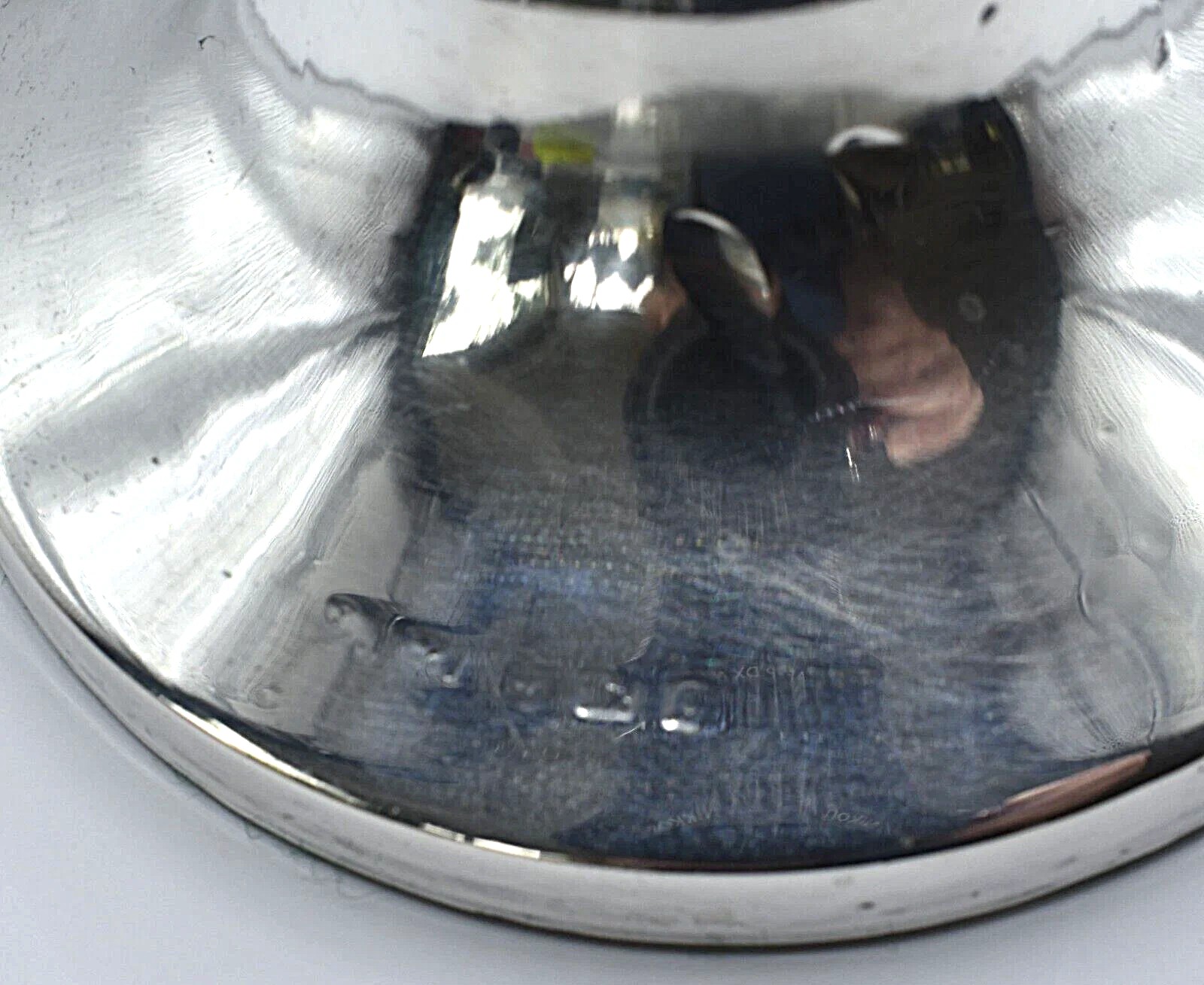
- The primary hallmark block—which originally included the Maker’s Mark (initials), Assay Office Town Mark (e.g., Anchor for Birmingham or Leopard’s Head for London), Lion Passant, and Date Letter—was struck along the outer sloped rim of the capstan base.
- Decades of hand-polishing with abrasive silver polishes have severely rubbed and smoothed away these surface marks on the base, leaving only faint outlines.
Dating the Inkwell
Because the assay office mark on the base is rubbed flat, the date letter “O” / “o” inside the lid narrows the date of manufacture down based on the most active English silversmithing centers for enameled capstans during the Edwardian and Art Deco eras:
- Birmingham Assay Office (Most Probable): Birmingham was the epicenter for enamel and capstan silver production in this era.
- 1913 (Lowercase o in a rounded shield – Late Edwardian / Pre-WWI)
- 1938 (Capital O in a square/shield – Art Deco / Late Interwar)
- London Assay Office:
- 1909 (Lowercase o) or 1929 (Capital O)
- Chester Assay Office:
- 1914 or 1939
Given the bright golden-yellow enamel hue, radial engine-turned geometry, and classic capstan silhouette, manufacture date falls squarely between 1909 and 1938, with 1913 or 1938 (Birmingham) being the primary historical candidates.
Manufacturing Process
The creation of a guilloche enameled sterling inkwell involved two specialized craft disciplines: silversmithing and enameling.
- Forming the Sterling Silver Body
- Metal Spinning: The capstan body was raised from a flat sheet of sterling silver (.925 silver, 7.5% copper). The disc was mounted on a lathe and spun at high speed, while a craftsman used burnishing tools to press and roll the metal over a shaped wooden chuck, creating the smooth, flared capstan profile.
- Hinge & Collar Construction: The collar neck and five-barrel hinge components were cast or drawn separately, then hard-soldered to the body and lid using silver solder.
- Guilloché Engine Turning
- Rose Engine Lathe: A skilled engraver mounted the silver disc insert for the lid onto a rose engine lathe—a precision mechanical lathe guided by geometric pattern cams (rosettes).
- Pattern Cutting: The machine mechanically guided a diamond-tipped or hardened steel cutter to engrave fine, overlapping, undulating wave patterns directly into the silver surface without removing excess metal.
- Vitreous Guilloché Enameling
- Enamel Preparation: Finely ground silica glass powder was tinted with metallic oxides (iron/antimony oxide for yellow tones) and washed with distilled water to remove impurities.
- Wet Packing: The wet enamel paste was meticulously painted/spread over the engine-turned silver disc.
- Kiln Firing: The piece was fired in a muffle furnace at temperatures between 750°C and 800°C (~1400°F–1450°F). The glass powder melted, fused, and flowed evenly across the engraved surface. Because the glass is translucent, light passes through the enamel, reflects off the cut silver pattern underneath, and creates a shimmering optical depth.
- Lapping & Polishing: After cooling, the enamels were ground flat with carborundum stones and hand-polished with rouge until perfectly flush with the silver bezel.
- Final Assembly & Weighting
- Lining & Weighting: To prevent the light spun-silver base from tipping over when opening the heavy lid or dipping a pen, the hollow base cavity was filled with a dense compound (typically lead, resin, or plaster of Paris).
Sold for $297 in July 2026
Content disclaimer. The information posted is the owner’s best knowledge and may not have been vetted by the SOIC. We welcome comments, corrections, and additions, working to make our website information comprehensive and accurate.
Join the Society of Inkwell Collectors (SOIC) – it’s free!
Founded in 1981 as a non-profit organization,
we are documenting inkwells (and accessories).
We’re here to help and inform!