





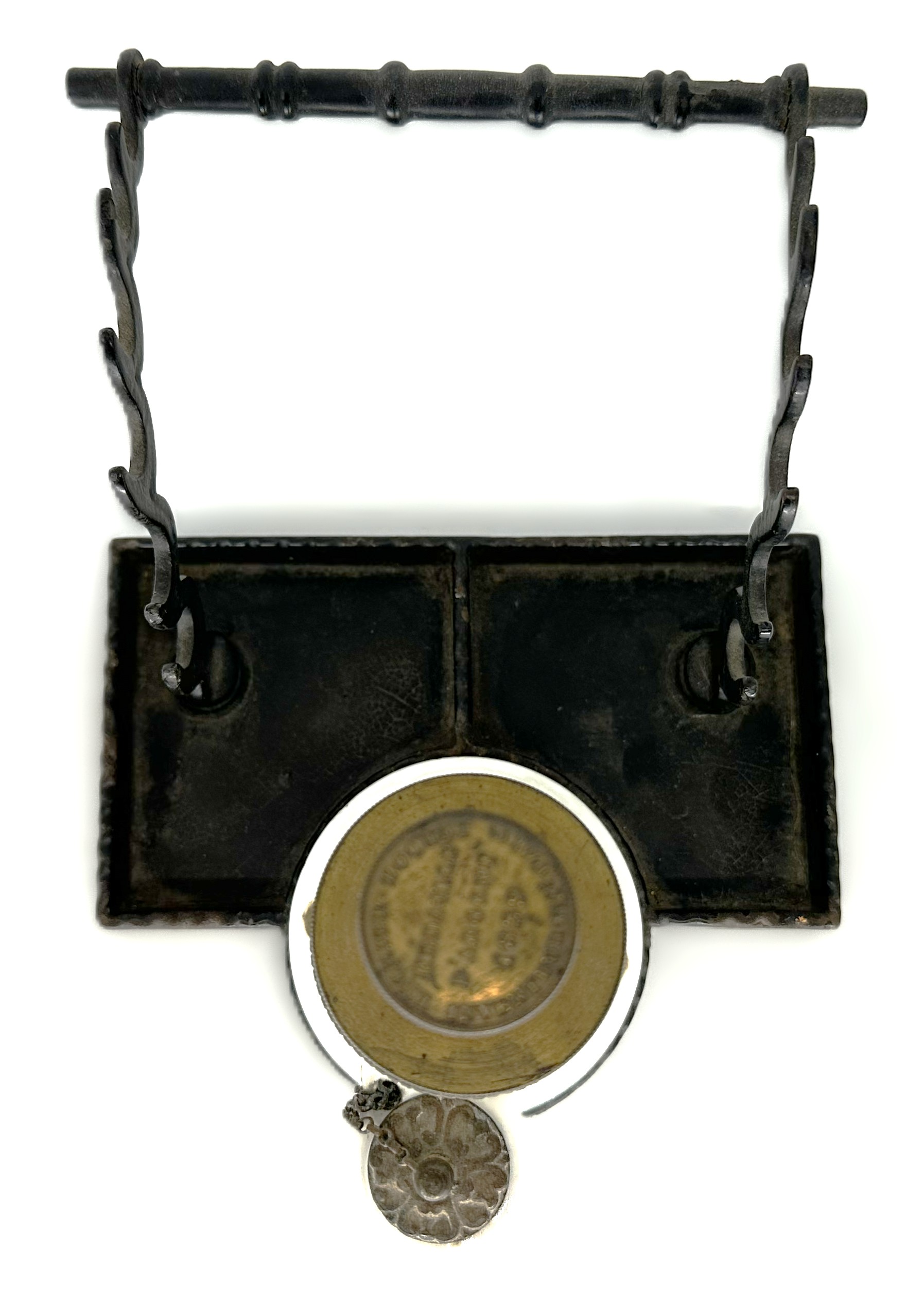


Cast Iron Inkstand with Pump Inkwell
| Categories | Mechanical - Pump / Siphon |
| Type | Pump |
| Material | Bronze, Cast iron, Porcelain |
| Markings | See Narrative |
| Manufacturer | Undetermined |
| Origin | France |
| Date or Era | circa 1870 |
| Measuring | 5 ⅜” x 4 ⅜” x 4 ½” high |
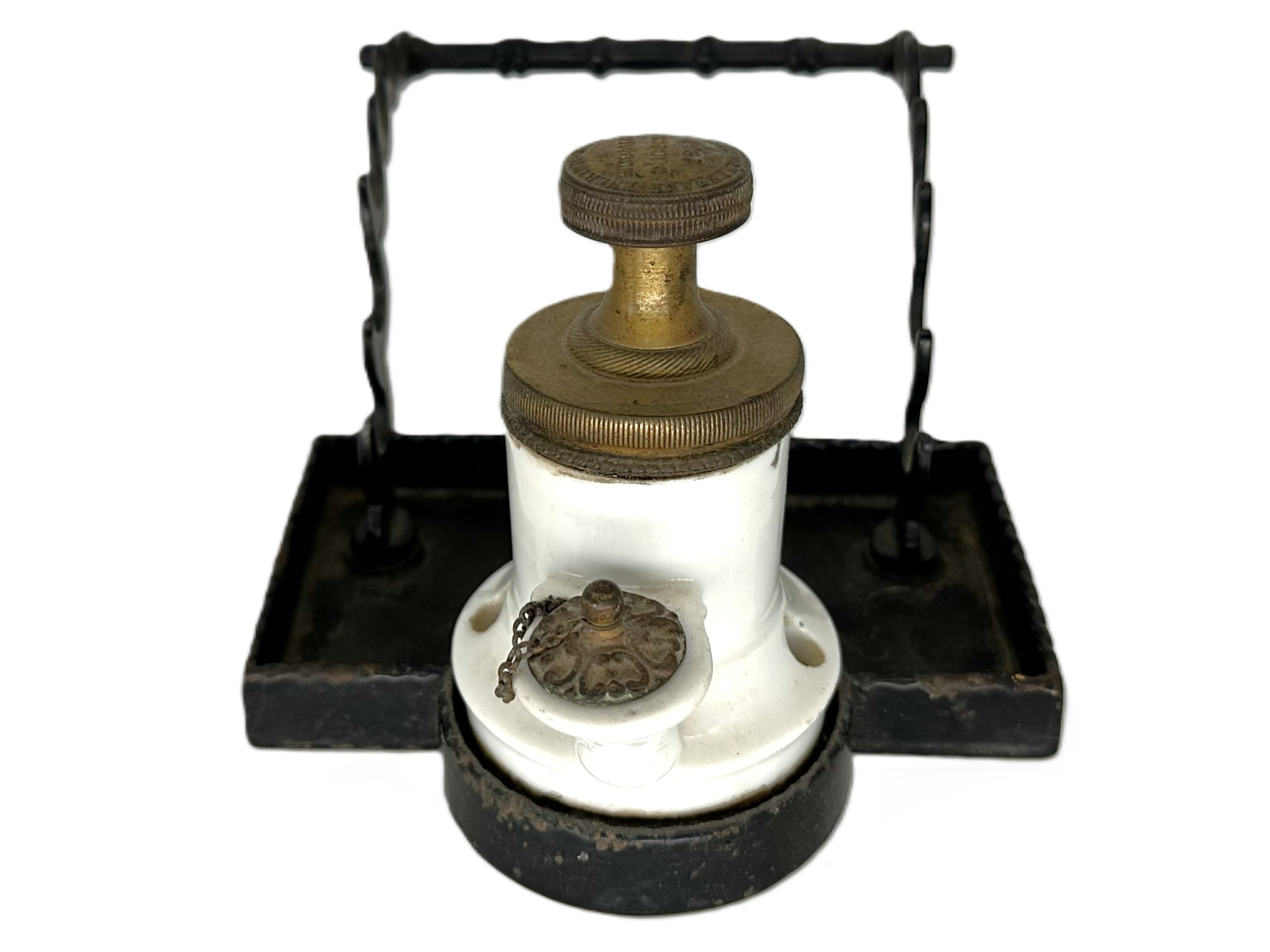
This French pump inkstand is a utilitarian desk set that emphasizes mechanical reliability over ornate decoration. It features a cast iron frame and a hydrostatic displacement system.
Transcription of the Knob Markings
The brass turn knob is impressed with the following information:
- Center: MÉDAILLE D’ARGENT 1839
- Outer Ring (Top): ENCRIER BOQUET
- Outer Ring (Bottom): INVENTEUR BᵀÉ PARIS
Description
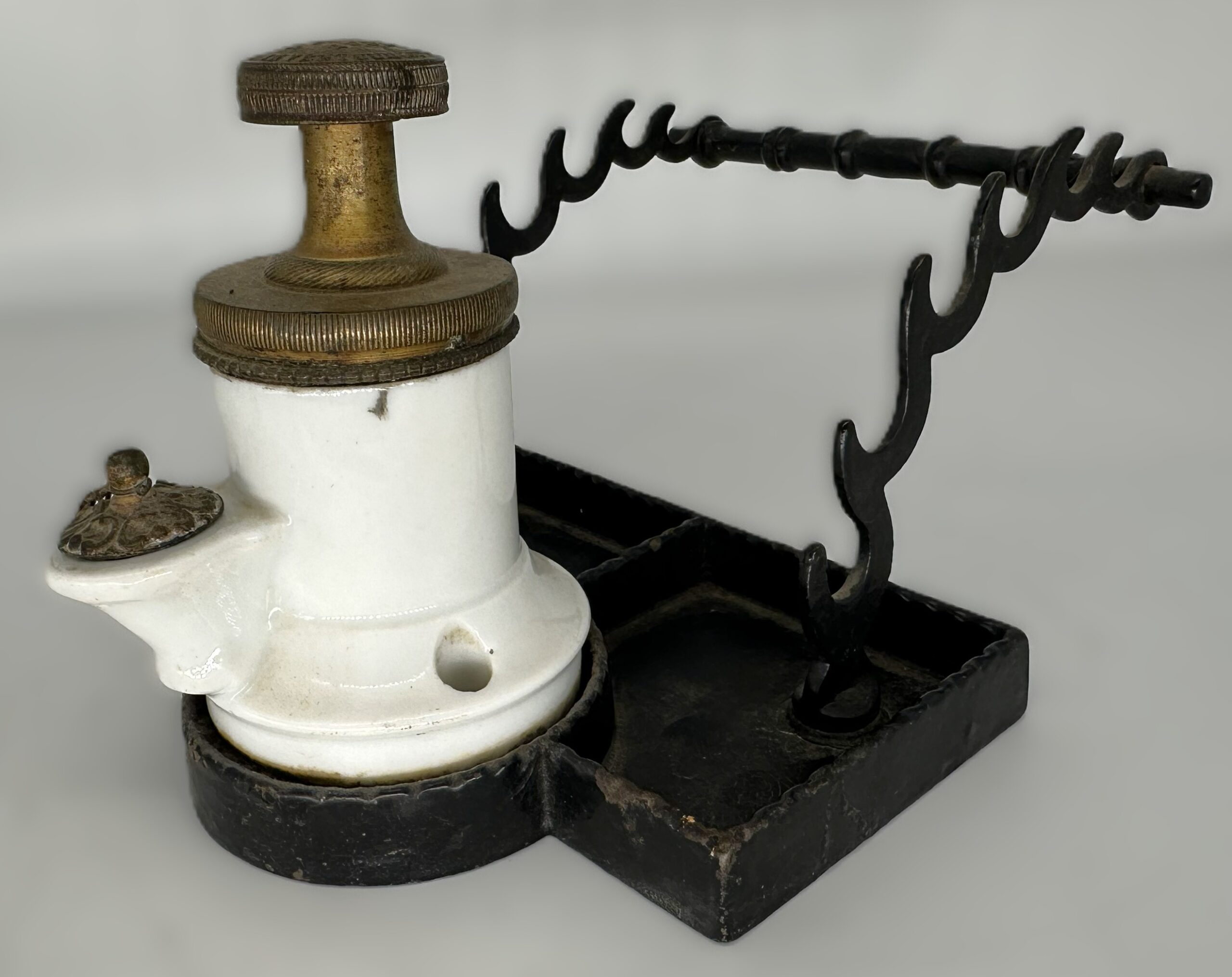
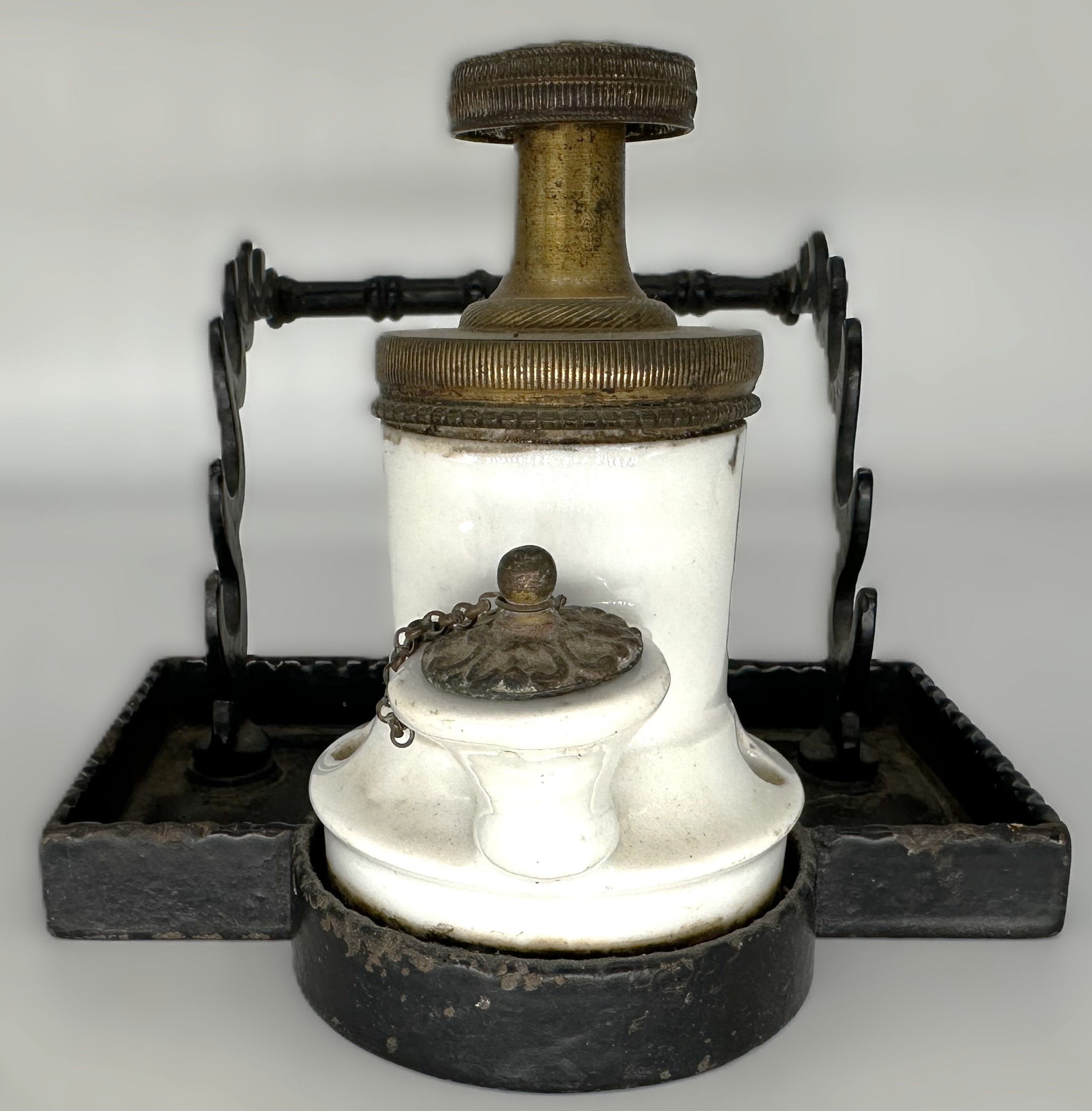
- Inkwell: The central reservoir is a white porcelain cylinder. A small porcelain dipping font is located at the front, covered with a bronze metal lid attached to the inkwell with a small chain.
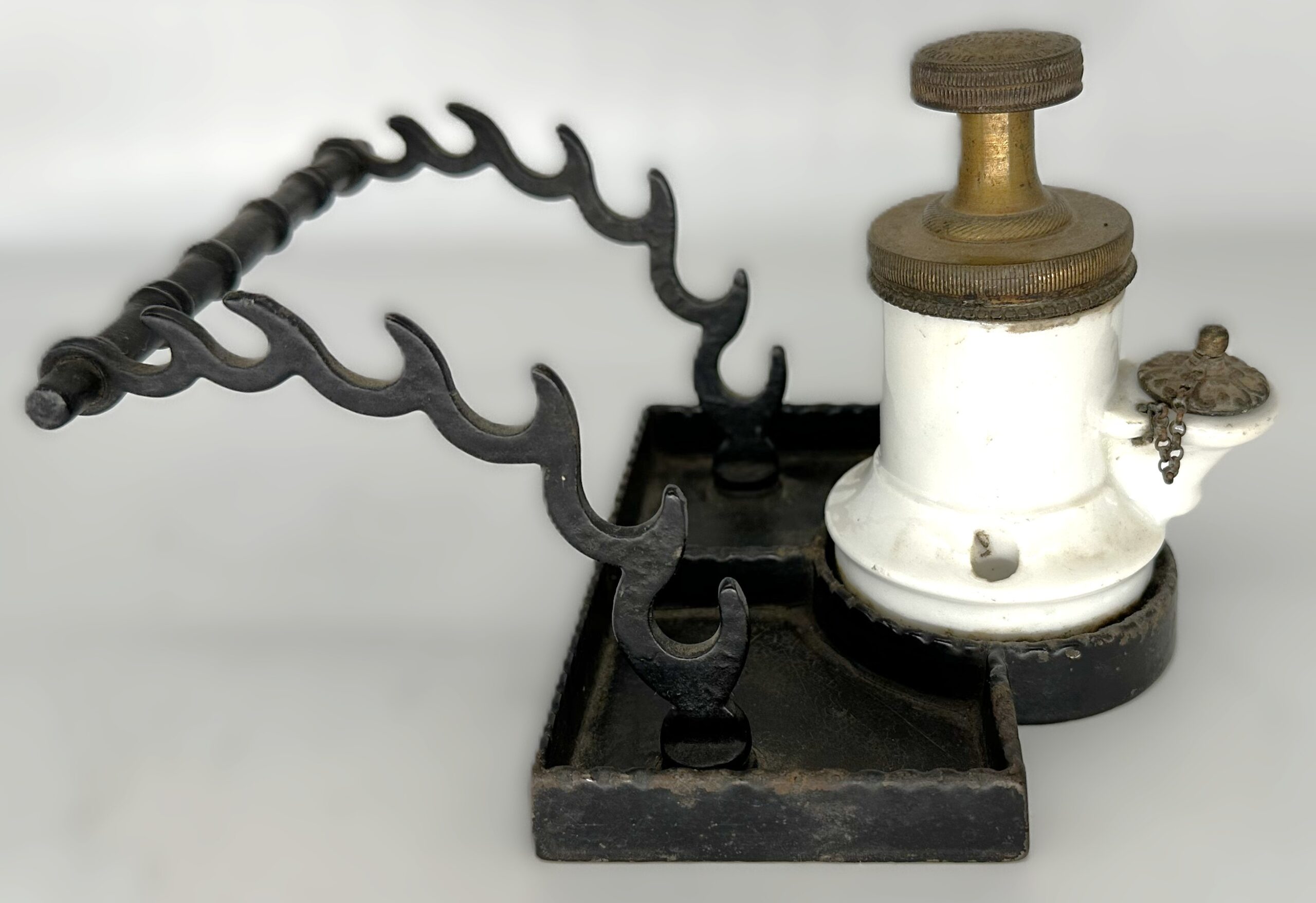
- Pen Rack: The inkwell is integrated into a heavy cast iron base that serves as a tray. Rising from the base is a dual-sided pen rack with five scalloped notches, designed to hold multiple dip pens or desk tools horizontally.
- Base: The tray is divided into two shallow rectangular compartments behind the inkwell for holding nibs, wafers, or seals.
The Ink Displacement Mechanism
This “Encrier Boquet” operates on a screw-driven hydrostatic displacement principle, which was a high-tech solution of the 1840s to prevent ink from thickening:
- Lowering the Plunger: Turning the brass knob clockwise rotates a central threaded rod. This forces a heavy, solid porcelain plunger (as seen in the disassembled view) deep into the ink-filled cylinder.
- Raising the Ink: As the plunger enters the reservoir, it physically displaces the ink, forcing it through a small internal channel at the base of the cylinder and up into the front dipping font.
- Vacuum Recession: After writing, reversing the turn lifts the plunger. This creates a vacuum that draws the ink out of the font and back into the main airtight reservoir. This “clean” cycle kept the dipping area free of dried sludge and kept the main supply fresh longer than standard inkwells.
Estimated value: $125
Content disclaimer. The information posted is the owner’s best knowledge and may not have been vetted by the SOIC. We welcome comments, corrections, and additions, working to make our website information comprehensive and accurate.
Join the Society of Inkwell Collectors (SOIC) – it’s free!
Founded in 1981 as a non-profit organization,
we are documenting inkwells (and accessories).
We’re here to help and inform!