

Inkipedia
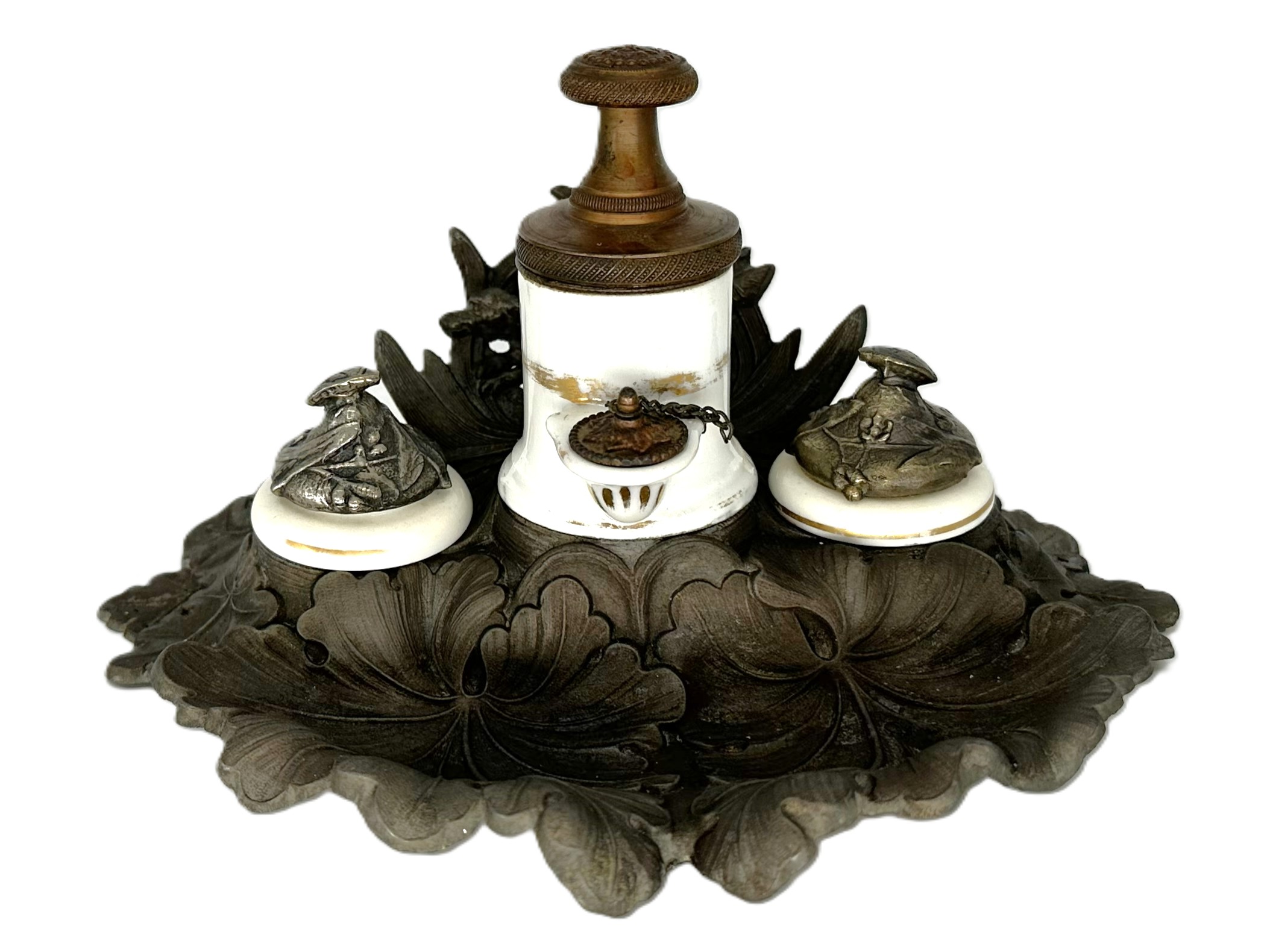
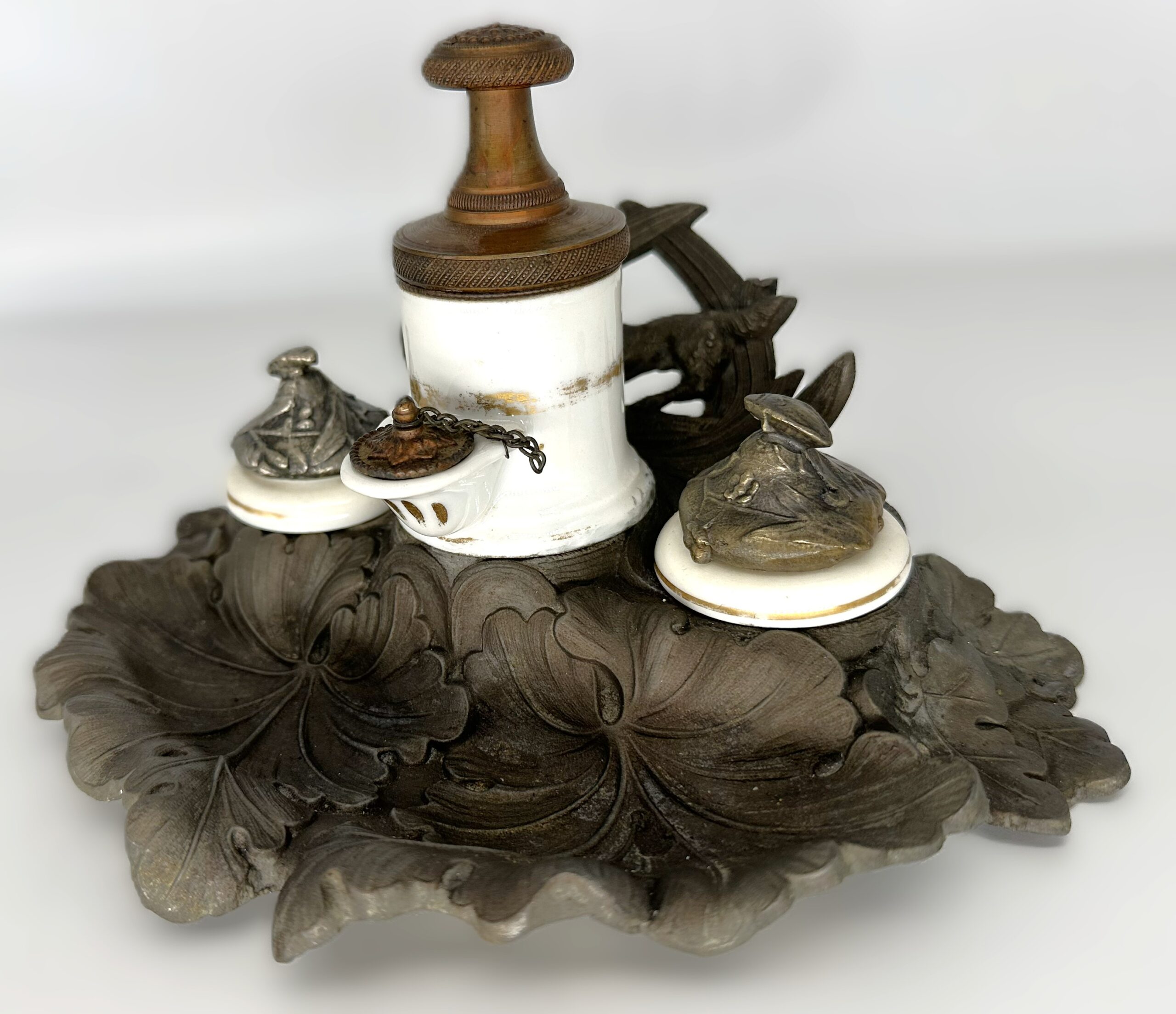


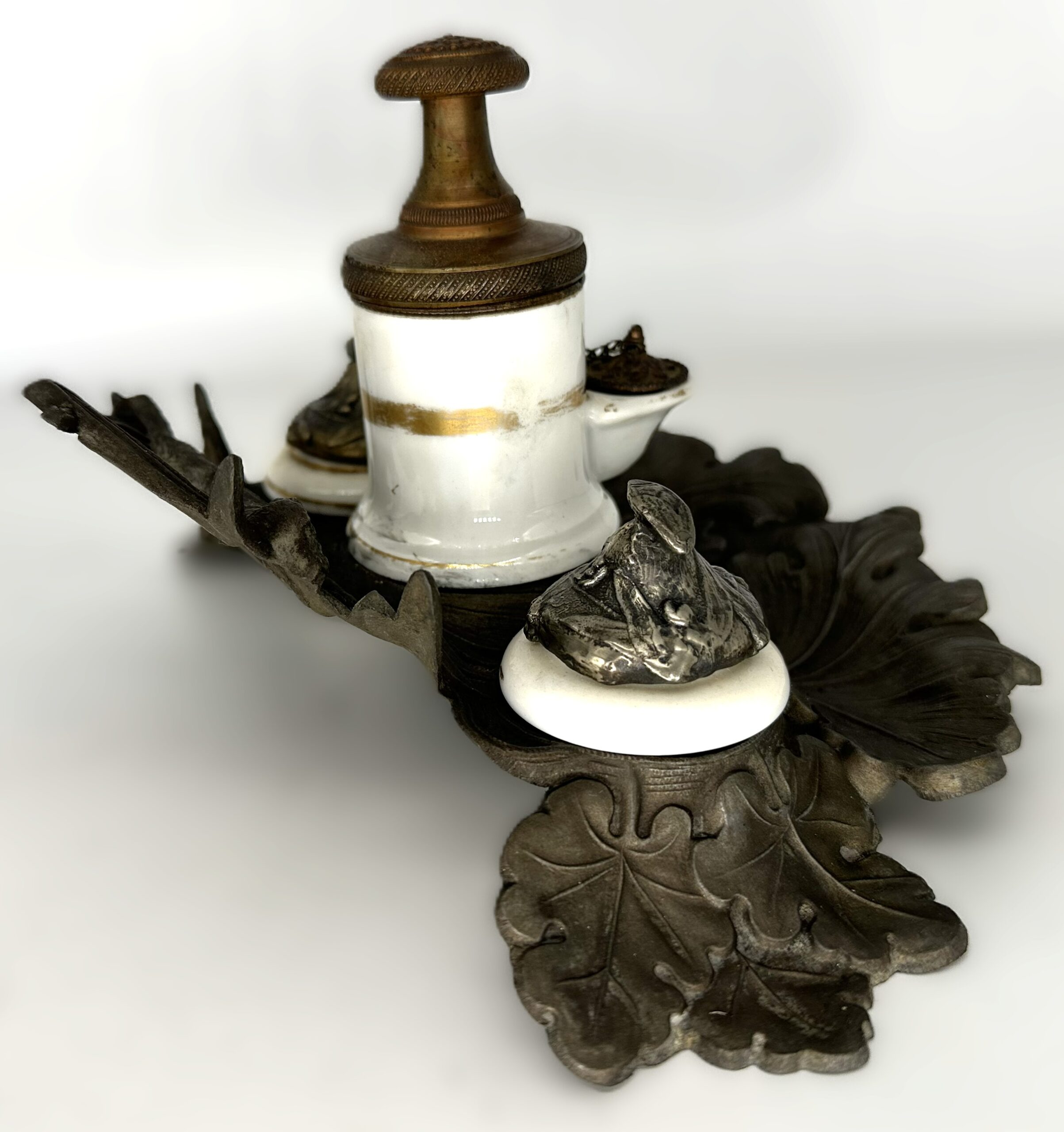
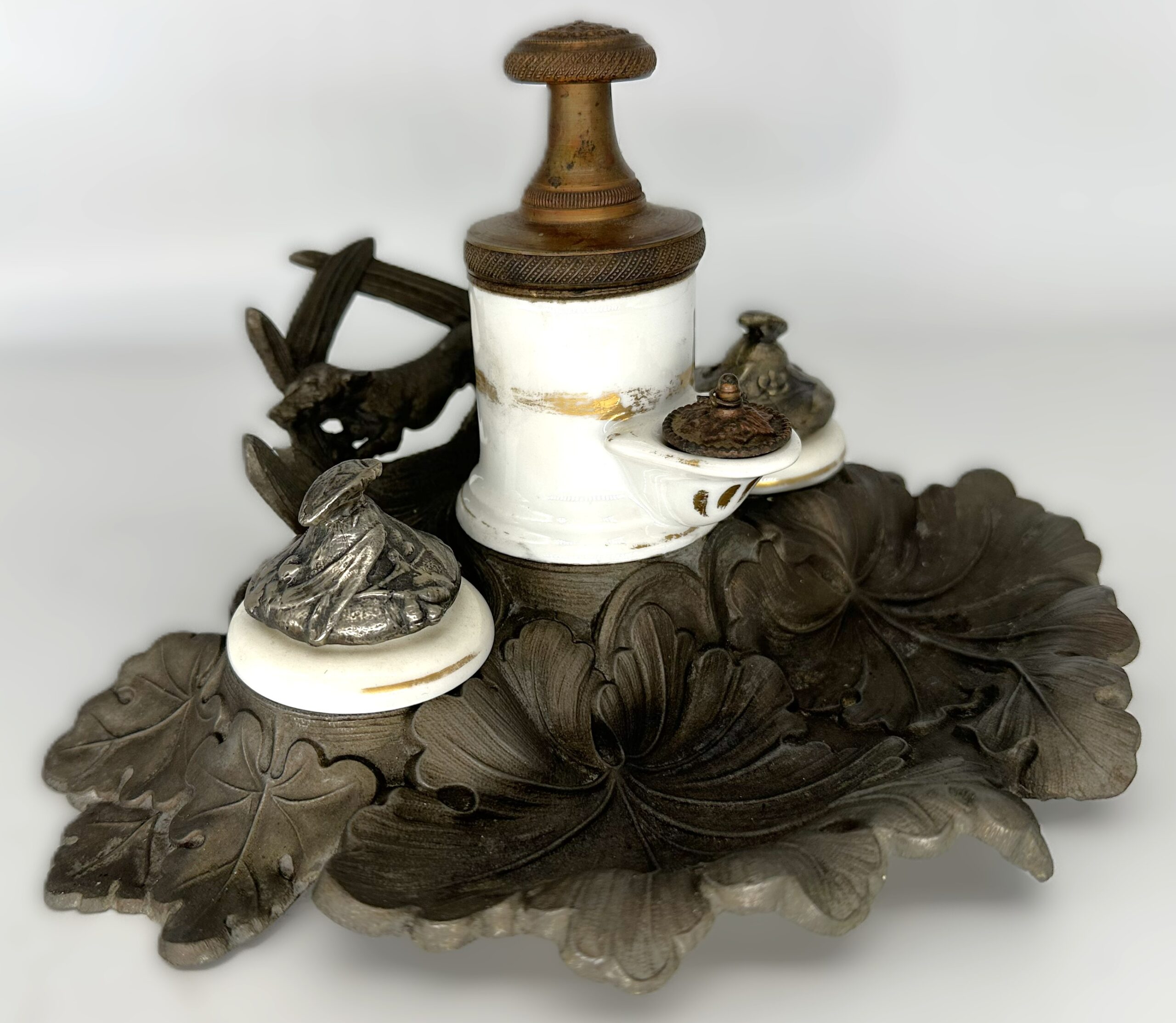
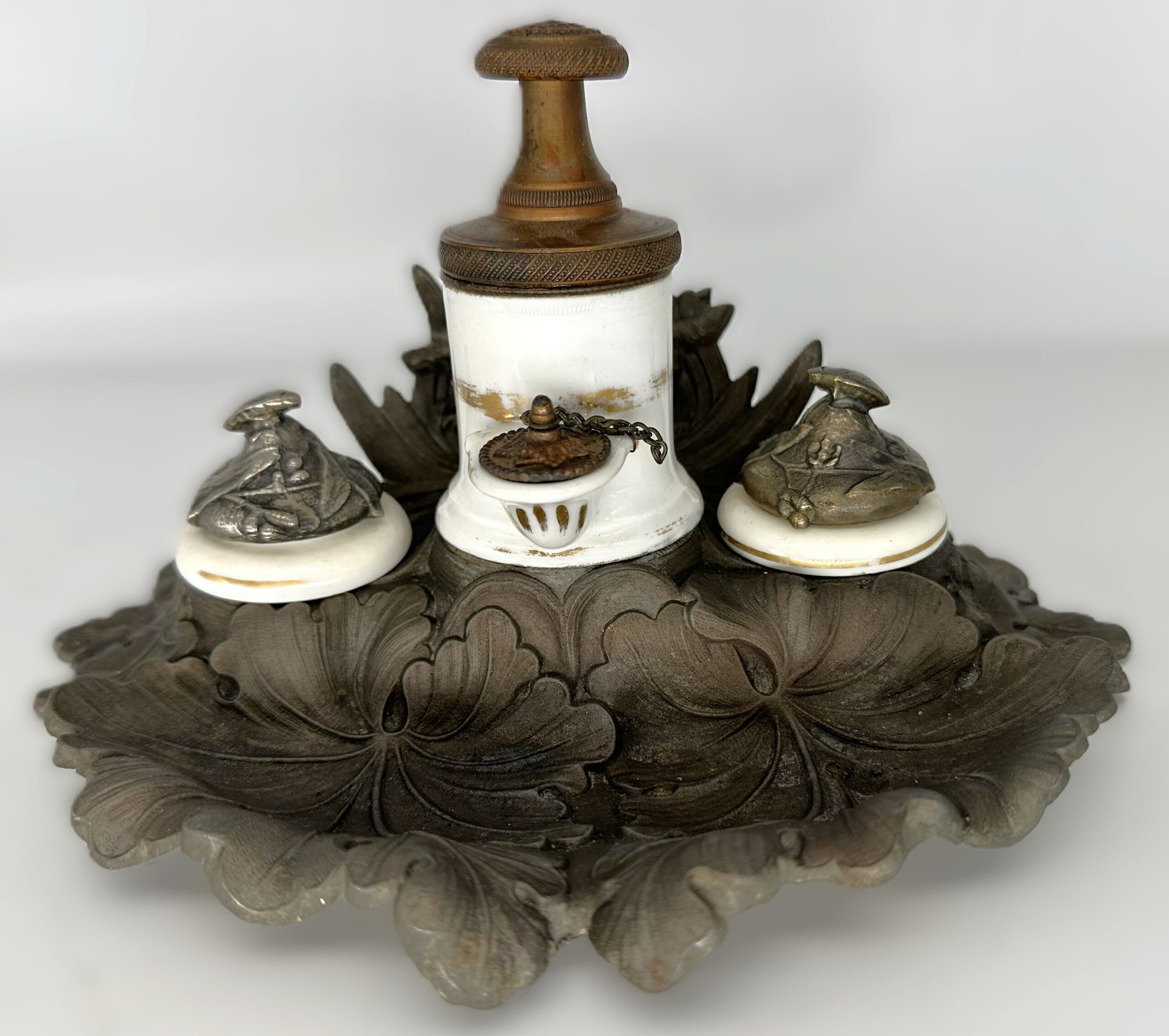
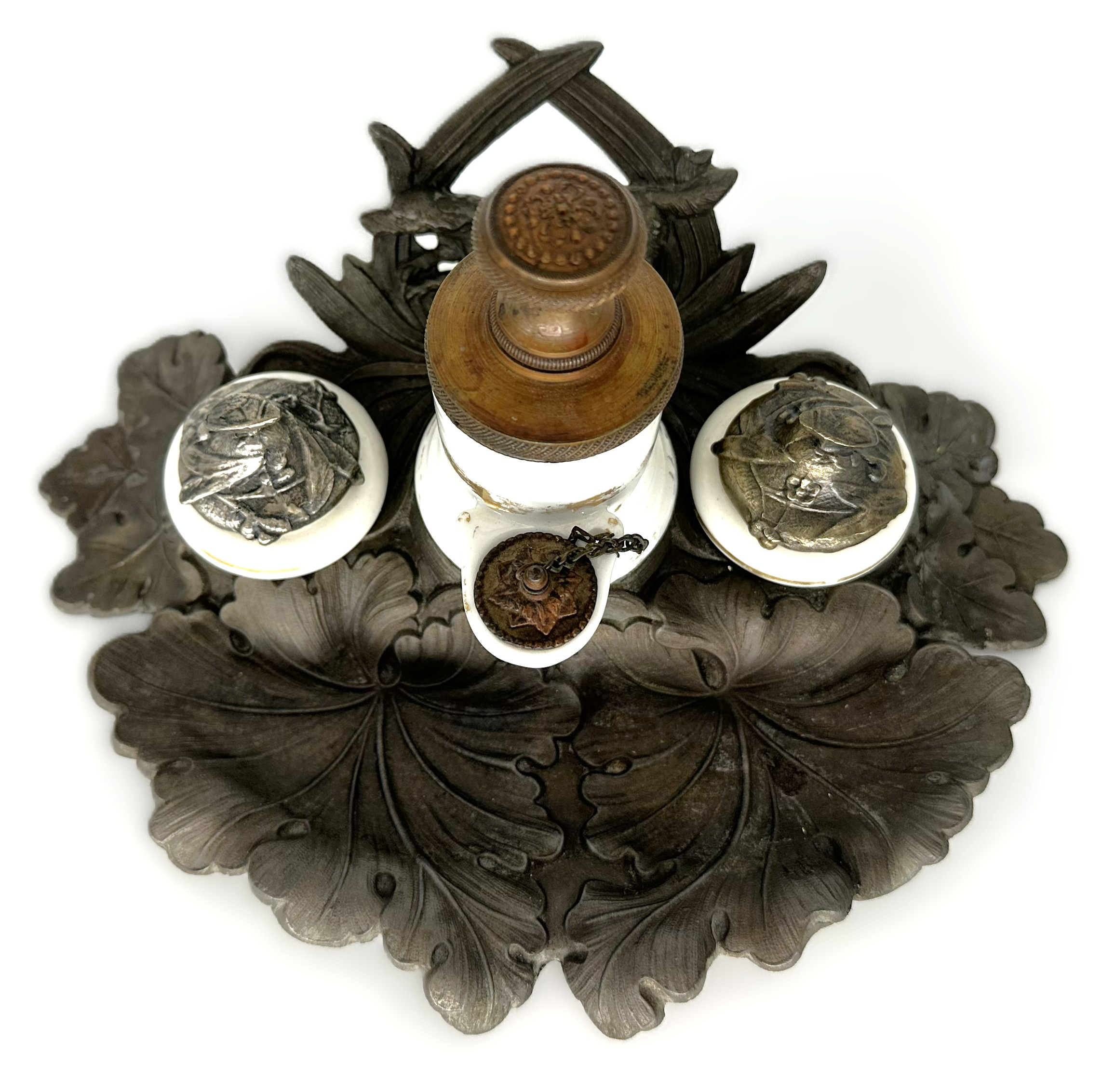


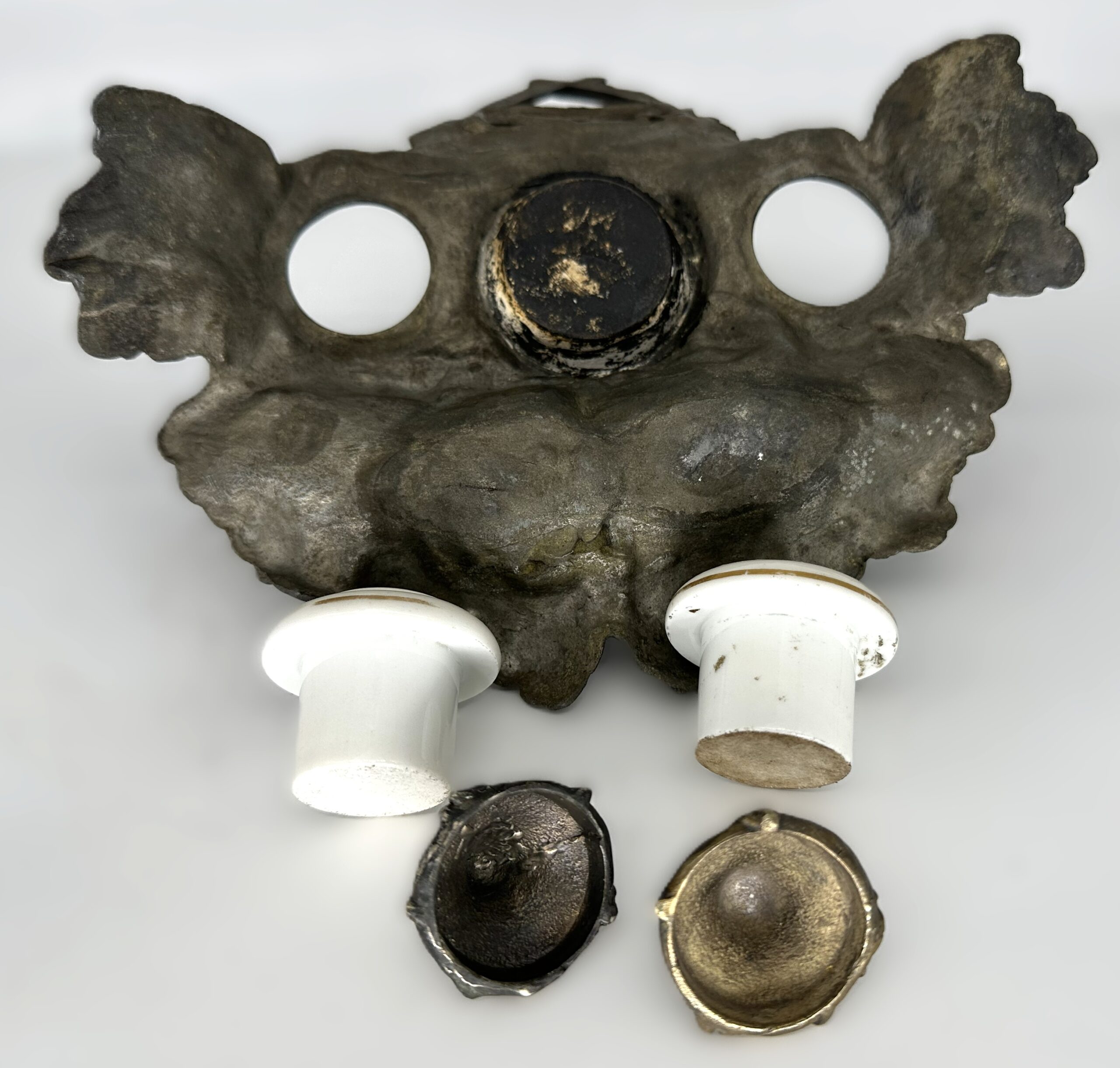
French Triple Inkstand with Hunting Dog Motif
| Categories | Mechanical - Pump / Siphon |
| Type | dog, Pump |
| Material | Spelter, Porcelain |
| Markings | Unmarked |
| Manufacturer | Undetermined |
| Origin | France |
| Date or Era | circa 1870 |
| Measuring | 9 ¼” x 7 ½” x 6” high |
This inkstand combines three separate ink reservoirs.
Description
- Base: The stand features a spelter metal base (a zinc-lead alloy) cast into an intricate overlapping leaf motif.
- Backboard: A decorative metal spray at the rear depicts a running dog (likely a hound or setter) framed by stylized branches.
- Central Inkwell: The primary reservoir is a white porcelain cylinder with a gilded band and a brass pump-action mechanism.
- Side Pots: Flanking the central well are two conventional porcelain ink pots with unattached, decorative metal lift-off lids.
Operation of the Pump Mechanism
This central well operates through hydrostatic displacement, a 19th-century innovation designed to prevent ink from drying out or becoming thick with sediment.
- Lowering the Plunger: By turning the brass knob clockwise, an internal screw forces a heavy porcelain plunger (the piston) downward into the main ink supply.
- Displacing the Ink: As the plunger enters the reservoir, it displaces the ink, forcing it through a small internal channel and up into the small external dipping font at the front.
- Recession for Preservation: Once the writing session is complete, rotating the knob counter-clockwise lifts the plunger. This creates a vacuum that draws the ink back into the main airtight porcelain cylinder, protecting it from air exposure and evaporation.
Origin and Age
- Manufacturer: While this specific piece is unmarked, the high-quality combination of porcelain and ornate cast metal is characteristic of French “Palais Royal” workshops. The mechanical design is based on the famous patents of Louis-Honoré Boquet or Morier, who dominated the market for luxury pump inkwells in Paris.
- Date: This inkstand likely dates to the 1860s or 1870s. The use of spelter metal and the naturalistic “hunt” theme were hallmark styles of the mid-to-late Victorian period.
Estimated value: $150
Content disclaimer. The information posted is the owner’s best knowledge and may not have been vetted by the SOIC. We welcome comments, corrections, and additions, working to make our website information comprehensive and accurate.
Join the Society of Inkwell Collectors (SOIC) – it’s free!
Founded in 1981 as a non-profit organization,
we are documenting inkwells (and accessories).
We’re here to help and inform!