


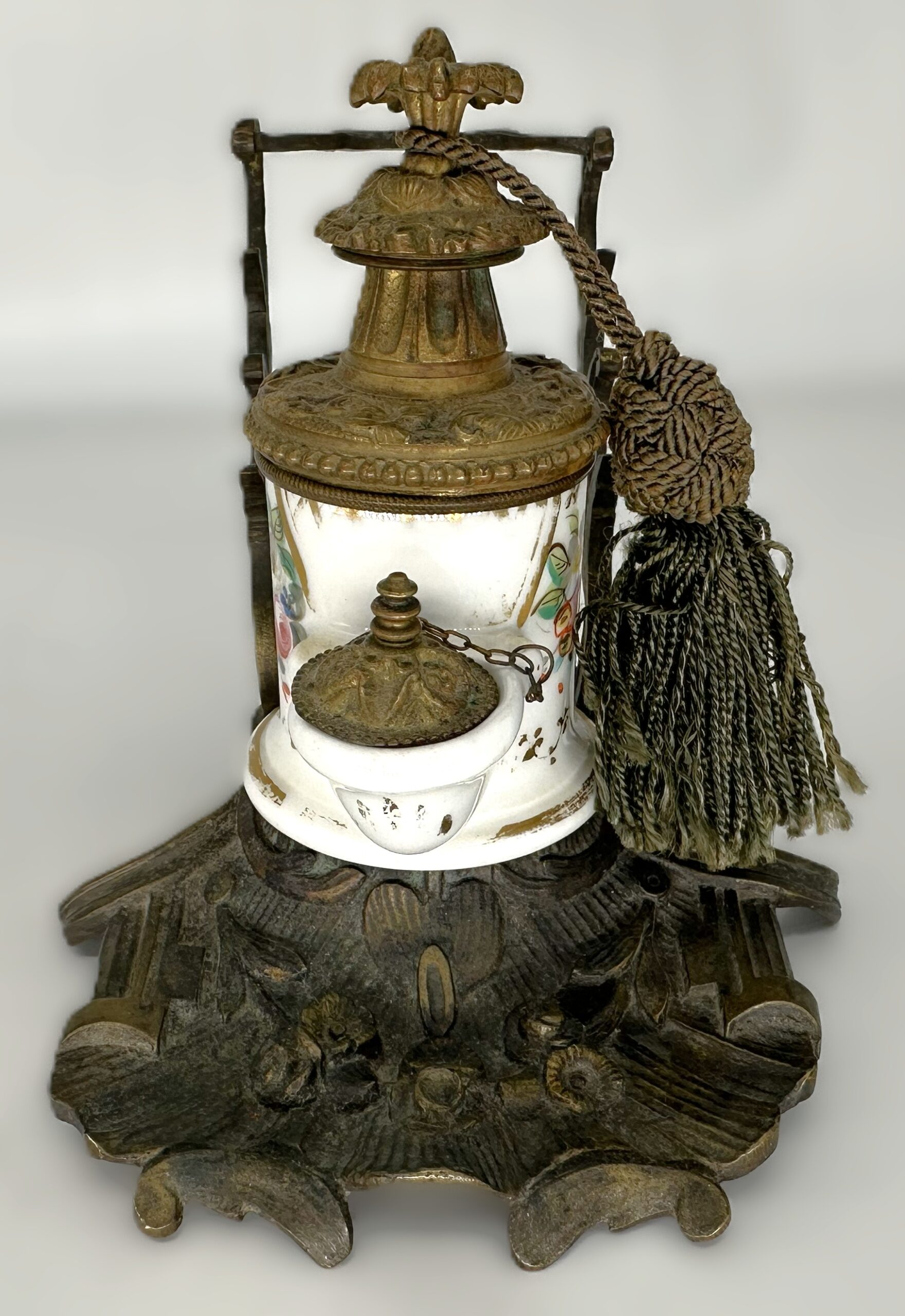
Pump Inkstand Set on a Pen Rack
| Categories | Mechanical - Pump / Siphon |
| Type | Pump |
| Material | Bronze, Porcelain |
| Markings | Unmarked |
| Manufacturer | Undetermined |
| Origin | France |
| Date or Era | circa 1865 |
| Measuring | Base: 5” x 4 ½”; 5” high |
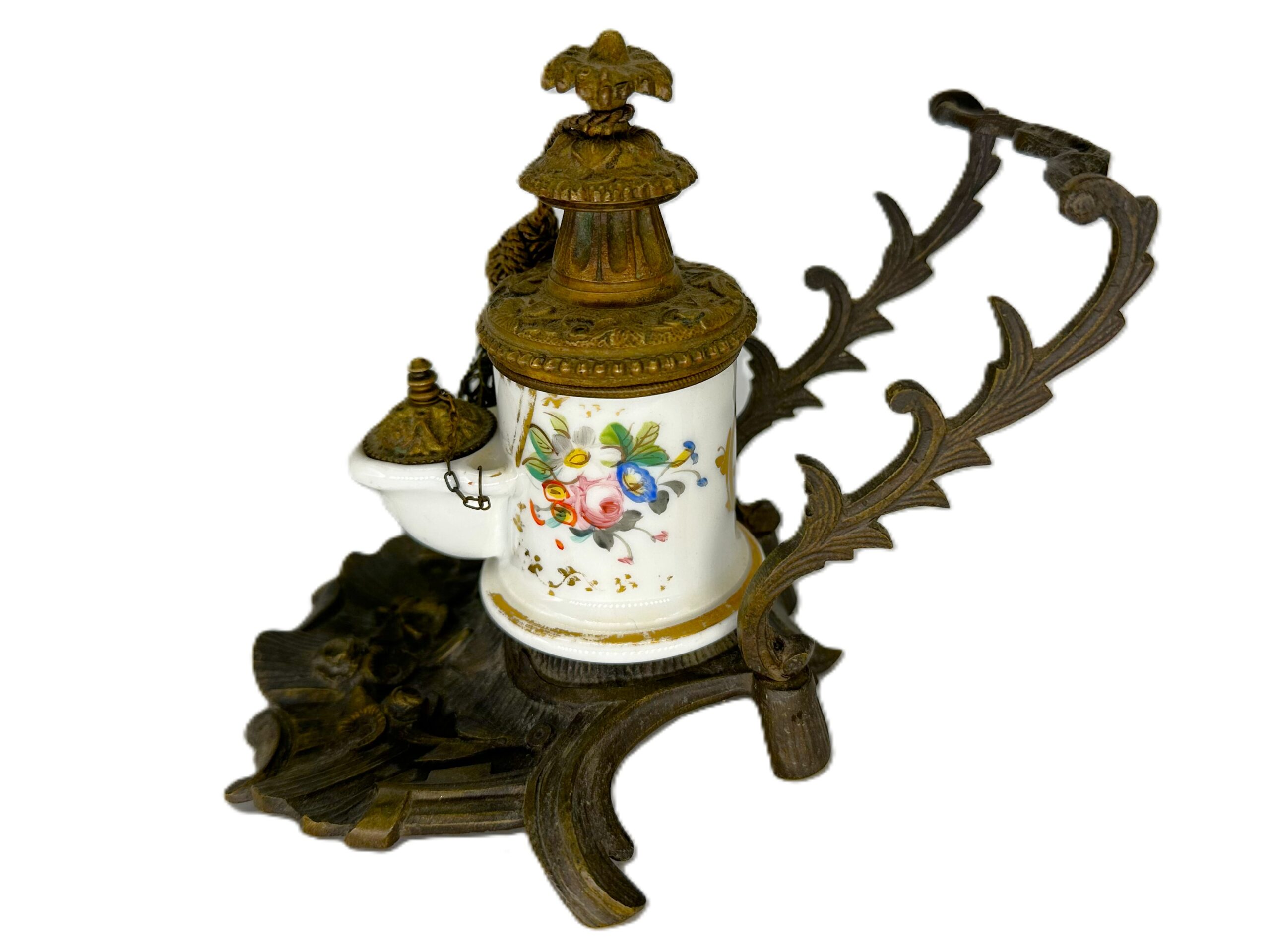
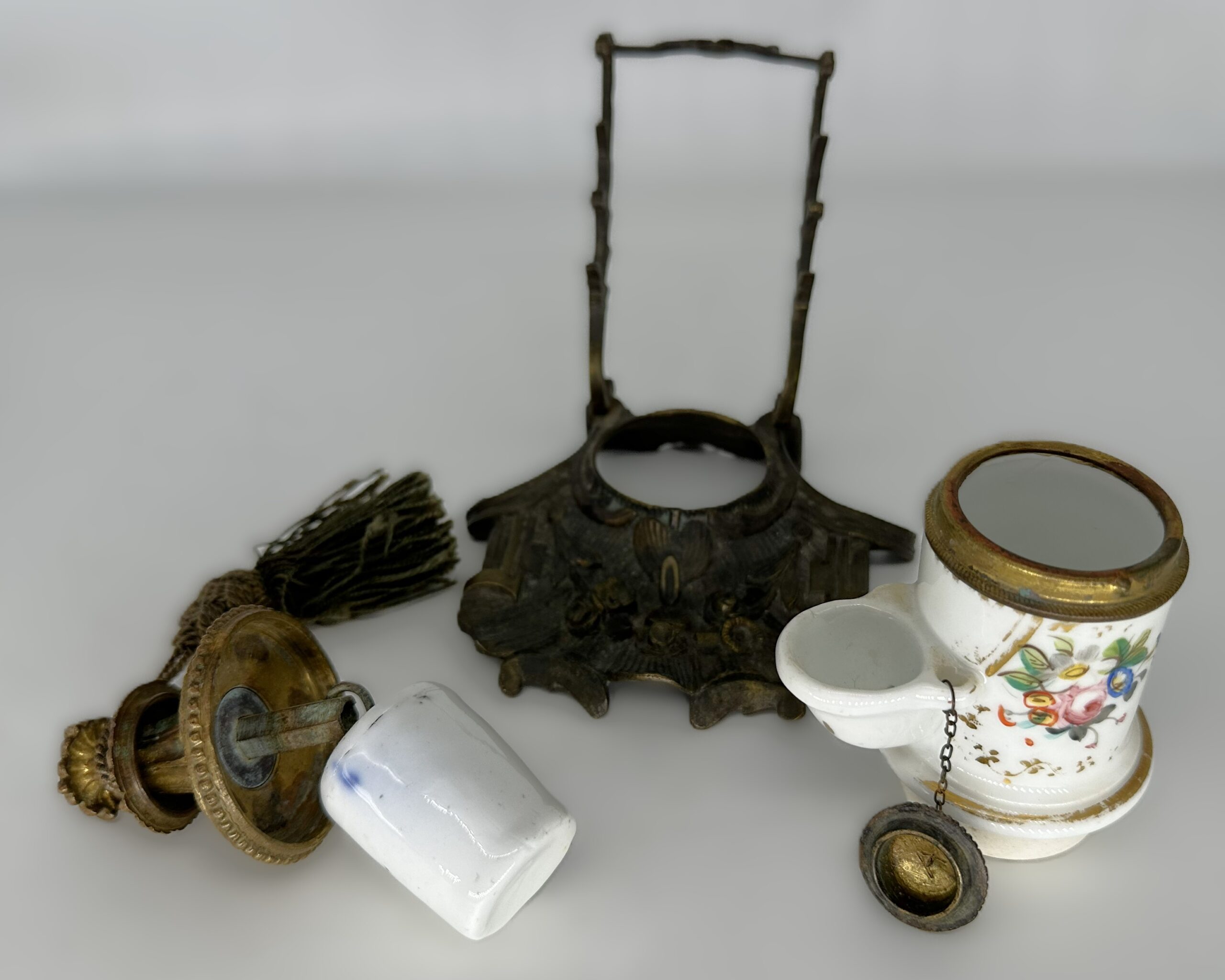
This pump inkwell dates to the 1860s or 1870s. It features a finely decorated porcelain reservoir integrated into a cast metal frame designed to hold multiple dip pens.
Description
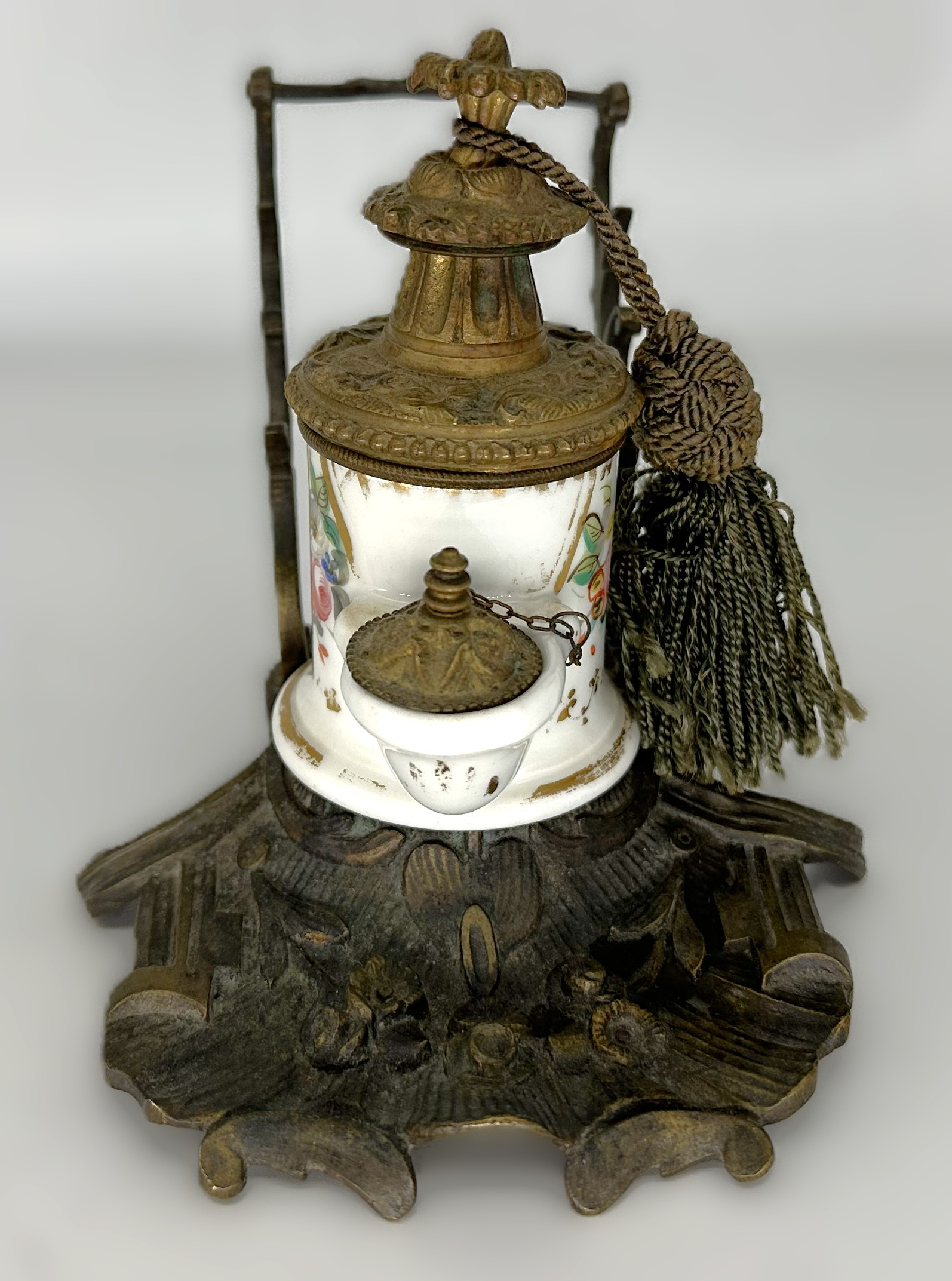
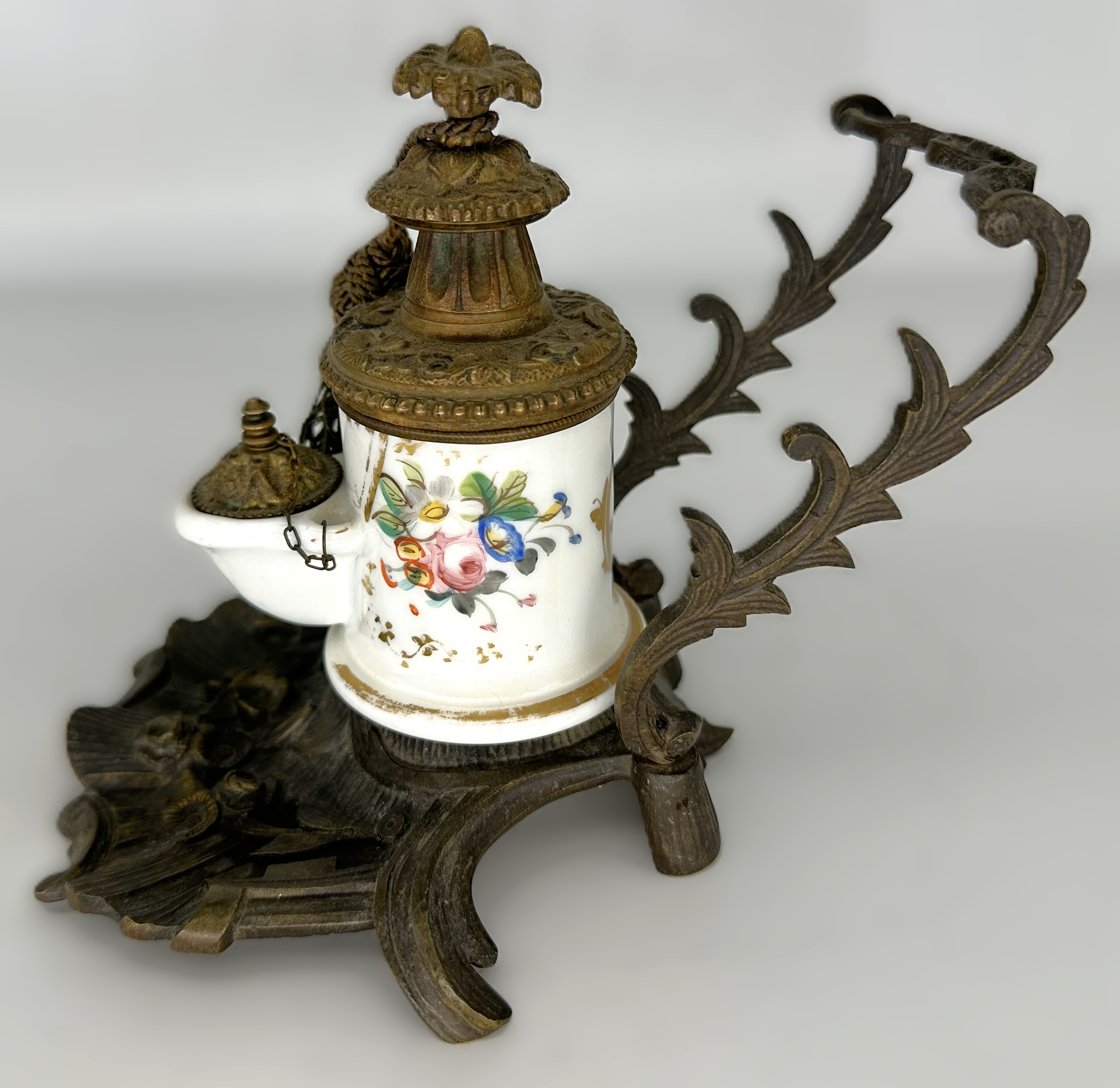
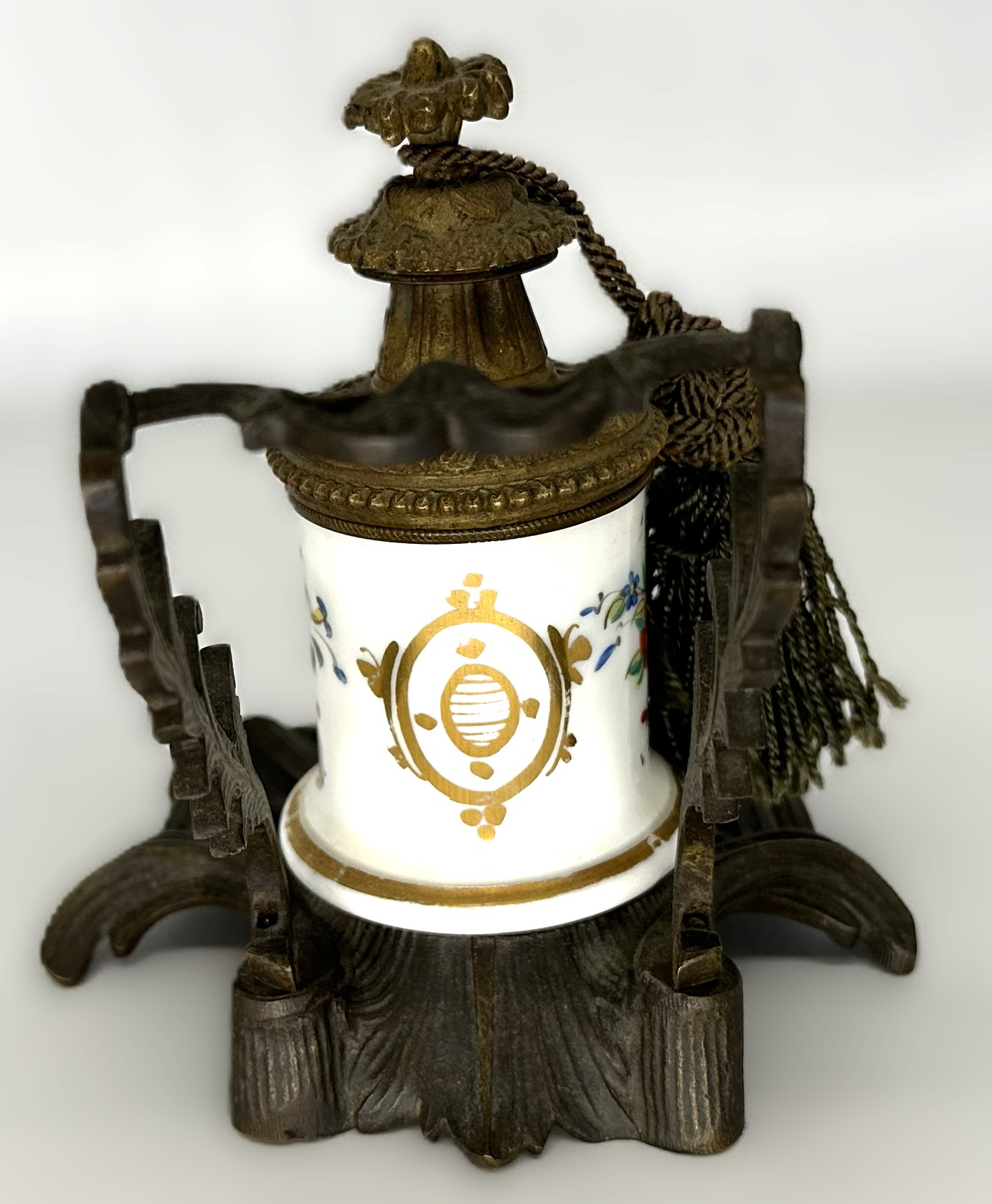
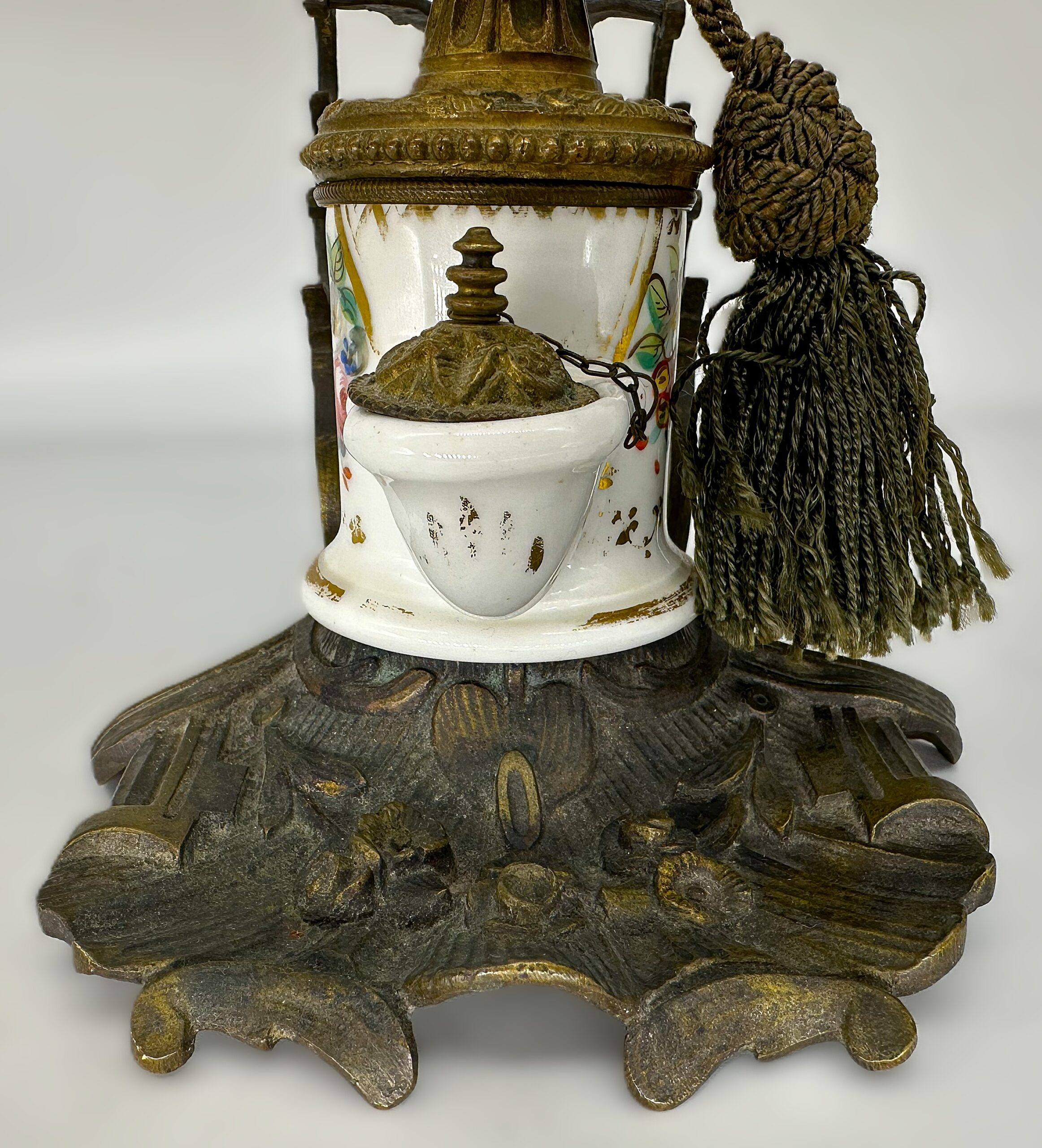
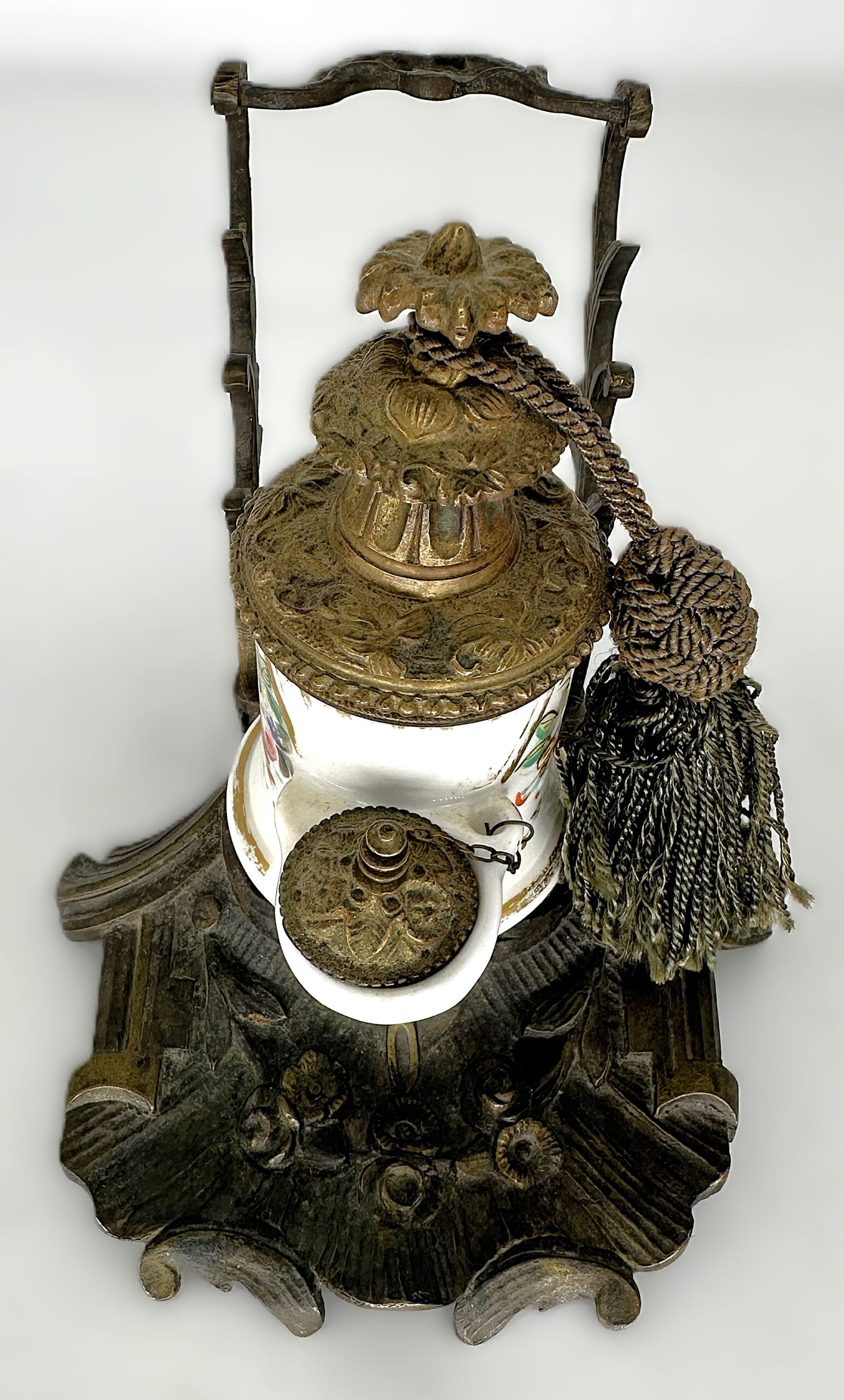
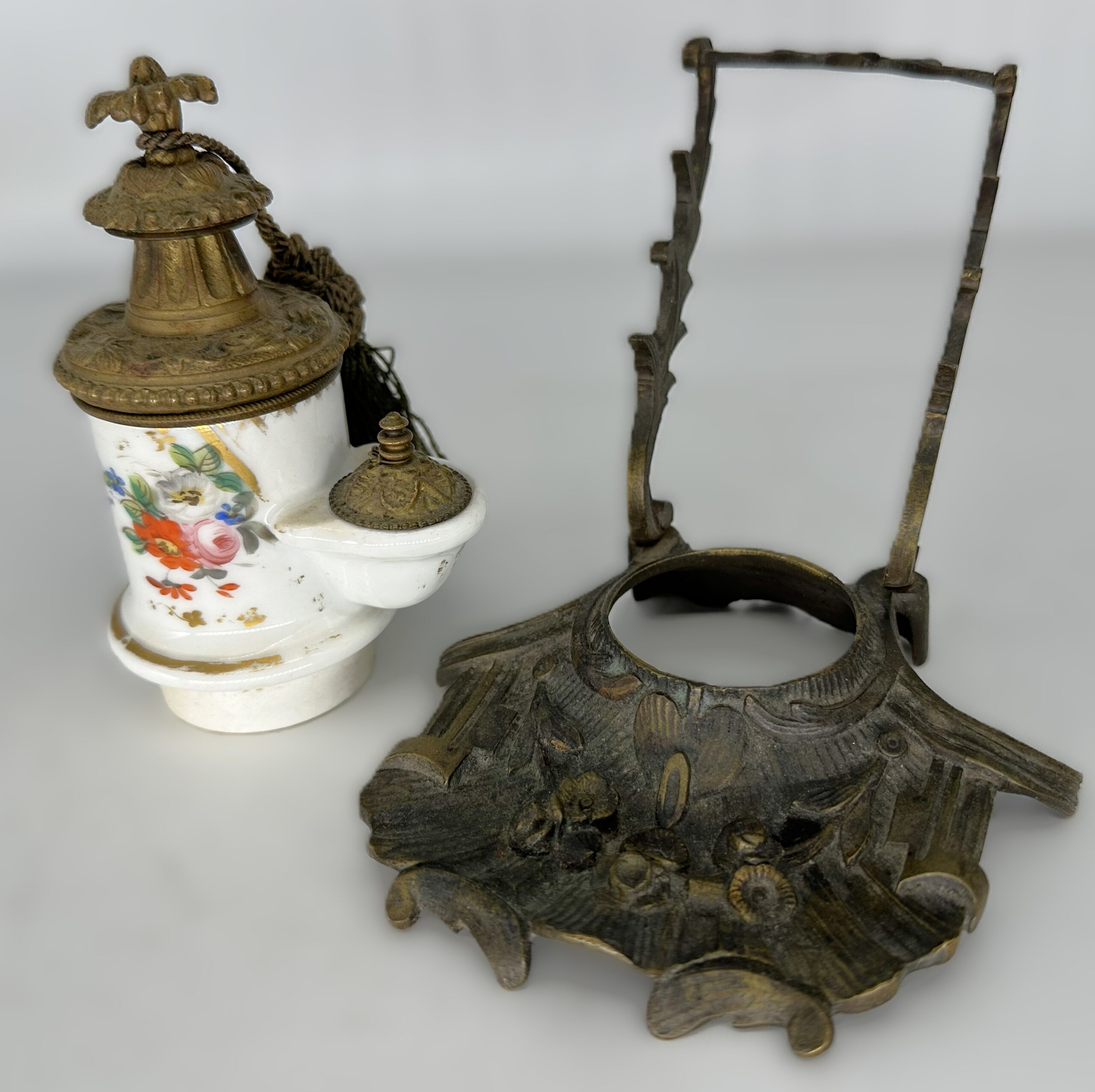
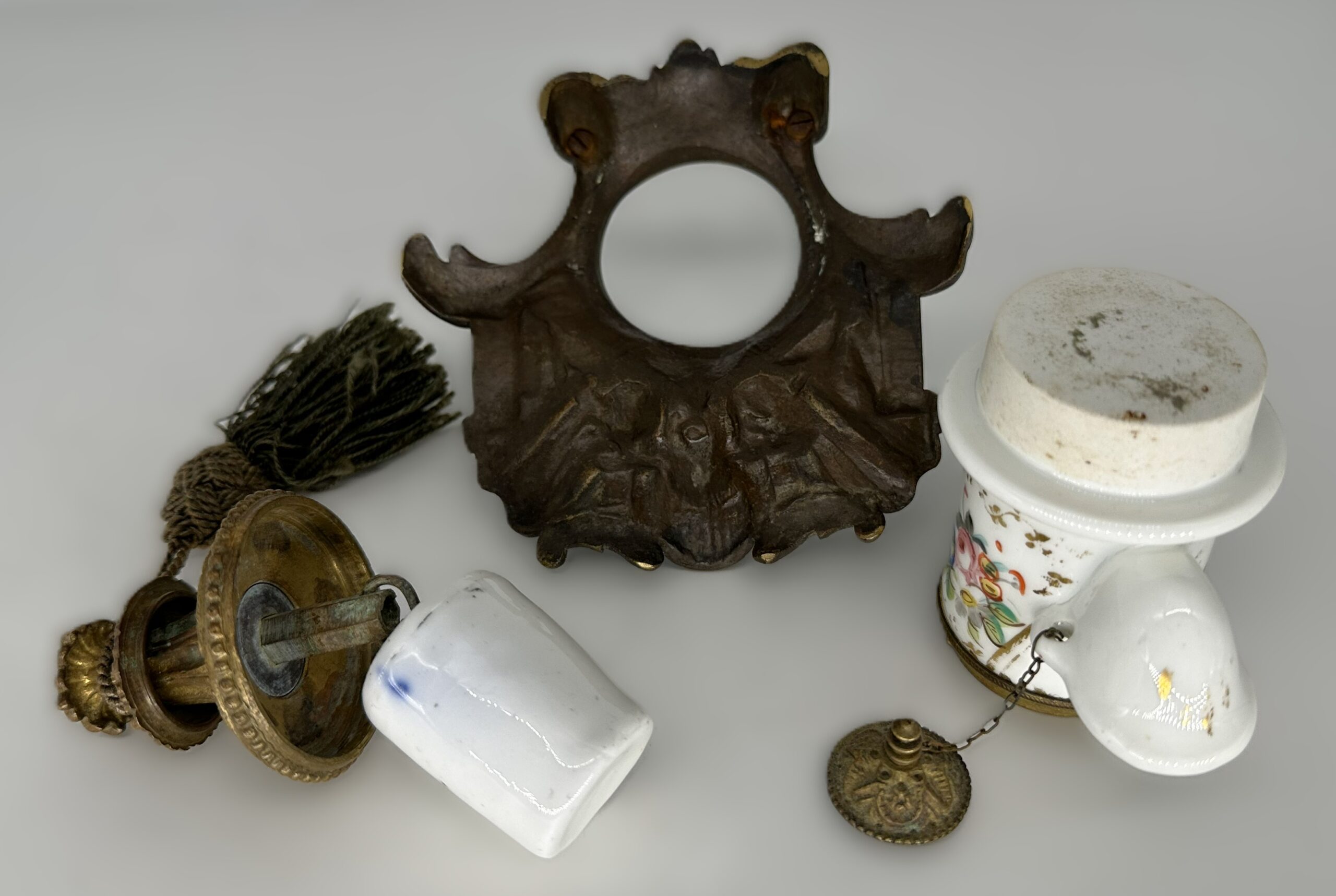
- Base and Rack: The inkwell sits in a bronze-finished metal base featuring Rococo-style scrolls and floral motifs. Rising from the base is a matching rack with four notches on each side to hold pens horizontally.
- Porcelain Reservoir: The central cylinder is made of white porcelain, featuring a hand-painted floral spray of roses and forget-me-nots on the front. The back of the cylinder displays a gilded crest within a laurel wreath.
- Hardware: The top is fitted with an ornate bronze cap and a tiered, fluted plunger knob. A small dipping font at the front is protected by a hinged brass lid attached by a fine chain.
- The Tassel: While common on luxury “Palais Royal” desk sets to add a touch of opulence, the green silk tassel may be a later addition or a replacement.
The Pump Mechanism
This piece uses a screw-driven hydrostatic displacement system, a hallmark of 19th-century French mechanical inkwells.
- Lowering the Plunger: Turning the brass knob rotates a threaded internal rod. This forces a heavy solid porcelain block (the plunger) downward into the ink supply.
- Displacing the Ink: As the plunger enters the main reservoir, it physically displaces the ink, forcing it through a small internal channel and up into the front porcelain font for easy dipping.
- Vacuum Recession: Rotating the knob in reverse lifts the plunger, creating a slight vacuum that draws the ink back into the main airtight cylinder. This process kept the ink from evaporating or thickening when not in use.
Origin and Artistry
- Hand-Painted Detail: The floral sprays are hand-painted, evidenced by the slight variations in brushwork and the “raised” texture of the enamel paint and gilding.
- Manufacturer: While unmarked, the quality of the porcelain and the ornate casting of the bronze-finished frame are characteristic of the Palais Royal workshops in Paris. These workshops specialized in “Articles de Paris”—luxury mechanical goods for the wealthy European market.
- Age: Circa 1865. The specific combination of naturalistic hand-painting and Rococo Revival metalwork was most popular during the middle of the Second French Empire.
Estimated value: $150
Content disclaimer. The information posted is the owner’s best knowledge and may not have been vetted by the SOIC. We welcome comments, corrections, and additions, working to make our website information comprehensive and accurate.
Join the Society of Inkwell Collectors (SOIC) – it’s free!
Founded in 1981 as a non-profit organization,
we are documenting inkwells (and accessories).
We’re here to help and inform!