

Inkipedia
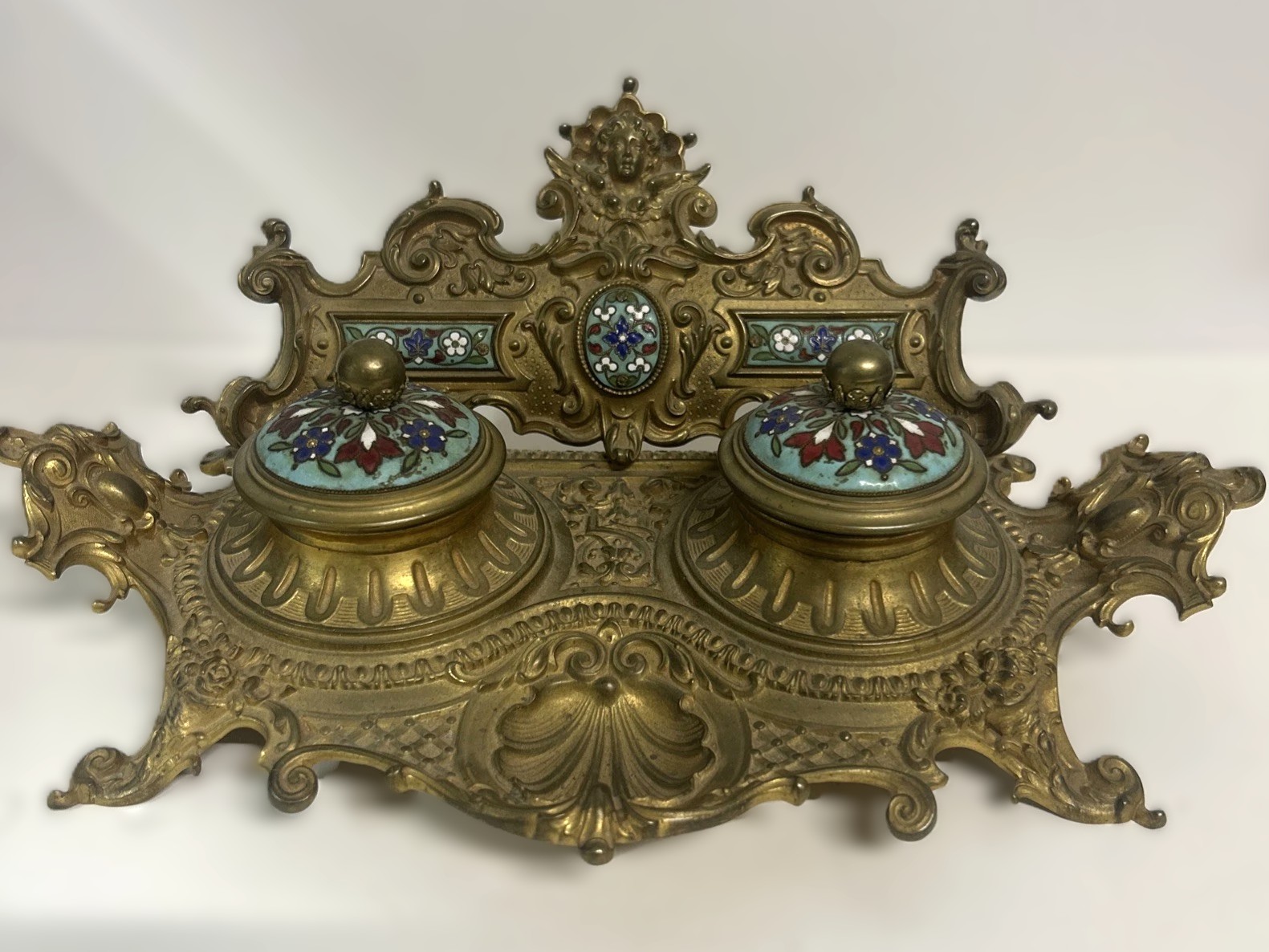
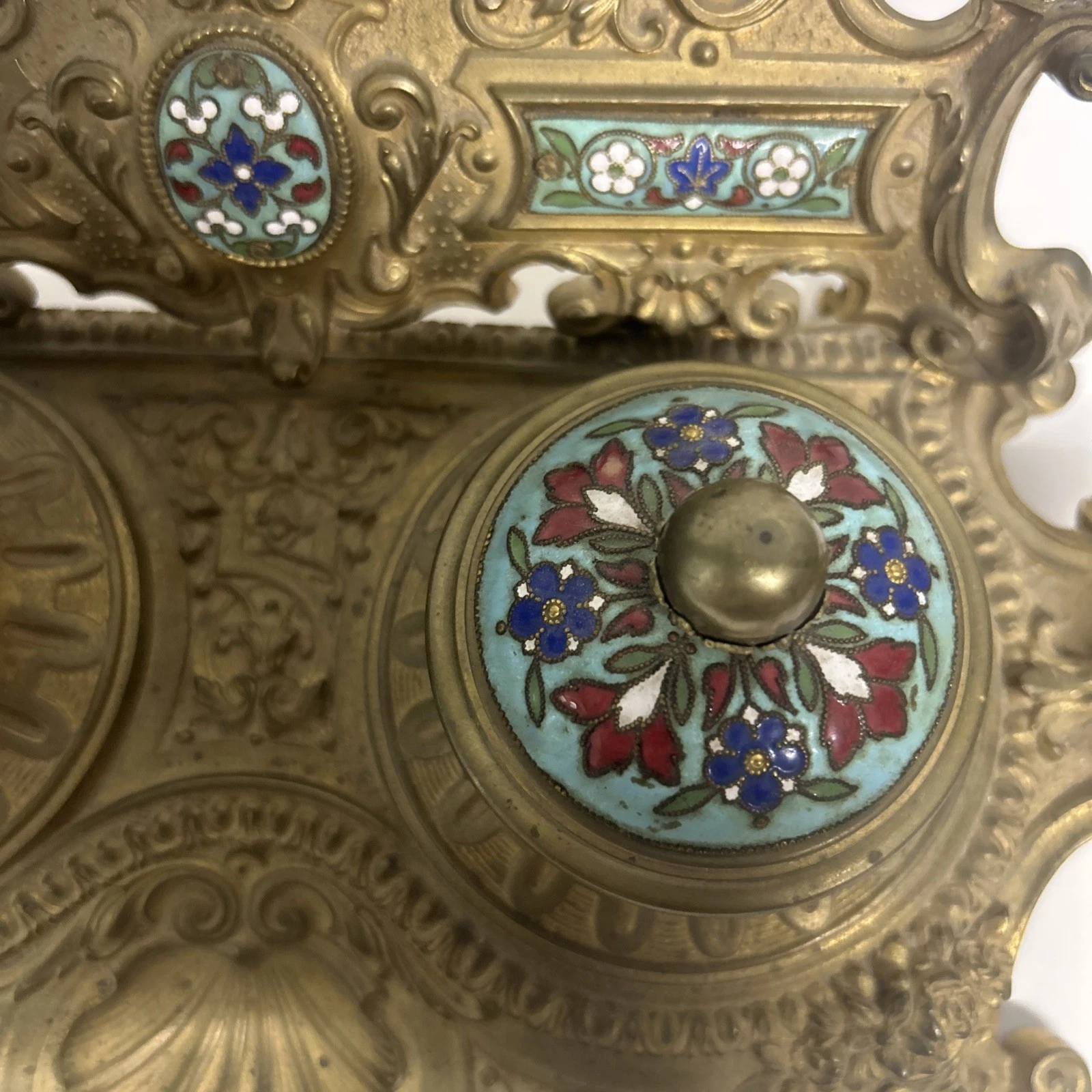
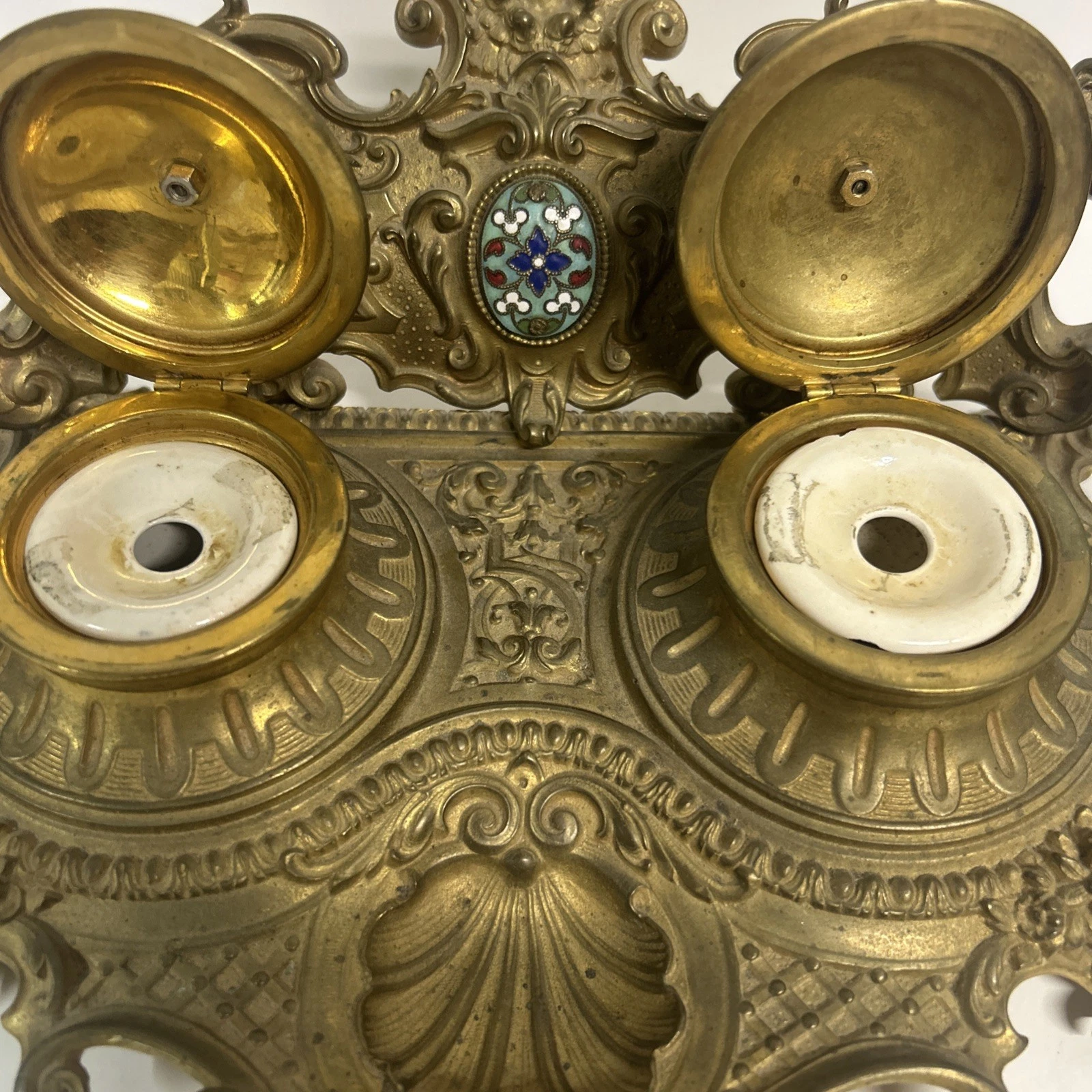
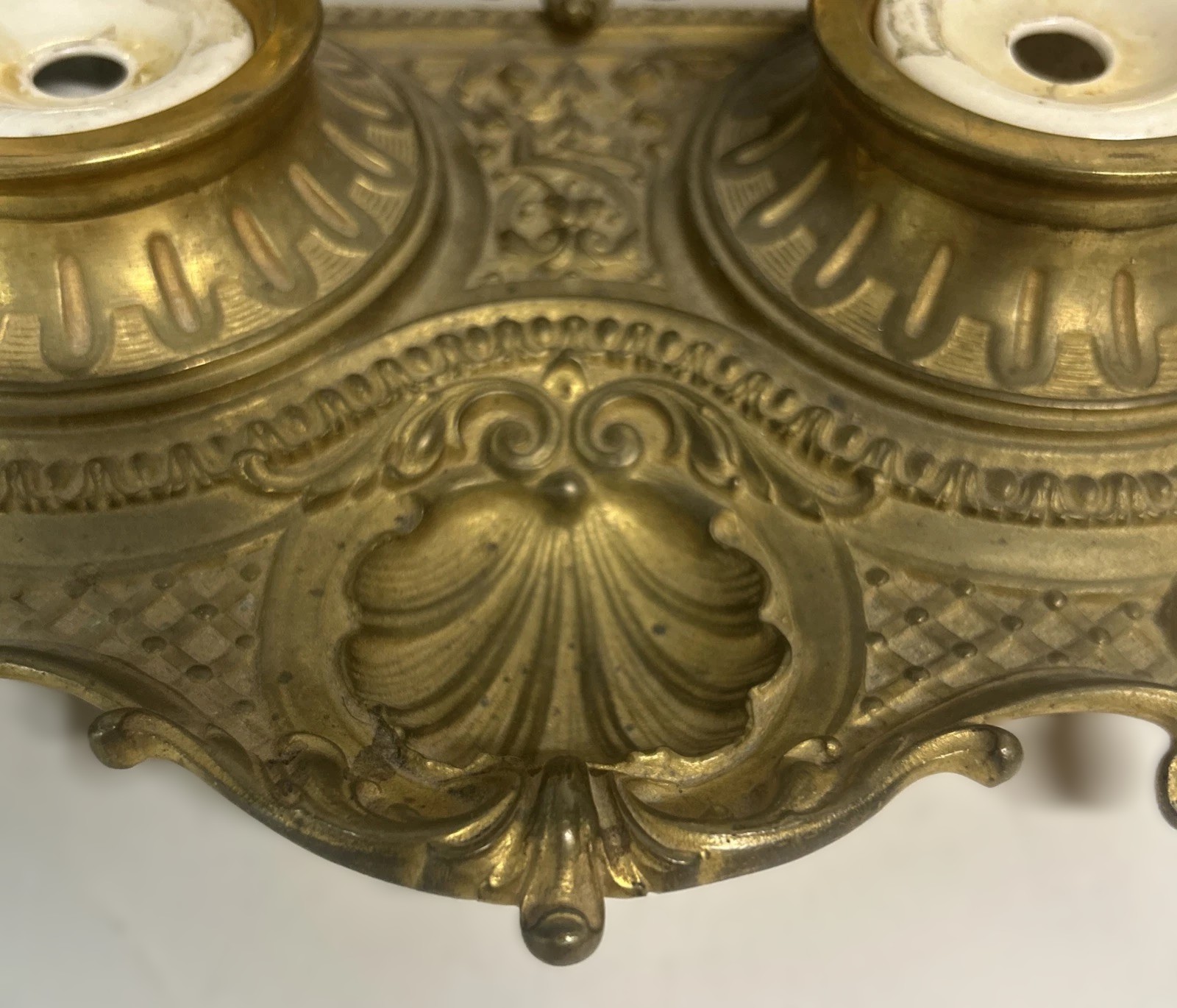
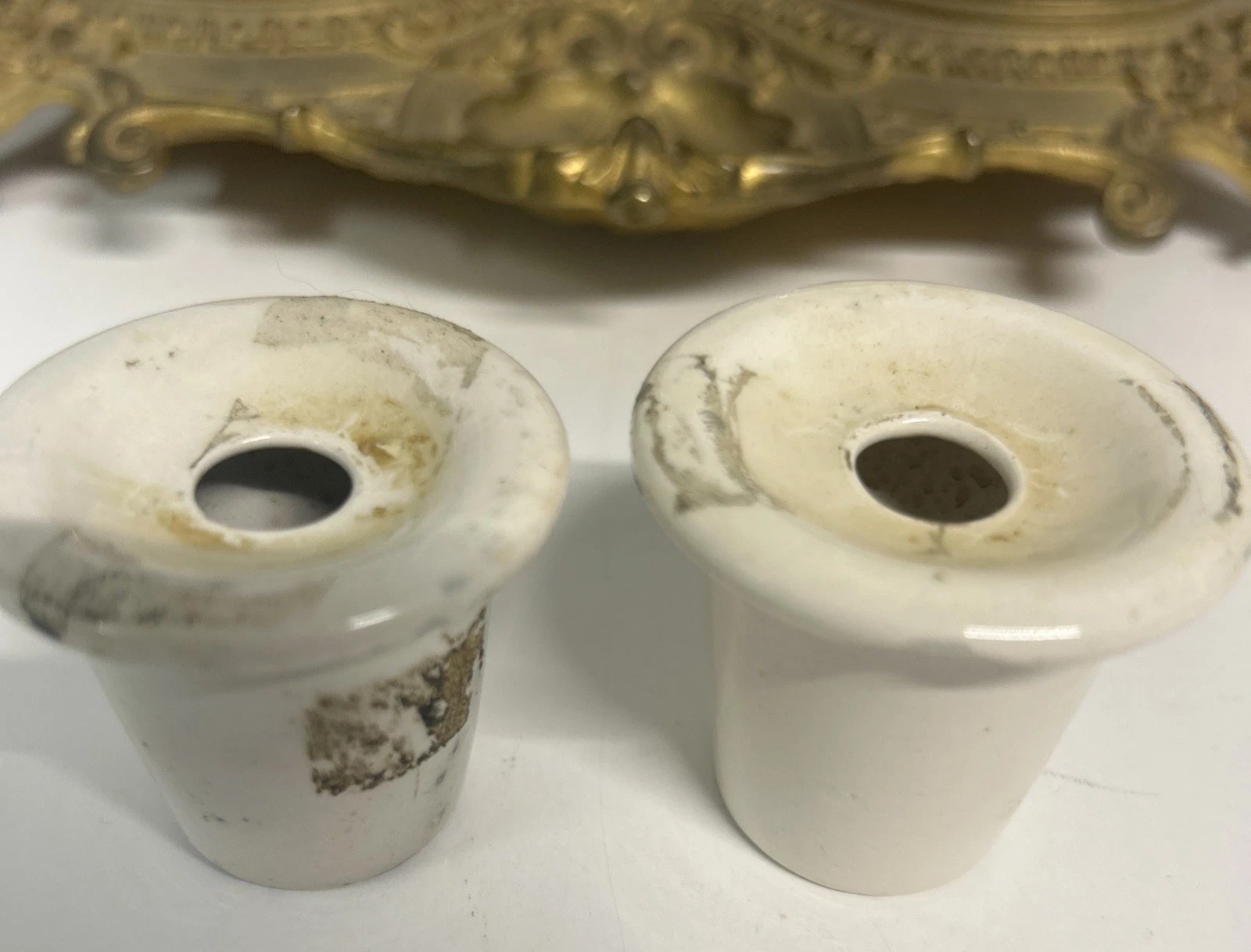
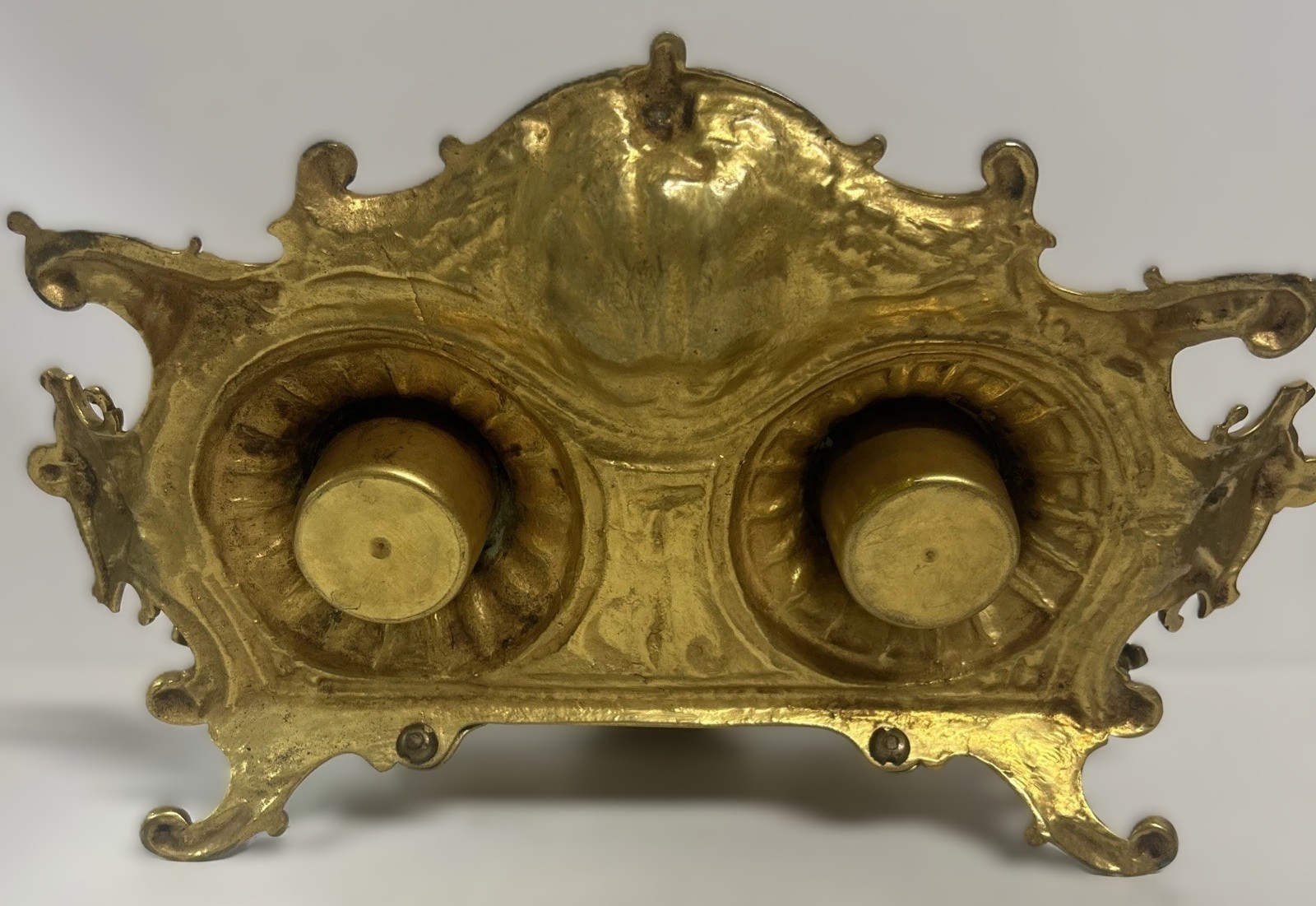
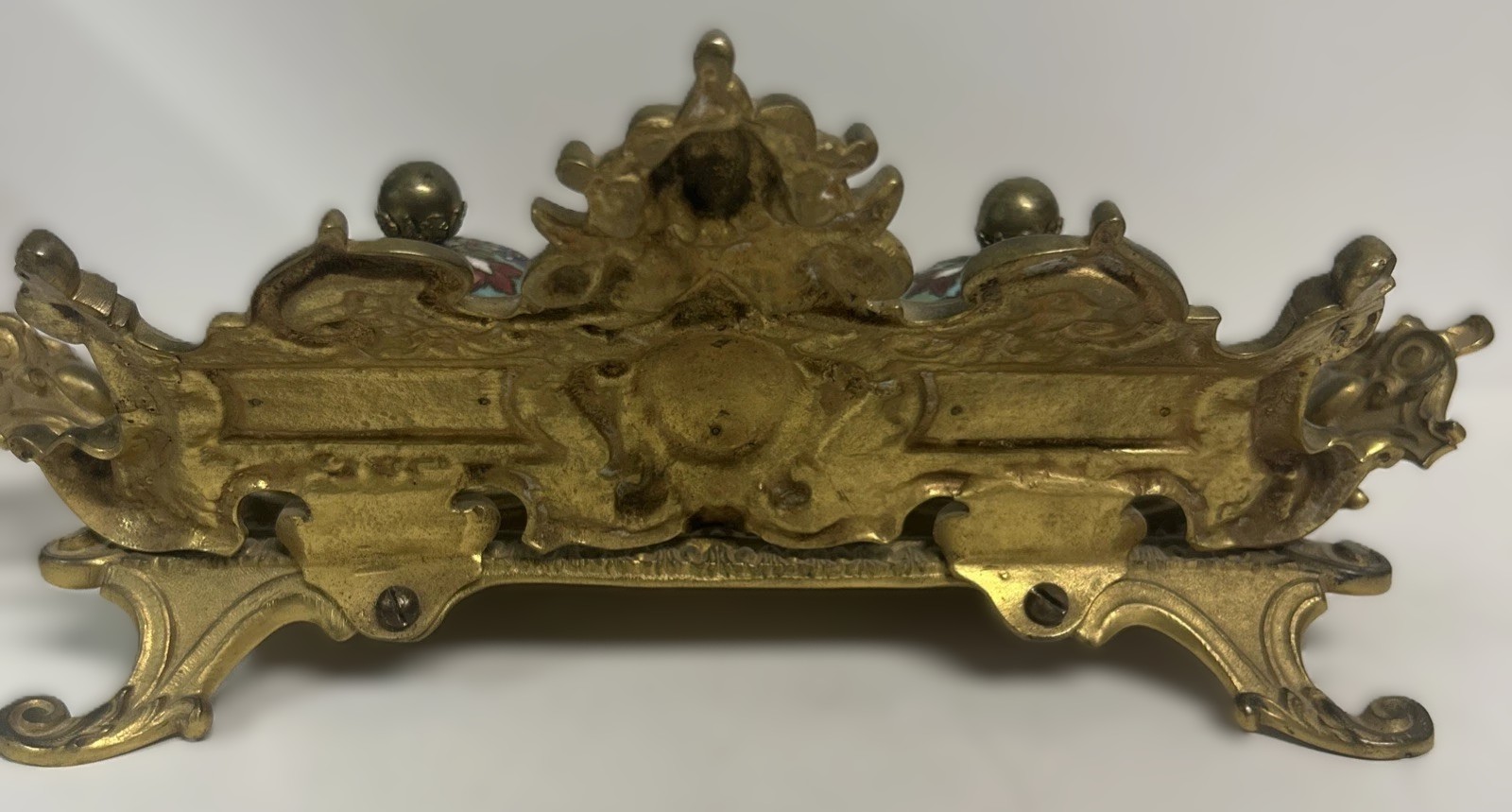
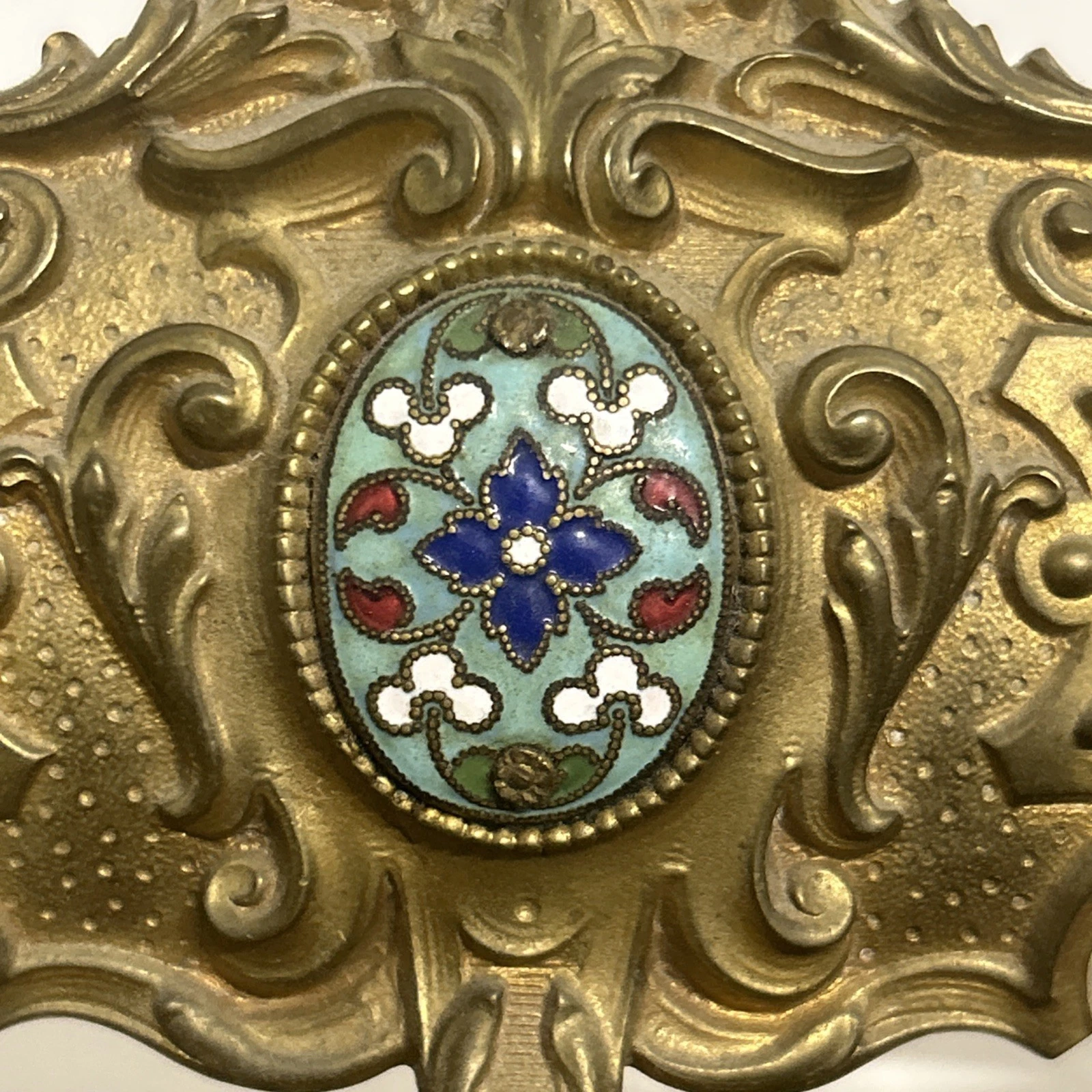
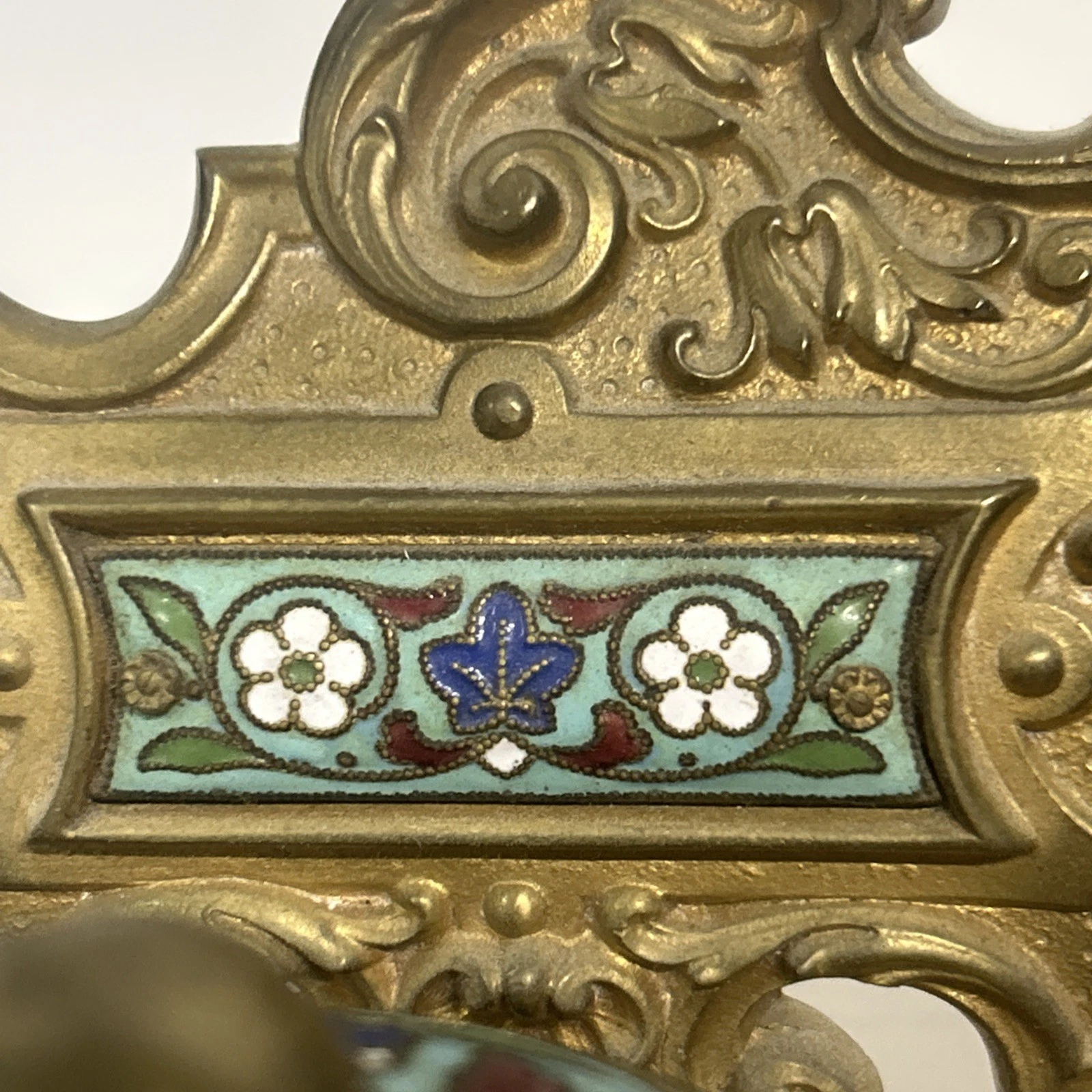
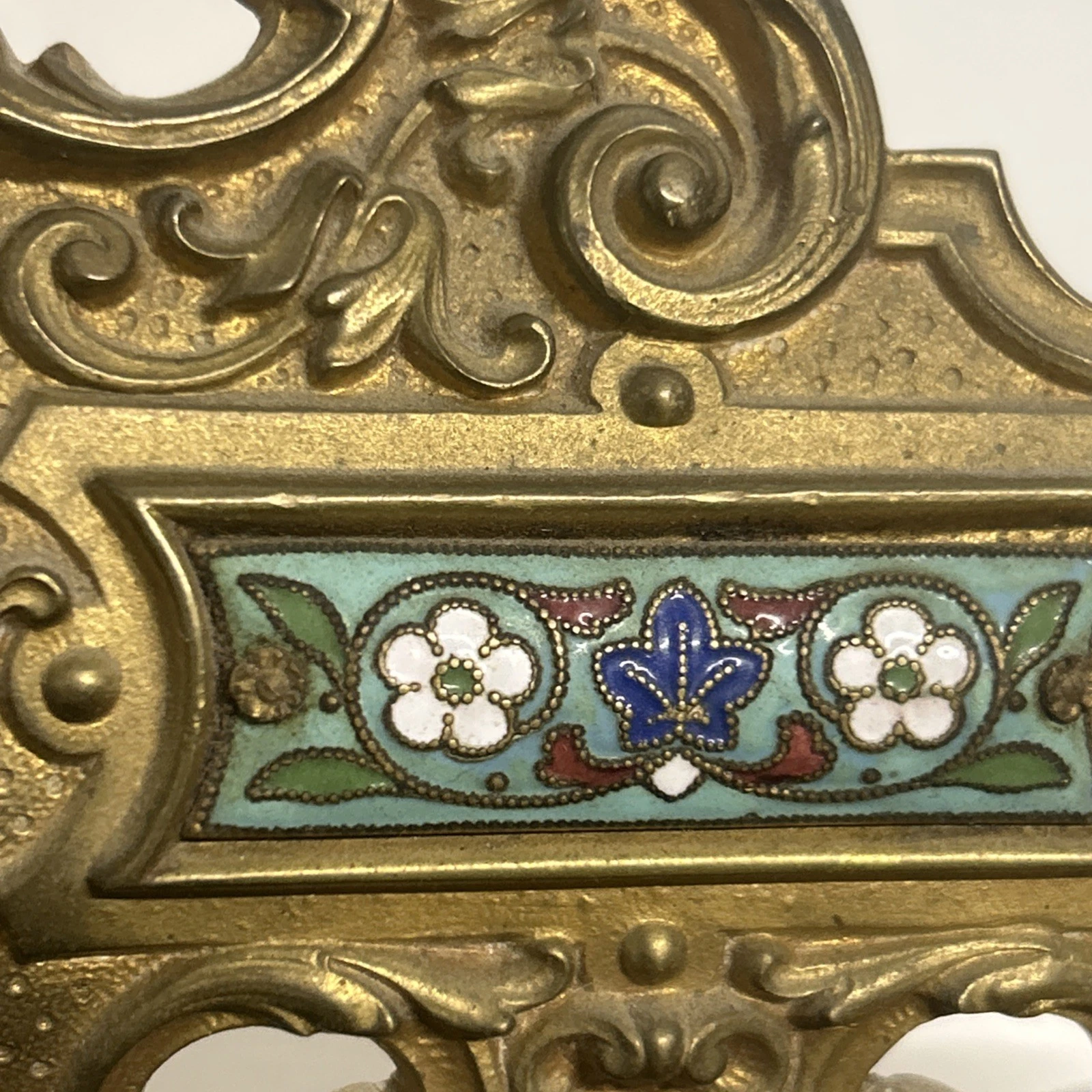
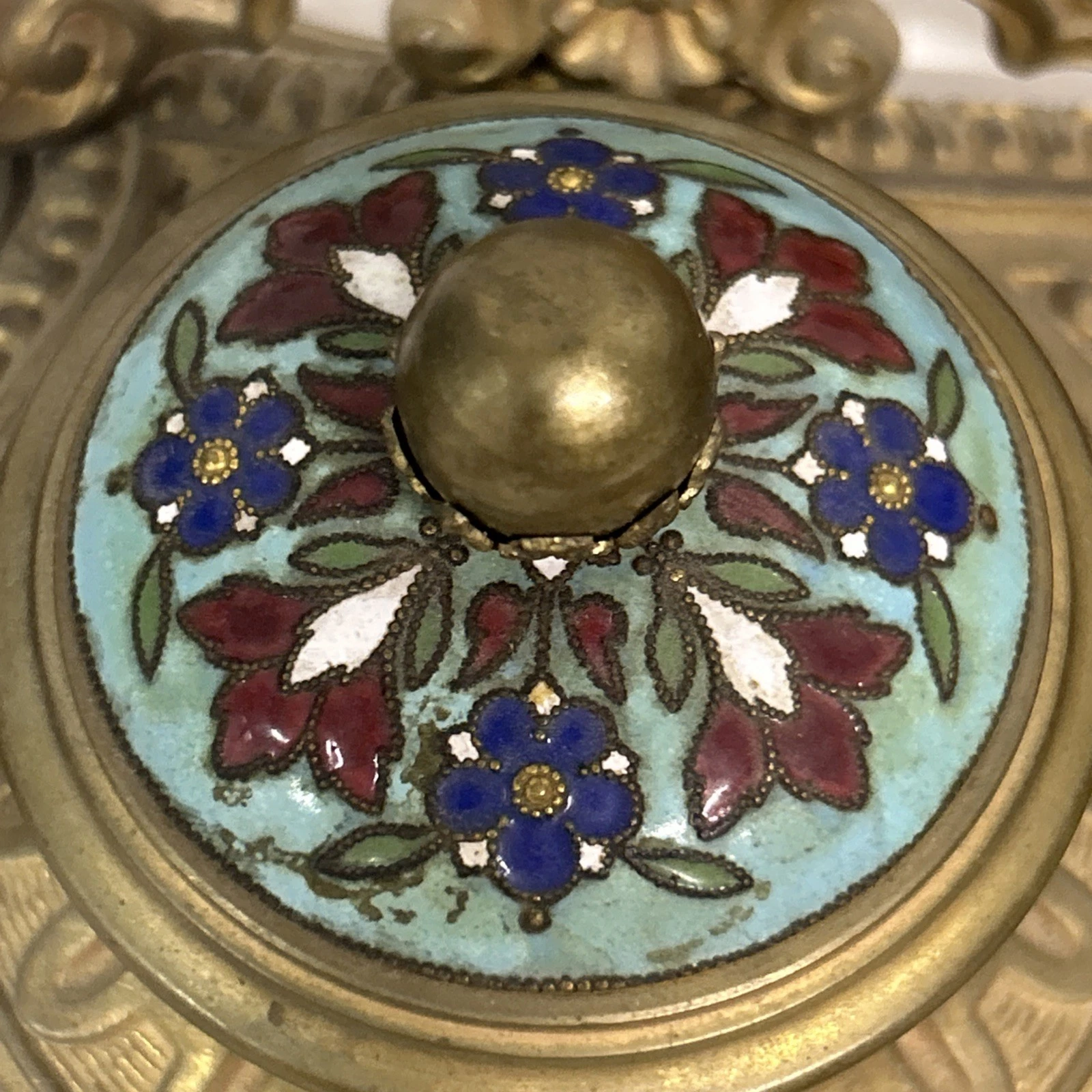
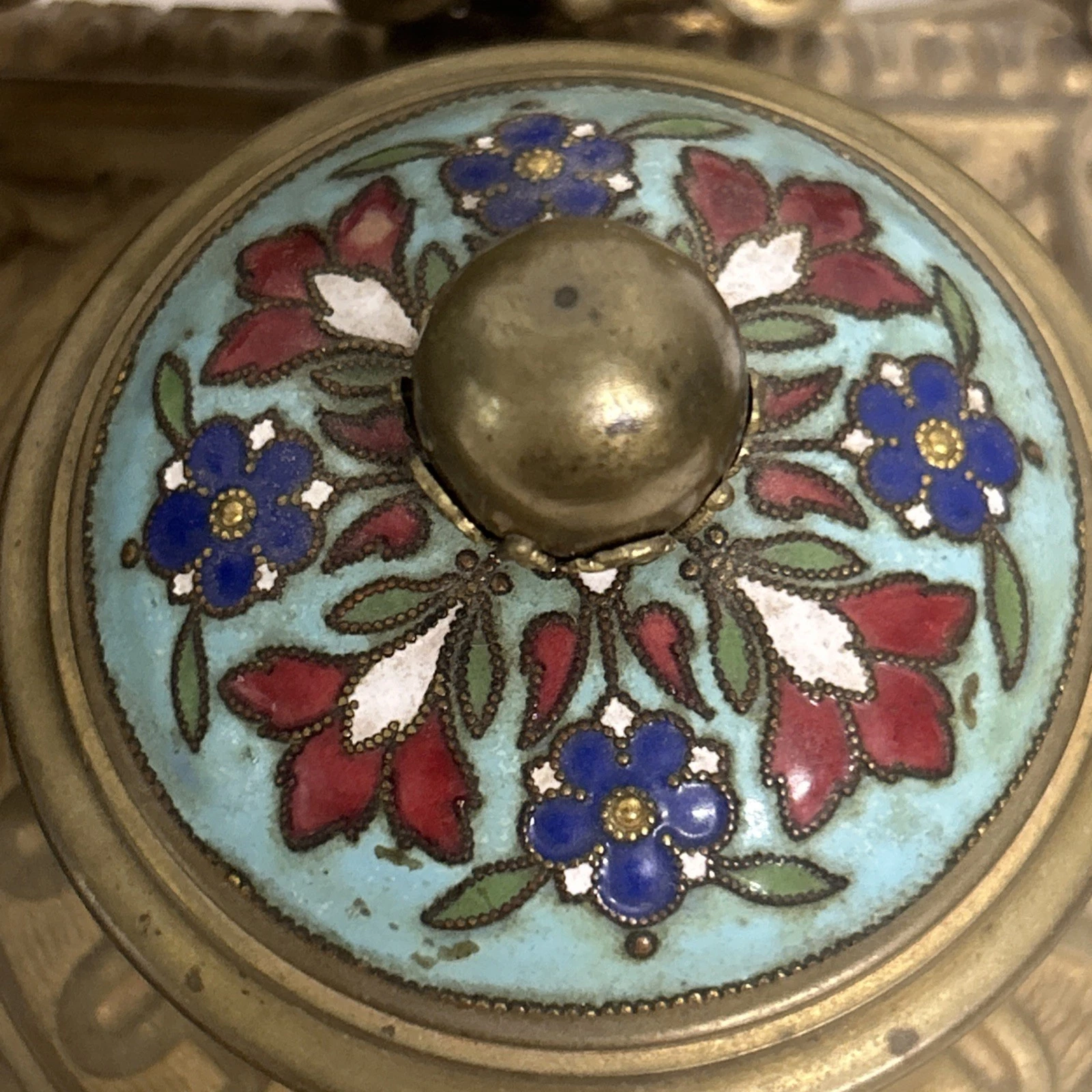
French Champlevé Enamel & Gilt Brass Double Inkstand
| Categories | Enameled Metal |
| Type | Champlevé |
| Material | Brass, Enameled Brass/Bronze/Metal |
| Markings | Unmarked |
| Manufacturer | Undetermined |
| Origin | France |
| Date or Era | circa 1880 |
| Measuring | 13” x 8 ¾” x 4 ¾” high |
Overview
This piece is a French gilt-cast brass double inkstand (écritoire), dating to circa 1875–1895, decorated with polychrome champlevé enamel plaques.
Description
- Architecture & Form: Cast in an eclectic Rococo Revival / Neo-Renaissance style, featuring a raised architectural back gallery, two integral inkwells with hinged dome lids, an integrated central pen tray, and outward-flaring scrolled bracket feet and handles.
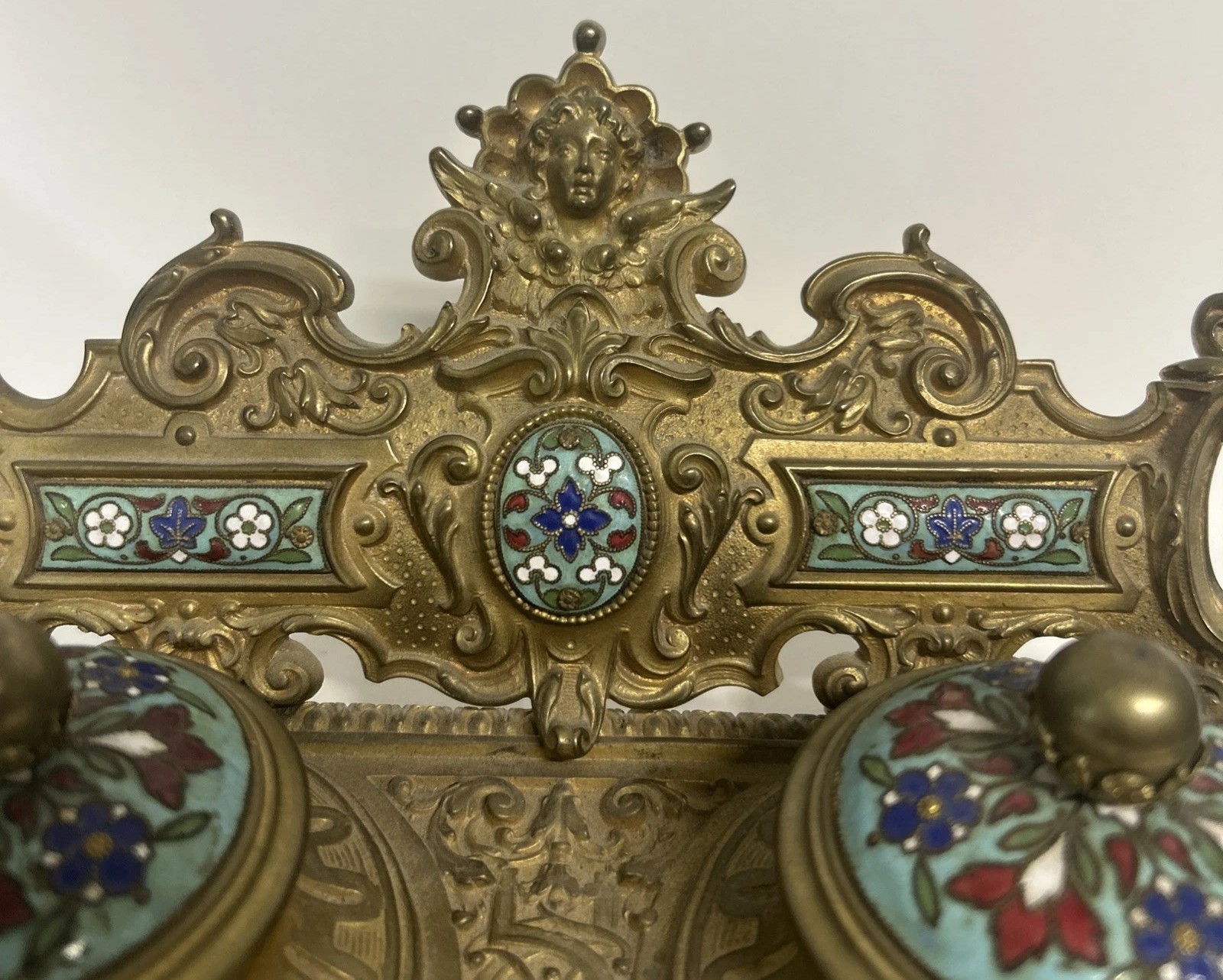
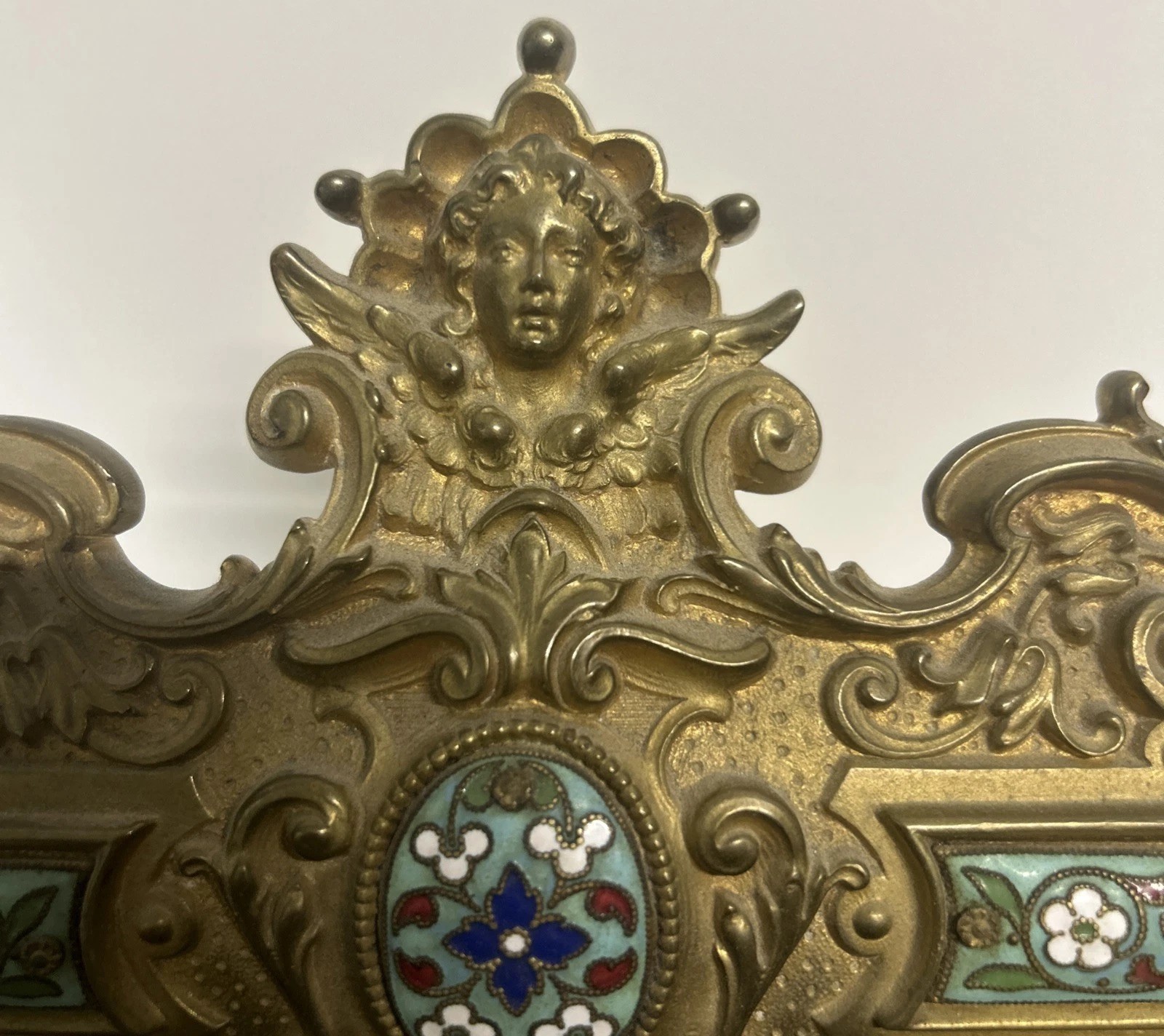
- Back Gallery & Crest: The crest is crowned by a high-relief winged cherub (putto/seraph) mask emerging from acanthus scrollwork. Below the crest are three framed champlevé enamel panels: a central oval medallion with a stylized four-petal floral cross, flanked by two horizontal rectangular enamel friezes of scrolling flowers and foliate tendrils against a turquoise-blue ground.
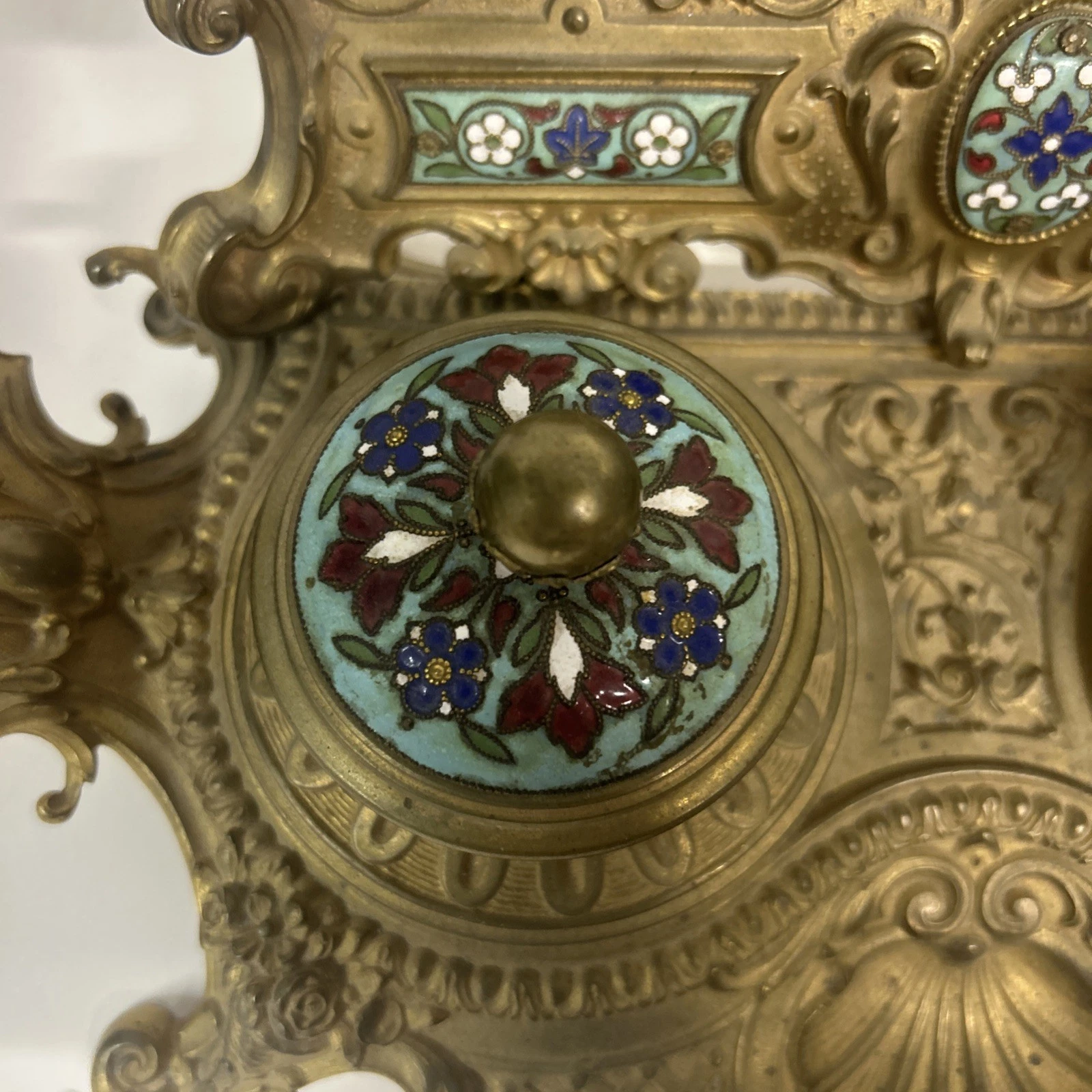
- Inkwells & Lids: Two circular inkwells feature lobed gadrooning around the perimeter. The hinged covers are set with domed champlevé enamel roundels centered by turned brass finials. The enamel palette consists of turquoise blue, cobalt blue, brick red, emerald green, and opaque white.
- Pen Rest & Base: The sunken pen depression is centered by a deeply fluted scallop shell (coquille) motif, surrounded by stippled/diapered punch-work grounds, acanthus borders, and ribbon-and-reed banding.
- Liners: Retains its two original drop-in white glazed porcelain/earthenware funnel-top inserts.
- Construction: Heavy sand-cast construction with hand-chased and punched surface detailing. The reverse reveals two threaded bolts securing the upright gallery to the base plate, typical of late 19th-century French assembly methods.
Technique
- Champlevé Enamel: Unlike cloisonné (which uses applied wire dividers), champlevé involves casting or carving recesses directly into the base metal, filling the cells with vitreous enamel paste, firing at high heat, and grinding/polishing the surface flush with the brass borders.
- Metalwork: Cast brass/bronze with original gilded/lacquered finish, displaying age-appropriate surface patina and minor wear.
Date & Maker Attribution
- Date: Circa 1875–1890 (Late 19th Century). The blend of Louis XV Rococo scrolls, Renaissance motifs (the winged putto), and Middle Eastern/Byzantine-inspired enamel colorways was the hallmark of French decorative arts during the 1870s and 1880s following the Paris Expositions.
- Origin & Maker: Made in Paris, France. During this period, Parisian bronziers and desk-accessory manufacturers in the Marais district specialized in high-end champlevé ormolu sets.
- Attribution: High-tier firms such as Ferdinand Barbedienne, Maison Millet, and Gaston Jolly produced works in this genre; however, unless stamped with a foundry name, cachet, or model inventory number on the underside or rim, such pieces are cataloged as French School / Parisian Foundry.
Sold for $359 in July 2026
Content disclaimer. The information posted is the owner’s best knowledge and may not have been vetted by the SOIC. We welcome comments, corrections, and additions, working to make our website information comprehensive and accurate.
Join the Society of Inkwell Collectors (SOIC) – it’s free!
Founded in 1981 as a non-profit organization,
we are documenting inkwells (and accessories).
We’re here to help and inform!