

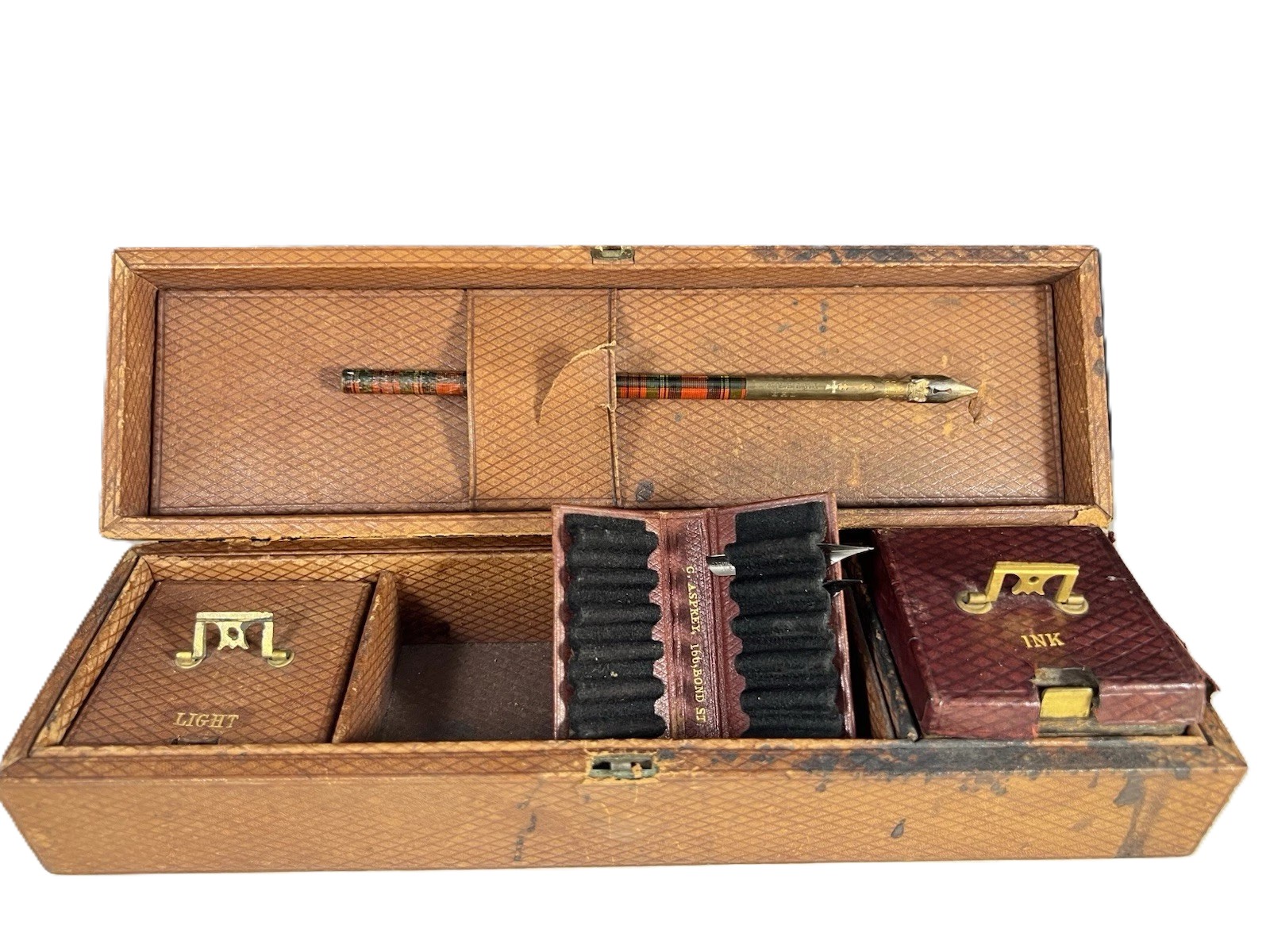
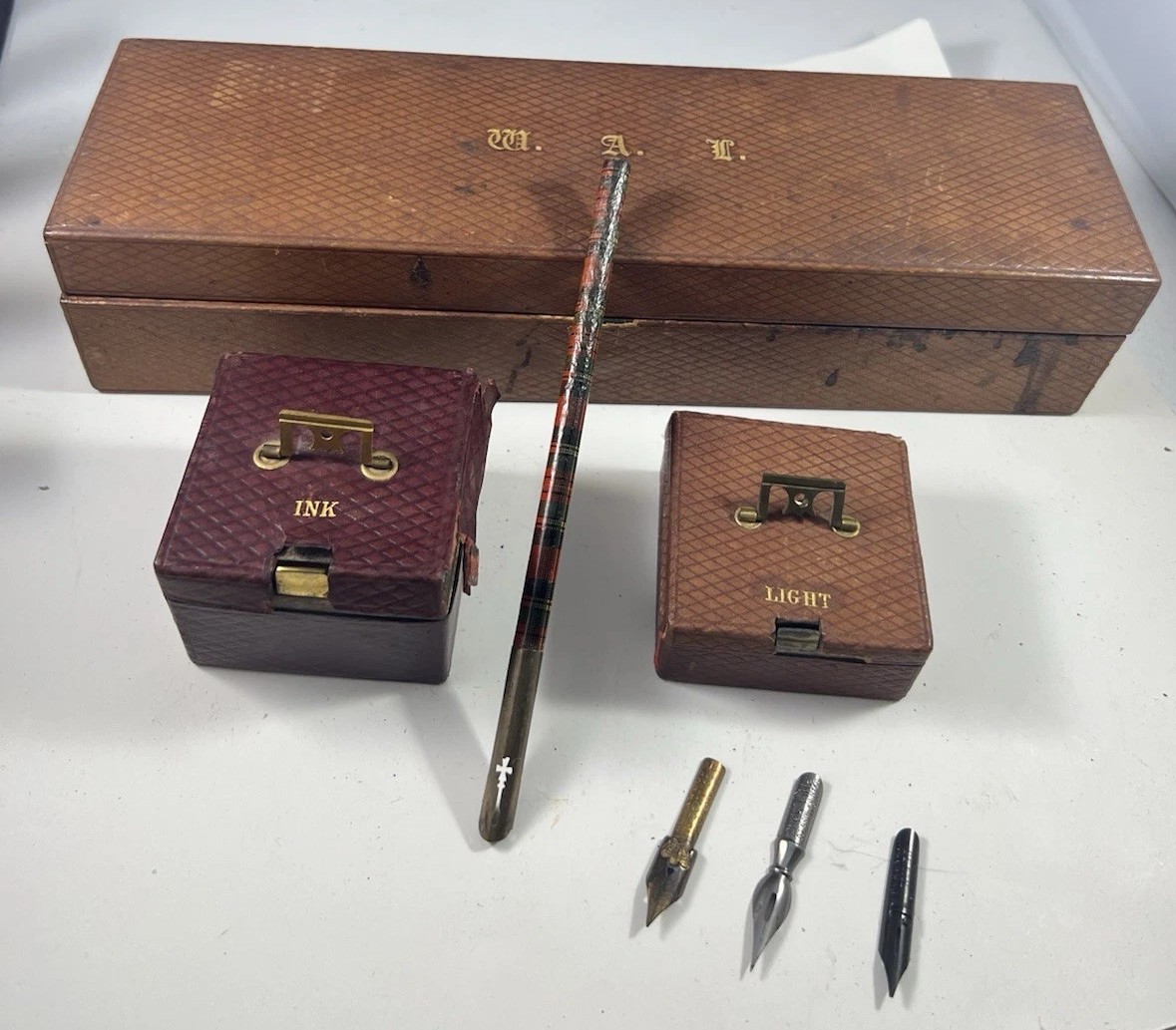
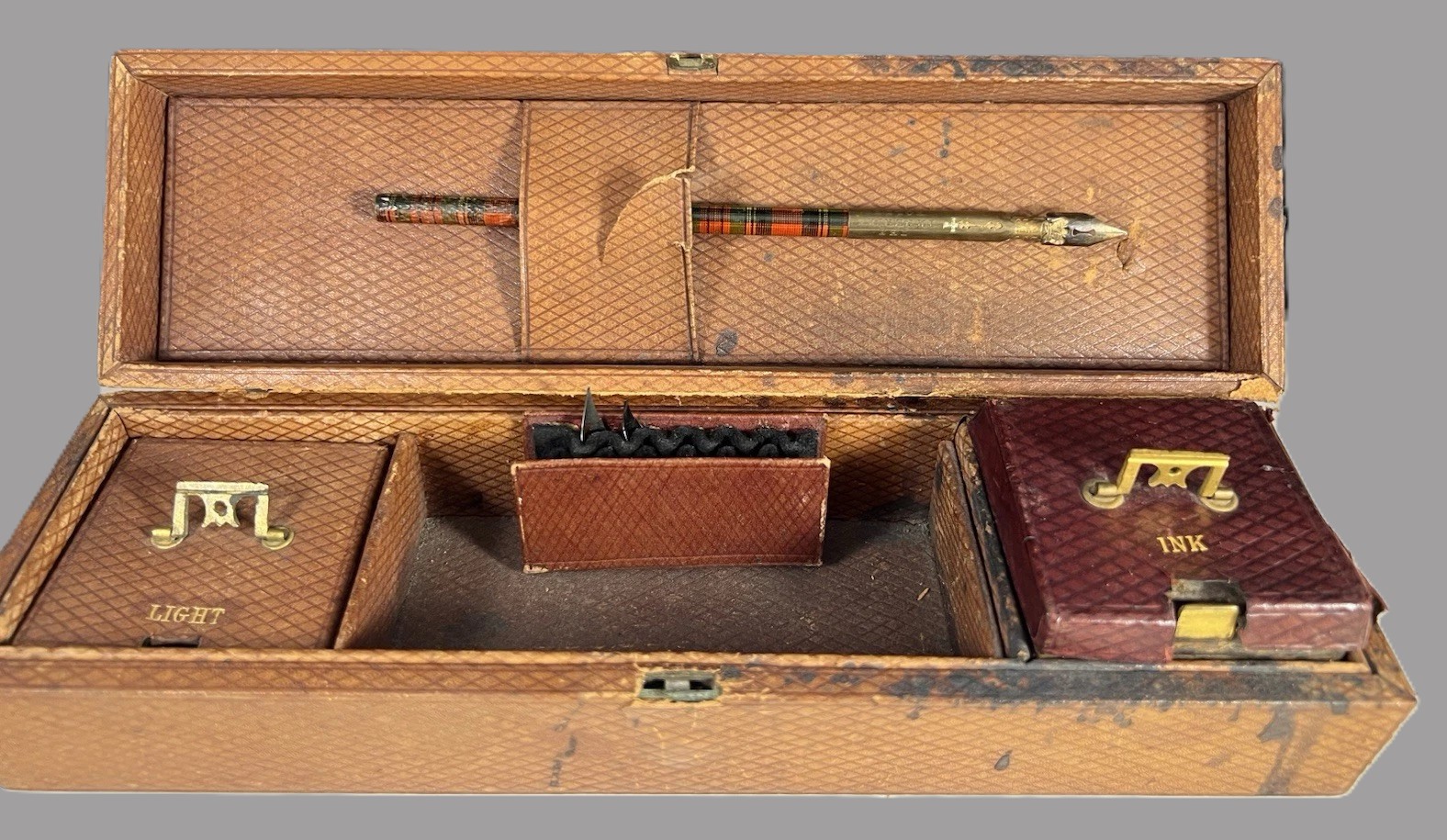
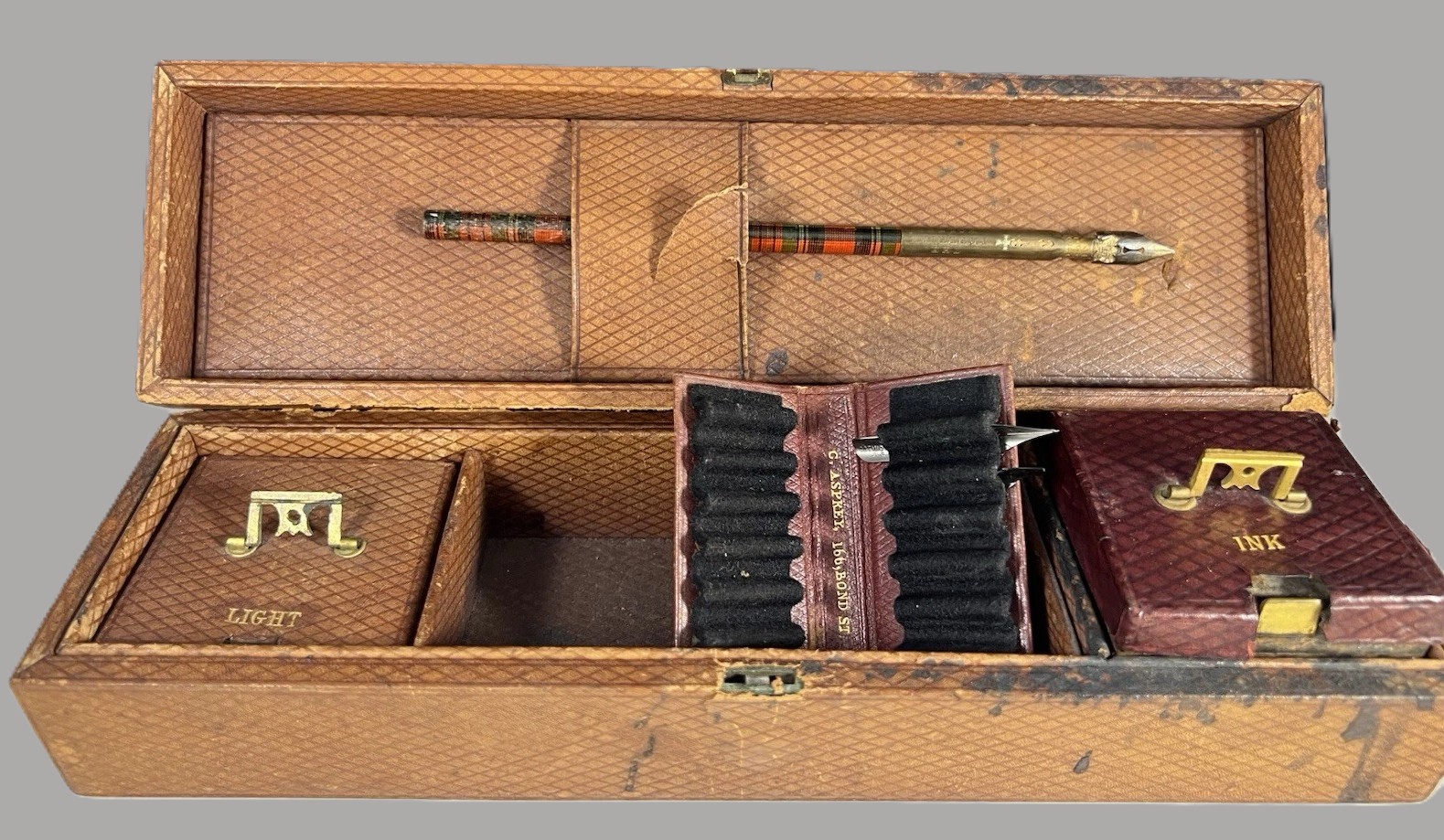
C. Asprey Leather Traveling Set (c. 1850–1870)
| Categories | Travel |
| Type | Compendium |
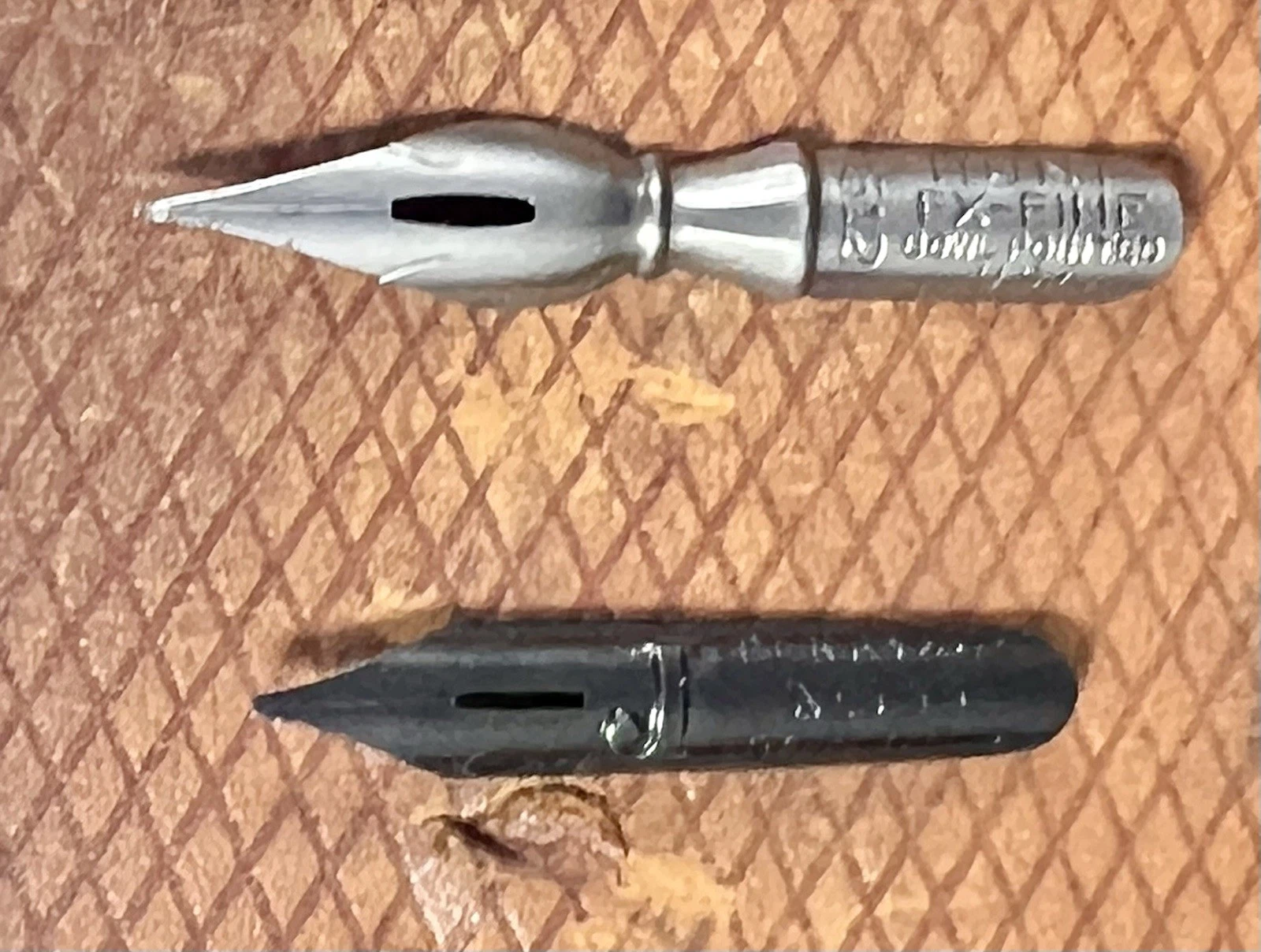
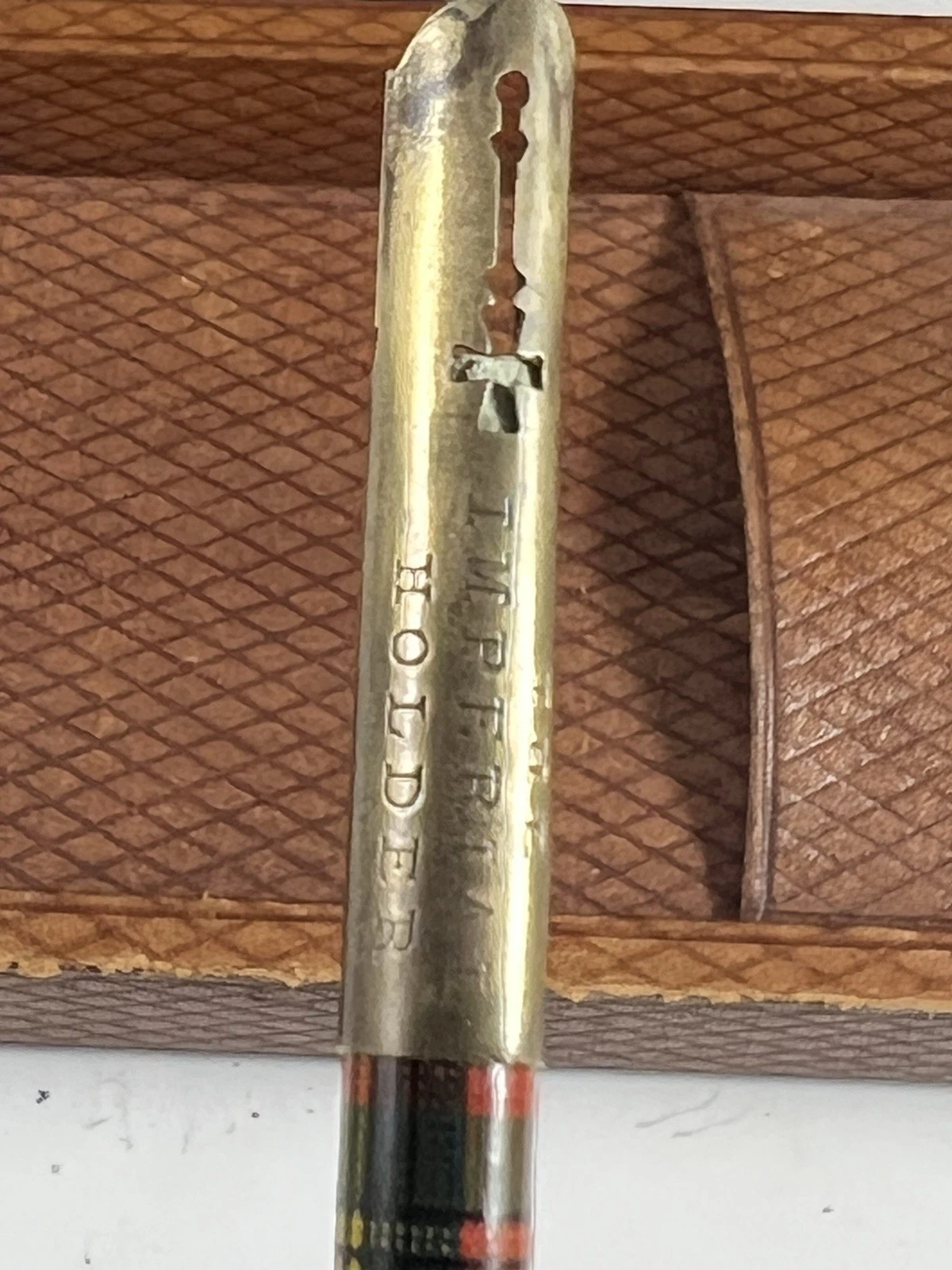
| Material | Brass, Leather, Metal, Wood |
| Markings | See Narrative |
| Manufacturer | Asprey & Sons |
| Origin | England |
| Date or Era | circa 1860 |
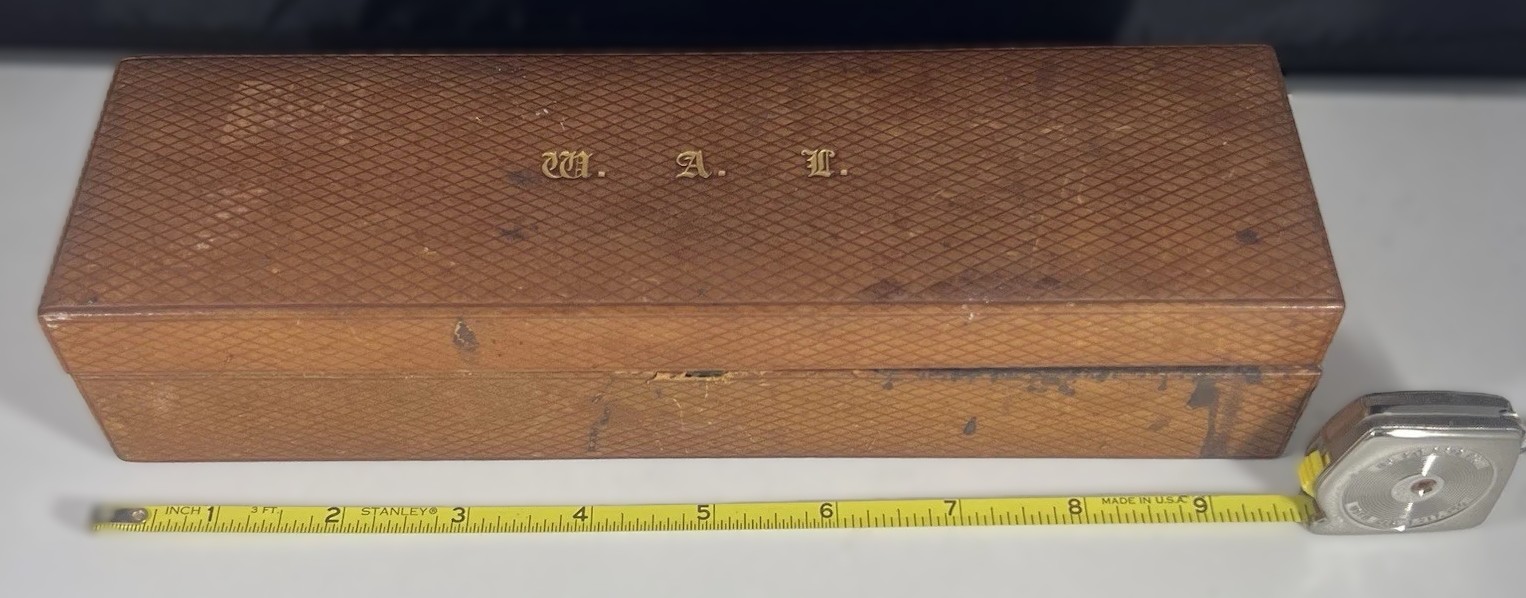
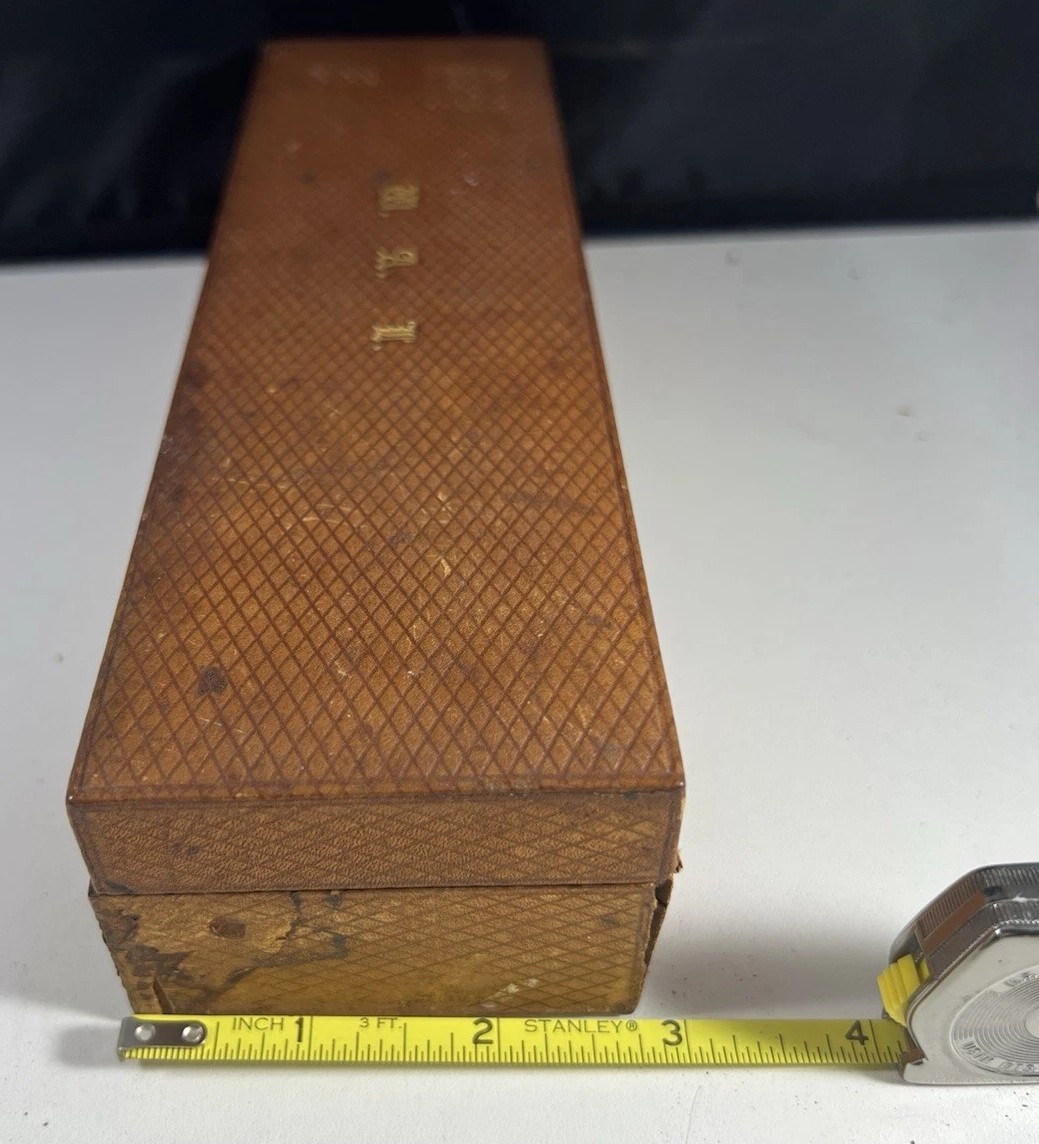
| Measuring | Case: 8 ⅝” x 2 ⅝” x 2 ⅛” high |
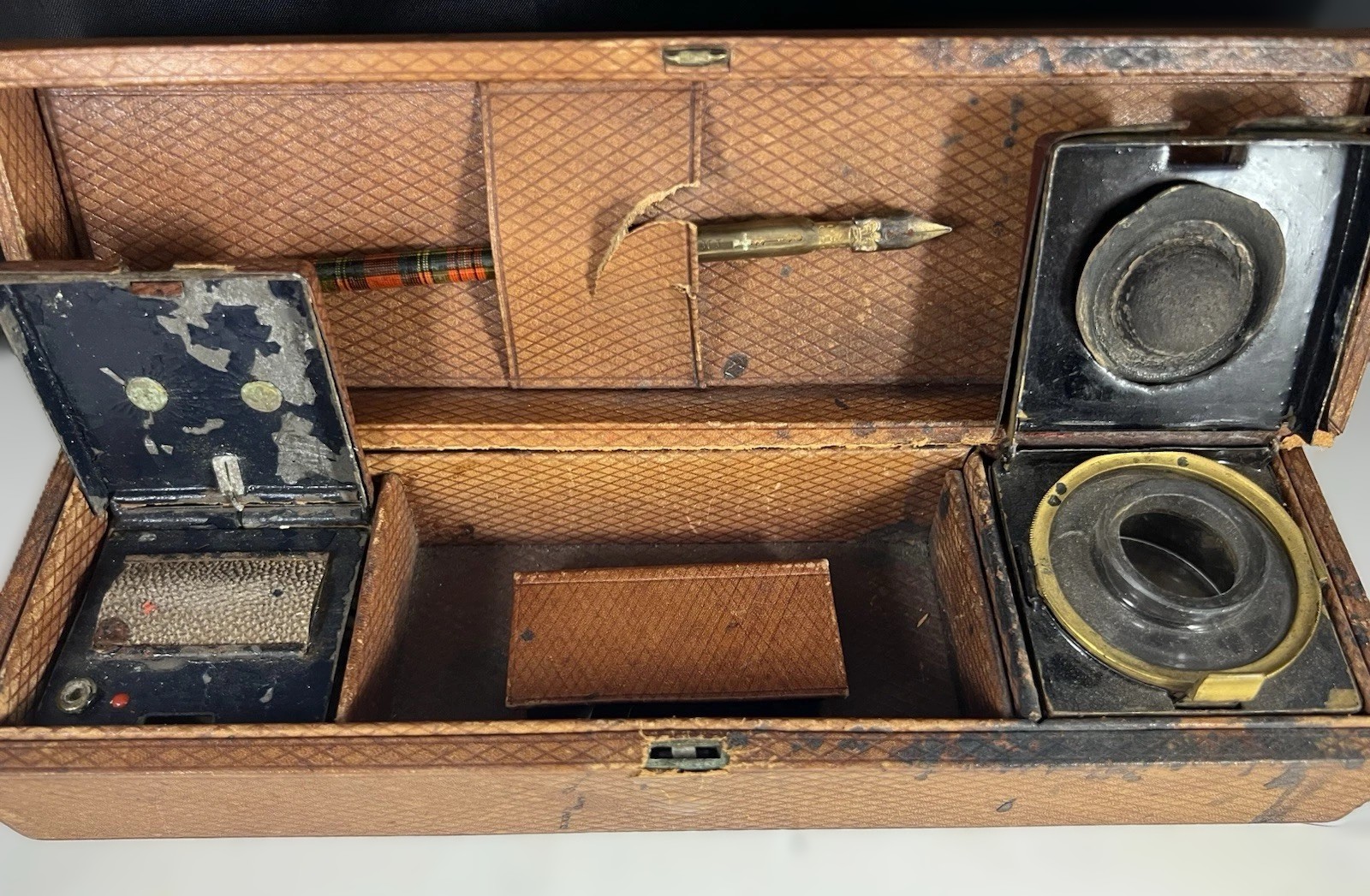
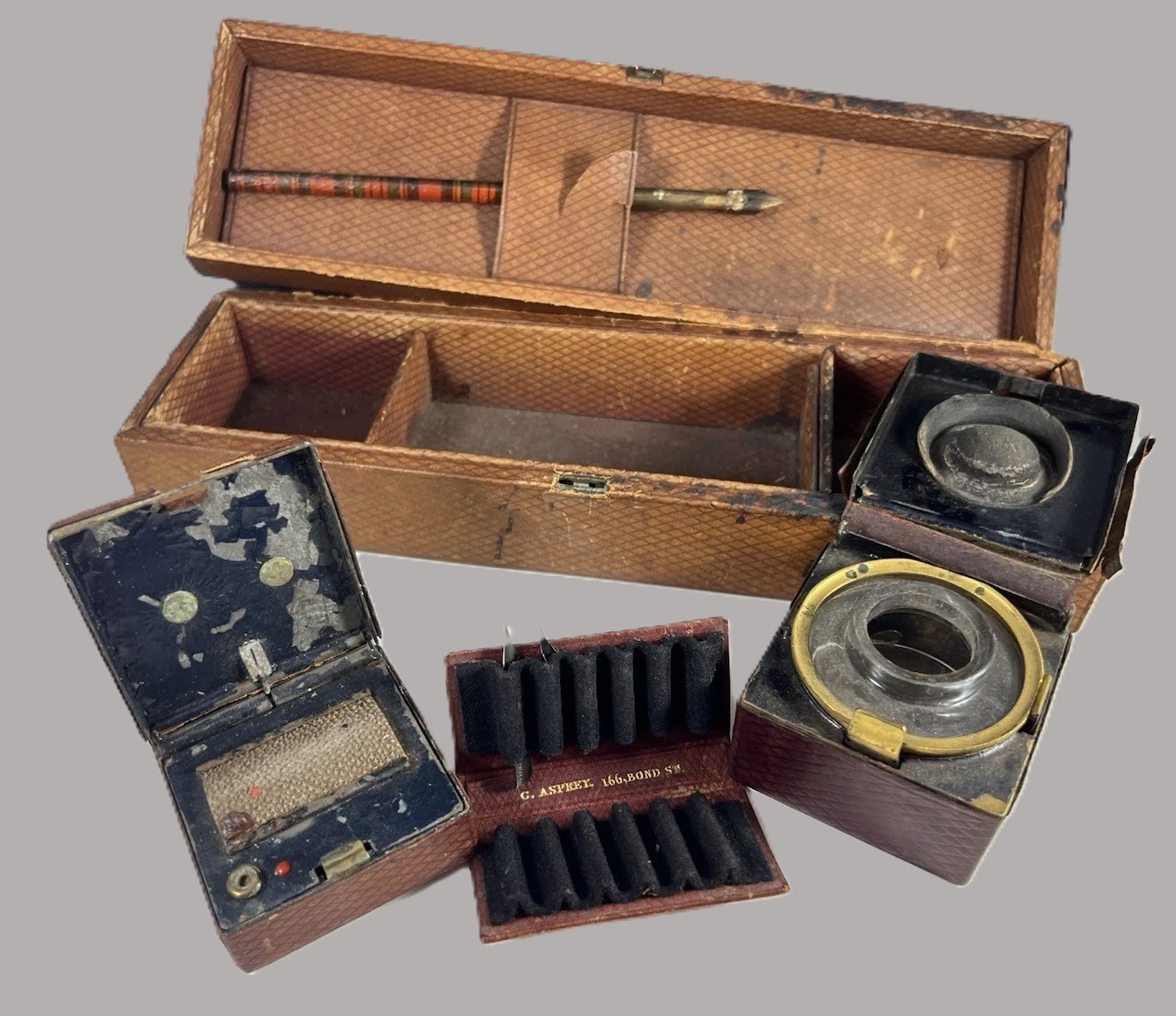
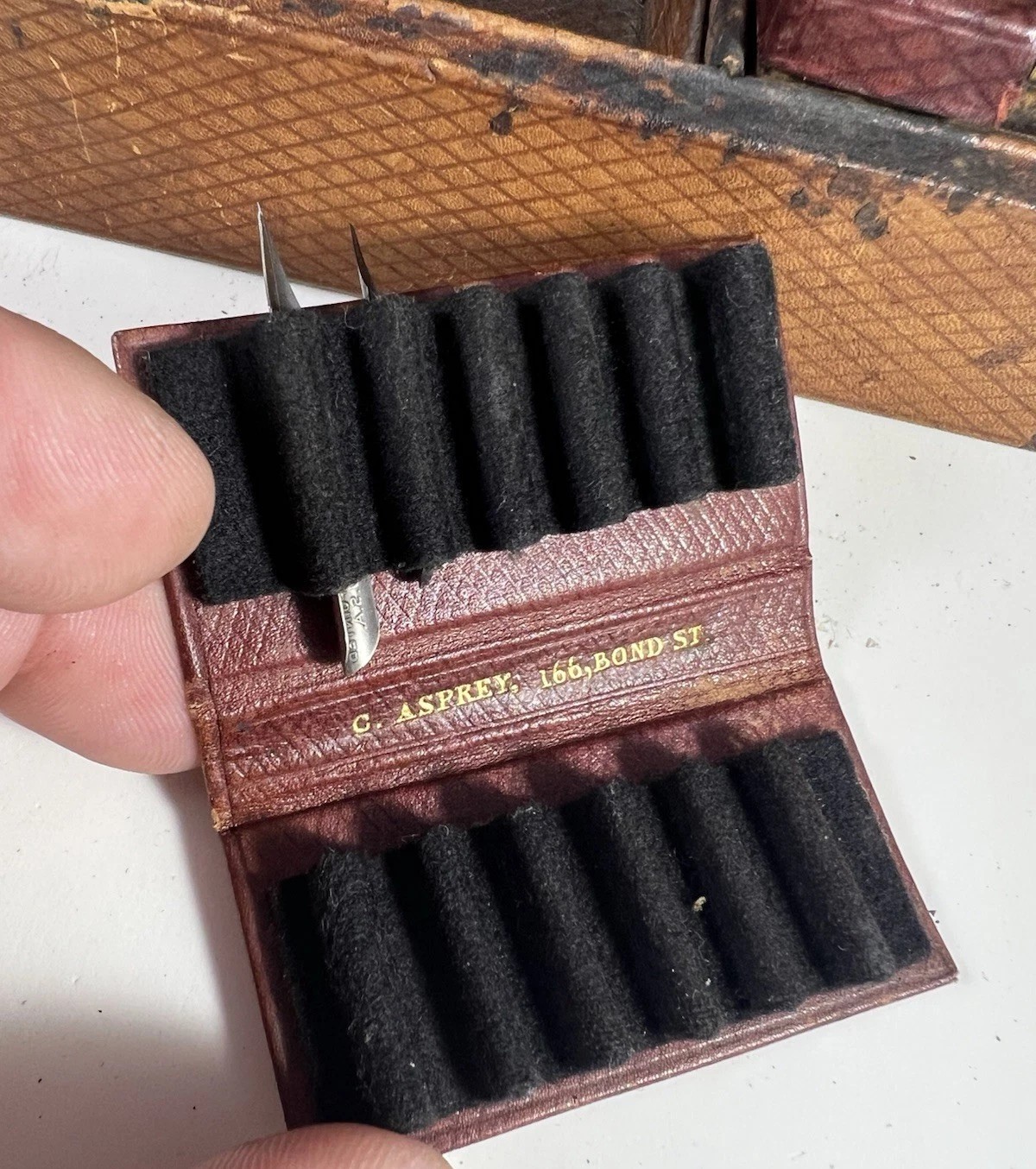
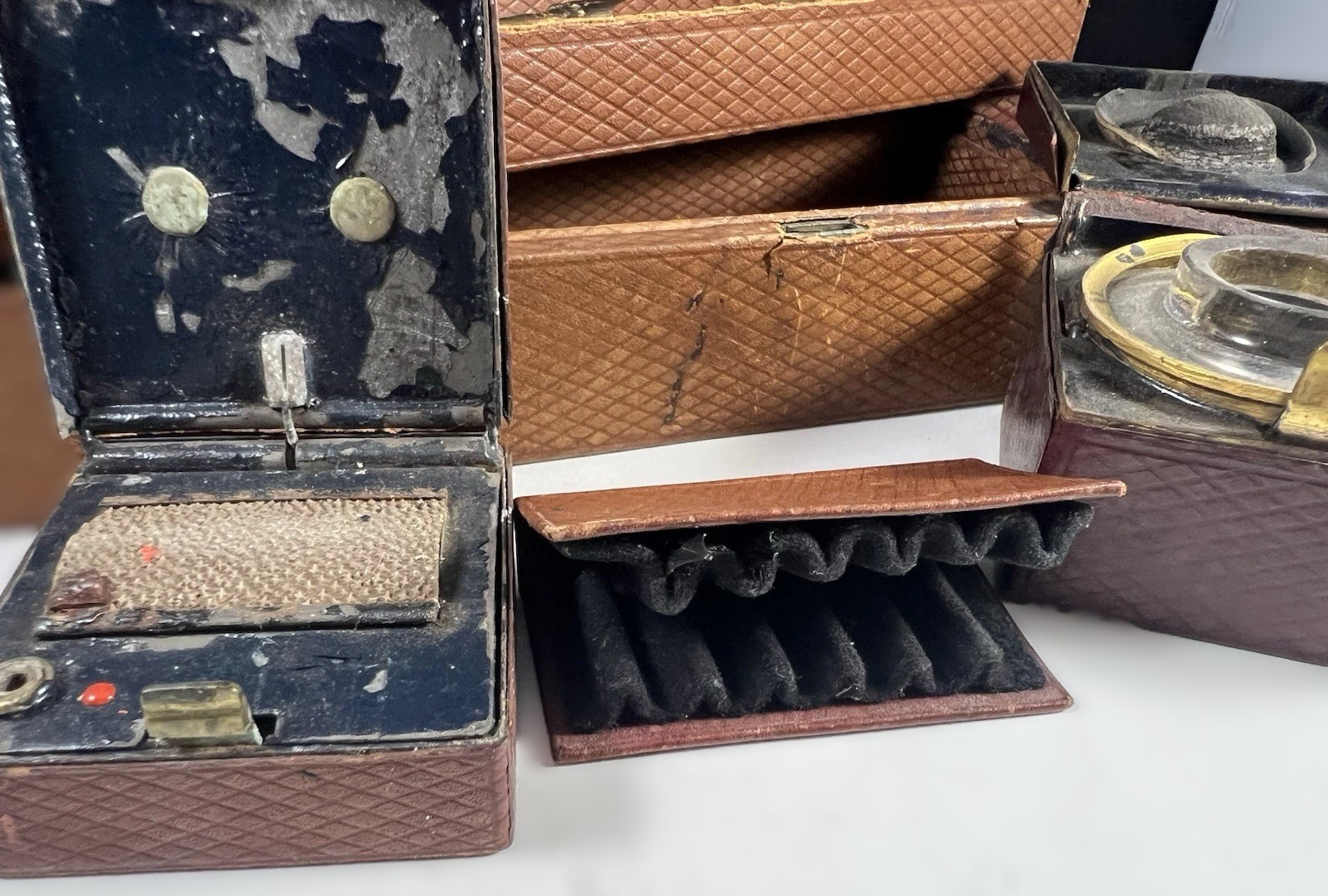
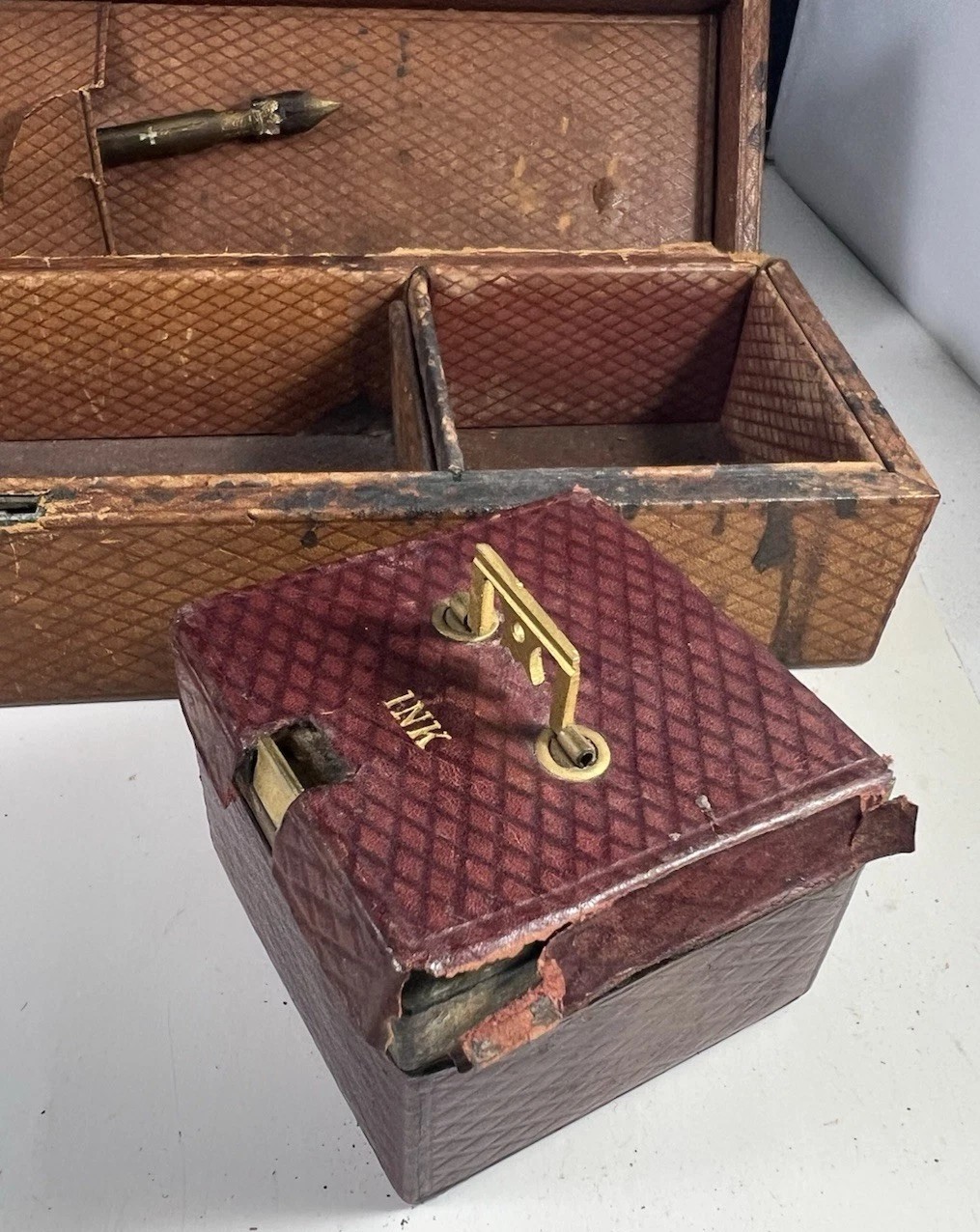
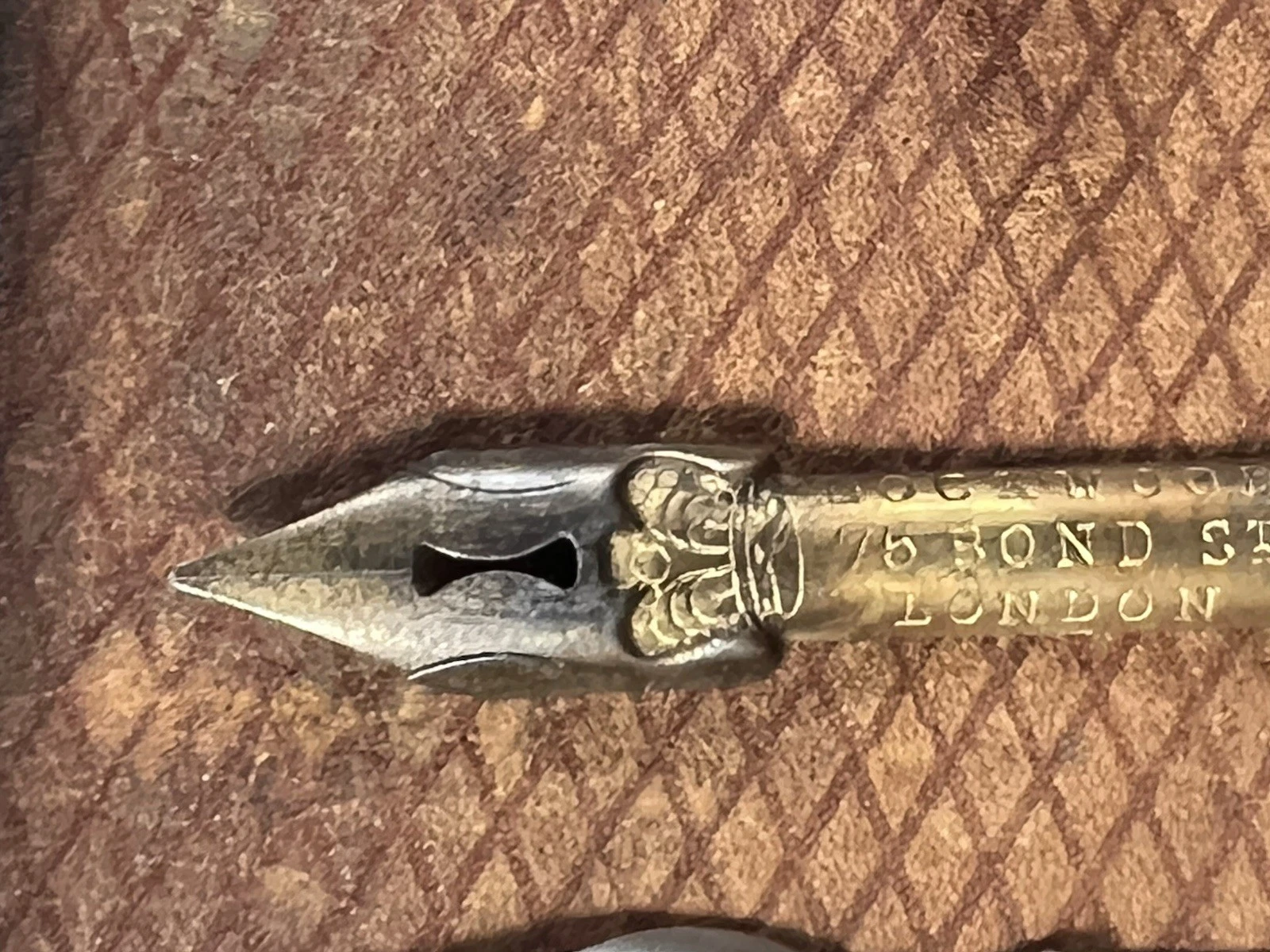
This is a high-end Victorian gentleman’s traveling writing compendium (or nécessaire de voyage), stamped in gilt on the interior folding nib-case: “C. ASPREY, 166, BOND ST.”
Maker and Date
- Maker: Charles Asprey (London), the luxury goods house and royal warrant holder.
- Date: Circa 1850s–1870s (Victorian era). Charles Asprey relocated to 166 New Bond Street in 1847, and the firm traded under this specific mark until it expanded to C. Asprey & Son in the 1870s.
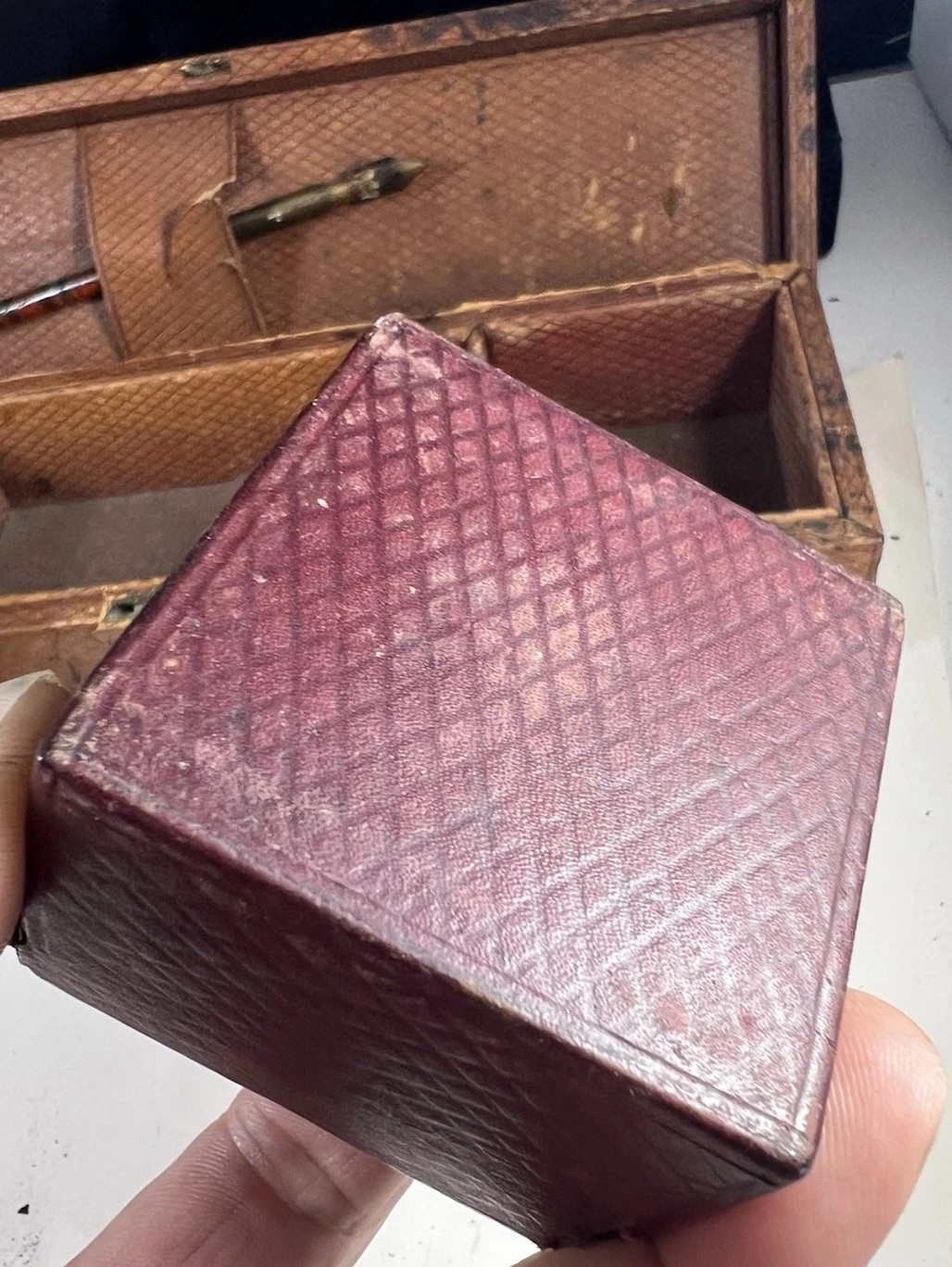
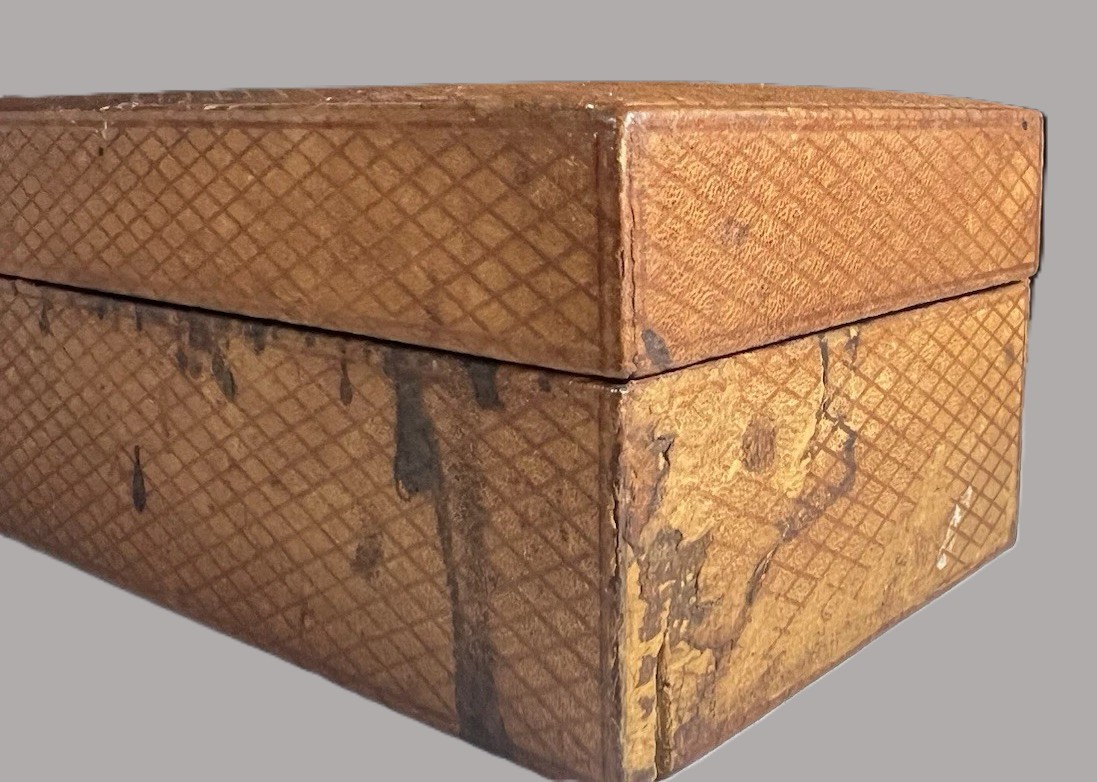
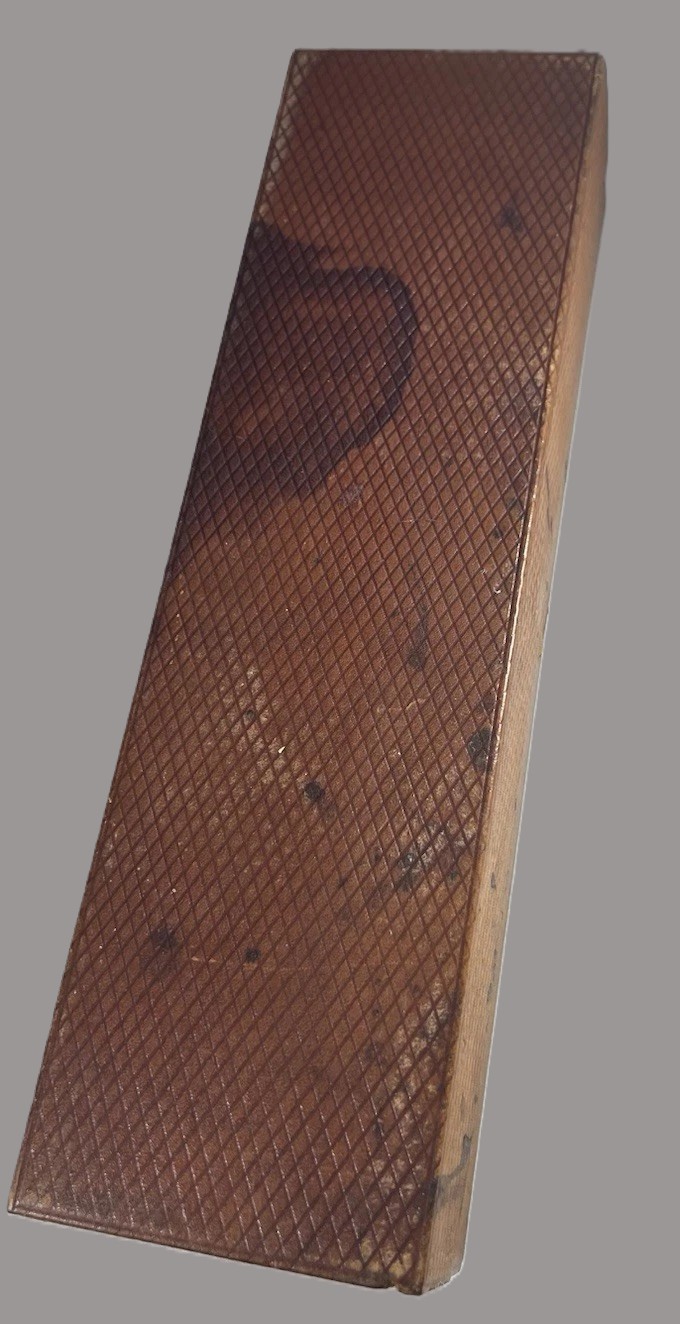
- Materials: Cross-hatch/diamond-embossed morocco leather over a wooden core, fitted with gilded brass hardware and velvet linings. The exterior of the outer box bears the original owner’s gilded initials (“W. A. L.”).
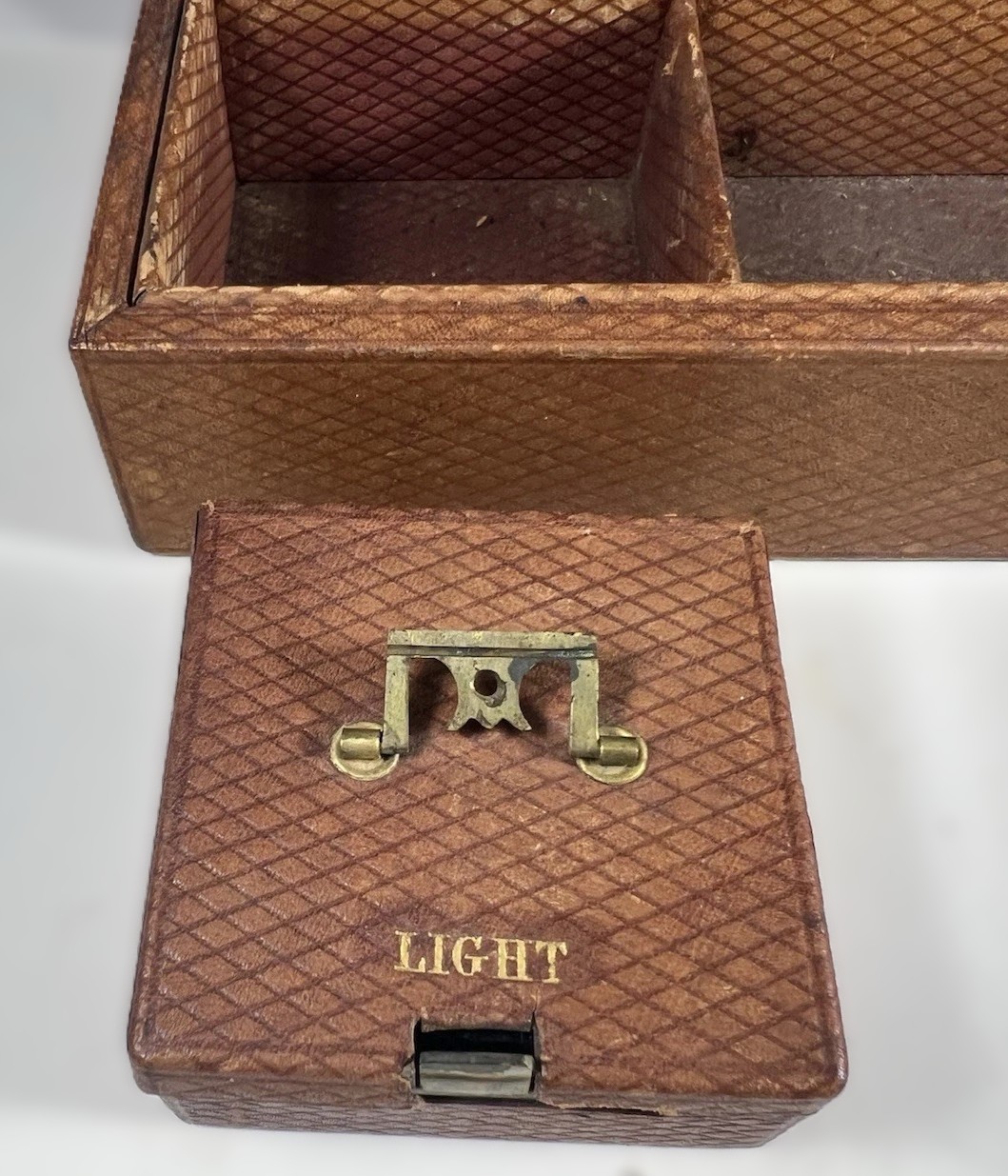
Why Ink Was Paired with Matches (“LIGHT”) Victorian traveling sets paired writing ink with a match safe for two primary practical needs:
- Sealing Wax: Until adhesive envelopes became standard late in the 19th century (and even long after for formal or confidential correspondence), folded letters were secured with molten sealing wax impressed by a signet ring or desk seal. A flame was necessary to melt the wax stick.
- Illumination: Travelers writing in inns, railway carriages, or poorly lit cabins relied on matches to light bedside travel tapers, small candles, or portable oil lamps.
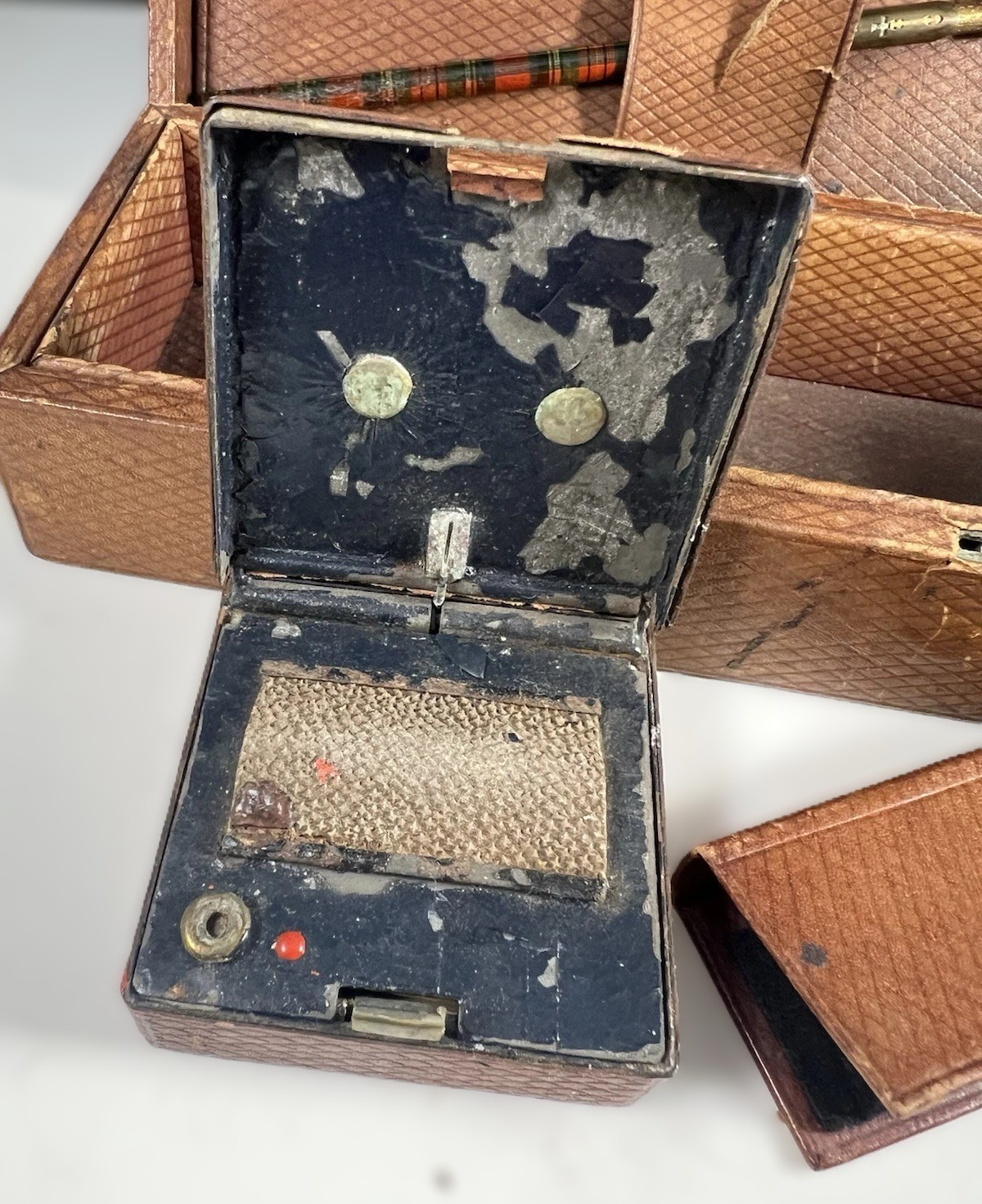
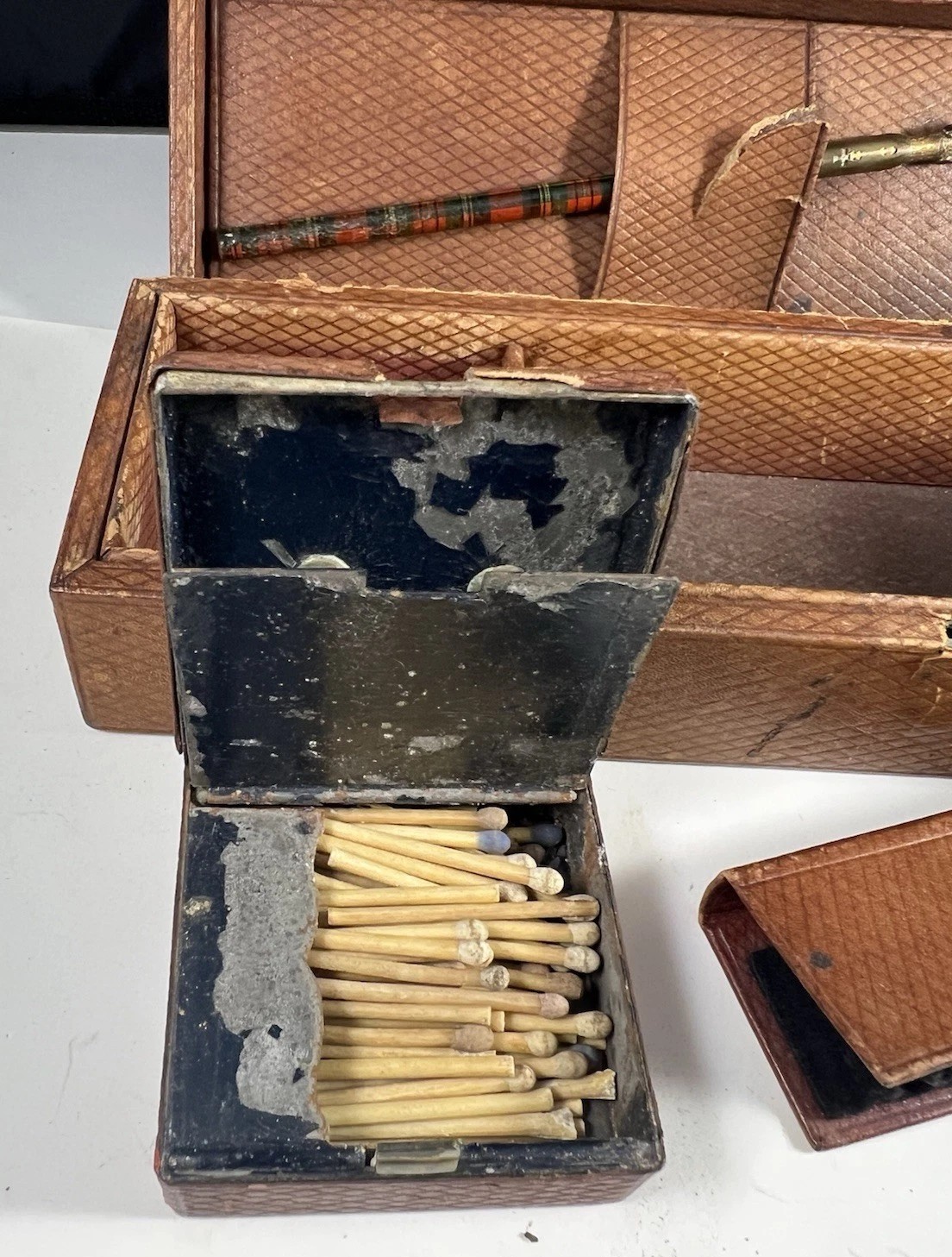
The Match Safe (“LIGHT”): Parts and Features
- Upper Hinged Lid: Opens to reveal the striking area and match socket.
- Textured Striking Surface: A patterned, file-cut metal strike pad used for igniting friction matches (lucifers or early safety matches).
- The Brass-Ringed Hole (Socket): This is a match stand / taper socket (sometimes called a go-to-bed socket). Once a match or wax vesta was struck, the lit match could be stood upright in this small brass collar to burn down hands-free, providing just enough sustained flame to melt a pool of sealing wax onto a letter or light a candle across the room.
- Internal Storage Compartment: A lower spring-hinged hatch/well that holds the reserve supply of match sticks.
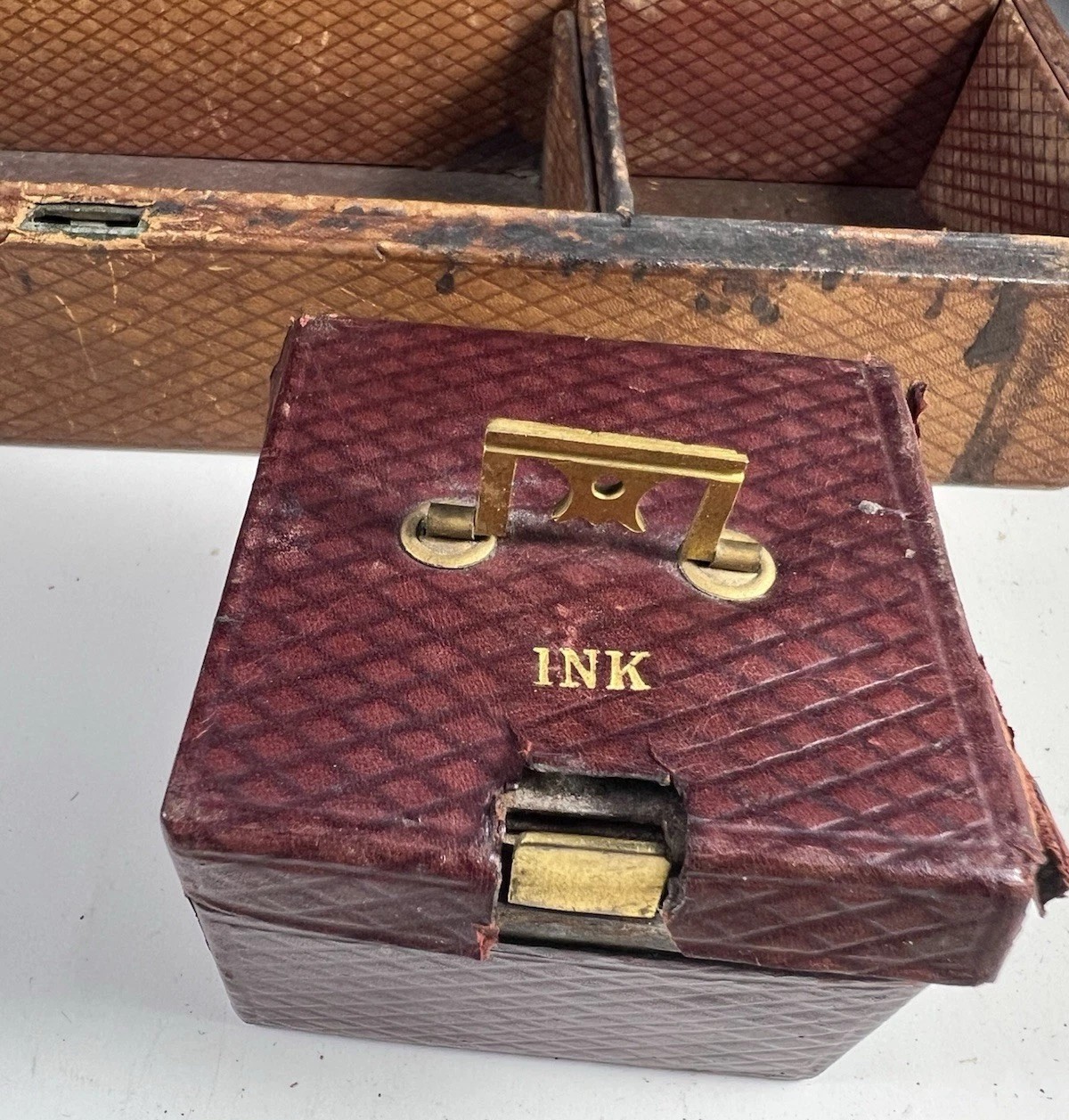
The Traveling Inkwell (“INK”): Construction and Operation Victorian traveling inkwells were engineered to prevent leaks during transit in luggage or stagecoaches:
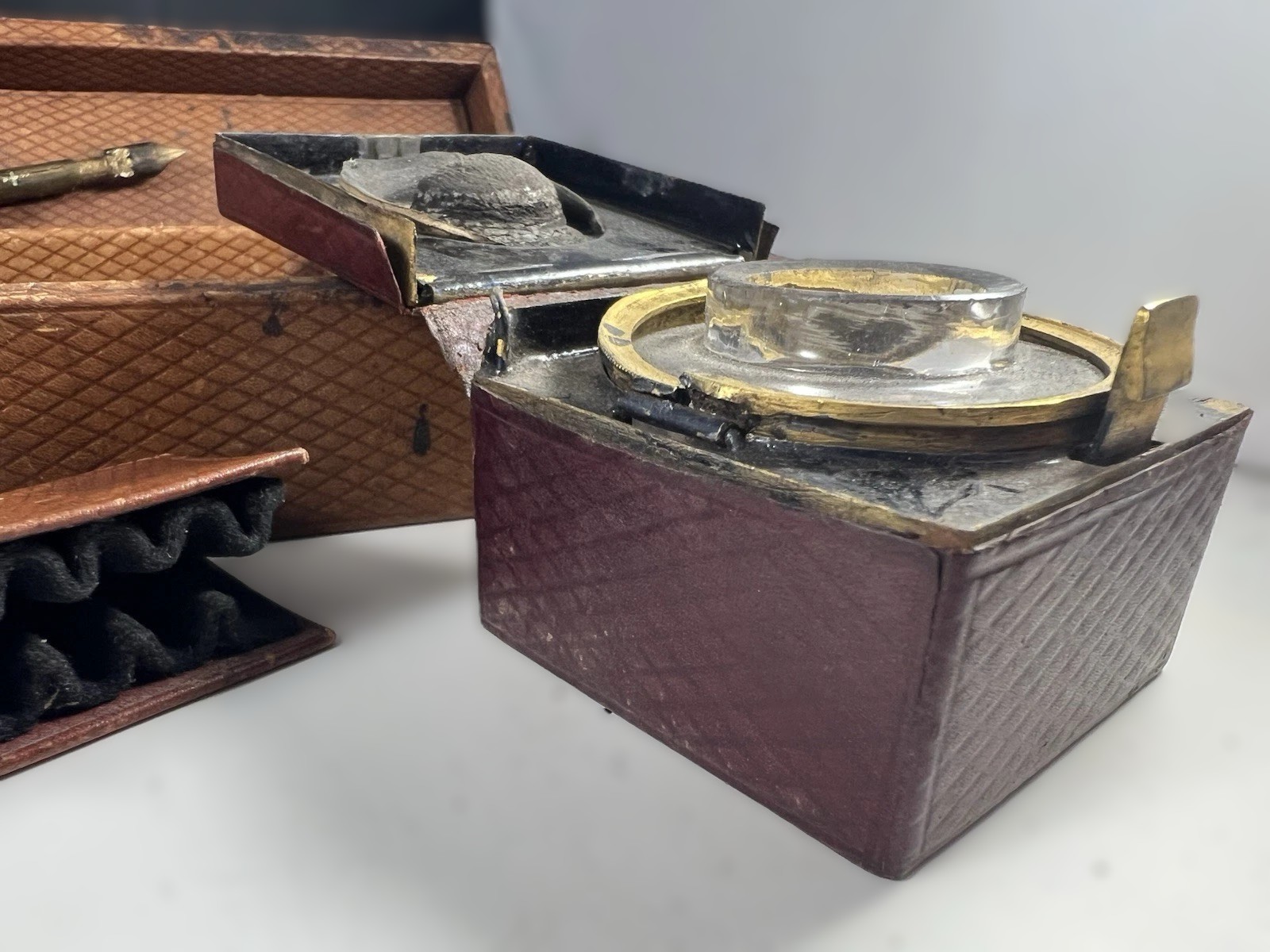
- The Glass Reservoir: A thick, heavy-walled, ground-crystal well set into a leather-covered metal casing.
- Spring-Loaded Outer Lid: Features a brass carrying bail handle and a push-button spring latch at the front.
- Gasket / Stopper Assembly: Mounted inside the hinged lid is a thick, domed leather, cork, or gutta-percha compression pad fitted inside a brass ring. When the lid is snapped firmly shut, this pad is driven tightly against the polished flat rim of the glass mouth, forming a hermetic, leakproof seal against jolts and altitude/temperature air pressure changes.
Sold for $60 in July 2026
Content disclaimer. The information posted is the owner’s best knowledge and may not have been vetted by the SOIC. We welcome comments, corrections, and additions, working to make our website information comprehensive and accurate.
Join the Society of Inkwell Collectors (SOIC) – it’s free!
Founded in 1981 as a non-profit organization,
we are documenting inkwells (and accessories).
We’re here to help and inform!