





Boquet All-Porcelain Pump Inkwell
| Categories | Mechanical - Pump / Siphon |
| Type | Pump |
| Material | Porcelain |
| Markings | See Narrative |
| Manufacturer | Boquet |
| Origin | France |
| Date or Era | circa 1850 |
| Measuring | 6 ½” x 5 ½” x 5” high |
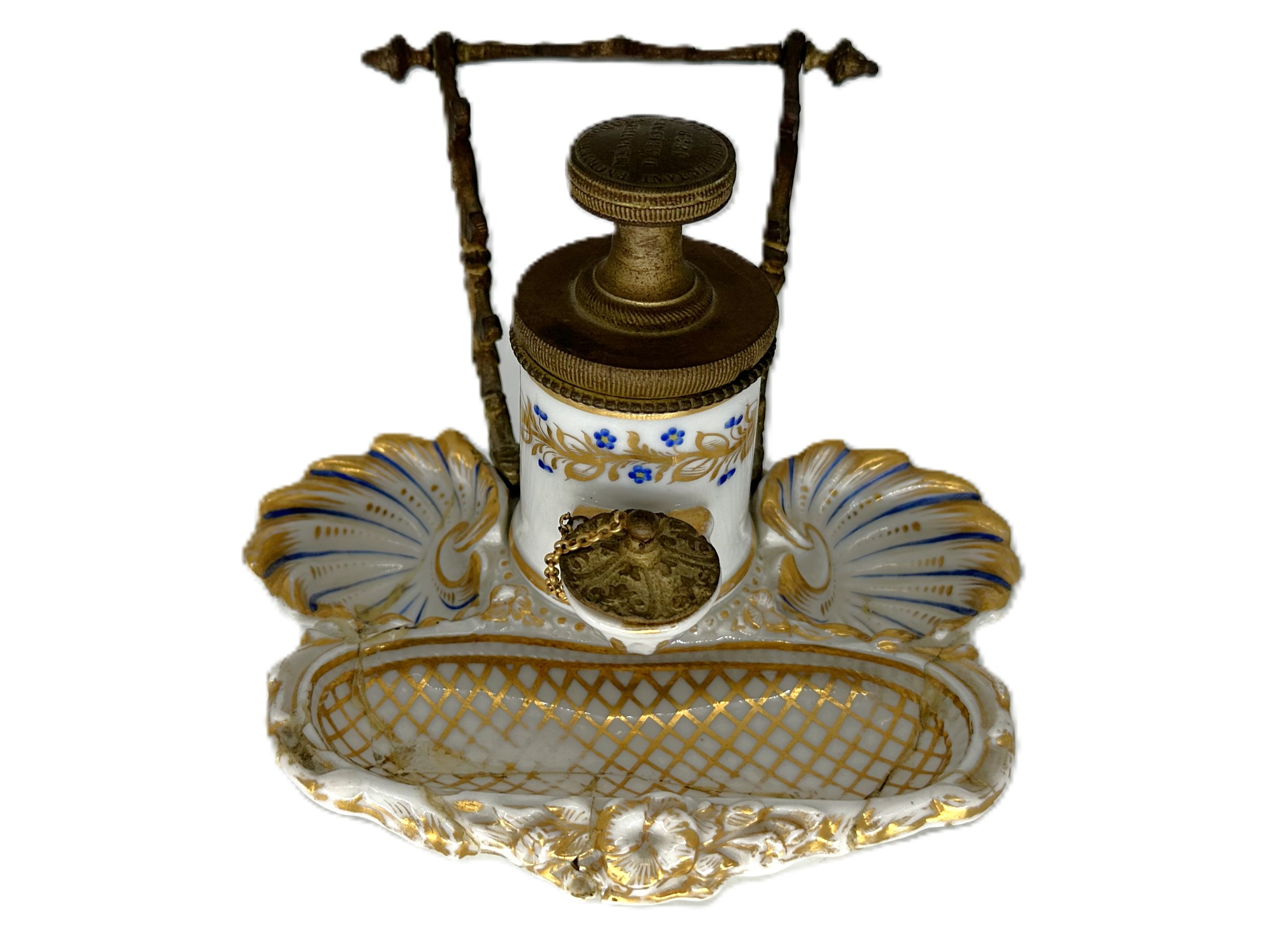
This is a mid-19th century French mechanical inkstand made of high-quality “hard-paste” porcelain and gilt brass. This piece is designed with the reservoir and base as a cohesive porcelain unit.
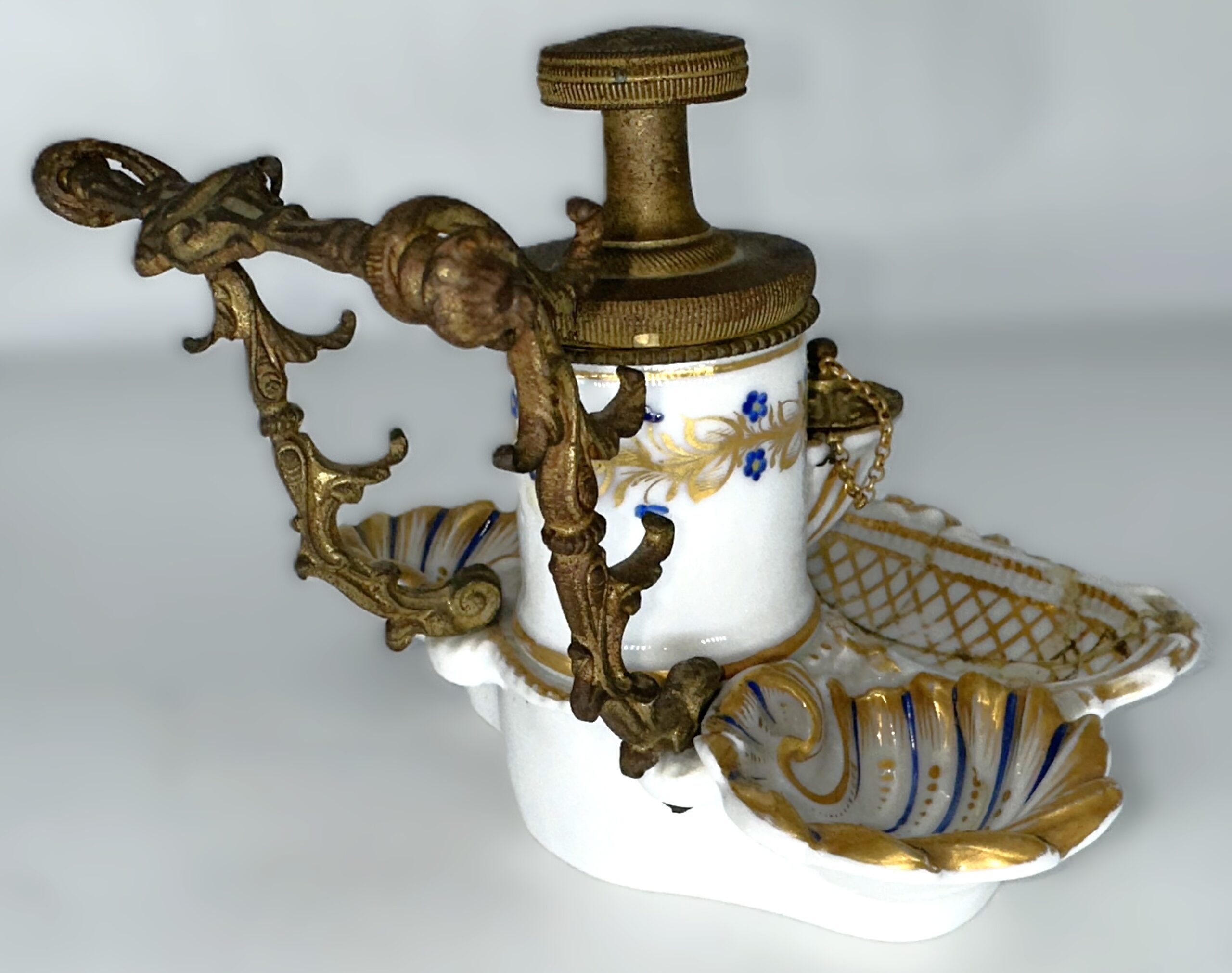
- The Porcelain Structure: The set features a central cylindrical reservoir that rises from a wide, integrated porcelain saucer base. The porcelain is white, decorated with hand-painted floral sprays and heavy gold-gilt (scrollwork) borders.
- The Dipping Font: Projecting from the front of the cylinder is a small, petal-shaped dipping font. This is where the ink appears when pumped. Its lid is affixed to the inkwell with a small chain.
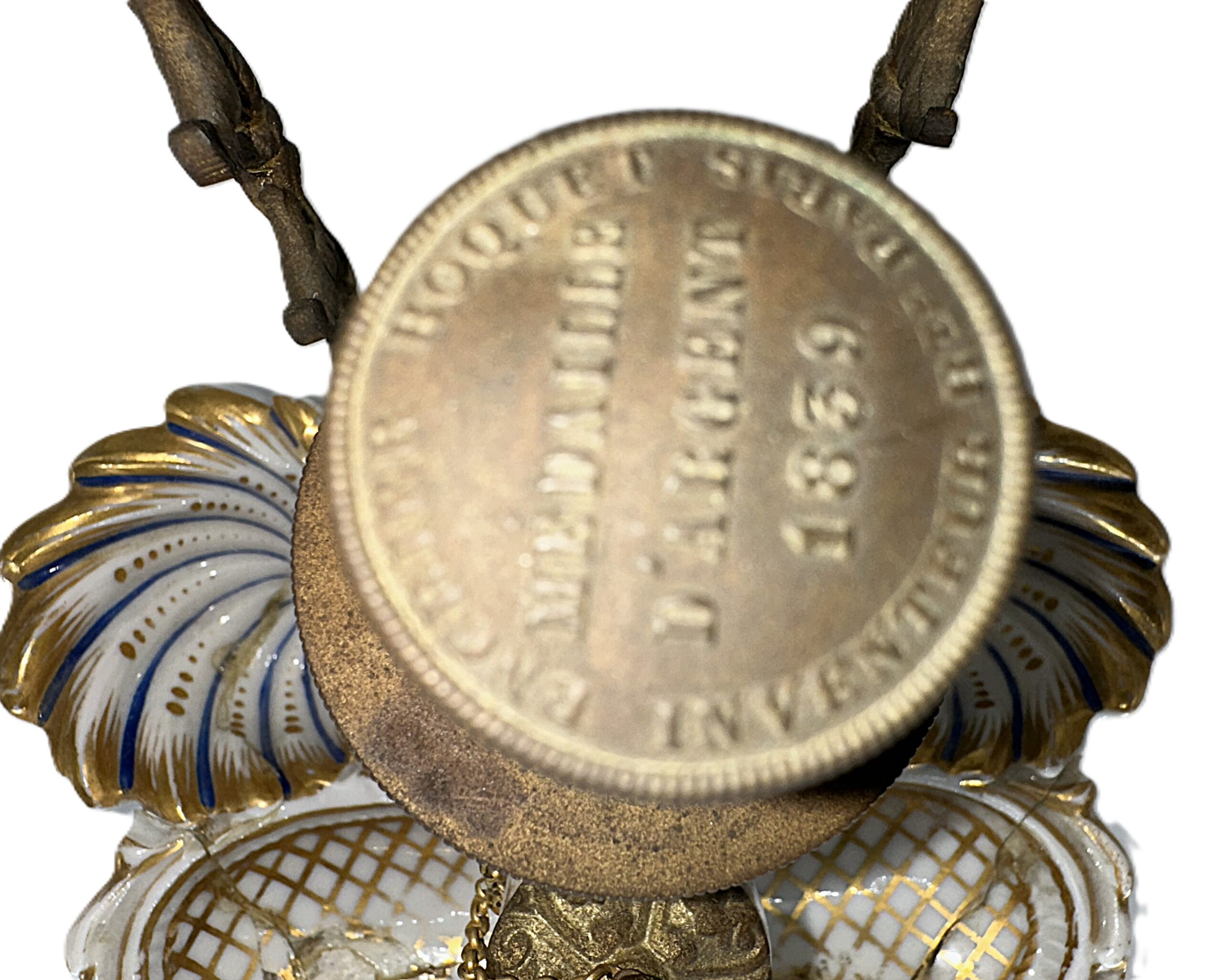
- The “Medal” Knob: At the top sits the brass mechanism featuring the large, flat winding knob that carries the prestigious 1839 Silver Medal inscription.
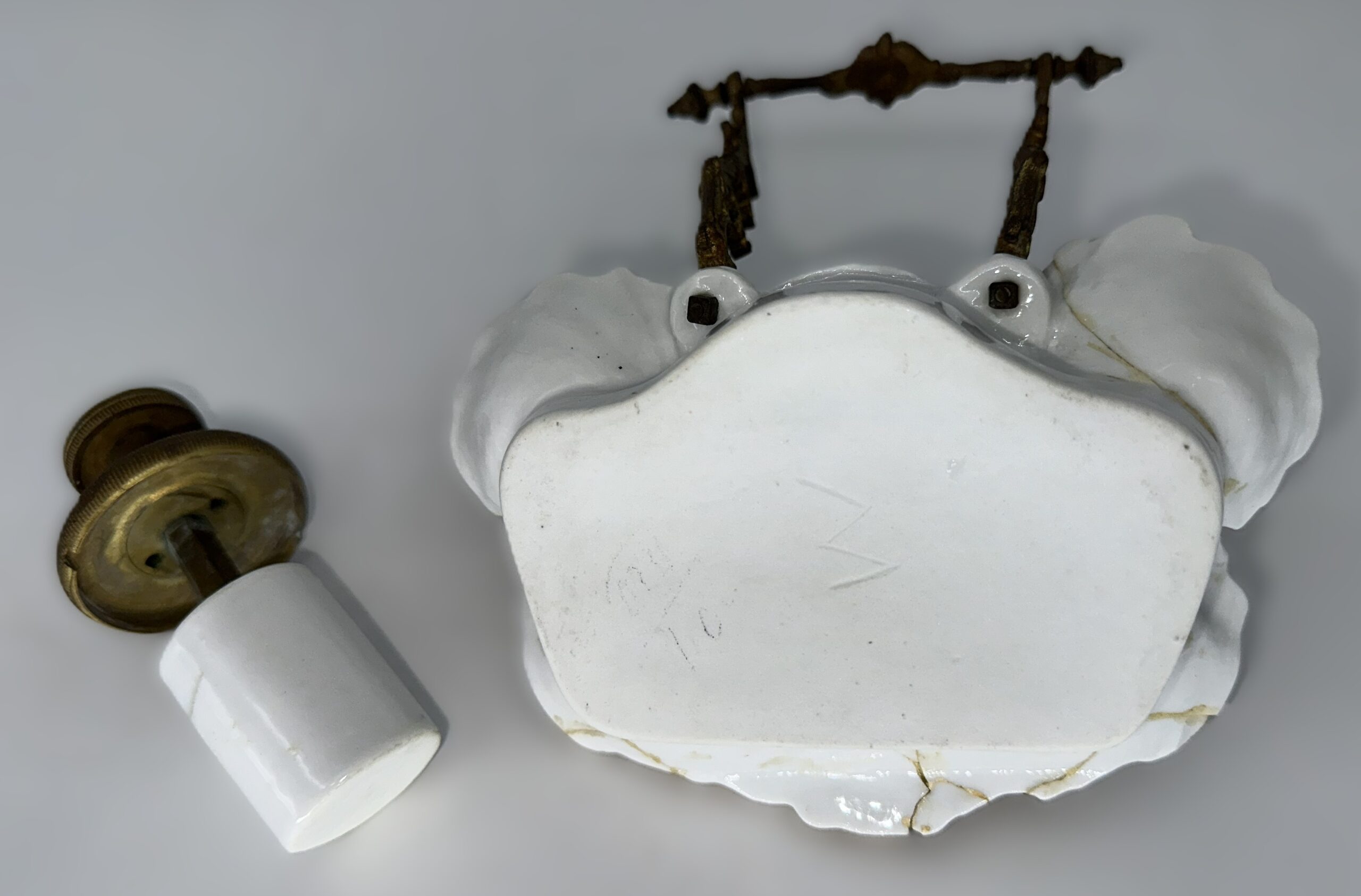
- The Plunger: Inside the porcelain cylinder is a porcelain-weighted plunger.
Inscriptions:
The words on the knob are:
- ENCRIER BOQUET: Confirms this is an authentic creation of Louis-Honoré Boquet, the premier pump inkwell inventor of the era.
- 1839 MEDAILLE D’ARGENT: This is an important historical marker. It tells us that this specific mechanical design won the Silver Medal at the 1839 Paris Industrial Exposition. This award proved the pump was reliable and technically superior.
- INVENTEUR BTE (Breveté) PARIS: This signifies that Boquet was the Patented Inventor based in Paris. The “BTE” protected his unique displacement system from being copied by other porcelain manufacturers.
How This Model Works
- The Wind-Up: When you turn the “Medal” knob, it raises or lowers the internal plunger.
- The Displacement: This action lowers the heavy porcelain plunger into the ink stored in the main cylinder.
- The Fountain Effect: Because the cylinder is airtight, the sinking plunger forces the ink to rise through a small hidden channel, making it “bloom” upward into the front dipping font.
Age
Because it celebrates the 1839 Medal, this piece was manufactured shortly after the award, likely between 1840 and 1860.
Estimated value: $125
Content disclaimer. The information posted is the owner’s best knowledge and may not have been vetted by the SOIC. We welcome comments, corrections, and additions, working to make our website information comprehensive and accurate.
Join the Society of Inkwell Collectors (SOIC) – it’s free!
Founded in 1981 as a non-profit organization,
we are documenting inkwells (and accessories).
We’re here to help and inform!