

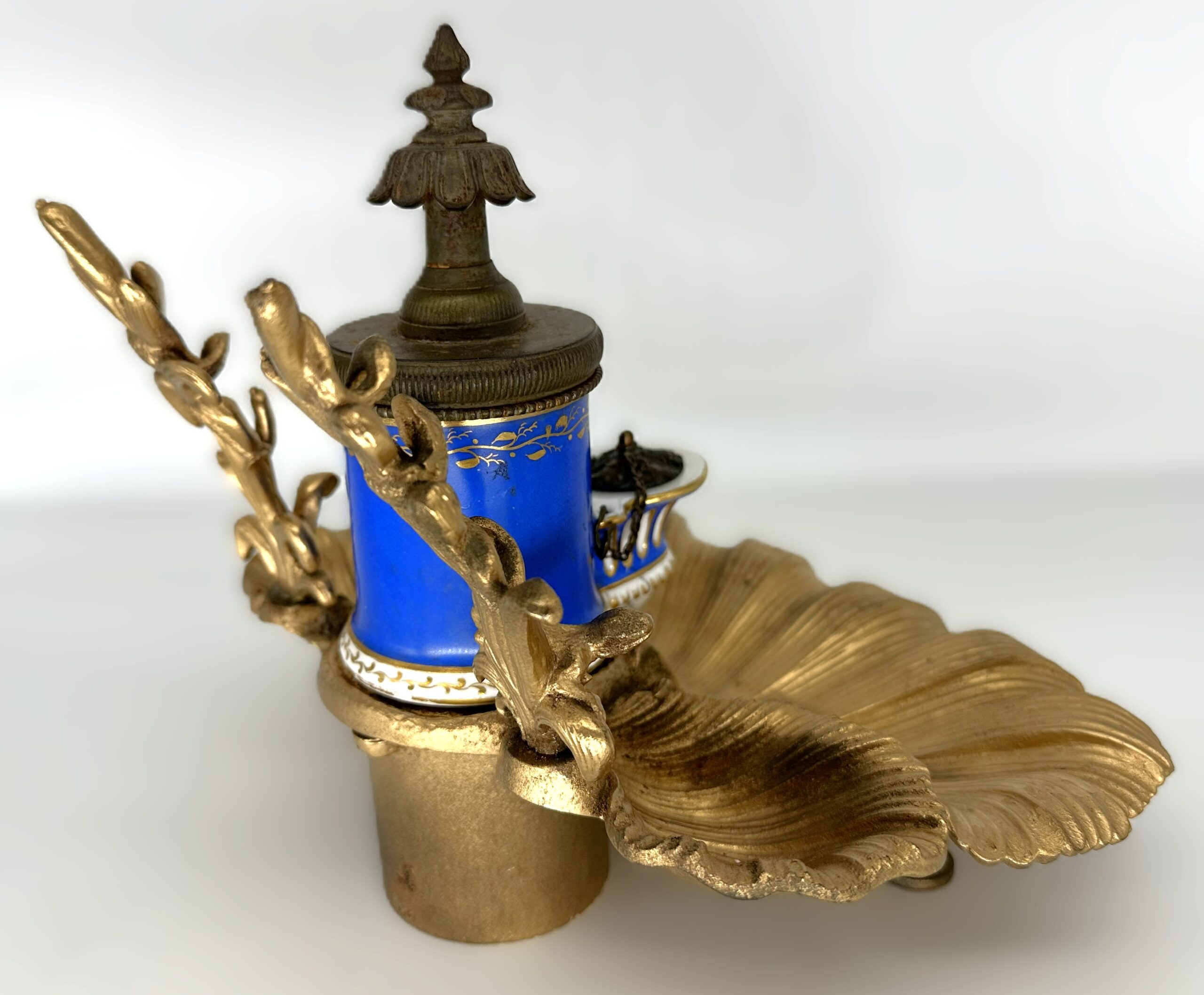
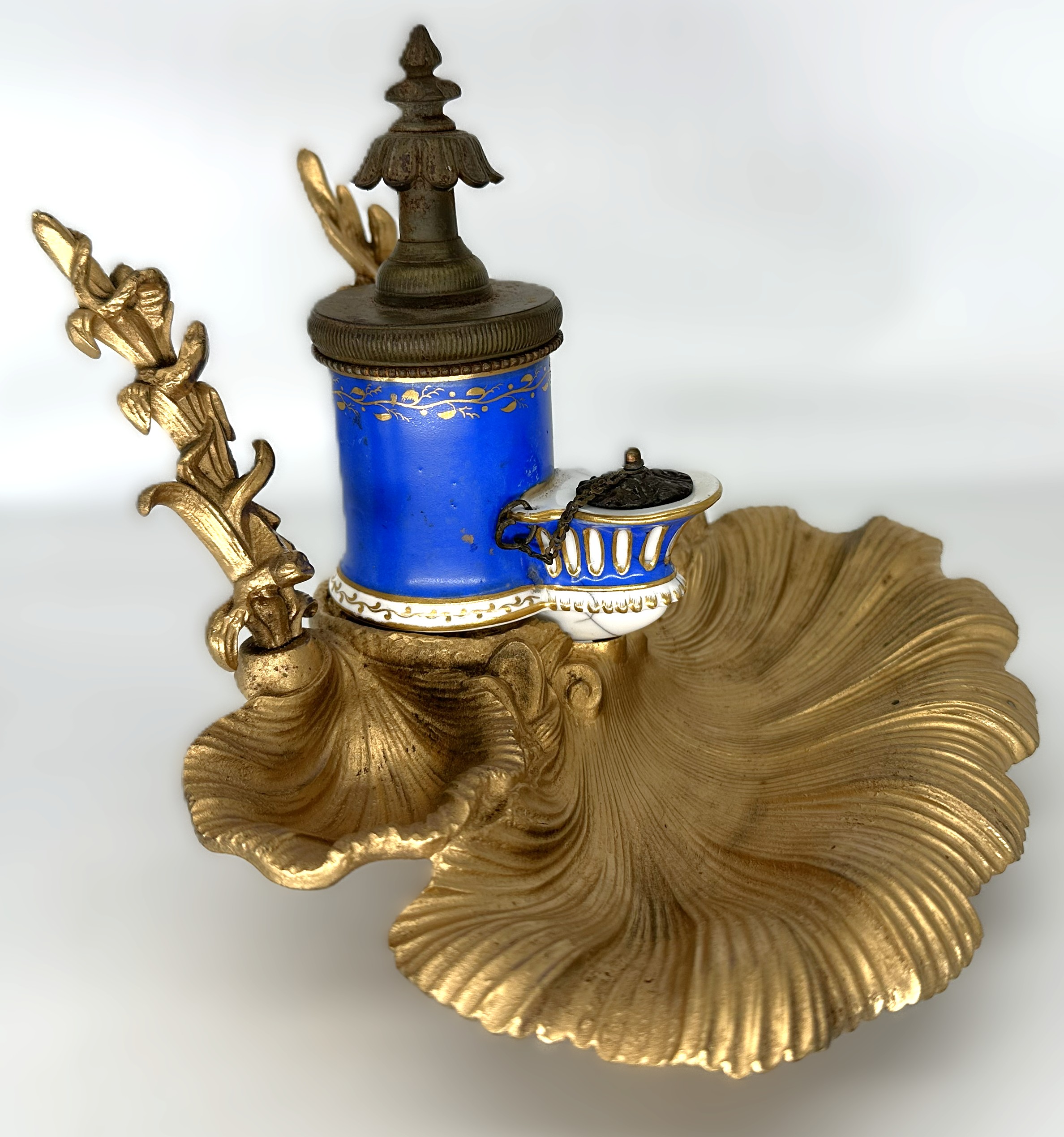
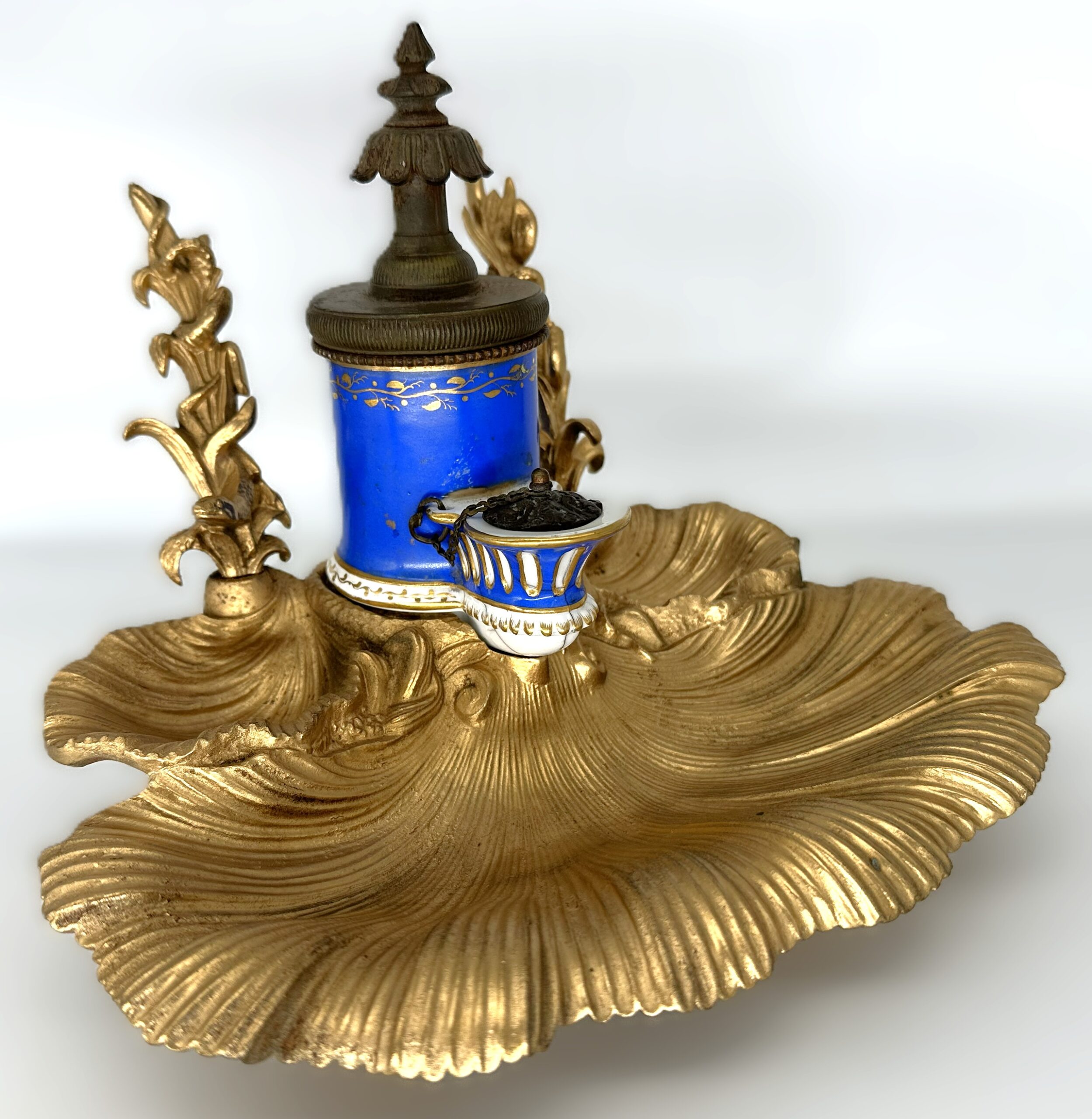
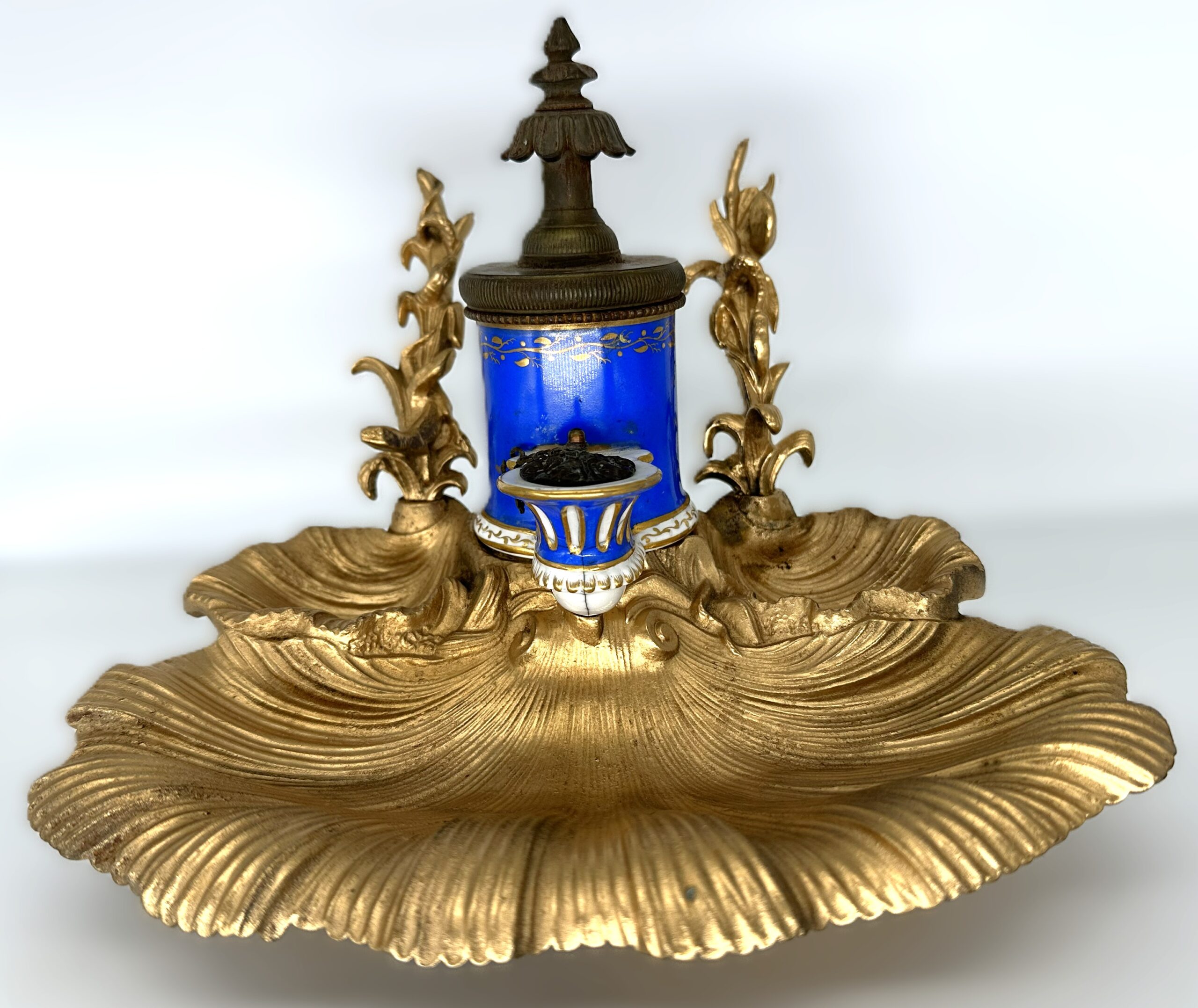
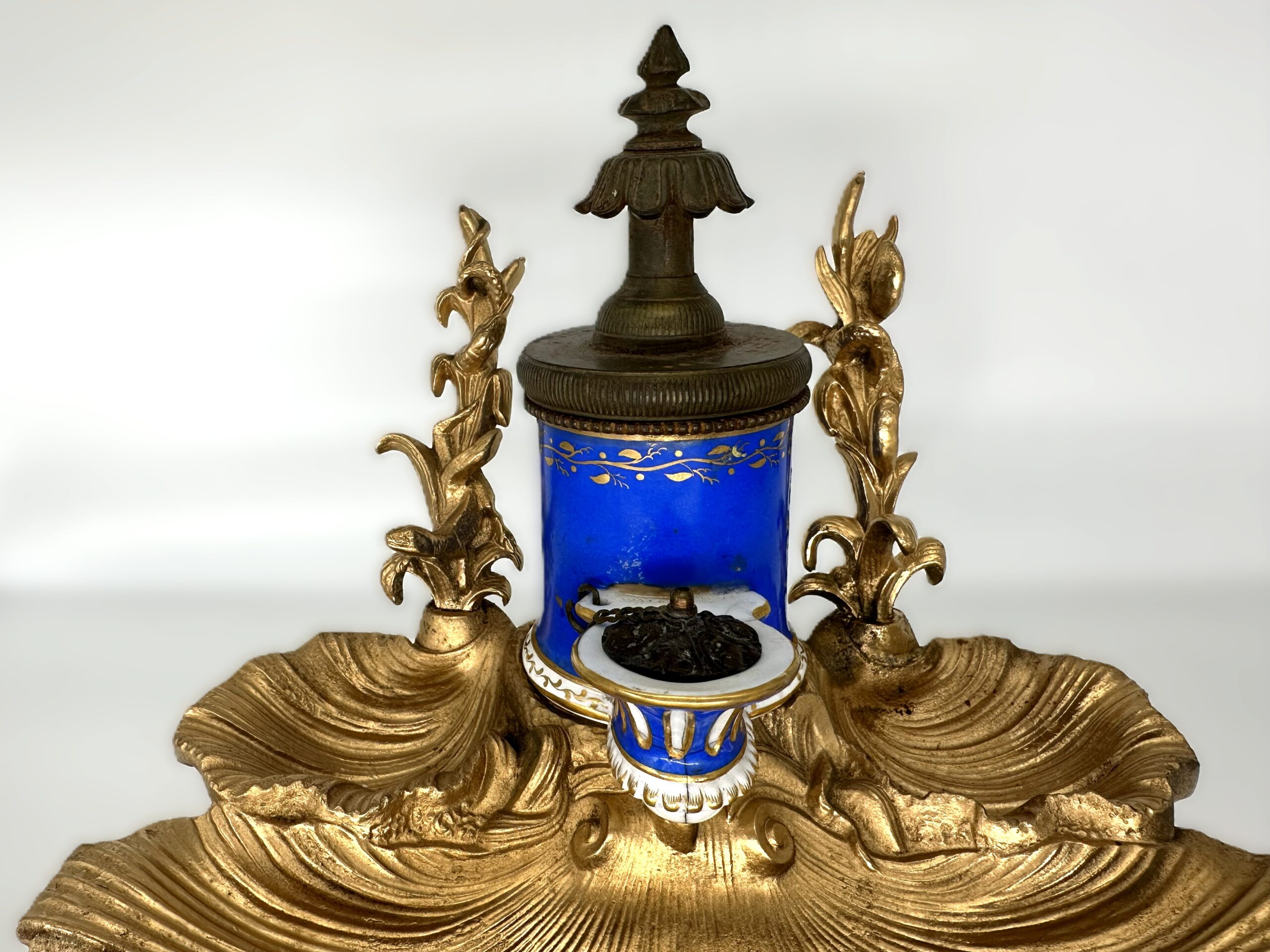
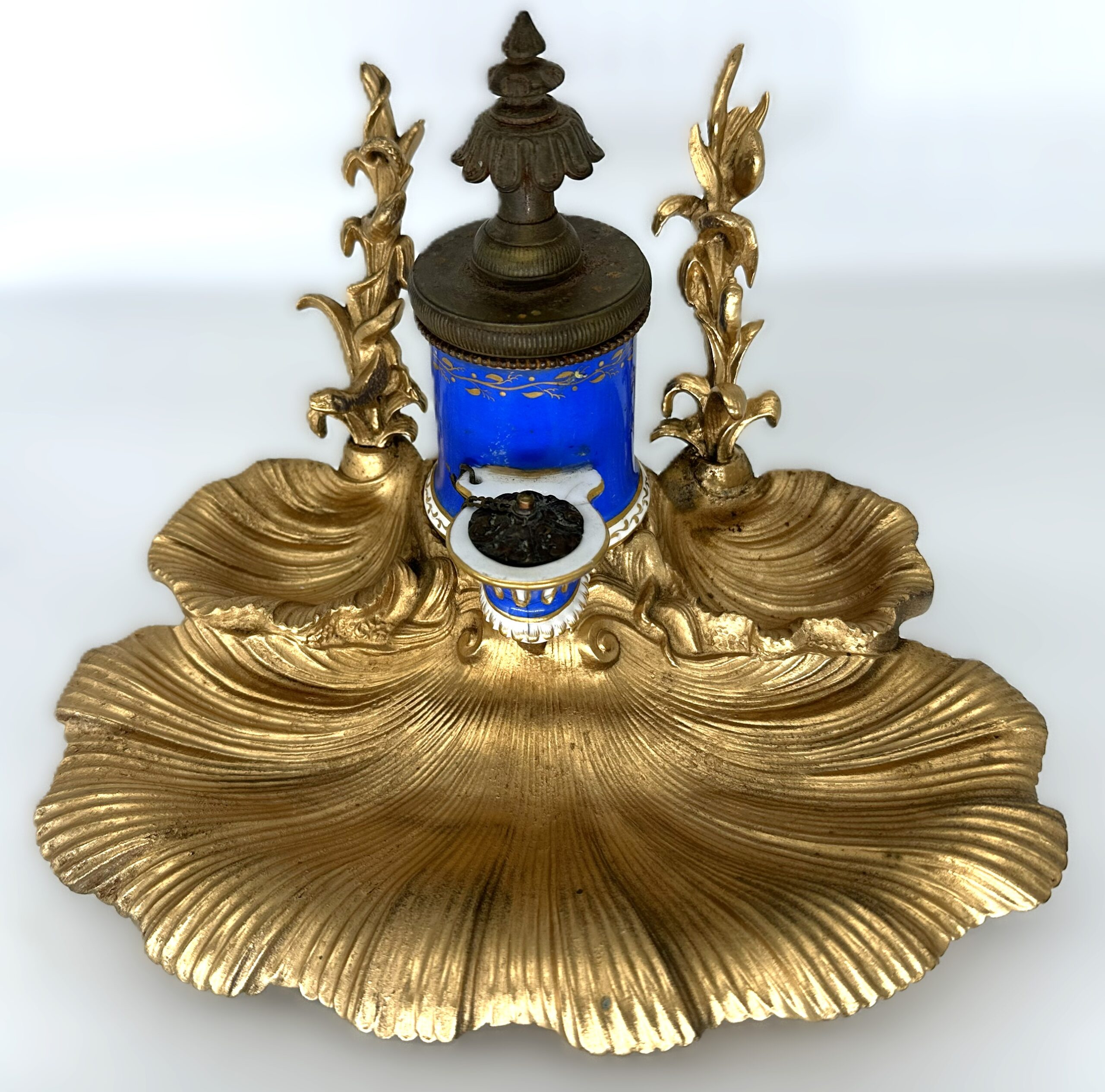
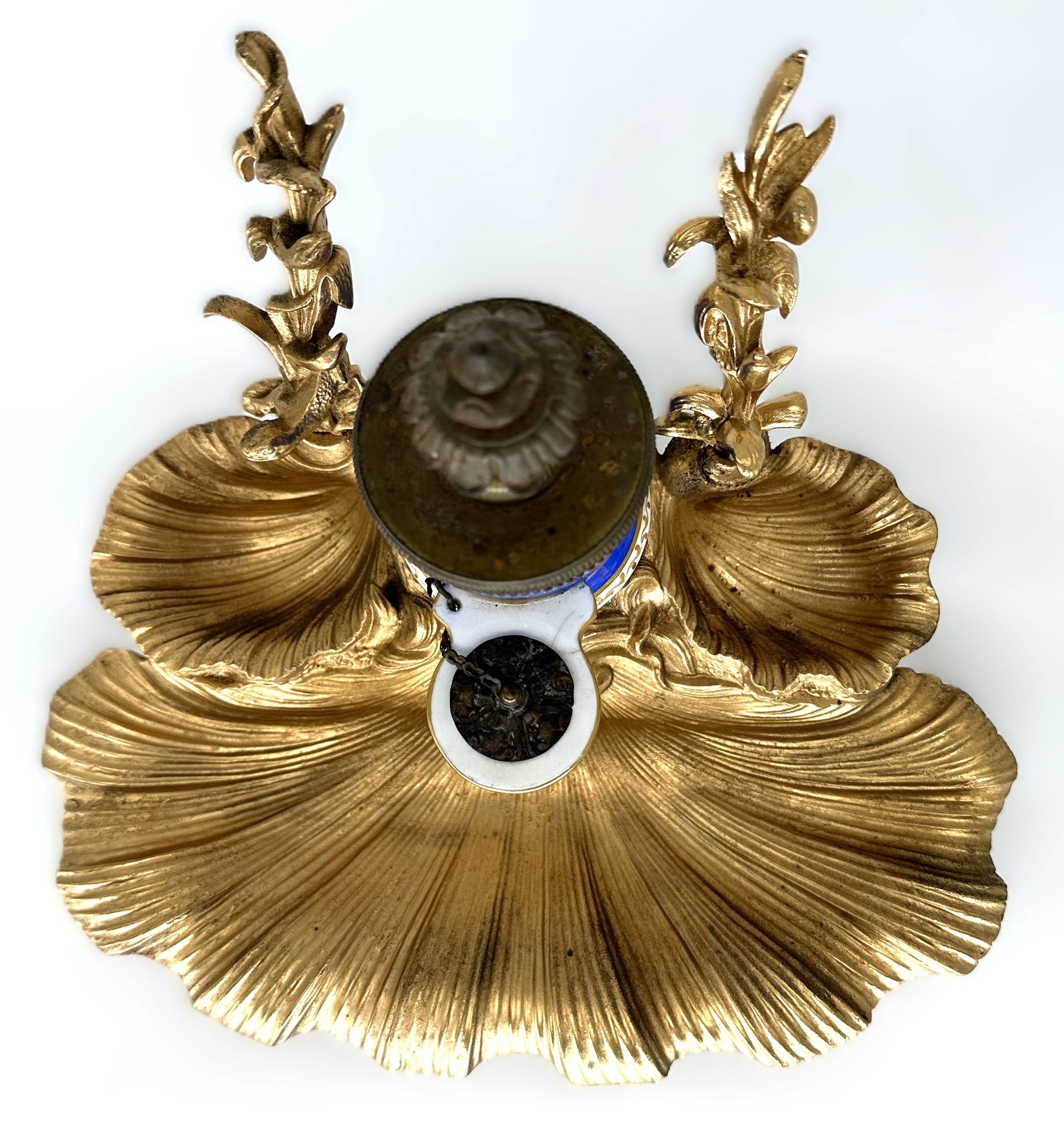
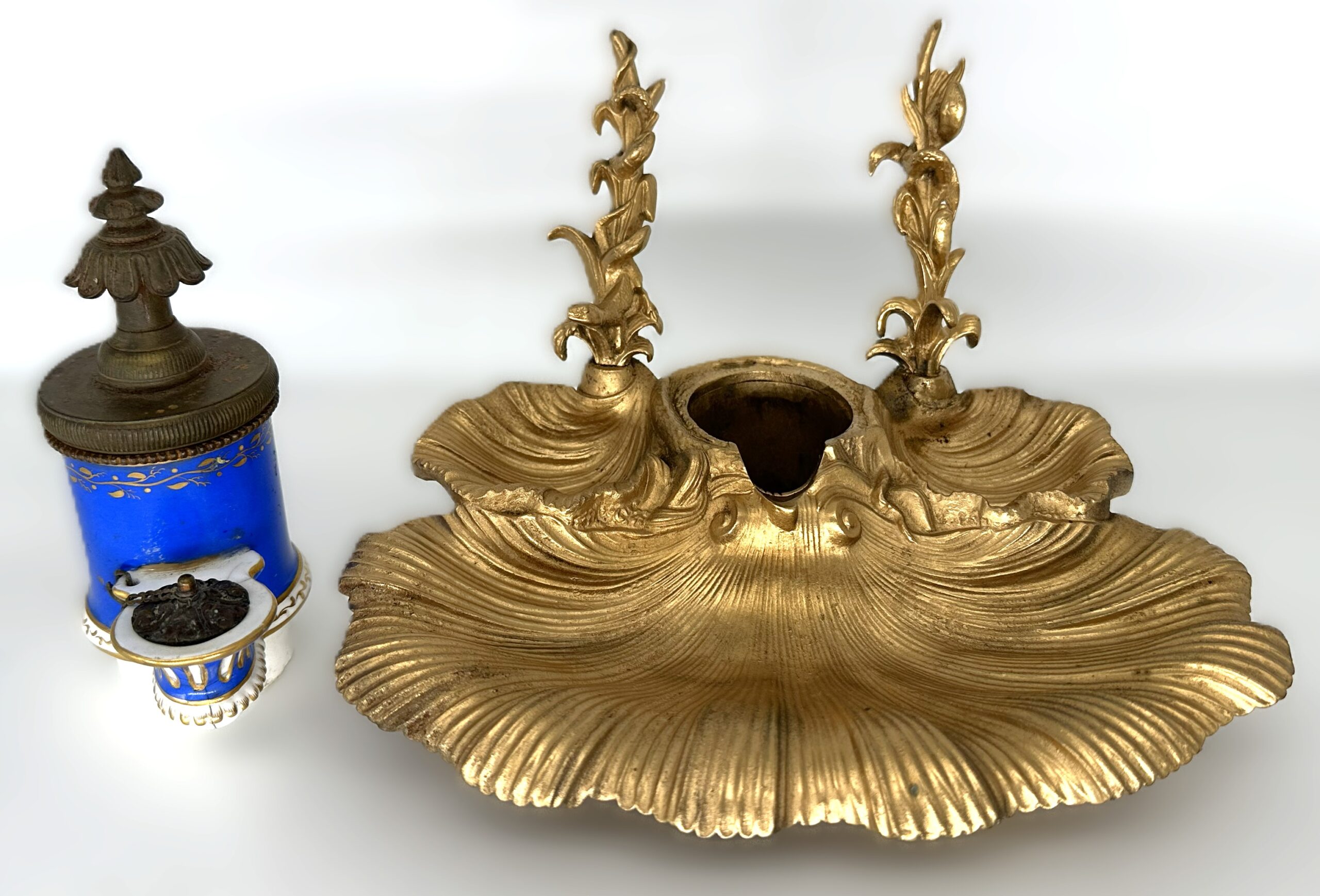
Pump Inkstand with Scalloped Shell Pen Tray
| Categories | Mechanical - Pump / Siphon |
| Type | Pump |
| Material | Bronze, Porcelain |
| Markings | Unmarked |
| Manufacturer | Undetermined |
| Origin | France |
| Date or Era | circa 1870 |
| Measuring | 9” x 7” x 7 ½” high |
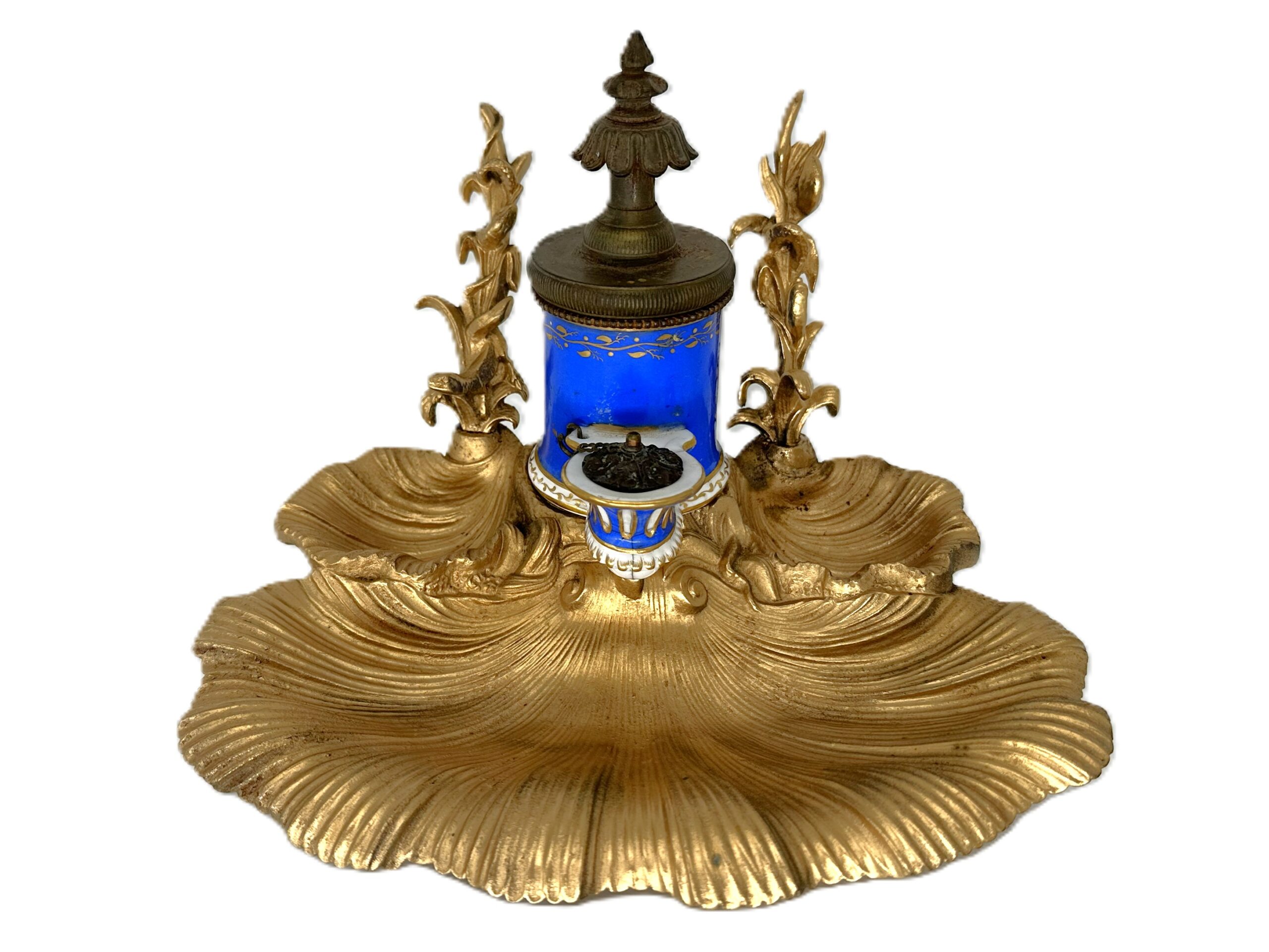
This French inkstand combines the utility of a pump inkwell with the ornate aesthetic of the mid-to-late 19th century.
Description
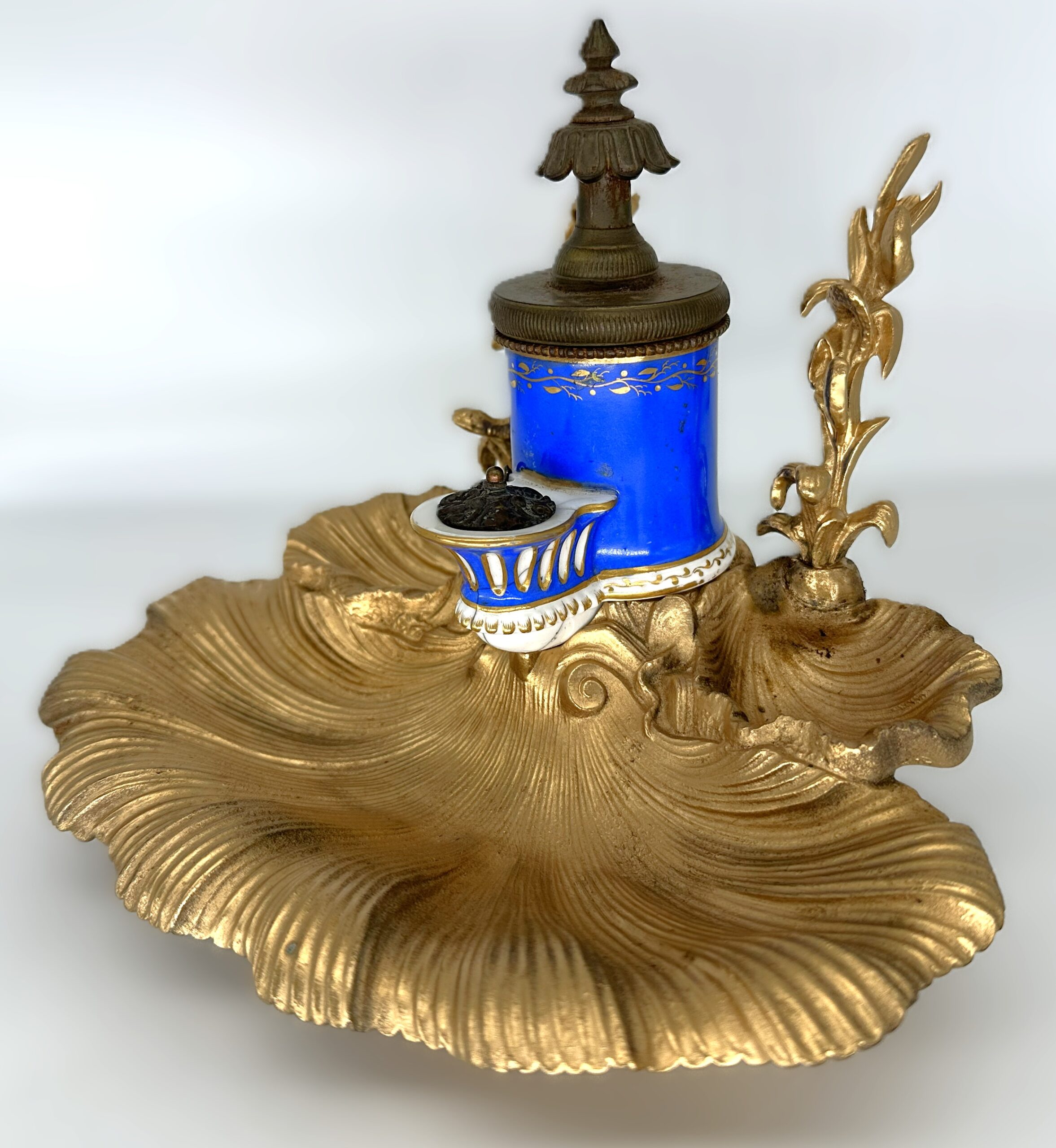
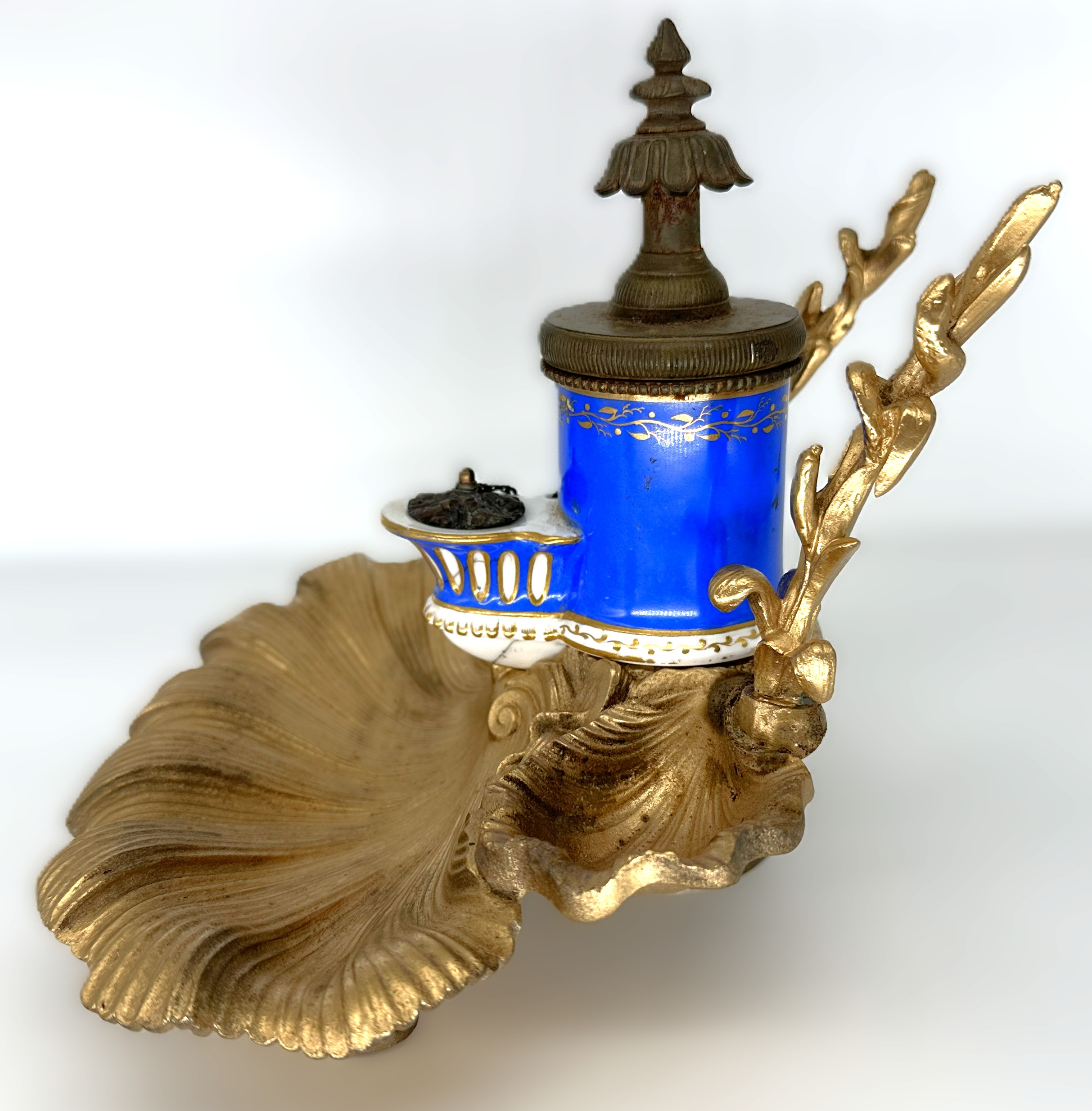
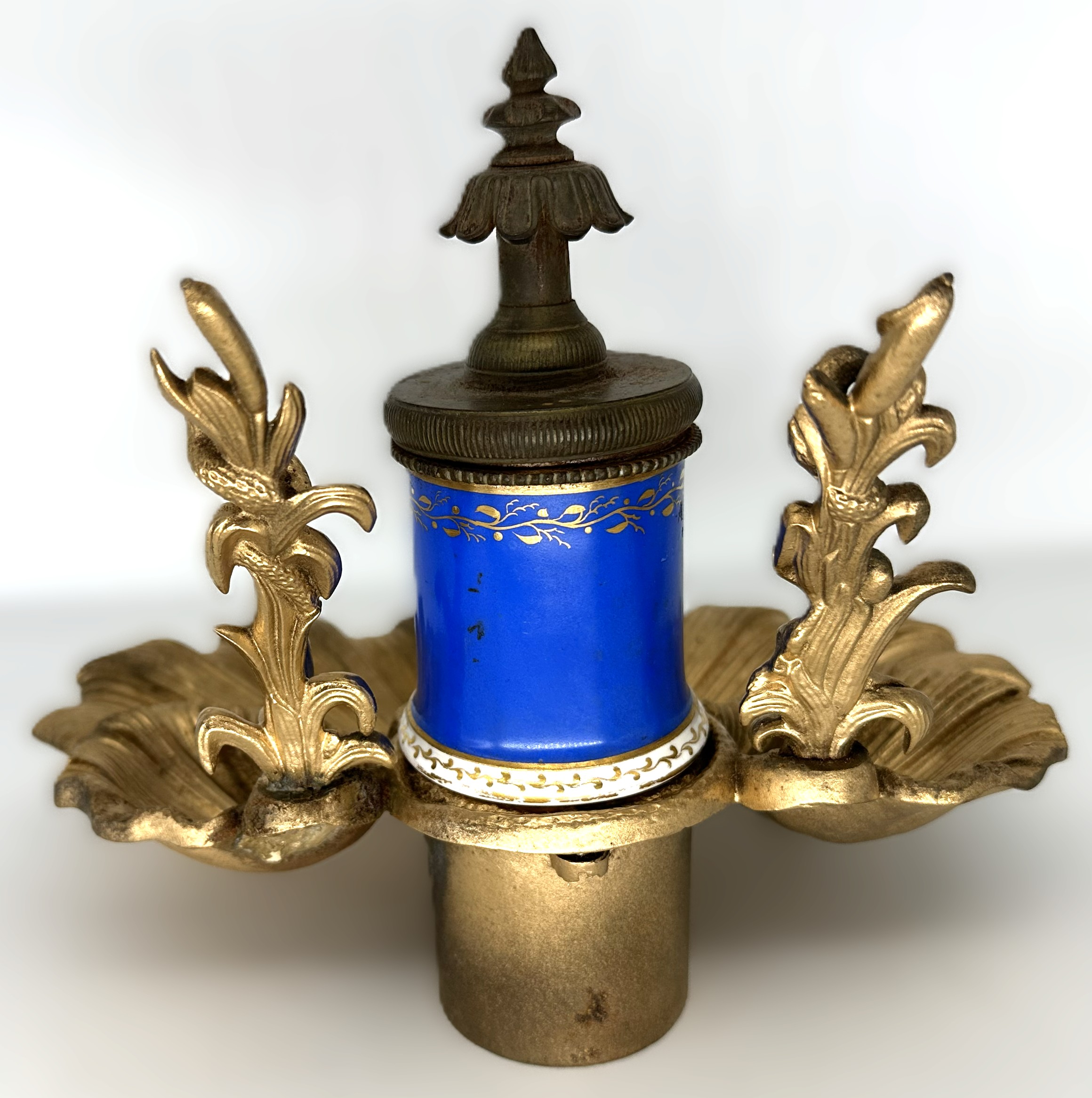
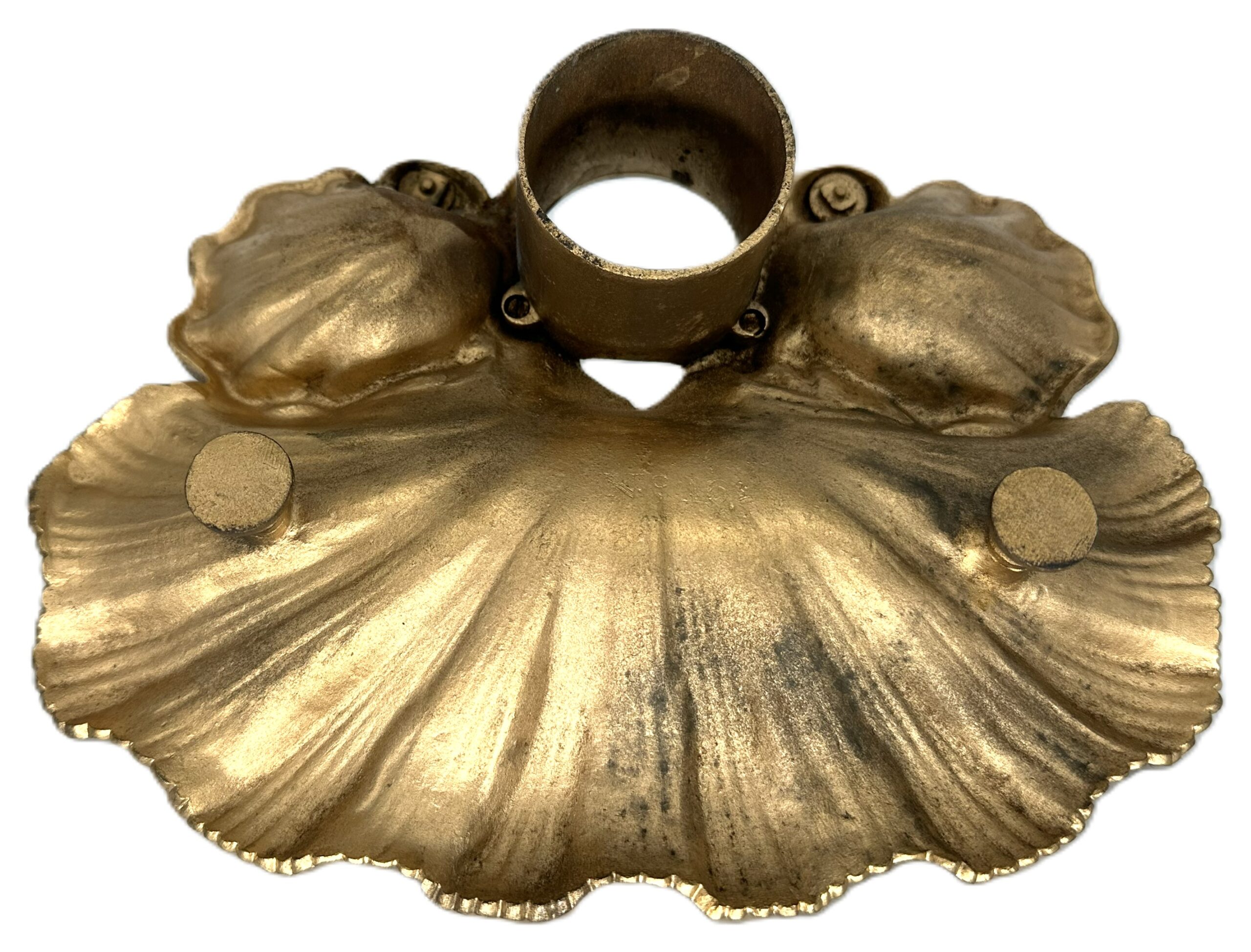
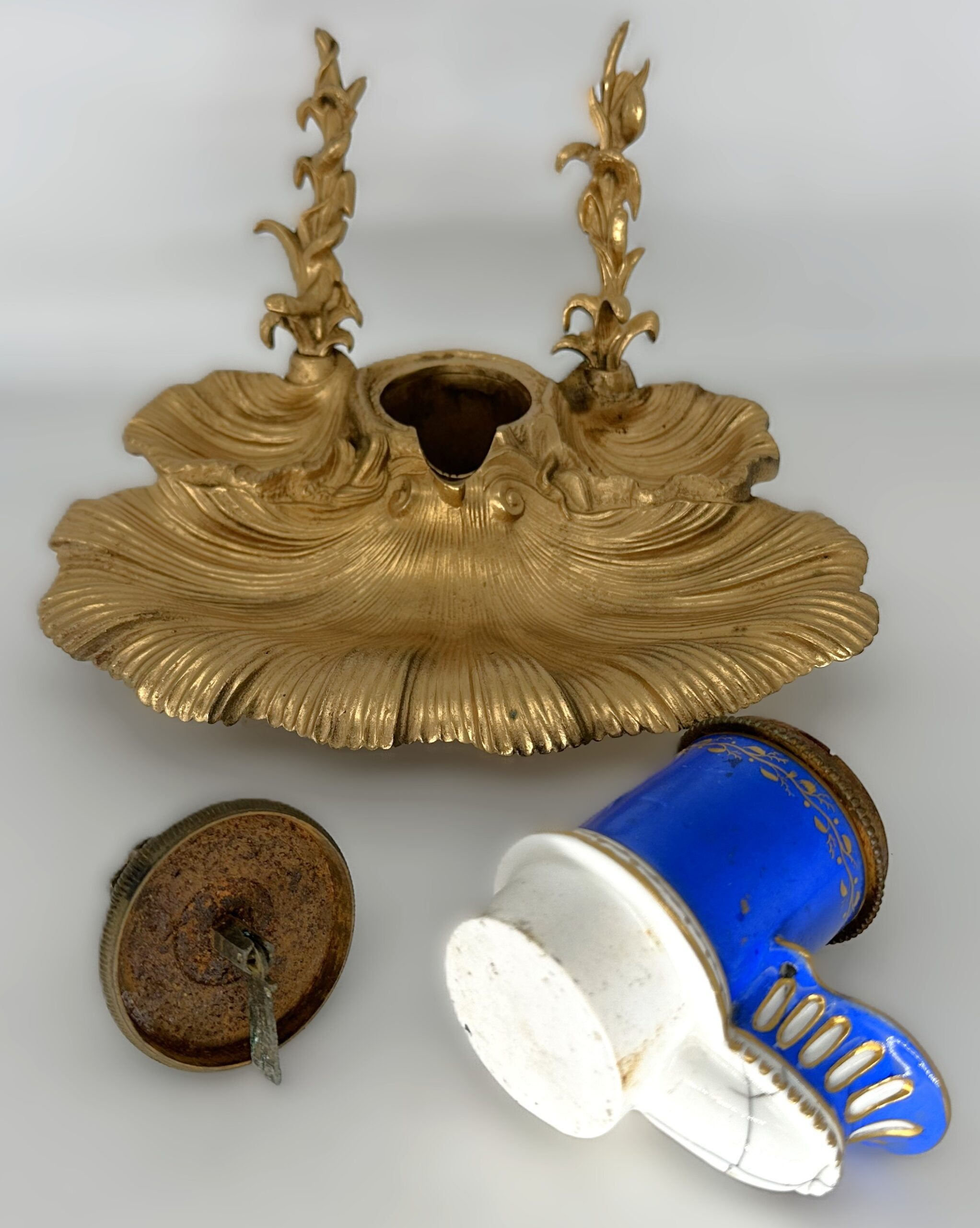
- Base: The stand is cast in a heavy gilt bronze and shaped like a large, scalloped tridacna shell. The front of the shell serves as a pen tray, while two smaller shells in the rear act as reservoirs for nibs or wafers.
- Ink Reservoir: The central vessel is made of cobalt blue porcelain (Sèvres style), decorated with a gilded scrolling leaf-and-vine motif.
- Hardware: It features a decorative bronze plunger cap with a tiered, finial-style top. Flanking the reservoir are two gilt-metal leafy sprigs that act as holders for dip pens.
The Plunger Mechanism
The “pump” mechanism was designed to solve the problem of ink evaporation and sediment buildup. The internal plunger is missing on this piece. But here is how it would have operated:
- The Reservoir: The blue porcelain cylinder holds a significant supply of ink. Because the cylinder is mostly sealed, the ink stays fresh longer than in an open well.
- The Plunger: Inside the cylinder is a piston or plunger attached to the finial top. When you turn the top mechanism, it creates air pressure or physical displacement.
- The Font: This pressure forces the ink through a small internal tube and out into the small porcelain font (the white “lip” at the front). There is a small lid covering the font and chained to the reservoir.
- Recession: Once you are finished writing, reversing the turn allows the ink to recede back into the main reservoir. This keeps the writing area clean and prevents the ink from drying into a thick “sludge.”
To see how a pump inkwell works, check out this video:
Age and Attribution
- Date: This piece likely dates to the 1860s–1880s. The “Shell and Sea” motif was a staple of the Rococo Revival style popular during the mid-Victorian era.
- Maker: While there are no visible maker’s marks, this style of porcelain-integrated metalwork is highly characteristic of French manufacturers (often termed Palais Royal style).
- The porcelain itself is meant to emulate Sèvres, though it was often produced by independent Parisian workshops.
- The metalwork is consistent with the quality of Tahan or Alphonse Giroux, famous Parisian cabinetmakers and ébénistes who specialized in high-end desk accessories for the wealthy.
Estimated value: $150
Content disclaimer. The information posted is the owner’s best knowledge and may not have been vetted by the SOIC. We welcome comments, corrections, and additions, working to make our website information comprehensive and accurate.
Join the Society of Inkwell Collectors (SOIC) – it’s free!
Founded in 1981 as a non-profit organization,
we are documenting inkwells (and accessories).
We’re here to help and inform!