

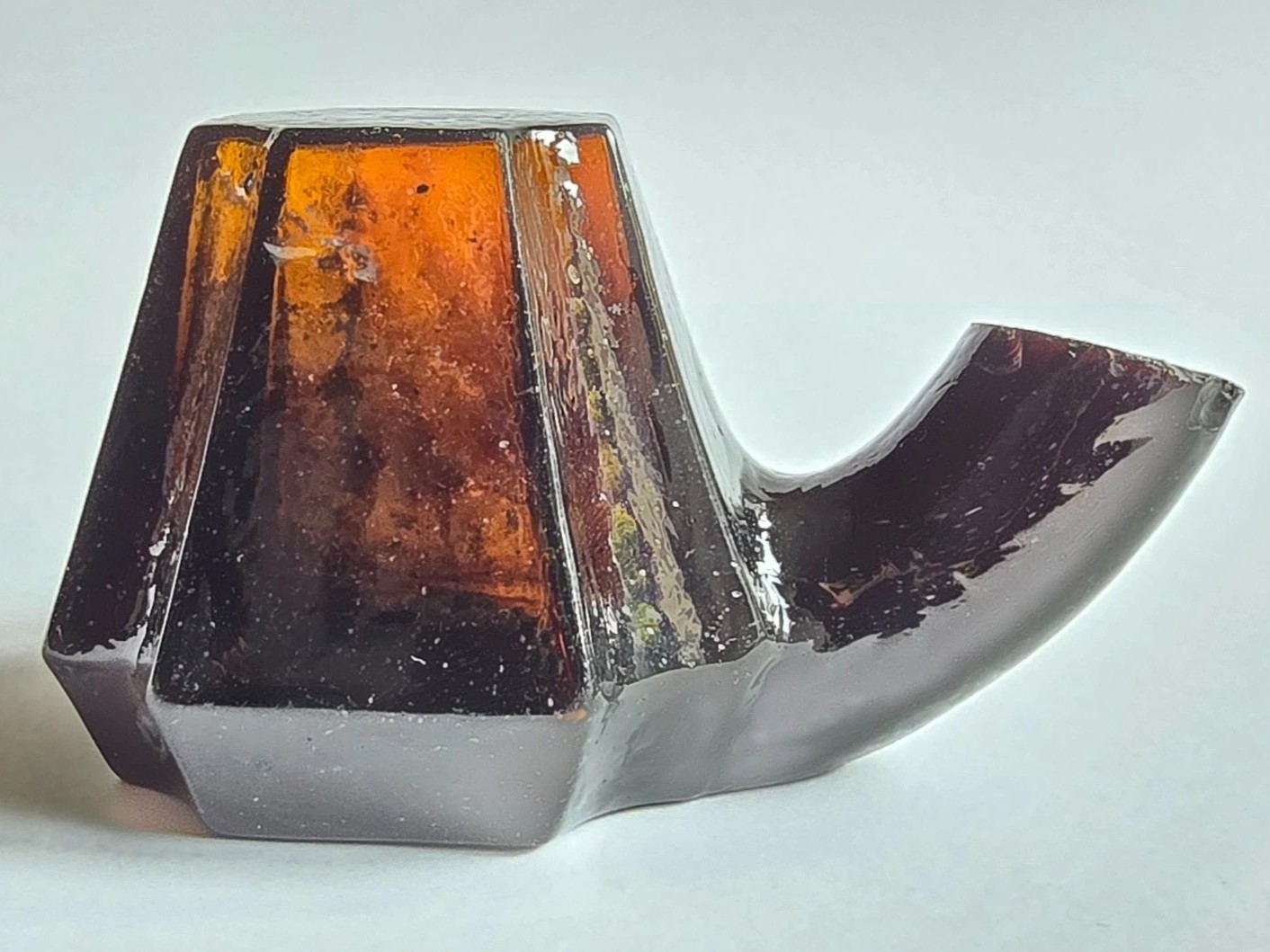
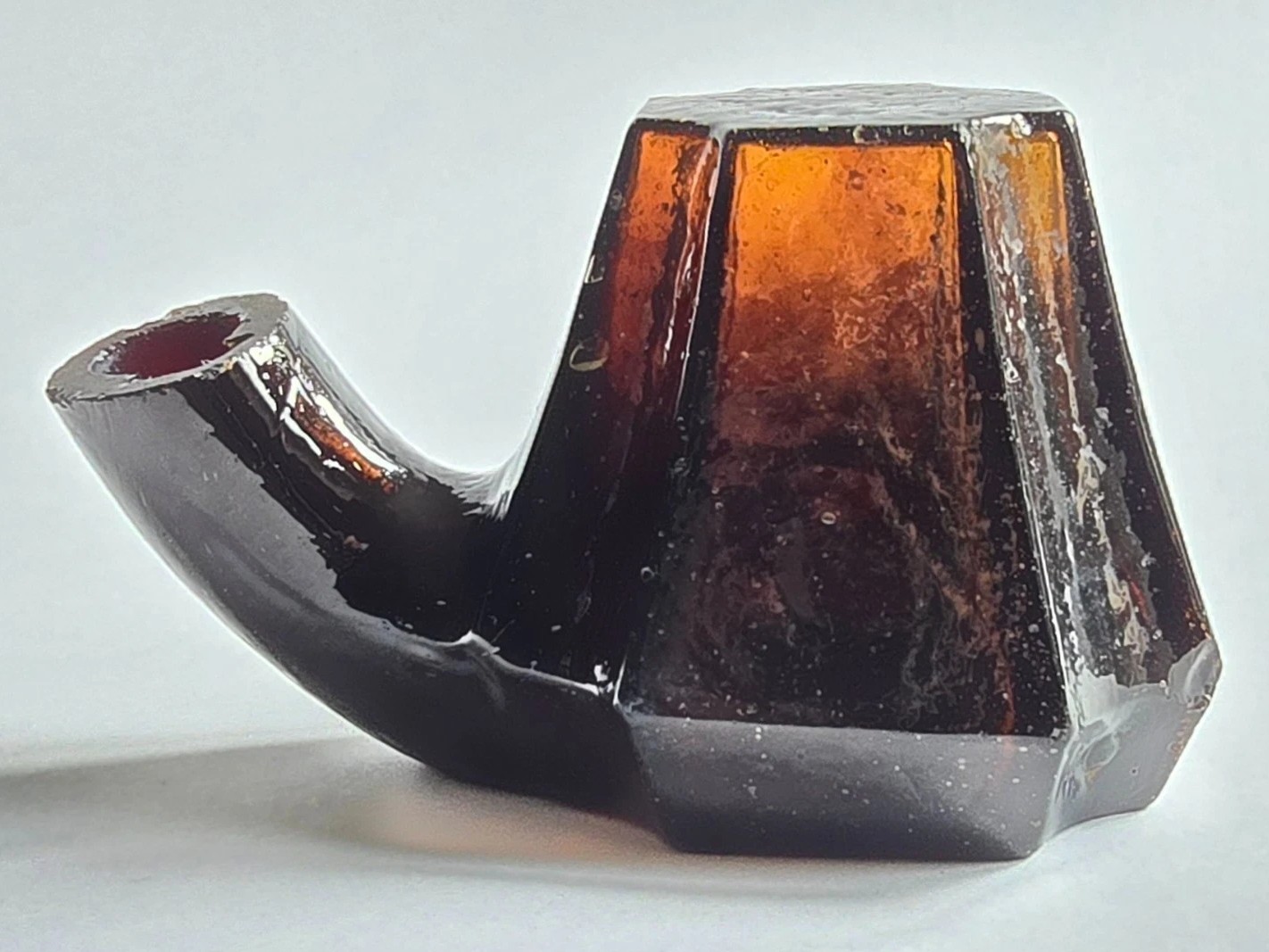
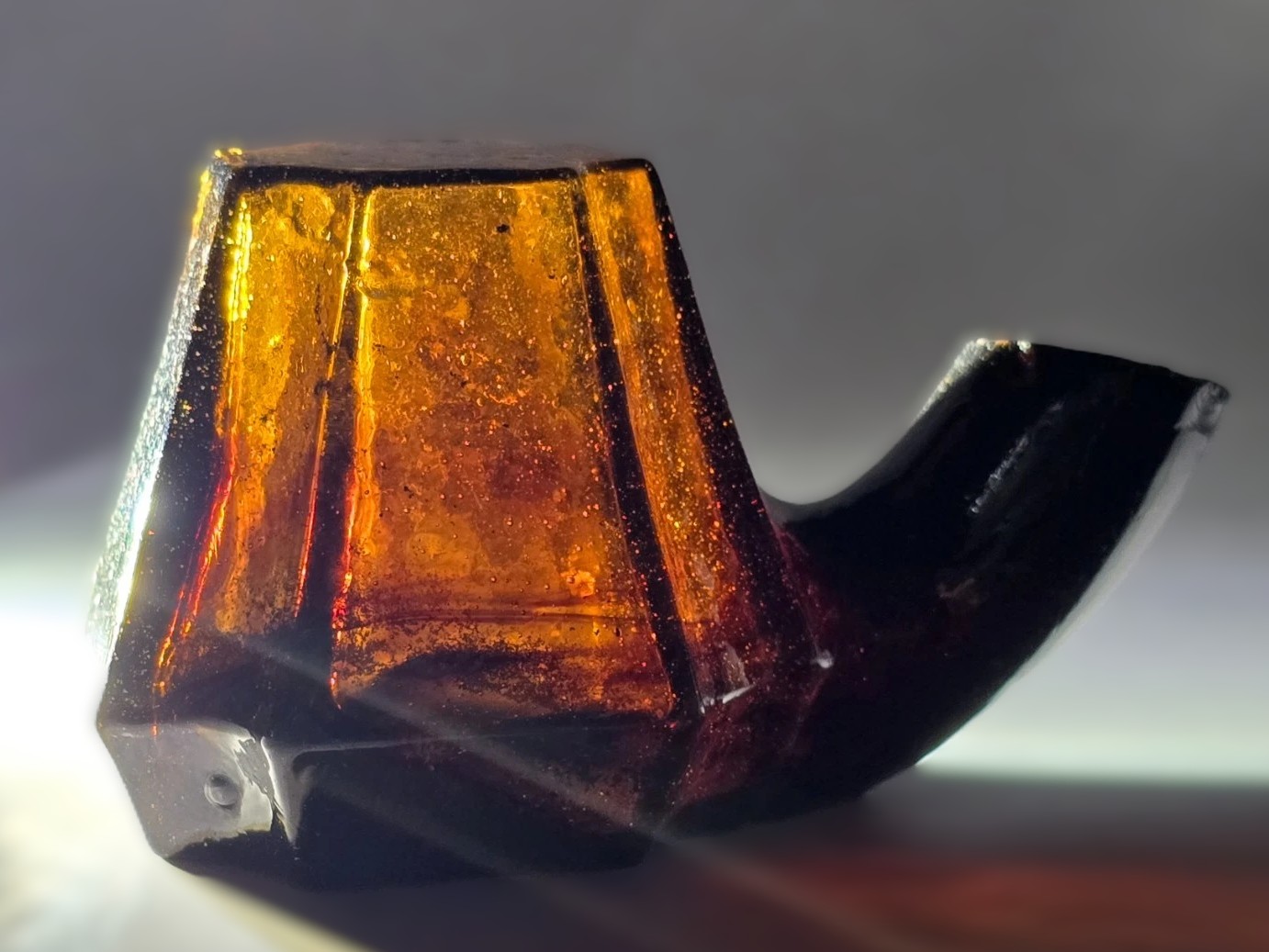
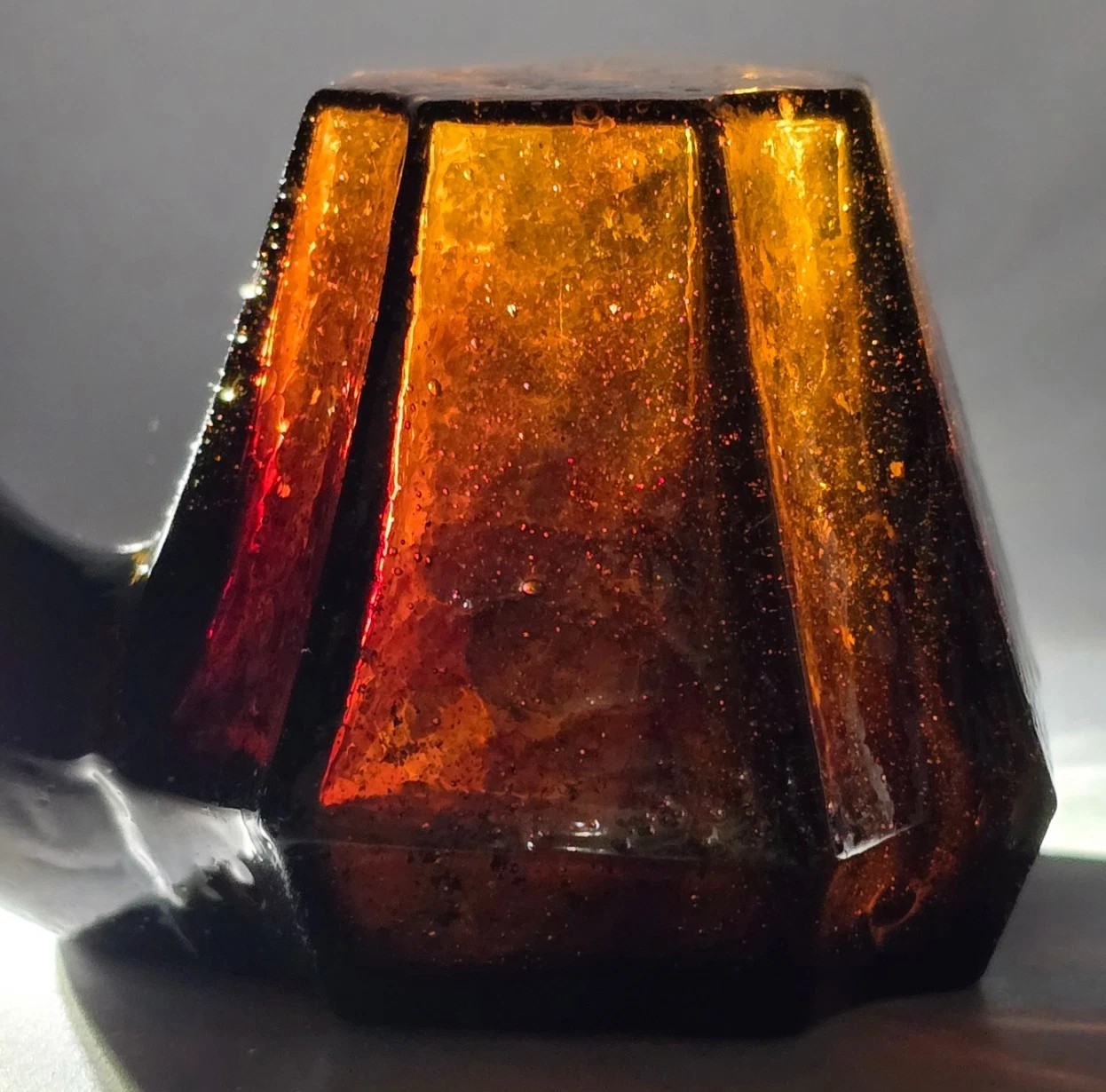
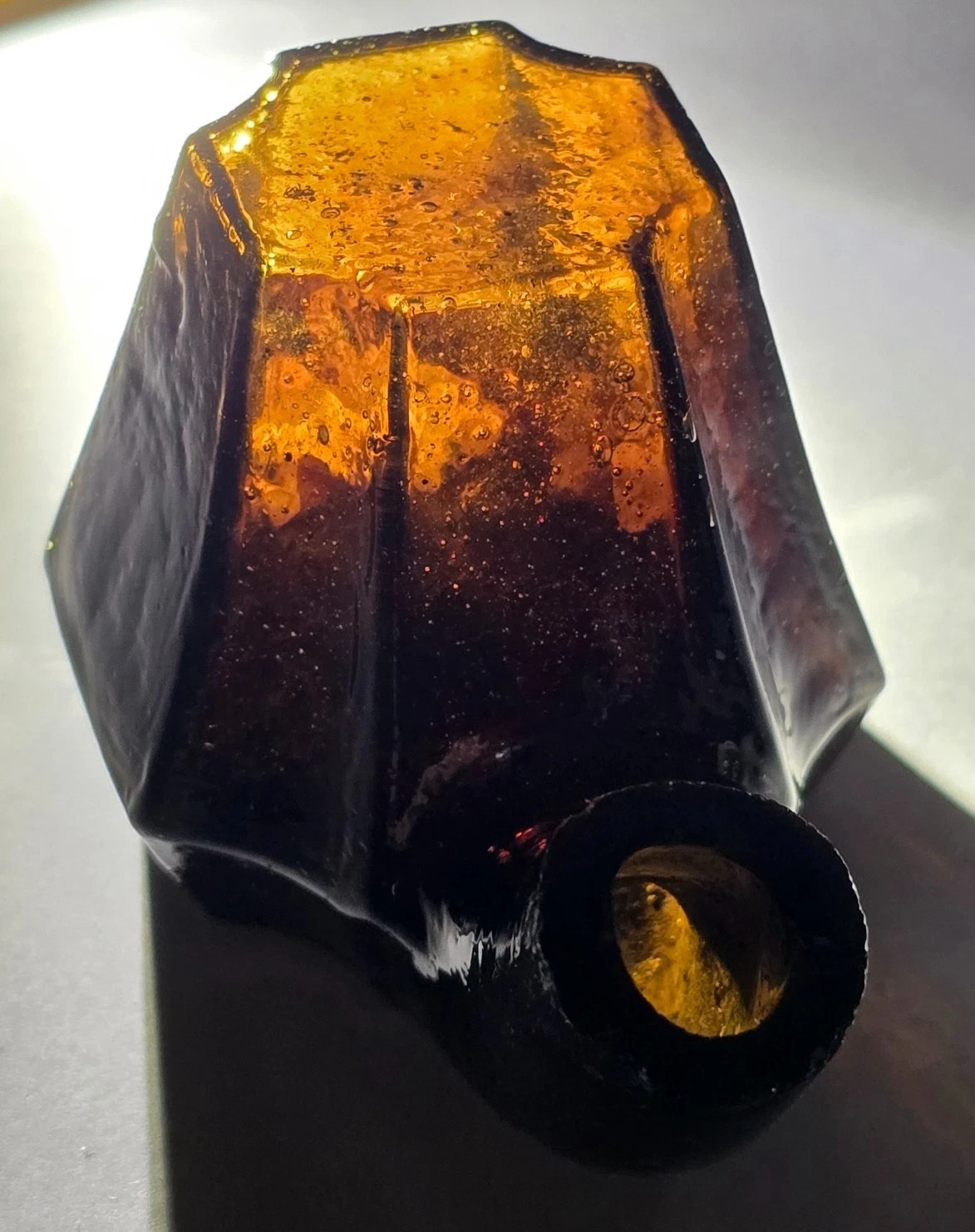
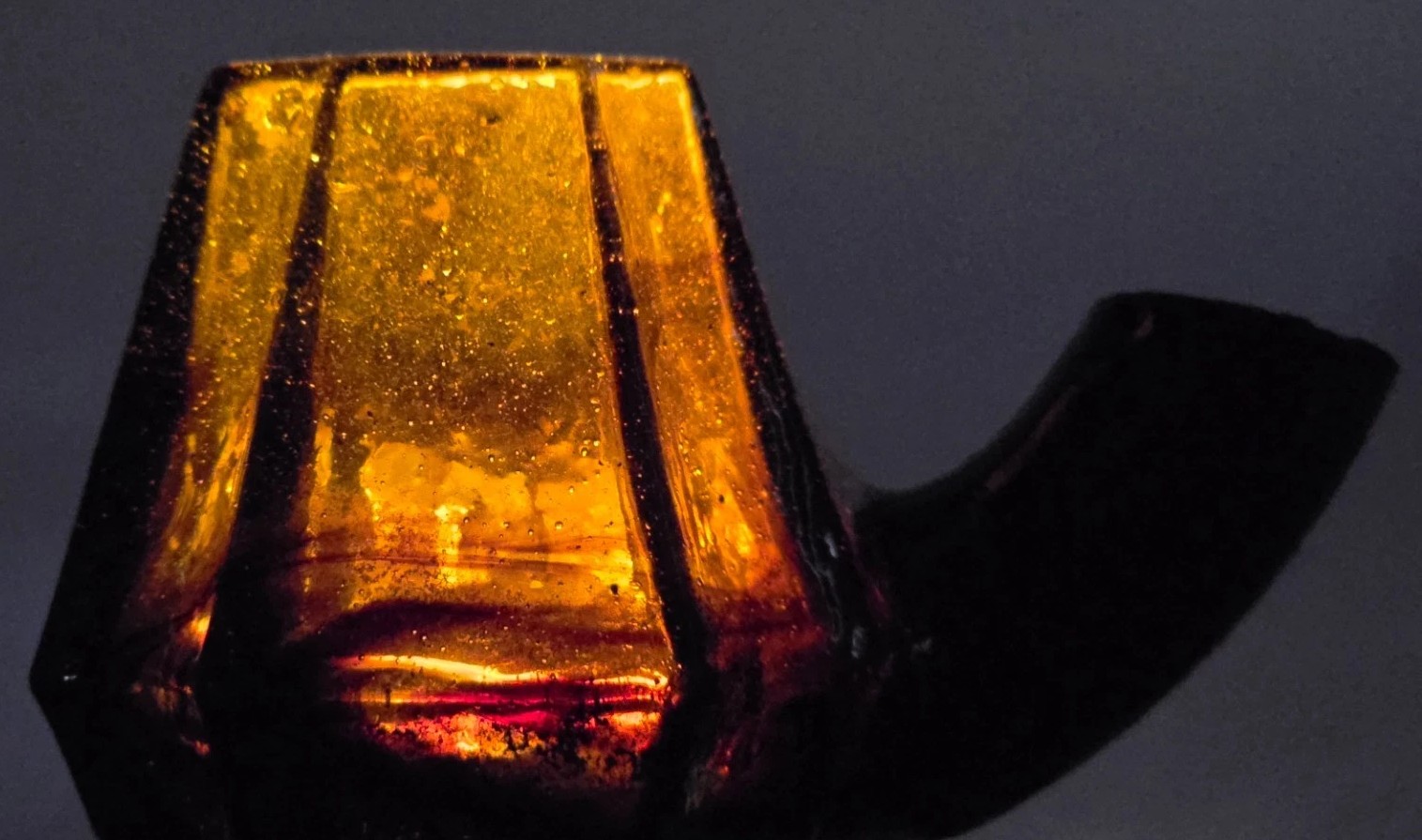
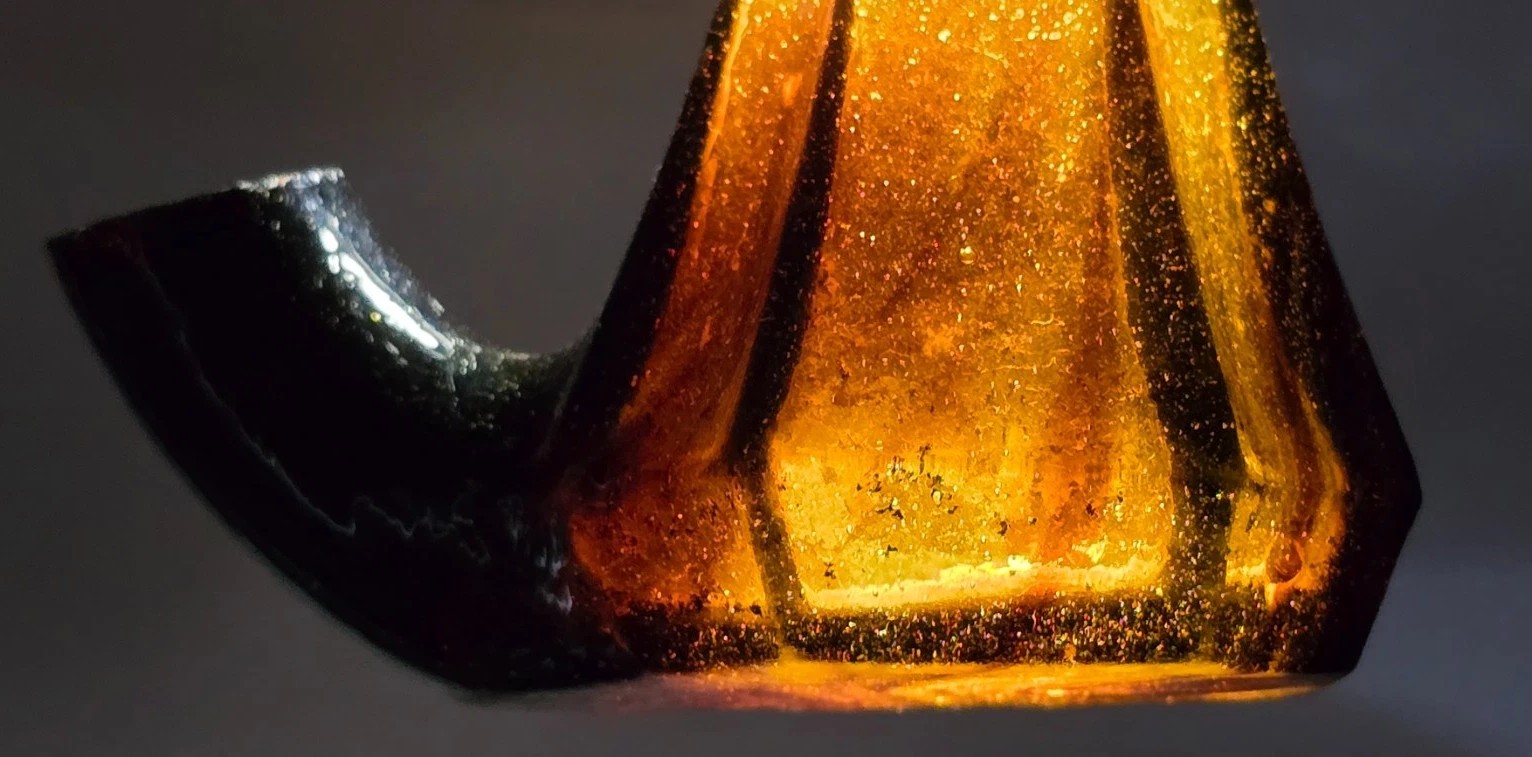
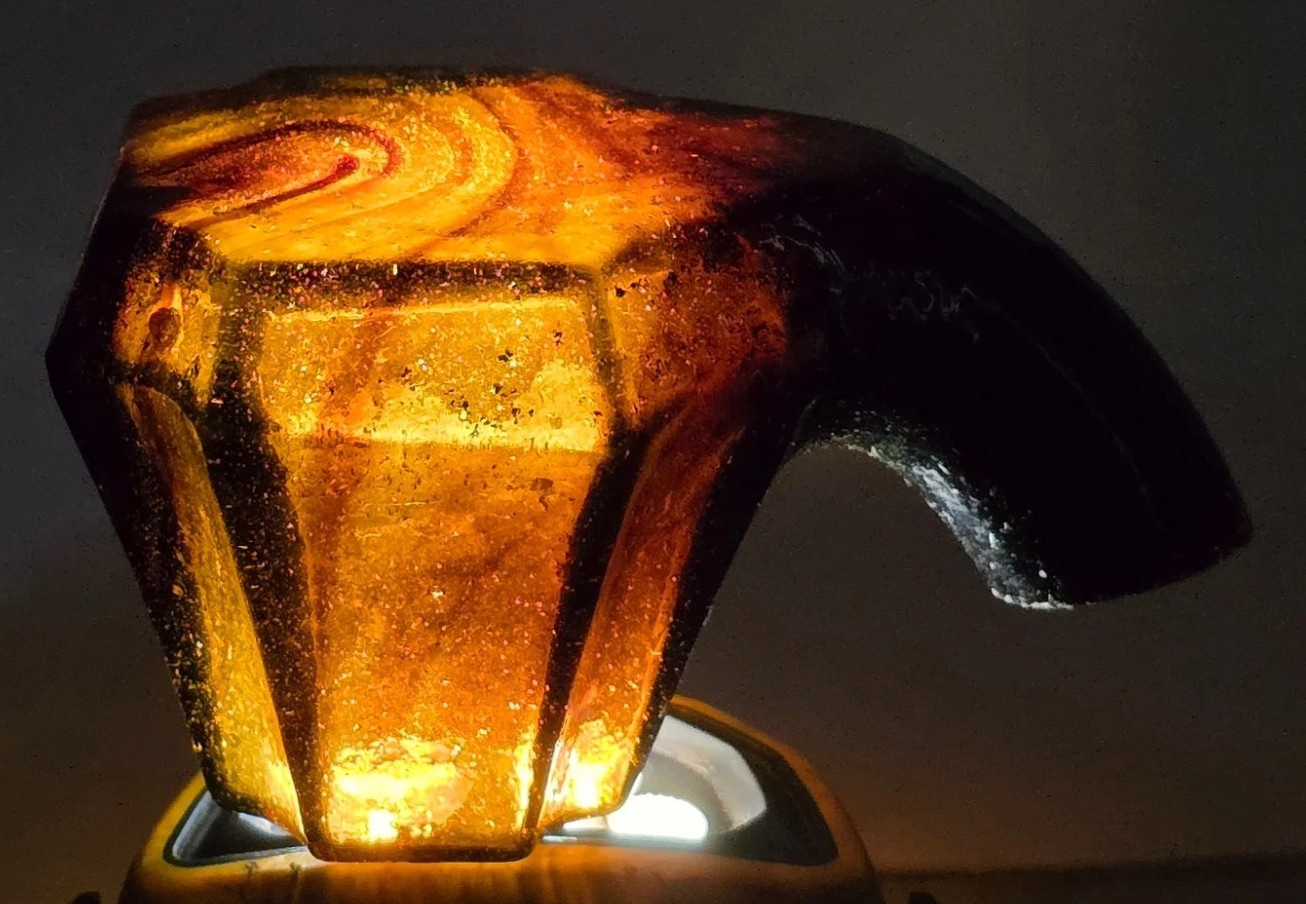
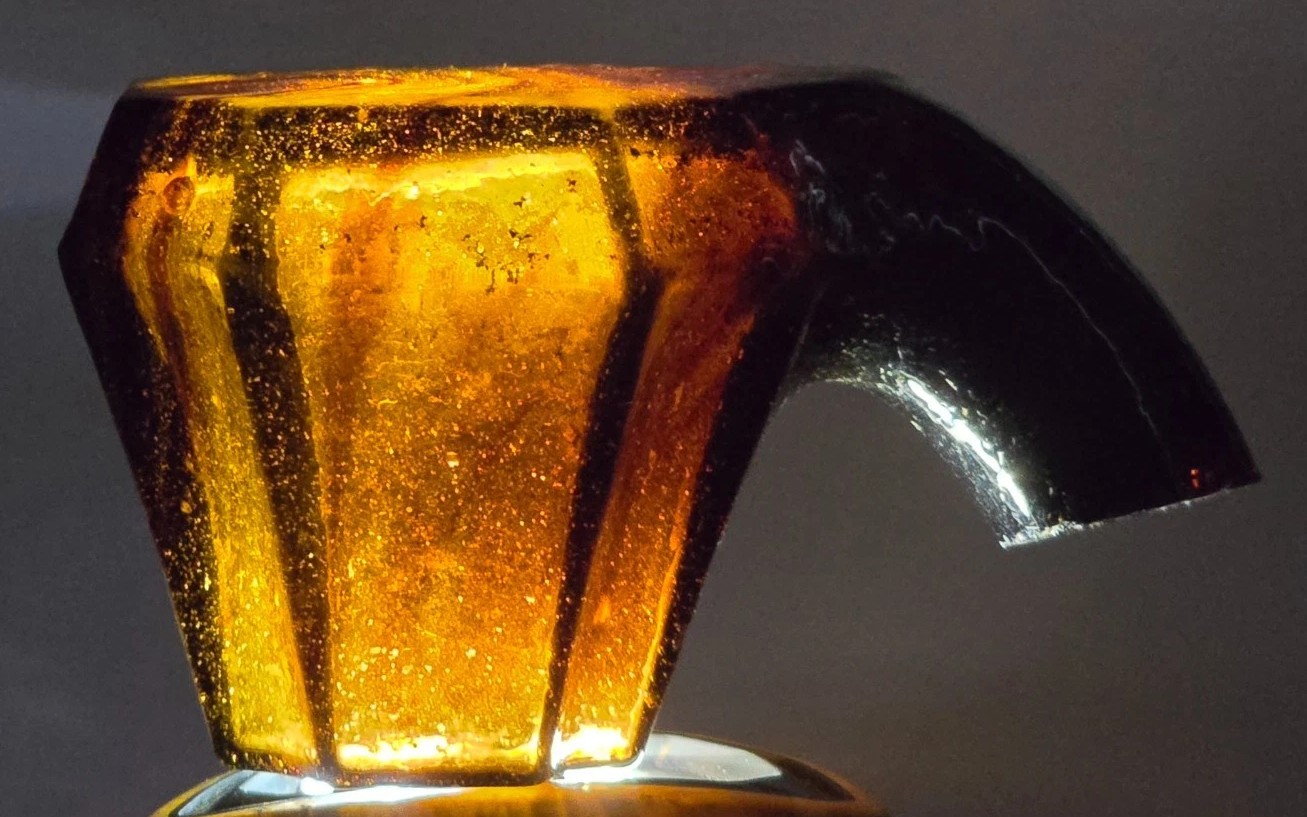
“Black Amethyst” Teakettle Inkwell
| Categories | Ink Bottle, Mechanical - Pump / Siphon |
| Type | Tea Kettle |
| Material | Glass |
| Markings | Unmarked |
| Manufacturer | Undetermined |
| Origin | France |
| Date or Era | circa 1860 |
This “teakettle” inkwell (or ink bottle) is a fine example of 19th-century utility glass designed with distinct Victorian flair.
Form and Silhouette
The piece features a geometric, eight-sided (octagonal) body that tapers gracefully upward to a flat top. Protruding from the lower shoulder is its signature feature: a short, upward-curving spout reminiscent of a miniature tea kettle. In period desk accessories, this clever form served a practical purpose—the reservoir held the ink safely away from the dipping area, while the open spout allowed a pen to be inserted smoothly without disturbing sediment or over-submerging the nib.
Dating and Historical Context
Teakettle-form ink bottles and inkwells gained popularity during the Victorian era. While iconic patented versions (such as those associated with Michael H. Hagerty’s July 1880 patent or “Patent Applied For” variants) anchored these designs firmly in the final decades of the 19th century, earlier hand-blown and mold-blown precursors date back even further to the mid-19th century.
Glass Characteristics and Color
The physical attributes of the glass lend the piece character:
- Optical Behavior: In normal ambient light, the rich glass appears deeply opaque and virtually black. However, when backlit, it transforms dramatically, glowing with radiant, warm amber, honey, and rich mahogany-brown hues.
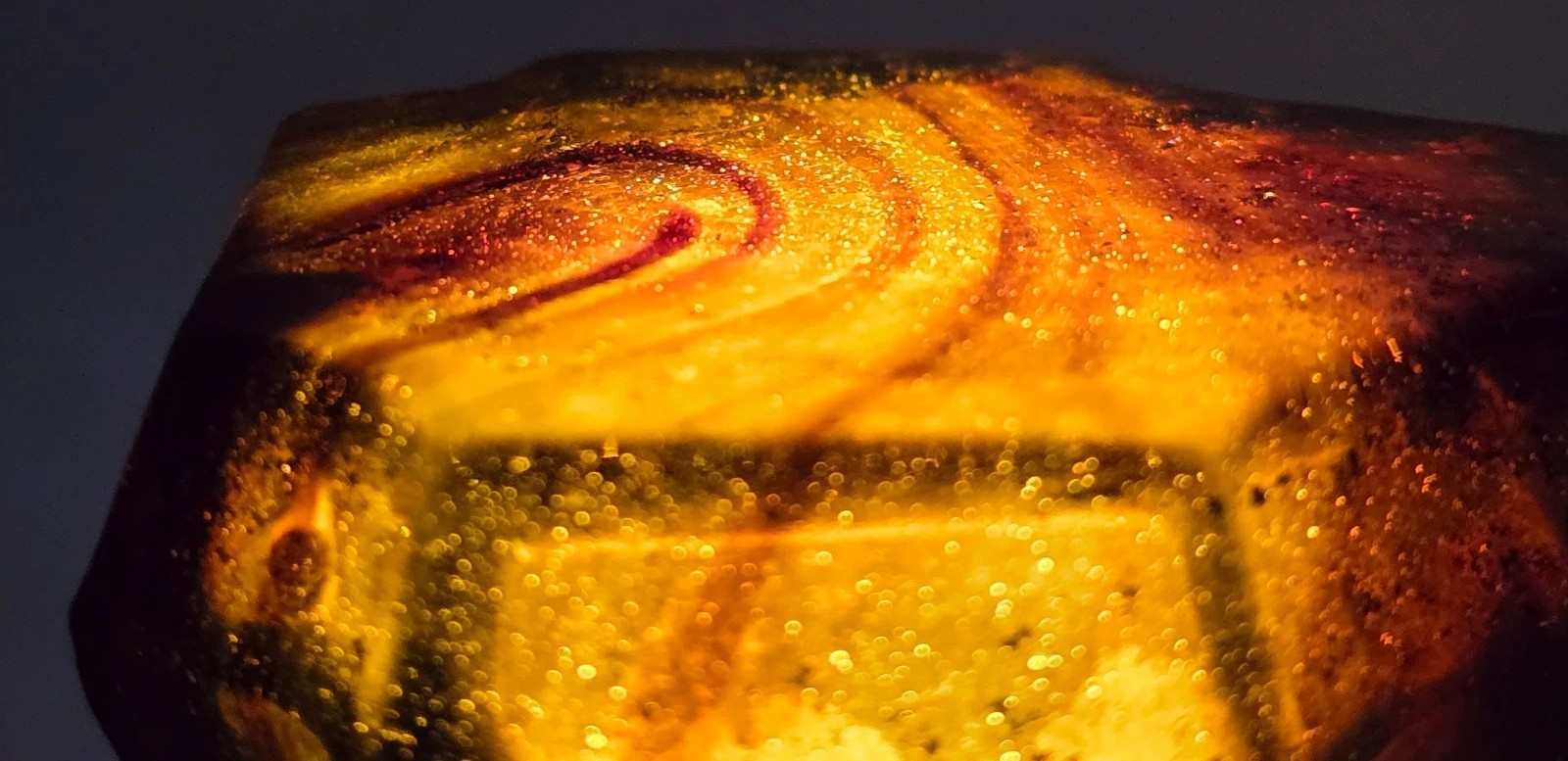
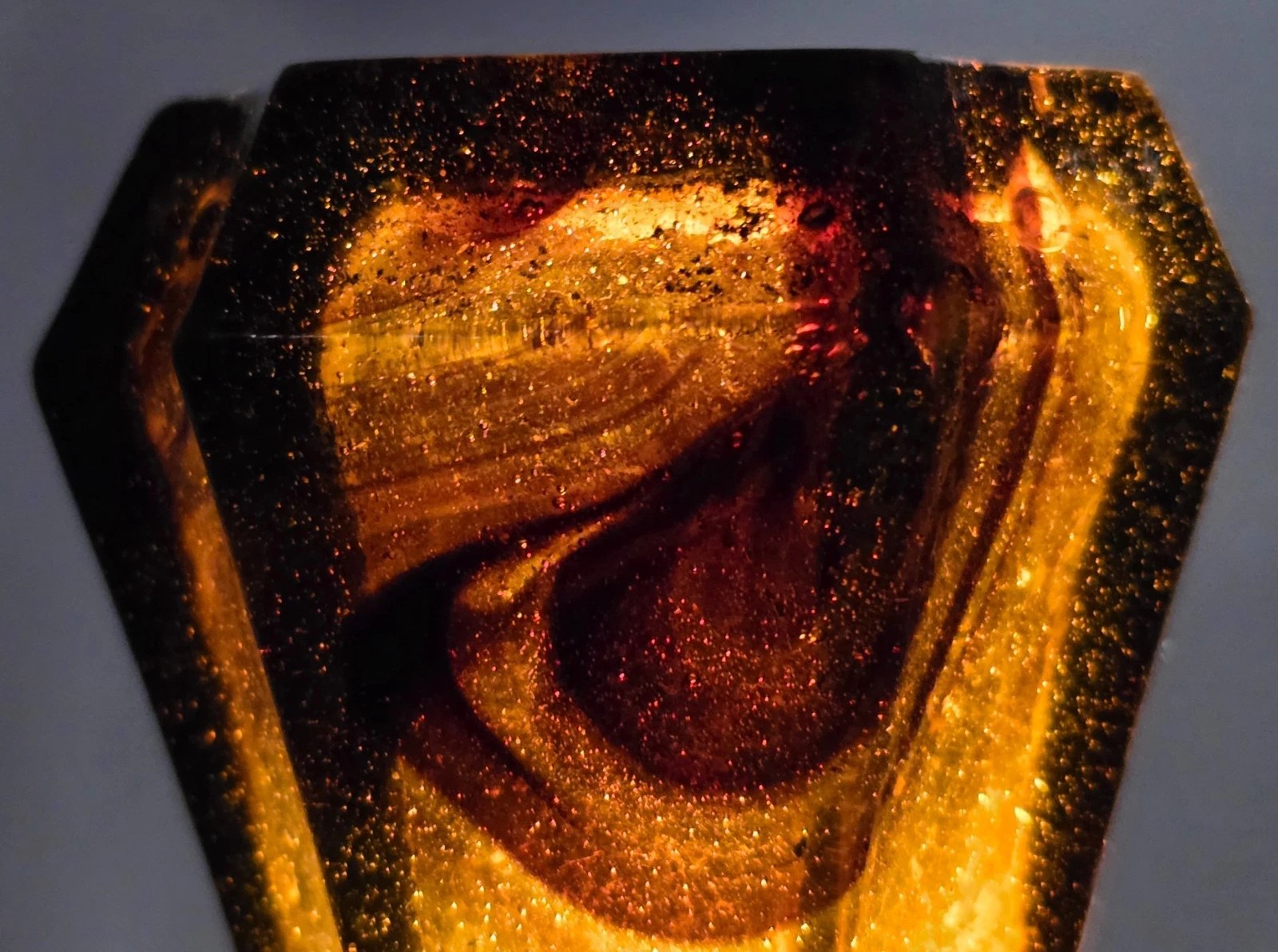
- The “Black Amethyst” Attribution: In antique glass terminology, “black amethyst” (often referred to by collectors as “black glass” or dark-lux glasses) describes deep manganese- or iron-rich glass formulations that appear black until struck by direct, strong light, which reveals deep purple, plum, amber, or ruby undertones. The swirling patterns and fiery golden-amber striations visible under strong light point toward traditional nineteenth-century glasshouse batch inconsistencies and mineral mixes.
- Handmade Imperfections: The presence of tiny, trapped air bubbles (seeds), minor internal striations, and tactile irregularities confirm that this piece was shaped using traditional nineteenth-century glass-forming techniques rather than modern automated manufacturing.
Sold for $400 in October 2026
Content disclaimer. The information posted is the owner’s best knowledge and may not have been vetted by the SOIC. We welcome comments, corrections, and additions, working to make our website information comprehensive and accurate.
Join the Society of Inkwell Collectors (SOIC) – it’s free!
Founded in 1981 as a non-profit organization,
we are documenting inkwells (and accessories).
We’re here to help and inform!