

Anglo-Indian Wooden Inkstand with Brass Inlay
| Categories | Wood Inkstands |
| Material | Brass, Wood |
| Markings | Unmarked |
| Manufacturer | Undetermined |
| Origin | India |
| Date or Era | circa 1900 |
| Measuring | 12 ¼” x 10” x 7 ½” high |
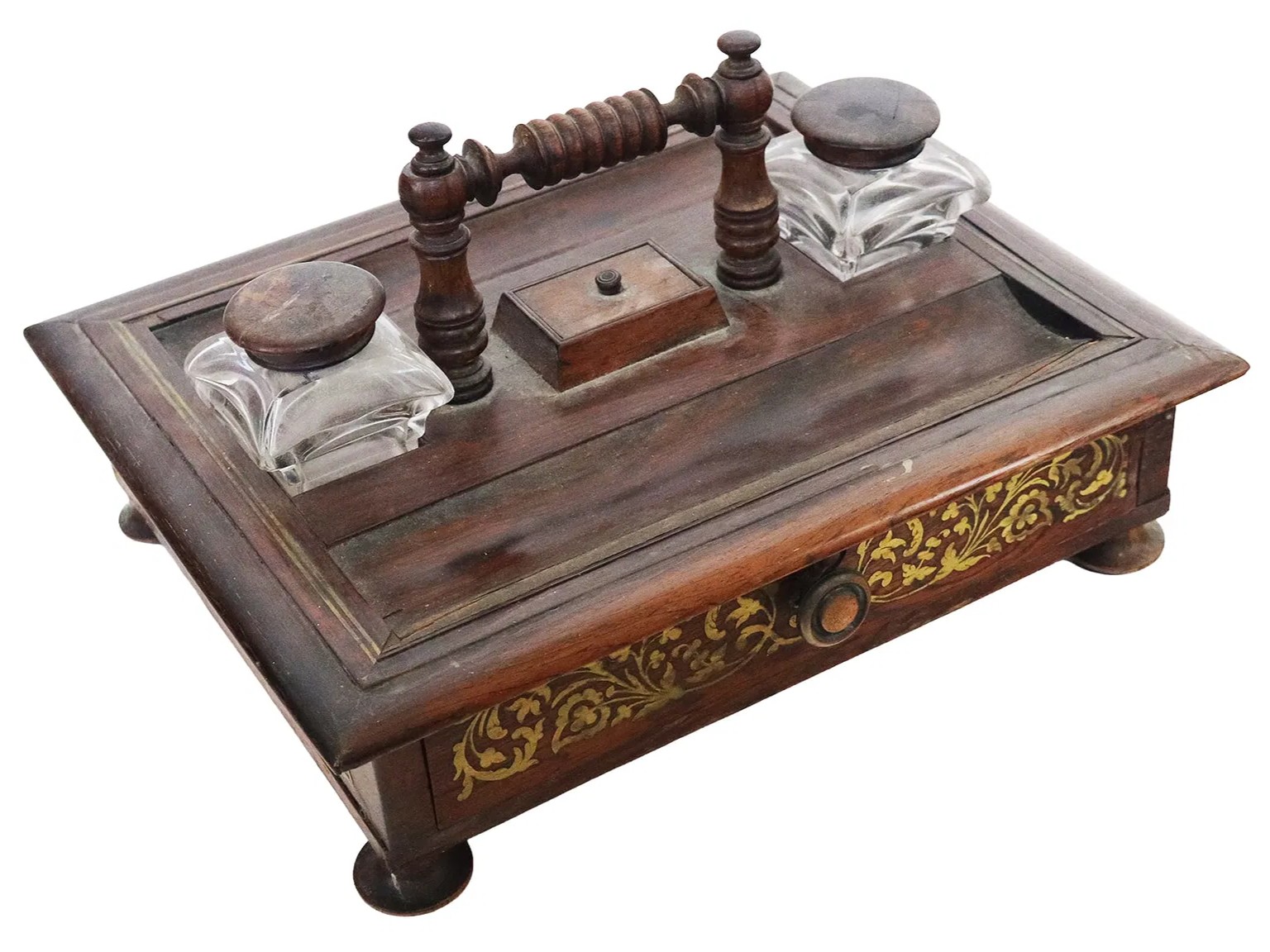
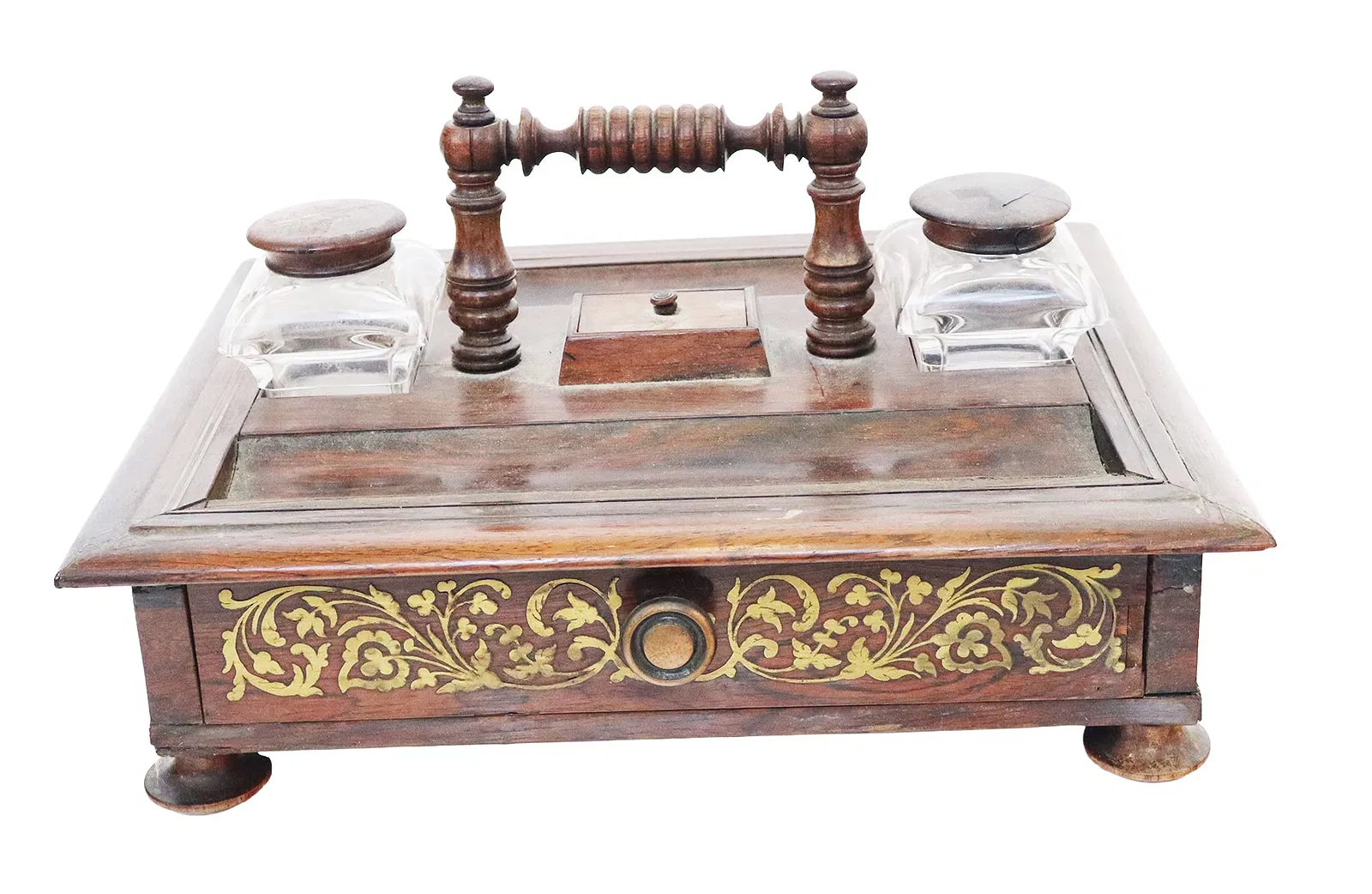
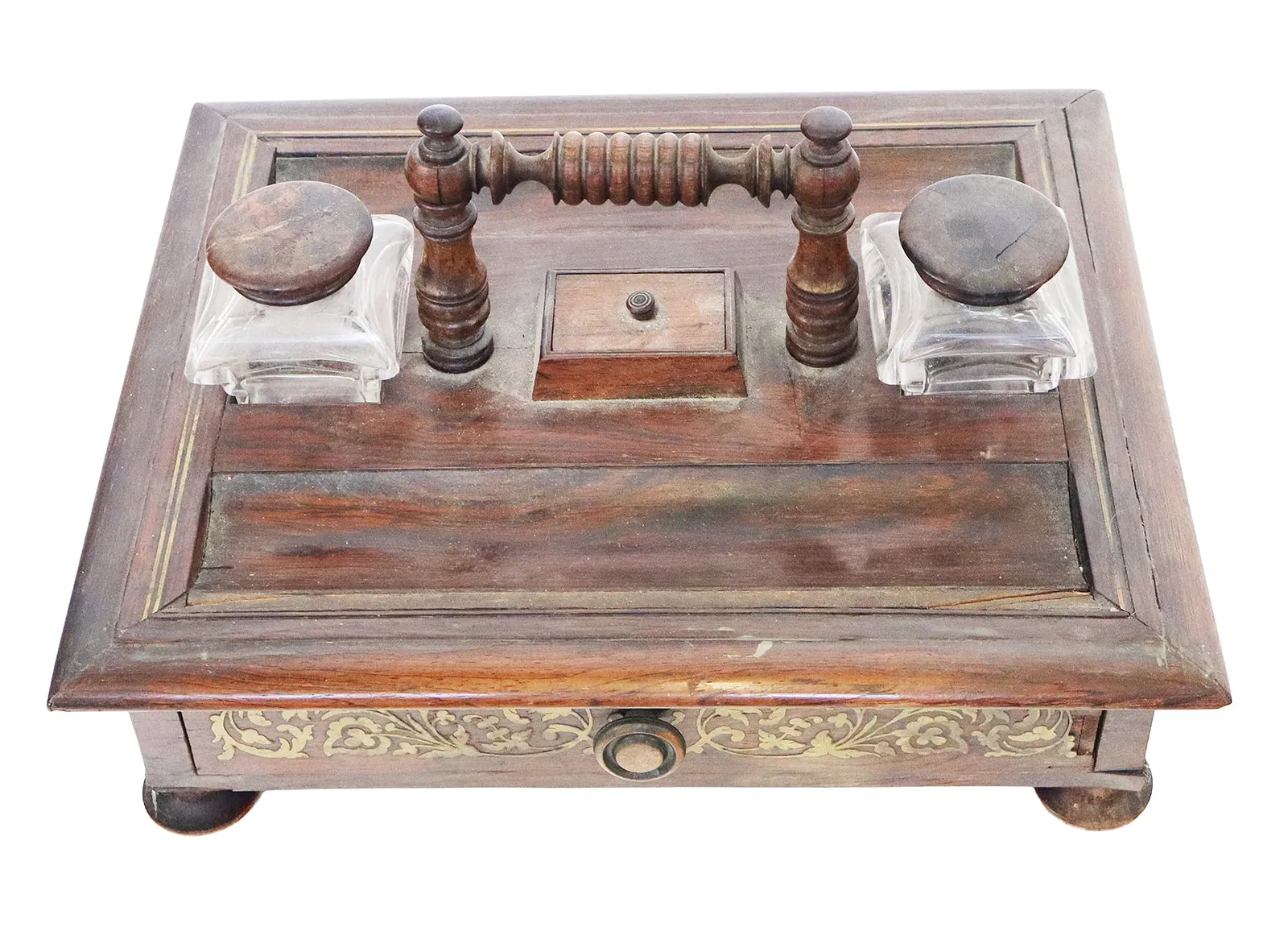
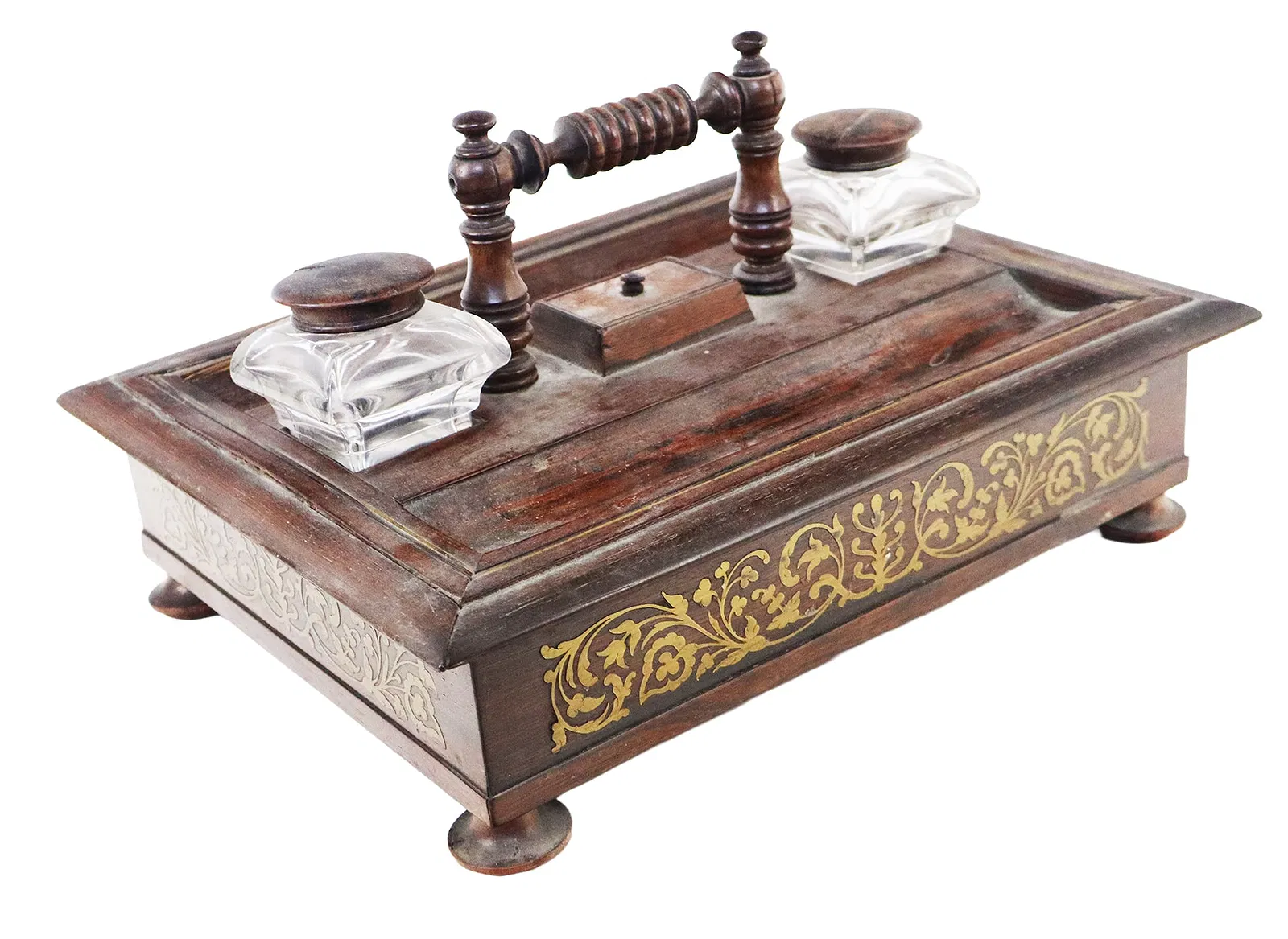
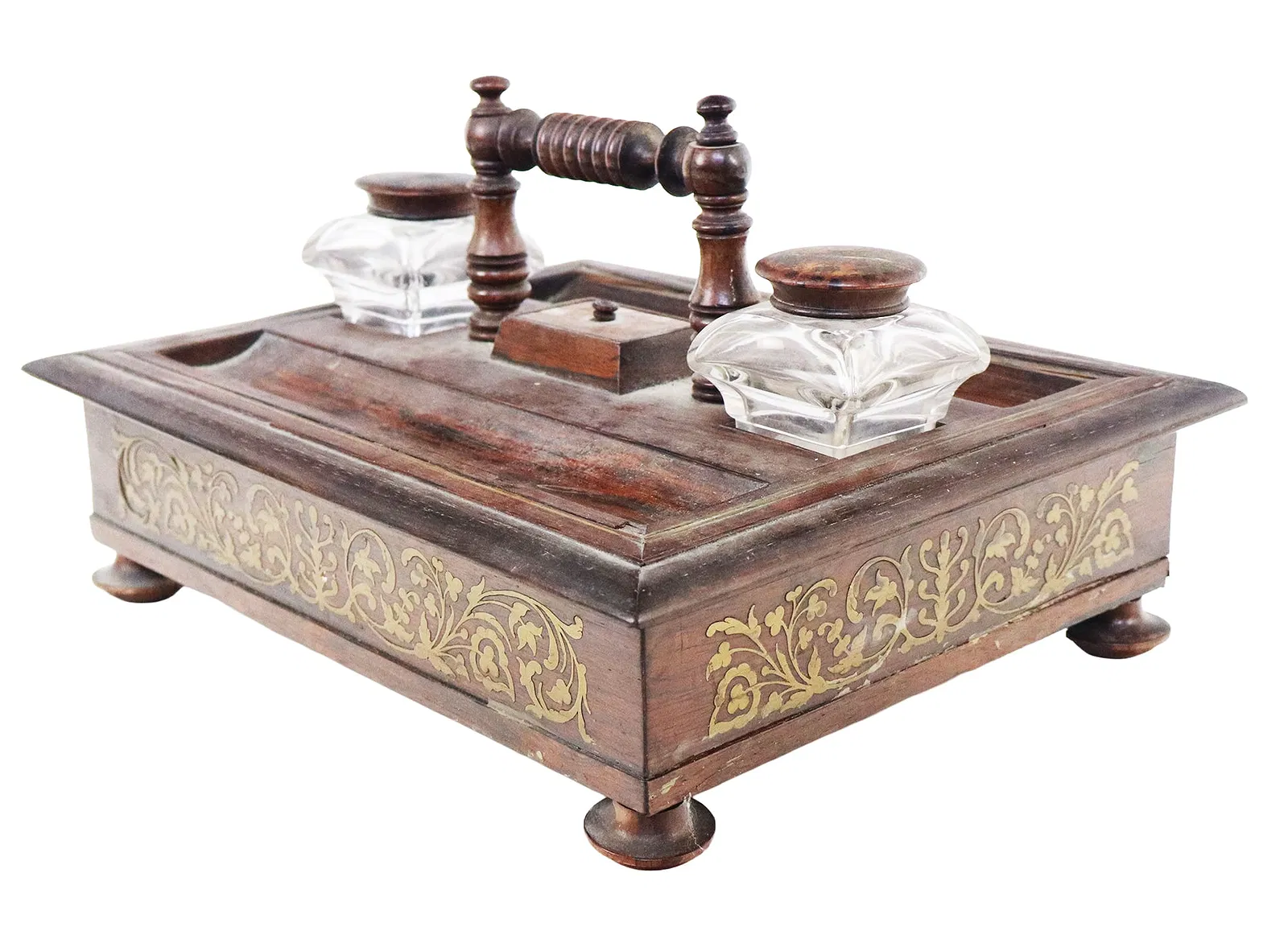
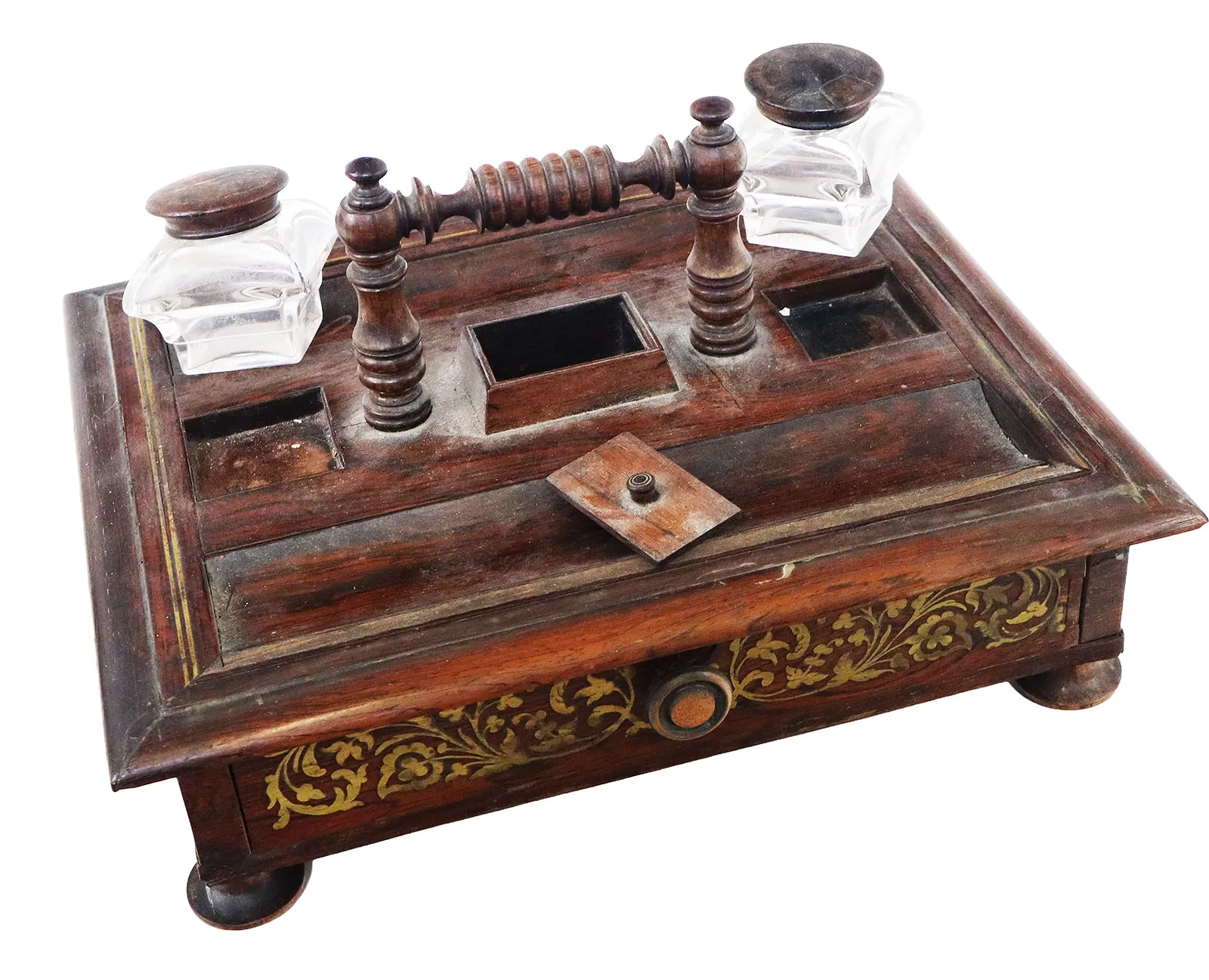
This Anglo-Indian desk inkstand is made from dark, rich rosewood with decorative brass inlay.
Key Features:
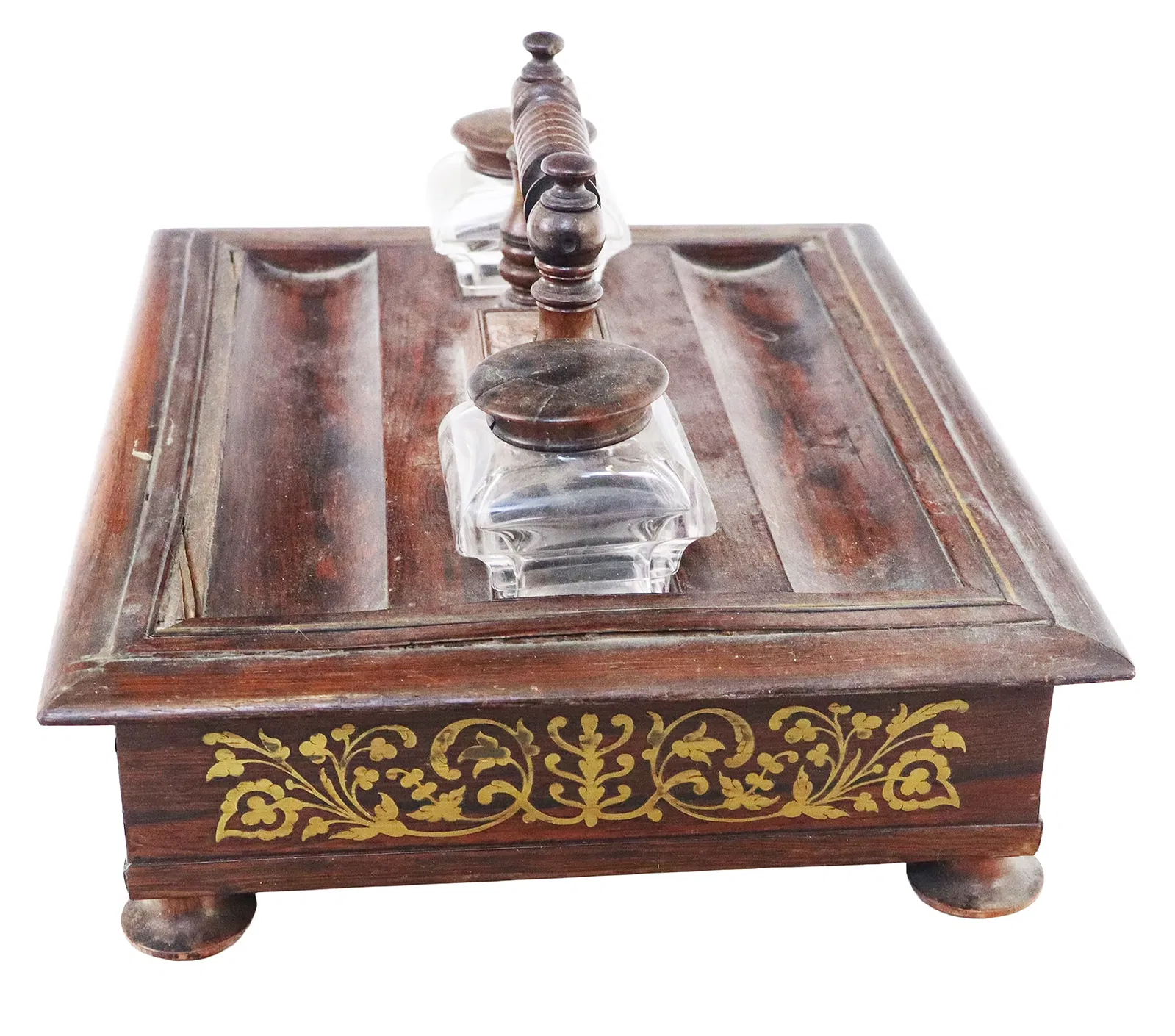
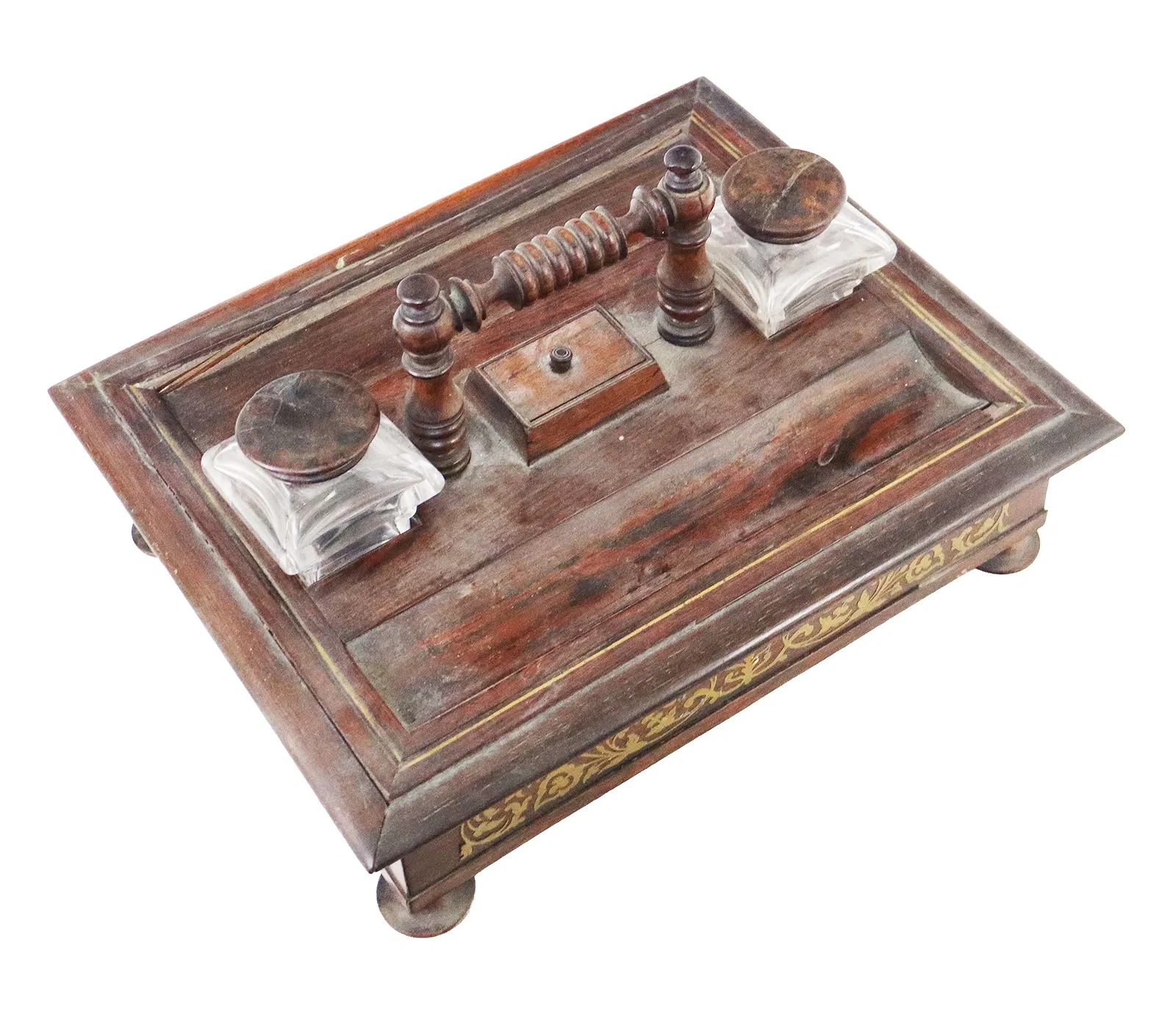
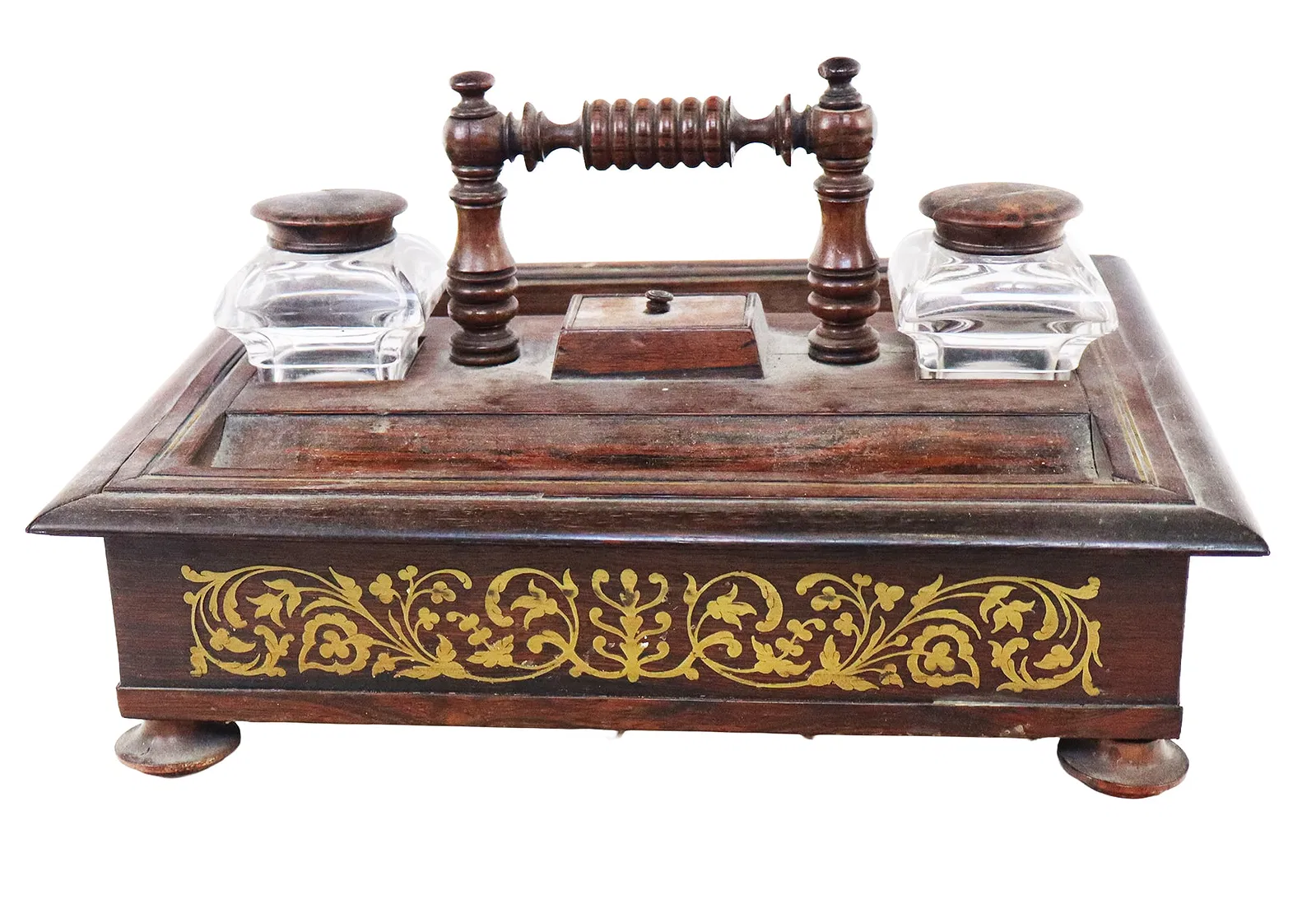
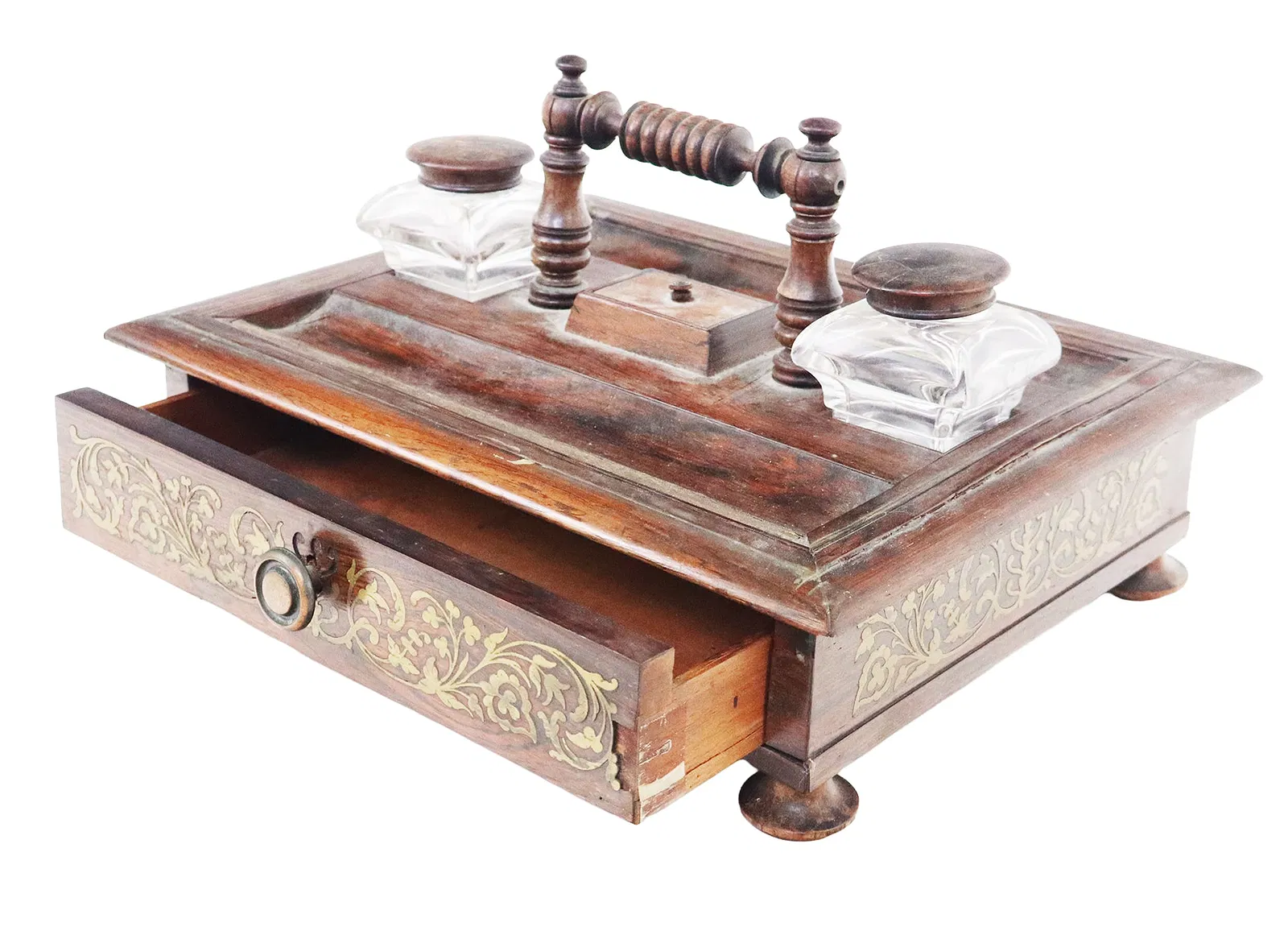
- Brass Foliate Inlay: The front, back, and side aprons are embellished with hand-cut brass wire and sheet inlay forming intricate, flowing foliate and floral arabesque patterns. Subtle brass stringing/line inlay borders the outer bevels of the top surface.
- Top Deck & Layout:
- Central Carrying Handle: Features a turned wooden baluster handle with central ring-turned detailing, flanked by two turned upright posts.
- Inkwells: Two square cut-glass inkwells with stepped shoulders rest in square recessed spaces on either side of the handle. Each well is fitted with a turned wooden lid.
- Central Compartment: Positioned directly beneath the handle is a small, rectangular lidded box – typically used as a stamp or nib box -with a small turned wood knob.
- Pen Wells: Flanking the central deck are two long, concave carved pen troughs (pen rests) for dip pens.
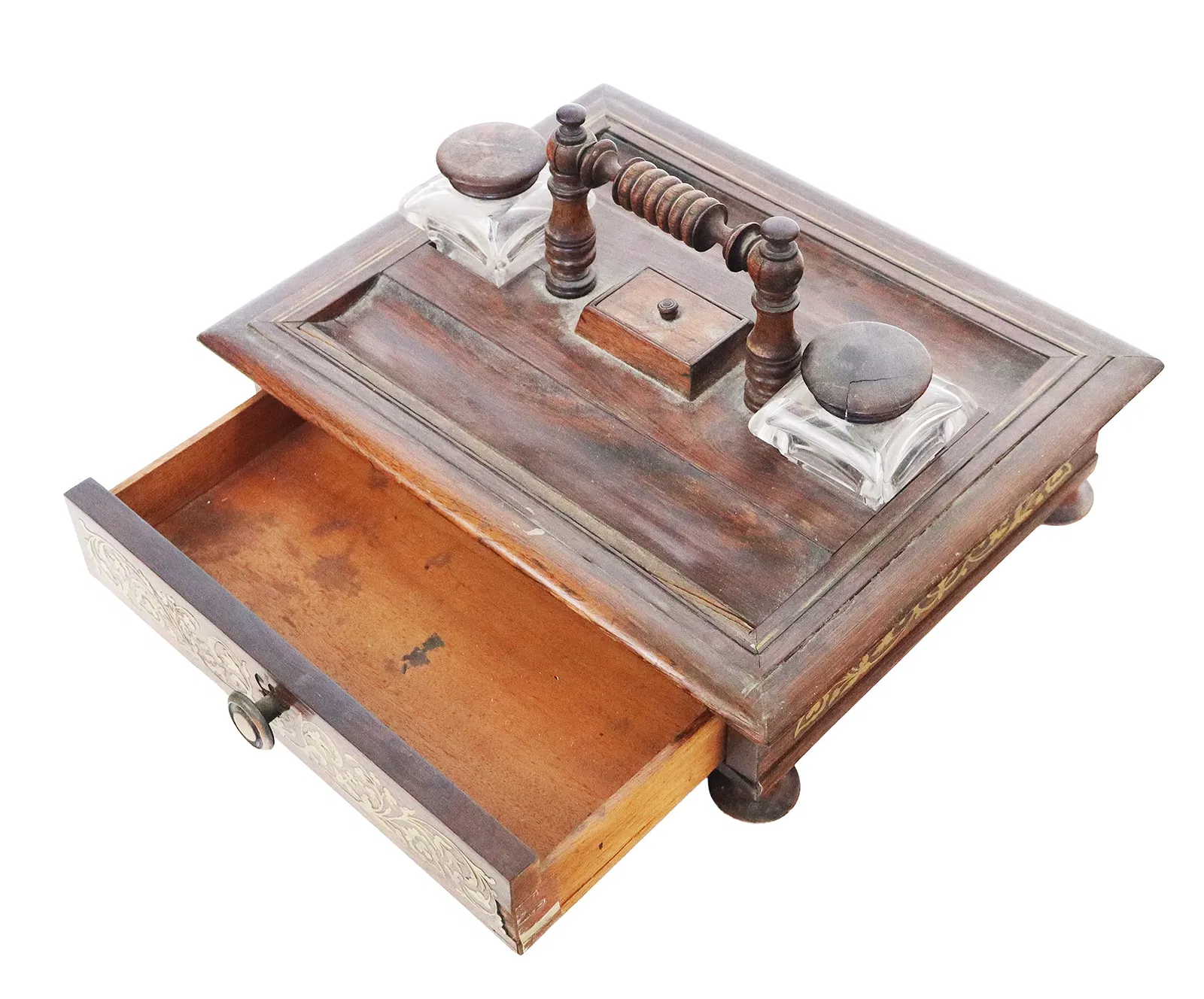
- Storage Drawer: The lower base houses a full-width pullout drawer with a single turned wooden knob, designed for storing extra nibs, sealing wax, blotters, or small writing accessories.
- Feet: The base is raised on four classic turned bun feet.
Attribution & Historical Context
- Who / Origin: Anglo-Indian artisans, likely produced in or around Hoshiarpur, Punjab (Northern India) or regional workshop centers in British India. Hoshiarpur was world-renowned in the late 19th century for its exquisite brass, bone, and ivory inlay work on dark hardwoods like rosewood and shisham.
- Where Made: India (specifically produced for the British Colonial market and export).
- When Made: Late 19th to early 20th century (circa 1880–1910).
Historical Significance
During the Victorian and Edwardian eras, Anglo-Indian furniture and desk accessories were popular among British officers, colonial administrators, and western collectors. Artisans combined traditional Indian brass-inlay techniques (Tarkashi) with Western utilitarian forms to create high-end writing sets.
Sold for $98 in July 2026
Content disclaimer. The information posted is the owner’s best knowledge and may not have been vetted by the SOIC. We welcome comments, corrections, and additions, working to make our website information comprehensive and accurate.
Join the Society of Inkwell Collectors (SOIC) – it’s free!
Founded in 1981 as a non-profit organization,
we are documenting inkwells (and accessories).
We’re here to help and inform!