

Inkipedia
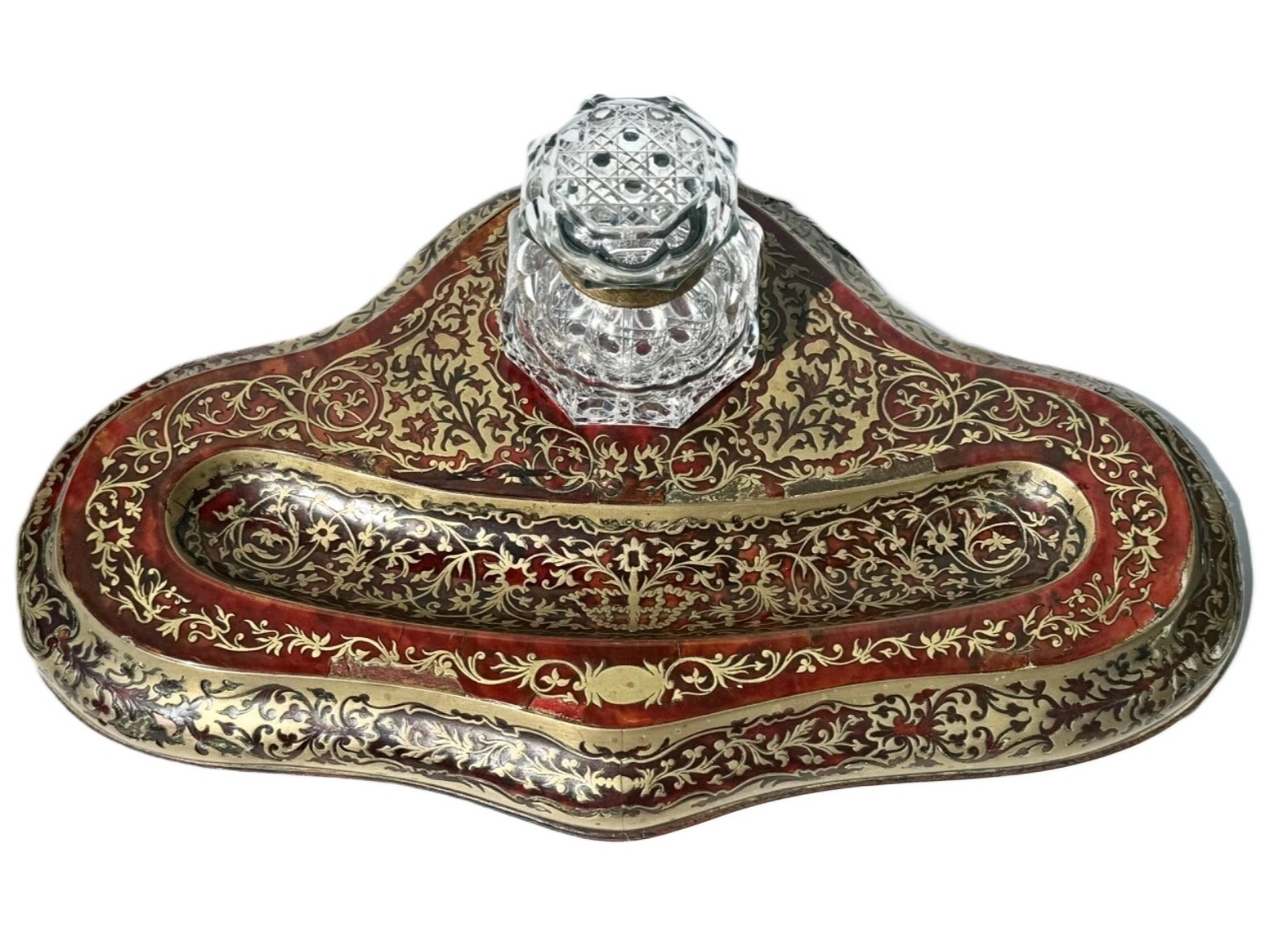
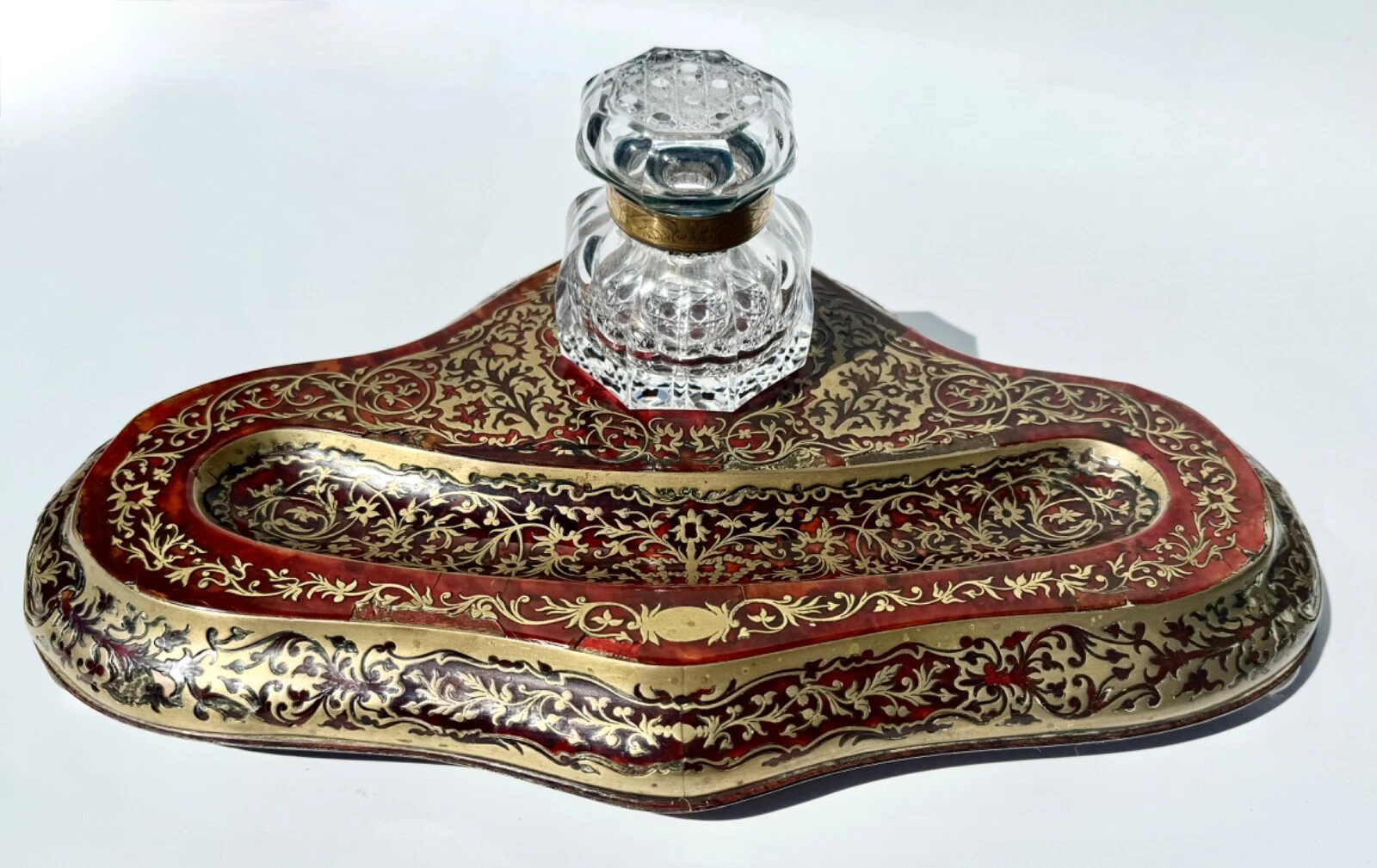
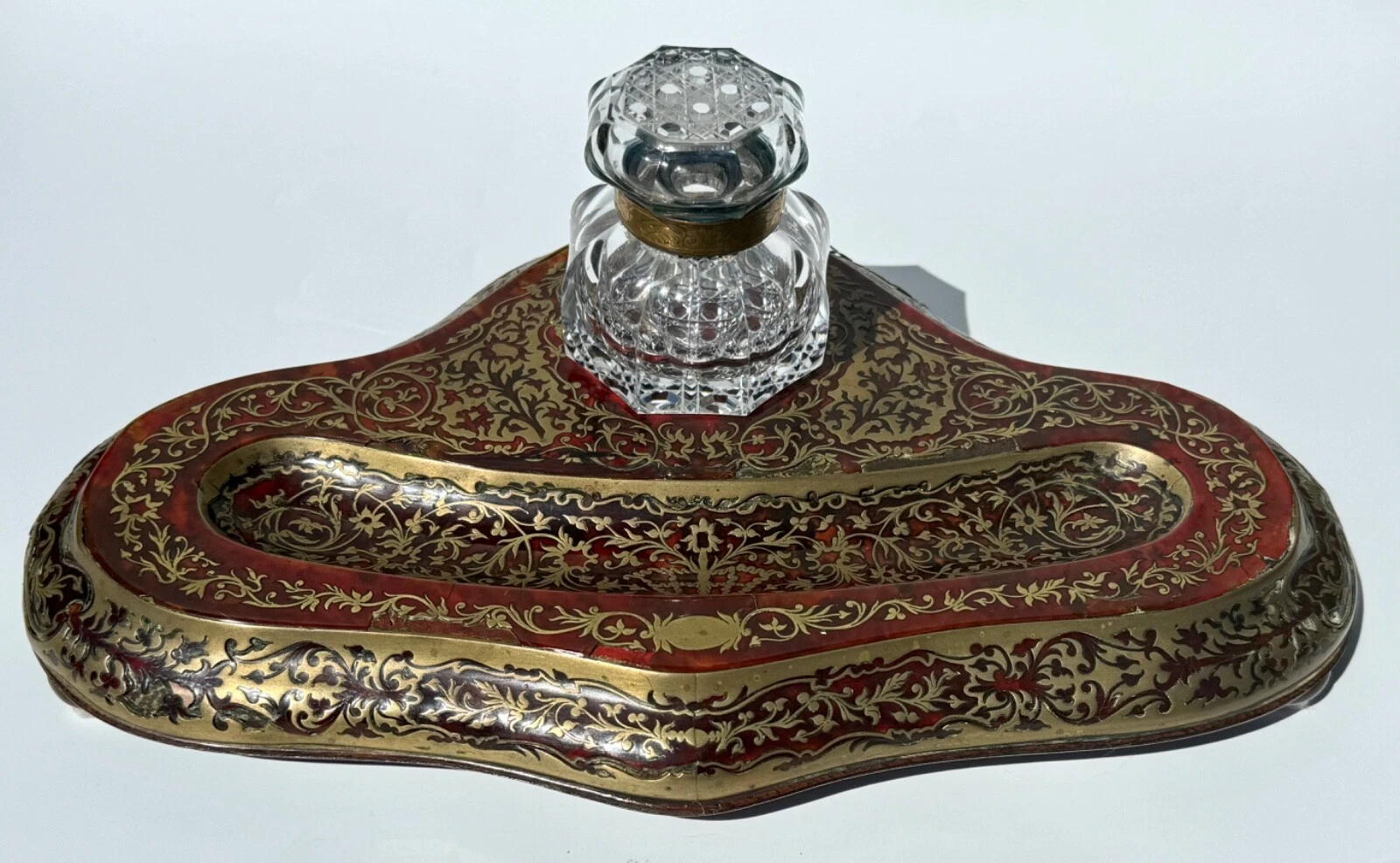
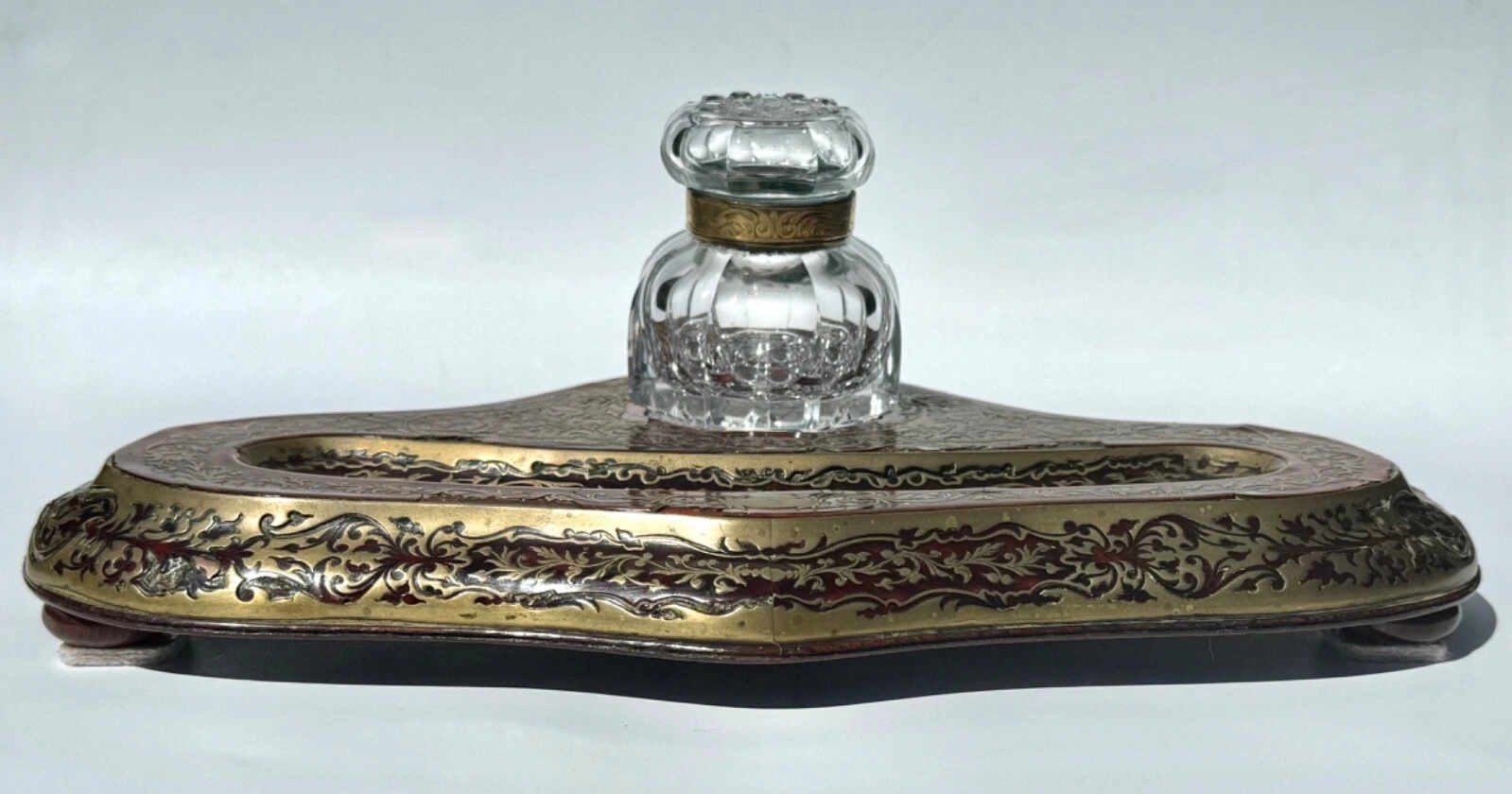
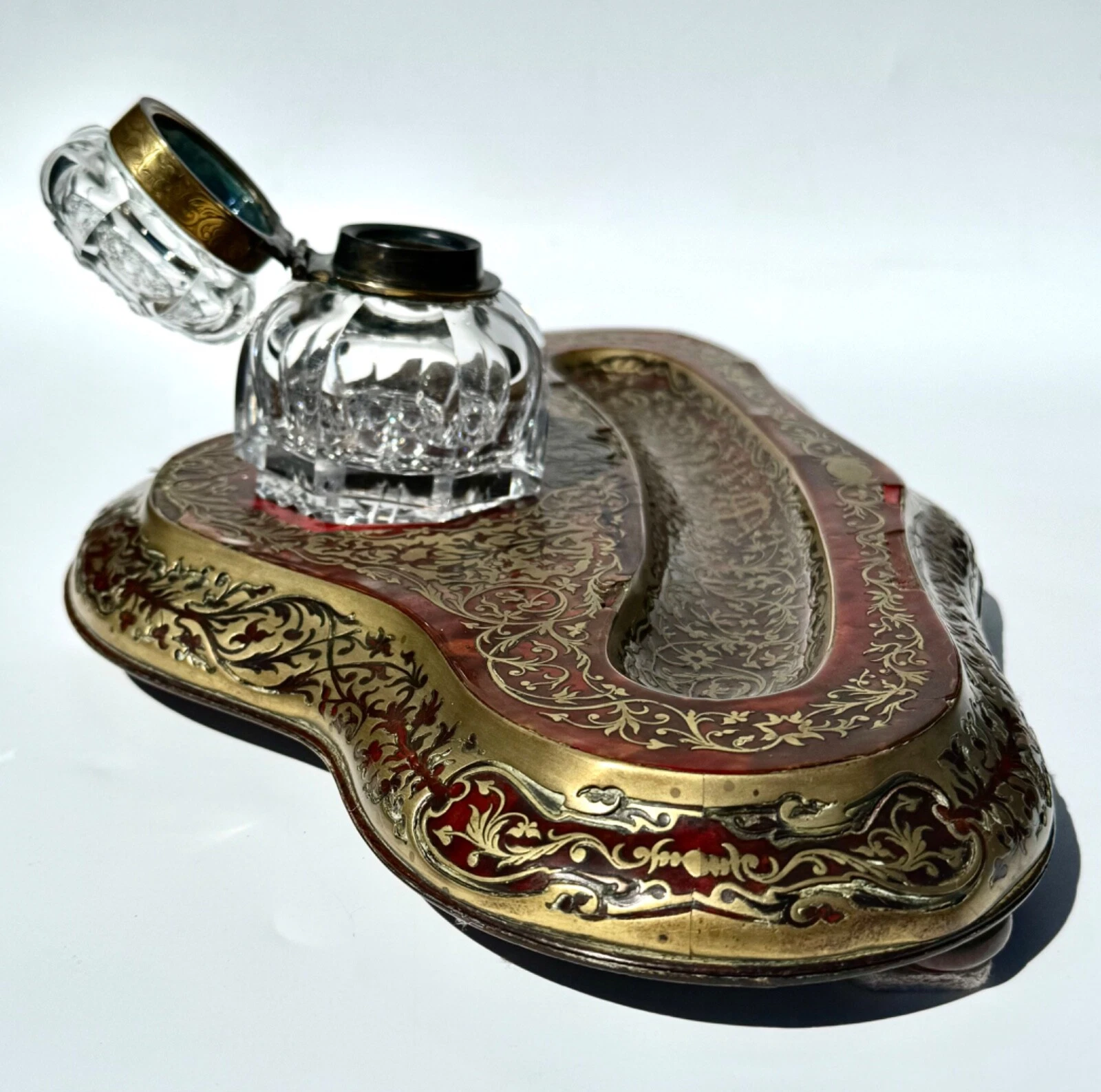
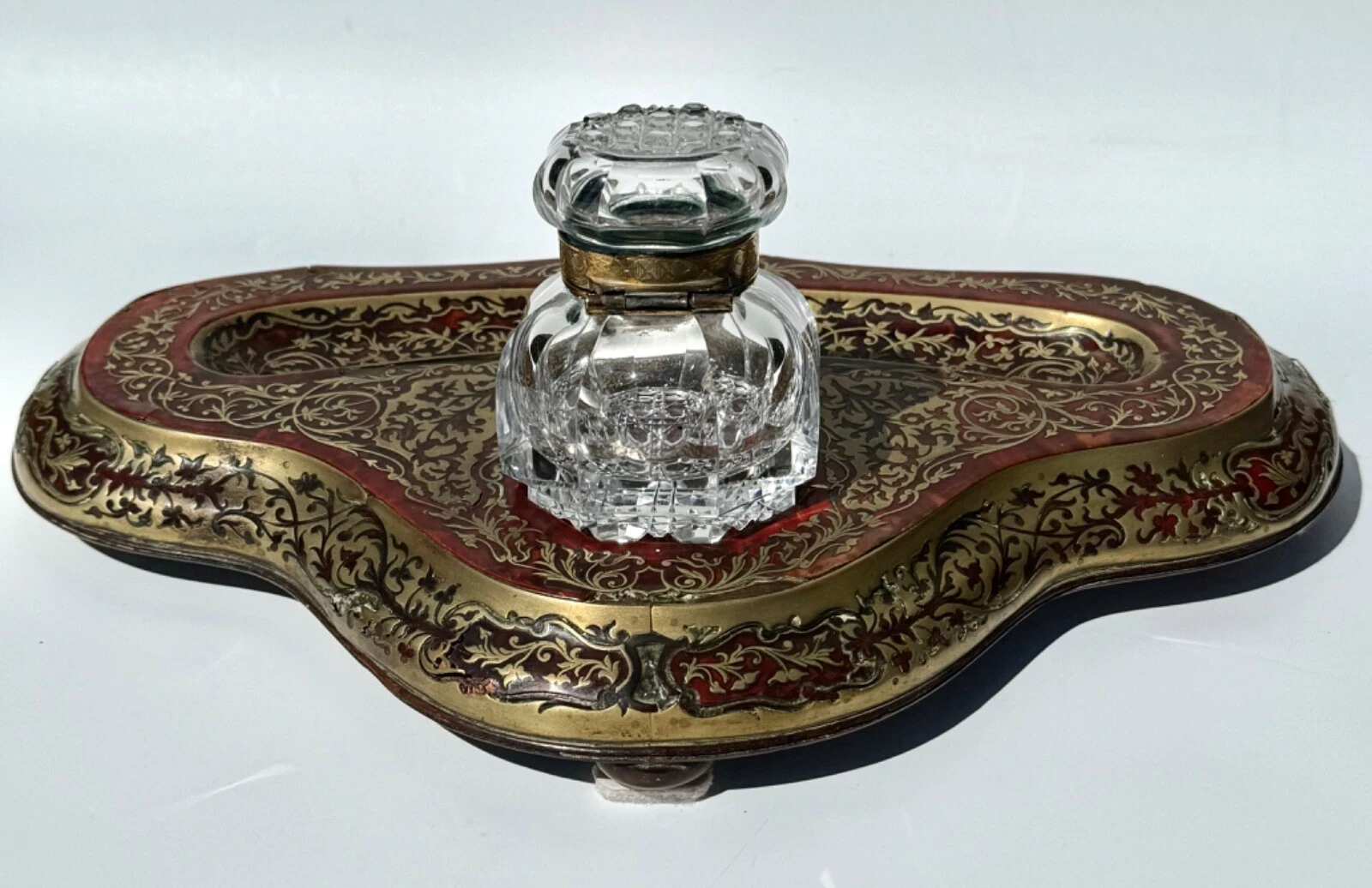
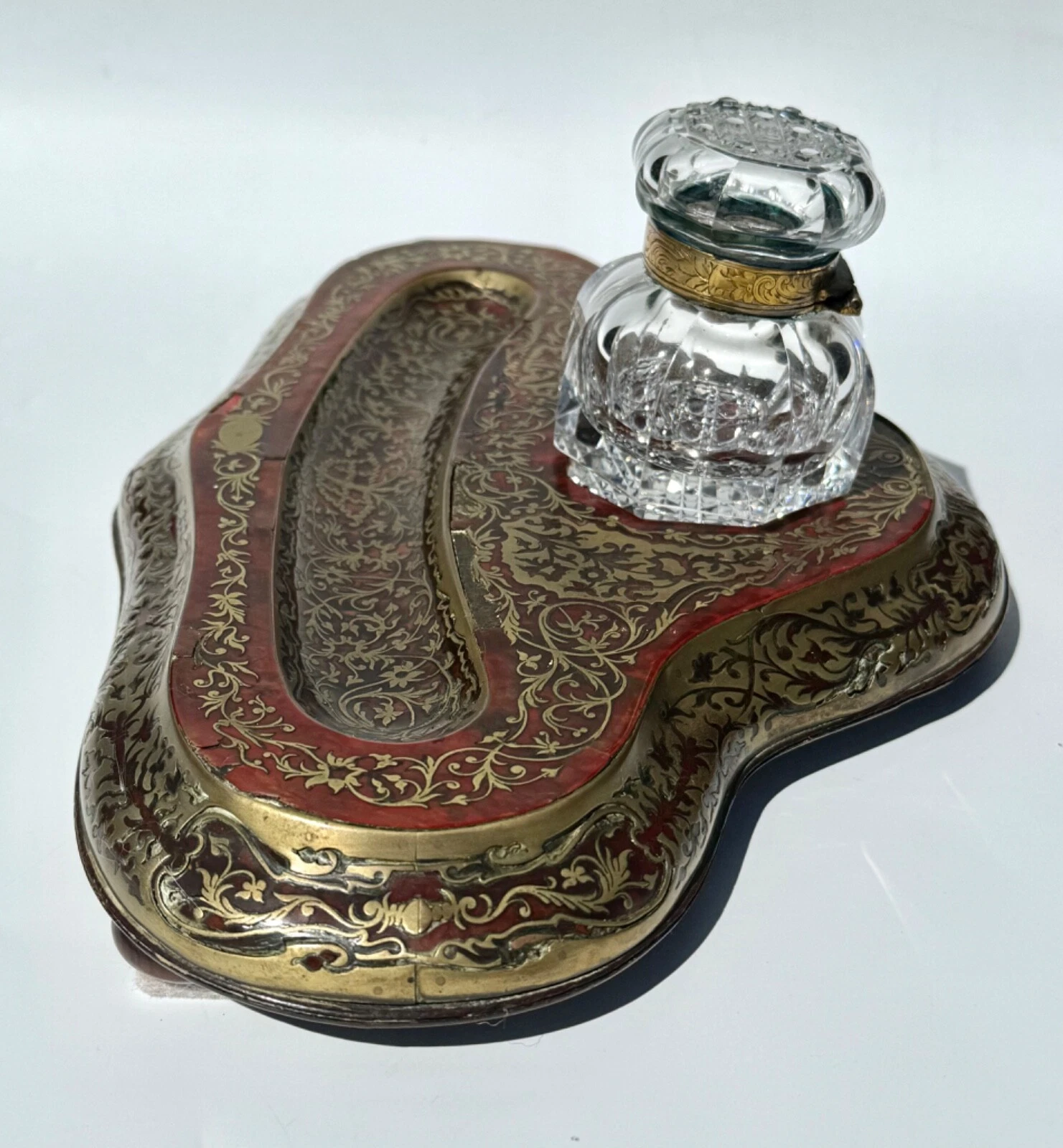
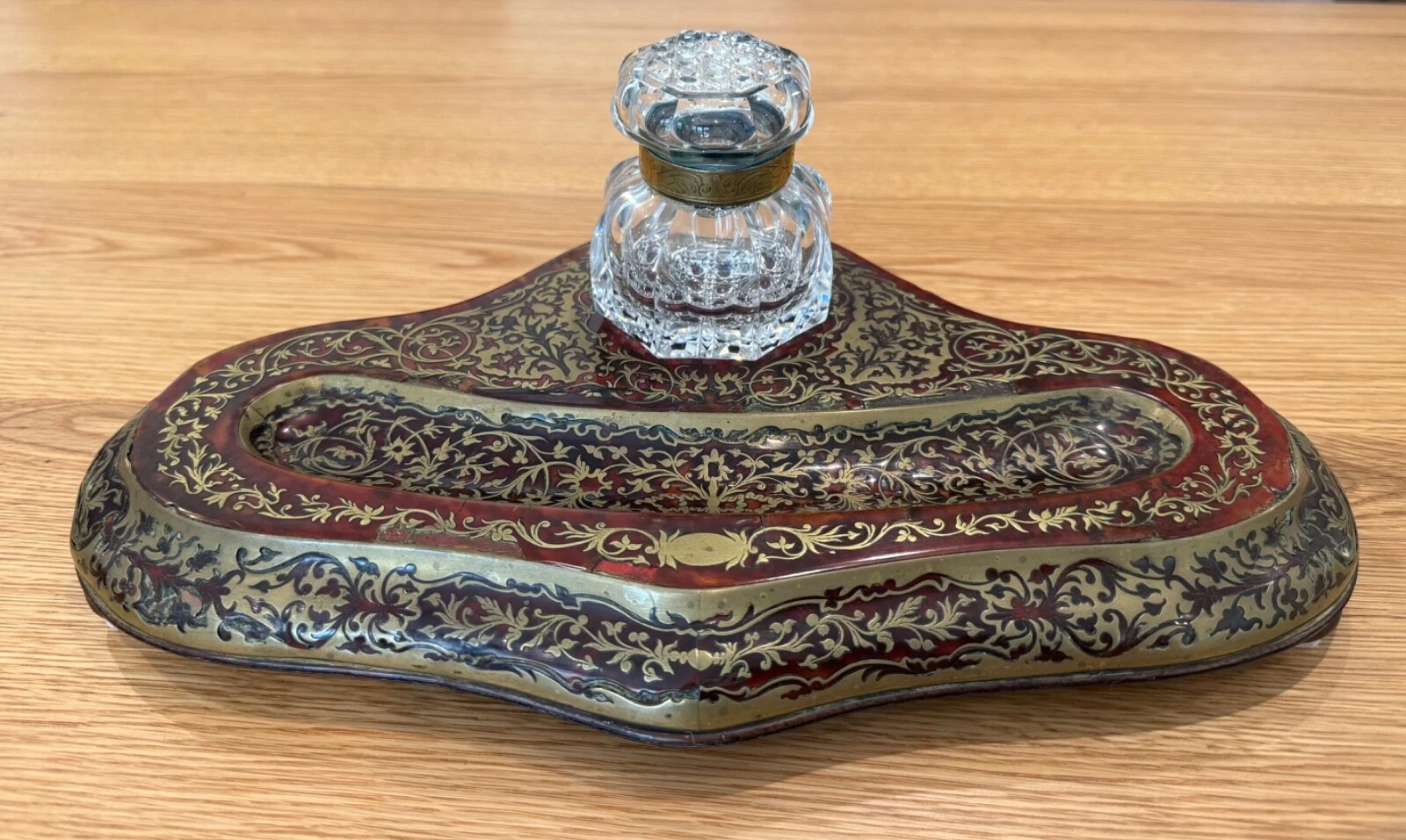
French Boulle Inkstand
| Categories | Wood Inkstands |
| Type | Boulle |
| Material | Brass, Glass, Wood |
| Markings | Unmarked |
| Manufacturer | Undetermined |
| Origin | France |
| Date or Era | circa 1860 |
| Measuring | 13 ⅜” x 8 ⅝” x 5 ⅛” high |
- Description
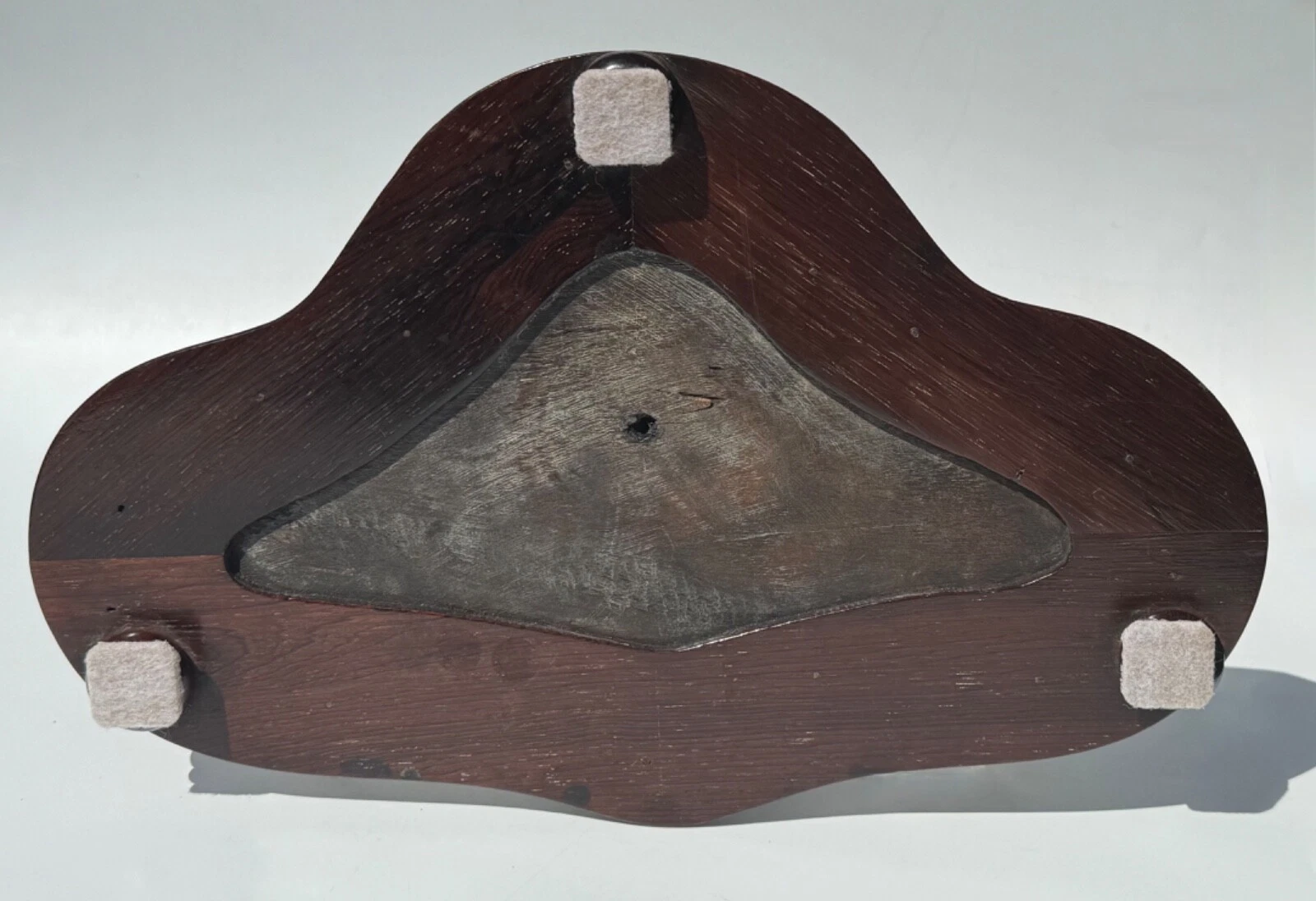
- The Base & Form: The wooden base features a sweeping, wide-lobed shape raised on three turned bun feet.
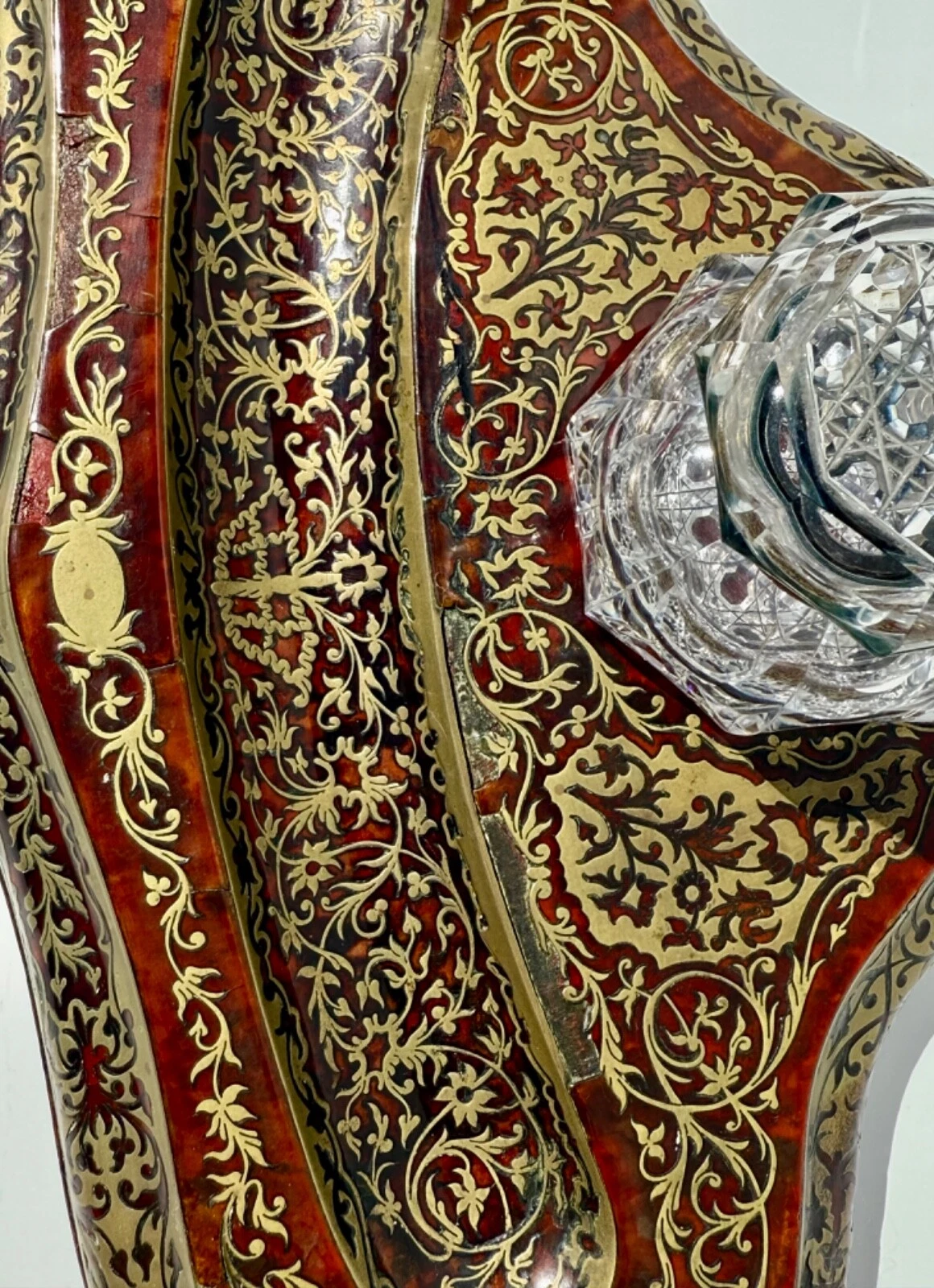
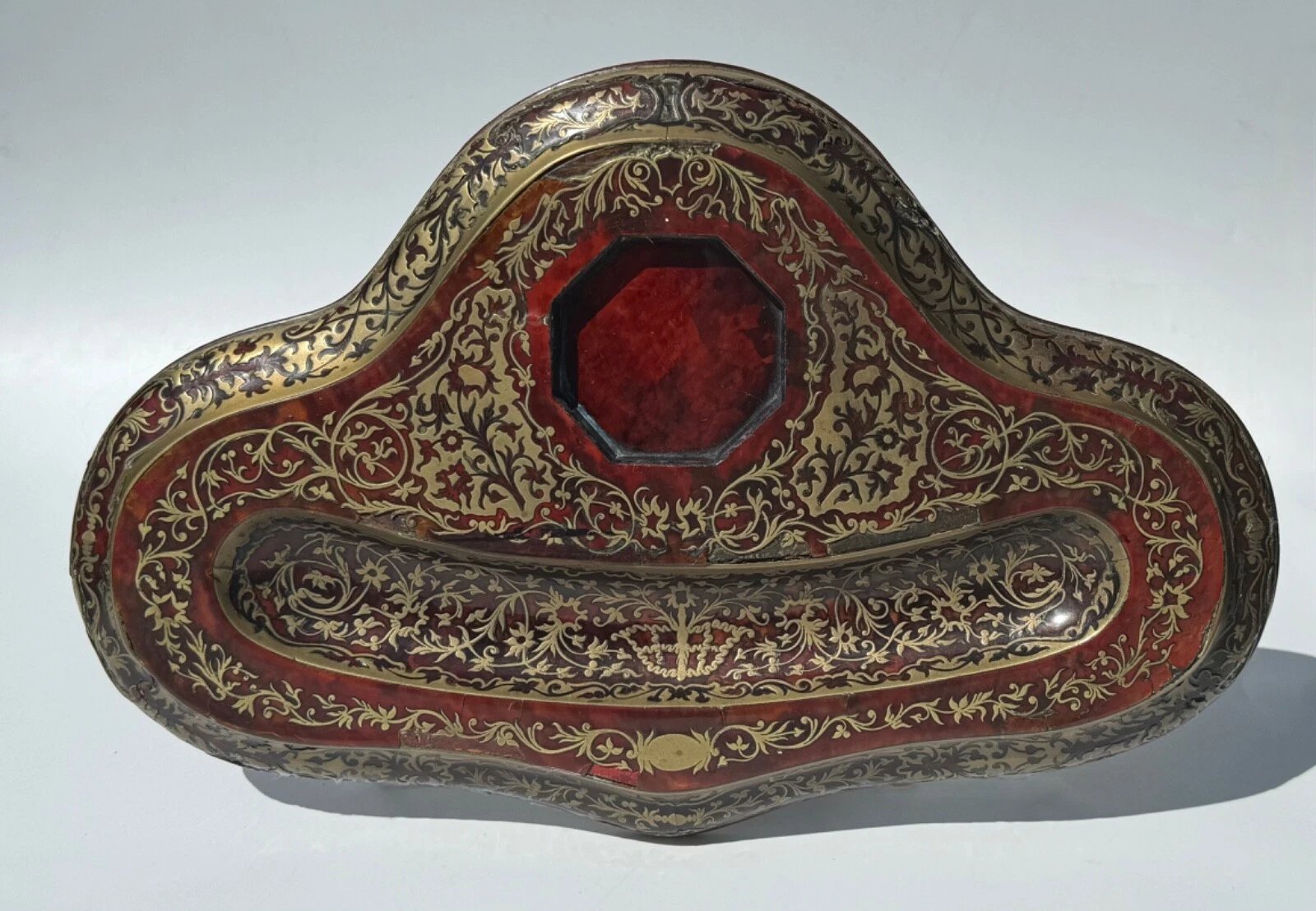
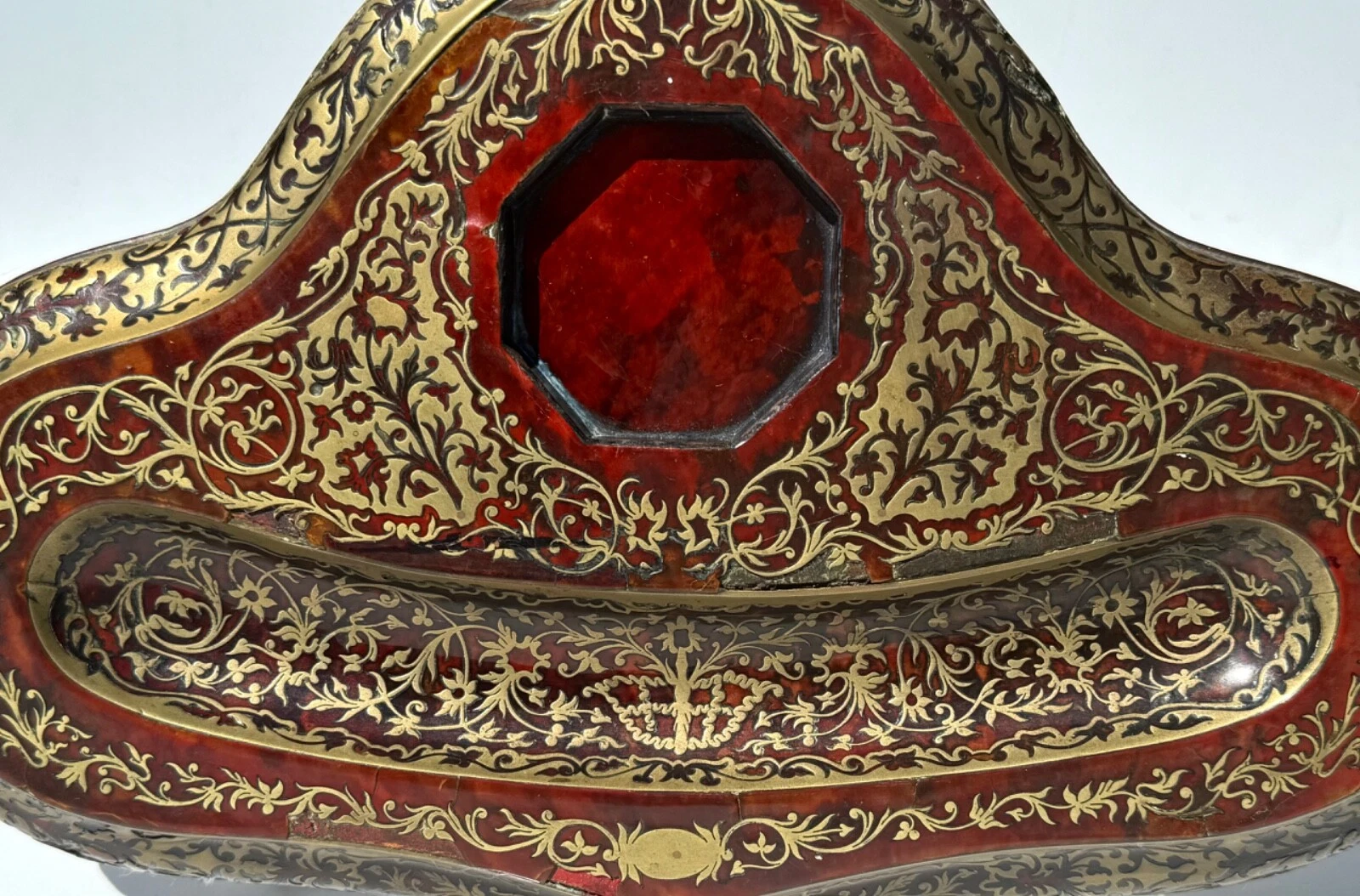
- Boulle Work & Framing: The entire top surface, curved sides, and sloping profiles are covered in première-partie Boulle marquetry—intricate, flowing brass foliate scrollwork inlaid directly into a rich, translucent red tortoiseshell ground. It is framed by a molded brass band running along the inner edges and borders.
- Pen Rest: A wide, curved, concave depression across the front serves as a pen/quill trough. The inlay pattern continues seamlessly down inside the curve of the trough.
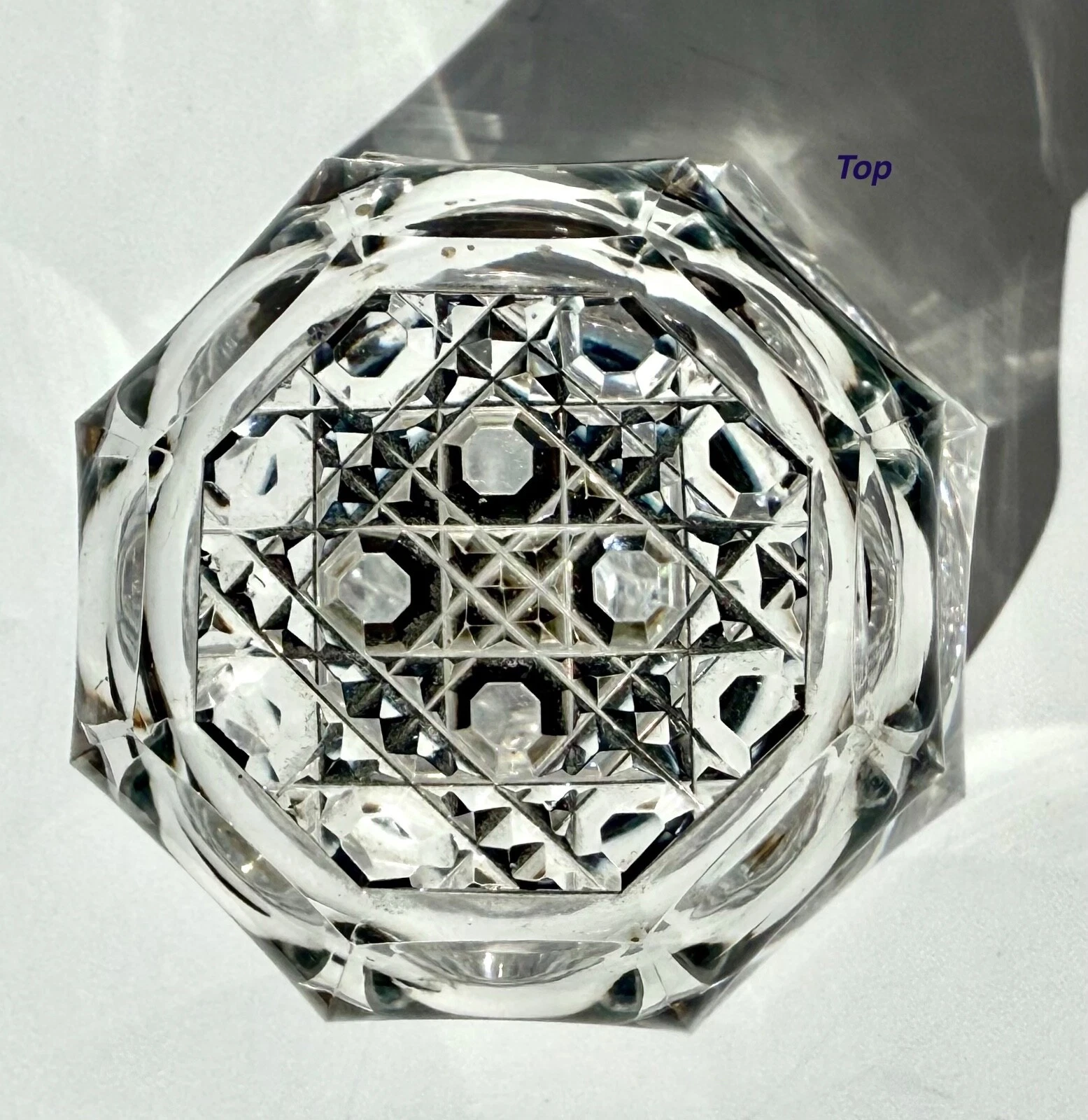
- Central Inkwell Receiver: Towards the back, an octagonal recessed area sits framed in dark wood to hold the heavy crystal inkwell securely in place.
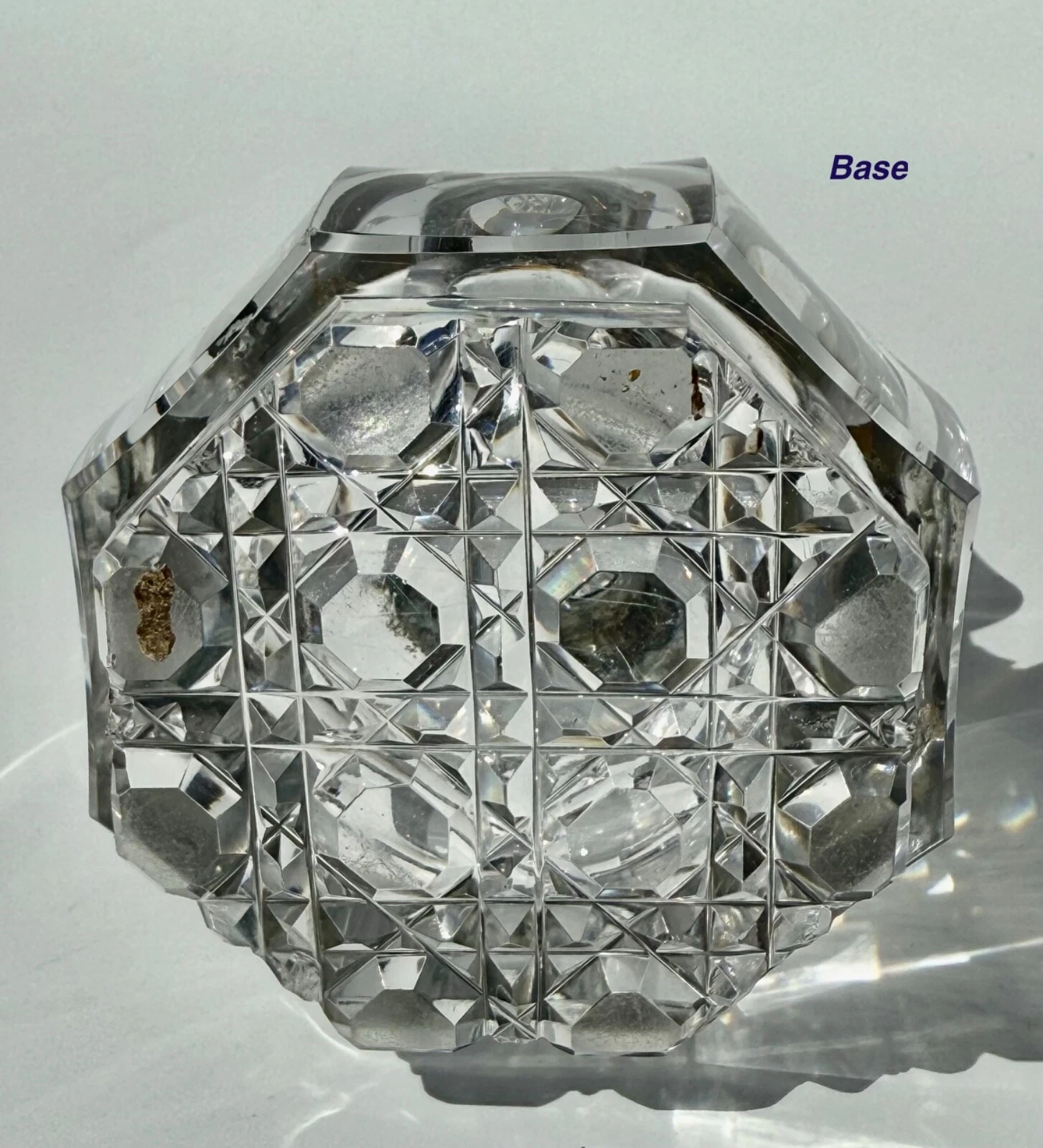
- The Crystal Inkwell:
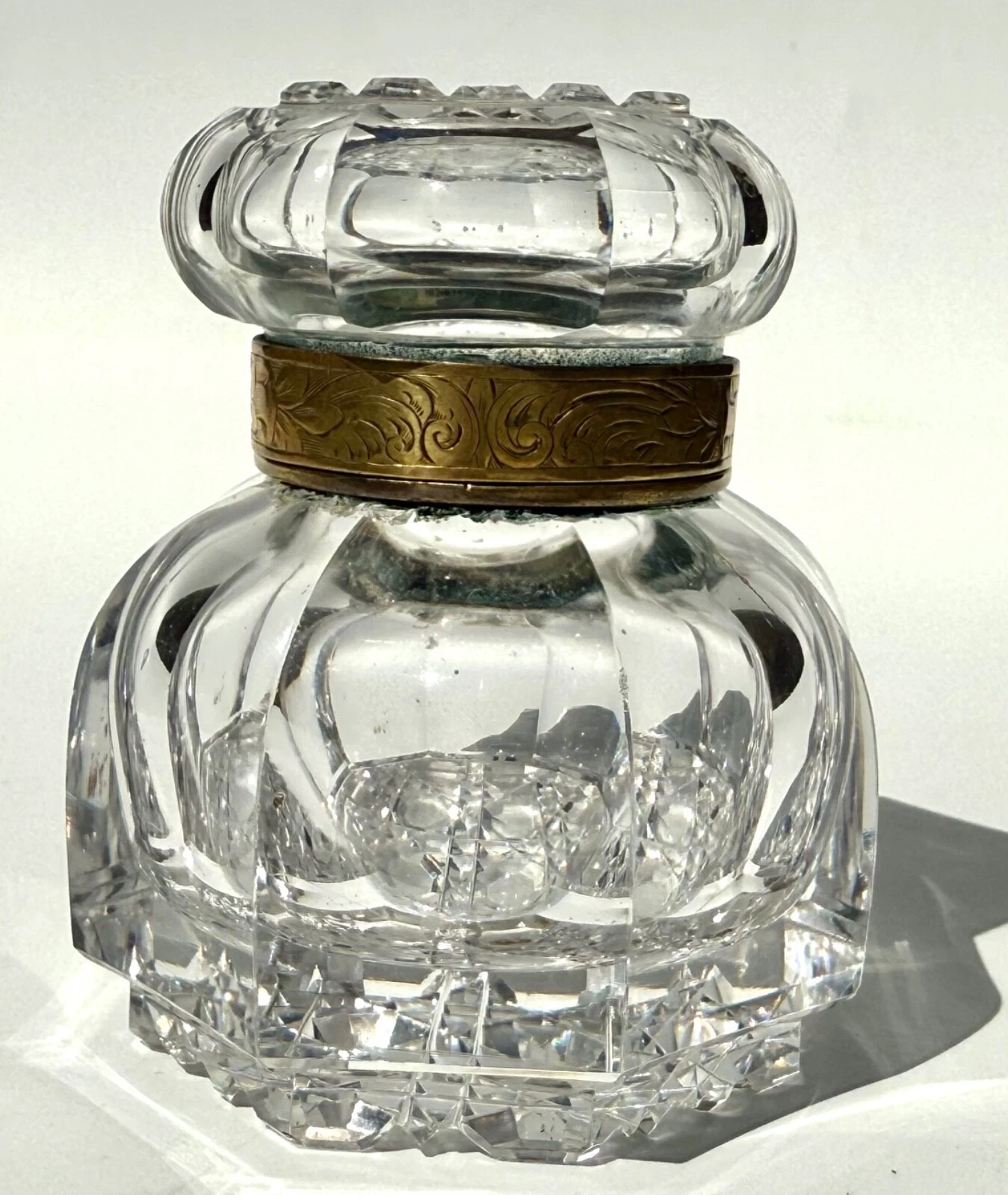
- Features a panel-fluted lower body transitioning into a heavily cut base.
- Top & Base Cutting: The flat underside of the inkwell features a bold, deep-cut geometric grid/panel pattern, while the thick octagonal glass lid showcases a circle hobnail cut (often referred to as a “strawberry diamond” or hobnail star variant).
- Collar & Hinge: The original, wide brass collar is decorated with delicate engine-turned/engraved floral scroll motifs and fitted with a rear hinge.
- How Boulle Marquetry is Made
Boulle work (named after André-Charles Boulle, master cabinetmaker to King Louis XIV) is an intricate marquetry process that bonds metal and organic shells together:
- Stacking the Sandwich: A thin sheet of brass metal and a thin sheet of natural tortoiseshell (often backed with red pigment/vermilion paper to give it that deep ruby glow) are glued together in a sandwich layer.
- Precision Cutting: A master craftsman uses a fine fretsaw or piercer to cut through both layers simultaneously in an elaborate arabesque or foliate pattern.
- Inlaying (The Puzzle): Once cut, the pieces are separated:
- Première-partie (First Part): Brass scrollwork inlaid into the tortoiseshell background (as seen on this piece).
- Contre-partie (Counter Part): Tortoiseshell scrollwork inlaid into the remaining brass background (the exact inverse).
- Finishing: The chosen assembly is glued down onto a solid wood substrate (often fruitwood or oak), hand-chased or engraved to add fine leaf veins, polished flush, and sealed.
- Age & Classification
- Estimated Age: c. 1850–1870 (Napoleon III Period / Second Empire France).
- Context: While Boulle invented the technique in the late 17th century, the mid-to-late 19th century under Napoleon III saw a massive revival of 18th-century French court luxury. Inkstands of this specific flared, scalloped silhouette paired with heavy panel-fluted cut lead crystal wells with hinged brass collars were hallmark luxury desk accessories produced in Paris during the 1860s.
Sold for $200 in July 2026
Content disclaimer. The information posted is the owner’s best knowledge and may not have been vetted by the SOIC. We welcome comments, corrections, and additions, working to make our website information comprehensive and accurate.
Join the Society of Inkwell Collectors (SOIC) – it’s free!
Founded in 1981 as a non-profit organization,
we are documenting inkwells (and accessories).
We’re here to help and inform!