

Inkipedia
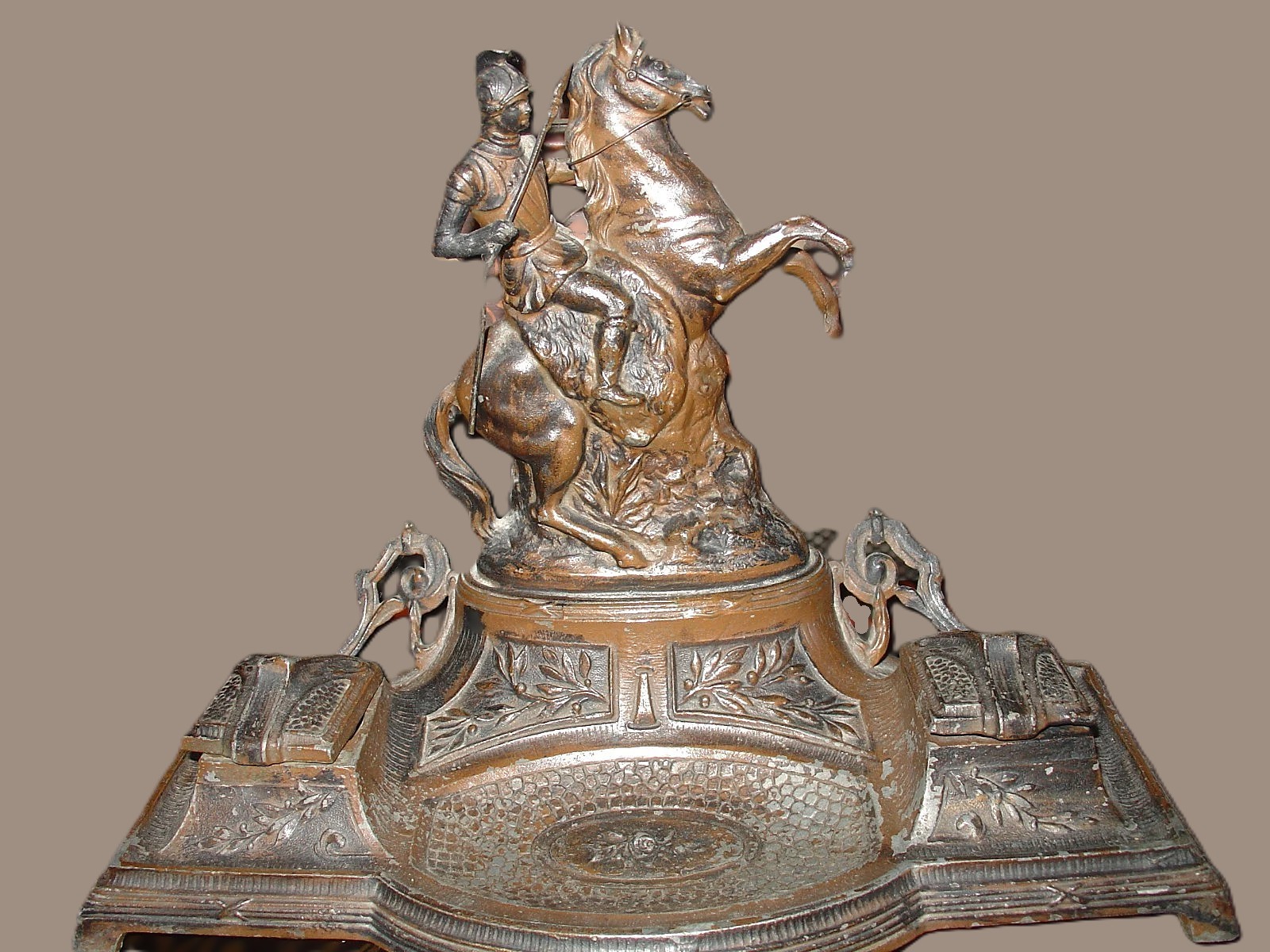
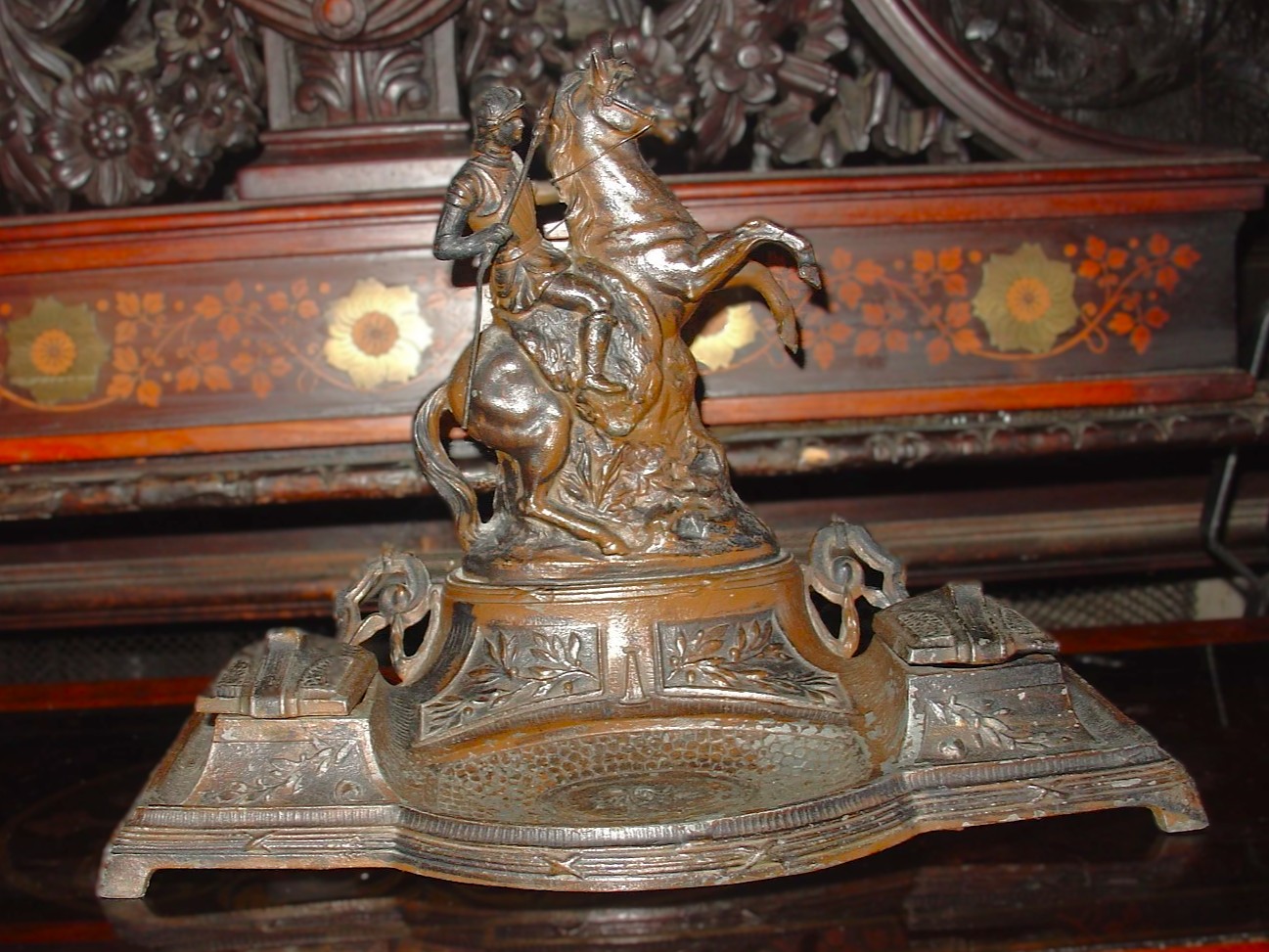
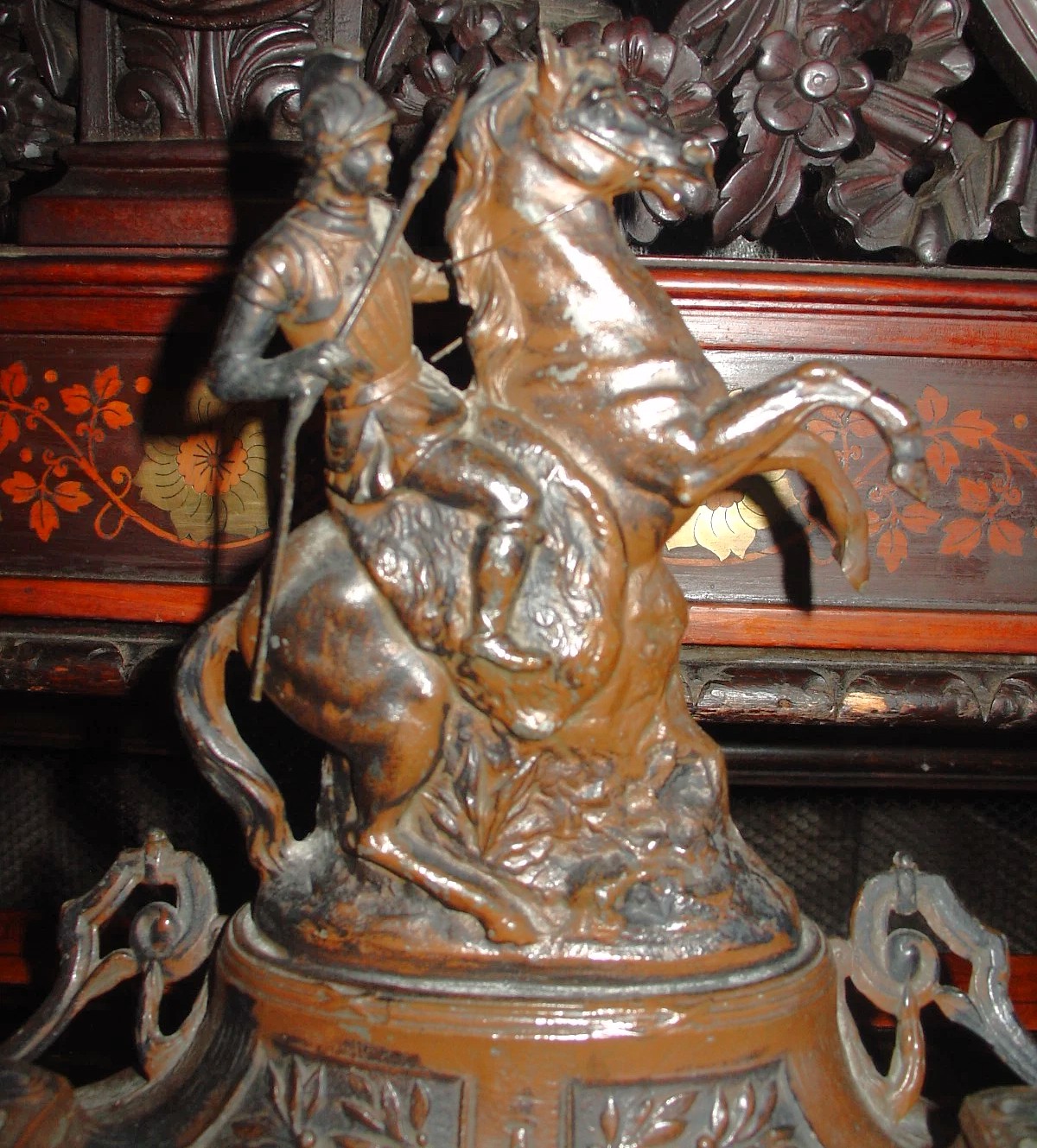
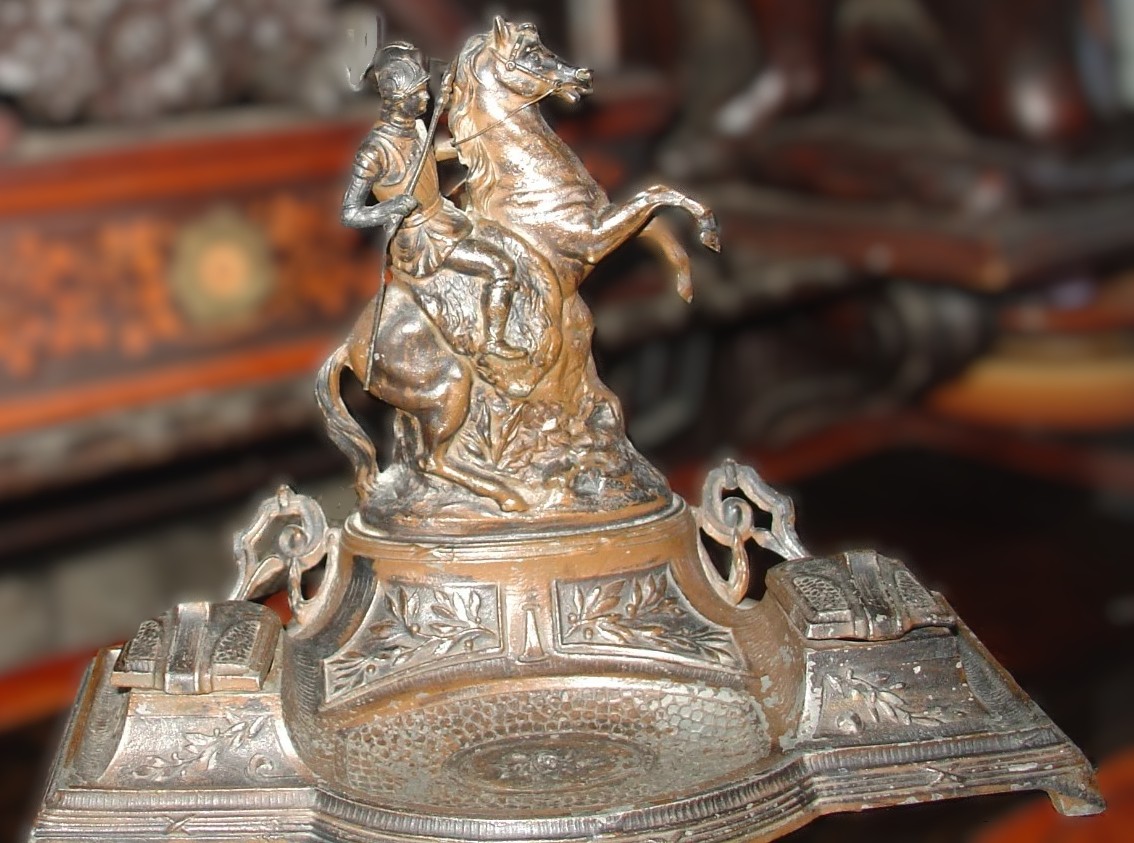
Warrior on a Horse Inkstand
| Categories | Figural - Animals & Living Creatures, Figural - Persons |
| Type | Horse, Military |
| Material | Spelter |
| Markings | Unmarked |
| Manufacturer | Undetermined |
| Origin | France |
| Date or Era | circa 1900 |
| Measuring | 11 ½” x 5” x 9” high |
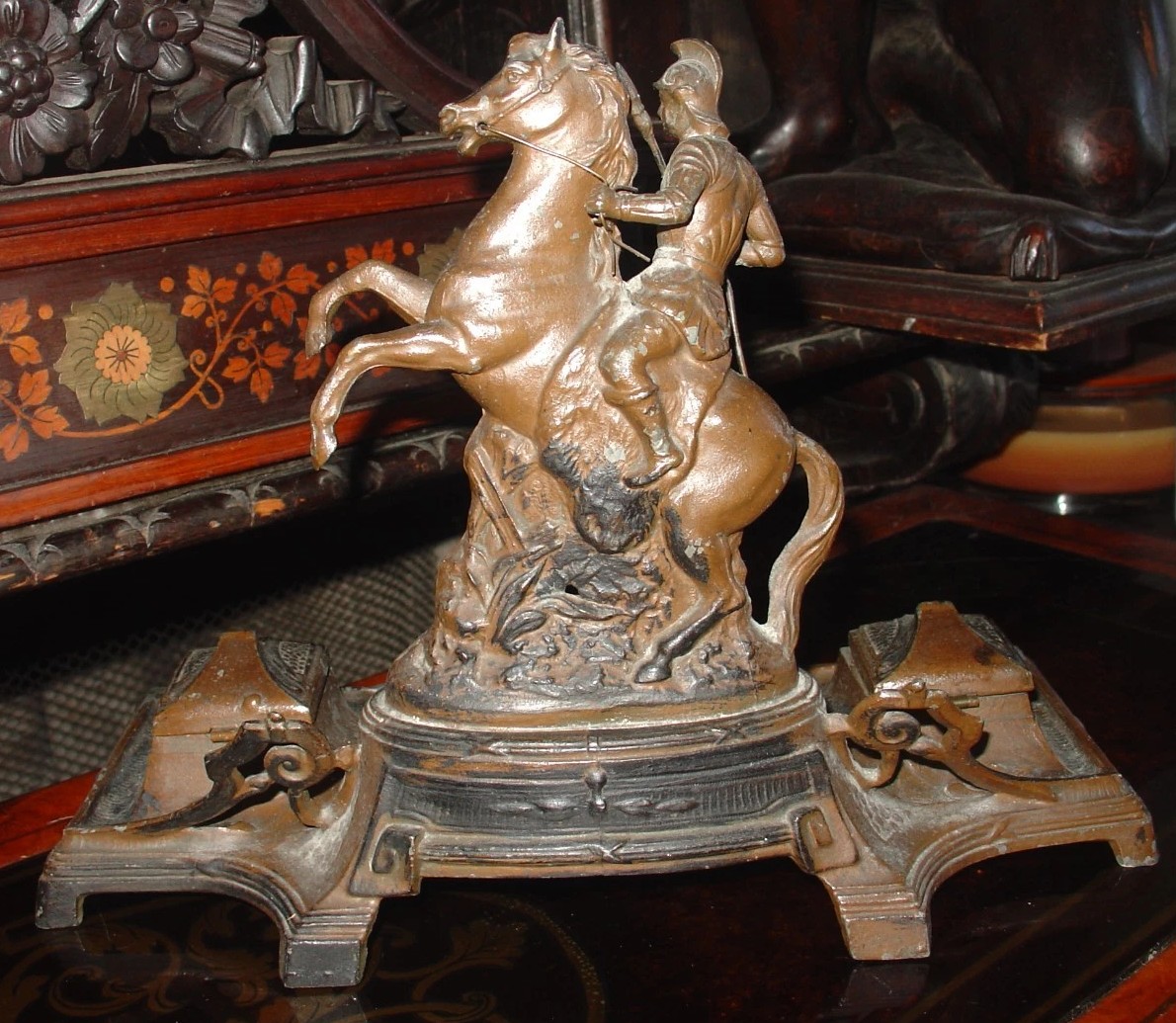
This double inkstand, an example of historical romanticism in desk accessories, was made in France during the late 19th to early 20th century (circa 1890–1910).
Detailed Description
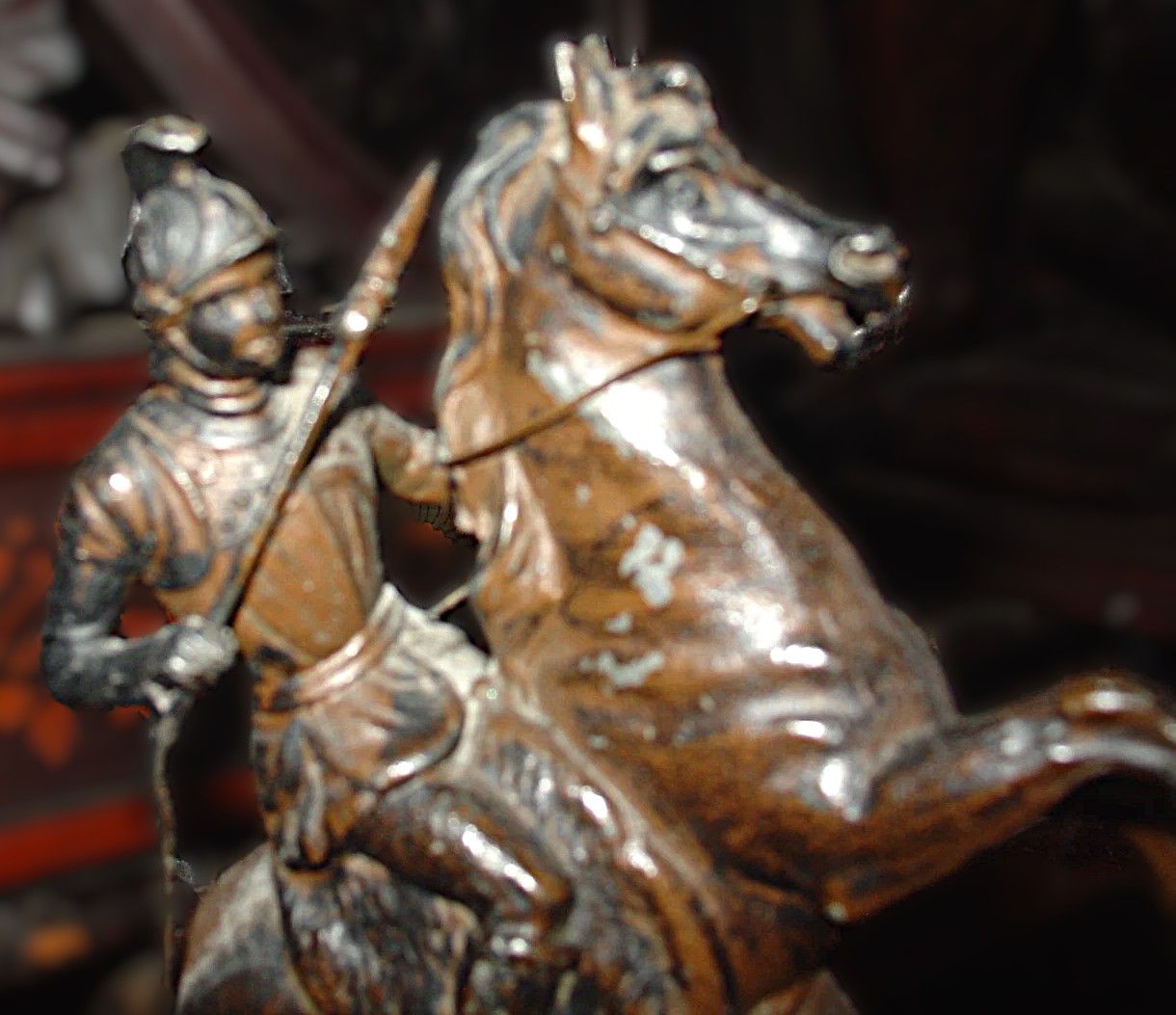
- The Figure: The central focal point is a cast figure of a mounted warrior or officer in a dynamic “levade” or rearing pose. The rider wears military attire characteristic of the late 17th century (Louis XIV era), including a cuirass (breastplate), a helmet, and high riding boots. He holds a lance or baton of command in his right hand.
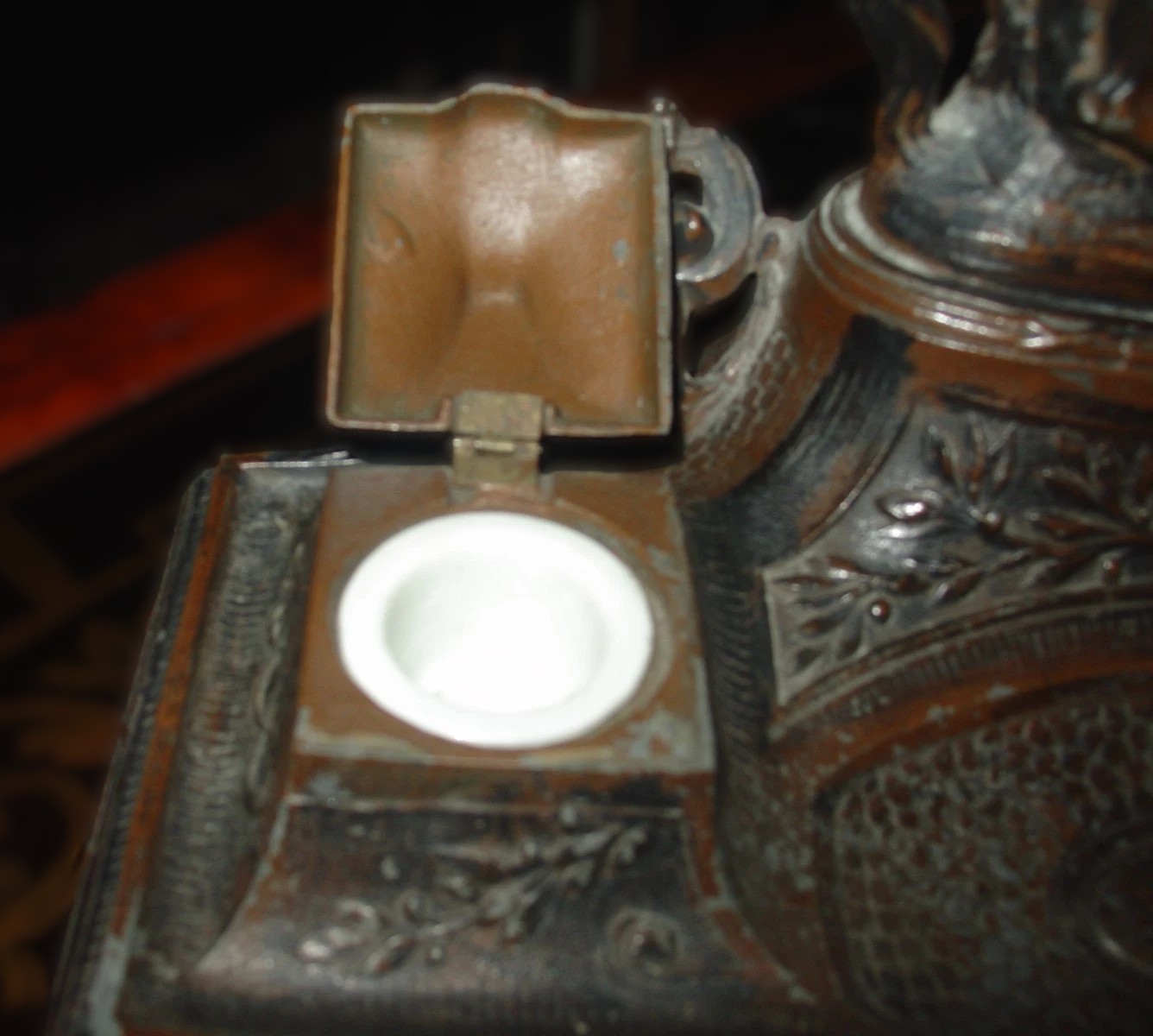
- The Inkwells: Flanking the central statue are two square inkwells with hinged lids. When opened, they reveal removable white porcelain inserts.
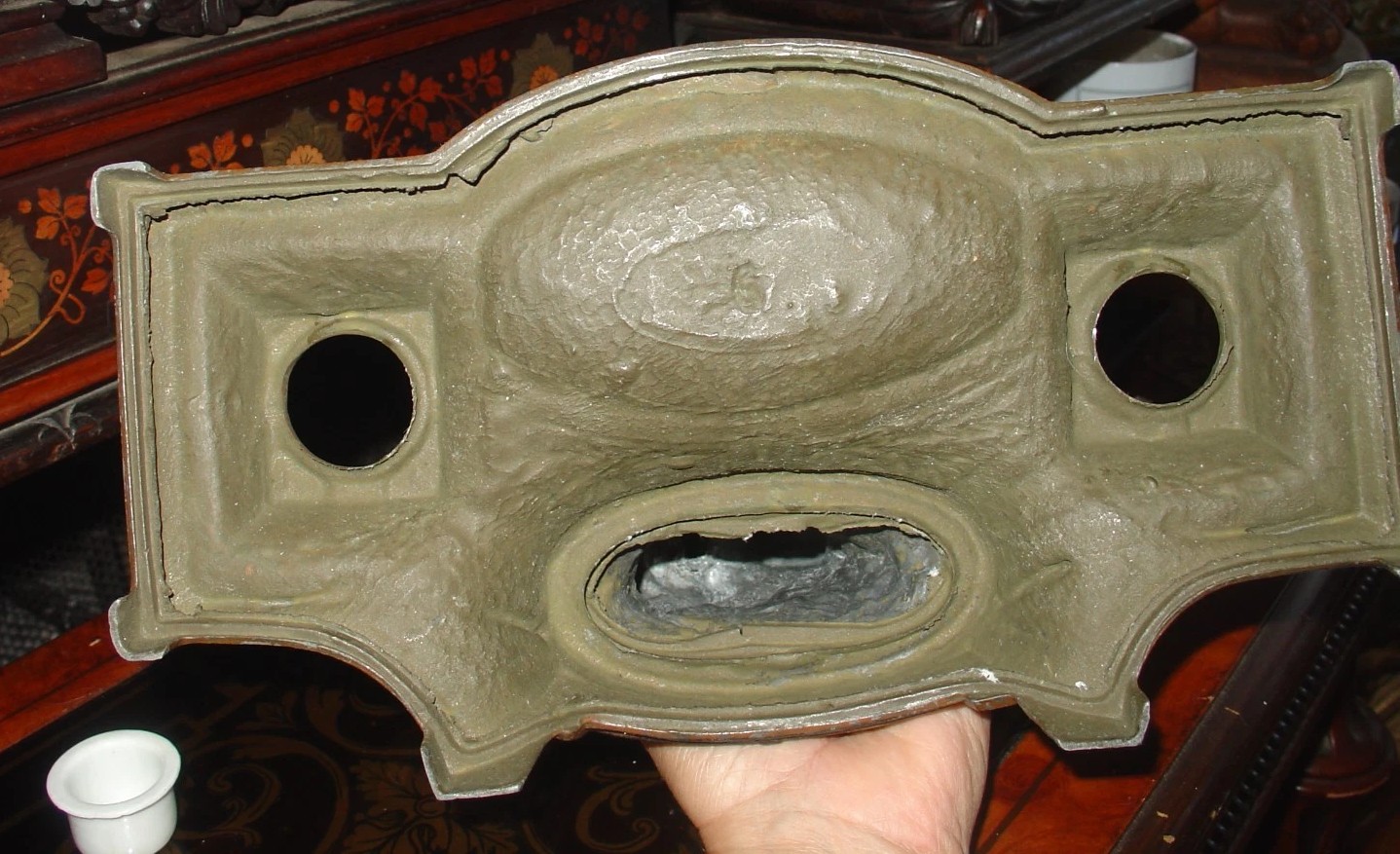
- The Base: The base features an ornate, neoclassical design with scrolling acanthus leaves, floral swags, and a textured “cobblestone” or “earth” pattern in the central pen tray. The underside shows the characteristic hollow, sand-cast appearance of spelter metal.
- Material: The piece is made of spelter (a zinc-based white metal alloy), which has been cold-painted with a copper/bronze-toned finish to mimic more expensive solid bronze.
Era
The figure celebrates the military glory of France under King Louis XIV (The Sun King).
- The 17th Century Style: The rider’s costume—specifically the helmet and the style of the cuirass—is a romanticized Victorian interpretation of an officer from the late 1600s. This was a period of numerous European conflicts, such as the Franco-Dutch War or the War of the League of Augsburg.
- The Pose: The rearing horse (the cabriole) was a standard artistic trope in 17th-century equestrian portraits to symbolize power and the “taming” of nature by a Great Leader.
Origin and Manufacturer
- Where: Produced in France, specifically in the foundries of Paris or the surrounding industrial regions.
- When: Circa 1890–1910. This was the peak era for high-quality “Regule” (spelter) desk sets intended for the growing middle-class market.
Sold for $125 in December 2025
Content disclaimer. The information posted is the owner’s best knowledge and may not have been vetted by the SOIC. We welcome comments, corrections, and additions, working to make our website information comprehensive and accurate.
Join the Society of Inkwell Collectors (SOIC) – it’s free!
Founded in 1981 as a non-profit organization,
we are documenting inkwells (and accessories).
We’re here to help and inform!