

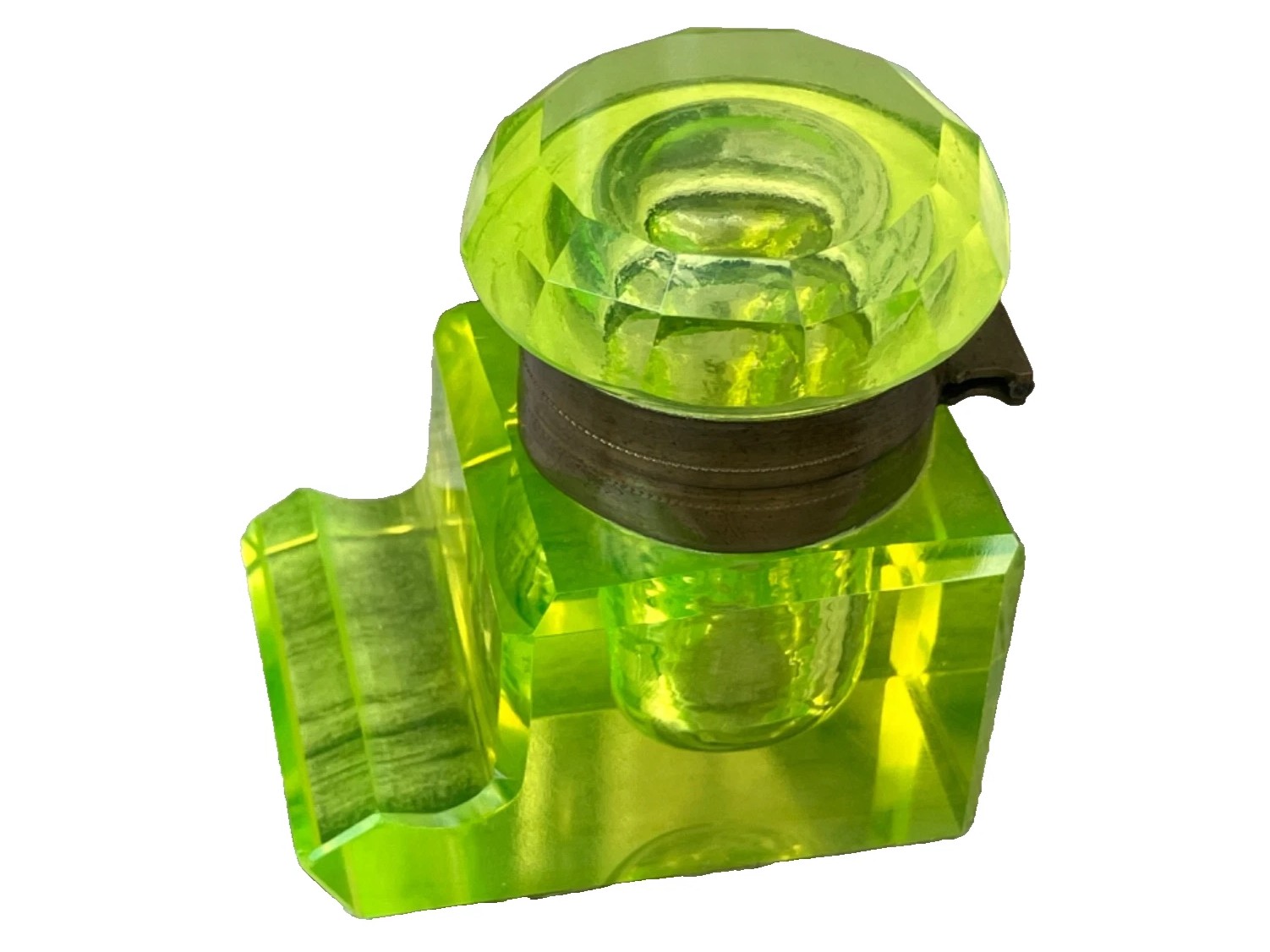
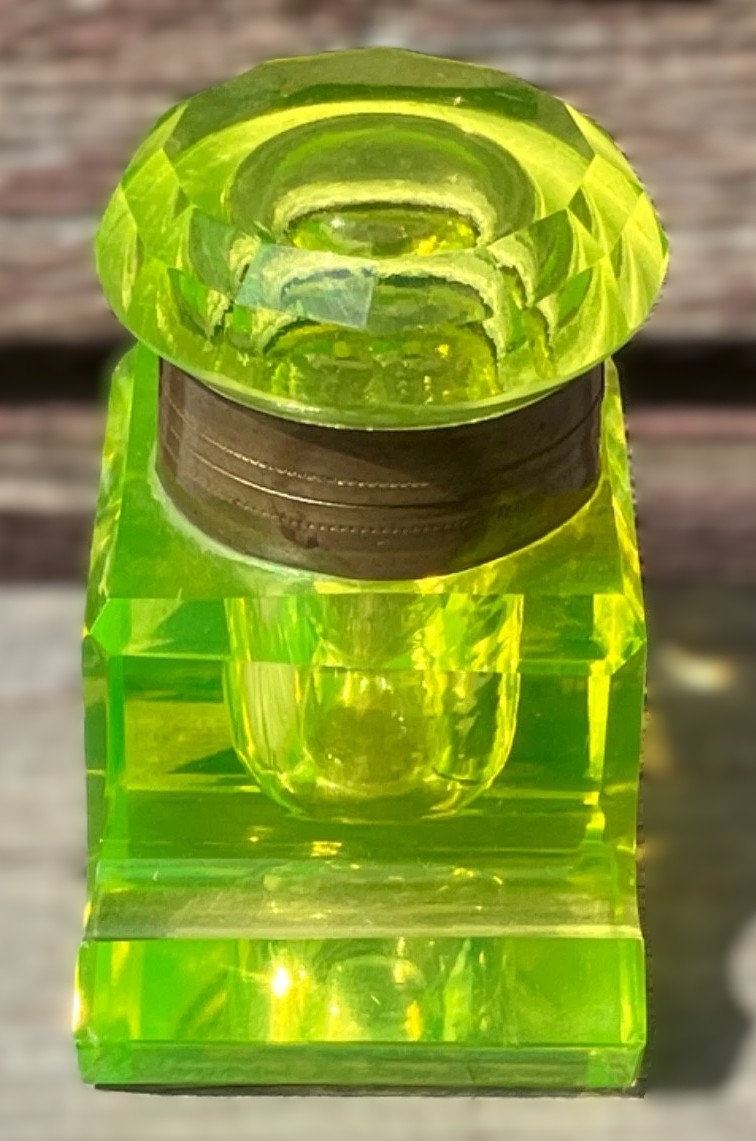
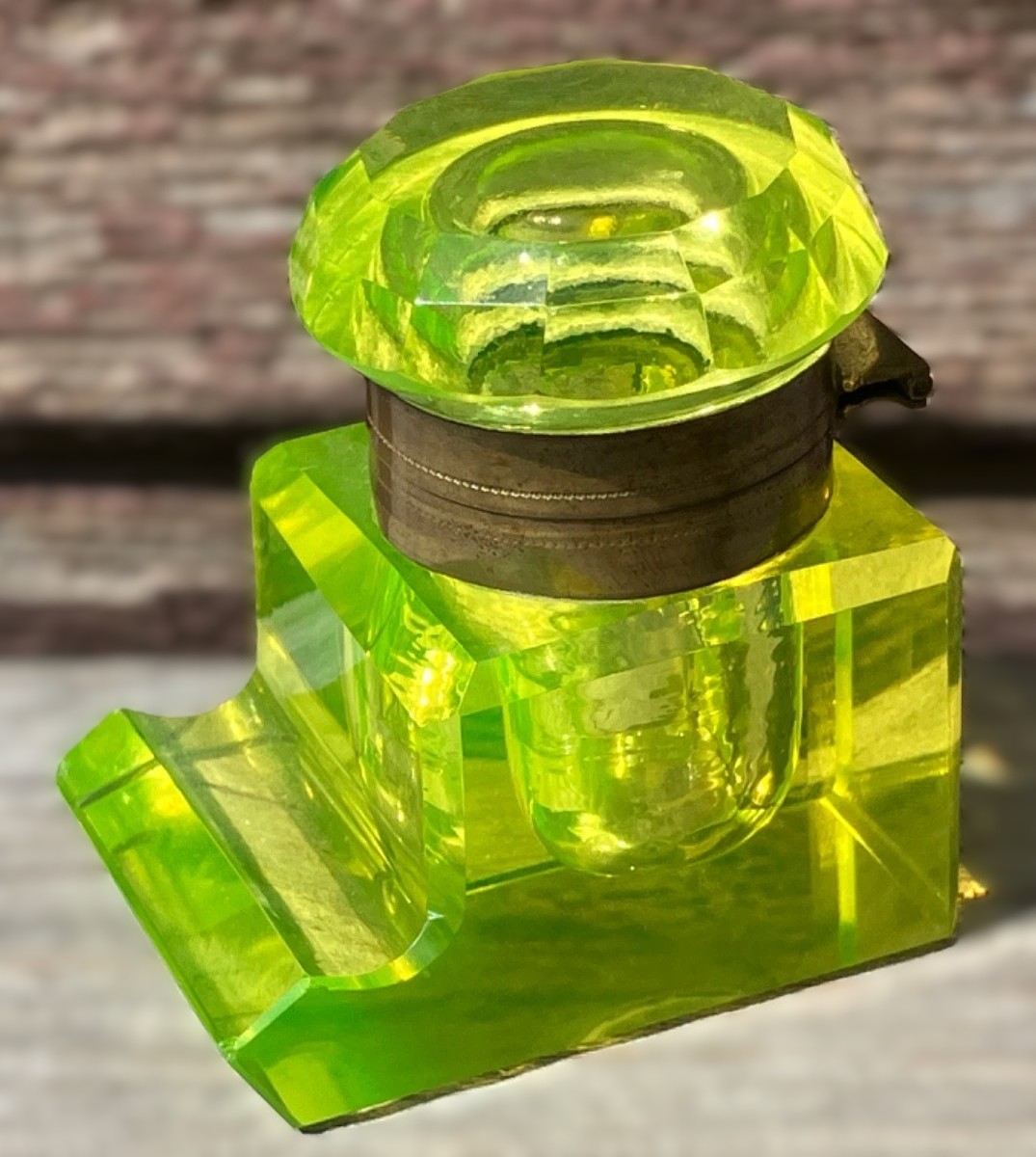
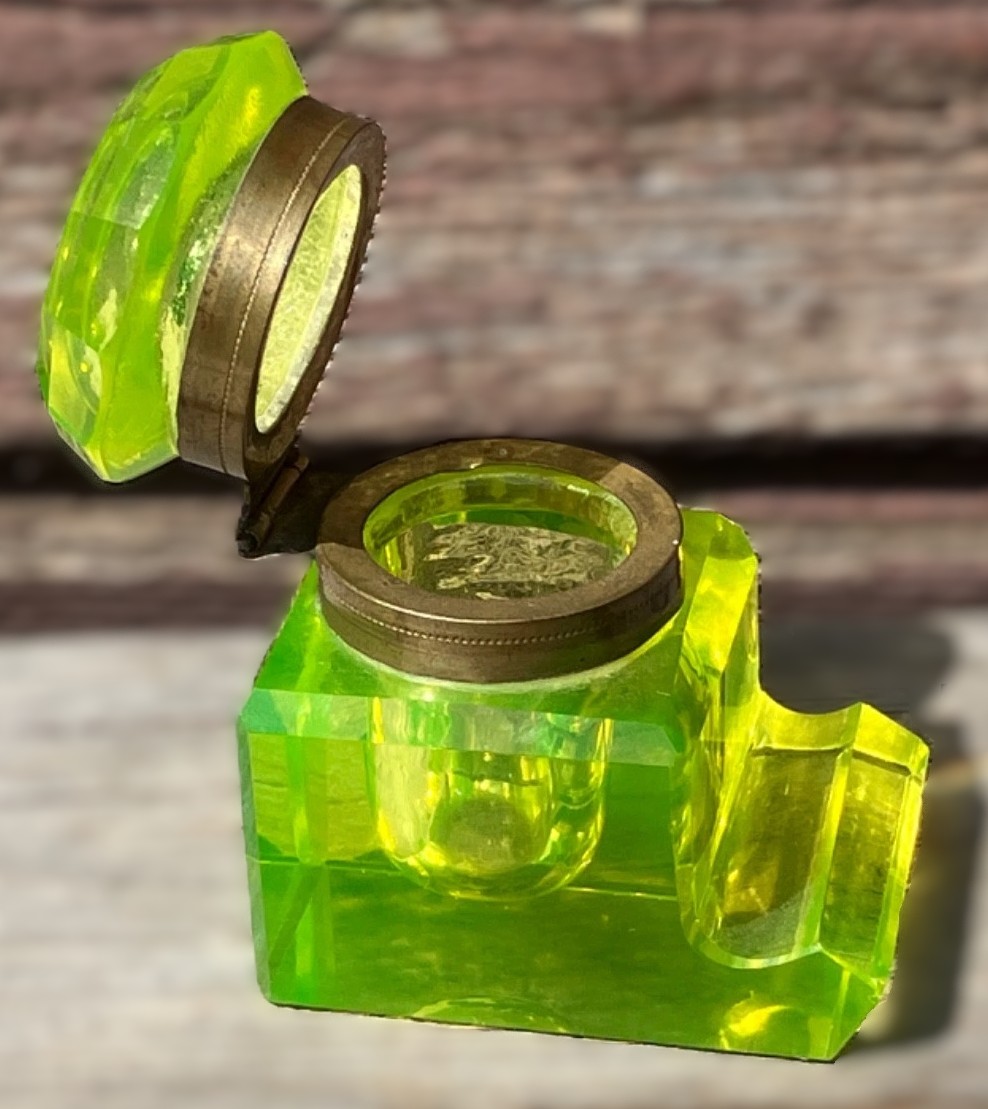
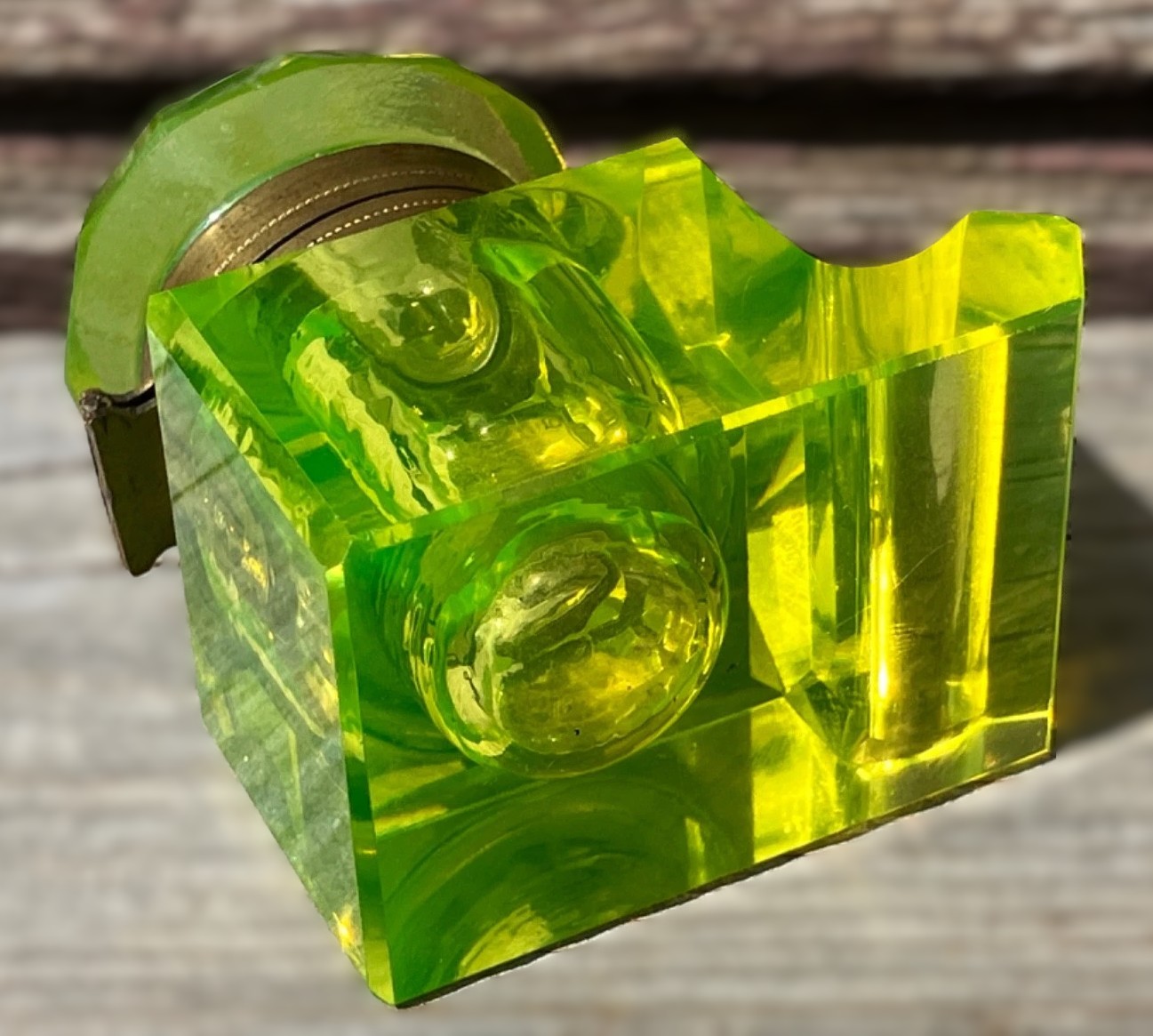
Vaseline (Uranium) Glass Inkwell
| Categories | Glass - Non-figural |
| Type | Vaseline |
| Material | Glass |
| Markings | Unmarked |
| Manufacturer | Undetermined |
| Origin | Undetermined |
| Date or Era | circa 1900 |
| Measuring | 2 ⅜” high |
This cut-to-clear uranium glass inkwell features an integrated pen rest.
Description
The inkwell is carved from a vibrant, luminous chartreuse or yellow-green uranium glass block. It features geometric faceting along its sides and a matching multi-faceted, chunky glass lid that mounts into a metal collar. Attached to the front of the heavy glass block is a built-in horizontal pen rest channel designed to hold a dip pen when not in use. The hinged metal collar and lid frame secure the glass top, which opens on a small hinge to reveal the ink reservoir within. Under ultraviolet (UV) light, this piece would exhibit a brilliant, glowing neon-green fluorescence characteristic of uranium oxide content.
When Was It Made?
This piece dates to around 1880 to 1910. Heavy cut glass inkwells with integrated pen rests and metal collars were exceptionally popular throughout the late 19th and early 20th centuries.
How It Gets Its Color
The characteristic bright yellow-green hue—often called “Vaseline glass”—is achieved by adding uranium (typically depleted or natural uranium in the form of diuranate compounds) directly into the molten glass batch during production.
- The Colorant: The uranium acts as a colorant, creating a translucent, glowing yellow or greenish-yellow tint.
- The Fluorescence: When exposed to ultraviolet light (UV), the uranium electrons absorb the UV photons and instantly re-emit them as visible green light, creating the iconic neon glow that collectors prize. The amount of uranium used in these historical pieces is generally small (often ranging from 2% to 25% by weight), making the radioactivity levels extremely low and safe for display.
Sold for $132 in August 2026
Content disclaimer. The information posted is the owner’s best knowledge and may not have been vetted by the SOIC. We welcome comments, corrections, and additions, working to make our website information comprehensive and accurate.
Join the Society of Inkwell Collectors (SOIC) – it’s free!
Founded in 1981 as a non-profit organization,
we are documenting inkwells (and accessories).
We’re here to help and inform!